

Author: HairWeavings Editorial Team

5 Squat Alternatives for Weak Knees (That You Can Do at Home)

squat alternatives

I know the feeling… you’re filled with motivation to start exercising again but soon discover every popular workout seems to include so much squatting, jumping and other high impact exercises.

If you’ve got weak knees, there’s no getting around these sorts of movements; they’re simply a no-go.

Luckily, there are alternatives and ways to follow lower impact exercises that will still help strengthen your muscles, without the associated pain or discomfort you may experience in your knees, hips or ankles with squats.

If you’re looking for alternatives to squats, you’re in the right place. Below, I outline 5 lower body exercises that target the same muscles but don’t put as much pressure on your knees or joints.

Glute (Hip) Bridges

Glute (hip) bridges are a fantastic low impact exercise that primarily target the glutes (your “derriere”, to put it another way).

If you find yourself sitting a lot of the day, activating the glutes is really important to keep these muscles strong. Weak glutes can lead to all sorts of problems such as lower back ache.

Glute bridges involve laying on the floor with your knees bent and feet flat on the floor. Squeeze your glutes to raise your hips off the floor. Hold this for 10 seconds (or as long as you feel comfortable), before lowering your hips back to the floor. Repeat this a few times, depending on your fitness level.

Your glutes are doing most of the heavy lifting, so your knees won’t take the same sort of pressure like they do in squats.

Holding the glute bridge will also help improve your overall core stability too.

Good Mornings

Good Mornings target the glutes and hamstrings, as well as the lower back. They can be performed with weights, or just as a bodyweight movement.

Good Mornings are another great exercise you can do throughout the day… even just waiting for the kettle to boil could be time spent strengthening those legs!

Stand with your feet shoulder width apart and knees ever so slightly bent. With your chest upright and back straight, lean forward as far as you feel comfortable. Squeeze your glutes and hamstrings to raise your torso back to an upright position.

Step Ups

Steps Ups may appear quite basic, but they are really effective at developing more power from your lower body. This sort of exercise also has clear benefits for the real world, i.e., getting up and down the stairs easier.

Stand with your feet shoulder width apart in front of a step (or raised surface). The higher the step, the more challenging it is. Push down on one foot to provide balance and lift the other foot onto the step. Push down on the foot standing on the step to straighten your leg and lift your remaining foot onto the step as well. Lower yourself back down and repeat.

There are lots of ways to vary up this movement, from holding a dumbbell or using ankle weights, that also increase the difficulty.

Side Laying Leg Raise

The side laying leg raise falls under the category of “hip abductor exercises” which are perfect for strengthening the outer hips. This can help avoid the knees leaning inwards, as well generally supporting better posture and alignment.

This guide on banded hip abduction exercises is a great resource on how to use a resistance band with abduction exercises to increase difficulty.

Lay on your side and gently raise your leg up and down, hinging at the hips. Repeat on the other side. You’ll find you don’t need to raise your leg too high for you to feel the muscles working.

Walking

Walking is a great exercise, and it can be easily adapted to your level of fitness. Walking naturally engages the whole lower body, helping to target the same muscles as doing squats.

To increase difficulty, use ankle weights for extra resistance during a walk.

Similarly, try Nordic Walking if you enjoy walking. There are lots of clubs you can join, and the use of poles helps engage more muscles during your daily stroll.

Final Thoughts

Squats are a great way to build lower body strength, but if you experience knee or hip pain whilst doing them, this list of alternative exercises could help you create effective lower impact workouts.

Not all of them may be suitable for your specific circumstances, but even if just one works for you, it could help you see tangible improvements in your legs and lower body.

What is your experience with squats? Are they painful for your knees? Would you be open to doing these alternative options? Do you have any exercises that are friendly on the knees? Let us know in the comments below.

Read More
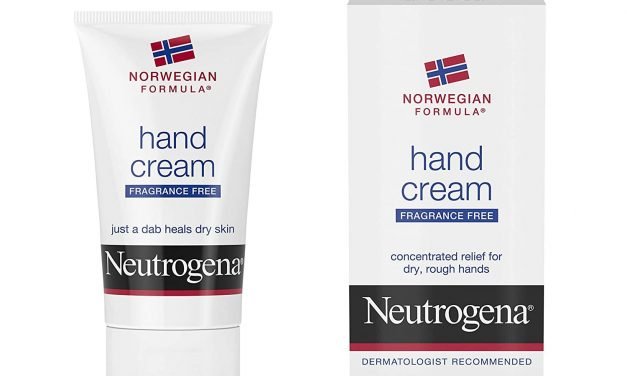
Shoppers Say This Hand Cream Is ‘The Only Lotion That Works’ For Dry Skin & I Wholeheartedly Agree

I think we’ve all experienced cracked hands in the winter. Not to be gross, but it’s just what happens when cold weather comes around and naturally takes a toll on our skin. We constantly use our hands, making cracks and dry flakes feel all the more painful. However, you don’t have to endure this common skin concern year after year. While there are tons of remedies on the market, I’ve only ever found one that actually works.

My ultimate skin savior is Neutrogena’s Norwegian Formula Hand Cream. After years of trying products that smelled weird, left my hands slimy or straight up didn’t do anything, I did my research and came across this game-changing product. 

You might think I’m being overdramatic, but I’ve been using it for a few years now, and I’ve even gotten my mom, sister and friend hooked. Trust me, with this wondrous product, you won’t ever need another hand cream again, and you most certainly won’t go through winter with dry skin any longer.  

“I’ve tried dozens of lotions, but this is the only one that fixes cracking and splitting on my hands,” wrote one shopper who gave the product a perfect rating.

RELATED: The 10 Best Face Moisturizers For Avoiding Dry, Cracked Skin This Fall—According To Dermatologists 

Neutrogena Norwegian Formula Hand Cream Amazon

Photo: Neutrogena.

You’ve likely never heard of this under-the-radar hand cream, but it’s actually been around longer than you. Let us explain. Going decades and decades back, Norwegian fishermen dealt with extremely chilly weather conditions. So when their hands would get chapped in the cold, they decided to create a glycerin-powered hand cream.

According to the brand, in 1969, Lloyd Cotsen, then president of Neutrogena, was in charge of advertising the fishermen’s O.G. recipe. After rubbing the fishermen’s concoction onto his hands, the dryness immediately vanished. And that, folks, is how Neutrogena’s Norwegian Formula Hand Cream came to be. 

That’s quite the story, but you’ll just have to try the arctic fishermens’ formula for yourself. It contains a high concentration of glycerin—40 percent, to be exact. It’s so strong that you really only need a tiny dot. According to Neutrogena, each tube holds 200 applications, meaning you’re good to go for the entire winter (and beyond).

The formula is also hypoallergenic, non-comedogenic and fragrance-free. Heck, it’s even certified by the National Eczema Association, so you know it’s even suitable for super sensitive skin.

The product has earned a 4.8-star rating on Amazon, with 1,500 reviewers giving it a perfect score. 

“This is my favorite hand cream and has been for many years,” wrote one shopper. “I always have it around, leave tubes around the house and carry them on the go. It does the job and lasts a long time,” they added.

“I have super sensitive skin (acute dermatitis) that acts up only on my hands. My dermatologist recommended this for me for daily use and I LOVE it,” wrote another shopper. “I now keep a tube in just about every room and one in the door of my car!”

For instant, lasting hydration and silky smooth hands, try Neutrogena’s Norwegian Formula Hand Cream. You might as well stock up now with this six-pack, since we’ll bet a million bucks you’re never going to use another hand cream again.

STYLECASTER | Ashley Benson Interview

Read More

K18 — The Bonding Treatment That Repaired My Broken Blonde Hair — Is Finally Available at Sephora

When I tell you my hair has been through it, I’m not exaggerating. I’ve had epic bleach disasters which resulted in gummy, crumbling strands, as well as chemical straightening and keratin treatments. Not to mention, I love hot tools. Basically, I’m not very nice to my hair so I need a product that helps repair my strands. K18 does just that and it launches at Sephora today. Allow me to explain why it might need to be your holiday present to yourself.

Although K18 calls its hero product a mask, you don’t wash out the Leave-In Molecular Repair Hair Mask. It doesn’t feel your usual conditioning mask and that’s because it isn’t. The patented bioactive peptide treatment strengthens and improves the elasticity of the hair, as well as works to actually reverse damage from chemicals and styling. It’s ultra-lightweight so you don’t have to worry about it weighing down your hair. The formula repairs strands over time, but you’ll still see a difference in the look and feel of the hair in just one use.

k18 mask

K18.

Here’s how I use it on my wavy, frizz-prone, bleached hair. In the shower, shampoo as usual. Don’t condition your hair. When you’re out of the shower, towel dry your hair and apply a pump or two of the mask throughout strands. You need a very little bit! Give it four minutes to activate and then style your hair as usual. I like to apply another leave-in product, such as a hydrating heat protector. The brand recommends using the treatment for the first four to six washes and then as needed.

Instagram PhotoSource: Instagram

After having to cut off all my hair and go back to my natural color a few years ago, I’m back to the blonde highlights I like. But this time, K18 is going to help keep my hair as strong as possible. Well, until I do something crazy to mess it up again.

STYLECASTER | Ashley Benson Interview

Read More

Kyle Richards’ Bear Sweater

Kyle Richards’ Bear Sweater on Instagram

Real Housewives of Beverly Hills 2021 Instagram Fashion

Kyle Richards was spotted keeping up on a tradition of shopping with her friends. And we are keeping up with the tradition of shopping her style. Which today just so happens to be this adorable bear sweater. Unfortunately the stock of the sweater went into hibernation. But no worries because we have our Style Stealers below that you won’t want to sleep on.


Sincerely Stylish,

Jess


Kyle Richards' Bear Sweater

Click Here to Shop Here Polo Ralph Lauren Sweater

Photo Credit: @kylerichards18

Originally posted at: Kyle Richards’ Bear Sweater

Read More

Lichen Sclerosus: Symptoms and Treatment

lichen sclerosus

Lichen sclerosus is a chronic inflammatory skin disorder and autoimmune disease which causes thin white patches to develop on the skin. While rare, post-menopausal women are at the highest risk, and the condition typically presents itself in the genital and sometimes anal area, which is also known as vulvar lichen sclerosus.

Often misdiagnosed as a yeast infection or a result of menopause, vulvar lichen sclerosus can be the source of serious physical, sexual and emotional discomfort.

To explain how lichen manifests, our skin is made up of several layers – the outer layer known as the epidermis and the inner layer known as the dermis. For women who are experiencing lichen sclerosus, the epidermis becomes very thin, causing the stretchy fibers in your skin to break, causing its symptoms.

Signs and Symptoms

A common sign that you could be experiencing lichen sclerosus is the loss of pigmentation and architecture of the vagina. This can be diagnosed during a pelvic exam with your OBGYN. Women may also experience pain with sex and itching, which is a common sign that you’re losing your protective layer of skin.

Itching, however, can often be mistaken for a yeast infection which is why it’s important to ask your doctor for a vulvar biopsy since this is the only way to properly be diagnosed with lichen. Lichen sclerosus is often a painful condition due to the vulvar tissues thinning out and can make doing everyday things like wiping after you use the bathroom painful.

Early diagnosis of this condition through a vulvar biopsy is imperative as lichen can lead to serious medical issues including vulvar cancer. In fact, if not treated, 4-5% of patients will develop vulvar cancer. Lichen can also lead to irreversible scarring and certain anatomical changes if left untreated for too long.

A majority of providers do not routinely look at the vulva which is why vocalizing you’d like it checked is very important.

Incontinence and Lichen Sclerosus

In a recent study, it was found that 35% of women who have Lichen sclerosis also experience urinary incontinence. If not treated properly, it can lead to anatomy-based incontinence, meaning the incontinence doesn’t have anything to do with the bladder.

When you start having closure of the labia, and the closure starts happening over the urethra (where urine exits), urine will get stuck in that area or it can cause women to not empty out their bladder as much, leading to urgency, frequency, or overflow incontinence.

For women who are already experiencing incontinence, lichen can worsen symptoms since urine is a major irritant to the skin. If experiencing both lichen and urinary incontinence, it’s best to go to the bathroom more frequently and change incontinence pads regularly.

Are There Preventative Measures?

While there are no preventative measures women can take to stop lichen sclerosus from developing, as mentioned before, early diagnosis of the condition will be the best way to lessen the chances of developing vulvar cancer and permanent scarring.

It’s also important to note that lichen can develop at any age between your 20s into your 80s. People may even have it for years before getting a proper diagnosis and will only find out when they begin to experience some of its most notable symptoms.

Treatment

The great thing about treatment of lichen is that, with the proper medications, your vaginal tissues/damaged tissues are able to grow back. Clobetasol ointment is considered the gold standard when it comes to treatment of this condition and works to thicken and rebuild the structures and architecture of your genital area that was lost (typically targeting the top layer of cells that experience damage).

It is recommended to use this ointment twice a week, once a day, for about 4-6 weeks. Use can be extended to 8-12 weeks depending on the state of someone’s condition. However, since clobetasol is a steroid, it’s important to be careful to not overuse.

If used too often, the ointment can reverse its intended benefits and start to thin out the skin of the vagina. If you’re allergic to this medication, another option is to use steroid injections directly into the vulva.

Takeaways

Lichen sclerosus can be an often painful and uncomfortable condition, which is why having an open conversation with your healthcare provider to make sure you’re receiving a thorough pelvic exam is important and key to receiving an early diagnosis.

While being your own advocate, especially with your healthcare provider, can be scary, having a thorough exam will benefit your health in the long run and prevent conditions like lichen sclerosus from worsening.

When was the last time you had a thorough pelvic exam? Did you ask for it? Why? How do you take care of your pelvic health?

Read More