Author: HairWeavings Editorial Team

6 Plastic-Surgeon Approved Anti-Aging Products From Sephora’s Holiday Sale

It’s no secret that Black Friday sales have been going on, well, since October, and one of the best just began. Sephora’s Holiday Savings Event is here, and it’s better than we could’ve ever expected. Here’s the deal: From now until Nov. 15, you can shop up to 30% off top-rated skincare, beauty, and hair products. It’s all based on your shopper status at the store—if you’re a Rogue member, you get 20% off, a VIB, you get 15% off, and an Insider gets 10% off. (You can sign up to become any of these at the site). In addition, some Sephora-brans products are discounted, as well.

All discounts will be applied automatically at checkout, but the time you can start receiving them differs. If you’re a Rogue member, the sale starts Nov. 5, for VIBs, it begins Nov. 9, and Insiders it starts 11/11. No matter, the price drops run through Nov. 15, so you can take advantage of the savings until then.

As shopping experts ourselves, we know that sometimes with these big sales, it’s best to tap into the brilliant minds of authorities in different fields. So, since we’ve been obsessing with anti-aging products and skin-plumping surgery alternatives lately, we outsourced a double board-certified plastic surgeon, Dr. Smita Ramanadham, and asked her what she would buy in this sale.

RELATED: The Wrinkle-Reducing Serum That Shoppers Call An ‘Age-Rewind In a Bottle’ Is 50% Off—For Now

The scoop she gave us includes everything from wrinkle-erasing serum that works so well, your friends might ask if you got Botox after using it, to plumping lip gloss that rivals filler products. Not including the discounts you’ll get, the prices of these items range from $21 to $129, and include everything from high-end to drugstore product favorites.

Our mission at STYLECASTER is to bring style to the people, and we only feature products we think you’ll love as much as we do. Please note that if you purchase something by clicking on a link within this story, we may receive a small commission of the sale.

Read on to see what Dr. Ramanadham recommends.

Buxom Full-On Plumping Lip Cream Gloss

Courtesy: Buxom.

Buxom Full-On Plumping Lip Cream Gloss

“With over 3k reviews, this is a fan favorite lip plumper that plumps and moisturizes the lips with powerful ingredients like hyaluronic acid and vitamins A and E,” she says. Might we add that the 10 shades it comes in are *chef’s kiss.*

IT Cosmetics Confidence in a Cream Hydrating Moisturizer

Courtesy: IT Cosmetics.

IT Cosmetics Confidence in a Cream Hydrating Moisturizer

“This cream is your all-in-one cream,” says Dr. Ramanadham. “It hydrates, improves fine lines, and discoloration. This cream contains collagen, ceramides, peptides, and hyaluronic acid which makes it great not only for anti-aging but overall skin health.”

Kate Somerville +Retinol Vitamin C Moisturizer

Courtesy: Kate Somerville.

Kate Somerville +Retinol Vitamin C Moisturizer

“This moisturizer contains retinol, which improves collagen in our skin, minimizing fine lines, texture, and pores,” Dr. Ramanadham says. “The unique combination with vitamin C improves brightness and helps to combat free radicals produced by UV exposure.”

Perricone MD High Potency Growth Factor Firming & Lifting Serum

Courtesy: Perricone MD.

Perricone MD High Potency Growth Factor Firming & Lifting Serum

“This serum lifts and improves skin plumpness and firmness. It contains growth factors, retinol, and ingredients to support the skin barrier,” she says. If only every other skincare product on the market included this array of powerhouse ingredients.

IT Cosmetics Bye Bye Lines

Courtesy: IT Cosmetics.

IT Cosmetics Bye Bye Lines

“This serum is packed with ingredients that minimize fine lines and wrinkles and plump the skin, while supporting overall skin health and elasticity,” she says. “The unique combination of hyaluronic acid, peptides, and collagen make this a favorite.”

Supergoop! Unseen Sunscreen SPF 40

Courtesy: Supergoop!

Supergoop! Unseen Sunscreen SPF 40

“This broad-spectrum sunscreen has an SPF of 40 and does not leave a residue or scent,” sats Dr. Ramanadham. “This is a great daily sunscreen to use to protect your skin from UV damage and protect against skin cancer.”

Read More

How Changing One Word Can Help You Accomplish Anything

changing one word to be successful

Personality tests are very popular, and I do enjoy them. I also think they are somewhat limited in their value because people are so very complicated, and I am not a fan of labeling a person. But I have learned over the years that every person is motivated uniquely to accomplish things.

I evaluate personality tendencies when I am helping clients develop health programs so that their specific program will actually work for them. I like to think of each of the tendencies I examine existing on a continuum, from one extreme to the other, because we are always somewhere between the extremes.

Where Are You on the Compliant-Rebellious Continuum?

Let’s limit this tendency evaluation to where we are as it relates to taking healthy actions. How rebellious are you? Another way to ask this is, are you a “rule-follower” or “rule-fighter”?

I am definitely a rule-fighter, especially when it comes to food. Many years ago, when I still believed that dieting could help me lose weight, I realized that almost every time I tried a popular diet, I would end up gaining weight instead.

I learned in the process that I am very rebellious towards any kind of food rules. Just tell me that I can’t have something and for sure that is all that I will want. I become obsessed with food I would normally not even eat if it shows up on a “forbidden food list.” I just can’t put those restrictive rule thoughts in my head – they always backfire.

This is not true for everyone. Some people love structure and rules. They might say to me, “just tell me what to do and I will do it.” They do great with specific food plans and restrictions, at least for a while.

If this is you, keep reading, because the one-word change can really help the rebellious, as well as the compliant, with motivation. I also believe that everyone has a little rebel in them somewhere!

The One-Word Change!

We often think “I have to _____,” or “I should _____.” The whiney, rebel part of our brain will then say, “But I don’t want to!”

The truth is that we don’t have to do anything. We usually end up doing the thing because really, we want to.

Let’s take an example – the kitchen is a mess. We may think, “I have to clean it up” or “I should clean it up.” The truth is that we don’t have to clean it up. Really, we want a clean kitchen. Really, we want to clean it up.

Do You Disagree?

Some of you may be yelling at me through your computer in response to me saying we don’t have to do anything. You may not agree, but it’s true.

You say, “I have to take care of my kids/parents/grandkids…” No, you don’t. Lots of people don’t. Deep down you want to, because you want them to be taken care of, and not by just anyone.

Or, “I have to pay my bills/taxes/mortgage…” No, you don’t have to. You may not like the results or the penalty for not paying, but the point is, you really don’t have to.

Are You a Fitness Rebel?

You may want to become more physically fit. Do you have thoughts like, “I really should go for a walk,” or, “I have to go to the gym”? If you are even a little on the rebellious side of the continuum, this thought might start a war in your head about how you “don’t want to.”

Many times, you might talk yourself right out of it. See if you can catch yourself and examine this thought. If your desire is to become more active and fit, you really do want to do the exercise.

My husband has argued with me about this. He says that is not the case, and he only exercises because he needs to. I try to explain that he wants the result, he wants to exercise and that the battle in his head about it is unnecessary and can cause him to stay on the couch.

Changing the sentence in your head from “should” or “have to” to “want to” can make a huge difference, especially when you are trying to establish new habits that you want.

Why Does the One-Word Change Work?

Wanting to do something feels entirely different that having to do it. In a previous article, Can Weight Loss be Fun, I quoted the habit researcher BJ Fogg, who said: “pleasure can reinforce a behavior and make it more likely to happen in the future.”

How You Feel Matters in Behavior Change

For a food rule rebel like me, changing my thought from “I have to skip the dessert” to “I want to skip the dessert” feels so much better. It feels like I am in control. It feels like it is completely my idea so there is nothing to rebel against.

We are limited in the amount of change we can make using willpower. We use willpower when we do something because we feel obligated, because we have to.

Doing something because we want to can make us feel successful, self-confident, or determined. Knowing that we are doing something because we want to, creates the kind of emotions that drive us to accomplish anything!

If you would like to start applying this concept to your life, get the One-Word Change Worksheet.

Can you think of any activities that you would like to be doing that you rebel against in your mind? Do you think changing how you think about the desired activity could make it easier? Do you spend a lot of time thinking about things you HAVE to do? Could that be holding you back? Let’s have a conversation!

Read More

4 Essential Knee Exercises to Make Climbing Stairs Easier and Pain-Free

Essential Knee Exercises for easy and pain-free stair climbing

You are standing at the bottom of that dreaded staircase once again. All you want is that maroon blouse from the armoire in the attic. Why would climbing 13 six-inch elevations feel like surmounting Mount Everest and cause your knees so much agony?

You ponder your options…

“Ok, maybe I should go at a slight angle this time.”

“Or maybe… if I put more weight on the railings.”

“Nope. I got it. I’ll sing the Hokie Pokie and change the key on each step. Yep, that should do it.”

Battles with staircases rage on across households every single day. And the variations on how to get up and down those steps would make a Texas Hold ‘em card counter spinning in circles. Thankfully, strengthening your knee using a few key exercises can make climbing up or downstairs easier and pain-free.

4 Key Muscles That Support Your Knees When Climbing Stairs

I’m not going to teleport you back to Mrs. Brown’s high school anatomy class and teach you the origins and insertions of the muscles in your knee. However, when you climb in a new car, wouldn’t you at least want to know the location of the brake and gas pedal?

When you know the muscles that help you get up and down the steps, you can engage them more effectively and bring greater stability and strength to each step.

The Quadriceps (aka “The Thigh”)

The quadriceps make up the front part of the thigh. When your 3-year-old grandbaby Emma is cuddling on your lap, she’s resting on your quads. This muscle group is really important for stabilizing the knee when going down the steps and is one of the key muscles to help you climb up.

The Hamstrings (aka “The Hammies”)

Hammies are the muscles on the back part of your thigh. They stabilize the knee when you go up and down the steps. They are also great “hand warmers” after shoveling the driveway this winter. Give it a try. Your hands will be nice and toasty.

The Glute (aka “The Rump Muscle”)

Now on to the king knee muscle for stair climbing. I don’t think I need to remind you where your rump is located. But know that the rump doesn’t just make for a great cushion. It’s the main muscle you use to climb up steps.

The Core (aka “The Abs”)

Any personal trainer will proclaim “keep your core tight.” But why is this important…. especially when climbing the stairs? The obvious answer is to help stabilize your body. But there is more to it than that. When you tighten your core, you help tilt your pelvis up just a smidge.

Think of your pelvis like a seesaw.

Most people’s seesaws are horribly unbalanced. It’s like a 400lb sumo wrestler sitting on one side. When you tighten your core, you help tilt the seesaw back toward a neutral position. This can ease pressure on several of the muscles and nerves that travel in and through your knee.

Stay with me and I’ll teach you a handful of exercises to bring even greater balance to your pelvis, but let me address a few common questions about knee pain and stairs first.

What’s the Difference Between Going Up Vs Going Down the Stairs?

Believe it or not, climbing up the stairs versus climbing down the stairs are two very different movements.

When you go down the stairs, you are placing direct stress on a straightened knee joint. Unlike walking, where you can glide into each new step, on stairs you have a gentle drop as you go down. It’s gentle, but it’s still a drop.

If you have conditions like chondromalacia (cartilage under the kneecap that has deteriorated) or osteoarthritis (inflammation inside the joint), it can be especially painful. Why? Well if you have less cushion inside your knee, the stress from your weight stepping down can cause pain.

When you go up the stairs, you place indirect stress on a bent joint. So, it’s less direct stress on the knee joint itself, but it’s added stress on the ligaments and tendons around the knee. Basically, the tendons and ligaments in your knee have to stretch in order to get into the next step.

Why Can Exercise Help Reduce Knee Pain on Stairs?

Research has shown that exercise, especially isometric, no-movement exercises can reduce pain. Isometric exercise can improve symptoms of knee osteoarthritis. And of course, strengthen the entire knee making climbing stairs much easier.

4 Essential Knee Exercises to Making Climbing Stairs Easier

So, what exercises can you do to strengthen your knees?

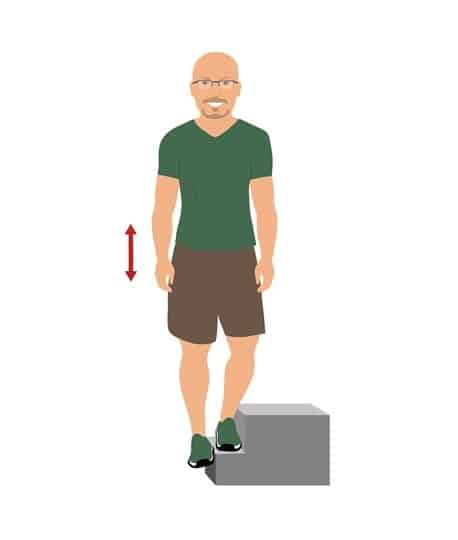
The “Mini Side Stair” Exercise

The “Mini Side Stair” Exercise

Whoever said, “If you don’t use it, you lose it,” was a wise person. I think it might have started with my great uncle Al, but I can’t be sure about that.

The same thing is true for stairs. Mini dosages of stairs can help you prepare for the real thing.

How to Perform a Mini Side Stair

Use a phone book or a 3- to 4-inch step. Position yourself parallel to the step because you’ll be going up sideways. Why? When you practice going up the step sideways, you naturally engage your glute muscle which is a key muscle used in stair climbing. So, you are training your body to fire up the right muscles when you practice sideways.

Make sure you have a chair on the other side for balance. Start with the leg that often gives you trouble. Lift your foot up and place it on the step, then lift your body up.

3 Important Things to Think About

  • Think about using your glute, the rump muscle, to drive you up.
  • Try to press up while putting pressure on the outer portion of your heel. Sometimes your ankle may be weak and collapse inward which can cause misalignment. By thinking about putting pressure on the outer portion, this will help keep your ankle in alignment and fire up your rump perfectly.
  • Drive your knees outward.

Stand up fully. When you are ready to step down, follow the same process. That is, put pressure on your outer portion of the heel and keep the knee over the second toe.

However, you are going to make one slight adjustment. Instead of focusing on your glute to lift you up, before you step down, squeeze your thigh muscles tightly. Remember, these crucial muscles are stabilizers in this movement. Tightening them will help build strength in proper form and prepare you for “game day” aka, your staircase.

Do this exercise in a controlled manner 10 times before switching to the other leg.

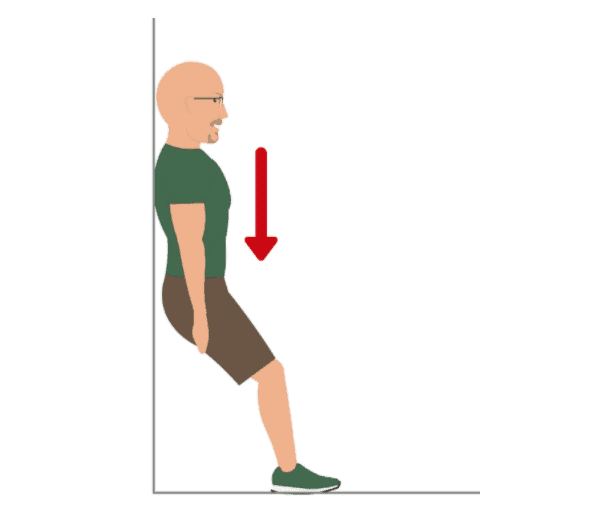
The Elevated Wall-Sit Exercise

The Elevated Wall-Sit Exercise

Stand with your back to a wall. Step out about two feet from the wall. Slowly slide down the wall until your knees are at a 45-degree angle. Hold this position for 20 seconds and do 3 sets. Rest for 30 seconds between sets.

Why Is It Important?

If you have knee issues, I recommend starting at a 45-degree angle first rather than a 90-degree angle. This will help you build strength around your knee and prepare you for stair climbing.

This exercise is weight-bearing so it helps build bone density and strength. But since it’s an isometric (you are not moving the joint), it puts less stress on the knee.

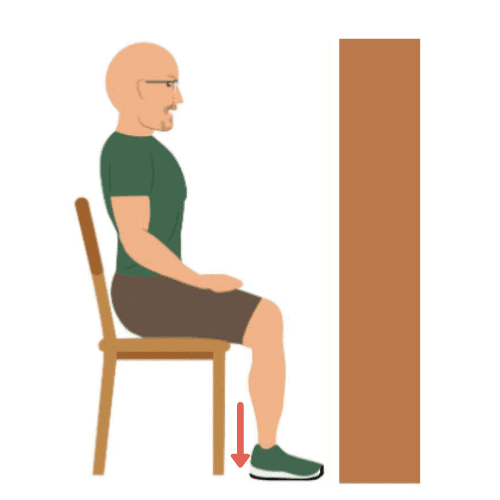
Seated Floor Push

Seated Floor Push

Sit down in a chair with your spine neutral (not slumped over and not arched back). Line your heels up so they’re underneath your knees. Push your heels into the ground while simultaneously squeezing your glutes.

You’ll know you are doing this exercise properly if it feels like you are about to stand up, but not generating enough strength to do it. Hold the position for 10 seconds. Then rest for 5 seconds. Do 5 sets.

Why Is It Important?

Remember when I told you that your glutes are one of the most important muscles for climbing stairs? This exercise isolates and strengthens them along with your hammies.

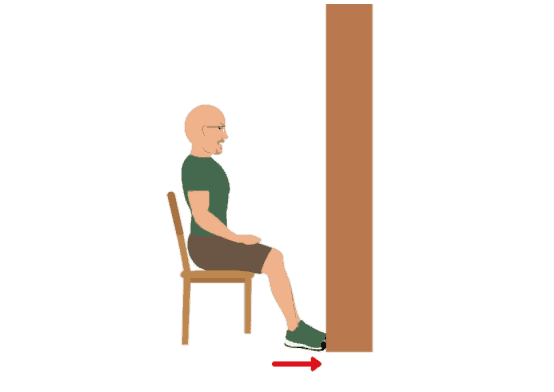
Seated Wall Kick

Seated Wall Kick

Sit in a chair facing a wall with your knee bent at a 90-degree angle. You’ll want your toes a few inches from the wall. Extend your leg out while pressing your foot against the wall. Hold for 10 seconds. Then relax.

Now scooch your chair back a few inches. Repeat the same press for 10 seconds. Then relax. Scooch your chair backward a third time and repeat.

Why Is It Important?

This exercise is also an isometric stabilizer, so it is safer on the knee joint but strengthens the all-important quadriceps muscle. This is the key stabilizer muscle when going down the stairs and an important helper muscle when going up. When you do the exercise at three different angles, you are strengthening different parts of the quad.

Quick Tip: Wear shoes. You are pressing your toes against the wall, so it’s good to have shoes that will absorb the pressure, not your toes.

Now if these exercises feel too challenging, you can start off with more gentle knee exercises from bed.

10 Gold Nugget Tips to Make Stair Climbing a Breeze for Your Knees

Go get an index card so you can write these down – seriously. Practice these individually so you build a habit around each of them, and your body will remember to do them like brushing your teeth.

#1 Drive with your glutes (aka butt muscle) when climbing up. Make it feel like your glutes are doing all the work to propel you upward.

#2 Drive your knees outward. This will provide greater stability and strength. Put another way, don’t let your knees collapse inward when going up or down. Pressure should be outward, not inward.

#3 Line up your knee with your second toe. You want your knees tracking properly. Keep them in line with your second toe, and you’ll do just that.

#4 Point your toes outward just slightly. This will help your knees track as well and help prevent your knees from collapsing inward.

#5 When climbing upward, feel pressure on the outer portion of your foot, especially your heel. Why? Two reasons. This will again, help prevent your knees from collapsing inward. Secondly, when there is a weakness in your knees, they often “wobble” when you are doing difficult movements like stair climbing. When you focus on your weight distribution to such a small degree, it can help minimize the wobbling of your knees.

#6 Tighten the abs and try to tuck your pelvis in as much as possible. This will help align the pelvis.

#7 On days where your knees are especially achy, lead with your better knee. Some days it’s okay to avoid stairs but movement is still helpful. You can try hoping on a stationary bike for your knee pain instead!

#8 On days where your knees feel good, practice! If you live in a location without stairs, find some stairs to practice. You never know when you’ll need to climb them, and you want to be ready.

#9 Keep your body hydrated. When you are dehydrated, your muscles are more likely to spasm which can cause micro-injuries you may not notice at first. This can happen when you do strenuous movements like climbing stairs.

#10 Practice slowly. Please don’t rush. Think about each and every recommendation. As my old gym teacher used to preach, “Practice doesn’t make perfect. PERFECT practice makes perfect.”

Ok, one last tip for you. And this doesn’t come from my weird grade-school gym teacher that used to wear clown hair to be funny. This is from one of the greatest fitness inspirations of all time, the late Jack LaLanne.

He once taught: “Exercise is king, nutrition is queen.” Why is exercise king? When you exercise, you force your body to make small changes and adapt. No matter what your age.

At 70 years young, good ol’ Jack swam 1.5 miles in strong currents while pulling 70 people on 70 boats. Oh, and I forgot to mention his wrists were handcuffed and his feet were shackled the entire time.

Now, I doubt you have any desire to do anything so crazy. But the point is you are stronger than you think. Don’t let those stairs defeat you. Start small by doing the above exercises 3-4 times a week. And soon, you’ll catch yourself opening that armoire in the attic realizing you floated up those stairs like you were riding on a feather.

To your health!

Do you struggle climbing stairs – up or down? Have you tried side stepping? What has your doctor told you about your knee issues? Have you noticed improvement with exercise? Please share your thoughts and experiences with our community!

Read More

10 Things to Consider if You Need a Revocable Trust

revocable trust

In October, National Estate Planning Awareness Month, I spoke with an estate planning attorney, Amanda Pyper Ruiz at Same Day Wills, who shared some great tips and things to think about when considering the will vs trust question or updating a trust. With her permission, I am including her helpful information below. You may find many of my free resources helpful in acting on her tips.

What Is a Revocable Living Trust?

A Revocable Living Trust (“RLT”) is a legal agreement that transfers ownership of your assets to a Trustee (initially you) to hold in trust for your benefit and then later for the benefit of your beneficiaries. The terms of the RLT are modifiable by you during your lifetime.

You maintain control of your assets as long as you are the Trustee, and you can dictate what happens to your assets once you pass away without court involvement. Assets that are owned by your RLT avoid the probate process and can be held or passed to your beneficiaries on your terms.

Below are 10 things to keep in mind when considering an RLT:

Do You Really Need One?

RLTs can be a great tool for individuals with minor children, individuals with family drama, and individuals who own property in states that do not have Transfer on Death deeds. However, it is possible to avoid probate without an RLT.

When you set up your RLT with your attorney, you will have to fund it, which includes re-titling your assets. It can be a paperwork intensive, expensive process, especially if your attorney and your Certified Financial Planner are not working together. This may not be something that you are ready for or do not need at all.

In some states, there are other tools that allow you to avoid the probate process. You may be able to record a beneficiary deed on your house so that it will pass to someone of your choice immediately upon your passing.

You may be able to set up the same type of transfer on your bank accounts, investment accounts, and vehicles. Additionally, your life insurance proceeds and retirement accounts will already pass outside of probate via the beneficiary designation on each one. Thus, having a basic will, up-to-date beneficiary designations, and beneficiary deeds can help you avoid probate without an RLT.

If you determine that an RLT is right for you, keep the considerations listed below in mind.

Make Sure to Fund Your RLT

Your attorney will draft your RLT and likely transfer your personal residence into your RLT. However, your attorney is unable to access your bank, investment, crypto, retirement, and other personal accounts to update the title holder information.

You will need to contact the account custodians to change your beneficiary designations and update the title holder of your accounts. Your attorney should give you a letter about how to move your assets into your RLT but will not be able to move most of them for you. You should take that letter to your Certified Financial Planner right away. You should also be sure to update your CPA about your RLT.

Put Your Team in Touch

Make sure to introduce your attorney to your CFP and your CPA. This way, your CFP and CPA can go directly to your attorney with questions when updating your investment accounts and preparing your taxes.

Include Any Business Interest in Your RLT

When you set up your RLT, you will assign your personal property to the RLT. However, you want to be sure to also assign any business interests you have so that your Trustee can help keep your business running smoothly during any transition period after your passing.

List Your Specific Assets in a Separate Attachment or Avoid Listing Them at All

RLT amendments are necessary for major life changes, but make sure that you are not making unnecessary amendments. Avoid listing your real property addresses or vehicle specifications in the RLT agreement if you are likely to sell those assets. Instead, either list them separately on an attachment like a Schedule A so when you sell or acquire an asset, you only have to update your Schedule A.

In the alternative, while specificity is typically encouraged in legal documents, avoid being too specific about property. You may consider general statements like “any of the collectible baseball cards I own at the time of my passing go to my grandson John Doe” rather than listing something that you may not own in 20 years.

Be Careful in Your Trustee Selection

Asking a family member to be the Successor Trustee of your RLT, especially RLTs that include subtrusts, is a big ask. Talk to your Successor Trustees to be sure that they know what is involved. Be sure to include a procedure for them to step down and include at least two Alternate Successor Trustees.

Finally, be aware that if you choose a corporate or private fiduciary as a Successor Trustee, there are costs involved and estate value minimums. Those Trustees also have specific language that must be in your RLT so make sure to include them in the drafting process with your attorney.

Set Your Successor Trustee Up for Success

Your Successor Trustees are only as good as the information they have. Thus, make it easy for them. Write down your passwords, assets, bill information, and insurance policy information. Keep the information in a safe place, but make sure they can fulfill their duties as Trustee by having access to the information they need.

You Need More Than an RLT for a Complete Estate Plan

The Trustee of your RLT only has control over assets that are in your RLT so you will also need to have a Pour Over Will in case any assets are outside of the RLT at the time of your passing. Additionally, you will want to have up-to-date Financial, Health Care, and Mental Health Care (in some states) Powers of Attorney and a Living Will.

Don’t Forget About Your RLT

Once you have set up your RLT, you must acquire all new property and accounts in the name of your RLT. Additionally, if you want to refinance your personal residence, many financial institutions will require you to take your property out of your RLT. Be sure to put your property back in your RLT after the refinance is complete.

Review and Update Regularly

It is good to review your estate plan every three years. However, life can change more often than that so be sure to update your RLT, Powers of Attorney, and your Schedule A when there is a birth, death, marriage, or divorce in the family.

Disclaimer: The information in this article does not constitute legal advice and does not create an attorney-client relationship.

Have you considered establishing a revocable trust? Would it work for you? Why or why not? What has your advisor said about an RLT?

Read More

This Anti-Aging Tinted Face Sunscreen Is One Of Hailey Bieber’s Holy Grail Products—& 8,000 Shoppers Agree

In our ideal world, multifunctional products would dominate our daily beauty routine. We don’t know anyone who wouldn’t want to save time and money as they get ready each morning. You know the saying “kill two birds with one stone?” Well, what if we told you that there’s a tinted face sunscreen that can actually kill three? 

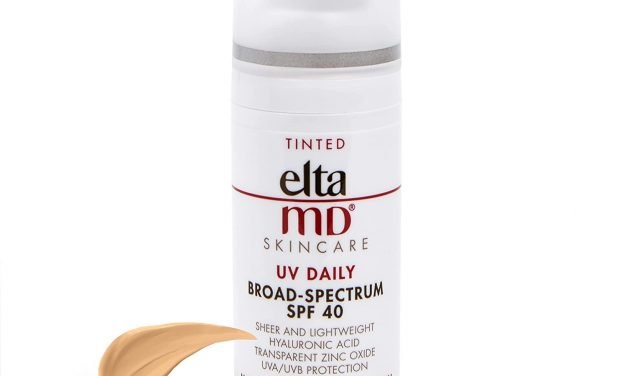
The sunscreen we’re talking about is EltaMD’s UV Daily Moisturizer, a hero product that acts as a sunscreen, moisturizer, and light tint all at once. It’s a favorite of none other than Hailey Bieber, who has some serious words of praise for the 3-in-1 essential. 

“A lot of sunscreens make my skin break out, and this one has been my Holy Grail,” she says in a YouTube video she did for Elle earlier this year

Now, these kind words are no shock. EltaMD is known for its effective sunscreens that fuse skincare and sun protection, but this formula takes it up a notch with the natural-looking tint. You can push your foundation with this 3-in-1 time and money saver. What’s even better is this product’s ability to combat visible signs of aging.

RELATED: What’s the Difference Between Physical and Chemical Sunscreens, Anyway? 

You know a product is worth it when it’s reached Holy Grail status for Hailey Bieber. Keep reading to hear more about how this sunscreen wears many hats and addresses a bunch of skin concerns all at once. Plus, it costs $32.50, which for sun protection, skincare, and light coverage, is quite the bargain.

Our mission at STYLECASTER is to bring style to the people, and we only feature products we think you’ll love as much as we do. Please note that if you purchase something by clicking on a link within this story, we may receive a small commission of the sale.

EltaMD Tinted Face Sunscreen

Courtesy of Amazon.

Let’s start with the obvious: sun protection. At its core, this product is a face sunscreen with an SPF of 40. Dermatologists tend to recommend you wear sunscreen with at least SPF 30 every single day. It provides UVA and UVB (a.k.a. broad spectrum) protection, which means it shields your skin from both types of UV light. UVA has everything to do with skin aging, while UVB deals with skin burning.

This tinted face sunscreen clearly checks off the box for sun protection, but what about its skincare benefits? The formula engages hyaluronic acid to moisturize your skin and help minimize the look of fine lines and wrinkles. Its sidekick ingredient, vitamin E, also plays a part in the sunscreen’s anti-aging powers by blocking your skin from free radicals. 

Last but not least, there’s a subtle, natural-looking tint to this sunscreen. You can wear it on its own or add more coverage with your fav foundation.

With a near-perfect rating on Amazon, thousands of reviewers share Bieber’s love for this multipurpose product. “My dermatologist recommended it and I love it,” wrote one shopper. “I use the tinted formula in the non-sun months to give my face a bit more color. I don’t buy any other kind for my face now.” 

Another shopper calls it the best sunscreen she’s ever applied, saying, “Most sunscreens I’ve used are thick and break me out. This sunscreen is lightweight and makes my skin feel soft.” She wears this tinted sunscreen with her usual concealer to create a natural everyday makeup look.

STYLECASTER | Ashley Benson Interview

Read More