Author: HairWeavings Editorial Team

Discover New Colors for the New You

new colors for the new you

As a young girl, growing up in the midst of the Women’s Lib Moment, I rejected all shades of pink in my clothing and room décor and never looked back. Pink was society’s self-imposed girly color, and I wanted nothing to do with it.

But as I moved into my 60s, I suddenly fell in love with pink. I painted my bedroom walls pale pink and special-ordered a soft pink sofa for my living room. I even placed all pink flowers in my balcony garden. Pink, pink, pink. I had to wonder what was up with this color fixation.

loving pink

Colors Reflect Life Change

After some reflection, I decided my enchantment with this color, which is often associated with nurturing and compassion, was my soul telling me that it was okay to take a deep breath and relax at this stage of my life. It was time to discover new colors.

I could hear my inner voice saying, “Heidi, have more compassion for yourself. Come snuggle into your pink sofa cloud and feel the love.”

New Seasons Demand New Colors

We expect nature’s colors to change with each season. So why shouldn’t we expect our own color palette to change as we transition through our own life seasons?

I’ve definitely had to rethink some of the colors I wear because of my maturing skin tone and silvering hair. And I believe it’s just as important to rethink some of the colors we bring into our living spaces.

Our physical environments are an extension and reflection of our inner-selves – who we are now and who we want to be in the years to come.

Are you ready to create a more supportive, harmonious, and “the real you” color energy in your living spaces? If so, here are a few points to consider that can help you find the colors that reflect your uniqueness at this stage of your life.

Our Memories Live in Colors

Much of what I do as an interior designer deals with helping my clients choose paint and fabric colors that create a beautiful and nurturing home, design-wise and heart-wise. In the process, I’ve learned that colors can be tricky because they hold so many memories.

I know of one woman who refused to have gray in her home. That is, until a beautiful experience of swimming with dolphins on vacation forever changed how she looked at the color.

Similarly, when I returned home to hot, land-locked Atlanta after a blissful trip to the Caribbean, I redesigned my kitchen around subtle ocean colors to hold the memory of those gentle sea breezes and heavenly blue waters.

Are there certain colors that hold memories – good or bad – for you? If you’re feeling drawn to the color now, maybe it’s your inner self wanting to either celebrate or change the memory around it.

Notice What You’re Noticing

What colors inspire you today? Which are yelling, “This is so me”? Notice which colors pop out at you as you walk through a nursery or thumb through a color fan deck. You might be surprised.

Trust your initial response to the color, even if it’s called Electric Lime or Psychedelic Purple. You don’t have to paint your entire living room in it. Even as only an accent color in a pillow, vase, throw, or wall art it might create the feel and allow the expression you desire. Never underestimate the impact of a small design element.

Too Much of a Good Thing?

Traditional design wisdom recommends having two or three colors flow throughout a home to help create a cohesive design and rhythm. But if you’re loving more than a few colors, don’t worry.

It’s okay to push the boundaries and experiment with lots of color combinations. Nowadays, trending design styles, like bohemian, have found a way to harmoniously play with layers and layers of patterns, textures, and colors.

Strange how combinations that once seemed unlikely or mismatched now work in beautiful synchronicity. You may not want “color clutter” in every room in your home, but go with your intuition and what you want to express about yourself.

Give a Color Nod to Nature

I incorporate Vastu, also known as the yoga of design, into all my projects. Vastu’s ancient science and wisdom teaches us how to partner with the natural world so that positive energy moves freely throughout our human built spaces.

Colors, each with their own unique energetic frequency, can help balance our spaces by bringing in nature’s uplifting colors.

Green goes with every color and speaks of refreshing, nourishing, and renewal. Placing living plants throughout the home is an easy and cost-effective way to infuse your life with the energy, emotion, and intention of good health and vitality.

The science of Vastu also balances the energy in our living spaces by placing representational colors of nature’s five elements – space, air, fire, water, and earth – in their respective geographic directions in a room or home. (Your smartphone compass, typically located in the utilities folder, can quickly establish the directions in your home.)

Here’s a color scheme you can utilize:

  • Place blue shades in the northeast to represent water.
  • Use delicate colors in the northwest for air.
  • Put flame colors like red, orange, and golden yellow in the southeast for fire.
  • Position earth tones such as brown, cinnamon, and ochre in the southwest.
  • The space element is located in the center of a room or home and should remain open and uncluttered.

These colors can be brought in through any decorative item, such as a painting, pillow, candle, or vase.

Let Intuition Guide You

Color is here to support you energetically, emotionally, spiritually, and aesthetically. So, let new colors inspire new memories and create a nourishing home for this season of your life.

Break a design rule, if necessary, to achieve the beauty and sense of belonging you desire. In the end, your own intuition will always be the best guide for your personal color choices.

Have you been surprised by a few new favorite colors that you didn’t like a decade or two ago? Are you gravitating toward shades you never considered before? What colors inspire you today? Which are yelling, “This is so me”? Please share your color inspirations and explorations with our community!

Read More

How to Restart Your Walking Habit

restart walking

It’s happened again. I was walking almost every day. My joints felt loose, and my arthritic pain was minimal. Then I missed a day, then two days in a row. Then we had a few days of rain and I elected not to go to the indoor track. Then a dear friend died and instead of walking to ease the grief I stopped walking all together.

This is not the first time I’ve done this, and it might not be the last. Previous fall-off-the-wagon stops were because of minor injuries, overscheduling, and numerous issues related to the pandemic such as stay-at-home orders and parks being closed.

Here are my top ten tips to get walking again.

Forgive Yourself

Beating yourself up about it is counterproductive. The stopping is in the past, the starting is now. Embrace it.

Start Small

One loop around the track or block or a short trail is all you need to get started. Don’t overdo it!

Embrace the Joy of Beginning

This is a fresh start, and all things are possible. Have fun!

Look Back and See How You Did It Before

I keep exercise journals and as I go back and read them, I remember how much fun it was to keep moving. My past accomplishments motivate me.

Track Your Miles or Track Your Days

Maybe buy a snazzy new journal for this. Or use a fitness tracker. Set a reward schedule. Something small for finishing a week (a Starbucks coffee or new socks), something a bit bigger for a month (maybe a manicure or pedicure). Maybe at 100 days book a massage.

Enlist a Friend or Online Group for Support

Consider using a site like Meetup to find a group to walk with occasionally. Or simply post on Facebook asking any of your friends in the area to message you if interested in walking together.

Set a Trails Goal

I am challenging myself to walk all the trails in three local parks. The 15 trails are different lengths and have different degrees of difficulty. I made a post-it for each trail and have them on a whiteboard. After I complete a trail, I date it and move it to the done side of the board. So satisfying!

Choose a Beautiful Place If Possible

In the parks I appreciate the forest canopy, finding feathers, hearing bird calls, even seeing the occasional snake. You might enjoy walking around your neighborhood.

Nature Sounds or Headset?

Sometimes just tuning in to the sounds around me is enough. But as a writer, I sometimes listen to YouTube videos or podcasts about writing. I have an app on my phone where I can dictate any ideas for future books or essays inspired by the listening.

Have a Backup Plan

Where will you walk if it rains? You could go to an indoor track, but I also love heading to a small shopping center. The concrete can be hard on my feet but the people watching, and window shopping make up for it!

The Two-Day Rule

Once I have my mojo back, I try to follow the two-day rule. I can miss a day if busy, maybe even two. But without fail, if I miss more than two, I find it difficult to restart. So, no more than two consecutive misses. I feel so good in my body when I walk regularly. I’m back at it now and hope you will be too!

Have you stopped walking daily for whatever reason? Is it easy or difficult for you to restart? What benefits of walking do you miss the most when you don’t walk? Please add any tips of your own in the comments.

Read More

How to Explore Diverse Holiday Traditions with Your Grandchildren

children's books about diversity

The holiday season is upon us. Of course, thoughts go to food, gatherings with family and friends, giving, and gratitude. But it is also a time when we share stories – holiday stories, family stories, and just plain good stories.

However, we often share stories that are familiar to us. But the holidays provide us with an excellent opportunity to share diverse stories.

Why Diverse Stories?

The Anti-Defamation League says this about the importance of children’s multicultural books:

“Children’s books, at their best, invite children to use their imaginations, expand their vocabularies and gain a better understanding of themselves and others. And, if the titles reflect the diverse groups of people in the world around them, children can learn to respect not only their own cultural groups, but also the cultural groups of others.

“Children’s literature serves as both a mirror to children and as a window to the world around them by showing people from diverse groups playing and working together, solving problems and overcoming obstacles. At its best, multicultural children’s literature helps children understand that despite our many differences, all people share common feelings and aspirations. Those feelings can include love, sadness, fear and the desire for fairness and justice.”

In addition, the article “5 Benefits of Teaching Classroom Diversity” from Kickboard for Schools (a company that creates professional development for educators) listed these benefits:

Knowing these myriad benefits for my students, I built a library collection focused on multiculturalism as a school librarian. Unfortunately, in the early 2000s, diverse books were hard to find. Now, the number of diverse books has increased (not nearly enough), but these books’ quality and authenticity is often lacking.

Part of this is because many publishers do not have diversity in their editorial teams. A book that is not authentic can often lead to stereotyping, so it is imperative to vet the books we give to children.

So How Do You Know If You Are Getting Books That Contain Accurate Portrayals?

Luckily, there are resources to help us find appropriate books, including book lists from reliable sources such as Cooperative Children’s Book Center, Children’s Book Council, We Need Diverse Books, and the Diverse Book Finder. In addition, Pragmatic Mom, a diverse children’s book blogger, has kids book lists for these groups: African Americans, Arab Americans, Asian Americans (Asian American, Korean American, Japanese American, Chinese American, and South Asia American), Hispanic Americans, Jewish,  LGBTQIA, and Native Americans.

Also, certain publishers are known for their quality diverse books, such as Lee & Low, August House, Groundwood/House of Anansi, Mango and Marigold Press, Oyate, Lantana Publishing, and Barefoot Books.

When you share diverse stories with your grandchildren, you help them understand that even if people have different beliefs, traditions, and histories, we all share the human experience. So, read a diverse book with your grandchildren this holiday season and model how to be good global citizens.

Below are some recommendations for diverse books that relate to holidays celebrated by cultures and religions from around the globe.

Thanksgiving/Gratitude

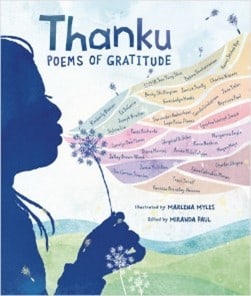
Thanku: Poems of Gratitude

Gratitude should be practiced all year round. A diverse group of writers has shared what they are grateful for in their lives. Each entry is in a unique poetic form. This book provides an excellent springboard for discussions of gratitude with your grandchildren. Suited for kids 6-9.

*A portion of the sales goes to the non-profit “We Need Diverse Books” mentioned above.

Christmas Traditions

Joy To the World

This joyfully and cheerfully illustrated book features Christmas traditions from Ethiopia, Colombia, Australia, Italy, Serbia, Mexico, India, Iceland, Egypt, Argentina, Philippines, Lebanon, and Canada. The rhyming text and shimmering gold ink will engage younger kids, while the endnotes detailing the traditions will keep older kids interested.

Embrace diversity by helping your grandchildren choose Christmas traditions from other countries to include in your celebrations this year. Perfect holiday gift book for ages 4-10 years!

New Year’s Traditions

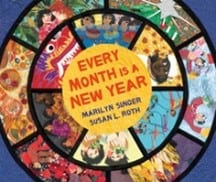
Every Month Is a New Year

In the U.S., New Year’s occurs on January 1. However, this is not the beginning of the new year for many others around the world. This multi-layered book features poetry and colorful collage illustrations describing these other new year celebrations.

In addition, endnotes contain historical and cultural details about the global New Year’s traditions that appear in the book. A fun way to begin diversity discussion, including exploring calendars used in other cultures. Best for ages 6-12.

Global Celebrations Throughout the Year

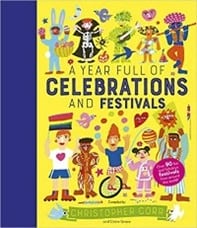
Year Full of Celebrations and Festivals: Over 90 fun and fabulous festivals from around the world

This extensive compendium includes religious and cultural holidays, national holidays, commemorating historical events, and festivals for fun. Details and entertaining facts are provided for each celebration. The cheerful and colorful illustrations by Chris Corr provide an engaging backdrop for this journey around the world. The book features people with a wide range of skin tones. And the traditional dress and architectural details from various cultures are included in the illustrations.

You can spend hours delving into this book with your grandchildren. It provides numerous opportunities to discuss diversity, including various customs, clothes, food, and beliefs. In addition, the book, organized by season, allows you to add a science lesson to the mix. It’s great for ages 6-9.

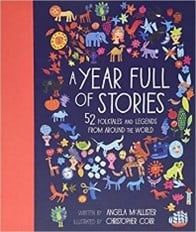
A Year Full of Stories: 52 Folktales and Legends from Around the World

This book provides a folktale, legend, or myth for each week of the year. Each story is associated with a religious holiday, festival, cultural event, or changing seasons. Organized into 12 chapters, one for each month of the year, this book gives you a year’s worth of stories to share with your grandchildren.

Make a weekly storytime date with your grandchildren, in person or virtually, to share a story from this enriching global collection. Illustrations by Chris Corr are colorful, detailed, and engaging. You will want to keep this book handy whenever you need a good story to share with your grandchildren. Perfect for ages 6-9.

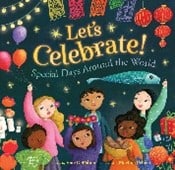
Let’s Celebrate! Special Days Around the World

This joyful book weds colorful, warm, and engaging illustrations with rhythmic, rhyming words to produce an outstanding contribution to diverse children’s literature. The reader travels worldwide to celebrate holidays from Japan, China, New Zealand, Peru, Brazil, Sweden, Iran, Nigeria, Russia, Egypt, Mexico, India, and the United States.

The text is sparse, but the illustrations and the endnotes provide details to satisfy curious minds. Includes pronunciations of the holidays and a calendar showing how these holidays are dispersed throughout the year. This book is perfect when you are reading to grandchildren of different ages. The book is suitable for ages 4-10.

How do you engage your grandchildren around the holidays? Have you discussed diverse ways that people around the world celebrate? Have you read any specific books that discuss diversity? Which ones are your favorites?

Read More

I Tried the Tinted Moisturizer With a 2,500+ Person Waitlist & Here’s What I Really Think

For the past few days, I’ve been getting compliments on my skin and I couldn’t figure out what I was doing differently. Is it that I finally got rid of an epic breakout? Is it my new moisturizer for cooler weather? Then it hit me. I had been wearing Tower 28’s SunnyDays Tinted Sunscreen Foundation for a few weeks. I was really liking the formula and the coverage but I didn’t realize others had noticed, too.

I started drilling my friends, asking them why I looked better in their eyes. (It’s both fun and annoying to be BFFs with a beauty editor.) What I heard most often was that my skin looked glowy and even but not too covered-up — you could still see my freckles. That’s how I knew I had found my new favorite foundation.

Our mission at STYLECASTER is to bring style to the people, and we only feature products we think you’ll love as much as we do. Please note that if you purchase something by clicking on a link within this story, we may receive a small commission of the sale.

tower 28

Tower 28.

I was trying out the foundation before it launched and boy, am I glad I did. When it finally came out earlier this month, it had a 2,500+ person waitlist according to the brand. But why were folks so excited before they even tried it? Well, for a few reasons. First, it’s tough to find a mineral sunscreen that doesn’t leave a whitecast. And to find a tinted one with 14 shades with no whitecast? Almost impossible. But Tower 28 was able to do it.

SunnyDays is also sensitive skin-approved. So much so that it’s the first and only complexion makeup product with the National Eczema Association’s Seal of Acceptance. So, if you worry sunscreen will break you out, cause a rash or inflame a condition like eczema, you don’t have to worry about that here.

Instagram PhotoSource: Instagram

The non-nano zinc formula is reef-safe, alcohol-free, fragrance-free, and contains skincare-like ingredients such as prickly pear extract, aloe vera and white sage sourced from California deserts. And let’s talk about that shade range! Fourteen flexible shades is a great amount for a tinted sunscreen. The brand worked with celebrity makeup artist Kirin Bhatty to nail the shades and undertones so everyone can find their unique hue. Plus, they have really cute names. They’re all named after places in Los Angeles (where Tower 28 is based), as a nod to some of the founder Amy Liu’s favorite local hang-outs. I’m wearing Larchmont.

Considering there was such a massive waitlist, Tower 28 did a good job continuing to stock SunnyDays. You can still pick it up now — at least until it goes viral on TikTok.

STYLECASTER | Ashley Benson Interview


Read More

Why the Solution to Emotional Eating Over 60 Is Self-Love, Not Diets

emotional eating

If you’ve ever reached for food for reasons other than satisfying your hunger, it’s likely you’ve struggled with emotional eating. And if you’ve been on this planet long enough, you’re bound to hear some terrible advice about how to manage it:

  • Stop doing that
  • Eat a healthy snack instead
  • Have more self-control and/or willpower
  • Create a meal-plan and stick to it (AKA dieting)

And even if you’ve had these experiences and hear this (bad) advice, you may still be wondering if emotional eating is a problem for you.

How to Tell If You’re an Emotional Eater

Simply put, emotional eating is eating to care for your emotions, rather than for physical nourishment.

Here are some examples of emotional eating:

  • Eating because you just like the taste of food (for pleasure)
  • Eating to reward yourself
  • Boredom eating
  • Eating to stay awake
  • Eating when stressed or angry
  • Sneaking or hiding food
  • Feel guilt or shame after eating
  • Eating at the end of a loooong day because you’ve put everyone else’s needs ahead of your own all day and indulging is how you spend “me” time.

And it really isn’t a problem… until it becomes a problem. It’s normal for everyone to emotionally eat now and then.

But when you begin to feel out of control around food and can’t make nourishing and healthful choices because you are using food for emotional reasons… it’s time to get help.

Maybe you can relate with Michelle, who didn’t realize she was an emotional eater until after menopause:

“I am indeed an emotional eater and have been for most of my life. Emotions don’t have to be negative. I found that I not only ate when I was upset, stressed, angry, mad, overworked etc. but also ate when I was happy, excited, on vacation or used food to celebrate with – lose a pound? let’s eat! get a new job? Eat! and the list goes on… I was also a closet eater or a secret car eater, and we know calories eaten in secret just don’t count! Food ruled my life! I was either thinking about food – what I was going to eat or I was trying to figure out how to lose weight and get food under control! It was a vicious cycle.”

Top Causes of Emotional Eating

To understand how to heal emotional eating over 60, and why diets aren’t the answer, you need to understand why you may resort to using food to numb, avoid, or comfort your emotions.

Stress Hormone Imbalance

The stress hormone cortisol can result in an activated nervous system that leads to more food cravings and feeling out of control around food. Besides psychological stress, your nervous system can be activated by a history of trauma, inflammation, sleep deprivation, blood sugar imbalance, and restrictive dieting.

Not Feeling Your Emotions

There are many reasons why you may avoid feeling your emotions. Many women are so busy caring for the needs of others that they don’t take time to reflect on and care for their own emotions.

Furthermore, dieting and modern food culture can make you feel disconnected from your body, so you may not be aware of how you are feeling. A history of trauma may also make emotions feel unsafe.

Not Connected to What Gives You Pleasure in Life

Not knowing or pursuing what you desire, what gives you please in life is another cause of emotional eating. When you eat, you get a hit of the neurotransmitter dopamine, activating the reward and pleasure pathways in your brain.

Eating allows you to feel good and rewarded, so not having other outlets to feel this way can lead to emotional eating.

Why Women Over 60 Struggle with Emotional Eating

In addition to the top causes I’ve mentioned above, women over 60 may be particularly at risk of emotional eating for the following reasons:

#1: Life transitions – like retirement, moving, losing loved ones, are often very emotional events. There is a lot to sort and process through, including pressure about how you “should” be feeling (for example, happy and satisfied in retirement) compared to how you are actually feeling.

#2: Lasting menopausal symptoms – hormonal imbalances can trigger the stress hormone cortisol which can lead to more cravings and feelings of anxiety around food.

#3: “Human Giver Syndrome” – the philosopher Kate Mann coined this term to describe the way women are frequently socialized to put the needs of others before their own, to the point that women may feel guilty when prioritizing their own needs and health.

This may be especially troublesome if emotional health wasn’t valued in your family or community. If you were expected to have a “stiff upper lip” or told “don’t cry,” “others have it worse,” you may be used to sweeping your feelings under the rug.

Unfortunately, emotional repression comes with real physical consequences. Problems can arise like decreased immune function, heart conditions, IBS, general pain, and fibromyalgia.

How Self-Love Can Cure Emotional Eating for Women Over 60

If emotional eating is caused by not feeling your emotions (both negative and pleasurable) and your nervous systems inability to cope with life’s stressors on top of the repressed emotion… then by now I hope you can see why dieting, supplements, and detoxes don’t help (and in many cases make things worse!).

Self-love is the solution to emotional eating.

When you truly love yourself and feel connected to your body, you will be able to honor your hunger and fullness cues. You will make food, movement and wellness choices that are the very best for you, so you don’t have to worry you’re not doing everything you can for your health.

You will think self-compassionate thoughts that shut-down self-criticism, so it’s safe to feel your emotions.

You can work towards body acceptance so your fears about what others think about you don’t hold you back from showing up fully and living the life you want to live.

If you’re struggling right now with emotional eating, you’ve probably been here for a long time, and I know it doesn’t seem like self-love or healing will ever be possible for you.

But I want you to know there is hope.

One Last Story to Inspire You

Annette had struggled with emotional eating on and off throughout her life, but started binging at night before she retired, thinking, “food was my comfort most days.”

After leaning into self-love, she no longer struggles with binge-eating or emotional eating and says:

“Now I can look at myself in the mirror, with or without clothes, and not feel any self-hatred, shame, or disgust. I can accept me for who I am in the moment. I am beautiful and I matter. I smile more and cry less.”

If you’d like a step-by-step approach to heal emotional eating and get over the most common barriers women over 60 face, grab my free guide now.

How often do you eat when you’re not hungry? Do you classify yourself as an emotional eater? Have you considered self-love as the cure to emotional eating?

Read More