
Author: HairWeavings Editorial Team

The 7 Personality Traits of Successful Grandparents

7-Personality-Traits-of-Successful-Grandparents

As grandparents, many women over 60 are embracing a new role in life. Seeing our children grow up to have children of their own is one of life’s great joys and privileges, and it reminds us of how life is a circle, with so many stages and cycles. The young become the old, and “The Child is father of the Man,” as William Wordsworth wrote.

For women our age, it might have been a while since our own grandparents have been part of our lives. Today’s women over 60 are looking for new ways to fulfill the role of grandparents by providing the right blend of support and independence and helping our grandkids grow up with a positive, influential family presence around them.

What does it take to be a successful grandparent in today’s world? Here are a few ideas. I would also love to hear your ideas. Please add your thoughts in the comments section at the end of the article.

Patience

The best grandparents tend to be full of patience – for their grandchildren as well as for their grandchildren’s mom and dad. Even if your grandchildren are boisterous or sometimes misbehave, the best grandparents know that it’s all part of growing up.

Your grandchildren will trust you more if they don’t see or hear you overreacting to stressful situations.
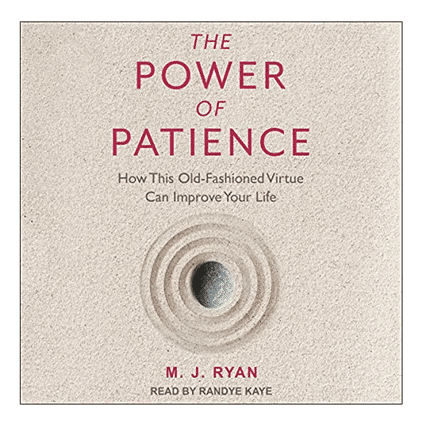
If you struggle with patience, you can read some self-help books on practicing and cultivating patience.

Generosity

The most successful grandparents tend to be generous – not necessarily in terms of buying toys, gifts, and offering financial generosity, but generous with their time, generous with their hospitality and generous with advice (when asked).

We all know it’s difficult not to spoil our grandkids rotten when we can afford to. It obviously makes us happy to see them happy. Try to resist the urge to buy your grandchildren too many toys. Milestones like birthdays, school accomplishments, and holidays are of course a great way to offer gifts.

Your grandchildren will remember more the quality time they spent with you than the numerous toys they received from you over the years.

Unconditional Love

The best grandparents are a rock-solid foundation of love in a child’s life. Children need to know that no matter what might be going on in their lives, no matter what disappointments they might encounter at school or on the street, they are always safe and loved at grandma’s house.

Listening to your grandchildren without any judgment will make them feel heard and seen. Let them know that they can talk to you about anything and that you are always there to listen and love them no matter what.

Empathy

Successful grandparents learn once again how to see the world through a child’s eyes. This is a surprising and wonderful privilege of being a grandparent – we get to interact with our grandchildren and live life, for a little while, with their sense of time and their capacity for wonder.

We, of course, carry our wealth of knowledge and experiences that we have accumulated over the years, but it’s always refreshing to learn something new and to open up to modern ways of thinking and living.

Willingness to Listen

The best grandparents know how to listen. Just being there to listen to your grandchildren’s stories and encourage their enthusiasm is a wonderful gift to give.

Life is busy, and chances are, your grandchildren have busy parents who work full-time jobs to provide for their family. You have more time now in your retirement to slow down and sit with your grandkids, in person or virtually. They may not always make any sense and they may have far-fetched ideas and stories, but it’s important that they feel listened to and acknowledged.

Detachment

“Detachment” doesn’t mean that you don’t care about your grandchildren – it means you know how to maintain a healthy distance without meddling or constantly injecting your own views.

Even if your own (grown) son or daughter isn’t doing everything “the right way” or “the normal way” in raising your grandkids, even if they follow different traditions or aren’t raising your grandkids in the same church or faith as you, the best grandparents know how to let things be and allow your grown children to chart their own course as parents.

Remember when you were just starting out as a new parent. Chances are you wanted to trust your instincts, and the base of those instincts is the fact that you wanted the best for your children. The same goes for every new parent. Trust that they are doing a great job at raising their children even if it is different than how you would do it.

Also, many family squabbles happen because of meddling grandparents. You may even be dismissed or asked to stay away completely if you can’t respect the parents and the boundaries that they have set for family members.

Presence

Being a grandparent isn’t always about buying gifts or hosting dinners or taking your grandchildren on special vacations or anything like that. Aside from all of the fun things to do together with your grandchildren (which are wonderful), some of the best gifts you can offer your grandchildren are just the gifts of your time and your presence. Children learn a great deal just from being in the same room with you, watching how you prepare a meal, listening to you sing your favorite song.

Some grandchildren love to go down memory lane with their grandparents. Show them old photographs, and without sounding like “this was the best of times,” tell them how your life was like at their age. Tell them how the world has changed and what your life was like without computers or cell phones. Gasp!

Also, if you live far from your grandkids or if you have been limiting your visits because of the pandemic, make yourself available for video chats. Several family members can join in and make it a family fun virtual reunion. And if you don’t know how to set up your computer, tablet, or phone for video chats, who better to ask for help than one of your teenage grandchildren who was born into this technology.

Seeing multiple generations of their family is an important way for children to learn who they are and how to live. This transmission of identity and family connection can be one of the greatest and simplest gifts of all.

What have you learned about yourself from becoming a grandparent? What do you think of this advice? Please join the conversation.

Read More

What Is Joyful Movement and How Can You Accomplish It?

joyful movement

How do we find enjoyment in our daily workouts? What movement sessions are best? Is higher intensity movement better than more gentle modalities?

These questions are often asked in classes. In truth, higher intensity movement and more gentle modalities can work side by side. There is no right or wrong way to move your body and you can choose from a variety of movement modalities.

Positive movement can feel hard and a little challenging some days or be of lower intensity on other days. Either way, you walk away from a movement regime feeling happy with your choice and not like you had to perform beyond your limits. 

Intuitiveness and Mindfulness

But how do you determine the right type of movement? Put simply, tune into your body and ask it what it needs today.

Intuitiveness and mindfulness will help you choose a movement practice you enjoy. Each day, week, month, and year are different since our needs change. This is a learning process, so be gentle with yourself.

Here are some questions to ask when deciding on a daily movement practice:

  • What does my body need today?
  • How rested am I?
  • How hydrated am I?
  • How is my anxiety or stress level?
  • Am I well nourished?
  • Is my body stiff or sore?
  • How is my mood overall?

These questions will determine if you are to go for that 10km hike or practice yoga or stretching on the mat for 15 minutes.

The workout you choose should match the way you feel today.

But Shouldn’t I Be Getting Sweaty After Every Workout?

Most people think that a workout means sweat 100% of the time. Sometimes that is absolutely true, but at other times it is best to take the gentler approach.

Full throttle and high impact workouts every day can be counterintuitive and detrimental to your health. And can you really sustain this regime long term?

If you are new to a movement practice, starting slowly with a gentler approach is much better than jumping into a higher intensity program. Working up to higher intensity over a period of months is better tolerated by the body.

What If I Am Not Sure Which Modality to Choose?

The first 5 minutes rule works really well in determining if a chosen workout is a match for that day. Put a timer on for the first 5 min. If after 5 minutes you are feeling worse than when you started, stop and choose a gentler approach.

Here are some other things to consider:

Warm Up Well

Take your time to do some mobility work before you embark on your chosen modality. This will help to prime your muscles and skeletal system to be ready for action and decrease the chances of injury.

Be Sure to Stretch Afterwards

Stretching is highly underrated and is something I recommend all people do daily. Stretching after each movement session helps to give back to your body in preparation for the next time, decreases the likelihood of injury, and loosens fatigued muscles.

Hydrate Well

Making sure you replenish your body’s water levels is highly important for your connective tissue to be able to function and move well, again decreasing the likelihood of injuries or little niggles.

Eat to Nourish Your Body

Filling your body with all the goodness of fruits and vegetables, protein, and other carbohydrates helps you to replenish your body, keeping you feeling your best and ready to take on the next workout.

Each Person Has Different Needs – Consider Yours!

There is no magic potion on what is the right amount of challenging or gentle movement you need to find what works for your body. Tune in and listen to what your body needs. Whether it’s a high, low, or a mixture of movements is up to you. There is no right or wrong way, only your way. 

Learn to trust and go with the flow. 

Editorial note: This article is not intended to provide medical advice. Always seek the appropriate medical care before starting any exercise regime.

What movement modality do you practice most often? Why is that your choice? Have you tried something else? Do you choose a different type of movement depending on your mood or physical state? Please share how you determine the best type of exercise for the day.

Read More

Do You Really Need $1 Million to Retire? Maybe Not!

how much do you need for retirement

Women in their 60s are increasingly questioning if it makes sense to continue working. For a variety of reasons, including an increased focus on what’s most important in life, work is sliding down the list of priorities.

With the help from stock and bond market returns since the Great Recession, it’s not uncommon for people in their 60s to find out that they’re doing surprisingly well financially. And after running some numbers, you might also find that you’re more prepared than ever for retirement.

That said, not everybody is fortunate enough to call it quits, and that’s a reality that we all need to acknowledge.

Unfortunately, a lot of big numbers get thrown around, and that’s not always helpful. For example, you may find that common rules of thumb – like needing $1 million or more – don’t apply to you. In fact, according to the Federal Reserve, the average retirement savings for households between age 65 and 74 was roughly $426,000 in 2019. And the median (or the middle, when you line up the answers from smallest to biggest) was $164,000. 

So, how can you get a more realistic view of things?

Understand Where You Stand

The first step is to have a basic understanding of your current financial position. Take an inventory of your assets and other resources that can provide the income you need to pay for the things you want. 

For example, you might have income sources (whether you’ve started taking income) such as Social Security or a pension. What’s more, you may have savings and investments earmarked for retirement. If so, you can withdraw from those funds to supplement your retirement income. Take the time to learn about your benefits and your various accounts, and revisit the topic periodically if you’re still not retired.

Next, get familiar with your spending. There are two ways to approach this, and each option has pros and cons.

  1. Figure out how much money leaves your accounts every year or every month.
  2. Create a detailed list of all expenditures.

The first option is a high-level view of your spending, and it’s most likely to capture all of your expenses. That’s a good thing. However, the second method provides more detail, which allows you to evaluate your expenses and identify costs that might change over time. For example, if you have a mortgage payment, you’ll likely pay off the loan balance at some point, and your monthly obligations change after that.

The best approach depends on your desire to dig into the details and your ability to get reliable information about your spending. It’s okay to start with a high-level view and move on to a detailed budget if your finances are looking constrained.

Plan Your Income and Spending

With an understanding of your resources and your monthly needs, you can make a retirement spending plan. Guaranteed income sources like Social Security and pensions can provide a “base,” and if you need more than that, you may need to spend from your retirement savings.

The average Social Security retirement benefit is just over $18,000 per year. But if you’re fortunate enough to have high earnings in your lifetime, you may get even more than that. 

What about spending? According to the U.S. Bureau of Labor Statistics, the average household run by somebody over age 65 spends just over $50,000 per year. 

Of course, your numbers may vary greatly depending on where you live, your health, and other factors. Many people live comfortably on less than that, while others need significantly more.

An Example

If we assume you’re single – with one Social Security benefit in your household – what does this mean? You might need $32,000 per year to close the gap between $18,000 of Social Security income and $50,000 of spending, ignoring taxes for simplicity. If your household has two sources of income, you’re in even better shape.

Where might that $32,000 come from? For most people, the funds come from retirement savings. In particular, you may need to spend down your savings – ideally at a rate that allows the money to last for the rest of your life. 

There’s no way to predict exactly how long your money will last. Ultimately, it depends on how much you earn on your assets, inflation, spending patterns, health events, and your luck. However, with some planning, you may be able to estimate how much you can reasonably spend each year.

The Controversial 4% Rule

One way to estimate how much you can spend in retirement is the 4% rule. But it’s important to know that this is anything but a “rule,” and most people don’t follow the approach exactly as it’s laid out. Still, the 4% rule is a way to get a ballpark idea of your retirement readiness.

The 4% rule says you can spend 4% of your retirement savings as measured on your retirement date. To use simple numbers, assume you have $500,000 earmarked for retirement. 4% of $500,000 is $20,000, so that’s how much you might spend from your savings each year.

Why is the number so low? You’ll adjust your spending for inflation, so the amount you take out should increase each year as prices rise. The original research behind the 4% rule suggested that this withdrawal rate should enable you to spend from your savings for 30 years – if certain assumptions hold true. Of course, nothing is guaranteed, so this strategy is merely an estimate of how things might unfold.

In fact, there may be several problems with the 4% rule. Some argue that you need to withdraw less than that, given low interest rates and high stock prices. Others say you could potentially spend more. And the standard 4% rule ignores taxes and other realities that are essential for a robust retirement income plan. Again, this is an oversimplification, and Margaret Manning discusses some of these topics in this interview.

Back to the numbers. If you have Social Security income of $18,000 per year and you can withdraw $20,000 from your savings annually, you’ve got $38,000 to work with. Assuming the average annual need of $50,000, we’re still $12,000 short (although I’ve certainly worked with people who can live on $38,000). That $1,000 per month will present a challenge, but there may be ways to generate some extra money or reduce spending, assuming you’re able to do so.

What If I Don’t Have Enough Money?

Many people are facing a retirement shortfall. While that can be stressful, remember that people retire with little or nothing every day. They aren’t as comfortable as millionaires, but they can still lead satisfied and meaningful lives. In these cases, it’s important to acknowledge the anxiety you’re experiencing – and, if possible, take steps to control what you can control.

You might have other resources that aren’t traditional retirement assets. For example, equity in your home could help pay for things, if necessary. While getting access to that money can be a challenge, there are several options, including downsizing (it might make sense anyway) and reverse mortgages.

Build in a Safety Net

Without a doubt, the more money you have, the better your chances of success. Money doesn’t buy happiness, but it buys flexibility, choices, and a safety net.

While you might not need $1 million to retire, it’s wise to have a cushion in place no matter what your lifestyle looks like. Surprises can happen, and healthcare expenses are just one example of costs that can impact anybody’s retirement plan. Consider the tradeoffs of spending and saving, and make a plan that can adjust course occasionally.

What do you think? Have you seen people retire comfortably on a modest income? What tips do you have for anybody retiring on less than $1 million?

Read More

Will Your Health Span Match Your Lifespan? How Not to Outlive Your Health

health span vs lifespan

As we round the corner of 60 years of age, the question of retirement looms large. Have I saved enough? How’s my 401K? How much will Social Security provide? I need to call my financial planner. For many, our past preparation and planning for that eventual day will be put to the test: Will I outlive my savings, and will I be able to keep the standard of living I’ve hoped for?

As these, all too familiar questions of monies have been asked or thought of before, the most important questions may have been overlooked.

  • How much health and vitality have you stored up and saved?
  • Have your past or present health habits promoted longevity with vitality?
  • Have you consulted with health promoting professionals to assure your health success?
  • Will you outlive your health, and will your standard of living be one of health and function instead of sickness and disease?
  • What can you do today that gives you the greatest opportunity to assure your health span matches your lifespan?

Start by adopting the principles and practices of The 100 Year Lifestyle. Adopting a style of living that recognizes that you will probably live longer than anticipated and thus taking steps to leverage that potential longevity with health, vitality and function instead of settling for ill health, sickness, disability and untimely demise. Adopt the principles and practice of FitNESS, The 100 Year Lifestyle way.

Nutrition

Many of us have some idea of what healthy eating may be. Let’s start by drinking more water. As a matter of fact, try drinking half your body weight times 1oz. every day. Remember, an aging spine is a dehydrated spine, drink up.

Feed your liver with multiple, daily servings of organic green leafy and colorful vegetables. Try raw vegetable juicing, either at home or at or local juice bar, powerful tonics to revitalize your organs of elimination and help your liver detoxify and burn fat instead of storing it in all the wrong places.

Make sure you include clean proteins like organic eggs, chicken, turkey and grass-fed beef. Eliminate hidden vegetable oils commonly found in baked and processed foods. Use olive oil on your salads and a little grass-fed butter or coconut oil if needed for cooking.

Make sure you supplement with plenty of quality Omega 3 fatty acids found in cold water fish oil and or Krill oil. Use fresh fruits as your desert and maybe a piece of dark chocolate as your reward. A great question to ask oneself before you partake: Does this food promote tissue healing? Start with the 80-20 rule, 80% clean, 20% earned delicacy.

Neurology

Protect and promote the health of your brain. Your brain is made up of 75 percent water by weight and 60% fat by composition so remember to drink more water and take your fish oil to counter cognitive decline.

Scientists used to think we couldn’t grow new neurons or brain cells as we aged, but it turns out they were wrong. This process is called neurogenesis and is promoted by certain forms of exercise, foods, and nutritional supplements.

In addition, to have optimal cognitive health and performance you must have good cerebral circulation of blood flow and cerebral spinal fluid flow. Research shows that improper spinal alignment, poor posture and a restricted, stiff spine can severely compromise fluid flow to one’s brain, contributing to cognitive and whole-body health decline.

Research has noted that 90% of nutrition of the brain occurs from motion of the spine below. The good news is there is help to be had with a 100 Year Lifestyle Doctor of Chiropractic specializing in predictable posture and spinal correction at any age. Do go the distance with vitality and function, you must have healthy spine and nervous system.

Endurance

Endurance is achieved with regular exercise like walking, swimming and/or biking. Sports like tennis, pickle ball or Stand Up Paddling are great cardiovascular exercises and fun too. Remember to have heart health and brain health, it’s all about good blood flow so keep moving.

Strength

When you lose your strength, you lose your independence. We lose muscle faster as we age, especially with inactivity. It’s imperative that you incorporate regular weight bearing exercise like weight training to build and keep lean muscle mass as you age. Participate in body weight and core strengthening exercises as well such as Pilates, yoga or band workouts. Seek out a skilled trainer to get going safely in the right direction.

Structure

Your brain and spinal cord are the only systems in your body that are encased in bone, so vital because they control the function of every organ and system in your body. Research shows that postural distortions like forward head posture, hyper-kyphosis, rolled shoulders and the dreaded hunch, are not only cosmetically unappealing, but can detrimentally affect the health of the heart, lungs and digestive tract.

Increased cardiovascular disease, lowered lung capacity and faulty bowel health have all been linked to posture and spinal distortions. Remember, structure controls function.

It’s never too late to start, preparation is power to perform. Start storing up your health and vitality savings for the future. Adopt these new health habits that will help you leverage your longevity with health. Seek out a dedicated 100 Year Lifestyle Doctor of Chiropractic to guide you into transformational health, giving you the greatest opportunity for your health span to match your lifespan.

Do you think your health span may be compromised because of bad habits? Which bad habits have influenced your health? Are you still maintaining them? Which healthy habits are you prepared to embrace?

Read More

Tracy Tutor’s Pink Cropped Blazer and Cutout Skirt

Tracy Tutor’s Pink Cropped Blazer and Cutout Skirt on Instagram

Million Dollar Listing Los Angeles Instagram Fashion 2021

Needless to say we are read👏y👏 for the Season 13 premiere of Million Dollar Listing LA tonight on Bravo at 8/7c. And although we definitely won’t be sitting as pretty in pink as Tracy Tutor is here in this cropped blazer and cutout skirt (picture pajamas with chip crumbs), that of course doesn’t mean that we’re not excited to watch her sell us some very chic property for our fashion portfolios.  


Fashionably,

Faryn


Tracy Tutor’s Pink Cropped Blazer and Cutout Skirt

Tracy Tutor’s Pink Cropped Blazer and Cutout Skirt

Click Here to Shop Her Dodo Bar Or Skirt on Sale (belt not included)

Click Here to Shop it in Black on Sale

Blazer By Zara

Photo #1: @BravoTV

Photo #2: @TracyTutor

Styling: @ShopExcessGranted

Originally posted at: Tracy Tutor’s Pink Cropped Blazer and Cutout Skirt

Read More