Author: HairWeavings Editorial Team

The Capsule Wardrobe – A Must Have Every Woman Should Be Utilizing

capsule wardrobe

In case you are unaware, a capsule wardrobe is a collection of basics to be mixed and matched to create endless outfit choices. The term was coined by Susie Faux, the owner of a London boutique in the 1970s.

In her words: “A capsule wardrobe is a collection of a few essential items of clothing that do not go out of fashion, such as skirts, trousers, and coats, which can then be augmented with seasonal pieces.”

Your wardrobe does not have to be high-end or expensive, but investing in high quality garments that outlast trends will actually save you time and money. You can find a lot of deals online and in secondhand stores.

There are so many choices to find classic, quality pieces on a budget. But before you go out and start buying items, here is a layout of what you should do step by step!

Where to Start?

First you will want to assess what you need in your closet. What kind of lifestyle do you lead? What is your occupation? What kind of vacations do you enjoy? What are your hobbies? Do you live somewhere that has four seasons? Do you enjoy dressing up or are you more casual?

Once you answer those questions it will be much easier to decide what you need.

Choose Color Palettes and Prints

You will need to, also consider which colors you wear the most, ones that flatter your skin/hair color, and prints that you seem to gravitate towards. Keep it simple.

First, choose one or two neutral colors – black, navy blue, gray, taupe/beige/brown, or white/ivory – that will go with most of your contrasting colors or fun prints.

Neutrals will be the most important part of your capsule wardrobe because they allow you to coordinate the most pieces. Choose neutrals that compliment some of the prints and other colors you like to wear.

Second, choose one or two contrast colorsthat will pair nicely with your neutral(s). For example, red looks great with navy, gray looks beautiful with blue, and green is a stunning choice against taupe or brown. You can also pair a neutral with a neutral!

If you’re like me and prefer gemstone colors as accent colors (red, purple, darker and brighter hues) opposed to pastel colors like pinks and lilac, then you will want to choose neutrals such as black and navy opposed to brown and gray.

Prints that are timeless and pair nicely with neutral pieces include stripes, polka dots, floral, checks, plaid, and leopard print.

Tops

You will definitely want a variety of styles for your tops to mix and match. I recommend at least 5 of each style:

  • Tees/tanks (2 solid contrast colors, 3 neutrals, possibly 1 print)
  • Blouses (3 prints, 2 neutrals, possibly 1 or more contrast color)
  • Pull-over sweatersfor fall/winter (neutrals or contrast color)

Adding a print here or there is a great idea. Blouses are the easiest to coordinate with for prints (as far as tops go). For tops, you will want to choose comfortable breathable fabrics such as cotton and jersey. Adding a few in viscose or silk would be beautiful but cotton reigns supreme in this category.

Choose Bottoms

Ideally, you should include skirts and pant pieces for bottoms. Not everyone prefers skirts though and that is just fine! Remember – what you enjoy and are comfortable in is what you will end up wearing over and over!

Pants

  • Trousers (at least 2 pairs in neutrals)
  • Jeans (at least 3 pairs in various cuts and colors)
  • Crop/ankle length or “cigarette pants” (1 in neutral)
  • Summertime shorts (1 dressy in a neutral, 2 in denim, 1 dressy in a print)
  • Stretch pants for down days or active days (neutral such as black or gray only; 1 or 2 pairs).

Skirts

  • Pencil skirt (one neutral, one solid color)
  • 3/4 circle skirt (one neutral, one print)
  • A-line or pleated skirt (prints such as plaid will look amazing, one neutral)
  • Culottes for spring/summer (1 pair in either a print or a solid color)
  • Wrap skirt (one in neutral or print).

Adding more pants or shorts may be needed if you prefer not to wear skirts. If you are an active lady who enjoys a lot of gardening or goes to the gym be sure to include enough workout/active wear bottoms and also a few more neutral tanks/tees.

Fabrics for bottoms would include cotton, linen, twill, rayon/viscose, woolen blends (lined for skirts), suiting fabric, and of course, denim. Black denim would be smart for dressy or casual.

Add Layers

Layering can be a fun and easy way to make your wardrobe pop! Include cardigans in different cuts, blazers, vests (optional), jackets, and coats. These pieces all really work the best in neutrals.

If you want to include a statement piece such as a bright red wool pea coat or a black and white hounds tooth blazer, go right ahead but don’t forget your neutral pieces! Denim and leather are excellent choices for jackets.

Wool, tweed, and linen are beautiful fabric options for blazers. For cardigans, go with knit jersey but if you are looking to splurge, invest in at least one in cashmere. For these pieces, you will want to consider quality as your motivation to buy.

Dresses

Though optional, it is very wise to have at least two formal dresses in your closet for weddings and other events. You can invest in:

  • Cocktail dress (in any color you love)
  • Professional dress (1 in neutral or print)
  • Pencil dress (1 in darker neutral)
  • Wrap dress (1 in a fun print)
  • Vintage style dress with full skirt (in a fun print or color-these are one of my favorites!)
  • Sleeveless, comfortable dress to layer (neutral).

Choose at least 5 if you like wearing dresses. I am a tad biased, but I happen to think there is no limit to your personal dress count!

There are lots of boutiques that can accommodate your taste in dresses. I suggest at least 3 prints and 2 neutrals.Fabrics varydepending on season and occasion.

For example, a linen professional dress that buttons up in an A-line with 3/4 sleeves would suit a business trip. A silk taffeta full skirted dress that adorns a boat neck bodice would be stunning for a wedding. Also, dresses are easy to layer or wear alone with accessories.

Add Accessories and Shoes

I’m sure that most of you will agree that you cannot have too many accessories!

Shoes

  • Flats (neutrals)
  • Heels (prints, solids, or neutrals)
  • Boots (1 or 2 pairs in neutrals)
  • Sandals (2 neutrals)
  • Athletic shoes (1 pair)
  • Casual slides or loafers (1 pair in neutral)

You will need at least one pair of most of these categories. You obviously only need a few pairs, but what woman actually follows that rule?!

Jewelry

  • Earrings (pearls, stones, drop earrings, small hoops)
  • Necklaces (pearls, gold, silver, chunky, statement pieces)
  • Bracelets (cuffs, bangles, dainty chains, pearls)
  • Brooches (to add on cardigans, blouses, blazers, or hats)
  • Rings (gold, silver, bronze, statement, dainty styles)

Belts

  • Black leather
  • Brown leather
  • Statement belt such as a wide one
  • Stretchy belts to throw over a cardigan or dress in neutral

Handbags

  • Large in neutral
  • Small for formal in neutral
  • Statement bag in a print
  • Straw bag for summer
  • Invest in at least 1 designer handbag in a print or color that is timeless (ahem, Coco Chanel!)
  • Any bags that catch you eye and make you happy!

Hats

You will want to include at least one summer straw hat and one winter hat.

For accessories, you will want a variety of higher quality pieces to last a long time and truly give you that chic look that you’re after.

I am a vintage addict, so I enjoy vintage accessories and reproduction pieces. These styles are timeless and so ladylike! Pearls are a must have. Also, invest in a beautiful pair of shoes that are comfortable and elegant.

Mix and Match to Create Endless Outfits!

After all of your hard work comes the best part… deciding which pieces to put together. Invite a friend over if you want. Have fun with it!

Organize your closet by color and style, and start creating outfits. Remember, this whole project is to make you look amazing and feel more confident; with an added bonus – being proactive with clothing choices.

Here are some ideas:

Little Black Dress

Pearl earring and necklace layered under a striped cardigan sweater. For feet, slide-on black ballet shoes and a red or black bag of your choice.

Office Chic

Taupe woolen blazer, leopard print pleated skirt, ivory button up in sheer over a beige camisole. Accessorize with gold buckle belt in brown, gold floral brooch or statement earrings, kitten heel slingbacks in brown leather, and a large vintage style handbag.

Vacation (Warm Weather)

Sundress in neutral or white sleeveless blouse tucked into flared/pleated culottes (in print or fun color). Layer with a soft, thin cardigan in neutral. Wear with dress sandals in neutral.

Add a straw hat and sunglasses, and don’t forget your swimsuit! Adorn with simple pearl earrings, an anchor or nautical themed brooch or necklace for fun.

Enjoy a More Time Efficient, Stylish Wardrobe

The ultimate goal of a capsule wardrobe is to have your work done for you, so you don’t have to spend an hour finding your outfit. You already know which pieces match as you have thought through the process.

Enjoy it and update as needed. I hope you have a blast creating your new looks!

What does a capsule wardrobe mean to you? Which are your favorite pieces? How many pairs of shoes are enough in your opinion? Please share any other ideas that you think work well and let’s have a conversation!

Read More

4 Mistakes You Are Making with Your Workout as a Woman Over 60!

work out mistakes

Let’s face it, your body is not the same body it was in your 20s. A lot changes over time in your body: from your hormones, to your muscles, and to your joints.

As a personal trainer who has helped hundreds of women in their 60s to build strength, tone their muscles, get rid of stubborn pounds and gain the vitality they deserve to get out there and enjoy life’s adventures, I have seen a few of the same mistakes frequently. With a few tweaks, you can uplevel your workouts! 

Mistake #1: You Aren’t Consistent

You aren’t consistent with your workouts. I talk to so many women over 60 who want to feel stronger, fit into their cute clothes, and have more energy. When I ask about their workouts, it usually goes like this: “I walk regularly… when it’s not too hot or cold… if my dog wants to go… and sometimes I do a workout on YouTube, but I haven’t gotten to that lately.” 

If you want to get better at anything, you have to work at it consistently. Just like if you wanted to learn a new language or learn to play the guitar, you’d have to be consistent with your practice. The same applies for your workouts. Put the excuses away and schedule time for yourself in your calendar. I have to do the same thing for myself! You are worth it! 

Mistake #2: You Are ONLY Doing Cardio

When most people think about exercise or getting back into exercise, they think right away about getting more steps in on their fitness tracker, walking, or hopping on the treadmill or elliptical. While cardio is important for your health, it gets a bit too much emphasis.

As we age, starting in our 30s, our body starts to lose muscle mass in the natural process of aging. This can lead to difficulty with daily tasks, resulting in more aches, pains, and injuries. 

To combat this loss of muscle mass, add strength training to your workout at least twice a week. You should focus on the major muscle groups like your glutes, quads, mid back, and shoulders. Perform 8-15 reps of 2-4 sets with a weight or resistance that challenges your body while maintaining good form by the last rep of each set.

If you can blow through the sets without any trouble, you need to find more resistance or a heavier weight. Strength training helps to build muscle tone, protect your joints, check off your daily activities, and boost your metabolism. 

Mistake #3: You Are Doing the Same Workout Every Time

Your body is smart and adaptable! It will quickly learn how to master a movement, and you won’t continue to see the benefits from doing the same movement each workout. Vary up your routine by changing the exercises, resistance, and intensity to boost your metabolism and your strength.

You can do a couple exercises in a row focusing on the same muscle group to add a challenge or mix up your workout to include resistance bands one day and weights another day or vary your tempo. Going slower focusing on a 3-count for your movement can also help to increase the challenge. 

You need to work out at a good pace for your body. That doesn’t mean killing yourself and pushing it to the extremes every workout but you do need to feel a challenge with your workouts. There is a healthy balance that will keep you building muscles, boosting your metabolism, and feeling full of energy. 

Check out the video below for a few tips on how to get the most out of your workouts, even if you have the same weights at home.

Mistake #4: You Don’t Have Accountability

The number one struggle when it comes to working out consistently to see the results that you want is accountability. You are not the only one who struggles to find motivation. It’s the most common complaint that I hear when I’m talking to women interested in my programs.

True confession: As a fitness professional, I also need motivation. Working out on my own doesn’t happen. Just like you, I tell myself that I’m going to do it and then a client needs me, my kids need me, and everything else fills that time. Even as a fitness professional, I use a coach to guide me and keep me accountable to my workouts to help me feel strong, improve my longevity, mental health, and energy. 

Having a workout buddy, accountability partner, or coach, like a personal trainer who specializes in working with women just like you, are ways to stay motivated. Also, once you start to see some small wins with your workouts and how you feel, how your clothes fit, and the energy that you have, you will be more motivated to continue! 

Now that you know the most common mistakes when it comes to workouts, you can make some changes to help you stay motivated, consistent, and get the most out of each workout.

Check out my virtual fitness solutions with live group virtual fitness sessions and private personal training. They are an amazing way to build strength, lose stubborn pounds, and gain the vitality you deserve to enjoy all of life’s adventures. Our next 12-week program starts Sept 20th. I’d love to see you there!

When it comes to exercise, how consistent are you in your routine? Who are you accountable to? Why did you choose that person? Have you done a routine that was too easy for you? How did you make it more challenging?

Read More

My Adventures with a Cargo Van: Part Two

cargo van adventures

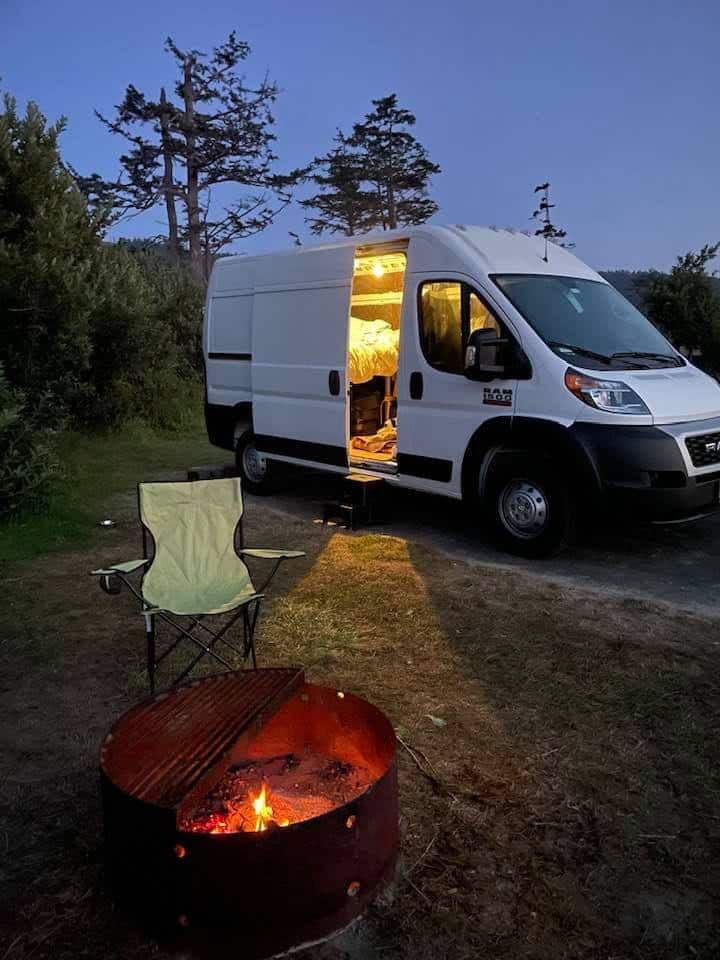
In Carpe Diem: Have You Ever Thought of Getting a Cargo Van?, I promised Part Two would describe what happened on the first adventure for my husband Rito, our dog Pepe, and me in our new Dodge Promaster.

I’m happy to report that the trip was terrific. Several people told me that my blog inspired them to consider trying a cargo van. Here I’ll share a bit about our van and our trip. I will also offer tips for camping during another Covid surge and, finally, advice from nomadic travelers.

The Van: A Work in Progress

Our van still needs a lot more converting, but we had everything we needed. The memory foam bed was comfortable. Since we didn’t have time to install a solar panel, we recharged the electrical system with our car battery. As a result, we had light, and I could use my CPAP.

A small fan kept us cool on the one hot night, and on a smoky day, we plugged in a portable air filter. A single burner electric induction stove cooked our food. An ice chest served our needs. Later we’ll install a small refrigerator.

This type of cargo van has many benefits. First, the short length allowed us to pull into parking spots with ease. Second, blending in with Amazon vans, we traveled incognito. Finally, unlike bulky campers, we had no trouble maneuvering along the windy coastal roads.

The Trip: Two Weeks Driving North, a few Days Heading Back South

I highly recommend the coasts of Oregon and Washington for a beautiful, relaxing vacation. Six hours after heading north from the SF Bay Area, we crossed the Oregon border, and for the first week, we only drove a few hours a day to camp in various lovely locations.

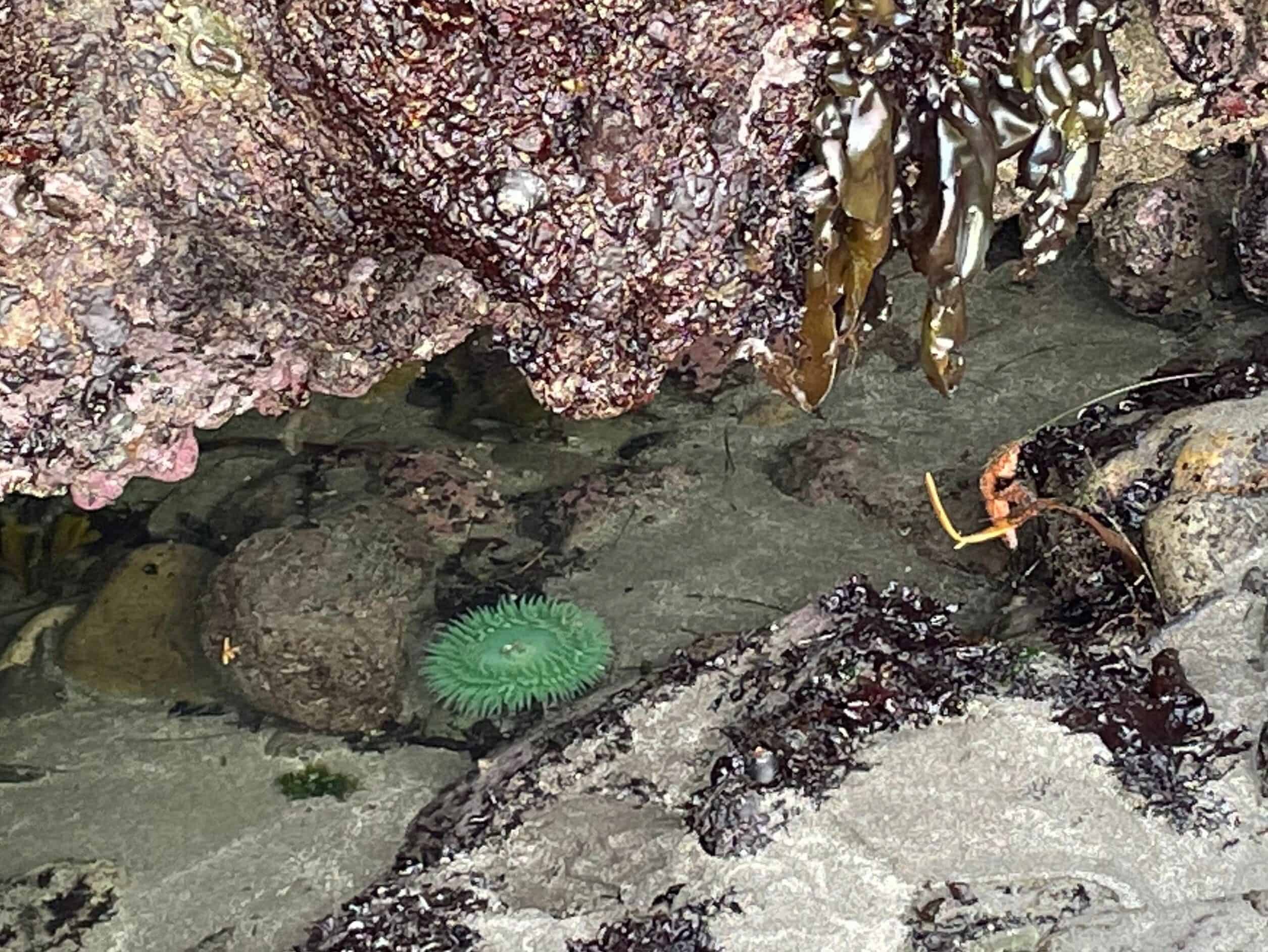
Strolling down Harris Beach, we witnessed tide pools with brilliant green sea anemones and colossal starfish.

In Florence, we climbed massive white dunes in a strange sandy world that stretches for miles.

On the Washington border, the 1,200-mile-long Columbia River empties into the ocean. There, we camped at Fort Stevens State Park, which features the only Civil War-era fort on the west coast. We climbed into bunkers that served as a World War II command center and even was shelled by a Japanese submarine.

In Washington, we spent several days on Lake Quinault, a lesser-known part of the Olympic rainforest. At the tip of the lower 48 states, we stayed outside Port Angeles and drove up to Hurricane Ridge with views of Mount Olympus and other snow-covered peaks. Unfortunately, that day, smoke from fires in Eastern Washington obscured our view.

In the Olympic National Park we took a short hike to the spectacular Madison Falls.

From there, we headed back, stopping at Rainbow Falls State Park and then heading south on Highway Five.

Wildlife

All along the way, we saw spectacular wildlife, eagles, cottontail rabbits, and a majestic pair of elk that stared straight at us. There were egrets, terns, osprey, red-footed Black Guillemots, and hundreds of squawking gulls along the ocean and in the lagoons.

Along lakes and rivers in the Olympic Rainforest, we viewed a family of merganser diving ducks, flocks of Canadian geese, a noisy killdeer, and a great blue heron. Woodpeckers, chickadees, and a fluffy winter wren greeted us in the forest.

Tech Support

On our way south, we stopped in Portland at the Light Harvest Solar Company, where we had purchased our electrical system. The technician marveled at Rito’s work and fixed a few things that were impeding the system.

There Was Even Time for Work!

Finally, after 12 days, we arrived in Ashland, where I gave two days of workshops. I’d safely stored my professional clothes and materials in a special suitcase. All went well, although I plan to give presentations at the beginning of the trip next time.

We made one alteration to our route. We had planned to spend our last night at Mount Shasta, but due to the wildfires in that region, we doubled back north and crossed back to the coast, spending our last night in the redwoods. I was able to reserve a campsite on my phone.

Planning Is Required

A successful trip to the popular Oregon Coast and the Olympic Rainforest requires planning ahead. We learned this the hard way on past trips. Once after traveling through Alaska and picking campsites as we went, we were forced to spend the night in an Oregon casino parking lot because all campgrounds were full.

With the ease of the Internet, I carefully mapped out a trip using Google Maps. I checked photos of the campgrounds, read reviews, and reserved spots for every night. All campgrounds sent preregistration forms, allowing us to arrive at our leisure and find our designated site.

Each location along the coast has its unique charm and only requires driving 2-3 hours from place to place. Here’s my route with all campgrounds. I recommend every one of them.

Camping During Covid

Due to Covid, we avoided crowds. Even with many people traveling to the coast to escape smoke and fires, we could keep a safe social distance. We wore masks in stores and restrooms and bought take-out or cooked our meals. Coastal trails and beaches had room for everyone. Since I presented to a large group, we had Covid tests on our way home, receiving negative results two days later.

Tips from True Nomads

Along the way, we met several nomadic campers. One 66-year-old woman had been on the road with her German Shepherd for three months. After her divorce, she decided not to pay substantial monthly rent and bought a Dodge Promaster like ours.

While recovering from a hip replacement, she hired a company to convert the van to match her needs. She explained that her solar panel gave her all the energy she needed, so she never hooked up to electricity.

She described herself as a newbie but appeared very savvy about the resources such as free campgrounds found on Freecampsites.com. She also told us about the women’s meetup she attended, making new friends, and getting tips.

If you’re considering van life, check out Van Camping And Senior Citizens – Are They A Match? The article tells of many boomers’ experiences with van camping. Also, here’s an excellent guide: Van Life How To: Your Complete Guide to Living in a Van. Finally, you might take a test run, like we first did, by renting a van on Outdoorsy (US) or AutoEurope (internationally).

Then we’d love to hear about your experiences.

What do you think is the biggest upside to traveling in a van? Do you think you could have a trip in a van or camper? Where would you go and what would you do?

Read More

Garcelle Beauvais’ Leopard Print Coat

Garcelle Beauvais’ Leopard Print Coat

Real Housewives of Beverly Hills Season 11 Episode 15 Fashion

What better way to match your leopard print dress than with a leopard print coat? That’s just what Garcelle Beauvais did to go full on feline. Which is great because it looks as if she’ll need to channel some animalistic behaviors at the party because it looks like claws will be out based on the previews. Just like the stock of this coat will be if you don’t get your paws on it quick.


Sincerely Stylish,

Jess


Garcelle Beauvais' Leopard Print Coat

Click Here to Shop Her Norma Kamali Leopard Print Coat

Originally posted at: Garcelle Beauvais’ Leopard Print Coat

Read More

Misunderstandings About the Financial Power of Attorney Document

financial power of attorney

Do you know if your financial power of attorney document is a “springing” or an “immediate” authorization? Do you know what your bank or retirement account custodian would require if your financial power of attorney agent needed to transact on your account for you?

Those two questions and their answers can cause a lot of confusion. Let’s see if we can clarify the terminology so you can better understand what you have in place and then talk with your estate planning attorney or financial institutions as needed.

No Wonder It’s Confusing!

In the United States, the copy of the legal document that you (hopefully) have in place to name who you want to act on your behalf on financial matters when you are unable, may be titled by many different names.

The heading may say Durable Power of Attorney, Durable (Financial) Power of Attorney, General Durable Power of Attorney, Durable General Power of Attorney, General Power of Attorney, Durable Power of Attorney for Management of Property and Personal Affairs, or something similar.

I currently see all of those on my clients’ documents that they had drafted by their estate planning attorney here in Arizona. The confusing part to clients is that it may not have the word “financial” in the heading of the document at all.

Now or Later?

Whatever your document is called, it is naming someone, often referred to as an agent or attorney-in-fact, who you want to make financial decisions as well as specifying what actions they can take if you are unable. Here is a Power of Attorney Checklist to help you with that decision making. That document also specifies when your authorization goes into effect.

Springing vs Immediate

It may only apply at the time that you are deemed incapacitated (often requiring medical confirmation in writing by two physicians). That is referred to as a “springing” power since it only “springs” into action when you become incapacitated and not before then.

Alternatively, you may state that your agent authorization applies immediately, and you give permission for that person to act on your behalf starting now. In that case, no incapacity is required, and no further documentation would be needed by a physician.

Whichever one you have, the agent’s power ends at death. Upon death, the trustee/executor/personal representative would become the decision maker.

Talk to Your Attorney

Without relooking at your document, you may not know or remember which type of financial power of attorney you have in place, “springing” or “immediate.” There is no right or wrong but the pros and cons of each, as well as the convenience and trust factors as we get older, makes for a good discussion to be guided by your estate planning attorney to help you make an informed decision.

To Each His Own

So whichever version of the financial power of attorney you have, it is also good to understand that each financial institution will have its own process if the time comes that your agent needs to take action on your behalf. You won’t know what’s required until you ask, and they may change those requirements over time.

So Many Options

Some banks, for example, will accept a copy of your financial power of attorney document and that is all that is required. Others will only accept that document if it is less than 3 or 5 years old (I have seen both).

Others will also require their form to be completed, either in addition or in place of the legal document. And still others may require a notary stamp or signature guarantee to be added to the process. At investment and insurance companies, there may also be a legal department review before it is deemed approved and in place.

Do It Now If You Can

If you have an immediate financial power of attorney document, I am a fan of seeing if you can get it on file at some or all of your financial institutions in advance. That way there is less delay or paperwork required at the time an agent may need to act on your behalf.

He or she will appreciate less stress in that moment by having it already in place. Some financial institutions will only allow it to be added at the time it needs to be exercised, not in advance. Again, you have to ask in order to find out.

A Copy to Your Agent

As always, when you name someone as a power of attorney, either for finances or health care, be sure you provide them with a copy of the document. That’s also the opportune time to talk with them further about your wishes including Living Arrangements for the Future and answer any questions they may have.

The “To Go” Bag

I attend and volunteer teach at a senior outreach program here in the Phoenix area, and one additional thought I learned from those audiences is something that you may want to consider too.

They suggest traveling with a “To Go” bag. It may be a folder, file, zipper pouch, etc. that you bring along on your travels. And it holds important information like a copy of your financial power of attorney, health care directives documents, medication list, and I.C.E. (In Case of Emergency) contact sheet.

This all may feel a bit like a belt-and-suspenders approach to making your wishes known. But documents are no good if they aren’t available when they are needed!

Have you had any experience with drafting a financial power of attorney or providing that document to a financial institution? What guidance can you offer to the community?

Read More