Author: HairWeavings Editorial Team

Jennifer Aydin’s Blue Printed Ruffle Dress

Jennifer Aydin’s Blue Printed Ruffle Dress on Her Instastories

Real Housewives of New Jersey Instagram Fashion

Jennifer Aydin looked absolutely gorg in her blue printed ruffle dress. She was celebrating Marge Sr.’s 75th birthday at her party and it all looked to be fabulous. Now it may not be any of our birthday’s at the moment, but it never hurts to give yourself a little present. I’m obvi referring to Style Stealer of this dress. 🥳


Sincerely Stylish,

Jess

Jennifer Aydin's Blue Printed Ruffle Dress

Click Here to See Her Atoir Whirlwind Dress

Click Here to Shop it in Pink

Photo Credit: @jenniferaydin

Originally posted at: Jennifer Aydin’s Blue Printed Ruffle Dress

Read More

Pet Loss Is Complicated! 3 Overwhelming Emotions We Feel and How to Deal with Them

pet loss

Dealing with complicated pet loss grief is very challenging to a pet lover. Have you ever experienced the loss of a pet that ran away? Did this pet ever come home? Are you suffering from the pain of not knowing what happened to them?

This type of pet loss grief is called complicated pet loss grief. It’s where a traumatic loss event is unresolved or has an incomplete ending.

Complicated pet loss grief has many elements but the most difficult one to ‘solve’ is finding closure.

More About Complicated Pet Loss Grief

With runaway situations, incomplete endings and finding closure leaves us wondering what has happened to our companion if they do not return to our homes and hearts.

Complicated pet loss grief is tough because you can rarely get to the point of truth. Your grief emotions will begin to surface and may impact your life consciously or unconsciously. At this time, guilt may lead to anxiety and even panic.

Please remember that you didn’t plan for your pet to run away and disappear. Accidents, such as leaving the backyard gate open or forgetting to lock the doggo door, happen.

Sharing Joanne’s Story

I recently got a call from a woman whose dog disappeared from her yard. Her story was heart wrenching as she described her loss.

She shared with me how she let her dog out for his evening activities like she always did. When she checked on him 10 minutes later, she noticed that the gate was open and he was gone.

As she continued sharing her story with me, her feelings of guilt for not remembering to close the gate were massive. She was trying to find closure with her loss.

Top 3 Emotions of Complicated Pet Loss Grief

Guilt

One of the most common and powerful of grief emotions is guilt. It punishes us and leaves us feeling negative. It also leads to anxiety and panic as we place blame on ourselves.

Even though guilt is a normal feeling, it can create chaos and become unhealthy. If you are feeling guilty, keep in mind this is a normal part of grief. Just be mindful if you become overwhelmed and unable to meet your daily needs.

If this happens, your complicated pet loss grief has become abnormal, so please contact your healthcare provider.

Crying

I have found that crying, sadness and even anger in regards to complicated pet loss grief is common and normal as well.

This is part of the grieving process and it’s important to allow yourself to go through it. Grieving is very hard work, especially when there is no closure.

Being Overwhelmed

Grief cannot be rushed, and it may seem endless to you right now. This alone can easily overwhelm you.

Be mindful of what you are going through. Take one moment at a time. Complicated pet loss grief is heart wrenching. The important thing to remember is to take care of yourself during this time.

Are you going through complicated pet loss grief? What are you doing to take care of yourself? Please share some tips that have helped you overcome your pet loss grief.

Read More

6 Must-Have Beauty Products Every Skincare Routine Needs

“Less is more” is often touted as the best beauty advice you can follow. But screw that. Your skincare routine doesn’t need a cap, but it should include certain types of products—the essentials, if you will. Sure, if you’re into an elaborate ten-step skincare routine as an act of self-care (or just because, for that matter), we totally get that too.

With that being said, however, whether you’re a beginner looking to start (and stick to) a daily skincare routine or just looking to cut back and get down to the basics to save some extra time and money, we’re breaking down the products everyone should have in their lineup — regardless of your skin type or personal skin concerns.

You’re probably already aware that every solid skincare routine should include a gentle facial cleanser, moisturizer, and a decent sunscreen (please, please, please don’t skip this step, y’all), but when it comes to the in-between steps (i.e. serums, toners, essences, etc.), you may be looking for a bit more guidance. Scroll through below to check out the six must-have products every skincare routine needs.

Our mission at STYLECASTER is is to bring style to the people, and we only feature products we think you’ll love as much as we do. Walgreens and d’Alba are STYLECASTER sponsors, however, all products in this article were independently selected by our editors. Please note that if you purchase something by clicking on a link within this story, we may receive a small commission of the sale.

STYLECASTER | Skincare routine

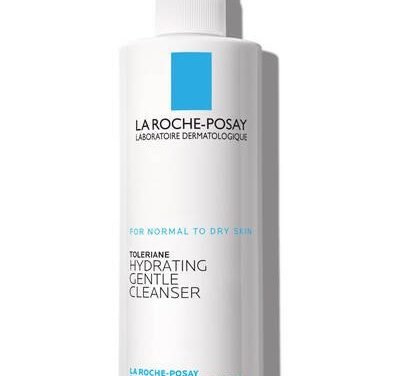
Courtesy of La Roche-Posay.

1. Cleanser

The obvious first step: A good cleanser sets the stage for your whole routine. Ultimately, your cleanser should be gentle, water-soluble and able to remove your makeup. Avoid anything with soap in it—soap’s pH level is too basic and will dry out your skin. This gentle cleanser is formulated for sensitive skin, but it’s suitable for most skin types as well.

rose hibiscus hydrating face 6 Must Have Beauty Products Every Skincare Routine Needs

Courtesy of Herbivore.

2. Toner

Toner often gets dismissed as overkill, but as part of a comprehensive skincare regime, toner is actually a pretty crucial step. Not only does it remove any oil or makeup residue, but it also preps your cleansed skin to receive whatever treatments you put on next. Think of it like a pre-serum or a pre-moisturizer. We love this rose-infused facial toner by Herbovire because it’s gentle yet effective.

Buy: Herbivore Rose Toner $32

STYLECASTER | Skincare routine

Courtesy of d’Alba.

3. Serums

Packed full of active ingredients, serums are for brightening, repairing, hydrating, anti-aging—the works. Some have multiple purposes and some are singular in the way that they work. You can layer these bad boys or pick one to focus on your biggest skin concern. We absolutely love this anti-aging and glow-boosting serum by d’Alba because it’s chock-full of skin-loving ingredients like vitamin C, collagen, and nourishing avocado oil.

Buy: d’alba Piedmont White Truffle Mist Spray Serum $29

kate somerville exfolikate intensive exfoliating treatment 6 Must Have Beauty Products Every Skincare Routine Needs

Courtesy of Kate Somerville.

4. Exfoliator

This is a crucial, though definitely not daily, step in your skincare routine. The best ways to go about exfoliating your face is to either use a cleanser with chemical exfoliants in it or use a dedicated physical exfoliator. Either way, look to use this product about twice a week.

Chemical exfoliators are best for sensitive skin, and physical ones (with gritty bits) are good for occasional use if your skin is on the dry and flaky side. Try Kate Sommerville’s cult-favorite Exfolikate formula — you won’t regret it.

Buy: Exfolikate Intensive Exfoliating Treatment $25

glamglow brightening treatment 6 Must Have Beauty Products Every Skincare Routine Needs

Courtesy of GLAMGLOW.

5. Targeted Treatments

These are the big guns, generally for treating blemishes, dark spots, and congested pores. Targeted treatments usually have powerful ingredients that should be used sparingly and (usually) at night to avoid damage from sun sensitivity, but they really work. Retinols and hyperpigmentation treatments fall into this category. There’s a reason GLAMGLOW’s targeted pore-refining formulas are best-sellers.

korres wild rose vitamin c active brightening oil 6 Must Have Beauty Products Every Skincare Routine Needs

Photo: KORRES.

6. Moisturizer

The last step in your skincare routine is as important as the first. No matter what state your skin is in, it needs to remain hydrated. Luckily, moisturizers are made for all kinds of complexions, either oil-free or loaded with skincare goodies like antioxidants and vitamins. You can use a facial oil as a moisturizer, too, no matter what your skin type. Different types of oils have different benefits, but generally, skin likes it because it matches its own sebum texture.

KORRES’ Wild Rose Vitamin C Active Brightening Oil is one of those moisturizers that brightens and hydrates skin, and you can find it as an ingredient in skincare or just use it straight.

Buy: Korres Brightening Facial Oil $54

A version of this article was originally published in June 2015.

STYLECASTER | Ashley Benson Interview

Read More

What to Do When Stepping on the Scale Unleashes Your Inner Self-Critic

getting on the scale

You step on the scale and the number staring back at you is higher than you wanted. For some, this can start a cycle of self-criticism and restrictive eating that can corrode self-esteem and ruin your day.

Take Mary for example. She had been put on a diet from a young age to manage a health condition and struggled with her weight her entire life.

By her early 60s, after decades of dieting and regaining weight, stepping on the scale felt traumatic.

Why Stepping on the Scale Unleashes the Inner Self-Critic

If stepping on the scale can ruin your day, then consider what it means to you to live in a larger body.

The Impact of Weight Stigma

Weight stigma is the social rejection and devaluing that occurs to people living in larger bodies. It is a very real phenomenon that can cause anxiety, depression, and low self-esteem in victims.

Weight stigma happens when medical professionals only focus on your weight instead of offering other treatment options, employers choose not to hire people with larger bodies, or loved ones negatively comment on your size.

Because having a larger body is stigmatized in culture to mean someone is lazy, not attractive, has poor willpower or moral character, etc., you get the cultural message that you are undesirable (this is called weight bias internalization).

The Impact of Others’ Perceptions

A 2011 study from Ohio State University found that the most important factor for whether a woman liked her body was how she believed her body was perceived by others, not her actual size.

Furthermore, women in their 60s were more likely to believe that others wouldn’t accept their bodies if they were larger, compared to younger women.

The takeaway: Women in their 60s are more likely to believe their bodies won’t be accepted if they are larger, and these same women may base their own body acceptance on how they perceive others accept their bodies.

How Data Can Turn Against You in Your Mind

So, if you are getting the message from the world around you that living in a larger body means you are not acceptable, lazy, and whatever other terrible things women hear, you might start to criticize yourself when the number on the scale goes up.

Research suggests weighing yourself regularly may help you lose more weight. The research into whether or not weighing yourself is psychologically harmful is conflicting, however.

While the scale only returns data about the force of gravity on your body, for some the number on the scale holds meaning rooted in weight bias and the at-times cruel perceptions of others.

Weighing yourself can feel like a declaration of how good you’ve been or how worthy you are of love and validation by others.

And when the scale isn’t going down, it’s not uncommon to start beating yourself up, sometimes mirroring what has been said to you about your weight as a child or into adulthood by people who should have cared for you better.

For women with eating disorders, weighing yourself can be harmful. If you suspect you or a loved one has an eating disorder and want help, contact your regional eating disorder helpline. In the US that is the National Eating Disorder Association.

Anyone may choose to opt-out of weighing because it feels unhelpful. If you need to be weighed for medical reasons, you can ask your medical team for a “blind” weighing, where you get on the scale backwards.

How to Stop the Self-Critic When You Step on the Scale

Determine What the Number on the Scale Means to You

We’ve discussed popular narratives about what it means to live in a larger body (weight stigma), and the stories we tell ourselves based on what we think others believe about us.

The first step to taking back control of the scale is to decide what the number on the scale means to you.

If I could suggest something?

I encourage the post-menopausal women I work with on healing emotional eating and loving their bodies to view the number on the scale as simply data.

No, I don’t mean data that reflects how “good” you’ve been, or how worthy you are of admiration and appreciation.

What I do mean is data that has no judgements associated. Like a clinical assessment. Either your metabolism is doing what you want it to do, or it’s not.

If something isn’t going the way you want it to, you can use that same non-judgmental approach to assess what you might change to reach your goals.

Self-criticism comes when you believe that the number means something important about you, so finding a different way to think about the number on the scale is the first step to stopping the flagellation.

Assess Your Own Views About Weight

What do you believe about people who are fat? Those beliefs can impact your self-criticism if you believe you are fat.

Assessing your own weight bias and practicing compassion for others will help you treat yourself kindly as well.

For myself, when I notice I have negative thoughts or assumptions about others’ bodies, I mentally back-track and replace the judgmental point of view with something kinder and not weight-related.

This practice has helped me be kinder to myself about my own weight. (You can learn more about my journey with weight here.)

Brainwash Yourself

You are inundated with messages about your body all the time.

Thinking of an alternative view of the scale or thinking something nice about someone with a larger body will probably not do anything.

But reminding yourself frequently of the new beliefs you want to hold about yourself and others can help.

Here are two ways I propose to brainwash yourself:

Surround Yourself with a Supportive Community That Is Working to Dismantle Weight Stigma

In my program, the Stress Less Weight Mastery, I meet with groups of women weekly to discuss body image issues and troubleshoot barriers to healing emotional eating.

Being immersed in a new way of thinking in such a group can be helpful to having these new ideas stick.

Create Affirmation Statements and Either Write Them Down or Say Them Out Loud Every Day

Affirmations are positive sentences that reflect your new belief.

Some examples could be:

The number on the scale is non-judgmental data that doesn’t reflect my value and worth.

Or

My weight doesn’t influence my happiness.

Whatever your affirmations, they have to feel true for you.

If you want to lose weight and feel in control around food, and are tired of the scale ruining your day, consider booking a call with Cassie.

How often do you weigh yourself? What does the number on the scale mean to you? How has that number’s meaning evolved with age? Do you think you can learn to consider that number as nothing more than data?

Read More

How Mammograms Look at the Older Breast… and New 3D Options

Mammograms-Older-Breast

I was recently visiting with a friend who is the chief radiologist at a small hospital in New York. He is a gentle, thoughtful guy. As such, I was a bit taken aback when he proclaimed that he wished we could just throw mammography out.

If you are a breast-cancer survivor, you may gasp. Conversely, if you have suffered the hardship of false positives time and time again, or ‘equivocal’ (ambiguous) results followed by the stress of waiting for confirmation, you may agree with him.

Actually, what he really meant was that he yearns for better technology. Tools are best if they generate a scenario for jumping into action only when it’s clearly necessary. They should catch real problems early and avoid unnecessary false alarms.

Mammograms Get More Accurate as We Get Older

The good news is that, evidently, mammograms become more accurate as we age, reaching approximately 85% accuracy. This is supported by this comment from Aging Specialist at Potpourri of Opinions & Suggestions from Health Care Professionals. One piece of agreed-upon rhetoric seems to say that with age breast tissue becomes less dense.

If you have “dense” breasts, which about 10% of women do, you know two things. First, dense has nothing to do with size, and second, you will probably have to pay more money for a required second opinion after each mammography.

These things I know. Nevertheless, if breast tissue becomes less dense, readings are easier.

Cystic Breasts

Occasionally, women who have been told they have ‘cystic breasts’ continue on to an ultrasound scan. The assumption is that after a second opinion, the ultrasound scan can more accurately detect lump from cyst in a clearer manner. This is especially important if both reviewers are uncertain.

So, with this in mind, I inquired of my friend about ultrasound for breast exams. His shoulders drooped, he sighed, and whispered, “In some ways it’s worse. They show every pimple, notch, sac or lump.” Again, his lament was about equipment and not opposition to early detection.

A New Three-Dimensional Look at the Breast

What I forgot to ask him about was the very test I had last year which many of you may have had as well. That’s a 3D mammogram – a three-dimensional look at the breast.

Frankly, even if you did have the newer exam, you may not have noticed a difference. Same gowns. Same cold metal. Same squeeeeze. Yikes. Same following few days of ‘sweating it.’

But it is different.

This 3D mammogram is called tomosynthesis (not to be confused with thermography) and offers sharper images. Oh, if only that “Sharper Image” store had a home version of this tool. Alas.

Despite the uncomfortable and awkward similarity between 3D and traditional mammography, the 3D type grants the radiologists a better look at lumps or cancerous tumors. This equates to more accuracy, detecting invasive disease sooner and reducing unnecessary biopsies or other testing. For more statistics, you can go here.

Early Detection

Early detection is like a necessary evil (“necessary” being the more critical word). With reliable diagnostics, the avoidance of further invasive measures can produce a shout-out-loud “yippee.”

Drawbacks

Unfortunately, newer 3D machines may have improved, but as late as 2011 there was one major drawback. The level of radiation from this technology is clearly higher. And breast tissue is very sensitive to radiation.

For those of us who don’t plan on a mammogram every year, this may be a disadvantage we are willing to accept. But, let me mention that my results still needed to go out for a 2nd opinion. Cha Ching.

Final Thoughts

Back to the ‘yippee’ part. Perhaps my friend’s hospital hasn’t invested in 3D mammography equipment yet. For me, for now, until something better (in terms of accuracy) comes along, I will invest time and energy in traveling to a place that has it. At least it may avoid prescriptions for recalls, suggesting a 2nd set of ‘films’.

3D machinery is not yet the ‘standard of care’. Moreover, since you, as a patient, can’t tell 2D from 3D, you must ask if the facility you pick is using 3D or not. In some locations, all their machines could be 3D. Others are waiting for more research and years of supporting results.

Do you have annual mammograms or do you treat yourself to less frequent visits? Has anyone else had an experience with 3D mammography technology recently? If you are against mammography altogether, what do you do to keep track of your breasts’ health?

Editor’s note: Nothing in this article should be considered medical advice. Please consult with your own doctor before making any medical decisions.

Read More