Author: HairWeavings Editorial Team

Please Don’t Listen To Gwyneth Paltrow About SPF

I have such a love/hate relationship with Gwyneth Paltrow. I think she’s gorgeous and funny and a great actress. I’m pretty obsessed with Goop skincare and think it really does work well. But her views on “wellness” when it comes to nutrition and sexual health really lose me and I think can be pretty harmful. It turns out, some of her skincare practices are, too. In a new Vogue video, Paltrow talks sunscreen and well, she flat out gets it wrong. Allow me to explain.

Listen, Paltrow is a 48-year-old woman and she can do what she wants with her skin. But many look to her for advice. So, when she reveals her “beauty secrets,” people listen. Unfortunately, they shouldn’t listen to her about sun protection. While she talks about great mental health things like meditation in the video, she goes on to chat skincare. She begins by using some really stellar products, including Goopglow Microderm Instant Glow Exfoliator ($125 at Goop), Vintner’s Daughter Active Botanical Serum ($185 at Detox Market), Weleda Skin Food Original Ultra-Rich Cream ($18.99 at Ulta) and Jillian Dempsey Hydrating Eye Mask ($75 at Goop). Then her advice takes a turn.

Paltrow grabs Unsun Cosmetics Mineral Tinted Face Sunscreen Lotion ($15.99 at Target), a great option for sun protection. But she completely ruins it during application. “I’m not, you know, a sort of head-to-toe slatherer of sunscreen,” she says. “But I like to put some kind of on my nose and the area where the sun really hits.” She continues to dab it on her face like she’s applying highlighter or some other makeup product that doesn’t, you know, help prevent skin cancer.

The sound you just heard is skincare experts everywhere screaming.

Instagram PhotoSource: Instagram

One look on my own social media and I saw the experts in my life upset about Paltrow spreading such a dangerous message. Celebrity esthetician Renée Rouleau took to her Instagram stories to call Paltrow’s sunscreen application “basically useless.” Not only is she not using enough, but she’s also applying it in the wrong order when she uses moisturizer after SPF. “Oils and moisturizers can dissolve away sunscreen and make them less effective,” adds Rouleau.

Dr. Adeline Kikam, DO, MS, FAAD, a board-certified dermatologist who works with Ole Henriksen, agrees. “Sunscreen is not for spot application of areas we feel like applying. It’s not a highlighter,” she tells STYLECASTER. “It has an intended purpose in our skincare and skin health in cancer prevention amongst other things but for it to be effective it needs to be used appropriately.”

“As dermatologists we treat skin cancers all the time and see that they can manifest on practically any area of the body including the face,” Dr. Kikam continues. “You don’t get to pick where you get melanoma, so spot application is dangerous. Sunscreen should be applied liberally not selectively.”

Dr. Kikam recommends using a broad-spectrum UVA/UVB sunscreen of SPF 30 or above. When it comes to the amount you need, be sure you’re using a shot glass to the entire body and 1/2 teaspoon to the face and neck. Reapply in two hours if you’ll be in the sun. We’re sorry to tell you that makeup with SPF isn’t enough because when do you use a teaspoon of foundation? But it’s still a great option along with your sunscreen. I like to use a hydrating one in place of my moisturizer daily.

Don’t forget those little areas like your ears and lips. There are so many great lip balms with SPF 30 you can apply throughout the day. You’ll be reducing your risk of skin cancer as well as premature aging from the sun. And when in doubt, listen to your skincare experts instead of entertainers.

STYLECASTER | Ashley Benson Interview

Read More

Teresa Giudice’s Face Cream

Teresa Giudice’s Face Cream

Real Housewives of New Jersey Season 11 Episode 7 Fashion

We know I am obsessed with spotting a Housewives beauty product. And thanks to Kameron Westcott divulging her go-to beauty products on a recent episode of Closet Confessions, I was able to spot Teresa Giudice’s skin cream on last night’s Real Housewives of New Jersey!

This luxurious cream seems to be popping up everywhere.  It promises to “dramatically improve the skin’s appearance” and is said to help with fine lines in addition to moisturizing. And to that I say, sign me up.


The Realest Housewife,

Big Blonde Hair


Teresa Giudice's Face Cream

Click Here to Shop Augustinus Bader “The Cream”

Click Here to Shop it at Nordstrom (the packaging is just different)

Kameron Westcott told us on Closet Confessions she also swears by this cream! In the winter when her skin is more dry she uses “The Rich Cream”

Originally posted at: Teresa Giudice’s Face Cream

Read More

Melissa Gorga’s Striped Pajama Shorts Set

Melissa Gorga’s Striped Pajama Shorts Set

Real Housewives of New Jersey Season 11 Episode 7 Fashion

Whether she’s bartending in a hot pink bandeau bikini or makin’ eggs in her striped pajama set, Melissa Gorga never looks anything but absolutely perfect! And while I’m kind of starting to sound obsessed with her (please don’t read all of my posts about her in a row), there’s no need to call the fashion police. Unless of course it’s to report that I’m totally about to steal Melissa’s perfect striped spring pajama short set style.


The Realest Housewife,

Big Blonde Hair


Melissa Gorga's Striped Pajama Shorts Set

Click Here to See her Splendid Pajama Short Set

Originally posted at: Melissa Gorga’s Striped Pajama Shorts Set

Read More

3 Tips for Managing Skin Tags as You Get a Little Older

3 Tips for Managing Skin Tags as You Get a Little Older

I’m not the only woman with Acrochordon. This is not wishful thinking. You probably do too. “What?’” you ask. Well, what if I called it skin tags? Ah, yes. Even if I didn’t know the prevalence of the strange-looking little things, I have had friends and acquaintances complain about them for years – and noticed them on many naked necks.

If you don’t have them, you still have something to look forward to. That is, if you consider cosmetic conditions to discuss with others “something to look forward to.” By the way, they escalate as we age.

Of course, everyone’s situation is different, so, be sure to check with your doctor about any abnormal skin features that you find on your body.

What Are Skin Tags?

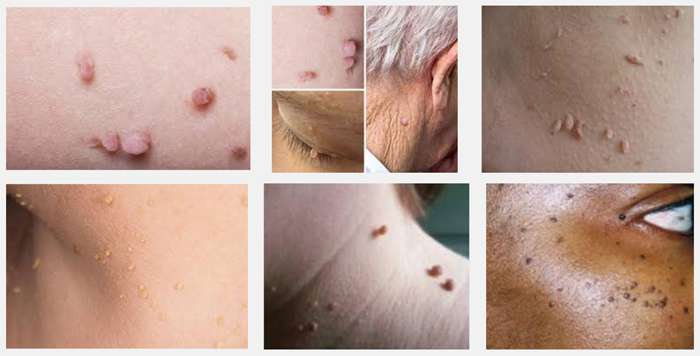
These soft little (or not so little) balloons of flesh, with a stem, often called the “connecting stalk,” are considered ugly by many. I raise my hand in agreement.

But, while “acrochordon” is technically a name for a tumor (although benign), they are truly less of a concern to our health than to our confidence and vanity. Skin tags are considered harmless and are most annoying if they are rubbed by clothing or irritated by jewelry. One caveat is the act of shaving (men or women) – THAT can be painful if the skin tag is cut.

Sometimes a dermatologist or resource site will list a different type of skin tag known as Seborrheic keratosis. Why are they similar? As with a regular skin tag these growths are “extra skin” and look like a kind of brown scab stuck on the skin. They are also incredibly common, as we age. Since they are difficult to distinguish from a serious conditions it pays to get medical confirmation. Yet, they too are benign and perhaps even less annoying than balloon-like skin tags.

Home remedies (noted below) are also valuable for this type of growth, except the ‘hanging’ type since there is no noticeable “connecting stalk”.

Either type of skin tag is different from two other common dermatological skin “bumps:” lentigo and nevi (moles). Lentigines aren’t actually raised bumps, like moles. Instead they are brown spots with distinct outlines. They are often stimulated by the sun, and more commonly noticeable on pale skin.

Moles are clusters of cells (melanocytes which affect skin tone), usually raised and dark in color. “Moles” can be dangerous, as in melanoma, and that is the reason for the “A-B-C-D-E” guidelines (changes in asymmetry-border-color-diameter-elevation/evolution). Skin tags are the less worrisome and easier to handle cousins.

Skin tags

What Causes Skin Tags?

The problem with the skin tags is that they either dictate a trip to the dermatologist for a health scan, and/or extra money and procedures to get them removed.

Typical procedures include cryotherapy (freezing), ligation (cutting), laser (sometimes called Estheticon) or electrospray (a type of burning with electric current).

Many professionals will give a knee-jerk answer of “friction” when asked the question “what causes skin tags?” Surprisingly that answer may not be the only cause. A sole reason for the root of skin tags has not been medically confirmed. Friction is definitely part of it, but there are suggestions of hormone imbalance, obesity, genetics and skin irritation. There is also the idea that “low risk strains of Human Papilloma virus” (as in warts) may be a cause.

A study of reviewed literature found a significant level of the virus present in people with skin tags. I’ll go into a bit more detail later on how that may play into new over-the-counter treatments.

Oliver Cromwell on commissioning a portrait said: “Remark all these roughnesses, pimples, warts and everything as you see me, otherwise I will never pay a farthing for it.”

Ah yes, we might agree, sadly in real life we can’t “airbrush” ourselves!

My Own Story with Skin Tags

So, I found myself on a trip to visit a new dermatologist. Similar to meeting any new doctor, I wondered if she would promote some latest-and-greatest fancy treatment (read that as “expensive” and/or “invasive”). I hoped not.

In all honesty, I was most interested in a skin scan and not my skin tags. I assumed I had seborrheic keratosis, but needed to make sure. Luckily for me my scan was fine.

As an added bonus, the dermatologist was of the “natural” and “preventative” camp. She mentioned coconut oil as a potential solution to several skin and cosmetic issues. We are talking about topical applications here. Still, you can’t avoid hearing from the media about claims for many other advantages as well.

Could Coconut Oil Help You to Deal with Skin Tags?

For years, coconut oil was a bit demonized in the US because it is high in saturated fat. I was on that band-wagon. Indeed, coconut oil is high in saturated fats, perhaps one of the riches sources known. Check the label and you may see over 90% of the calories from the oil are saturated fats (or somewhere between 60-95%). So, if it is so high in saturated fats, why the change in recommending coconut oil for consumption purposes?

The answer is two-fold. Many large studies (including hundreds of thousands of participants) are apparently demonstrating that the process of how saturated fats affect cholesterol and arterial or heart disease is a bit of lore.

Some studies actually suggest that saturated fats raise HDL (the good) cholesterol – the type that works to transport cholesterol to the liver (and away from arteries) to be reused or eliminated. Similarly, other studies demonstrate that saturated fats change the bad LDL cholesterol to a less harmful type which one day may be shown to reduce heart and artery diseases.

Secondly, instead of the long-chain fatty acids found in most of our “traditional” (you might read that as “bad”) saturated foods, coconut oil consists of Medium Chain Triglycerides (MCTs). Compared to long-chain types, these fatty acids of medium length are metabolized (or digested) differently in the liver. The special properties of coconut oil reportedly aid in quite a number of health conditions and daily function.

But back to the coconut oil and skin tags. Before I describe the simple approach noted by my dermatologist, let me discuss two others. One I know works (but can hurt a little); the other sounds promising (but is more expensive).

Let me warn you that NONE of the three treatments mentioned here work quickly. So if you plan to be a do-it-yourselfer with such home remedies you have to be prepared to apply something else – patience. (Let’s say 6-8 weeks at a minimum). And, as always, you should check with your doctor before trying anything mentioned in this article.

Can You “Strangle” and Skin Tag?

If you are in your 50s or 60s, you probably know about this idea already as it is a certified “old fashioned remedy.” It’s not that simple to get right, but it works. We “hang” the skin tag by lifting it away from the skin and tying it tightly around the “connecting stalk” with dental floss or heavy-duty thread. It can be mildly uncomfortable.

You DO NOT immediately cut the tag off, as with true ligation. That would be outrageously painful. You knot the thread and leave it. The blood supply is slowly reduced. Ultimately the tag turns color (dark) and dries up.

Before two months you can almost rub it off with the lightest of pressure. You can protect against infection by keeping it clean, applying a topical antibiotic or covering with a plaster.

This hanging method has moments of tenderness or soreness but was not substantially painful the time I used it (a while back). Few people would want to do this in an area that is visible, like the neck, so that rules out a lot of tags. Again, it needs patience.

Over the Counter Skin Tag Removers

Personally, I cannot attest to whether over-the-counter (OTC) remedies work. However, do not let anyone laugh at you, if this is your choice. Products such as “Tag Away,” “Revitol Skin Tag Remover” or “Dermisil” contain a substance known as Thuja Occidentalis (an extract of northern white cedar).

There have been several double-blind studies showing its success for warts (and some other conditions like ring worm). If the theory is correct that the human papilloma virus is a primary cause of skin tags, the ability of this Thuja substance to stimulate the immune system may be a key as to why the OTC products are popular. Most tag treatments include Tea Tree Oil as well, which is said to help speed the drying process, but it is generally stinky, at least as a sole product.

Back to Our Discussion of Coconut Oil

My dermatologist recommends coconut oil for several skin issues, such as seborrheic keratosis. Typical skin tags (acrochordon) are also a condition that dermatologists include in this treatment category. Again, one of the theories is that the coconut oil decreases blood supply but does no harm to surrounding tissues. Applications are simple:

First cover the tag in coconut oil completely. Just a small amount will do it. Some people suggest covering the tag further with a Band-Aid or plaster.

Apply at least nightly; preferably day and night.

WAIT! (Patience, patience, patience.)

Coconut oil can be expensive, since most sources recommend the “organic virgin” types, but don’t forget that a little goes a long way.

Other sources say that these terms “organic” and “virgin” or “cold pressed” are not really industry standard as they are with olive oil. Coconut is the fruit of the coconut palm and it is the nut, or fruit, of the tree used to make medicine and quality oil.

Most sources say the preparation process matters, and that you should never use a liquid coconut oil for this application since one key element – lauric acid, with a strong effect on antimicrobial germs – is missing. I’m not certain of this claim, but I have only used the recommended varieties. Besides, they don’t seem any more expensive than the liquidized type.

There’s one additional positive aspect to using coconut oil. If it doesn’t work for your skin tags, you can check your cook books for a myriad of other uses. It will never go to waste!

Have you ever had a skin tag? What solutions or home remedies worked for you? Please join the conversation below.

Read More

If Age Is Just a Number, Doesn’t That Mean I Can Lie About It on a Dating App?

lying on dating apps

I think I know what you are thinking, and part of me agrees. People really should not begin relationships with lies. Usually, lies taint relationships rather irrevocably. Moreover, is one not capitulating to ageism to fudge on this basic truth?

But with new research and scientific thinking, the concept of “biological age” may be more of a reliable indicator than “chronological age.” If people are busy “swiping left” based solely on a number, which I have done countless times, does that not skew one’s search?

Are We Using a Double Standard?

Maybe some of these 75-plus-year-old men I shoot down are fitter, healthier, and sexier than those youngsters in their 60s that I ponder over.

Every time I open Tinder, Zoosk, Match, or what have you, I remind myself to not overreach, but stay within my “I could get him” level. Why waste time and emotional energy communicating with someone with whom there will, most likely, never be a connection?

But if I want this playing field to be fair and accurate, doesn’t lying about my age give me the “handicap,” as it were, to level the playing field? After all, often, but not always, men are looking for younger women, or at least they are frequently accused of doing so.

This is merely a fact I cannot even get angry at; men want what they want. Often these wants are more like biological imperatives that are half hidden in the unconscious mind. And women are capable of this wanting of younger mates as well.

I’m not going to argue with any of it. But given all this, how do I accurately portray myself to the “I could get him” crowd? And who might that crowd be?

Chronological Age vs Biological Age

There is a concept, which has been around for a while, about chronological age versus biological age. Chronological age is just what it sounds like, the number of years one has been on this planet, a number I strive to forget on a daily basis. Biological age sounds much more appealing, but what is it, exactly?

According to Healthline:

“The basic idea behind biological aging is that aging occurs as you gradually accumulate damage to various cells and tissues in the body. The actual number comes down to different biological and physiological development factors. Some of these include: chronological age; genetics (for example, how quickly your body’s antioxidant defenses kick in); lifestyle and nutrition; diseases and other conditions. Using these guidelines along with various mathematical models, medical professionals can figure out what age your body ‘acts’ like it is.”

Like many of us, I first learned of biological age years ago from Dr. Oz. There is an online test one takes which goes into detail about nutrition, lifestyle, body fat, mental health and other aspects of personal health. The results determine your biological, or “Real Age.”

The last time I took the test I was apparently only 59 and ½ (I am 68), although I have to admit I fudged on the amount of belly fat I had (I plugged in the amount of belly fat I wanted to have after I finished losing weight (that’s almost legit, right?).

But at the end of the day, I decided my “dating age” should be 63, as I figured I would be unable to pass for 59 and 1/2. There is zero percentage in courting humiliation.

Mindset and Aging

Staving off aging and death has always been of interest to us humans, think Ponce De Leon and The Fountain of Youth. My continued google searching on the subject yielded the following.

Derek Beres wrote an article for Big Think entitled “Youthful Thinking Can Slow – Even Reverse – Aging, Research Suggests.” Beres referenced a 1979 experiment by Ellen Langer, a Harvard psychology professor, which suggested that the manner in which each of the subjects in her experiment thought about time influenced the metabolic processes in their bodies.

This she determined through studying a group of older men who lived in a time capsule, a retreat center she tricked up to reflect 1959. They were told to live as if it were 20 years prior. Studying the men after a week in their cozy retreat, Langer found they looked younger, and showed improvement in memory, vision, hearing, and physical strength.

Perhaps this means that the money I have put aside for my medically necessary facelift can be used for buying a cute little RV!

Can Exercise Reverse Aging?

There is great information on the role of exercise in reversing aging. An article by Robert Nellis on the Mayo Clinic website, “Mayo Clinic discovers high-intensity aerobic training can reverse aging processes in adults,” says that high intensity aerobic exercise “…can reverse some cellular aspects of aging.”

The takeaway is that “supervised” high intensity training reaps benefits metabolically and “at the molecular level.” Continuing on, the article describes science stuff that would be remiss of me to try to explain.

However, there is one clear caveat. If one reads what is reported in the journal Cell Metabolism “Excessive exercise training causes mitochondrial functional impairment and decreases glucose’s intolerance in healthy volunteers,” March 18, 2021. The upper limit of the amount of exercise has not been established, and at a certain point too much becomes unhealthy.

What About Pure Oxygen?

Another “age reversal remedy” floating around out there is “hyperbaric oxygen therapy,” also known as HBOT. According to an article entitled “What is hyperbaric oxygen therapy good for?” on the Medical News Today website, HBOT is a treatment that originated in 1662 and “involves breathing almost pure oxygen in a special room or small chamber.”

“In the 1940’s, HBOT became standard treatment for military divers in the US,” as it treats the decompression sickness that sometimes occurs. Currently, the FDA approves HBOT for an additional 13 medical conditions, according to hyperbaricmedicalsolutions.com. According to some reports, HBOT can possibly regenerate brain tissue and may have “other important capabilities.”

The idea of getting younger by merely breathing calls to my soul. And guess what? One can purchase an HBOT chamber for home use for pennies under 4K. I might trade in my car for one. Having to walk everywhere would further boost the effects of my HBOT machine!

In order to maintain an ideal mindset, I often find myself ever so slightly living in a fantasy world. In my mind I’m a 9-year-old galloping around on a horse, whizzing down hills on a bike, and exploring scary looking places.

Above all else, this could be the strongest factor in my campaign to fight the ravages of times. To further this mindset, I’m contemplating buying a banana bike with pink tassels, although riding it through town might impede my ability to attract the right kind of men.

So… I Did Lie!

Oh, and, I had a date with the first man to whom I lied about my age. I wanted to use the date as an experiment for revealing my age, but then again did not want to ruin things on the first date. It was an especially tricky situation!

But surprisingly, Mr. X told me his age was not accurately represented on Tinder. Recently, he’d celebrated a birthday, making him a year older. Well bless his honest little heart; here was the perfect opportunity to tell him that I also lied.

He didn’t blink an eye, nor ask for my real age. So maybe I got away with it, for now anyway. We shall see.

How about you? Have you lied about your age on dating apps? What’s your reasoning? What were the results? Have you tried any ‘reverse ageing’ strategies? What results have you actually noticed? Please share with the community!

Read More