Author: HairWeavings Editorial Team

Dolores Catania’s Mascara

Dolores Catania’s Mascara

Real Housewives of New Jersey Season 11 Episode 4 Makeup

We’ve gotten a lot of great looks at the makeup worn by the Real Housewives of New Jersey so far during season 4, but spotting Dolores Catania’s mascara is probably the best yet because it’s so damn affordable. While I can’t speak to this exact variation as I haven’t used it, it’s made by my favorite brand of drugstore mascara. But with that $5.99 price tag, I think it’s time for us to start talking.


The Realest Housewife,

Big Blonde Hair

Before:

Dolores Catania's Mascara

After:

Dolores Catania's Mascara

Click Here to Shop her L’Oreal Mascara 

Originally posted at: Dolores Catania’s Mascara

Read More

Keep Active in Your 60s to Stay a Step Ahead of Diabetes (And Don’t Forget Nutrition Too!)

Keep-Active-in-Your-60s-to-Stay-a-Step-Ahead-of-Diabetes

I recently read a sobering statistic. Nearly 50 percent of boomers are prediabetic. This means that we have blood sugar levels that are above normal, but not high enough to be diagnosed with full-blown type 2 diabetes.

What is equally concerning is that many of us who are prediabetic have no idea that we are. So we probably aren’t making the lifestyle changes that we need to make to help delay or even prevent our prediabetes from progressing to diabetes.

One way to help better manage our blood glucose levels is to be physically active. I always knew that being active is important for our general health. But I really had no clue how dangerous being inactive – even for a short period of time – could be for those of us who may be prediabetic.

For example, there is current research which shows that being inactive for just two weeks can trigger diabetic symptoms in overweight, older adults who were already at risk for developing type 2 diabetes. These symptoms included reduced strength, increased insulin resistance, and loss of muscle mass.

To make this news worse, an abrupt drop in activity levels – which has happened since the pandemic started – elevated blood sugar levels and sped up the onset of diabetes.

In addition, you may not fully recover even after returning to normal activity levels for two weeks. So not only does inactivity exacerbate pre-diabetes, you may never return to being as healthy as you were before.

Now this definitely got my attention – as it should yours.

How Does Physical Activity Help Keep Diabetes at Bay?

A long time, even perhaps decades, before you show symptoms of glucose intolerance (a more medical term for prediabetes), you will first develop increased insulin resistance.

When this happens, your cells don’t take in and use insulin as efficiently as they are supposed to. As a result, your blood glucose levels may start to “creep up” until you are diagnosed as prediabetic.

Activity can decrease your body’s resistance to insulin so that the insulin you have works better with your cells. This results in lower levels of glucose in your blood, and “your numbers” will improve. This is because your muscles need and use glucose more than your other organs.

When you exercise, or increase your activity level in any way, your muscles first use the glucose they have stored for energy and then take some glucose from your blood for the rest.

This helps reduce the amount of glucose circulation in your body, your glucose levels come down, and your body more readily maintains an optimal level of glucose in your blood.

Some Good Activities to Consider

If you aren’t someone who is used to being active, here are some suggestions that will help get you on the right path.

Walking

If the idea of exercise is not all that appealing to you, the great thing is that any activity that gets you moving is good. Since I really enjoy hiking with my dogs, I mention walking a lot in my blogs – it’s fun.

It gets me outdoors, and only 30 minutes a day makes a big difference in my health and mental outlook. But you can really do any physical activity that you enjoy. The secret is doing it consistently throughout the week.

While walking at any time is great, taking the time to do it for just 10 minutes after a meal – rather than “bundling” all your walking into one longer walk – also has many benefits when it comes to helping you manage your glucose levels. Yes, the timing matters!

Blood glucose levels were much lower when study participants walked for just 10 minutes after each meal vs. walking 30-minutes on a single daily occasion. So, if you have trouble remembering to walk, try setting an alarm on your phone.

Yoga

Another activity you may also want to consider adding to your routine is yoga. There is a wealth of credible evidence to suggest that yoga may prevent the development of diabetes in high risk individuals.

Resistance Training

Never forget resistance training (otherwise known as lifting weights). First off, if you’re worried about putting on too much muscle and looking like a bodybuilder, I can tell you that isn’t going to happen. You may gain some muscle tone, but that is about it.

Also, if you believe that women “our age” don’t do resistance training, I ask you to rethink that and keep an open mind!

But back to your health. Resistance exercise is important for increasing muscle strength and helping keep muscle mass, both of which help maintain glucose levels.

Nutrition Is Another Part of the Equation

Of course, all the walking, weight lifting, and other exercising in the world won’t amount to much when it comes to managing prediabetes or diabetes if you’re not eating right.

In fact, there are those who believe that when it comes to diabetes, diet is probably more important than exercise. And, given that being overweight is the single highest risk factor, they may be right.

While you already know much of this, it does bear repeating. Eating healthily and ensuring that you are nutritionally balanced is key to avoiding diabetes.

For example, the first thing you can commit to do is to avoid processed sugars. Identify foods high in lactic acid or acetic acid, like vinegar, which can regulate glucose production and absorption.

There are also nutrients which may help with normal insulin function like magnesium, chromium, and fiber. Foods with these nutrients include pistachios, bananas (ripe and green), eggs, and green peppers.

Finally, it may also be a good idea to avoid the use of open-flame and/or high-temperature cooking, including grilling, barbecuing, broiling and roasting, to cook meat because this may increase your risk of developing type 2 diabetes.

By combining healthy eating with exercise, you will have the formula for helping to delay or prevent prediabetes from progressing to diabetes.

What measures do you take to prevent prediabetes? Have you incorporated exercise into your proactive routine to better manage it? What about diet? Does one work better than another for you? Tell us all about it. Please join the conversation.

Read More

These Drugstore Products Fully Restored My Over-Plucked Brows in 30 Days

I came of age in the early aughts, which means thin, almost sperm-like eyebrows (think late ’90s Kate Moss) were the look. While my mother verbally banned me from plucking my eyebrows as a pre-teen (I’d regret one day, she rightfully cautioned me), but somehow I got ahold of a pair of tweezers after school one day at my friend’s house (little did I know that a decade and a half later this fatal move would lead me on a quest to find the best eyebrow regrowth serums.). Hey, if there’s a will, there’s a way, and I was downright determined to emulate my beauty icons—which at the time, were Britney Spears, Christina Aguilera, and Mandy Moore—somehow the Olsen twins were smart enough to leave their full, fluffy brows alone.

So, despite the sting, I plucked away at my naturally full brows (ugh, why?!?!) until they looked like pint-sized tadpoles. As anyone who’s ever overplucked their eyebrows knows, brows take a long, long time to grow back. While they filled out a bit over time, they never fully returned to their normal state. To make matters worse, I went through an especially stressful couple of months recently, and apparently, the constant anxiety and lack of proper sleep caused my hair to fall out—but it wasn’t the hair on my head that I was losing.

Basically, I woke up one morning, and seemingly out of nowhere, as I looked in the mirror, I realized that my brows were drastically thinner than they had been just a week or two ago. Of course, given my non-stop schedule (and my apparent inability to take a proper break, for that matter),  it makes sense that the thinning brow situation would go unnoticed until that very moment. Regardless, I was in total panic mode, but rather than heading straight to my bible, WebMD, to figure out what disease I had, I calmed down and reach for GrandeBROW Brow Enhancing Serum. (the ReivtaBROW serum also works wonders too, BTW). I’ve been a loyal fan of their lash serum for about a year now, so it seemed only natural to give their brow product a shot.

Our mission at STYLECASTER is to bring style to the people, and we only feature products we think you’ll love as much as we do. Please note that if you purchase something by clicking on a link within this story, we may receive a small commission of the sale.

STYLECASTER | Drugstore Brow Products

Courtesy of GrandeBROW.

Grande Cosmetics GrandeBROW Brow Enhancing Serum

If you can afford to splurge, I do highly recommend this magic potion. It really does keep its promises.

STYLECASTER | Eyebrow growth serums drugstore

Courtesy of Mia Maguire.

In the image above, I’m wearing tinted fiber brow gel to plump things up but scroll down below to see what my brows look like sans product as I’m about to publish this story (a.k.a. now).

After a month of using the GrandeBrow consistently, my brows were noticeably fuller—like, not only did I notice but so did my friends—and I haven’t been layering on pomade and brow pencil either. I still swear by this magical serum, but after some research, I realized there weren’t too many well-known brow-growth products that were affordable (and by affordable, I mean, under $65).

I finally found a few drugstore and budget-friendly options and I reluctantly (for the name of journalism, y’all), decided to swap out my trusty GrandeBROW to see if these drugstore alternatives could hold and keep my brows looking, well, the best I’ve seen them look since I was 12 years old. To give the below product the best chance at success, I reluctantly paused any brow serum for two weeks to let them thin back out for the purpose of this review (you’re welcome!).

STYLECASTER | Best eyebrow serums drugstore

Courtesy of Mia Maguire.

By the way, this is an (awful) selfie of me and my sparse brows from 2018—and yes, I had darker hair and weighed 15 pounds less back then. So back to the eye growth treatments. My mom had sent me an article about castor oil’s alleged abilities to naturally help boost hair regrowth and prevent hair thinning. She said she’d been applying to her scalp daily, and while only anecdotally, she said she noticed a subtle difference, so I began applying it to my brows morning to see if I’d also see any results.

STYLECASTER | Eyebrow Growth serums drugstore

Courtesy of Kate Blanc Cosmetics.

Kate Blanc Cosmetics Castor Oil

This multipurpose castor oil can be used for a laundry list of different things, but its main claim to fame is its re-growth boosting benefits. The academic research linking castor oil and reduction of hair thinning is scant, so most of the evidence backing it is anecdotal, but I did feel that the hydration prevented my lashes from becoming brittle, and therefore falling out. This one even comes with a spoolie brush for easy application.

Buy: Organic Pure Castor Oil $9.99

STYLECASTER | Drugstore Brow Products

Courtesy of Mia Maguire.

As promised, here I am up-close-and-personal with a selfie I took (yes, with portrait mode) about ten minutes before writing this very sentence. I believe the COVERGIRL serum below worked almost as wonderfully as the GrandeBROW, but you can still see some gaps at the end of my brows, to be sure.

STYLECASTER | Drugstore Brow Products

Courtesy of COVERGIRL

COVERGIRL Lash Blast Lash & Brow Serum

One thing I also love about COVERGIRL’s serum is that, as the name suggests, it works for both brows and lashes (I feel like my lashes have gotten a bit thicker and dark from applying this to them too).

Buy: COVERGIRL Lash & Brow Serum $9.97

The gel formula is a bit stickier than the liquid serums I’m used to applying, but I didn’t mind that because it also doubled as a brow gel to brush them up for a natural boost. It’s infused with plenty of nourishing ingredients, including bamboo extract, biotin, peptides, and yes, castor oil.

COVERGIRL claims lashes will look 24 percent longer in just 30 days with daily use, and while I notice an improvement in this arena, my brows definitely benefited the most. I still love my GrandeBROW—it will forever be my favorite that changed the game for me, this $10 alternative is a solid steal that works almost as well too.

StyleCaster newsletter

Read More

Jackie Goldschneider’s Neon Pink Shoes

Jackie Goldschneider’s Neon Pink Shoes That She Didn’t Wear

Real Housewives of New Jersey Season 11 Episode 4 Fashion

While we don’t normally get a lot of requests for things the Housewives didn’t wear, many of you asked about the neon pink shoes Jackie Goldschneider decided to leave at home for Evan’s birthday party part deux. And since I’m a sucker for some neon and a strappy heel I really couldn’t help but look. However now that I’ve got the info, unfortunately you’ll be able to look, just not touch. Just like with Evan (who also happened to requested in our comments).


The Realest Housewife,

Big Blonde Hair


Jackie Goldschneider's Neon Pink Shoes

Click Here to See her Alice + Olivia Talene Sandals

Click Here for Details on Her Dress

Originally posted at: Jackie Goldschneider’s Neon Pink Shoes

Read More

An Assembly Project for Exercising at Home

fitness at home

Over Christmas, I spent two weeks at my son’s home in southern California. We had taken precautions; everyone had tested negative, the nanny and the housekeeper were given two weeks off, and I drove door to door with only one stop for gas.

It was a wonderful visit, during which I reacquainted myself with my four-year-old granddaughter and observed how often and lovingly her family is using Sheila, my Class B motor home that had been sitting, unused, in my driveway since Covid-19 began.

I soaked in their spa while my son and his wife, their dog, and my grandchild swam in the pool. I joined them on several hikes and watched movies long into the night with my son.

What I learned from all that is that my physical fitness, never great, had slipped away during these many months of sheltering in place. The three-day-a-week circuit class I attended before Covid had been keeping me strong and flexible enough to haul groceries in from the car, take the three trash bins out every week, keep up with my laundry and stand on tiptoes to reach plates and bowls on high shelves.

Now, I needed help to get my suitcases up a flight of stairs, pull myself out of the spa, and scale steep hills. It wasn’t a happy notion. I’d been thinking that twice-daily walks in my neighborhood were keeping me fit, but clearly, they hadn’t been enough.

Six months of grocery deliveries, a year of writing to the exclusion of nearly everything else, and watching way too much Netflix movies had left my muscles weak and my joints creaky.

Fitness at Home

Several years ago, my son and his wife gave up their gym memberships and bought several pieces of exercise equipment. While I was visiting, they bought an elliptical trainer, and I watched from the sidelines as my son put it together.

It didn’t look difficult, although it took two long sessions during his daughter’s naptime and some hours late into the night. An idea was born as I watched my kids trying it out. Perhaps I should get an exercise bike for myself!

When I returned home, I researched equipment that I could afford and found a lightweight, foldable recumbent exercycle with an upper-body exerciser. I clicked BUY and waited for my new toy to arrive, imagining how strong and fit I would be by the time the pandemic ended.

I was in the back of the house when it came. The delivery person stood the box up against the front door. The box was heavy and I couldn’t open the door from the inside, so had to go around to the side of the house to get out. I shoved the box so it fell to the ground, and there it stayed, too heavy for me to lift.

I went into the house and closed the door. What had I done? I couldn’t even move the box. How was I going to put this thing together?

Some Assembly Required

It took two days before I was able to face The Box. This is ridiculous, I told myself. You have been putting Ikea furniture together for years, and helping children with Lego projects, too. “Yes, but you always had help,” my internal naysayer reminded me.

That was true. I had children to help me with the bookshelves and desks and Lego projects, and a partner to help with the couch and the art carts. I had never assembled anything alone.

Now I remembered that on several occasions my son had asked me to “hold this” or “lean on this” as he put together the elliptical. But I had no “someone” to help me now.

Stepping into the Fray

Finally, I decided to at least open the box and get it off the front deck. I rummaged around on my bench for a box cutter and began cutting the box apart.

Each part was individually wrapped in plastic and tape. The 22-page instruction booklet contained detailed drawings that identified the many parts and 33 bolts, nuts, and washers, and listed 11 steps to assemble them.

The most recent Lego project I had helped my granddaughter build was a Frozen castle. It contained hundreds of parts and three separate instruction booklets. Thinking about that project, I decided I would just do what I had coached her to do: Start with Step 1 and don’t worry about the rest.

It took me three days to assemble the bike. I worked on one step at a time, taking a break after each, rewarding myself with a cup of tea or a walk around the block. And, with just a few missteps, I did it.

I climbed on and tried out the pedals. I could barely move them. It was super stiff. Discouraged, I left the bike alone for a couple of days. Then, encouraged by my son, I sat down with the instruction manual and finally realized that the pedals were by default set on the highest number: 8. I dialed it down to 1 and then I could pedal freely.

More Assembly Required

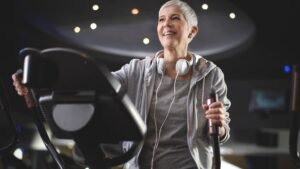
I suppose it’s not too surprising that I found sitting on an exercycle kind of boring. There wasn’t a shelf to put a book on, so I tried using headphones connected to my iPhone, then listened to podcasts or audiobooks.

But I was a wimp – I would stop after five or ten minutes. It was boring and it was hard. My youngest daughter called one day and after hearing my frustration, she offered to be my exercise buddy. “Check in each day with a text telling me how you did,” she suggested. “If I don’t hear from you I’ll call.”

And that’s what she did. Apparently, I needed some assembly too. A few days later, my daughter sent me a podcast called “Re-Engage with Your Resolutions” that listed several strategies she thought would help.

Three of them resonated with me:

  • Accountability: I needed to be accountable to someone.
  • Tracking: I needed to record my progress.
  • Pairing: I needed to make exercising more enjoyable.

It took some experimenting, but I finally discovered that exercising while I watch the 12:00 noon local news program worked. I would get so caught up in the events of the day, the daily Governor’s report on Covid-19, the weather report, etc., that I forgot to be bored. My daughter continued to check in with me for a few more weeks, and I recorded my progress on a chart.

Now I have a routine and I’m slowly getting stronger. I still don’t love pedaling my exercycle, but I’m doing it.

Have you faced a project that overwhelmed you at first? Where did you get the courage and ambition to keep at it? How did you feel when you accomplished what you had set out to do? Let’s talk about it!

Read More