
Author: HairWeavings Editorial Team

Medicare vs. Medicaid: What Seniors, Loved Ones, and Caregivers Should Know

Medicare vs Medicaid

Although their names sound similar, Medicare and Medicaid are two different types of healthcare programs offered by the United States government. While both cover healthcare costs, the eligibility requirements for each program are different.

From the government’s perspective, the collective goal is to provide healthcare coverage to American citizens and residents age 65 and older, to those who have a disability (regardless of age), or to low-income individuals and families.

If you fall into any of these categories, depending on which category you fall under, you will want to either enroll in Medicare, Medicaid, or both. Bear in mind, Medicare and Medicaid do not offer automatic enrollment, and each program has different costs, benefits, and coverage.

The following guide provides an overview of Medicare and Medicaid and lists their key differences, in addition to answering a few common questions. Since both programs tend to be a bit confusing, I encourage you to leave comments and ask questions!

Medicare Coverage

Medicare is a federal program that primarily focuses on providing healthcare coverage for adults over 65. However, Medicare also provides healthcare coverage to disabled people and to those with permanent kidney failure (End Stage Renal Disease).

Medicare is available through a four-part program. The healthcare coverage you receive depends on which plan you select. Here’s a quick breakdown of Medicare’s four-part program:

  • Part A: Helps cover hospitalization, including inpatient services and care received from a skilled nursing facility.
  • Part B: Helps cover outpatient services such as: doctor visits, services from physicians, and some preventative care services. (Please note: Parts A & B, a.k.a. “Original Medicare,” are provided through the Federal Government.)
  • Part C: Referred to as “Medicare Advantage Plans,” these combine Medicare Parts A, B and D, as well as other services, into one plan. These plans are offered through private insurance companies.
  • Part D: Helps pay for prescription drug coverage.

Understanding specifically what Medicare covers and the costs involved is a deeper topic which I will address in future articles.

Medicaid Coverage

The Medicaid program primarily concentrates on the healthcare needs of low-income families and individuals as well as those with disabilities. Medicaid is jointly funded by the U.S. states and the federal government. Therefore, Medicaid coverage differs by state.

Medicaid benefits generally include the following:

  • Care and services from a hospital or skilled nursing facility
  • Home health care services
  • Care from a federally qualified health center
  • Long-term care
  • Doctor and nursing services
  • Lab services and X-rays

Medicaid is, in fact, the largest single source of long-term care funding in the country. 

To learn more about Medicaid in your state, do a simple Google search. Just type, “[your state] Medicaid.” For example, if you live in Florida, you’d type, “Florida Medicaid.”

What Are the Main Differences Between Medicare and Medicaid

The key difference between Medicare and Medicaid is who is eligible for each program. There are different rules for eligibility, and there may be circumstances where you qualify for Medicaid but do not qualify for Medicare, and vice versa.

Another difference is that Medicaid covers long-term care services and support, while Medicare will often limit this form of coverage.

Can You Be Enrolled in Medicare and Medicaid at the Same Time

With Medicare, you must be age 65 or older to qualify for coverage. However, with Medicaid, anyone is eligible regardless of age, as long as you meet the low-income requirements. Therefore, it’s possible to meet the requirements for both programs.

If you are eligible for both programs, then you are deemed, “dual-eligible.” When you’re dual-eligible, Medicaid pays for your Medicare costs under the Medicare Savings Programs. The amount that Medicaid covers depends on your income level.

Next Steps

Now that you have a better understanding of Medicare and Medicaid, the first question you may have is what if I already have health insurance through an employer? This is a great question. The short answer is that if you’re happy with your employer’s healthcare coverage, and it extends into your retirement, then you don’t need to enroll.

For everyone else who needs healthcare insurance into retirement, put together a list of your healthcare needs. What types of doctors do you visit? How often? What types of prescription drugs do you use? Are you in need of any special medical equipment?

If you need Medicare coverage, you have to sign up during certain enrollment periods which amount to a seven-month window:

  • Three months before you turn 65;
  • The month you turn 65;
  • Three months after you turn 65.

If you miss this window, you must wait for the next enrollment period.

With Medicaid, there aren’t specific dates or deadlines. You can apply any time of the year. However, you still must apply. Even if you think you don’t qualify, you should apply anyway. You may quality for your state’s program at the very least.

Are you enrolled into Medicare or Medicaid, or do you have an employer based health care insurance? Have you considered applying for one of the government health care programs? Which ones do you think you are eligible for? Please share your comments and questions below.

Read More

A Feast of Delicious Recipes and History in One Cookbook

cookbook black cuisine

Cookbooks have been a collector item for me since I was gifted with one for my wedding. When I travel, my favorite souvenir is usually a local cookbook found along the way.

Tell Me a Story through Food

Every good cookbook tells some sort of story. It may be a story of the community that created it, a story of those who know the local cuisine, stories of the land and people where the food is grown and raised. It is sometimes the story of the cookbook’s author who, with time and love, compiled recipes to share with those of us who read and cook.

The most recent addition to my cookbook shelf tells many stories and tells them beautifully. The Rise, subtitled Black Cooks and the Soul of American Food, is authored by storyteller and highly-acclaimed chef, philanthropist, and restauranteur Marcus Samuelson. His name may be familiar from several television cooking shows such as Chopped.

You may have enjoyed or prepared what is generally referred to as soul food. Samuelson delves into the history and continuing journey of black foodways. He refers to this book as an invitation to a conversation to the historic foods and people who created this widely defined cuisine.

The stories are told through interview vignettes composed by Samuelson’s co-author, James Beard Award winning food writer Osayi Endolyn. Included are some of the stalwarts of the cuisine as well as up and comers related to it.

Cuisine Development Over Time

Among the mouth-watering recipes beautifully photographed by Angie Mosier, writer, photographer, and food stylist, there is background on the origin of what we may know as soul food. Many foods included in the book’s recipes were grown in slave gardens for sustenance of their families. In some cases, enslaved people brought a knowledge of growing specific beneficial foods with them.

Samuelson was joined by recipe developers Yewande Komolafe and Tamie Cook. Through the recipes, homage is paid to the food writers and chefs who understood the importance of documenting black foodways and have kept the history of a cuisine initiated and developed by black Americans. In many cases, dishes have changed as people migrated to and from other areas.

Foods and recipes also migrate. The authors of The Rise discuss how dishes and use of specific ingredients go through a process of change as people migrate from one region to another. Additionally, dishes have adapted based on influences from other groups or countries.

Let’s Cook

Since this is a cookbook, let’s talk about a few of the recipes that caught my eye. Throughout the book, Samuelson has honored noted chefs, sommeliers, restauranteurs, and food writers by selecting recipes to highlight them.

I spotted a couple of recipes that I plan to try, the first being a staple comfort food, Pork and Beans with piri piri (a sauce with Portuguese-African origins). I think it’s a safe bet it will be a step up from the can of pork and beans in my pantry. The recipe was included to honor Therese Nelson, chef and writer of black culinary history.

Snapper is one of my favorites as are chickpeas, and I’m looking at the Banana Leaf Snapper with Chickpeas and Coconut Rice. I understand banana leaves can be purchased frozen or online, which is a good thing because the climate where I live is not conducive to the banana plant. This recipe honors an anonymous chef.

And finally, a dessert I look forward to preparing this summer, Ginger and Hibiscus Flower Granita. I love ginger, and this one has few ingredients and a short preparation time. The recipe was selected to honor West African chef Michael Adé Elégbèdé

Spices and Ingredients New to You (and Me)

Never heard of a certain ingredient? It’s not a problem. Samuelson includes a resource list of online and brick and mortar businesses that carry many of the ingredients included in the recipes. I’ve been pleasantly surprised to find some ingredients in my local grocery stores. They had been there all along, I just hadn’t shopped for them.

There is also a separate section (Chapter 5) where you can find ingredients and techniques for sauces, rubs, and blends to add to your pantry.

Even if you don’t read a word of this book, or try any of the incredible recipes included, paging through it is a pleasure to the eye. Each page is a work of art, deep colors interwoven in each page layout, photographic portraits of the men and women who make these great foods and those who write about the food and the people, from the restauranteurs to the farmers who raise our food.

Do you include foods of the African diaspora in your cooking? When you dine out, do you choose food new to you (ok, maybe no one is dining out right now, but thinking forward)? Do you look for a story in your cookbooks? What is the last cookbook you purchased?

Read More

Dolores Catania’s Tan Ribbed Dress

Dolores Catania’s Tan Ribbed Dress

Real Housewives of New Jersey Season 11 Episode 2 Fashion

Dolores Catania’s ribbed dress on tonight’s episode of the Real Housewives of New Jersey totally made me a tan Stan. She looks perfect in it, which seems to be the theme with the Jersey girls’ this season who have had some major glow-ups, whether they were needed or not. Kind of like how we should all get a tan dress like Dolores, whether it’s needed or not.


The Realest Housewife,

Big Blonde Hair


Dolores Catania's Tan Ribbed Dress

Click Here to See her Maje Relly Ribbed Dress

Originally posted at: Dolores Catania’s Tan Ribbed Dress

Read More

Thinking About Dying Doesn’t Have to Be Morbid

Thinking About Dying Doesn't Have to Be Morbid

Death
and dying do not make for a jolly subject of any conversation, but it is part
of life. And none of us is getting any younger. Is death or dying something you
think about very much?

You
may prefer to think it will never happen and leave it at that. But if you are
one of those people who like to prepare themselves for what is coming down the
line, you might want to give it a passing glance from time to time.

As We Grow Older

I am
not obsessed with death, but it does cross my mind on occasion – and probably
increasingly. Before I was 60, I rarely gave it much thought at all. The possibility
of dying seemed almost as remote as it did when I was a child, which is to say
it was over a very distant horizon.

Now
that I am in the second half of my 70s, I have to face the fact that my
remaining years are increasingly limited. The statistics are not brilliant as
you grow older, for obvious reasons. And, with each quickly passing year, they only
get worse.

None
of us knows when we’ll die, of course, but it is time to begin to recognise the
situation.

Yes,
some of us live well into our 90s – and centenarians are becoming much more
common. I even have good genes, with current good health and my parents living
to age 90 and 91 respectively.

Yet,
these are details. The truth is, we will grow older and frailer and will have
to face the end, sooner or later. In the words of a young woman living with
AIDS, quoted in my book on the subject some years ago, “You haven’t got forever
any more.”

Dying

Is
it the moment of dying that worries you?

Although
some people die in great distress, the much greater likelihood is that you will
do so fairly peacefully. The profession of palliative care is getting
increasingly clever at keeping people pain free. In the coming years, it can
only get better.

I
haven’t reached the stage of thinking where I would want to be – or, indeed, where
I am likely to be.

Nor
do I often think about my own funeral. Occasionally, when I hear a particularly
beautiful piece of music, I will say casually, “You can play that at my funeral.”
But in fact, it would be better played at a funeral I was attending during my
lifetime as I would actually hear it.

Being Gone

Or
is it the fact of no longer living that worries you? Of no longer being there
to enjoy the many pleasures of life? Or no longer being there for your family
and friends, some of whom may rely on you?

These
are undoubtedly ‘heavy’ issues, which you may want to prepare for.

In
fact, we do make many preparations without thinking of them as such. The urge
to ‘downsize’ stems partly from the wish to make your passing easier for those
who must administer your things. Perhaps you have done this for someone else
and it came home to you how very complex such matters are.

Visits
to long-lost relations – or friends you don’t see very often – may also be
stimulated by the thought of doing so before it is ‘too late’. Such thoughts
may remain un-articulated but are nonetheless real for everyone concerned.

Death of Loved Ones

If anything, I think less about my own death and more about the possible death of my husband, as statistically, this is the more likely first event.

Having
been married almost all our adult lives, it is scary to think about being
alone. Those of you who are already widowed will doubtless know what I mean.

Writing About Death

Although
I really am not obsessed with death, I have written two books dealing with two
different aspects of it.

One
was about young people with HIV and AIDS, all of whom were dying because there had
been no cure back then. It is not a morbid book at all, but it is an honest one
about people facing an early death.

I was impressed with their resilience and called it Wise Before Their Time, because that is what I felt they were.  

The
second is about people who work with the dying. I had worked as a volunteer in
a hospice and found it fascinating that so many people could go to work each
day to help others die. I interviewed nurses, doctors, chaplains of various
faiths, administrators, and even a very reflective chef.

I called it Life in a Hospice, because this is what it was about – the living before the dying.

Preparation

Last year, I watched a TV interview with Sir Ian McKellen, who always struck me as a very thoughtful man. I also have a soft spot for him as he wrote a terrific Foreword for my book about people with AIDS.

Himself in his 80s, he said he did think about death quite often and had even planned his own funeral. (And noted that he thought it sounded like such a good occasion, he wondered if he could plan an early dress rehearsal so he could attend.)

He
surmised that old people thought about death a lot, because it was a form of
preparation. When the time actually came, it probably helped them to feel that they
are ready.

This
seems to me to be time well spent.

How
often do you think about death or dying? Occasionally? Not at all? Does it
worry you? Are you making plans for it? How have you prepared for your own
death? Please share your thoughts with the community.

Read More

Deciem Just Dropped Its Iconic Fragrance & The Backstory Is So Emotional

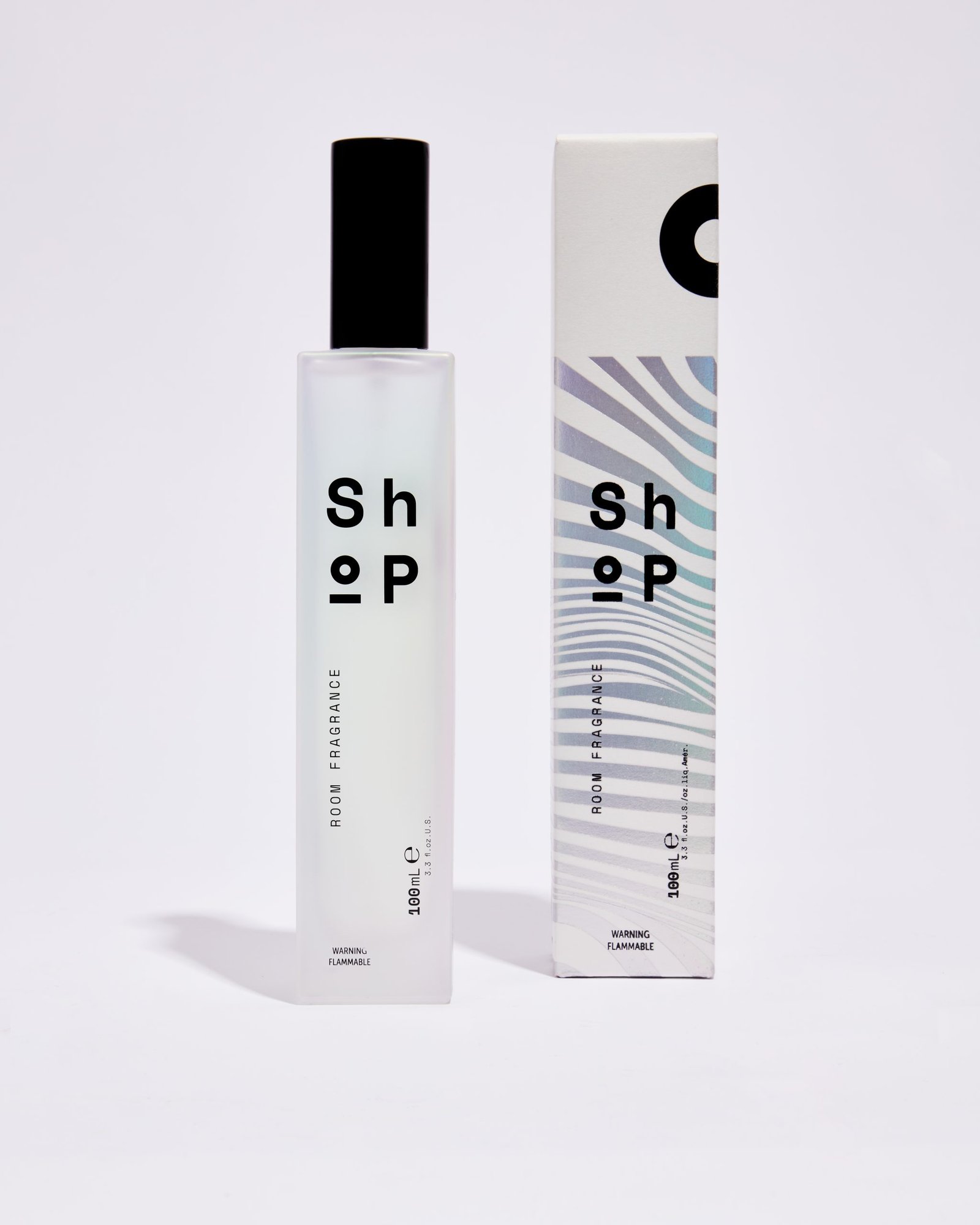
If you’ve ever walked into a Deciem store and wondered how you can get that calming smell into your home too, well, you’re in luck. Today, Deciem is rolling out its Abnomaly, Shop home fragrance after years of customers asking for it. The scent has serious emotional roots. It was created by the company’s late founder, Brandon Truaxe. Abnomaly, Shop was created with Truaxe’s friend and perfumer Azzi Glasser and she’s speaking out about this passion project.

“Brandon knew that smell is a tricky sense to convey through space, especially invisibly, and briefed me to create a fragrance that could transport one directly into the world of Deciem,” she said in an interview the brand shared with STYLECASTER. “He wanted a feeling of being lifted into a comforting, cozy bubble with a touch of edginess.”

This cumulated into top notes of Black Poivre enhanced by Cypress oil, Iso E Super and chalk, warm notes of Guaicwood, Sequoia, and fresh Cedar, as well as balsamic notes of Labdanum resin, White Amber Crystals, White Musk and patchouli.

Our mission at STYLECASTER is to bring style to the people, and we only feature products we think you’ll love as much as we do. Please note that if you purchase something by clicking on a link within this story, we may receive a small commission of the sale.

Abnomoly SHOP Box Product Deciem Just Dropped Its Iconic Fragrance & The Backstory Is So Emotional

Glasser explains how a room scent has a completely different function to a skin scent. “When I composed and sculpted the formulation for Abnomaly Shop, I knew it would need to perform well in large areas,” she says. “The strength had to be at a level that permeates well into the atmosphere so it can give the emotional feeling and work its magic through diffusion in the space.”

Her favorite places to use Abnomaly, Shop are in the home entrance and the main living space, but if you’re anything like us, you’ll spray it all around your bedroom, too. Where don’t we need a little grounding? Abnomaly, Shop is available now and if it’s anything like Deciem’s other launches, is sure to sell out. 

STYLECASTER | Ashley Benson Interview

Read More