
Author: HairWeavings Editorial Team

Claim Your Inner Selfie

inner selfie

Social media is the land of the selfie, and I’m sure there are entire research disciplines devoted to figuring out that phenomenon! I’ve never been a fan, but recently have been contemplating the concept of an inner self.”

During a celebration of life for a dear friend, I watched the highlight reel of his life and wondered, Are these the photos he would have chosen for himself? Aside from images illustrating a life well-lived, were there other photos that he would have chosen to reflect the most important aspects of ‘self’ – who he was at his core?

Self-image is often forged early in life and gradually morphs as experiences either reinforce or diminish the connection to self. Significant life events may also “rock you to your core,” making it difficult to see a clear pathway back to one’s best self.

When was the last time you really felt connected to self? You know, that feeling of energy or flow that fuels joy in your life – regardless of challenges. The feeling that you are connected to your core values and are truly known by others?

You may know exactly what I mean or maybe it has been so long you’re not sure you would recognize the feeling!

What Is an Inner Selfie?

Try this. Think of a picture of yourself (past or present) that you really love – one that makes you think, “Yes, there I am!” Something about it reflects who you are at your best, or who you want to be. 

Think of it as an inner selfie!

If you can’t find one – imagine what it would be and why. Maybe it reveals an internal thread of your best self that runs through every role you take on in life – at work, home, and in the community.

Maybe it reflects the energetic, joyful person you want to be or the life you want to live.

Here’s One of My Inner Selfies
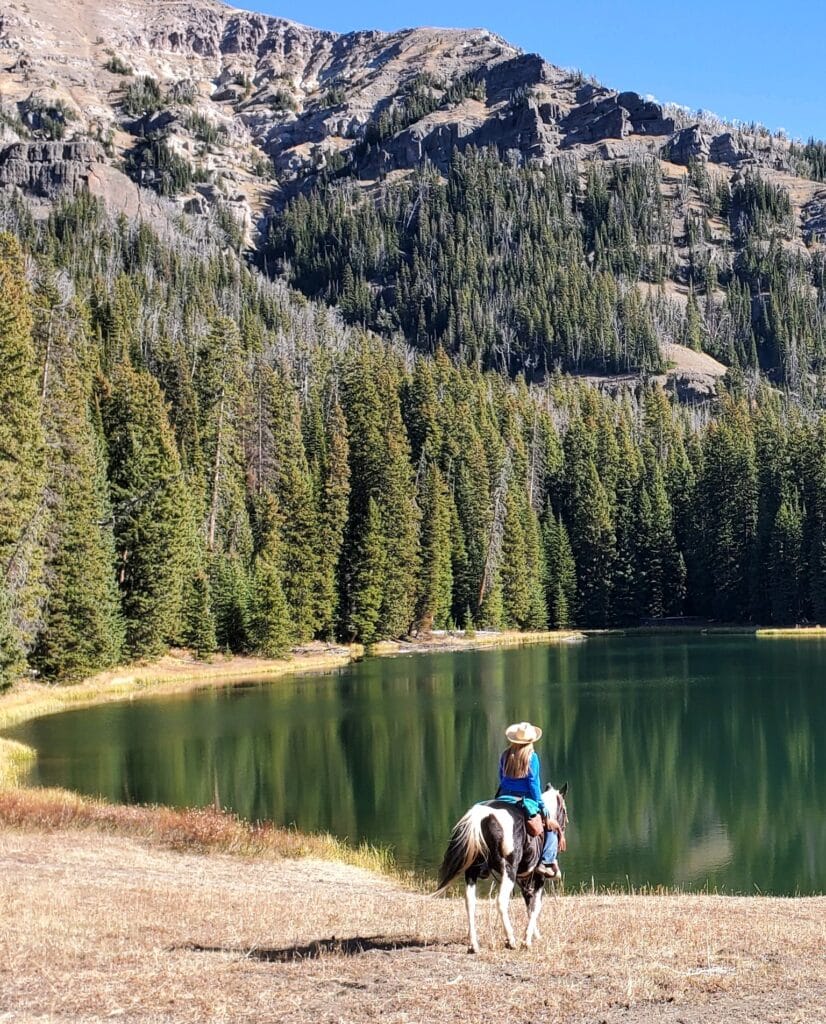
The photo above reflects my drive for a sense of freedom and adventure, a passion for exploring new paths, confidence in my ability to lead the way, and a lifelong kinship with wild places and spirited horses.

Each of these qualities have shaped how I experience both my personal and professional roles in life. 

As a mom I took my boys camping, fishing, and horseback riding. In a favorite Mother’s Day card my adult son thanked me for taking him fishing “every time he asked”!

When riding with friends I seldom stay on the trail, opting instead for bushwacking through the trees looking for new trails or scenic vistas that might be just over the next hill.  

Professionally I’m also driven to create new pathways to overcome common challenges. It’s so much a part of how I work that the Emerson quote, “Do not go where the path may lead. Go instead where there is no path and create a trail” – is prominent on my website!

What Do You Envision as Your Inner Selfie?

So, what about you? What would your inner selfie express about you? Does a photo exist, or can you envision what one would look like? Consider for example:

  • What consistent threads run through your life no matter what role you’re playing?
  • Has your ‘core-self’ changed or remained the same through life challenges and changes?
  • If it has changed, are you happy with that change; and if not, can you create a pathway back to your best self?

The concept of an inner selfie can help you remain connected to your core values and more clearly illustrate your best self to others.

Currently, how well do people in your life truly know you? Consider how you ‘show up’ in all aspects of your life and how most people would describe you to others. Are you happy with that description, and would it match how you would describe yourself?

Do Others See You as You See Yourself?

Be aware that as your interactions with others change over the years, how they view you compared to how you view yourself can become quite different.

For example, recently while our family was exploring some mountain property, I took a side trail and got back to the group a little later than everyone else. When I returned, one of my boys was hollering MOM!!, and the other had gone to look for me. They were worried, and I was completely baffled.

I’m healthy, fit, and quite competent in the mountains (thank you very much), so what made them think I was at risk? After some discussion, it boiled down to my age of 66! What? After all our outdoor adventures together and years of pushing back against ageist expectations, they were worried because of my age. Seriously?

Apparently, neutralizing ageism is like an endurance event combined with a contact sport where you can get hit at any time, even by your own teammates!

Contemplating this experience, I realized that while I continue to lead mountain adventures with my friends of all ages, interactions with my boys are much different – focused instead on interacting with grandkids aged 3–6 years old. Of course, that’s part of who I am as well, but it’s clearly time I took my adult sons on a bushwhacking adventure they won’t soon forget!

It Takes a Lifetime

Being true to self is a persistent life challenge. But, having a clear image of self and being aware of how well we project that to others can help! Consider posting an ‘inner selfie’ (complete with how it reflects your best self) someplace you will see it daily. Then contemplate specific ways to ensure your interactions with those you care about consistently reflect the most important aspects of who you are at your core. Inner selfies – pass it on!

Visit Brilliant Aging for more information about living your best life at every age!

Also read, SMALL CHOICES CAN TIP THE WELLNESS SCALE.

Let’s Have a Conversation:

What would (or does) your inner selfie look like? Have your adult children or others close to you underestimated your abilities simply due to age? If you have lost a part of ‘self’, can you think of ways to get it back?

Read More

Are You Ready to Take a Break – from Alcohol?

take a break from alcohol

Many of us start drinking during our 20s and 30s – to socialise and have fun. As we get older, some of us switch to using a glass (or two) or wine in the evening to relax or to relieve stress. The evolution from “socialising” to “self-medicating” has begun.

Alcohol is insidious – it creeps up on us and many of us find that we have become daily drinkers. However, we live in such an alcogenic culture that it just feels normal. Not having a drink when socialising is far more likely to be noticed!

Here’s the thing, though. Alcohol is a toxin, and we owe it to our amazing bodies and brains to take a break now and then. It could be time to ask yourself this question:

Could I go for 66 days without a drink?

Here Are 8 Reasons Why You Should Try

30 Days Is Not Long Enough

Many of us have done a Dry January but 30 days is just not long enough to experience the benefits of sobriety. Whereas 66 days of sobriety will boost your health, improve your looks and give you a glimpse of just how awesome alcohol-free living can be!

We Need to Make Sure We’re Not Addicted

Alcohol is a drug, and we need to take regular breaks to ensure that we are not becoming dependent. 20% of social drinkers will become dependent over the years. Alcohol is insidious and sneaks up on us which is why an annual “dependence-check” makes so much sense.

A Break from Alcohol Has Slimming Benefits

66 alcohol-free days will certainly have an impact on your waistline. Of course, wine is full of sugar, and it also leads to unhealthy snacking. Even more important to know is that because alcohol is a toxin your body will focus on metabolising it first. In fact, every drink will put your fat burning mechanism on hold for at least 24 hours. For more info listen to this podcast.

Your Looks Will Improve

A break from booze will have a positive impact on your looks. You will lose that puffiness in your face, your skin will clear and your eyes will sparkle. The average US woman spends $300 a month on beauty treatments. The global wellness economy is estimated to be worth $4 trillion. We are on an endless quest for wellness and vitality and youth. Yet ditching alcohol is the best beauty treatment of all – and it’s free!

A Challenge Is More Socially Acceptable

“Alcohol is the only drug we have to justify not taking,” sounds harsh but is true. If you tell your family and friends that you have given up drinking, they may well ask you why on earth you would do such a crazy thing. Whereas tell them you are doing a 66-day alcohol-free challenge as a health kick they could well leave you in peace – or even join you! 😉

Better Sleep Is Certainly a Bonus

To feel rested, we need 7 cycles of REM sleep. Drinkers usually get 2 at the most. The resulting fatigue builds up over the years, especially if you drink a glass (or two) of wine every evening. Ditch the drink for 66 days, and you will sleep like a baby and begin to feel fabulous — who knew?

You Will Experience the “Domino Effect”

After a significant period of sobriety, your mind will clear and your energy and motivation will come flooding back. You may well start reviewing and changing other parts of your life – your eating plan, your exercise program, your career and your relationships.

Enjoy Spring and Summer More Fully

We’re (finally) coming into Spring and Summer is not far off. Wouldn’t you just love to start the summer feeling happier, healthier, slimmer and full of energy!

Why 66 Days?

There’s been a neuroplasticity revolution taking place over the last couple of decades, and this is great news for us 60+ ladies.

Gone is the outdated idea that our brains stop evolving in our mid-20s. The latest science is telling us that our brain is constantly rewiring itself. You’ll wake up with a different brain tomorrow to the one you have today.

How fabulous is that!

In fact, one study done on 57-72 year-olds discovered that their brains gave birth to between 500 and 1,000 new neurons in their hippocampus alone – every day!

The science is also showing us that 66 days is long enough to change a habit and build a new neural pathway.

If you want to see the research which led to the 66 day principle then here it is.

Building New Habits

Our brains have been wired for survival so we like to take the easiest route to whatever result we want. That’s why we may find ourselves pouring that glass of wine rather than going for a run if we want to wind down and relax.

To build that new habit of not drinking for 66 days we have to create a new route – a new neural pathway.

Here’s an analogy to illustrate the process:

Imagine you’re trying to get from Las Vegas to Los Angeles. Route 1-15 is going to be the fastest route.

What if you pulled over to the shoulder and began driving on the sagebrush? The goal may remain the same (Los Angeles) but you’re taking a less efficient route. It’s going to take more time and be more painful.

However, if you took that sagebrush road again and again, day after day tire tracks will form and you’ll gradually be able to pick up speed. That’s exactly what happens in our brains as we build a new habit – we build a new neural pathway. If you continue with your new habit, it will eventually become like a superhighway!

So, yes, changing your habits is hard in the beginning but once you’ve built that new neural pathway, you’ve changed the game and there’s no better feeling than to look back at your superhighway and know that it didn’t get there by accident – it was built by design!

Try the 66 Day Experiment!

Now you’ve read the science and understood the theory – are you ready to put it into practice?

Are you ready to go for 66 days without uncorking that bottle of wine?

Even if you are just looking to cut down, then take a 66-day break and you will find it SO much easier to drink within the low-risk levels of one and a half bottles of wine (or six beers) a week.

If you are thinking about making alcohol-free living a permanent lifestyle then you will find it SO much easier after 66 days.

At Tribe Sober we’ve been running our #Sober66 Challenge twice a year… for years. Many of our Challengers feel so great after 66 alcohol free days they decide to keep it going.

Join Tribe Sober’s Annual #Sober66 Challenge!

If you’d like a bit of support to get through the 66 days then join the Tribe Sober #Sober66 Challenge and you’ll get online, community and audio support for 66 days from the day you sign up.

The Challenge begins on the 20th March so sign up today!

Let’s Have a Conversation:

How many years have you been drinking? Do you drink consistently – a glass or two of wine most evenings? Have you ever tried to take a break to test your dependence? Have you noticed an impact on your looks after a taking a break? Did you lose weight? Do you ever worry about your drinking? Are you aware of the health dangers of alcohol as you get older?

Read More

The Best Exercises for Your Spring Walk or Hike

best exercises walking hiking warmup cool down

The days are getting longer, the sun is shining brighter, and the buds are beginning to bloom. Getting outside for a walk or a hike should be high on your to-do list! Getting outside for regular walks can help you to reduce your risk of heart disease, lower your blood pressure, improve your mood and mental health, and can be a great time to get out with friends or enjoy some quiet time yourself.

When the sun is shining, I enjoy getting outside with my rescue dog Smokey. To make the most out of your walk or hike and to prepare your body, there are some important exercises to incorporate to feel your best. 

Warm Up Benefits

A good warm up is an essential part of your workout, even when it’s a walk or a hike outside. Warming up gives your body a chance to gradually increase body temperature, get your cardiovascular system ready for exercise including your heart and lungs, and helps to warm up your muscles and joints, which sets you up to prevent injury.

Dynamic Exercises

When performing warm up movements, it is best to use dynamic movements versus static movements. Dynamic movements such as marches, side steps, kickbacks, arm circles, and trunk rotation are great movements to bring your heart rate up and start warming up your muscles and joints in a safer way than static stretches such as leaning over for your hamstrings or leaning in for your calves.

Your muscles and joints aren’t ready for static stretching yet. Leave the static stretches for after your walk. Check out this video for some dynamic movements to perform before your next walk or hike to prepare your body for a great walk: 

Cool Down Benefits

After your walk or hike, it can be tempting to jump back in the car or get on with your day right away. Take a few minutes to cool down and stretch your muscles. Your joints and muscles will feel so much better if you take this time. It also allows your cardiovascular system to cool down slowly, keeping you healthy.

Static Exercises

Now is the time when static stretches are good for your joints and muscles as they are warmer from your walk or hike, such as hamstring stretches, calf stretches, and quad stretches. Hold your stretches without bouncing for 3 to 5 deep breaths for 2 to 3 rounds per side.

Listen to your body and give your muscles a gentle to medium stretch, never stretch too deeply. Focusing on your deep breaths instead of time gives your body the oxygen it needs to settle down, slows your heart rate, and gives your muscles the oxygen they need. Check out this video for a few static stretches to perform after your next walk or hike to help your body feel great: 

Strength Training

So many of my fitness coaching clients want to be able to walk, hike, and enjoy travel and adventure for years to come. As we age, we start to lose muscle which can cause aches in joints and a lack of endurance and strength if we aren’t actively strength training our muscles.

Keeping your muscles strong to protect your joints, build endurance, build balance, and strength for your adventures is so important. Having strong muscles in your lower body, including your hips and your ankles, will help to improve your body to stay strong for walks, hikes, and travel and your everyday activities.

I love to smile when a coaching client of mine tells me not only are they ready for their next big adventure, but they are now putting their pants on standing on one leg. Strength training exercises should be performed three times per week with 8 to 15 reps of each exercise and 2 to 4 sets.

Check out this video for some strengthening exercises to keep your lower body strong for your walks, hikes, and adventures: 

Adding in these warm-up, cool down, and strengthening exercises will make a huge difference in your endurance, strength, balance, and mobility to help you enjoy your walks and hikes even more!

Let’s Have a Conversation:

Are you going outside for walks and hikes now that the weather is turning warmer? Do you warm up before a walk/hike and do you cool down afterward? Have you noticed a difference when you warm up compared to when you don’t?

Read More