
Author: HairWeavings Editorial Team

Emotional Decluttering in My 60s

As I look back on my life, I can see all the events and circumstances that brought me to where I am now. I am grateful for every situation and relationship that helped me to grow into the woman I am today.
What I have realized is that some of what I have been holding onto no longer serves me, and it is time to let it go. Just like that closet packed with clothes that I no longer wear; it is time to clear some of the emotional clutter.
Letting go can be difficult but when I look at the benefit it brings, it becomes easier.
It Doesn’t Happen All at Once
Just like sorting through that closet, I needed to take my time and try some things on. How does it feel? Does it work for who I am and what my life is about today? If so, I will happily keep it – if not, I have to release it.
I like the philosophy of Treasure or Toss in decluttering, and it helped to ease some of the emotional discomfort I felt about this process.
One thing I seemed to have accumulated a lot of over the years are unhealthy relationships. Those interactions that, no matter how hard I to try to fix them, never get better.
What I have discovered is that abuse comes in all shapes and sizes (physical, verbal, emotional, financial, spiritual). Running the gamut from unkind and disrespectful to controlling and manipulative, it all has the same outcome – pain.
Replace What You Don’t Need with What You Do Want
In the beginning, everything felt like a loss. Now, I look at what I have to gain in the process. Once I removed the anxiety and discomfort, I found peace and clarity.
Gently, I began sorting through my feelings. I evaluated each situation carefully and asked myself – does this bring me joy?
The answer isn’t always clear cut, and relationships are complicated. But if I am serious about improving my life then I need to prioritize what I give my time and energy to.
Aging Clarified What Is Most Important in My Life
After turning 60, I no longer felt like I had forever but, in many ways, it felt like my life was just beginning.
What I didn’t want to do was to waste one moment being unhappy. Life can be short or long, but it is all very precious, and we have to make the most of it.
For me, that means taking the time to appreciate all of the wonderful experiences I have had and letting the rest go.
Clearing what no longer fits feels like creating space for what is yet to come – more joy and satisfaction at this beautiful time in my life.
Let’s Have a Conversation:
Did your outlook on life and relationships change after turning 60? What impact has aging had on your relationships? Share your stories and join the conversation.
Read More

What Can You Do at Every Meal to Reduce Your Risk of Heart Disease?

You may be thinking, “Well, this is an easy question. Simply reduce or eliminate the amount of saturated and hydrogenated fats, refined sugars, and total calories you consume at a meal,” and you would be right, and we should all work to achieve these healthy nutritional guidelines.
However, regardless of how hard we try we often fall short of eating according to recommended guidelines on a consistent basis. Fortunately, there is a very positive and impactful intervention that we can all make at mealtime that has shown to provide significant protection against the major pathological mechanisms of atherosclerosis that can lead to cardiovascular disease (CVD) or heart disease.
What Happens When We Eat a Meal?
First, there are several processes that take place when we consume food – digestive, endocrine, neurological, etc. to name a few, and all are important and even contribute to the enjoyment of the meal.
However, there are a number of physiological responses that take place in the body during the hours following consumption of a meal (called the Postprandial Period or Postprandial Response) that have the potential to cause harm to our bodies.
These include damage to endothelial cells that line the walls of our arteries, hyperactivity of our blood platelets, oxidation of LDL cholesterol in our blood and an increase in inflammation in the cardiovascular system.
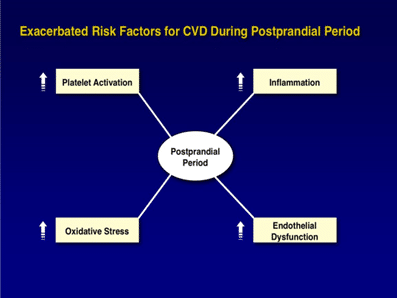
All of these risk factors or pathological mechanism responses that become elevated during the hours following a meal contribute to atherosclerosis or the progressive narrowing and hardening of our arteries due to the buildup of plaque.

Let’s look at each one of these pathological mechanisms separately to see how they individually and collectively contribute to the process of atherosclerosis.
Damage to the Endothelial Cells of Our Arterial Walls
Lining the inner surface of our arteries is a single layer of endothelial cells. These cells play a very important role in maintaining the integrity and functionality of our vessels.
Specifically, healthy endothelial cells release nitric oxide (NO) that functions to repel blood platelets, white blood cells and other debris from sticking to the wall of the artery, and when released in sufficient amounts cause the vessel to dilate for enhanced blood flow.
If these endothelial cells were to become damaged and rendered dysfunctional, the buildup of these cells and other debris overtime, in conjunction with oxidized cholesterol, forms the plaque that builds up in the walls of our arteries.
Endothelial cells can be damaged by a number of lifestyle habits and risk factors including cigarette smoke, high blood sugar (diabetes), high blood pressure (hypertension), and high blood cholesterol levels (hypercholesterolemia).
Specific to the focus of this article, a meal that is high in total caloric content, refined sugars, and saturated and/or hydrogenated fats has been shown to cause damage to endothelial cells during the postprandial period.
Blood Platelet Hyperactivity
A healthy, normal level of blood platelet activity is essential to helping us control bleeding in our bodies. They also play a vital role in helping heal damaged endothelial cells by releasing what is called platelet derived growth factors (PDGF) that promote the healing of damaged endothelial cells.
This is very important and as we previously mentioned there are some lifestyle habits and risk factors that damage these cells.
Unfortunately, the same risk factors that can damage endothelial cells also cause platelets to become hyperactive. As part of our body’s healing process, hyperactive platelets are drawn to the site of damaged endothelial cells (to aid in their healing) in excessive numbers (hyperactivity), and subsequently release excessive amounts of platelet derived growth factors (PDGF).
The PDGF work to heal the damaged endothelial cells, but because it has been released in excessive amounts, it diffuses through the inner lining of the arteries and stimulates the vascular smooth muscular cells (VSMC) of the middle arterial layer, causing them to divide and multiply aggressively.
Consequently, this excessive division and multiplication of the VSMC causes them to migrate inward into the opening of the artery, effectively narrowing the opening and negatively affecting blood flow through the vessel.
Inflammatory Response to LDL Cholesterol Oxidation
Our bodies are constantly subjected to free radicals (oxidants). Free radicals form as a natural byproduct of our own metabolism, can be found in certain foods or beverages we consume, are present in polluted air we may breathe, etc. These oxidants are unstable oxygen molecules and can “oxidize” and effectively alter LDL cholesterol molecules and damage body tissues.
Fortunately, we have antioxidants in our body that can neutralize the free radicals. Some of our antioxidants are endogenous or manufactured by our bodies, and others we must consume in our diet. If we maintain a good balance between the number of free radicals and antioxidants, our cells are not damaged, and LDL cholesterol is not oxidized.
However, if our LDL cholesterol becomes oxidized, our body’s immune system perceives the oxidized (changed/altered) LDL cholesterol molecule as a foreign intruder to the body’s well-being. Through complex chemical reactions our body’s immune system is activated to combat this foreign threat. In response, white blood cells (WBC) circulating in the blood are drawn to the site of the oxidized LDL cholesterol.
As these WBC’s pass through the inner layer of our arteries, they are converted to macrophages (MAC)and begin scavenging the oxidized LDL cholesterol molecules, similar to what they would do to invading pathogens (bacteria, viruses, etc.).
When they become engorged with the oxidized LDL cholesterol the MAC’s are then referred to as foam cells. These foam cells accumulate in the arterial walls and contribute to the development of atherosclerotic plaque.
Overtime, this plaque buildup causes narrowing of the artery leading to the development of cardiovascular disease. This process can occur over years and decades as the plague gradually accumulates before the problem leads to a heart attack, or a stroke if occurring in the arteries that feed the brain.
What Can We do to Combat these Pathological Mechanisms that Occur During the Postprandial Period?
Because these physiological responses that occur during the few hours after consumption of our meal – a time in which our cardiovascular system is under significant attack by these pathological mechanisms – we need an intervention with each meal that will reduce or negate these pathological responses and provide protection against heart disease.
The answer to the key question posed in the title of this article is to be sure and consume polyphenolic compounds (flavonoids) with each meal.
There are over 4,000 identified flavonoids and they are found in fruits, vegetables, nuts, seeds, and plant derived beverages like wine, tea, and fruit juices. They have extraordinary powerful properties including the ability to counteract the pathological mechanisms that are taking place during the postprandial period, as well as increase cardiovascular protection from a temporary increase in the protective HDL cholesterol and endothelial cell function.
This protection also includes a positive impact on blood pressure values as the vessels dilate more efficiency reducing the resistance to blood flow.
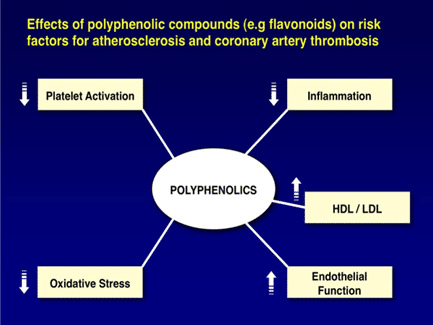
The targeted and timely (with a meal) consumption of these polyphenolic compounds/flavonoids can blunt the negative effects while providing healthy constituents to your diet.
Below are various ways to ensure that your meals, whether the nutritional content is good or not so good, include polyphenolic rich foods for a timely intervention against the pathological postprandial responses and their damage to our cardiovascular system.
For Breakfast
- Include a cup of berries with your cereal or whatever you eat in the morning. It really does not matter the kind of berry as all have various flavonoids that can offer some protection.
- Drink a 100% natural fruit juice such as purple grape juice, pomegranate, apple, orange or another berry juice. Research has shown that purple grape juice and pomegranate juices and red wine contain more of the types of flavonoids that promote cardiovascular health.
During Lunch
Lunch seems to be a time when a lot of folks eat out, whether that be at a fast-food restaurant or some quick grab-and-go food place. Unfortunately, the food options available at these types of places tend to be high in total calories, refined sugars, and saturated fats – all of which are associated with greater postprandial responses – and hence the need for a flavonoid rich component that you “add” to a typical lunch.
Consider bringing along your own fruit to help blunt the effects of the postprandial response. Again, the key is to always include a source of flavonoids whenever you consume significant calories, especially if those calories contain a lot of saturated fats or sugars.
If you are eating your lunch at a nice restaurant, whatever meal you select, be sure to include a fruit or vegetable with your order.
Evening Meal
The evening meal tends to be the time where many people consume a lot of calories. Drinking a glass of red wine or purple grape juice or pomegranate juice with your meal has shown to provide significant cardio protective benefits against the pathological mechanisms of the postprandial response.
A worthy goal is to always include a fruit and/or vegetable with your dinner.
Other Considerations
The consumption of alcohol in any form may be a risk for some individuals and therefore should be avoided. A person with diabetes may avoid drinks that are high in sugars, as are natural fruit juices as part of their efforts to control their blood sugar levels.
Overweight and obese individuals who are working hard to reduce caloric intake and improve body composition may choose to avoid foods and drinks that are high in caloric value during their weight loss efforts. And some simply do not like the taste of red wine, purple grape juice or pomegranate juices.
For these individuals, there are supplement products such as grape seed and grape skin extracts that may potentially offer benefits like those found in red wine and purple grape juice. As these substances are not regulated by the FDA, their potency and bioavailability may be questionable. However, some have been tested and offer benefits associated with blunting the postprandial responses.
It should also be noted that as a “supplement,” these products would be effective to help “supplement” your total dietary flavonoid intake. In doing so, keep in mind that several epidemiological studies have shown an inverse relationship between death from CVD and the total intake of flavonoids.
In conclusion, consuming a polyphenolic/flavonoid rich food/drink with each meal will help to reduce the negative pathological mechanisms occurring in our cardiovascular system during the hours following a meal. It is literally a timely and targeted intervention to protect your heart and vessels from disease.
Let’s Have a Conversation:
How will you incorporate these strategies into your meal planning to obtain protection against the post prandial pathological mechanisms that lead to heart disease?
Disclaimer: This article is not intended to provide medical advice. Please consult with your doctor to get specific medical advice for your situation.
Read More

5 Steps to Sell Your Business

It may not have been on your mind the day you started your business, but one day you’ll exit it. If you’re at the point in your business life-cycle where you’re starting to think about an exit, selling a business may seem overwhelming. It doesn’t have to be. Here are the five steps to make the transition efficiently and effectively.
Set Transition Goals
Stephen Covey first coined the phrase “start with the end in mind” in his book The Seven Habits of Highly Effective People. When planning your business exit, this is excellent advice. First, ask yourself why you want to leave your business? Are you burned out, are you ready to retire, looking for new challenges, or is the business not providing enough financial rewards?
After you have the why, think about whenyou would like the primary responsibility of your business to switch to someone else. Consider who the ideal buyer will be. Is it a key employee, a competitor, a family member? What role do you want to play after the business is sold? Do you want to simply walk away, or do you see yourself helping in the transition or playing a smaller role?
Finally, try to estimate what the business is worth to a potential buyer. (I’ll write a separate blog post on how to estimate your business’ value in the future.) For now, you can either estimate the value based on net profit (gross revenue minus expenses) or do research to see what other businesses in your field have sold for recently.
Assess Your Business
Every business owner needs to do a self-assessment called a SWOT analysis. If you’re not familiar with this term, it stands for Strengths, Weaknesses, Opportunities and Threats. This is an honest review of what your business does well, what its weaknesses are, a list of opportunities for your business and an assessment of the threats to your business. You’ll use this assessment in a variety of ways as you move along the path to the sale of your business.
The key to getting maximum value from a SWOT analysis is to look at your business from the perspective of a potential buyer. As business owners, we tend to see things only from our perspective.
During this step, you will request a formal business valuation from an independent business valuation expert.
Here is a free SWOT template you can download.
Improve the Business
Using the information you gathered from the previous step, you can improve the business to make it easier to sell. Think of it like selling a house.
A real estate agent listing your house for sale will do a preliminary walk through and recommend changes to enhance the house’s value in the eyes of a buyer. The agent might suggest new countertops for the kitchen and master bath, refinish wood floors or get the roof fixed. The agent will recommend you remove clutter and have the house staged.
It’s the same when you are ready to sell your business. You’ll want to improve the business where it matters and not in areas a buyer won’t value. Here’s where the SWOT analysis you did in step two comes in. Using the list of weaknesses you created in your SWOT analysis, you might spend six months to two years improving your business.
Maybe you’ll update your books and records, document critical standard operating procedures, or go through your P&L to see what you can stop doing, start doing and keep doing to make your cash flow as positive as possible. Like upgrading a house, focus on the things that matter to a potential buyer.
Market the Business
This is my favorite part of selling a business because in this step you’ll write your business’ story in as positive a light as possible. Again, using the SWOT analysis, you’ll highlight your unique value proposition, your list of happy clients, your personal story from start-up to success, and describe the opportunities you see for your business and industry.
After you’ve crafted your story, you’ll want to shop your business to friends, family, competitors, professional contacts and your professional network. Of course, this must be done carefully and confidentially to ensure clients, customers and your team are not alarmed. This takes artful conversations and careful activities.
Sell the Business
This is the last step in your journey, and it’s one where you may need the most support from other professionals. There are three critical parts to the sale:
Due Diligence
Once a potential buyer and you are acquainted, you’ll start the due diligence process. It starts with you and the buyer signing a non-disclosure or confidentiality agreement that protects your interests. Then, you and the buyer will share details of your business and the buyer will share information about their ability to purchase your business and their plans for the future of your business.
Terms of Sale
You’ll negotiate the terms of the sale including timing, terms, price, and your role after the sale. You’ll include these details in a formal sale/purchase agreement. Your accountant and business attorney play critical roles in this part of the sale process as they educate you about tax implications and draft the agreement.
Transition Plan
After you sign the sale/purchase agreement, you and the buyer will agree on the transition plan. This is the nitty gritty of roles, responsibilities, and timing, including how to tell your team, clients, vendors, and the marketplace.
Summary
Selling your business may seem overwhelming when you’re at the start and in the middle of the sales journey. However, thoughtful planning in step one and consistent effort in the remaining four steps will get you to the end. It’s not easy to sell your business, but you can do it with the right mindset, enough time and good support along the way.
Let’s Have a Conversation:
Have you thought about the future of your business? What questions do you have about this exciting, daunting and exhilarating process? Please let me know and I’ll answer them directly or in a future blog post.
Read More

10 Factors Influencing Emotional Eating

Emotional eating, the act of consuming food in response to emotional triggers rather than physical hunger, is influenced by various psychological factors. Understanding these factors is crucial for unraveling the complex relationship between emotions and eating behavior.
Emotional eating usually develops gradually, influenced by a variety of emotional and psychological factors. It often begins as a seemingly innocent response to occasional emotional discomfort or stress. At first, it may provide a temporary sense of relief or distraction from negative emotions. For instance, after a particularly challenging day at work, indulging in a sweet treat may offer a brief escape and create a sense of comfort.
Over time, however, this occasional behavior can develop into a habitual pattern as the brain starts associating food with emotional relief. The brain’s reward system reinforces the connection between consuming certain foods and feeling better emotionally, leading to a cycle of emotional eating.
In this article, we will explore the psychological factors that contribute to emotional eating, shedding light on the intricate interplay between emotions, thoughts, and behaviors.
Emotional Triggers and Emotional Regulation
Negative Emotions
Negative emotions such as stress, anxiety, sadness, or loneliness are common triggers for emotional eating. These emotions can disrupt emotional well-being and lead us to seek comfort or distraction through food.
Emotional Avoidance
Emotional eaters may engage in eating as a means of avoiding or numbing unpleasant emotions. By focusing on food, we can momentarily escape from emotional discomfort or suppress challenging feelings.
Emotional Regulation
Food can serve as a form of self-soothing or emotional regulation. Consuming palatable foods triggers the release of neurotransmitters like dopamine, providing a temporary mood boost and reducing emotional distress.
Cognitive Factors and Thought Patterns
Cognitive Distortions
Emotional eaters often experience cognitive distortions, such as all-or-nothing thinking or catastrophizing. These distorted thought patterns can contribute to emotional eating by intensifying negative emotions and leading to impulsive or irrational food choices.
Reward and Pleasure Seeking
Emotional eaters may associate certain foods with reward and pleasure, seeking them as a means of gratification or self-reward. This association reinforces the connection between emotions, food, and the temporary relief it provides.
Perceived Lack of Control
Feelings of powerlessness or a perceived lack of control in other areas of life can contribute to emotional eating. Turning to food allows us to exert control over their immediate environment and provides a temporary sense of empowerment.
Beliefs and Expectations
Beliefs and expectations about the effects of food on emotions can influence emotional eating. For example, we may hold the belief that certain foods can provide comfort or alleviate stress, leading them to seek out those foods during emotional episodes.
Body Image and Self-Esteem
Body Dissatisfaction
Body dissatisfaction and a negative body image can contribute to emotional eating. We may use food as a means of coping with feelings of inadequacy, seeking temporary relief from the distress associated with body dissatisfaction.
Self-Esteem and Emotional Eating
Low self-esteem can lead to emotional eating as a form of self-soothing or self-comfort. Food becomes a source of validation or temporary boost in self-worth, providing a sense of comfort or distraction from negative self-perceptions.
Shame and Guilt
Emotional eating can trigger feelings of shame and guilt, perpetuating the cycle of emotional eating. The act of overeating or consuming “forbidden” foods can intensify negative emotions, leading to further emotional eating as a means of coping with these feelings.
Strategies for Addressing Psychological Factors
Emotional Awareness
Developing emotional awareness is crucial for addressing emotional eating. By recognizing emotional triggers and understanding the underlying emotions, we can begin to differentiate between physical hunger and emotional hunger.
Cognitive Restructuring
Challenging and reframing negative thought patterns and cognitive distortions can help us develop healthier responses to emotional triggers. Cognitive-behavioral techniques can assist in identifying and modifying unhelpful thoughts related to food and emotions.
Self-Compassion and Body Acceptance
Cultivating self-compassion and fostering a positive body image can reduce the reliance on emotional eating. Practicing self-care, self-acceptance, and engaging in activities that promote self-esteem can contribute to a healthier relationship with food and emotions.
Seek Support
Seeking support from healthcare professionals, therapists, or support groups can provide guidance, accountability, and validation in addressing psychological factors influencing emotional eating. Working with a professional can help us develop personalized strategies for managing emotions and building healthier coping mechanisms.
Psychological factors play a significant role in emotional eating. Understanding the emotional triggers, cognitive patterns, and body-related influences can empower us to address and overcome emotional eating behaviors. By developing emotional awareness, challenging distorted thoughts, cultivating self-compassion, and seeking support, we can navigate the psychological factors that contribute to emotional eating and work towards a healthier relationship with food and emotions.
Reclaiming control over your eating habits and fostering a healthier relationship with food and with yourself can be difficult, but it is possible. You can start your journey by getting my free e-Book here and learn how emotional eating began for you.
Let’s Have a Conversation:
What psychological factors lead you to eat your emotions most frequently? How do you keep control over your eating habits despite these factors? Let us know in the comments.
Read More
