Author: HairWeavings Editorial Team

Have Fun Moving through the Winter

fun exercises

We’re into our second full month of winter. I don’t need a calendar to tell me this. When I have misplaced one half of each of my two favorite pairs of gloves, we have passed the half-way point of winter.

Thus far, my favorite hats are still accounted for, but looking a bit scruffy at the moment. If you see a woman running down the street wearing a red mitten on one hand and a black glove on the other, that is likely me.

Although I do love running and hiking, just for fun I began looking for some forms of exercise that wouldn’t require gloves and hats. Although I may not have tried all of these, let me share a few activities that are supposedly trending this year.

And, of course, what you choose to do for exercise is between you and your doctor.

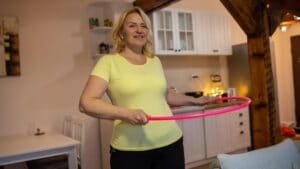
Weighted Hula Hoops

These hula hoops have grown up from those we enjoyed as 12-year-olds. They are intended to help with fitness and weight loss. They vary in size from kids’ to plus sizes. Some even have a counter built in.

Weighted hula hoops are available on multiple online sites, lots of glitzy colors to make it fun, and I saw prices varying from $13 to $40.

Backward Running or Walking

This is a good one so long as you have a bit of space free of throw rugs and pointed pieces of furniture. And you can do it in around 60-second bits of time as your intervals.

I do this occasionally and feel most comfortable backward walking across an open space in my kitchen or basement. Walking backwards is said to improve coordination, increase focus and build stronger legs. Besides, again, it’s fun. In the depth of winter, we need some fun.

So, put that cup of coffee in the microwave to reheat for a minute. When the timer beeps you will have completed one circuit. This Healthline article about backward walking and running provides more detail on benefits and duration.

Online Fitness 30-Day Challenges

Challenges were a strong trend last year and a number of sites offered online fee-free challenges. This year, some of those have gone to paid membership. Still, there are several sites I have followed that remain available to anyone.

There are several benefits to a 30-day challenge. First, you are beginning from scratch along with everyone who is following online. Other participants may post about how it went for them that day, so there is a feeling of comradery even if you are working at it solo on your living room floor.

Last year, I participated in a Livestrong 30-day push-up challenge as well as a 30-day plank challenge. I continued those challenges for separate 30-day periods. Livestrong offer various 30-day/4-week challenges on their website.

I was surprised at how much my ability to do pushups improved. Now, I didn’t get to the full number doing a full pushup, but I was half-way there before I switched to a modified push-up form. I count that as a success since it was a vast improvement over where I started at the beginning of the challenge.

This year, I am again doing the 30-day Yoga Journey with Adrienne. Even though that 30-days is about to finish, the series will usually stay on the site for some time after its completion.

I hope one of my three offered options appeals to you on these frigid days when we are down to miss-matched gloves and slightly tattered hats. For those of you in warmer climes, any of the above will work well on your lanai or deck before the morning sun is too high for comfort.

Let’s Have a Conversation:

How are you keeping your body moving through this long winter? Have you found a new exercise that is as fun as it is beneficial?

Read More

Grandparenting Matters in All Generations

grandparenting

My first thought when my oldest daughter told me she was expecting my first grandchild was “at last!” I was 64 years old, with four adult children more focused on their careers than on starting families. Most of my friends were already grandparents. Some of them even had great-grandchildren. I was ready to join the grandparenting club. 

What I wasn’t prepared for was how I would feel when my daughter placed her infant in my arms. I suddenly realized I was holding the future of our family. Before I could process that thought, the tiny creature curled her hand around one of my fingers and I was instantly in love.

My granddaughter was born in February. I retired from teaching and moved over a mountain range to live a few houses away from my daughter and granddaughter. Many new parents would have cringed to have their parents so close, but this new mom had asked for my help, and she was fine with my proximity.

From then on, I took my granddaughter for long walks in her stroller while her mother rested or painted. As she was able to go longer between feedings, I expanded our walks to include the grocery store, the bakery, and the park. We built traditions together – singing, reading, playing outside in my patio, now furnished with a water table, sand box, and child-safe plants. My guest room became her playroom.

When she graduated to overnight visits, she slept in a day bed with me on the trundle beside her. When she started preschool, I helped with afternoon pickups and dancing lessons. Soon it was carpools and summer camps, art lessons, and Taekwondo.

Now I have six grandchildren. Each child has a unique place in my heart, and we make special memories together. We’ve planted seeds, made gingerbread people, furnished doll houses, and enjoyed hot chocolate around campfires.

Grandparenting Today

There are 70 million grandparents in the United States today. The average age to become a grandparent is now 50, although many individuals become grandparents earlier. By 2030, there will be more people of grandparent age than children and youth. We can have a tremendous impact on society by becoming active grandparents and mentoring younger generations.

My first grandchild helped me see life differently. I slowed down, observed on my hands and knees the progression of a line of ants across the pavement, or the fuzziness of a Lamb’s Ear leaf against my cheek, or the way sand felt when poured slowly from one hand to another.

As a single parent, I hadn’t had the leisure to watch my own children play, to observe them discovering the world, to notice their growth. Now that I didn’t have to worry about my job, the dishes, the laundry, the shopping list and all those other daily tasks of parents, I was free to play with her and the other grandchildren to come.

Soon we were engaged in deep conversations about friendship, family, homeless people, and saving the whales. Spending time with my grandchildren took me back to the basics and enriched my life. 

Grandparents Enrich Family Life

But I have also enriched the lives of each of my grandchildren. Young children experience their world as an environment of relationships, and these relationships affect all aspects of their development. I hope my grandchildren have rich memories of the times we spend together. Even if they don’t, I know that I have provided experiences and conversations that have helped in some way to make them the adults they will soon become.

Parenting is difficult. Not all families can have, or wish to have, grandparents just down the street. But most families will be richer for including the grandparent generation in their children’s lives. Teaching a seven-year-old how to knit, or play chess, or plant vegetables will give children a heritage of connection. Participating in family activities and engaging with your grandchildren will add a richness to their lives as well as yours.

Across the Miles

One of my daughters who works from home has encouraged her five-year-old daughter to FaceTime her grandparents on snow days, holidays, and other occasions when Mom is on the computer and the hours stretch out ahead of her.

Her daughter has become adept at including each of us in her arts and crafts projects, detailed recounting of weekend activities, and singing silly songs. It’s not always possible for families to connect like this, of course. We don’t always agree across generations, and sometimes the little hurts build up and make it hard to reconnect. I’ve thought about this a lot and spoken with many families who have done so successfully.

These conversations have prompted me to write a book about grandparenting. Grandparenting Matters will be about the changing nature of grandparenting in the western world, and how families can most effectively meet the challenge.

It won’t be a book about activities to do with your grandchildren or a keepsake album or stories about how grandparenting changed the lives of 20 of my closest friends – there are lots of those already. Rather, this book is a guide to grandparenting in this fast-moving world, both interpersonally and technologically.

Some of my stories will be about cross-generational families and how they mended broken relationships and built new, stronger ones. Other examples will be of single parents, single grandparents, and how illness, unemployment, or incarceration can derail the best of plans. I will give suggestions for building resilience in the children of struggling families.

How You Can Help

During my research for this book, I will talk with grandparents of different cultures, grandparents who live thousands of miles away, grandparents who live with their children and families who move in with Grandma. We’ll explore the changing needs of maturing grandchildren and aging parents, the value of sharing family history with children, and of teaching ethics and kindness and how to say thank you.

Grandparenting does matter. The distinguished developmental psychologist Urie Bronfenbrenner wrote, “The grandparent/grandchild relationship is… second in emotional importance only to the parent/child relationship.” That makes grandparenting worth understanding. I would love to hear your stories about grandparenting.

Let’s Have a Conversation:

What is your relationship with your grandchildren? What was your relationship with your grandparents? In what ways are you a different grandparent to your grandchildren?

Read More

Set Yourself Up for Successful Guitar Practice

successful guitar practice

Whether you’ve just started playing guitar or you’ve been at it for years, you probably want to get the most out of each practice session. The power of preparation can’t be overestimated! Start setting the stage for success by creating a physical space that supports your commitment.

Your Physical Space

The great thing about the guitar is that you can take it with you wherever you go. All you need is a place to sit comfortably while holding your guitar correctly. But this advantage can become a liability if it enables you to avoid creating the optimal space for daily practice. A little time and planning can go a long way toward crafting an environment that enables satisfying and successful learning and playing.

You don’t need much room for your practice, but you do need a designated area where you feel comfortable. Your space should be private, so you’ll be able to concentrate without any concern for how you might sound to someone else. Practice is a whole different thing than performing. You need to feel free to repeat passages ad nauseum and make mistakes boldly!

If you share a living space with someone else, you may need to collaborate on ways to keep your sounds to yourself. If you’re playing a classical guitar (nylon string), you’ll probably do fine by being in a separate room with the door closed. But you’ll need an extra layer of sound protection if you’re playing a larger guitar with steel strings, or if you play an electric guitar through an amplifier.

If your housemate is amenable to listening to music, books, or podcasts through headphones when they’re home during your practice time, your problems are solved! But that’s not always necessary if you typically play using amplification because you can use your own headphones! I use the Fender Mustang headphone amp and find it really satisfying for most sessions. When I want to sing or play backing tracks through my amplifier, though, I still appreciate my husband using his headphones.

Furnishings

Furnish your space with an armless chair or stool that enables you to hold the guitar correctly and without tension. I use an armless office chair, which I can set at a height that allows me to have my feet flat on the floor and enables me to swivel between metronome, music stand, recording devices, and, in my case, students.

Because your posture is important when playing guitar, you’ll need a music stand and footstool. It’s also helpful to have a small table next to your chair for all of your accessories.

Increase your desire to practice and enhance your overall experience by making your practice space pleasant. Furnish it with fresh flowers or plants, pleasing or inspiring artwork, and aromas that contribute to calmness, energy, and focus.

Equipment and Accessories

You’ll want to be able to easily reach a capo, a metronome, picks, extra strings, instructional books, paper, pencil, your guitar journal, and the recording device of your choice. You’ll also need a device to use for listening to or watching audio files or videos of the songs you’re working on. If you use your phone to access a metronome app or watch YouTube videos, avoid getting distracted by texts or emails. Make a commitment to stay focused during your precious practice time!

Your Mental Space

Once you’ve shut out the physical world, you’ll still need to corral your thoughts. Make a point of clearing your mind when you enter the practice room and perform a repeat clearing after any mentally intense periods. Pause, shake out your hands, take a deep breath, and release all thoughts. Sit in this empty state for as little as 10 seconds or up to five minutes. When you start again you may be surprised by how relaxed and productive you are!

Your Emotional State

Creating an optimal emotional state for practice can be tricky. Who knows what emotions you’ll experience on any given day? Fortunately, you don’t need to anticipate or control your emotions, because as you engage with your guitar, they will almost certainly shift.

Keeping this in mind can help you avoid the trap of avoiding your guitar until you feel like practicing. Truthfully, the best time to practice your guitar is often when you feel like it the least. After a few times of stepping into practice when your heart’s not in it, you’ll probably begin to look forward to practice as a way to balance or soothe a challenging or unpleasant emotional state.

Further read, CAN THERE EVER BE ENOUGH TIME FOR WHAT YOU WANT?

Let’s Have a Conversation:

What furnishings or accessories do you find inspiring in your practice area? Can you be sufficiently assertive in claiming privacy in your guitar time? What songs tend to shift your mood the most?

Read More

How to Make the Most of Life in Your 60s

make the most of life after 60

Our 60s can be an exciting phase of life filled with new possibilities and opportunities. It’s a time to reflect on achievements, recognize our own wisdom, and perhaps nurture ourselves a little more than we’ve done in the last few decades. It may not come naturally to be a bit more self-centered, so it may help to engage in a bit of self-discovery. It will be time well spent, if it enables us to be intentional about how to make the most of life in our 60s.

There Are Really No Boundaries in Our 60s!

This can be a time to explore new hobbies, interests, and even possibly career paths. Or it can be a time to relax and enjoy well-earned comfort and family time, if that’s what you crave and what helps you, personally, to thrive.

Whatever activities you choose to pursue, stepping out of your comfort zone a bit can help you to stay flexible and nimble. If you venture into uncharted territory, you may also discover hidden talents and passions that bring joy and fulfillment to your life.

Let’s talk about some practical ways to take advantage of this wonderful opportunity for joyful reinvention and rediscovery.

Life Is Full of Opportunity in Your 60s

As we reach our 60s, responsibilities and commitments may start to ease, allowing for more personal freedom. This newfound flexibility provides the perfect opportunity to prioritize our own desires and embark on adventures that we’ve always dreamed of.

It’s also a wonderful time to make a commitment to immerse ourselves in activities that we are truly passionate about.

Making the most of life in our 60s requires making a conscious effort to live in the present moment. This means being mindful and savoring each experience as it unfolds, appreciating the beauty and wonder of the journey.

By cultivating a present-focused mindset, we fully engage with the adventure at hand and create lasting memories.

Let’s get into how to make the most of life in our 60s.

How to Make the Most of Life in Your 60s

1. Stay Active and Healthy

The most important thing to make the most of life in our 60s is very simple and straightforward. We must work to maintain our physical and mental well-being. The good news is that this is easy to understand. The basic rules to follow are unchanged from earlier in life. The challenge? Staying active and healthy, and preserving our physical and mental well-being, may begin to take more of a conscious effort in our 60s.

To fully enjoy the adventures that await us, we need to step up to the plate and prioritize our well-being, first and foremost.

So how can we do this? A few basic commitments to ourselves. We must:

  • Nurture our mind, body, and spirit so we have the energy and vitality to fully savor every adventure.
  • Maintain an active lifestyle that includes regular exercise, such as walking, swimming or yoga.
  • Adopt a balanced, healthy, nutritious diet that provides energy and nutrients we need to thrive.
  • Manage our lifestyle and set boundaries that enable us to get sufficient, quality sleep.
  • Continue to keep our minds active and engaged, through continuous learning and seeking out new adventures and opportunities.

That’s right. Seeking adventure in our 60s is an excellent way to not only maintain our health but to challenge ourselves physically and mentally.

Let’s agree to set wellness goals and engage in activities that sensibly push our limits, such as hiking, kayaking, weight training, learning a new skill or exploring a topic of interest that is new to us.

Pushing ourselves beyond our comfort zones helps build resilience and self-confidence while invigorating our spirit.

2. Nurture Existing Relationships and Cultivate New Ones to Make the Most of Life in Your 60s

Nurturing relationships is essential at any age, and our 60s are no exception. Surrounding ourselves with loved ones, friends, and a supportive community can bring immense joy and emotional well-being.

These long-standing relationships can provide a sense of familiarity, support, and shared memories. We must:

  • Take the time to connect with others, share experiences, and create meaningful memories together.
  • Reach out to old friends, family members, and acquaintances we’ve lost touch with.
  • Schedule regular catchups, outings, or phone calls to reconnect and invest in those connections.

Entering your 60s can also be an opportune moment to cultivate new relationships.

Social groups are an excellent way to meet others who share common interests. We can seek out local community centers, book clubs or hobby groups that align with our passions. Whether it’s a walking group, or a volunteer organization, these platforms offer opportunities to connect with others who share our enthusiasm.

It’s key to approach new encounters with an open heart and mind and to be open to finding new friendships at any age, as connections can be formed in unexpected places.

Engage in community events, workshops, or online forums, and be receptive to forming bonds with people from diverse backgrounds and experiences.

3. Make the Most of Relationships, New and Old, to Make the Most of Life in Your 60s

It can be easy to sit back and let the younger folks lead the way and set the tone for conversations and activities. But we serve ourselves most by being present and engaging with others. This means actively listening, asking open-ended questions, and being genuinely interested in what others have to say. By fostering connection through meaningful conversations, we build strong and lasting relationships.

Technology can also open up a world of possibilities for connecting with others.

Explore and experiment with social media platforms or online communities. Online forums create opportunities to share experiences, join discussions, and connect with people who may inspire or resonate with your journey.

4. Seek Out New Experiences Outside Your Comfort Zone to Make the Most of Life in Your 60s

Entering your 60s doesn’t mean that the thrill of adventure has to come to an end.

In fact, this stage of life presents a remarkable opportunity to adopt a growth mindset, experience new things and seek adventure like never before.

Sign up for classes, workshops, or clubs that align with your interests. Whether it’s art, photography, cooking, music, or any other passion that fuels your creativity, embrace it with gusto. Attend workshops, join clubs, or participate in classes to pursue and refine your skills.

Exploring new activities not only broadens your horizons but also provides opportunities to meet like-minded people and make new friends.

Be curious and embrace the chance to learn and grow alongside new companions. Consider using some of your free time to travel and experience different cultures. Seek out the stimulation of novelty and create lifelong memories.

Welcome the unfamiliar and be open to trying new things. From novel activities to different cuisines, from learning a new language to travelling to new places, from committing to an exercise program to taking up a challenging hobby, the possibilities are endless. Just do something new!

Because stepping outside of our comfort zone stimulates personal growth and creates a sense of vibrant living.

5. Continue to Seek Meaning and Purpose to Make the Most of Life in Your 60s

As you enter your 60s, it’s natural to reflect on your life’s purpose and the legacy you want to leave behind. Take the time to identify what truly matters to you and aligns with your values.

And then brainstorm ways to become more fully committed and active in ways that demonstrate who you truly are and what you stand for.

Volunteer work is a possible means to align your actions to your principles and values and it not only benefits your community but also provides an avenue for connection and purpose. Identify causes or organizations you feel passionate about and offer your time and skills.

Volunteering also brings people together, fostering camaraderie and forming new connections built on shared values.

Whether it’s giving back to your community, mentoring others, or pursuing a cause close to your heart, finding meaning and purpose can bring immense fulfillment – and open doors to new relationships and experiences.

How to Make the Most of Life in Your 60s

As you work to stay healthy, fit, and active, and explore new opportunities, don’t forget to celebrate the milestones and accomplishments you’ve already achieved in life, and the new ones that you are encountering, along your path of continued growth and development.

Your 60s are a time to acknowledge your accomplishments and be proud of the person you’ve become, as well as to continue your ongoing journey of self-discovery.

Continue to seek out opportunities and savor each moment with gratitude and enthusiasm.

Let’s start a conversation about how to make the most of life in your 60s!

Thank you as always for reading.

If you haven’t yet subscribed, please visit KindCompassCoach and enter your email address so you never miss a post. 

Let’s Have a Conversation:

What adventures have you pursued recently that you would recommend to others? Do you know others in their 60s who you admire? What principles do they represent? How are they a good role model for others? Was there an active grandparent or family friend or colleague in your earlier life who demonstrated what it looks like to be an active, vibrant, 60-year-old? What does it look like to you, to make the most of life in your 60s? How will you know you’re achieving your goal of a fulfilling, meaningful phase of life? What actions can you take this week, this month, this year to align your activities with your intentions?

Read More

5 Things You Should Tell Your Hairdresser

hairdresser

While a lot of us confide in our hairdresser, sharing some of the most private details about our lives, I’ve learned from writing for the hair industry that often we leave out the information that actually matters in terms of how our hair will turn out.

If you’re a stylist’s first-time client, it’s not enough to have the hairdresser look at you and feel your hair. You have a lot of knowledge that will improve your chances of a good outcome. And if you’ve been seeing the same hairdresser loyally on a rigid schedule, things may have changed in your life that are worth mentioning.

Even when asked for information while we’re sitting in the chair, we can forget dates and details. I asked one of my best sources, Todd Faulk, an educator with the Aveda Arts & Sciences Institutes, to run down the list of what clients should be telling their hairdressers before color or scissors ever touch the hair. These are his top five.

#1: Hair Color Candor

Have you ever had hair color take beautifully on the regrowth at the roots but not so well on the rest of your hair? That’s what will happen if the same formula is applied all over to hair that has been previously colored. Typically, the color should be applied on the roots well before the rest so it can process for a longer time. Your roots may need their own formula as well.

According to Todd, clients tend to report that they have color on their hair only if the color is fresh. By the time it’s washed out or faded, they disregard that color application. Rather than asking you whether you have color on your hair, the better question for stylists to ask is: “When was the last time you had a hair color or other chemical service?” So even if that’s not the question you get, it’s the one you should answer.

The “other chemical service” part is important, because a perm or straightening service deposits chemicals on your hair just as a color service does. In a worst-case scenario, the hair could break off if there’s no elasticity left in the hair when your stylist bleaches over an old perm.

Sometimes clients do know they have color on their hair, but they’re reluctant to tell the stylist because either they went to a different salon or they did it themselves.

“Don’t be embarrassed,” Todd says. “I know that people don’t want to be judged on whether they went to another stylist or they used box color. But hair color isn’t like paint – you can’t just paint over it. Hair color is achieved through a chemical process. When you look at your hair you might think the color is gone or the perm has fallen out, so the chemicals aren’t there anymore. But the chemicals are still in the hair even if you can’t detect them.”

#2: Scalp Health

Your stylist can run a thumbnail across your scalp to determine whether there’s a buildup of sebum, which is oil on the scalp. Sebum causes inflammation, and it can drive hair loss if the follicle gets clogged or the inflammation suffocates the follicle enough to keep hair from growing out of it.

You can give your stylist a heads-up, though. If you’ve been noticing any thinning, oiliness, itchiness or flaking, let your hairdresser know. Don’t assume the flaking is dandruff, which is believed to be caused by a fungus and seen pretty rarely after adolescence.

Todd says that, typically, the cause of flaking on middle-aged women is dry scalp. If you’re using a dandruff shampoo on a dry scalp, it may make you feel squeaky clean but it’s actually aggravating the situation if that shampoo is stripping oil from your scalp.

#3: Medical Information

As part of your physical body, your hair and scalp will be affected by an illness, allergies or medication you’re taking. For example, if a seasonal allergy causes patchiness on your arm or generally irritated skin, your scalp may be experiencing the same condition.

If you’ve ever noticed that you “shed” more during a certain part of the year, that’s the reason. You may benefit from using a product just for that season.

You’ll probably tell your hairdresser if you’re undergoing chemotherapy, but that’s not the only time you should mention a new medication. While younger women’s hair can change during pregnancy or from birth control medication, we older women take all sorts of things that might be affecting our hair.

“If you’re trying to cover gray and the color isn’t taking, it could be due to medication you’re taking for high blood pressure or thyroid,” Todd says. “Medication can deplete some of the pigment in the hair, so there will be less pigment left and, if the hair is resistant, you may need to either change your color formula or let it sit longer.”

You probably think that the last thing a hairdresser wants to hear about are your menopause symptoms. But both men and women stylists are very accustomed to that conversation, and it can be important. Menopause presents so many major changes in your body that it can impact hair growth, pigment, texture, strength and elasticity.

Do you have a mole on your forehead, scalp or neck that isn’t visible with your current hairstyle? Let your stylist know. Your hairdresser not only will keep an eye out for any changes in size and color as time goes on, but if you ask for a short cut like a pixie, the stylist will remind you that the mole will be showing and will make sure that’s okay with you.

#4: Lifestyle and Travel

Sometimes you and your stylist will be trying to figure out why your hair feels drier than usual, and the answer is simpler than you think – you just returned from visiting a drier climate, or your home humidifier has been on the blink, or you started swimming for exercise. It can be a lot of things. Always think through what’s changed in your life, and mention it. Diet, stress, activity – it can all impact your hair.

If you’re planning to travel, that’s something to bring up, too. You might want to take along a leave-in conditioner if you’ll be in dry air or saltwater. Todd offers this tip if you’re going to be in chlorine: Rinse your hair with tap water before you jump into the pool.

“The hair will be saturated like a saturated sponge, and then it can’t absorb as many of the pool’s chemicals,” Todd notes. “After swimming, rinse again. You can condition before and after also, even if you don’t shampoo.”

If your finances are tight or they’ve changed, don’t be embarrassed to let your stylist know you’d like to have options for lower price points on the recommended services and products. Maybe you just can’t afford highlights this time. Again, this is not an uncommon salon conversation, and a good stylist will not be judgmental or push you to do anything that’s not comfortable for you.

#5: Home Hair Care Routine

What you’re using at home is important. If you walk into the salon with lots of product already on your hair, your stylist may want to wash your hair before applying color. If your hair feels dry and you say that you shampoo every day, your stylist may suggest switching to every two or three days.

Your stylist should educate you on products. If you color your hair, your hairdresser will probably recommend a color-safe shampoo. A minty shampoo may make your hair feel extra clean, but Todd says the mint is an astringent and will pull color out of the hair.

“People often don’t understand why we recommend sulfate-free shampoos,” Todd adds. “Sulfate makes the product lather, but it’s filler and dries out the hair. Even if it says it’s 100% organic, that refers only to the active product, not the filler, and that filler can take up a lot of the bottle. There’s even an organic sulfate, but it’s still a detergent. Be truthful with your stylist about everything you’re using on your hair.”

Also read, HAIRSTYLE TIPS FOR OLDER WOMEN: 13 TRADE SECRETS YOUR HAIRDRESSER WANTS YOU TO KNOW!

Let’s Have a Conversation:

Do you visit the same hair stylist every time you need a touch up? How well does he/she know you and your hair condition? Do you share any of the above information?

Read More