Author: HairWeavings Editorial Team

Piano Lesson 28: Amorous Anecdotes about Johann Sebastian Bach and the Mystery of the Notebook!

piano lesson 28, Johann Sebastian Bach

Welcome to piano lesson 28 where we will discuss composer Johann Sebastian Bach! We will be playing two short pieces arranged for your right hand to play alone which will include the new high B and C notes you learned on p.76 in Upper Hands Piano, BOOK 1.

[NOTE: If you are just joining us for the first time, you can find my previous Sixty and Me Free Piano Lessons on my Author page. You can join our lessons any time and move at your own pace!]

27.1 Amorous Anecdotes about Johann Sebastian Bach and the Mystery of the “Notebook”
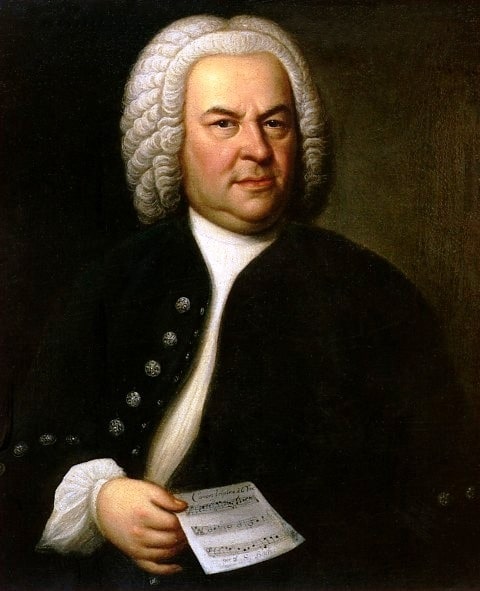
Image sourced from Wiki Commons

Johann Sebastian Bach was one of our most prolific and celebrated composers, having written over a thousand intricate and innovative pieces in his lifetime. His second wife, Anna Magdalena, was a famous, accomplished and beautiful soprano singer, and helped Bach immensely by transcribing and copying many of his works.

Bach fathered 20 children which earned him the name “Papa Bach,” yet Anna continued to perform after their marriage. Here I reveal some of the surprising details of Bach’s love life, along with an explanation of why we attribute some pieces to Anna Magdalena’s mysterious “notebook:”

28.2 Blue Bells of Scotland, p.77

Remember to observe the repeat signs! Play from the beginning to the 1st ending repeat sign 😐| and repeat back to the ||: beginning repeat sign, then skip to the second ending. Notice also the f-p and the other dynamic markings. Play the first line forte the first time, then piano on the repeat. There is also another forte and a mezzo forte dynamic marking to observe. See my demonstration video to verify that you are playing the repeated section correctly:

28.3 Minuet, p.77

When I was a young student, we called this piece the Bach Minuet, but as you can see in my video 28.1 we now attribute this Minuet to a composer named Christian Petzold. However, since we can’t be 100% sure, the composer attribution reads, “From the Notebook of Anna Magdalena Bach,” Bach’s second wife, who had a collection of pieces in a notebook which her husband Johann Sebastian gave to her. You will recognize this famous tune right away. Be sure to keep your eighth notes even!

Passion Practice

  1. Review Exercise #1 in B, and add F# and D-flat, with hands together. These are some of the trickiest pentascales to play, so practice them slowly. Play the 5 notes of each position before playing the exercise to be sure you have the correct notes. Play each exercise once forte (loudly), and once piano (softly) with your eyes open, then closed, if possible.
  2. p.77 – Play the Blue Bells of Scotland observing the repeats and dynamics. When you feel comfortable with Blue Bells, play the Minuet. Once you know the notes, you can try playing both of these pieces with a metronome. Listen for even eighth notes in the Minuet.
  3. Chord Calisthenics #5, Appendix viii – Play each set of minor and diminished triads, in F# and D-flat, alternating hands. Also review C, G, D, A E and B. See Lesson 26 for a demonstration of Chord Cali #5.
  4. If you have time, review For He’s a Jolly Good Fellow on p.67.

Let’s Have a Conversation:

Papa Bach certainly lived an interesting life. Do you like learning a little bit about the history of the music you are playing? Bach and Vivaldi (who wrote Spring, p.23) composed music in the Baroque period. Baroque music is characterized by more intricate melodies and fewer dynamics than the generally more melodic Classical era, as you might observe in our pieces by Mozart (Sonata p.58) and Beethoven (Ode to Joy p.31-32). Which pieces have you liked the best? Do you have a preference for Baroque vs. Classical music?

Read More

Reduce Anxiety in 3 Simple Steps

reduce anxiety

Is anxiety controlling your life? Are you worried all the time? If so, you are in the right spot!

I Was an Anxious Person Too

Ten years ago, I was a nervous wreck because of a relational and legal difficulty in my family. I was a hot mess: I was filled with anxiety; I couldn’t sleep or eat; I was unable to calm my mind down or relax.

At bedtime, my mind was still in chaos and racing in every direction. Worst case scenarios developed very easily in my mind. All the “what if’s” surfaced regularly. I tried distracting myself by watching TV, playing a game, or going for a walk.

If I was washing dishes or watching TV stressful thoughts lurked in the back of my mind. Anxiety was a constant threat to any sense of well-being. Finally, my doctor put me on Xanax to help calm me down. I was miserable. I was so obsessed with negative, scary thoughts.

When the situation finally settled down and I was able to think more clearly, I decided that I was “not living like this anymore!” So I got help to learn how to manage anxiety and worry. It took months but gradually I learned how to become free from the tyranny of anxiety. You might say I became immune from excessive worry and fear. Of course, life still presents challenges, but I have tools and I know how to manage anxiety. This is why I’ve become a certified life coach with the goal of assisting women find freedom from anxiety. It is my passion and prayer.

Managing anxiety is possible for you too!

STEP 1: Name the Fears Causing Anxiety

Identify what is causing your anxiety. This could be challenging but once you know what is causing your anxiety you can make changes to help reduce your anxiety. Answering these questions can help you name foundational fears.

What worst case scenarios am I telling myself?

Can I identify what is really triggering my fearful thoughts?

What is my inner critic telling me?

This inner work is so worth the effort. You must be intentional and focus a spotlight, so to speak, on the fears at the root of your anxiety. Recently, I worked with a woman who was overwhelmed with anxiety, filled with worry and having a hard time calming down. She was very upset and angry about a situation with her daughters.

We worked together and took the time to identify her fears. Through our conversations and journaling, she recognized the fears triggering her anger and anxiety. She was able to get perspective, calm down, feel less overwhelmed and think rationally about her relationship with her daughters.

Step 2: Change Old Thoughts to New Thoughts

Intentionally shift from old thought patterns to new thought patterns. This means catching negative thoughts as they arise and replacing them with positive ones.

This is about a radical change in thinking patterns. As you experiment with this you will begin to experience less overwhelm and out-of-control thinking.

Not too long ago, I was contacted by a person experiencing anxiety about her upcoming retirement. Her mind was spinning in many directions. She was sad, anxious, and fearful. As we worked together, we focused on her thoughts and subsequent feelings. She learned how to pay more attention to her thoughts and feelings and most importantly, how negative and destructive they were.

As a result, with practice, she calmed down and used her newfound tools for shifting her thought patterns. It’s made a difference. While she continues to explore what retirement could mean for her, she is more at peace with the unknowns. She’s feeling lighter about the future.

Step 3: Create a Plan

Create a plan including new habits to turn around guilt producing and fear generating patterns of thinking. Use tools every day to reduce anxious thoughts and feelings.

Outline a routine for quieting yourself. You could verbalize or write affirmations each day.

Self-assurance and hope will develop when you stick with your blueprint for coping with anxious thoughts whenever they arise.

You will discover that managing anxiety is indeed possible.

Perhaps you can identify with another client who contacted me because of the anxiety she was experiencing about her physical well-being. She was quite concerned that she had a debilitating, crippling illness. Waiting for medical appointments was tough. She couldn’t really avoid the situation or change it.

We talked about shifting her thinking and behavior. She moved towards accepting the situation through changing negative thoughts to more positive ones. This helped reduce anxiety and a chaotic mind. Now she functions with a mental bag of strategies and tools she can use to manage anxiety. She’s written down a list as well. This is a continuing journey as she awaits more test results. All the while she is living out a plan to manage anxiety.

Reducing Anxiety Is Possible

You can learn how to manage anxious thoughts and feelings. You can use these 3 steps to handle anxiety. Understanding anxiety and intentionally moving forward with rewiring thoughts puts you on your way to worry free living.

If this sounds like you and you’re ready to make a change and become anxiety free, I hope you find someone to support you in managing anxiety. I’d love to offer you a free 30-minute consultation. We’ll talk about your situation and, if you want my help, explore how I can help you.

Further read, ANXIETY IN WOMEN OVER 60: SPOT IT AND CONQUER IT TODAY!

Let’s Have a Conversation:

What worries you the most in life? Does it cause you anxiety? Are there “what-if” scenarios that replay in your mind? How do you manage your anxious thoughts?

Read More

Starting the Year Out Write?… Map It Out!

starting the year out with a map

This is the year, you’ve told yourself, when you finally write that book – or start painting, playing the piano, singing, quilting, sculpting… But as the first month of the year wanes, you wonder what happened to your resolution.

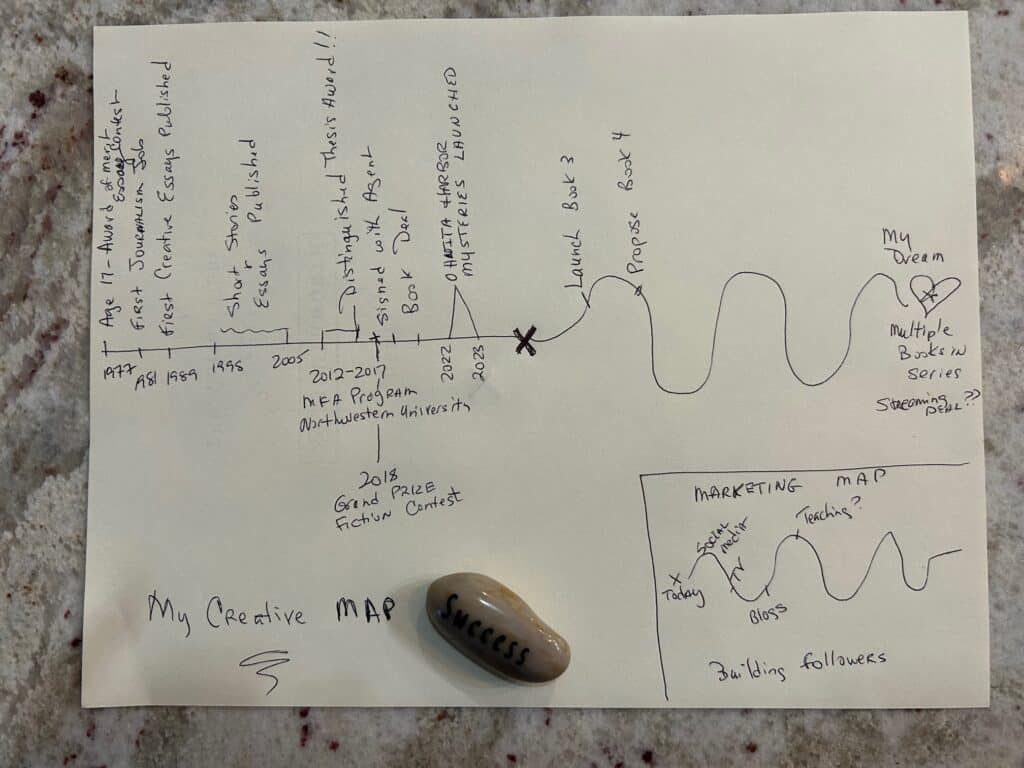
Never fear! To bridge the gap – you need a map. It’s a simple, but surprisingly effective, visual tool to move from ideation to motivation to activation! I call it a Creative Map, and it not only helps you chart the course toward your dream, but also acknowledges the progress you’ve already made.

Before we dive into mapmaking, let’s consider why this exercise is important. Experts advise us about the power of declaring our intentions and writing down our goals, using techniques such as journaling. In addition, research shows that sharing your progress greatly improves the odds that you’ll successfully achieve them. With the Creative Map, you’ll do both!

The Creative Map process makes dreams far less daunting – what we might dismiss as unattainable becomes far more tangible. This isn’t a pipedream – there is a precedent! So, if you’re feeling stuck and stymied, a Creative Map can generate energy and provide direction to advance along your journey.

With that, let the mapmaking begin! (I have a short video on the Creative Map, too.)

“X” Marks the Middle

We’re all works in progress, and that includes our goals and dreams. That’s why the Creative Map starts with an X in the middle of a sheet of paper turned horizontally (or posterboard – if you want a larger scale). From that X, extend a line to the left.

Along that straight line mark down past attempts and accomplishments that support your current dream. You may very well see more entries than you expected – like those notebooks full of doodles when you were in high school or that college theater production. You recall how you felt the first time you walked into a gallery and really looked at art.

My own Creative Map extends back to an accomplishment I had nearly forgotten – winning a special award of merit in a nationwide essay contest when I was a 17-year-old high school senior.

Track the Tangents and Turnarounds

While you’re gazing in that rearview mirror, think of the tangents and turnarounds along your creative path. You wanted to be a dancer until severe tendonitis kept you away from the ballet barre, and you took up singing – finding your true passion. Or you tried and tried to get a book published, then gave up (but you did complete that manuscript). Mark these junctures and claim the lessons learned.

For me, my biggest tangent was pursuing literary fiction for years, only to be told by a very wise editor that what I was actually writing had all the elements of a great mystery! That sent me back to square one to, once again, rewrite my novel. But the result was the launch of my Ohnita Harbor Mystery series, and my first novel, The Secrets of Ohnita Harbor, followed by The Secrets of Still Waters Chasm. Without that turnaround on my path, I wouldn’t be where I am today.

Now, the Journey Begins

It’s time to chart your course ahead. Mark your desired destination in the far-right margin (I suggest using a heart, star or other aspirational symbol). Label it with your deepest desire – your novel published, your painting or photography on display, staging your performance art, or other creative endeavor. Take a moment and savor what you’ve just done! You not only wrote down your goal, but you’ve made it the destination for your ongoing journey.

Where to from Here?

Draw a curvy line between your “X” in the center to your destination. Why the zigzag? Creative paths always involve interesting twists, so you might as well welcome the learning experiences, challenges, and fortuitous moments ahead. Now, plot out the next 2 or 3 points along that path – especially the things that you commit to doing this year (leave lots of white space for the future).

A writers’ workshop? An art class? Entering that contest or juried show? Getting up on open mic night for live lit or standup comedy? By mapping it out, you’ll increase your chances of actually taking that brave step.

 A Living Document

Throughout history, topographers and mapmakers have made changes as they explored the world (and found out a ship wouldn’t plunge over the edge into the abyss). In the same way, your map is going to be amended. From time to time, you’ll probably have to draft a new – and bigger – one. And that’s a good thing!

Additionally, you might need a companion map, like those city inserts on state roadmaps (the kind we tried to refold and stuff into the glove compartment in the days before GPS and Google Maps). For example, while my Creative Map is all about perpetuating my writer’s journey as a novelist, I have a companion map that helps me keep up momentum in marketing through social media, traditional media, and even a goal of teaching.

From past to present, present to future – our Creative Maps are snapshots of our journeys. They acknowledge what we’ve already done and chart a course toward our dream. And whenever we feel lost or stuck, all we need to do is plot out one more step. And that’s how we start (and keep) this year on the write track!

What looks like scribbles and scrawls is actually the first draft of my Creative Map, marking my progress thus far and charting the course to my dream. Now, I’ll transfer it to posterboard for a bigger map to put on the wall.

Let’s Have a Conversation:

Have you drafted a Creative Map as a visualization tool? What did you write on it? How can you connect the dots from past experiences to your current dream? What can you do now to take you one step closer to your goal?

Read More
Kyle Richards’ Black Asymmetric Dress

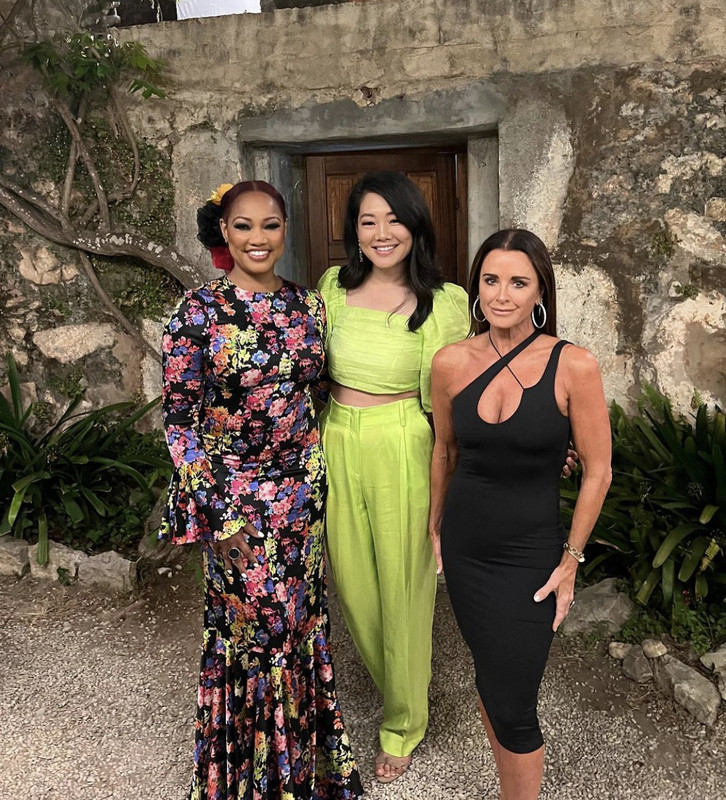
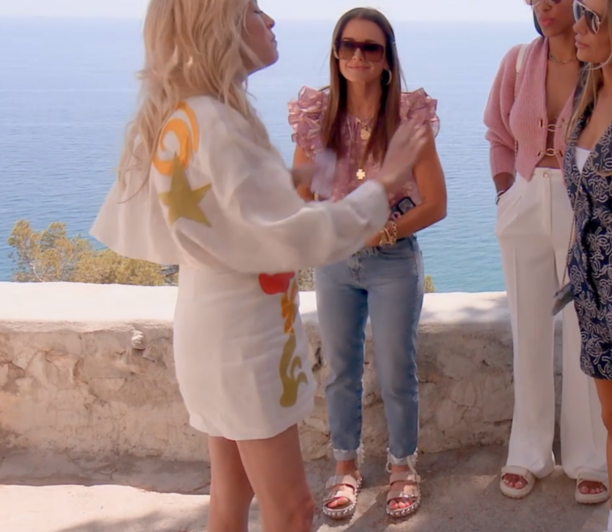
Kyle Richards’ Black Asymmetric Dress in Spain / Real Housewives of Beverly Hills Season 13 Episode 14 Fashion

It’s another day in Spain for the #RHOBH ladies which means it’s another dinner! One that is filled with both drama and fab outfits per usual. One of those outfits being Kyle Richards’ black asymmetric dress. Not only does she eat a gorgeous dinner she also ate in this look. Which if you’re new to the Gen Z slang (like me) that basically means she totally rocked it.

Sincerely Stylish,

Jess


Kyle Richards' Black Asymmetric Dress

Photo: @garcelle


Style Stealers


Originally posted at: Kyle Richards’ Black Asymmetric Dress

Read More