Author: HairWeavings Editorial Team

Where Do Your Beliefs Come From?

limiting beliefs

Your thoughts, behavior and life experiences are run by your beliefs. Therefore, to improve the quality of your life in 2024 and beyond, it won’t come by a flurry of physical activity as most people have been taught to believe it will.

It will happen by adopting new beliefs. But how do you do that?

To get things started, let’s look at where our beliefs come from. For there is no better time than the start of a new year to let go of limiting beliefs that no longer serve you and begin making room for new and enhanced experiences to flow into your life.

The Step Most People Avoid

Becoming clear on the original source of your existing beliefs and how they direct your life is essential before you adopt new beliefs or even unpack your limiting beliefs.

This seems like a no-brainer, but it is the one step most people avoid while attempting to create new and improved experiences in their life.

As I am sure you have discovered along your life path, what most of us were fed as children about how life works is simply not true. That is why the new beliefs you will want to adopt in this new year will likely be at odds with the limiting beliefs you are letting go of.

Limiting beliefs are founded on the premise of scarcity and unworthiness.

Although you may have many positive beliefs about yourself, limiting beliefs tend to be the most dominant for they are the thoughts that represent the most fundamental perceptions you have about yourself.

The way limiting beliefs make their way into key areas of your life is that they frame a general perception of the world, which translates into you not having enough of what it takes to be loved, successful, happy, or fulfilled.

What About Now?

Like millions of others who are 60 and over, you likely inherited many of the same beliefs about who you can be or what you can achieve from previous generations.

In a different era, these beliefs about how life works may have made sense. But do they work in today’s world? And do they work for you based on where you are now in your life?

When you take time to do an honest review of your beliefs, it is quite common to recognize that for most of your life the beliefs you had about yourself can be traced back to what your parents, teachers, and authority figures expected you to be.

Like most of our generation, the ideal path you were likely told to take and stay on for love, success, safety, and happiness was predicated on pleasing others. This may provide temporary satisfaction, but more often than not it leads you into stress, resentment, and emotional depletion.

Granted, you may not have been aware of all of this back then, but what about now? The answer can be found in a famous quote by Maya Angelou, who said, “Do the best you can until you know better. Then, when you know better, do better.”

Life Happens for You

The more you take time to honestly uncover the source of your beliefs and realize the power this has over your choices in life, the more you can confidently flip the script of your life on your terms.

A big part of this is transitioning out of any limiting belief that says life happens to you and instead, knowing life happens for you. This is because you are in control of what new beliefs you adopt and which ones you let go of.

To make such a transition requires going beneath the surface of your daily actions, behaviors, and experiences. This, however, is not where or how most people in our generation were taught to look for creating sustainable change.

You Are the Boss of Your Life

When you go beneath the surface of your daily life, it becomes apparent just how much your behaviors and reactions to life are predicated on unconscious limiting beliefs.

As much as these beliefs may have served you well earlier in life, they are not in your best interest now – at least not in the areas of your life you seek to improve.

Another thing you realize is that YOU are the BOSS of your life.

You are in control of creating new responses to life through new beliefs and behaviors, all of which produce the joy and sustainable fulfillment you have been seeking. At this point you start to see where you can make immediate, positive changes without requiring anyone else’s approval but your own.

Let’s Have a Conversation:

What were some of the more influential limiting beliefs in your life that were passed down to you that you are now ready to let go of? What is something you can give yourself permission to do more of this year that would immediately improve the quality of your life? Is there a current limiting belief that is getting in the way of you doing this? If so, what is it?

Read More

Resolutions Made Easy

resolutions made easy

Did you make any resolutions for the new year? It’s a natural time to initiate new activities or revitalize old ones. Unfortunately, resolutions can be slippery, but I’ve discovered a few simple tools that make them stick!

As a guitarist and instructor, I have a lifetime of experience with conscious goal setting and achievement, both in my own and my students’ practice and performance. In addition to researching and studying the topic, I’ve gained insight by evaluating my own habits and patterns around discipline and resolve. And, in coaching countless students, I’ve witnessed some great successes – and some epic fails.

Is It as Simple as Self-Discipline?

Not really. As you might guess, the thing that most people feel trips them up is self-discipline. But discipline is not always what it appears to be. I realized long ago that most of what appears to others to be discipline in my life is merely habit that I’ve carefully and consciously chosen and placed. I suspect that most people who succeed with resolutions would say the same.

It’s true that establishing habits does require discipline, but the required amount of discipline is small, in terms of time. In fact, most habits take as little as a few days to establish. You have countless daily habits – from brushing your teeth in the morning to doing the dishes at night – that initially required discipline, but no longer do. It follows that when you’ve chosen to commit to something new, your success lies in moving the activity as quickly as possible from discipline to habit.

By combining that strategy with a supportive mindset and some informed choices, you can set yourself up for success. Start by choosing the optimal way to frame your resolution.

Know This: It’s a Gift!

The most important thing you can do to assure success in keeping your resolutions is to consciously make them as a gift to yourself as opposed to a punishment. Whether you want to practice an instrument, learn a language, start a new exercise regimen, or launch a new diet, you’re doing it to elevate the quality of your life and your enjoyment of it. The fulfillment of your resolution is a gift that you desire and deserve. Remind yourself of that every day!

In addition to approaching your practice with gratitude, be patient! Don’t measure and judge your progress daily. Just welcome your practice as an integral part of your life.

Set Practical Goals

Before launching into your new commitment, make sure the goal you’ve set is attainable. For example, in your zest to advance quickly on the guitar, you might resolve to practice several hours a day. But are your hands strong enough yet? Will that schedule work with your current obligations?

If you realize that your plan is unrealistic, don’t give up – just adjust. In the above example, you could start with 20 or 30 minutes of practice a day. As the weeks go by and your hands strengthen, you can choose to add more time. Life has a way of shifting and expanding to support your investment.

Choose a Favorable Time

Timing is everything when working with resolutions. If you’re excited about starting a new instrument as the holidays wind down, for example, it will be hard to focus on practice until the guests have cleared or you’ve tidied up after a celebration. Likewise, a walking or running program is unlikely to get off to a good start during a season of inclement weather. Set yourself up for success by starting under the best circumstances you can. Once you’re firmly established in a routine, you can more easily navigate challenges like weather or holidays.

In addition to choosing a supportive external circumstance, it pays to be as emotionally and mentally prepared as possible. If you’re immersed in or recovering from a particularly stressful period, try to catch up on your rest and find your center before embarking on a new routine. When you’re in touch with both your inner and outer life, it’s possible to set your intentions and then wait and watch for the starting time to show itself. This doesn’t mean that you give in to resistance, but that you trust what your thoughts and feelings tell you!

Schedule your time for daily practice thoughtfully, too, remembering to choose habit over discipline. It’s a lot easier to do something every day than to do it only on specific days of the week. If, for instance, you decide to exercise on a Monday, Wednesday, Friday schedule, you may always have in the back of your head that if you “need to”, you can put off one of those sessions with the hope of using one of your unscheduled days to “catch up.” Things have a way of unraveling from there because your practice hinges on discipline as opposed to habit.

The most effective way to schedule your daily practice is to attach it to something that’s already in place. Guitar practice could come directly before or after any daily activity, such as morning coffee or tea, an afternoon exercise program, or your evening meal. Be creative in finding ways to achieve the things that add joy to your life!

Let’s Have a Conversation:

Do you have any tricks for keeping resolutions? What resolutions have you kept? Do you have a story to share about a successful resolution? If so, please share them!

Read More

Going Beyond the Vision Board

going beyond the vision board

For many of us, early January is a time of dreaming about the year ahead. I just love taking the time for this with a cup of cacao or tea wrapped in my aqua Afghan made by a friend. Find your special place to focus on your own desires.

Perhaps you dream of following an interest long ignored or deepening love in your life. Maybe, like me, you dream of some new adventures to keep the spark shining brightly. Some women desire to make more of an impact in the world or to slow down and live a simpler life. What are you dreaming of?

Then, what can you do to take your dreams out of the “dream world” and into the life you live?

Bringing to life our deepest desires requires faith and trust because usually it is not clear how we can make them reality. That is a good thing! If you know how to accomplish something, then it is a goal, rather than a dream. We deserve to dream, to expand, to grow. A dream is allowed to come clear and to unfold over time. A dream becomes real through curiosity, exploration, and discovery.

Visioning

Most of us are familiar with the value of making a vision board. Creating a vision board offers the opportunity to use images to clarify what we desire in life. Boards can be created using digital methods or a clip and paste approach. I have drawn images in a journal to help me clarify what my desires might look like in reality. The vision board is simply a tool in service to a deeper process.

Exploration

Approach clarifying what you desire in an expansive way, rather than forcing certainty; surprises may await you. When you commit to a desire, often opportunities and support you have overlooked suddenly become clear. Give yourself the grace of exploration and curiosity.

You might take several days to focus your attention on one of your dreams. Observe what you notice. Follow what you are drawn toward. For example, when I committed to expanding my friendships, a paddling Meet-up group caught my attention. I said “yes” to it, and it has become a central part of my life that I love.

Design Your Moments

The most critical step for your dreams to become your reality is to fully imagine yourself living what you desire. Find one moment in your dream that moves you. Perhaps it is a moment of laughter with friends or sitting in front of a fire with your love holding hands and feeling safe.

Maybe it is a moment of complete contentment or of someone embracing you in gratitude for your service to them. For example, one of my clients imagines attending an outdoor concert, moving to the music, and smiling with her friends under the stars. Don’t you want to be there?

Notice yourself in the moment you imagine. You have become the woman who can experience this love and comfort; the woman with the capacity to serve or to master a new skill. Your dream will become reality when you truly are the woman who can live the life you imagine. When I spent over a year imagining and believing in my life with a loving partner, my real work was to become the woman who could give the love I desired and move beyond my fear of being vulnerable.

Immerse Yourself

The key to putting power in the moments you imagine is to apply all your senses. Become aware of yourself in your inspiring moment. Notice the feelings in your heart. What do you smell? Taste? Are you warm or cool? Exhilarated or calm? What do you see and hear? What and who is around you? This is a full immersion moment!

Finally, find time to experience your moments every day, without fail. This only takes a few minutes. You are, in a way, making this moment a part of you. Then, allow life to unfold in the direction of your desires. It will as you act as though it is coming to be.

Mindset

Changes in life can take some time. Manage your thoughts so what you desire can take form. Here are some areas to notice.

  • Yes, you deserve to live the life you desire.
  • Clear out disorder and turmoil.
  • Allow what you desire to unfold, rather than trying hard.
  • Be grateful for what you do have and who you are.
  • Let go of what you need to.
  • Know that everything you need is available to you.

Let’s Have a Conversation:

I’d love to learn about your heartfelt desires. What practice do you use to dream? What does it feel like to desire something you don’t know yet how to create? What thoughts have stopped you from creating your desires in the past?

Read More

Navigating Emotional Eating with New Year’s Resolutions

navigating emotional eating

Embarking on a weight loss journey is a common New Year’s resolution, but for those grappling with emotional eating, the path is laden with unique challenges. This article delves into the complexities of setting weight loss resolutions for emotional eaters. We will explore the dynamic relationship between emotional eating and New Year’s weight loss resolutions, aiming to shed light on ways to approach this issue with a blend of fun and compassion.

The Challenge of Emotional Eating when Resolving to Lose Weight

Emotional eating is a coping mechanism where individuals turn to food in response to their emotions, be it stress, sadness, boredom, or joy. It often becomes a cycle, as the temporary comfort gained from food can lead to guilt and further emotional distress. Recognizing the triggers and patterns of emotional eating is the first step towards creating sustainable change. If you want to take my free quiz to discover if you are an emotional eater, please click here.

With emotional eating, attempting to lose weight through traditional restrictive diets can trigger a counterproductive cycle, as the very act of restricting can intensify emotional responses and lead to overeating.

The emotional eating cycle typically involves a triggering event, an emotional response, eating for comfort, followed by guilt or shame. Traditional weight loss resolutions may inadvertently reinforce this cycle, as they often focus on deprivation and strict rules, exacerbating the emotional struggles.

Why Traditional Weight Loss Resolutions Fail for Emotional Eaters

1. Rigid Diets vs. Emotional Needs

Traditional weight loss resolutions often advocate for strict diets that may not address the underlying emotional needs triggering overeating. Emotional eaters require solutions that address the root cause of their relationship with food.

2. All-or-Nothing Mindset

Many weight loss plans promote an all-or-nothing mindset, making it challenging for emotional eaters to navigate the gray areas. The pressure to be perfect can lead to guilt when slip-ups occur, perpetuating the cycle of emotional eating.

3. Overemphasis on Appearance

Resolutions often focus solely on achieving a certain body image, neglecting the importance of fostering a positive relationship with food and addressing emotional triggers. This narrow focus can contribute to feelings of failure.

New Year, New Resolutions

A Compassionate Approach is the key for emotional eaters to lose weight and keep it off on the long run.

1. Shift the Focus to Well-Being

Instead of fixating on weight loss, try to consider resolutions that prioritize overall well-being. This shift in focus allows emotional eaters to work towards a healthier lifestyle without the overwhelming pressure of achieving a specific weight.

2. Turn Your Resolutions into Fun Challenges

Transforming resolutions into enjoyable challenges can infuse a sense of playfulness into the journey. For example, you can experiment with new healthy recipes, explore different forms of exercise, or try mindful eating exercises. By framing goals as exciting challenges, the path to positive change becomes an adventure rather than a chore.

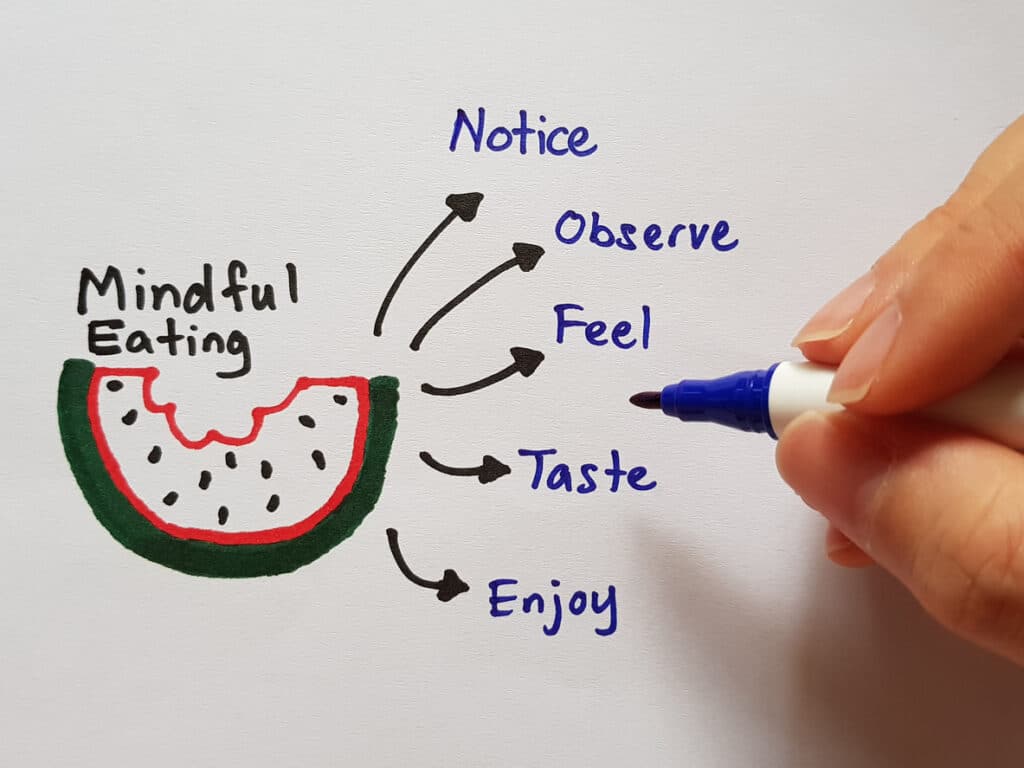
3. Mindful Eating Practices

Mindful eating encourages being present in the moment and paying full attention to the sensory experience of eating. Incorporating mindfulness into meals can help break the cycle of emotional eating by fostering a deeper connection with food.

You can try to integrate mindful eating practices into your daily life. For example, encourage paying attention to hunger and fullness cues, savoring each bite, and appreciate the nourishment it provides. It might bring joy back to your eating moments. Recognize emotional triggers without judgment. Nobody asks you to be perfect. Mindfulness will help you foster a healthier relationship with food.

4. Set Realistic, Positive Goals

Try to establish achievable and positive goals that align with personal growth rather than focusing solely on weight loss. Celebrate progress in building healthier habits, cultivating self-compassion along the way.

5. Self-Compassion, a Key Ingredient

In the pursuit of New Year’s resolutions, it’s essential to practice self-compassion. Acknowledge that setbacks may happen, and it’s okay to not be perfect. Be gentle with yourself, celebrating the small victories and learning from challenges. Compassion creates a supportive environment for growth, fostering a mindset conducive to positive change.

6. Find Joy in Movement

Exercise is often viewed as a means to an end, but it can also be a source of joy. Try to explore different forms of physical activity until you discover what brings you genuine pleasure. Whether it’s dancing, hiking, or practicing yoga, incorporating joyful movement into your routine makes resolutions more enjoyable and sustainable.

7. Celebrate Your Progress

As the year unfolds, celebrate the progress made towards your resolutions. Reflect on the positive changes in your relationship with food and emotions. Small victories deserve acknowledgment, reinforcing the commitment to a healthier and happier lifestyle.

8. Build a Support Network

Embarking on a resolution journey, especially one related to emotional eating, is more enjoyable and sustainable with a support system. Try to share your goals with friends or family who can offer encouragement and understanding. Creating a sense of community can make the process lighter and more enjoyable. Surround yourself with understanding friends or family who can offer emotional support. Sharing your journey and challenges with others creates a supportive environment conducive to positive change.

9. Seek Professional Support

Enlist the help of a therapist, counselor, or a registered dietitian with experience in emotional eating. Professional support can provide valuable insights into the emotional aspects of eating and guide the development of healthier coping mechanisms.

Conclusion

The dawn of a new year symbolizes a fresh start and an opportunity to break free from unhealthy habits. When it comes to emotional eating, setting realistic and positive resolutions is crucial. Rather than focusing on strict diets, consider resolutions that promote a holistic approach to well-being, such as fostering a healthy relationship with food and addressing underlying emotional triggers.

Resolving to lose weight as an emotional eater requires a nuanced and compassionate approach. Navigating emotional eating within the realm of New Year’s resolutions can be a rewarding and transformative experience. By understanding the emotional eating cycle and acknowledging the pitfalls of traditional resolutions, you can set goals that prioritize overall well-being, mindfulness, and self-compassion.

By approaching the journey with a blend of fun and compassion, we can cultivate lasting habits that contribute to our overall well-being. Remember, the key lies not only in achieving the goals but in enjoying the process of positive change. The journey towards a healthier lifestyle is not about perfection but about embracing positive change at a pace that fosters lasting well-being. Cheers to a year filled with self-discovery, growth, and a healthier, happier you!

If you decide to focus on your emotional eating and to build a healthier relationship with food in 2024, you can check out my workbook on Amazon, that will provide you with a step-by-step guided process to be successful on your journey and enjoy 3 free online classes with your purchase.

Let’s Have a Conversation:

So what are your New Year’s Resolution going to be for 2024? What are they related with? Have you decided to go resolution-less? Or to stick with it this time? Let us know in the comments!

Read More