Author: HairWeavings Editorial Team

Being a Full Partner in Your Medical Decisions

being a full partner in your medical decisions

I remember as a small child accompanying my mother to doctor’s appointments. Specifically, I remember sitting quietly listening and watching as the doctor lectured her about her weight, prescribing treatments, tests and regimens for her to follow.

What I Don’t Remember Is Her Saying Much

It was the 1960s, and she was expected to follow the doctor’s orders without as much as the opportunity to ask questions or request more information. She was instructed to take the pills, follow whatever advice was given and return in a prescribed time for a follow up.

Even as a little girl, I sensed the lack of consideration, compassion and understanding for the person inside that obese body with related health issues, and how being treated as though she should be ashamed made for a very quiet drive home. I knew she was struggling, and it was obvious the doctor wasn’t offering any support, just pills.

We Are Living in Different Times

Times have changed, there’s been a shift toward prevention, self-care and a broader variety of choices to improve one’s health, while still offering clinical treatment for those conditions that warrant them. Medications are now accompanied by detailed instructions, information about side effects, and contact information to get questions answered or to ask for assistance.

The Dynamics of an Office Visit Have Changed as Well

An interesting report featured in the National Library of Medicine cites the median length of a doctor’s visit as 15.7 minutes with the median talk time by patient at 5.3 minutes, and physician talk time at 5.2 minutes, clearly revealing patients are more actively involved and participating in the process.

This topic came to me as I prepared for an appointment with an endocrinologist. A routine scan of my thyroid a few weeks earlier revealed some new and suspicious looking nodules and a needle biopsy concurred there was a chance of malignancy that warranted further tests. I did what I always do, researched for more information and guidance for my next steps.

What I found was a website which piqued my interest, giving a name to what I wanted for myself.

The Agency for Healthcare Research and Quality, the lead federal government agency charged with improving the quality of healthcare for all Americans, developed a model for the process called Shared Decision Making. They introduced it as follows:

“Shared decision making occurs when a healthcare provider and a patient work together to make a healthcare decision that is best for the patient. The optimal decision takes into account evidence-based information about available options, the provider’s knowledge and experience, and the patient’s values and preferences.”

Further research revealed an article on the Journal of American Medicine Association (JAMA) network and several other major research and teaching hospitals across the country, all expounding the benefits of Shared Decision Making.

Making Use of Shared Decision Making

I was encouraged and eager to meet with my doctor and have the opportunity to engage with her in this new approach. I was not disappointed. We had a candid conversation before my next procedure, and I felt completely heard and understood, confident that we were striving for the same outcome.

I’m grateful for this innovative process and plan to continue to include it in all of my healthcare decisions. However, I also realize it comes with some significant responsibility and commitment on my part. To that end, I’ve compiled a list of the steps I will take to be fully involved.

I’m sharing this in hopes it might help others going through the same process of evaluating a condition and making choices about treatment.

I Will Be Clear About My Intention to Be Involved in the Decision-Making Process

I will ask for resources to get further information and promise to educate myself so I can make informed decisions with my healthcare provider’s support.

I’ll Be Brief and Come Prepared

I will arrive with a list of questions and let them know at the beginning of the appointment so they can leave time to answer them.

I Will Represent Myself Well

It’s important that the healthcare professional has a clear picture of who I am, my goals for aging, my level of dedication to my health and how I take care of myself.

I Will Thoroughly and Carefully Read the Material Provided to Me

My healthcare provider hosts an online patient portal that gives me access to all my test results and post appointment summaries. I appreciate knowing what is happening first hand as soon as the information is available, rather than having to wait until my next appointment. I will let my doctor know I have read this information so they know I am actively involved and well informed each step of the way.

I Will Ask for Clarification When I Don’t Understand

The medical industry has its own language, and the terminology can be intimidating. So I will speak up and ask to have things explained. I will inquire about the purpose of tests, what to expect and when I might get the results.

I Will Ask for a Second Opinion If Needed

Another specialist may see something different or offer another option, or they may concur and help me feel secure in my choice.

If I’m Not Comfortable with the Physician or Specialist I Am Referred to, I Will Find Another

I understand I am entering into an intimate partnership with this person, if I don’t feel confident in their abilities and comfortable with them, I will request a different referral.

I Will Educate Myself Between Appointments

I will research my condition through reputable resources. Most major hospitals, universities and research centers have well developed websites that offer patients guidance and information. I will take advantage of this wealth of information.

I Will Take My Time to Absorb Information and Get Comfortable with Any Diagnosis

I will ask for time if I feel the process is advancing too quickly.

This is my body, my life and my future. I want and need to be an active partner in how it plays out, and I fully believe taking these steps will afford me that choice.

As for my thyroid, further tests ruled out malignancy. I am grateful for these results and the care I received as I went through the evaluation. I am also grateful to have discovered and adopted this method of approaching my care and will continue to practice it in all my healthcare decisions, feeling empower and secure in my role.

Further read NOW MORE THAN EVER BECOMING YOUR OWN HEALTH ADVOCATE IS ESSENTIAL.

Let’s Have a Conversation:

When was the last time you went to see your healthcare provider? What was your experience like? Have you been encouraged to take active part in medical decision making?

Read More

How to Harness the Power of Laughter

power of laughter

Laughter, that contagious expression of joy, has the incredible power of brightening our days and uplifting our spirits. Charlie Chaplin said that a day without laughter is a day wasted. Humour probably became an essential part of our ancestors’ culture long before the evolutionary split between humans and apes.

According to some scientists, it can be traced back to the primates of 10 to 16 million years ago. They likely developed it as an evolutionary trait that strengthened relationships between individuals and groups, improving their chances of survival.

Philosophers have not always been so approving of laughter, seeing it as derisive or mocking – which, of course, it can be.

  • Herodotus (484–425 BCE) warned that it could be disdainful of others and thus attract the wrath of the gods.
  • Plato (428–347 BCE) didn’t approve of the ancient Greek myth of the gods laughing on Mount Olympus. He saw their conduct as undignified, even if they were having a good time.
  • Thomas Hobbes (1585–1679) considered laughter an expression of superiority over others.
  • Immanuel Kant (1724–1804CE) thought it was a reaction to something incongruous.
  • In The Philosophy of Humour (2013), Paul McDonald offers an in-depth exploration of what philosophers down the millennia have thought about humour. You may find it interesting.

The Healing Power of Laughter

The benefits of laughter are not confined to mere entertainment; they extend to our emotional, physical and social well-being. Modern psychologists see laughter as a tool for tackling depression. Emotionally, laughter serves as a boost, offering a momentary escape from stress and anxiety.

It provides us with a fresh perspective on our troubles, making challenges seem less daunting and anger less intense. Laughter also helps in improving mood, sparking hope for the future and fostering a positive mindset.

On the physical front, the advantages of laughter are equally profound. The Mayo Clinic states that a hearty laugh triggers the release of endorphins, often referred to as “feel-good” hormones. These endorphins contribute to relaxation, stress reduction and even pain alleviation. Moreover, laughter is linked to improved cardiovascular health because, among other things, it enhances the functioning of blood vessels and reduces stress hormones. It also aids in boosting the immune system and burning a few calories, adding a fun twist to weight management.

Socially, laughter plays a pivotal role in shaping our relationships and interactions. Sharing a laugh helps create a more positive and light-hearted environment, fostering a sense of camaraderie. As John Cleese said, “Laughter connects you with people. It’s almost impossible to maintain any kind of distance or sense of social hierarchy when you’re just howling with laughter.”

Laughter also keeps us grounded in the present moment, encouraging us to be more attentive and aware. Through laughter, we can bridge gaps, heal resentments, and diffuse conflicts. More than that, it acts as a powerful tool for problem-solving, enhancing teamwork and collective focus.

Cultivating Our Sense of Humour

Cultivating a sense of humour requires conscious effort and a willingness to embrace life’s lighter side. We can start by smiling more often and practising generous laughter. Learning to laugh at ourselves and finding humour in (almost) every situation can transform our perspective. A positive outlook on life, along with a touch of irony and absurdity, adds a layer of lightness to our experiences.

Being spontaneous, expressing genuine feelings and shedding inhibitions are crucial steps in developing a robust sense of humour. It’s essential to let go of defensiveness and embrace constructive criticism with grace. Surrounding ourselves with people who appreciate humour can create a supportive environment for growth. Moreover, incorporating humour into various situations, remembering to play and have fun, and counting our blessings all contribute to our overall good mental health.

To help us to cultivate a healthy appetite for humour, there are several practical steps we can take.

  • Commit to laughing at least once every day, remembering that laughter is an exercise for the soul.
  • Reflect on what truly amuses you and actively seek out sources of it.
  • Begin by amusing yourself; as your laughter resonates, it’s likely to infect those around you.
  • Engage with comedy podcasts, books and films that will expand your comedic horizons.
  • Incorporating humour into your daily routine, such as by having a notice board that you put jokes on, can infuse your surroundings with light-heartedness.

The Art of Telling Jokes

Telling jokes is a fine art that, when mastered, can enhance our sense of humour and – hopefully! – amuse our friends. However, there are certain considerations to keep in mind. Firstly, ensure that the situation is appropriate for humour. Avoid jokes that might hurt someone’s feelings or be offensive. Embracing self-deprecating humour is a safe way to generate laughter without causing harm.

If a joke falls flat, it’s best to let it fade away naturally rather than attempting to explain it. Timing is key, and practising our delivery can refine our comedic skills. Lastly, remember to speak slowly; this lets your audience catch every humorous detail.

If you’re not in the habit of telling jokes but want to be, here are a few simple ones to get you started:

  1. Doctor: I’m sorry, you only have ten to live. Patient: What do you mean? Ten what? Days, weeks, months? Doctor: Nine…
  2. Sarah: My old aunts would tease me at weddings: “Well, Sarah, do you think you will be next?” They stopped when I began doing it to them at funerals.
  3. What’s the most terrifying word in nuclear physics? “Oops!”

As they say, “Laughter is the best medicine.” And a smile and cheery remark go a long way!

Let’s Have a Conversation:

Do you laugh a lot? Have you trained yourself to find humour in simple things? Do you make others laugh?

Read More

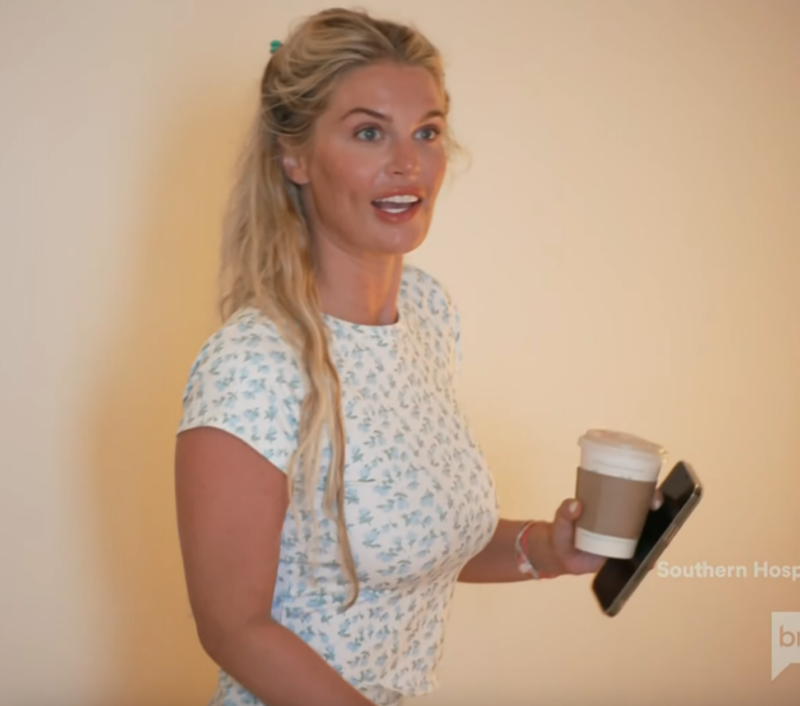
Madison LeCroy’s White and Blue Floral Pajama Set

Madison LeCroy’s White and Blue Floral Pajama Set / Southern Charm Season 9 Episode 13 Fashion

Only Madison LeCroy could look this good waking up after a 2 day vacation bender. But maybe her super cute white and blue floral pajama set is helping out a bit. And not only are they super cute they are SUPER affordable as well. We know Madison knows her way around a solid Amazon find and this is no different, so don’t sleep on the chance to get your hands on this set!


Sincerely Stylish,

Jess


Madison LeCroy's White and Blue Floral Pajama Set

Style Stealers


Originally posted at: Madison LeCroy’s White and Blue Floral Pajama Set

Read More