
Author: HairWeavings Editorial Team

The Terror of Inheriting a Mess: Part 2

inheriting a mess

What better time to complete this topic series than October, National Estate Planning Awareness Month!?! Based on your feedback and sharing from Part 1, this blog shares stories, tips and encouragement for those who have experienced inheriting a mess.

Your Stories

One Sixty and Me reader forewarned that you often can’t count on the decedent’s spouse for any help. In her situation, after an aunt died, she was trying to help her uncle, “but he knew absolutely nothing about accounts or even where his own money was.”

This is so common. Too often, couples take responsibility for different “departments” in married life, which is normally fine – EXCEPT when it comes to finances. We need to at least be aware if not involved in the details of our money life.

You may remember from a past blog, or as I often explain in my free workshops, research indicates that couples usually fall into one of three categories when it comes to the financial aspect of our relationships:

The Driver and Passenger Couple

Only one person in the couple is aware of, makes decisions about, and takes care of all things financial (the Driver). The Passenger is often glad not to be involved or have to be bothered with that “financial stuff.”

The Joined at the Hip Couple

Both members of the couple talk about and make financial decisions together, but only one of them is the “doer” who takes care of implementing those decisions.

The Divide and Conquer Couple

Just like the Joined at the Hip couple, both members of the couple talk about and make financial decisions together but then they split the duties. So, each one is acting on implementing some of the decisions.

The Differences and Consequences

The research has also shown that the survivor of the Divide and Conquer couple adjusts the best, experiences less stress, and adapts to his/her new life better than the other two categories. Which makes sense since the survivor is often only taking on 50% more of the responsibilities vs 100% of the potentially unfamiliar duties and decisions in the other two categories.

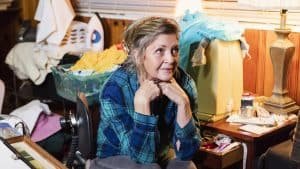
One woman I know, Charlotte Fox, truly experienced the “terror” of inheriting a mess when her “Driver” husband passed away unexpectedly when she was just in her 50s. As the “Passenger” in the financial relationship, she recalls how she felt somewhere between a drug induced coma and a nervous breakdown.

Similar to Heather Parker, in Part 1 of this series, Charlotte reacted to her situation in a life-changing way. She used her trauma to fuel her energy into writing a 200+ page workbook And Then There Was One to help others avoid or survive what she experienced.

She wrote the book with an invitation to readers and attendees at her workshops to hold her hand as she walks you through. One reader, quoted in her book, commented, “Your husband would be so proud of you!”

Tips Moving Forward

Another reader recommended hiring help. A second set of eyes helps avoid missing things you may not know about or you may not see, especially if you are experiencing brain fog, which is very common after losing a loved one. Moving forward on steps that need to be taken, though difficult, with an accountability partner involved can feel less overwhelming.

Whether you have help or are tackling this alone, another reader found that setting up “project management steps” can be a big help in focusing on getting one thing done each day. Breaking the seemingly endless tasks down to smaller, manageable bites is, over time, truly the best way forward.

“Slowly but surely clearing it away”, “slow and steady” were the exact phrases from women who commented after Part 1 of this blog. They are so right! We are more likely to feel progress and not get discouraged when we remember it doesn’t all have to be done in one day.

Words of Encouragement

Some final words of encouragement. One reader of Charlotte’s workbook wrote her a thank you letter and shared how going through the process of getting prepared had sparked helpful discussions with her family. Charlotte’s motto today is “The time to discuss your end-of-life plans is NOW.”

One woman who replied to the Part 1 blog on the Sixty and Me Facebook group, admitted “I made the mess.” Not taking action now to organize, express wishes, put things in writing, correctly title assets, etc. can leave you or your family with a preventable “terror” experience.

So, my final encouragement is to get yourself a checklist and get started. Whether you prefer short bullet points in a book, an electronic paperless format, or a fill-in-the-blank workbook, just pick the one that you are most likely to DO.

Let’s Have a Conversation:

Too often we don’t take action on something until we have experienced a traumatic event. What prompted you to get financially organized with your estate planning? What motivation can you share with our community?

Read More

A Staying Well Plan for Those Prone to Anxiety and Depression

anxiety and depression

October is Depression Awareness Month, and 10th October, 2022 was International Mental Health Awareness Day.

For many years, I have managed the Facebook page of the Swanage Depression Support Group. This was set up as a response by members of the support group, but it was left to me as the only person familiar with Facebook to manage the page.

Needless to say, there were many messages coming through on the page during the two lockdowns, sometimes people seeking help for themselves and at other times people seeking help for others. It is one of the kindest things you can do to point someone in the right direction when they are at a low ebb.

This is also the time of year when many people suffer depression because of the darker evenings and wetter, colder weather. This condition is known as SAD (Seasonal Affective Disorder). Thankfully, special lamps exist that mimic daylight, which help.

Depression Is an Illness

But depression is not simply being fed up on a Monday morning – it is much, much more. It is an illness, and the best things you can do on such a day are:

  • Accept the tired phase when you need to lie in bed most of the morning. Your brain needs to rest which prevents further stimulation and calms the brain.
  • Read the first few pages of Depressive Illness, The Curse of the Strong by Dr Tim Cantopher. This book gives an excellent understanding of the true meaning of depression.

Dr. Cantopher insists that something has to change if you are to stay well and not relapse.

Some Things to Avoid If You Are Prone to Depression

  • Keep off the computer. You may have to give it up for a while, but you will come back to it.
  • Avoid reading the news or watching television news, especially when anxious.
  • Avoid live TV as some storylines may be difficult to follow. Watch on Catch Up and pause frequently.
  • Avoid negativity and people who are ‘glass half empty’ as they will not help you.

Some Things You Can Do to Alleviate Depression

Do Exercise

  • Shop each day for a few things. Use local corner shops if larger stores are overwhelming.
  • Walk each day, at least twice. Increase the distance. Take a friend.
  • Go swimming.
  • Do yoga.
  • Sing, dance, get a massage or reflexology.
  • Do something new.
  • Use a power workout DVD.

Journalling

  • Keep a notebook/diary of thoughts, feelings, actions that were helpful to you.
  • Write down three things you want to do the next day.
  • Write down three positive things that happened today.
  • Write down three things you are grateful for. Gratitude is now known to be a factor in fighting depression.

Listen to Music

Play Smooth radio, relaxing music, CDs.

Aromatherapy

  • Use lavender oil to relax at night and geranium which lifts the mood during the day.
  • Practice deep breathing all the time, when waiting in a shop queue or watching TV.
  • If you have a relaxation CD, play it 2 to 3 times a day and relax on the floor under a blanket.

Food & Drink

  • Eat healthy food. Cut out junk food.
  • Search for foods which help depression.
  • Drink more water.
  • Eat little and often.
  • Use ready meals until you feel able to cook.

Practise Good Habits

  • Go to bed each night and get at least 8 hours of sleep.
  • Visit the library and sit with a book, just feel the warmth, feel the nearness of the human company and the ambience of books around you.
  • Visit the library 2 to 3 times a week, take a few books out and return those that do not appeal. Stick with those you like after the first three pages. Try to sit down to read several times a day.
  • Make reading a regular part of your day. Read happy romances. Avoid dystopian, tragedies and horror stories until you feel better.
  • Follow mental health blogs and self-help websites such as MIND. Read what other people have written. Contribute your own positive ideas which make you feel good. Print out anything useful and put it in your GETTING BETTER file.
  • Face up to finance. Budget and look at ways to save money. Avoid credit cards. Instead of regretting overspending, look at your accounts. It may not be as bad as you think.
  • Keep occupied – do puzzles, crosswords and read for short periods throughout the day. Reading is known to improve mental health because training your eyes and brain to follow a line across the page will steady the overactive brain.
  • Spend some time each day tidying up. A small area, one or two shelves or one or two drawers.
  • Sort through your photo albums. This will remind you of happier times.
  • Watch happy TV, explore Netflix and BBC I player

The World Health Organisation recognises World Mental Health Day on 10 October every year.

The theme of 2022’s World Mental Health Day, set by the World Federation for Mental Health, is ‘Make mental health and wellbeing for all a global priority’.

Finally, remember that these feelings will pass. Even those with serious mental health conditions are not very ill for very long.

Let’s Have a Conversation:

Have you suffered depression in the autumn months or are you someone who suffers it at other times of the year? How do you cope and what are your coping mechanisms? How do you help those who are near and dear to you?

Read More

This Kim Kardashian & Victoria Beckham-Approved Exfoliator Is 35% Off—But Not For Long


If you purchase an independently reviewed product or service through a link on our website, STYLECASTER may receive an affiliate commission.

I’ve been fighting acne on-and-off throughout my life, but it came back in a big way a few years ago. Washing my face with my hands never seemed to make my skin feel very clean. I started to get frustrated that I wasn’t seeing a difference in my skin despite adapting to a 7-step skincare routine. Then, as a holiday gift, my mom bought me the FOREO Luna Mini 2 (AKA the device that celebs like Kim Kardashian, Victoria Beckham, and Cindy Crawford have all gone on record praising), and let me tell you, it’s been a game-changer.

After two months of using this cleansing brush twice a day, my skin finally started to clear. The breakouts almost completely stopped (aside from the occasional blemish here and there), my skin feels more elastic and it feels like my cleanser is actually getting rid of dirt, oil and dead skin cells.

RELATED: This Does-It-All Skin Tint Has Been Sold More Than A Million Times — What’s The Deal?

So, I’m obviously more than excited to say that this wondrous gadget is 35% off right now, as part of Amazon’s Early Access Sale. Here, you can shop hair and skincare essentials for huge discounts right before the holidays hit full swing.

As my family and friends can attest, it’s difficult for me to change my routine, but I religiously use this silicone brush twice a day—no matter how tired I am. To use it, I put my cleanser on my face, wet the cleanser and move it in a circular motion around my skin for one minute, then I rinse. I usually just use the basic setting and don’t play around with the other seven vibration levels. I’ve been using it since December and haven’t had to recharge it once.

Even though this brush is a little pricey, usually retailing at $139, it’s worth adding to your cart. The aquamarine cleansing brush is only $90 today, so you’ll be saving $50 on it. I don’t know how long it will last though, so you should shop it now.


StyleCaster | FOREO Cleansing Brush

Courtesy of FOREO.

Aquamarine Foreo LUNA mini 2

This bright blue silicone cleanser won’t be hard to find in your purse, backpack or suitcase. It’s a whopping 35 percent off, so definitely worth adding to cart if you’ve been lusting after this tool.

Buy: Foreo LUNA mini 2 $90


StyleCaster | FOREO Cleansing Brush

Courtesy of FOREO.

Pearl Pink Foreo LUNA mini 2

You can’t go wrong with this light pink cleansing device. It’s one of the more popular color options out there. And this colorway is also 39% off.

Buy: Foreo LUNA mini 2 $84

More Prime Day 2022 Deals to Shop

StyleCaster newsletter

Read More

Having Trouble Downsizing? These 6 Questions May Help You to Simplify and Move Forward

Upsizing Downsizing

Simplifying, downsizing, decluttering… these topics seem to be very popular. Why is this such an issue for so many people?

When I went through a major downsizing several years ago, one of the things I learned was that I needed a very small percentage of the things that I had accumulated over the years.

This is absolutely not to say that it was easy to sell, donate and throw out piles and piles of things that had been – and in many cases still were – important to me.

As I’ve explained in my book, The Upside of Downsizing: Getting to Enough, that sorting and disposing process was very painful at times; however, now that I’m on the other side of it, I realize how little I actually need in order to feel perfectly satisfied – to feel as if I have just enough.

More Than We Need

Why do many of us keep piling in possessions way beyond the point of need? Why do we cram more and more things into closets, drawers, garages, basements and attics?

And, when all that gets full to the bursting point, why do we rent an external storage unit for which we pay not an insignificant amount of money every month?

Each of us will have our own answer for that. I invite you to spend some time with these questions if you’re one of the many of us who have accumulated way more stuff than we need.

As I’ve talked to people about downsizing and simplifying, some version of the following story seems to be fairly common:

Jane, a composite of many people who told me their story, grew up with parents who had lived through the great depression, and so were very frugal. As a child, Jane remembers having very few (by today’s standards) clothes and three pairs of shoes: Sunday shoes, play shoes and school shoes.

Every year, she and her sister each received three Christmas presents from Santa. One usually was either something for school (a new book bag), underwear or pajamas. She had one much loved doll whose stuffing was falling out.

She and her sister shared a wagon. And since everyone around Jane lived pretty much the same way, she was satisfied most of the time.

The Impact of Technology

Over the decades, our world has changed significantly. Perhaps one of the most significant changes is the impact of television and the Internet. We now have ready access to images of how people live in places very far from us.

We see poverty, of course, but we also watch nightly sitcoms where seemingly average people are living in ideal apartments in New York or Paris or London.

We are flooded with ads for all the things we can buy that will make us beautiful, successful, desirable, sexy, younger… all we have to do is buy that thing. And we have ready access to fairly inexpensive things in a burgeoning number of megastores that are close by.

So, in the middle of all this is Jane, who grew up with three pairs of shoes, and now often can afford to buy many pairs of shoes at any number of outlet stores or with one quick click of the key at Amazon and have them delivered in two days.

We simply have lost track of what is enough.

This story, or some variation of it, may help explain the current situation for Jane, but what is at the heart of this? For those like Jane, there are two causes: 1) our tendency to compare ourselves with others and/or with an idealized self and 2) our fear of not having enough or of being without.

Each of these can be explained from the story of Jane above. Jane grew up comparing herself with those in her immediate environment, not with those thousands of miles away who were living very different lives than she was.

Additionally, she was not hourly being inundated with information about all the things she could buy that would make her ‘better’.

In Jane’s case, she also may have heard stories her parents told about not having enough or of having to go without. Today, she remembers very well a childhood where there was significantly less than what she has gradually become comfortable with and used to.

Your Story

This is Jane’s story. Yours may be very different. I’ve heard dozens of explanations for why stuff seems to accumulate in our homes. What’s yours?

If, over the years, you have amassed far more than you need and can reasonably use on any kind of a regular basis, why do you think that is? Are you comparing yourself to others that may have much more than you do? Do you have trouble making decisions?

Do you have an image of yourself that seems more desirable than the current image you have of yourself? Did you experience significant loss in your childhood?

Are you afraid of not having enough or of running out of things you need to keep yourself comfortable? Is comfortable enough or is there more that you’re striving for?

If you’re starting to feel as if it may be time to begin downsizing your home, now or in the near future, these are some questions you can begin asking yourself so when the time comes, you’re ready to face the difficult feelings that may arise.

And, if downsizing doesn’t seem to be in the near future for you, it still is an excellent time to think about these questions and begin to get rid of unused things and stop acquiring new ones unless something is realty necessary.

You may find this process challenging, or even painful, so consider providing yourself with some extra support. Ask a non-judgmental friend to help you by sitting with you and asking you what’s important as you reflect on the issue. Or consider hiring a coach like myself to help you.

You can do it! Good luck!

Let’s Have a Conversation:

Have you started the process of downsizing yet? Are you even considering it? What’s the first thing you would get rid of, if you were to start downsizing your stuff? Please let us know in the comments below.

Read More

Do You Allow Busyness to Overtake Your Life After 50 and Beyond?

Do You Allow Busyness to Overtake Your Live After 50 and Beyond?

I was trying to plan an outing with
a friend I’d not seen in a while. But when I looked at my calendar, I realized
that my next window wasn’t for another month.

“I’m really sorry,” I
said. “October is insane. I’m afraid that’s the reality of being a freelancer.”

“No, it isn’t,” she
quipped. “That’s the reality of being Delia.”

Work First, Life Second

Although the comment stung, I knew
she was right. Much in the way that other people are addicted to their
phones or other, more nefarious substances, I’m addicted to busyness.

And the primary way that I make
myself busy is through work. I frequently work on weekends. I tell myself
that this is down to the “plight of the freelancer” – and there is
some truth to that – but I know that a lot of it is my own inability to stop
working.

I was really proud of myself
recently for carving out a three-hour window to see friends every Friday
evening between now and Christmas. I finish teaching at 4 o’clock on Fridays,
and I’m usually totally beat. So I thought, “Yes! That’s when I’ll
chill!”

I told another friend how excited I
was about finding this window for my social life.

“You and your windows!”
she said, shaking her head. (Are
you seeing a pattern here with my friends
?)

My friend organizes her life around
seeing her friends and slots her work in around that. I do the reverse.

Fear of Death

I’d love to tell you that my
endless busyness is driven by the fact that I’m a high-energy person. I am. And
particularly
now that I love my job
, I don’t mind working extra hours when I need to.
Work is fun.

But it runs much deeper than
that. There is a fear of the abyss – of how to deal with the thoughts and
fears that crop up when I don’t have 10,000 things to tick off my to-do
list. 

I
worry that if I slow down, I won’t re-start
. It is, at the end of the day,
akin to a fear of death. In my mind, to stop moving is to stop being. And who am I without constant movement? 

This fear
is particularly acute on Sundays
, when I always feel like I’m right on the
edge of a tidal wave of despair. But if I swim fast enough, I can just escape
being swallowed up. Over the course of the day, what might have been depression
morphs into a prickly disquietude. And I ward it off through work.

Paying It Forward 

When I was growing up, my mother
used to say, “I’m cold; put a sweater on.” It was her way of
projecting onto me her own needs.

I hate to say that I now do this
with my own daughter. Except that instead of telling her to put a sweater on, I
tell her to stop being so busy. My daughter does a gazillion after-school
activities. (Apple, meet tree.) Her motto, which is emblazoned on a neon sign
in her room, is “Vive
la Vie
!”

Unlike me, however, my daughter
isn’t busy because she’s fleeing something. For her, living life to the fullest
means never saying no.

If someone invites you to the
theater or to a bubble tea or to a political protest at the last minute, you
say “yes,” even if you’ve got a mound of homework to get through. She
doesn’t want to miss out on life’s experiences.

I admire this in her. Just like I
admire my friend who organizes her social life first and her work life second.

And yet, I am constantly
admonishing my daughter to do less. “You’re too busy!” I tell her.
“Slow down a bit!”

Who am I really talking to?

Vive la Vie

Not for the first time, I find myself taking life lessons from my recently turned-adult children. I think it’s time to put my money where her mouth is and vive my own vie.

Which is to say, it’s time for me
to let go of the fear and be OK with slowing down.

I won’t be able to do this overnight.
But I can start with Friday afternoons. Are you free for a coffee?

Let’s Have a Conversation:

How do you handle busyness in
life and work? Do you have way too many commitments? What would be a good way
to slow down and simply enjoy life? Please share in the comments below.

Read More