
Author: HairWeavings Editorial Team

Looking Back on Motherhood

motherhood

The older we get, the more often we find ourselves looking back and musing on the trajectory of our lives. Did we get it right? Or is there, indeed, one right way?

There are many dimensions to such questions, but here I want to consider motherhood in some of its manifold complexities. This is, indeed, a step back as I write more frequently on being a grandmother.

How Many Children?

Some of us managed to have the exact number of children we planned for. A bit of good luck.

But there will be some who had little say in the number of children produced, since Mother Nature has a funny way of getting the upper hand.

We may have intended to have none, but one or more somehow found themselves born. Or we may have had plans for a large and active family, but ended up with only one or, perhaps, none at all.

I suspect that any regrets on this score are not evenly balanced. Those who wanted children – but never managed to have any ­­­– are likely to feel considerable pain. The strong urge to procreate is not readily quelled.

In contrast, those who found themselves with one or more children, even if unplanned, will almost inevitably be glad that they came along. There may be a few women who would secretly wish away their children, but I suspect it is rare thought and always unspoken.

For me, I had two children, both planned (but see below) – a girl and then a boy.

The Spacing of Children

When I had my first child and those around me were doing the same, it was said to be important to have another child fairly quickly, so that the first one would have someone to play with.

I must admit that when I looked at those mothers with a short gap between their children, I felt, very simply, that I could not cope with so much going on at once. Their day-to-day lives looked like mayhem.

Of course, I would have coped if I had to, but it seemed like very hard work. Rather like having twins. This would not have suited me.

I have no idea what is the ideal spacing between children (and how do you define ideal?). But it is certainly easier for the parents if the first child can manage some tasks on his or her own before a second is born.

By dint of circumstances (doing graduate work, a reluctant husband, an unfortunate miscarriage and the vagaries of Mother Nature), I ended up with the extreme course of children born nearly 13 years apart.

This meant effectively raising two single children, although it didn’t always feel like that. I well remember when the youngest, an active boy, was two and my daughter was in the throes of adolescence at 15. It was not anyone’s finest hour.

With the high divorce rate and frequent second marriages, there may be many women who embarked on a similar course, with children widely spaced (but of different husbands).

To Work or Not to Work

These days, this is not a very frequently asked question, but I am sure we all remember how very important it was in our day.

Growing up in the 1950s, it was very much assumed that women would stay home and look after their family. It was just what women did.

Doesn’t that sound such a very ancient thought! I remember many a young man would opine that he wouldn’t want his wife to work, because it was his job to provide for his family. And many many women concurred.

Such attitudes persisted, so that when I had my first child in 1969, it was still the prevalent view. I happened to be the daughter of a working mother and, for me, ‘normal’ was to have both parents at work. I decided to make no decision until my baby was born.

But when I chose to undertake some part-time work and leave my baby daughter in the hands of various paid helpers (the word ‘nanny’ sounds too grand for the people involved), I was the object of considerable veiled criticism from the women around me.

“I don’t think anyone else would have the patience with my child” was a frequent comment, spoken with an air of disapproval. The underlying message was, “how could you be so awful as to leave your child with someone else?” I tended to reply that I did not have much patience myself.

Yet by the time my second child was born in 1981, views about working mothers had completely reversed. Even when I was pregnant, friends would ask “When will you be going back to work?” It had become the conventional assumption.

Indeed, by that time, those who stayed at home to look after their children became a bit defensive of their decision. I am not saying they should have been, but simply that they were.

Autre temps, autre moeurs (other times, other customs).

And at all times, there were some women who needed to work to support their family. For them, it was not a choice at all.

Looking Back

And now, whatever we did on this score, it is too late to go back. If you are 60+, you are no longer making decisions about having children (although at 80, I still have the occasional dream that I am pregnant).

The deeper issue, which requires a discussion all on its own, is whether we were ‘good’ mothers – and what this even means. I will leave this for another time.

Did I make the right decisions? Who is to know? Both of my ‘children’ are doing well and are now parents themselves. It is always hard to know what might have been if you had made different choices.

I think it best not to dwell too long on what cannot be changed.

Did you have the number of children you wanted? Were you happy with their spacing? Did you work when they were young? Do you feel you made the right decision on this question?

Read More

Kristin Cavallari’s Black and White Slides

Kristin Cavallari’s Black and White Slides on Her Instastories

Kristin Cavallari 2022 Instagram Fashion

They say never judge someone until you walk a mile in their shoes. And after seeing Kristin Cavallari’s black and white slides I would gladly do so. They look sooo comfy and the fact that you can just slip ’em on and go without any thought and still look cute is a win. So with that being said go ahead and slide down the the links below to snag yourself a pair.


Sincerely Stylish,

Jess


Kristin Cavallari's Black and White Slides

Click Here to Shop Her Adidas Slides (Men’s Sizing)

Click Here to Shop Additional Stock (Men’s Sizing)

Click Here to Shop More Stock

Photo Credit: @kristincavallari

Originally posted at: Kristin Cavallari’s Black and White Slides

Read More

How Our Thoughts Shape Our Future When We Reach the 60 Threshold

How Our Thoughts Shape Our Future When We Reach the 60 Threshold

Not many
generations ago, aging was considered a privilege, and those who lived the
longest were considered to be important members of society and keepers of the wisdom
necessary for survival.

Today, the
opposite is true. Society subscribes to the “old is bad, young is good”
mentality. Examples are everywhere – from the
greeting card aisle to the 42.51 billion (USD) anti-aging industry. Whenever
the underlying message is that old is bad, ageism is at work.

Ageism is defined
as discrimination based on age, and can be directed at any age group, old or
young (as Millennials can attest). It is often called the last socially
acceptable form of discrimination. Spending a lifetime immersed in an ageist
society is not without an impact: no one is immune to ageist thinking.

Two
varieties of ageism exist: that which is imposed by others and that which we self-inflict.
Most people get heavy doses of each, and both are tremendously harmful.

Self-Inflicted Ageism

“At my age
I shouldn’t….”

“People my
age can’t….”

“It’s
downhill from here.”

“I’m
getting forgetful and it’s only going to get worse.”

Have these
thoughts ever crossed your mind? They may seem harmless, yet research shows
that how we think about aging has a profound impact on how we age.

In a 23-year-long
study
, older adults who reported more positive self-perceptions of
aging lived 7.5 years longer than those with more negative self-perceptions.

Those with
positive perceptions of aging also lived better, with less illness, better
functional health, improved brain health, and increased psychological
well-being, and tended to engage in more preventative health behaviors and
physical activity – as compared to their counterparts who
had negative perceptions.

How can
our thoughts create such a dramatic increase in not only lifespan, but quality
of life? Our thoughts create our feelings, our feelings, in turn, prompt action,
and our actions produce results, for better or worse. In essence, our thoughts
about aging become self-fulfilling prophecies.

How Our Thoughts Shape Our Future

For example, let’s say two women both break an ankle and need to spend some time in rehab. Nancy believes that this is the beginning of the end. “This is aging,” she thinks, “the downhill spiral.” Nancy gives only partial effort to rehab, becomes depressed, and never fully recovers.

Patty, on the
other hand, decides to think of rehab as being sidelined only briefly. “This is
an opportunity to dust off my Rosetta Stone and focus on learning French in
between therapy sessions,” she thinks.

She decides
that her goal is a trip to France, and with that in mind, she works hard,
rehabs fully, and then seeks out a personal trainer to boost her total body
strength and endurance. That summer, she poses proudly for a picture in front
of the Eiffel tower.

Nancy and
Patty found themselves in identical situations, but they chose their thoughts
differently. It’s true that with time, life can throw its share of curveballs,
but when we associate our circumstance exclusively with age, we place it
outside of our control.

We buy into
societal beliefs that old is bad. We relinquish control of our thoughts and
default to thinking that doesn’t serve us.

About 70 % how
we age physically is the result of lifestyle choices we make each day. Setting
age aside offers an opportunity to examine our choices. It may be that your
circumstance has little to do with chronological age and everything to do with
that which is within your control.

Thinking with Intention

What are your
thoughts about aging? Is it synonymous with decline and dependence? Does it
mean that the best years have already passed? Maybe you have already reached an
age that your parents didn’t. Who are you if you’re not young anymore?

Or do you
think of aging as a new opportunity to grow and become who you were always
meant to be?

The great news
is that we get to choose our thoughts. If we can see our circumstances (in this
case, aging) as neutral, then we place ourselves in a position to choose our
thoughts. We can succumb to the old is bad/young is good thinking so common in
society, or we can choose to think differently.

We can buy
into the stereotype that aging is all about decline or we can choose to believe
the decades of research that prove aging is primarily about choice. We can resign
ourselves to thinking that the good years are already behind us, or we can
choose to believe that the best years are still ahead.

Spend a
few minutes today downloading your thoughts about aging. Write them down.
Notice which thoughts serve you, and which do not.

Examine
your self-talk and consider whether you would speak to a friend in the same
manner. Since many thoughts go unnoticed, make a bigger effort to eavesdrop on
your thoughts each day.

If we can
think any thought we want, on purpose, why not think thoughts that serve us,
rather than thoughts that do not?

Be on alert
for those thoughts that do not serve you. When they reoccur, as they very
likely will, delete them immediately and replace them with thoughts that do
serve you.

Also consider
your thoughts about your chronological age. When you ask a child their age,
they’ll often be extremely accurate, “I’m 6 and a half.”

I once asked
my friend Ben his age, and he said, “In 18 months I’ll be 100.” What about
those of us in between? When did we start making our age mean something bad? And
more importantly, when will we stop?

What Is Age, Really?

If your
chronological age makes you cringe, here’s an important truth: chronological
age is not actually cringe-producing. Your age is a fact – simple math based on today’s date and the day you were born. What
makes us cringe is what we think about our chronological age. We get to
choose those thoughts, too.

To take an
even bigger leap, what if you loved your age, at every age? It starts with
rejecting the myths and knowing the research-based truths about aging. It means
discovering the ageist beliefs playing on repeat in your mind and choosing new
thoughts that serve you better.

Let’s start
thinking on purpose those thoughts that serve us – especially about our age.
The degree to which we choose to be indifferent about age, and even better,
love our age at every age, will help us not only live longer and better, but
begin to evolve back into a society in which aging is an honor.

How often do
you feel discriminated against because of your age? What do you do in such
situations? Have you noticed your own thought on the subject of aging? Do you
think yourself old? Can you intentionally change your thoughts about aging?
Please share in the comments below.

Read More

Reviewers Swear Their ‘Necklines Have Disappeared’ After Using This Skin-Firming Cream—& It’s on Sale


If you purchase an independently reviewed product or service through a link on our website, STYLECASTER may receive an affiliate commission.

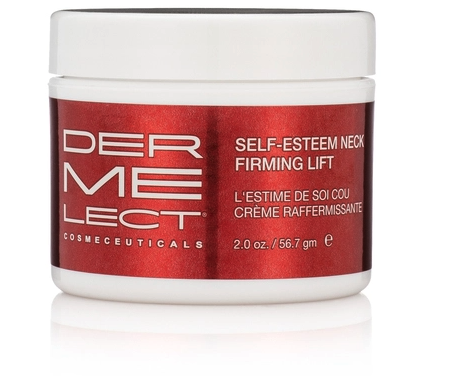
Getting your neck firm and ready for the upcoming spring season might not be such a task with a little help from skin-lifting cream that shoppers say makes a “huge difference” on sagging skin. Dermelect’s neck firming lift cream is packed to the brim with skin revitalizing ingredients like avocado oil, alpha-hydroxy acid and green tea extract that hydrate and plump skin so well, wrinkles and fine lines look less prominent instantly. Even better, it’s currently 30 percent off with code YOU30 for the next two days.

“This is THE only neck cream that does what it promises to do,” wrote one five-star reviewer. “My necklines have disappeared and my skin feels much softer. No negative side effects, either.”

With the purpose of being used daily, the cream is meant to improve the overall appearance of wrinkling and sagging skin from across the neck and jawline area. Basically, it gets rid of what’s so lovingly nicknamed “turkey neck.” 

Self Esteem Neck Firming Lift Cream

Courtesy of Dermelect.

When you take a look at the product’s main ingredients, it’s easy to see how it’s so effective as an anti-aging, wrinkle-erasing tool.

Avocado oil works to nourish your skin, while the alpha-hydroxy acid evens your skin texture out and the green tea extract aids in UV protection as well as anti-inflammation. One shopper said the product’s a “game-changer” and added that, if “you want instant better skin tone—this is it!” 

Along with anti-aging ingredients, the cream is jam-packed with nourishing ones. Jojoba Oil is also another powerhouse ingredient in this firming cream and helps skin retain moisture. Say goodbye to dry, chapped skin.

This firming cream is a hit with customers who have mature skin problems,  many of whom said it helps them look younger and fixes sagging issues around their necks. 

“I have been using this cream for my ‘senior neck’ for a long time and I can report that my 89-year-old neck looks years younger,” says another customer. “Be consistent, I use it twice a day.” For best results, use your bare hand (or maybe a Gua Sha stone) to massage the cream into your skin with an upward motion until the product is fully absorbed. This can be done when you wake up and before you go to bed. 

Even better: the neck-firming cream is free of mineral oil, parabens, phthalates, sulfates and synthetic fragrances. Along with this, it’s also cruelty-free and gluten-free, making it the perfect product for you if you have relatively sensitive skin. 

So, if you’re in the market for a neck cream that performs wonders and has an ingredient list from the heavens, then Dermelect’s Self-Esteem Professional Neck Firming Cream might be something you might just want to add to your cart.

Read More

Cremation 101: What Do You Really Need to Know About That Funeral

cremation funeral

There is no aspect
of funeral service as misunderstood as cremation. The biggest misconception is
that cremation precludes any and all funeral services.

Nothing could be
further from the truth.

In a recent Twitter
post, a woman commented that when her time came she wanted to be cremated
because “no one would get [her] bangs right.”

Clearly, she was
under the false assumption that choosing cremation negates having an open
casket visitation. She is far from alone. Perhaps the proliferation of articles
touting cremation as an economical alternative to burial has led to the
confusion.

What Is Cremation?

The Cremation Association
of North America (CANA) defines cremation as:

“… the mechanical,
thermal, or other dissolution process that reduces human remains to bone
fragments. Cremation also includes processing and pulverization of the bone
fragments into pieces that are usually no more than one-eighth inch.”

The
practice of cremation has been around for thousands of years
and was introduced
to western civilization by the ancient Greeks. In 1876, the first crematory was
built in the United States. In recent years, the popularity of cremation has
increased markedly.

While Catholicism
permitted cremation back in 1963, certain stipulations have to be adhered to.
The church requires that the cremains (cremated remains) be placed in a spot of
permanence – a grave, or a columbarium niche.

They should not be
kept at home, nor should they be scattered, divided into small keepsake urns,
or portioned out into cremation jewelry. In 2016, the Vatican reiterated these
directives.

Some other
religions, such as Judaism, Islam, and the Eastern Orthodox forbid cremation.

Cremation vs Direct Cremation

Cremation is just
another final disposition choice, along with burial and entombment. On the
other hand, direct cremation is an inexpensive alternative service.

While a basic
direct cremation – in which a remains is taken
directly to the crematory without services of any kind – may
seem self-explanatory, families don’t often fully grasp the implications.

It has become
increasingly common for funeral directors to field calls asking about the price
of a cremation.

“Are you looking
for a cremation with services or without?” we ask.

Most people seem
surprised by the question, as well as relieved to know they can choose
cremation and still be able to tailor the funeral service to meet their emotional
and financial needs.

Cremation and
direct cremation are offered by all funeral homes. However, there are also numerous
low-cost cremation purveyors, and starkly-named direct disposers (in Florida), which
deal exclusively in cremation.

Prices vary widely,
as does the time to complete the process. As a rule of thumb: the lower the
price the more impersonal the service.

Direct Cremation

  • The cremation takes place with an absence of
    services and funeral rites.
  • The remains are removed from the place of death,
    taken to the funeral home, and generally placed in a cardboard container. After
    the paperwork is completed, the remains are taken to the crematory.
  • A memorial service may follow in a funeral home,
    religious institution, or a venue of your choosing.
  • Costs vary widely. The cremains can be mailed
    for an extra cost or picked up at the funeral home.

Cremation

  • The same services included in funerals which end
    in burials or entombment may also be requested – embalming,
    cosmetology, hairstyling, visitation, a religious service, etc.
  • Generally, a wood casket is selected for the
    visitation. Some funeral homes offer “rental caskets” which contain a removable
    insert for transport to the crematory.
  • Mourners have the option to have a committal
    service (with or without clergy) at the crematory. Families may also opt not to
    accompany the casket to the crematory.
  • Depending on the accompanying services you
    select, costs can be comparable to that of a burial.

Cremation Does Come with Options

Whether you choose a full-service funeral that ends in cremation, or a direct cremation, you have a number of final disposition choices: transfer of the cremains into an urn, placement in a columbarium niche, burial in a family grave, or scattered in a cemetery’s urn garden.

The majority of
cemeteries offer indoor and outdoor niche spaces to meet the growing demand for
cremation.

What misconceptions
about cremation have you heard of? Which ones do you believe yourself? What are
your thoughts about cremation, and would you choose to go that route? Why or
why not? Please share your thoughts with the community.

Read More