Author: HairWeavings Editorial Team

Why I Hate the Term “Jobs for Seniors”… But Embrace the Idea of Working in Retirement

Why I Hate the Term “Jobs for Seniors”… But Embrace the Idea of Working in Retirement

If you look up “jobs for seniors” on Google, you are likely to find dozens of articles with jobs that require no experience are easy to do part-time and that you can do at home. While there is no doubt that these attributes are appealing to some retirees, overall, I believe that the entire idea of “jobs for seniors” is misplaced… and even a little dangerous. Here’s the reason…

Older adults already face negative stereotypes everywhere that we look. In movies, we are portrayed as slow to adopt technology, grumpy, week, mentally slow and boring. In the workplace, we are looked at as if we are “on the way out,” even if we would like to work for years to come.

It’s the same thing with the concept of “jobs for seniors.” When we imply that there are certain jobs that are acceptable for older adults, we reinforce society’s negative stereotypes.

We Aren’t Our Parents… and We Are Ready to Rock Retirement

An argument could be made that the concept of “jobs for seniors” applied to our parents’ generation. For starters, they faced different economic realities. Their job experience wasn’t necessarily translatable to part-time work. In addition, they didn’t expect to have 20-30 years of life in retirement to learn new skills and start new careers or businesses.

Our generation is different. Most of us have acquired skills (writing, customer service, business, finance, teaching, marketing, accounting and many others) over the course of our four decades in the workplace. Those of us haven’t acquired tangible skills in the past are more than capable of doing so now – especially with sites like Udemy, Coursera and LinkedIn Learning.

So, What Are the Best Jobs for Seniors?

The short answer to this question is that there are no best jobs for seniors. There is only the best job for you as an individual. Here are a few questions that you can use to get started on your search for the perfect job:

  • How many hours do you want to work? Is “part-time” really your goal?
  • What are your hobbies? Could you make money from them?
  • What jobs have always fascinated you, even if you don’t (yet) meet the requirements?
  • What smaller jobs are related to your ultimate career aspiration?
  • Who do you know who is already working in your dream job? Talk to them!
  • Have you looked at all of the websites that offer online training?

These are just a few of the hundreds of questions that could help you to get started on your search for the perfect job in retirement.

A Few Words About Ageism and the Practicality of Starting Something New in Retirement

At this point, I’m sure that quite a few of you are thinking something along the lines of: “This all sounds great in theory, but, no-one is going to let me start over as a [Insert your dream here] at my age. All the training in the world won’t help me to overcome ageism.”

There is certainly some truth to this. And, I’m not saying that you won’t face barriers as an older adult.

There may be compromises involved. For example, going to vet school may not be possible (unless you are very lucky, quite rich and uniquely talented.) But, if you want to work with animals, why not train as a vet assistant? Seriously, have a chat with your local vets and see what they say.

Is it likely that a PR firm will hire you with only book knowledge in your 60s? Probably not… but, could you start writing about PR, become an expert, and start your own PR business? Absolutely.

There are no free lunches in life. Life isn’t fair. And, as older adults, we face significant work-related challenges and discrimination.

At the same time, with the growth of the Internet and the acceptance of remote work, it has never been easier to go around gatekeepers. We just need to have the bravery and grit to stick with it until we succeed.

What Do You Want Your Retirement to Stand for?

If you found this article by searching for “best jobs for seniors” in Google, I hope that you will take a few minutes to reconsider your definition of productive work in retirement.

There’s nothing wrong with looking for work that is easy to do at home or that you can do part-time. But, you are so much more than your age. You are a vibrant and dynamic person who is capable of taking on new challenges. So, decide what interests you, even if you don’t yet know how to do it, and step boldly into the future! You can do this!

Do you agree or disagree that the concept of “jobs for seniors” is outdated? How have you gone about making extra money in retirement? Or, if you are still working, what do you plan on doing for extra money when you finally do retire? Let’s have a conversation!

Read More

How to Tie a Scarf Like a Pro: Older Women Rock the Style

Ways-to-Tying-a-Scarf-Like-a-Pro-Older-Women

Ways to Tying a Scarf Like a Pro 2

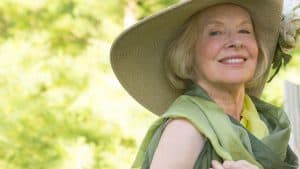
For anyone, really, but particularly for those of us over 60, wearing a beautiful scarf is a fabulous and very effective way to brighten up, freshen up, and liven up any outfit. It can also complete a look.

That’s the thing about good accessories – they provide the finishing touch, demonstrating that we still care about and put thought into what we wear.

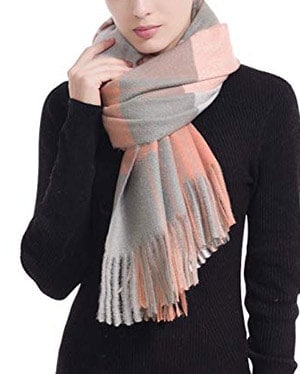
On a practical level, a cozy knit scarf can keep us warm and also serves to camouflage any skin around the neck that we’d rather not show off.

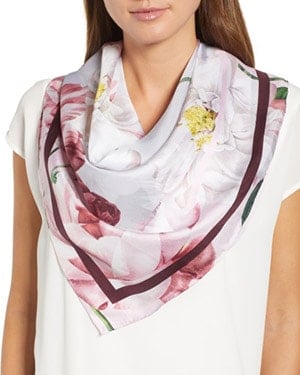
In the warmer months, a less dense scarf, such as a lovely silky floral or sheer textile can serve as a light shawl when you’re subjected to the blast of cold air in air conditioned rooms and restaurants.

For a jaunty and elegant look you can also tie it loosely on the handles of a handbag, which is a very popular thing to do among fashionable European ladies these days.

And of course, if you’re heading out to warmer climes for the winter, a larger scarf will serve double duty as a sarong to wear over your swimsuit by the pool or on the beach!

Make It Intentional

Ways to Tying a Scarf Like a Pro 2The key to making a scarf an artistic statement, as part of your whole look, is simply to not make it seem haphazard. You may be wearing it primarily to protect your neck but try to avoid making it look as though you just threw it on for only that purpose.

Of course, if it’s in a beautiful print, you can just wear it draped over your shoulders to show off the pattern. In that case, make it the centerpiece by wearing it over something plain that doesn’t have much adornment or competing details or pattern.

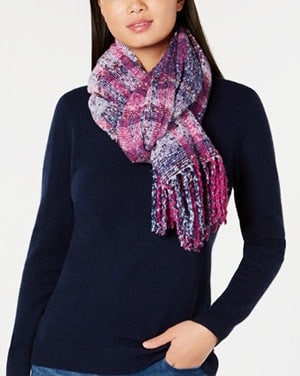
Ways to Tying a Scarf Like a Pro 2Whether you wear a thick, bulky knit, a large pashmina-type, or a print in a finer material, all scarves cry out for a bit of shape. This is especially true for knits, otherwise they can just look overwhelming.

One, Think of Your Laundry: Fluff and Fold

That means that if you’re wearing a large scarf, it’s a great idea to add some drape and shape to the end. Or, if you’re wearing a moderate-sized scarf, after you wrap and fold the ends over or knot them into a pleasing shape, fluff out the edges and the knots themselves a bit. That gives them volume.

Two, Think Geometry

Ways to Tying a Scarf Like a Pro 2

Look to a man’s tie as an example of how to create geometric shapes with a scarf.

You can affect something similar by experimenting with various knots, and then loosening up the knot a bit so that it has a softer shape. Then try draping the ends forward, or one over your shoulder instead of just hanging straight down.

Scarf Instead of a Necklace

Ways to Tying a Scarf Like a Pro 2If you want a no-hassle, very feminine look that can replace a necklace, try one with ruffled edges. This kind of presentation is almost impossible to mess up and doesn’t require much more than tying the ends loosely or wrapping them around your neck and then draping them.

Another necklace-like replacement is the bib. It works for everything from bulky knits to silky scarves. It involves folding a square scarf into a triangle, tying the two widest ends together, placing the knot at the back of your neck, and then draping the pointed end across the front of your chest.

France vs. Asia

It’s pretty much universally accepted that French women have taken the gold in the scarf-tying competition (although the Asian market is giving them some serious competition.) The artful ways that they tie their scarves is enviable.

There are numerous YouTube videos demonstrating how to create those different ties, knots, and drapes. Here is one of my favorites with charming designer Justine Leconte.

It’s well worth practicing with some of these ideas. After a while, they become super easy to do, and people will start asking you, “How did you tie that pretty scarf?”

What is your favorite accessory? Do you wear scarves? Which types do you prefer and how have you worn them to best effect? Please share below!

Read More

My Normandy Itinerary – Planning My Next Trip While Waiting for the World to Get Back to Normal

Normandy Itinerary

Just like many of you, I have delayed all of my travel plans through July. I prefer to use the word delay rather than cancel because I will be rescheduling all trips for 2021. The current pandemic will surely pass, and we will once again enjoy the many travel opportunities the world has to offer.

One of my trips that has
been delayed until April 2021 is a travel experience in France. I love France
and I am looking forward to exploring an area that I have not visited in the
past, Normandy and Mont St Michel.

So, since I have to wait
for another year to enjoy this trip, I thought I would put together a virtual
tour of my itinerary. I cannot be there in person right now, but in my
imagination, I am there already!

Days 1 and 2 – Paris!

We arrive in Paris, the City of Lights, and stay for two
nights. Of course, I will start with shopping on the famous Champs Elysees,
ending the first day at Arc de Triomphe. The second day in Paris begins with a
visit to the Les Invalides and Louvre Museum and ends with a tour of the
magnificent Eiffel Tower.

Day 3 – On the Way to Normandy

Day three is when we leave for Normandy. I’m planning
a stop in Giverny to visit the former house of Claude Monet known for the
gardens which inspired many of Monet’s paintings.

On the way to Normandy, we’ll “step back in time” to a
historic battle, and see the intricate Bayeux Tapestry, woven to commemorate
the Norman invasion of England by William the Conqueror in 1066.

Day 4 – Explore WWII Places

The D-Day invasion will forever be remembered as a day
of true bravery and sacrifice and the beginning of French liberation. We will
start the day at St. Mere Eglise on the Cotentin Peninsula, where the allied
invasion began 75 years ago on June 6, 1944 – D-Day.

Then we’ll travel on to Utah Beach, stopping to explore
the Ranger Memorial at Pointe du Hoc. Next stop will be Omaha Beach and the
site of the Normandy American Cemetery and memorial. The cemetery covers 172.5
acres and contains the graves of 9,387 American soldiers.

Day 5 – Mont St. Michel

On day five, we are off to the iconic Mont St. Michel,
rising from the sea on a mighty rock. We will cross the causeway by shuttle and
browse the narrow streets and admire the views of the surrounding bay.

One of France’s most recognizable landmarks, the
fortified town, is crowned by the mighty 10th century abbey.

Day 6 – The Loire Valley and a Lovely
Chateau Experience

Our trip will continue with a full day in the Loire
Valley exploring the nearby sights, one of which is the magnificent Chateau de
Chenonceau. Stretching across the river Cher, the chateau boasts a 197-foot
gallery built over a series of arches.

We will tour the extravagantly furnished rooms and the
formal gardens – added by the mistress of Henry II, Diane de Poitiers.

Also, we will visit the Royal Chateau d’Amboise for a
guided tour. The castle is most closely associated with King Francois I, who
introduced the Renaissance to France and brought Leonardo da Vinci to his
court. The artist is buried in the chapel.

Day 7 – The Last Day to Remember

Our last day in France will
take us to Chateau de Chambord – the largest residence in
the Loire Valley. Chambord was built for Francois I in the 16th century by
1,800 men and master masons.

We will then continue with a visit to Chartres, home to the greatest Gothic cathedral in France. Originally built in 1020, the cathedral contains the sacred Veil of the Virgin relic and a world-renowned collection of stained glass windows.

The imagination never stops no matter what is going on in the world. I hope you have enjoyed this virtual adventure with me.

Have you planned your next trip? Where will you go once it becomes safe to travel again? Please share your itinerary with us and let’s dream together!

Read More

Tinsley Mortimer’s Pink Lip Gloss

Tinsley Mortimer’s Pink Lip Gloss

Real Housewives of New York Season 12 Episode 2 Fashion

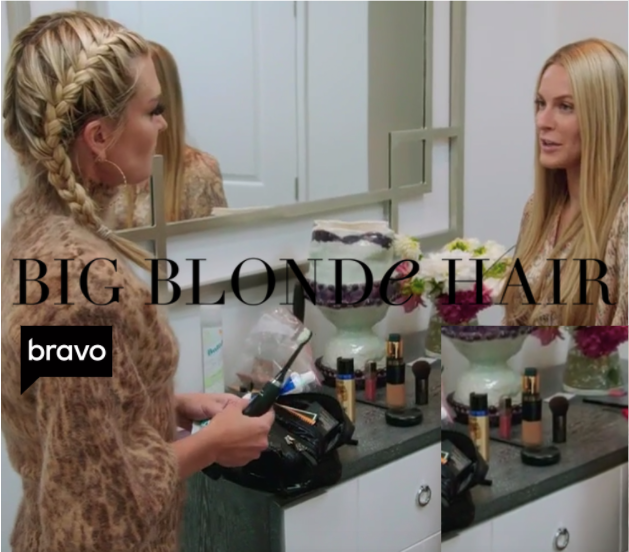
While Tinsley Mortimer was giving Leah McSweeney lip service on who and who not to trust with her secrets on last night’s Real Housewives of New York, BBH Staff Writer Faryn Wegler was focused on what was going on next to them which was all of Tinsley’s makeup sitting out for the taking finding. First she was able to track down Tinsley’s pink lip gloss based on the hexagonal shape of the lid, which is some pretty good detective work in my book. I just hope she didn’t tell Sonja Morgan first, I wouldn’t want for her to tell everyone and have it sell out before I get my hands on it.


The Realest Housewife,

Big Blonde Hair

Tinsley Mortimer's Pink Lip Gloss

Click Here to Shop her Fenty Lip Gloss in Fussy

(Based on other images of the gloss this color matches the most closely)

Originally posted at: Tinsley Mortimer’s Pink Lip Gloss

Read More

Building Resilience in Tough Times: Do We Have It in Us to Move Forward?

Building Resilience in Tough Times Do We Have It in Us to Move Forward

Back in February, I didn’t realize the timeliness of the article I wrote about resilience and the lessons we learn that help us bounce back from difficult days.

Here we are now,
in a crisis bigger than any of us imagined a month ago. The Coronavirus blew into
our lives like a tsunami. It set us back on our collective heels, threw us into
varying degrees of loss and grief, and robbed too many of us of our health or,
worse, of people we love.

Everything
changed. This is a lot to bounce back from. 

We’ve never been asked
to fight this kind of battle. In the coming weeks and the following months, we will
continue to manage uncertainty and learn to navigate new waters. 

And the truth is,
we don’t know what life will look like when this war ends. So, since no one has
a crystal ball, what do we know?

We know we have Right
Now
. We know we can build resilience muscles. And we know that, during
this unsettled time, we do that minute by minute, day by day.

When Life Is
Uncertain, Take Care of Yourself

Our culture
teaches that, when problems arise, we’re supposed to figure out the answers.
But when really big events happen, like this pandemic, trying to figure things
out is the last thing we need to do, not the first.

Thank goodness there
are experts and helpers working tirelessly to provide a solution for us. And there
are trusted sources we can go to for information. The rest of us can give
ourselves a break as we follow the recommendations and guidelines. Our job right
now is to do what comforts us and calms us.

Many of us find solace
in a spiritual practice or in adopting that practice to this environment of
social distancing. Many of us are reassured by routine, creating simple structure,
and performing daily rituals. Practicing gratitude and noticing small things
that spark joy are universally comforting.

Whatever you
choose to do that quiets the mind and nourishes the rest of you is okay during the
first stages of big change. We return to our center of Peace not by making
giant leaps but by taking small steps. The time to “figure it all
out” will come. We’ll be stronger when it does if we’ve put ourselves
first for a while.

Creativity Brings
Possibility

Unstructured time can be considered a creative white space. That space is fertile ground for the “makers,” the artists, the teachers. And that includes each of us, whether or not we’ve ever practiced art as a profession.

Your inner
creative self might wake up! When she does, she’ll probably bring
lightheartedness and playfulness with her.

She may come
through in traditional ways like writing or music. But she could appear in the
form of a new furniture arrangement for the living room. Or baking a cake from
scratch. Maybe she wants the colorful scarf you bought to celebrate Spring to
be worn around the house!

Creative pursuits
show us what’s possible. When we see what’s possible, we become hopeful about
what’s next.

Authentic Connection
Carries Us Through

The world feels
smaller than ever.

I appreciate what late-night talk show hosts are doing – broadcasting live from home and winging it a little. And I love the musicians who serenade us online from around the world, unplugged and without the glitz. It feels personal and real.

If this current
situation teaches us anything, it will be the positive impact of genuine
connection
.
Uncertainty has allowed us to fearlessly reach out. It’s stripped down the
pretense and made us brave enough to make that phone call, send that email. Use
Zoom!

The more we
connect in the coming weeks, the stronger our bonds will become. And, thanks to
those bonds, we’ll be ready for what’s to come.

Do we have it in
us to get through this? We certainly don’t have a rulebook.

But we do have the
resilience we brought with us into this situation. We have the capacity to
become stronger. We have each other. And we have Right Now.

I’m hopeful
that’s a recipe not only for bouncing back but for moving forward, however that
will look.

Do you have it in you to move forward in
difficult situations? What do you think it takes to build resilience in tough
times? When the world closes in around you, what keeps your mind open and
active? Please share with our community!

Read More