
Author: HairWeavings Editorial Team
9 Best Purple Shampoos for Grey and Silver Hair

Are you transitioning to your natural grey hair? Are you already sporting full grey or silver? As grey and silver hair become increasingly popular and embraced, maintaining their brightness and avoiding brassiness is key. Purple shampoos are a simple solution, neutralizing yellow undertones while enhancing the cool tones of your hair.
Here are some of the best purple shampoos that keep grey and silver locks looking their best.
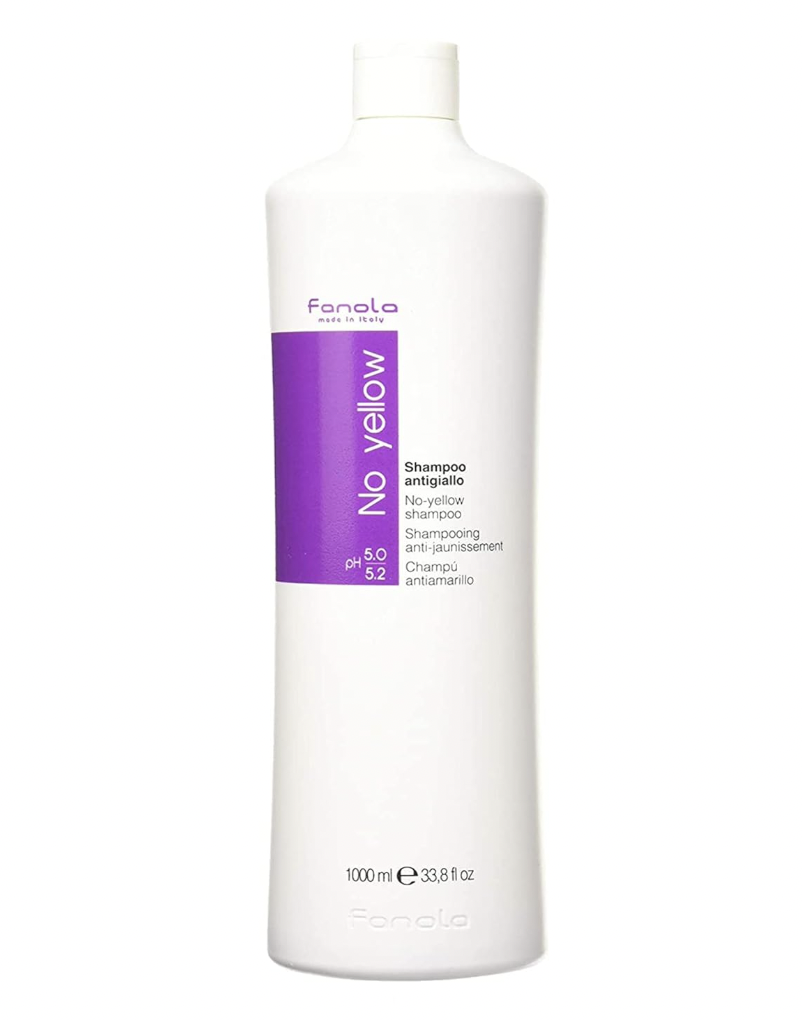
- Fanola No Yellow Shampoo – This salon-quality shampoo is a powerhouse for fighting yellow tones.
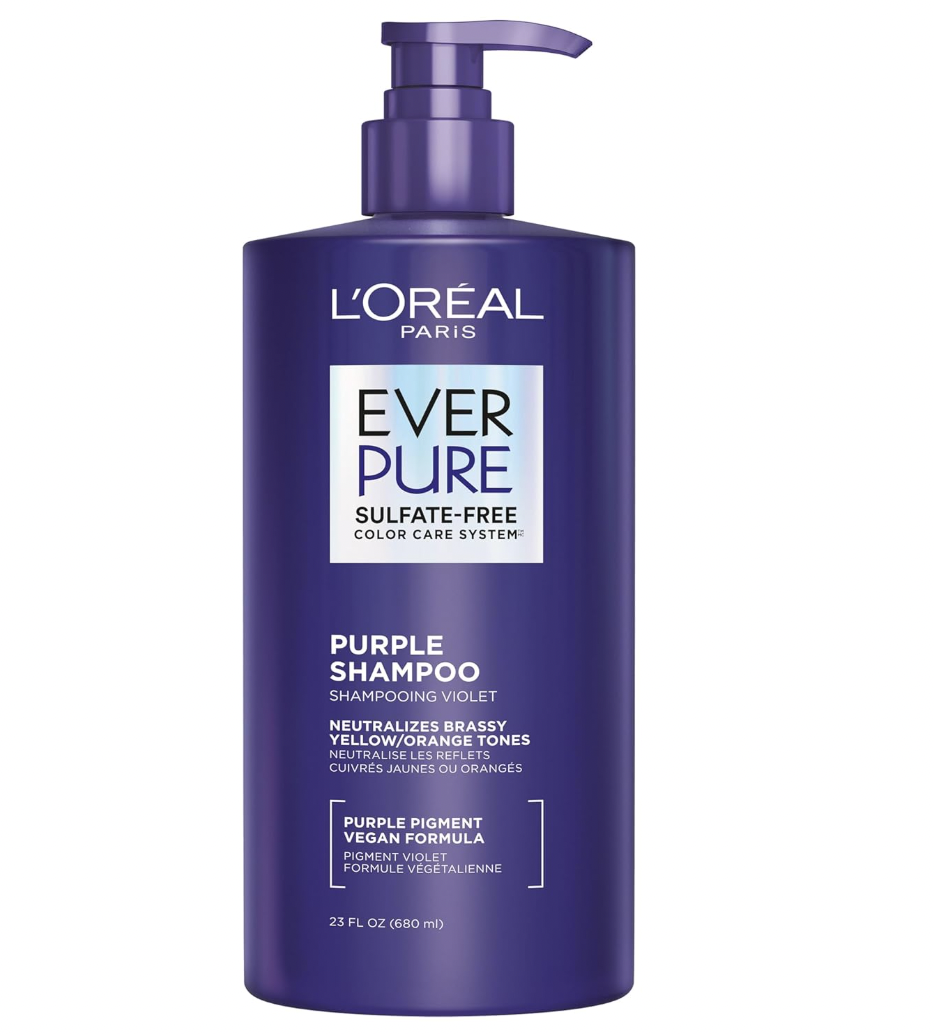
- L’Oréal Paris EverPure Brass Toning Purple Shampoo – Free from harsh sulfates, this gentle formula nourishes while neutralizing brassiness
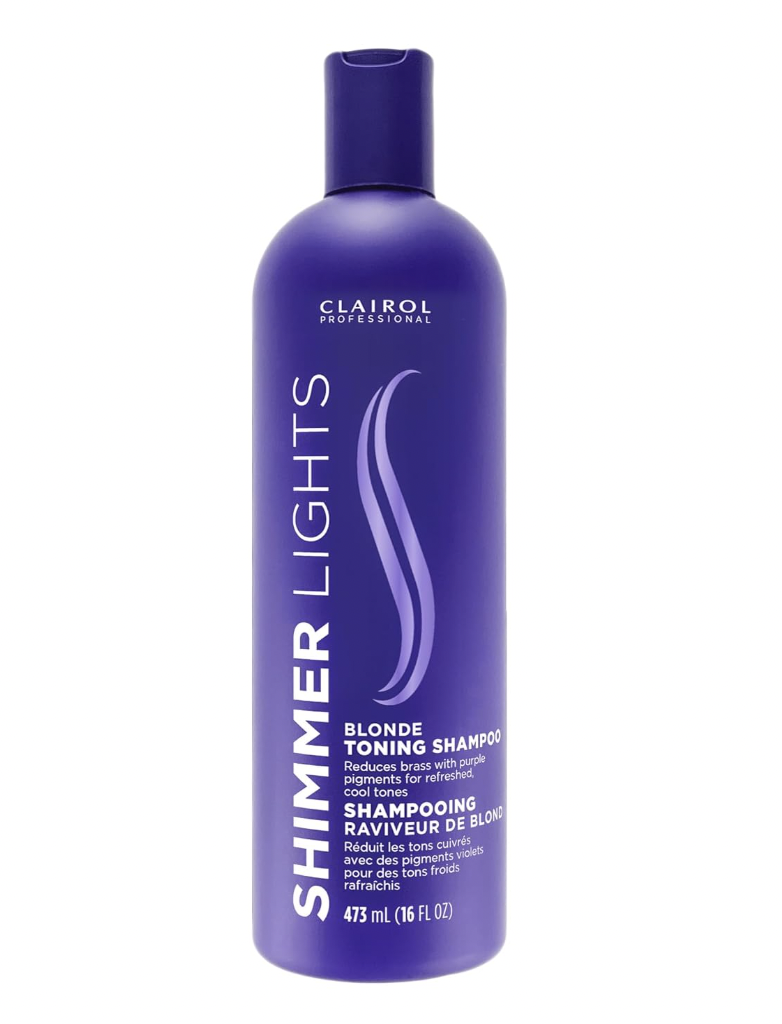
- Clairol Shimmer Lights Purple Shampoo – A classic in the world of purple shampoos
- Joico Color Balance Purple Shampoo – Packed with tone-correcting pigments.
Continue reading to discover our list of purple shampoos for grey and silver hair.
Read Everything You Always Wanted to Know About Grey Hair (#4 is Harder Than it Sounds!).
Purple Shampoos for Grey Hair
Fanola No Yellow Shampoo
Why It’s a Favorite:
This salon-quality shampoo is a powerhouse for fighting yellow tones. Its deep purple pigment works wonders for keeping grey and silver hair vibrant.
Perfect For:
Anyone seeking a professional-grade solution for brassiness.
L’Oréal Paris EverPure Brass Toning Purple Shampoo
Why It’s a Favorite:
Free from harsh sulfates, this gentle formula nourishes while neutralizing brassiness. It’s perfect for color-treated hair and offers UV protection.
Perfect For:
Those who prefer affordable, sulfate-free options.
Clairol Shimmer Lights Purple Shampoo
Why It’s a Favorite:
A classic in the world of purple shampoos, this product effectively brightens grey and silver hair while being budget-friendly.
Perfect For:
Anyone looking for a reliable, time-tested formula.
Joico Color Balance Purple Shampoo

Why It’s a Favorite:
Packed with tone-correcting pigments, this shampoo not only eliminates brassiness but also strengthens your hair with its keratin-based formula.
Perfect For:
Those with brittle or damaged hair.
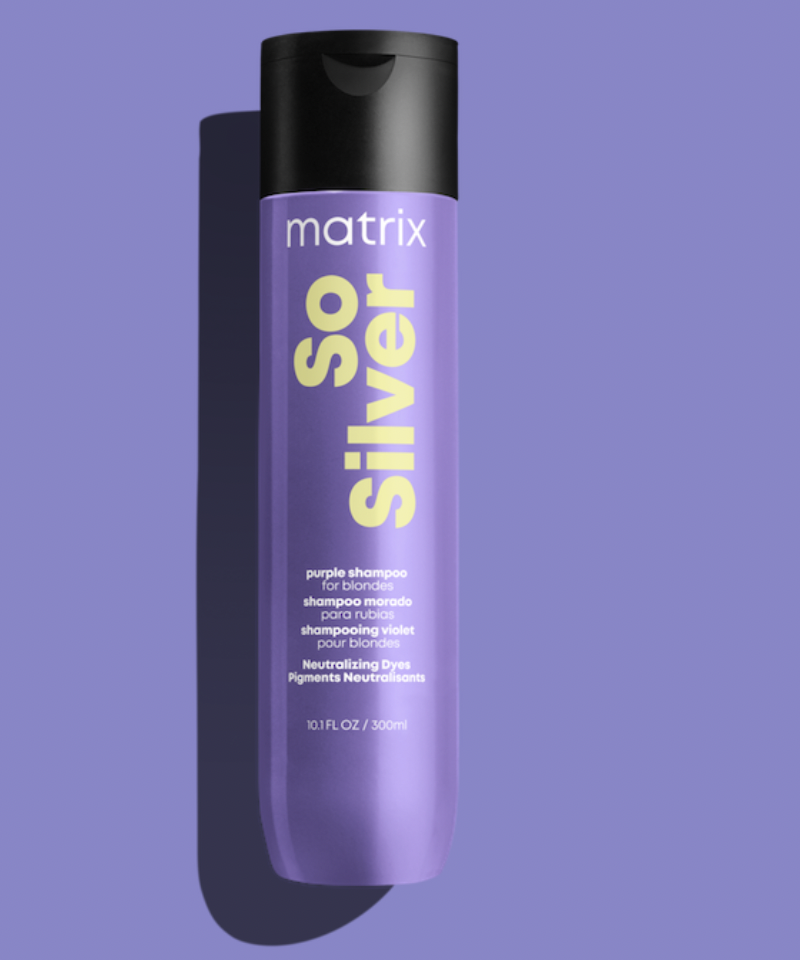
Matrix Total Results So Silver Purple Shampoo
Why It’s a Favorite:
This shampoo doesn’t just tone; it hydrates and smooths hair while enhancing the brightness of silver and grey tones.
Perfect For:
Dry or coarse hair types needing extra hydration.
Pureology Strength Cure Blonde Purple Shampoo

Why It’s a Favorite:
Formulated for both blondes and greys, this sulfate-free shampoo is packed with antioxidants and proteins to repair and protect your hair.
Perfect For:
Eco-conscious individuals seeking a luxurious option.
Amika Bust Your Brass Cool Blonde Shampoo

Why It’s a Favorite:
Known for its vegan and cruelty-free formula, this shampoo brightens and hydrates without harsh chemicals.
Perfect For:
Anyone looking for a gentle yet effective toning shampoo.
dpHUE Cool Blonde Shampoo

Why It’s a Favorite:
Infused with natural ingredients like silk proteins and hibiscus extract, this shampoo not only tones but also strengthens and conditions.
Perfect For:
Those with sensitive scalps or dry hair.
Pravana The Perfect Blonde Purple Toning Shampoo

Why It’s a Favorite:
This richly pigmented shampoo works quickly to banish yellow tones while leaving hair soft and shiny.
Perfect For:
People who need fast results and vibrant toning.
Read How to Apply Makeup for Grey Hair (Video).
Tips for Using Purple Shampoo
Start Slow: Use once or twice a week to avoid over-toning.
Apply Evenly: Distribute the shampoo evenly and let it sit for a few minutes for maximum effect. See the recommended time on the bottle.
Pair with Conditioner: Follow with a matching purple conditioner for extra hydration and toning.
Read How to Highlight and Enhance Your Grey Hair (A Celebrity Stylist Video Interview).
Why Purple Shampoo Works
Purple shampoo is designed with violet pigments to counteract yellow and brassy tones. Grey and silver hair can sometimes pick up these unwanted tones due to environmental factors or product buildup. The purple hue neutralizes these tones, restoring brightness and vibrancy.
With the right purple shampoo, your grey and silver hair can remain as striking and luminous as ever. Whether you’re new to purple shampoo or looking to switch up your routine, one of these nine options is sure to meet your needs.
Read 60 Shades of Grey: Why Women are Going Grey Gracefully.
Read What is the Best Shampoo and Conditioner for Grey Hair, According to Women Over 60?
Let’s Have a Conversation:
Do you use purple shampoo on your grey or silver hair? Which brand is your favorite? Do you have tips for our Sixty & Me readers for using purple shampoos? Tell us about it in the comments below.
Read More
The Wisdom I Gathered from Three Marriages

I have been married three times. If you met me, you would know immediately I am not the Elizabeth Taylor type. My three men did not seduce me with rock-sized engagement rings. I did not tire of any of them: they were or are all good men! It is only life’s unpredictable circumstances that have made me a serial bride.
I have come to realize that the tenure of each of my marriages corresponds to three unique stages of life: young adulthood, family-focused years, and now retirement. All three marriages can offer some wisdom into how being in a relationship at various times in one’s life is so different, even if one’s partner remains the same! I am also quite stunned on a daily basis that marriage can bring such great satisfaction later in life.
Marriage in Retirement
Dr. Sara Yogev, in her book A Couple’s Guide to Happy Retirement, has discovered through counseling her patients for over 30 years, and in the literature, that newly retired individuals report the lowest marital satisfaction and highest marital conflict compared to older retirees, the unretired, and those still working. It seems to take about two years for husbands and wives in retirement to settle down and begin to make accommodations to the other’s needs (if they can).
Each member of the couple has uniquely different desires in retirement, and both have not spent such a great amount of time together… ever! Luckily, Dr. Yogev has some great suggestions for the common problems. Perhaps such a consultation can lower the “grey divorce” rate which has tripled among those over 65 since the 1990s. Also, a look at marriage in prior life stages might illuminate the challenges and pleasures which marriage can bring in one’s later years.
Also read, Why Do Couples Divorce Later in Life?
Young Adulthood
Like many in my generation, I married at a very young age: engaged at 19 and married at 20. I fell in love with my first husband at a summer religious youth camp. We came from the same community, and there was a great alignment of values, friends, and aspirations for the future.
We supported each other in every important way through college, both living at home, and working in our spare time to save enough to get married in our senior year. Our future looked bright, and we were supported by loving parents, siblings and the local community.
Although our stars aligned, I was too young for so much responsibility while still in college. I had no experience with all the required domestic duties, and I found them to be quite burdensome. Right after our honeymoon, I was thrown into my student teaching semester, with its own very adult responsibilities.
I secretly wanted to have the marriage annulled, but I felt badly about the cost of the wedding album which had not yet been delivered by the photographer!
Unfortunately, this 8-year marriage ended when my young husband was killed in a tragic accident at the age of 30, leaving me with a toddler. Although my marriage had quite an unusual ending, women who marry too young often are not prepared emotionally for the adult requirements of running a household, intimacy on a daily basis, and lose the years required for deep self-exploration.
Family Focused Years
After surviving the first two years as a widow and single parent, fate smiled upon me.
I took my daughter to register for nursery school, and the secretary just happened to be a childhood friend of my mother. She introduced me to the education director of that institution, and we fell in love immediately.
Once again, there was a large, loving community enveloping us, an alignment of values, this time of a very spiritual nature, and our son was a happy surprise who needed a babysitter as we celebrated our first anniversary.
My second husband gladly adopted my daughter, and all four of us reveled in our hard-won family status: I was a young widow, and my husband was a 40-year-old bachelor, now with two children. My daughter now had a brother!
Unfortunately, a tragic death leaves its imprint on everyone in an extended family. I now had the old in-laws, the new in-laws and their tribe, and a daughter affected by her father’s death.
Even our son was influenced by the family saga which never seemed to recede. Unfortunately, this 18-year marriage ended in divorce. This was a hectic time, with both of us working so many hours, coping with domestic chores and full children’s schedules. We all did the hard work in therapy, but we were pulled under the strong current of past events and the daily grind common to many couples in middle age.
Marriage in Later Life
Not being one to give in to adversity, after several years passed, I signed up for Match.com. Along comes husband #3 and a reawakening of love and passion… at the age of 51! At this juncture, extended family obligations had receded. Robert and I were able to focus on our relationship, especially when my son went off to college. One of my friends now calls us a happy “nation of two.”
Although we’ve been married for 20 years and have passed through the abrupt end of my career and his tricky divorce, we find ourselves in a daily state of comfort, living the intersection of similar values and interests, and palpable feelings of love and support.
These later years have great poignancy with their inherent illnesses, losses, and diminishing future. I’ve been by Robert’s side as he navigated two serious illnesses, and he’s been by my side as I lost both parents and continue to unravel my family history.
I find marriage so much more satisfying at this age for a number of reasons. In previous life stages, I always felt the competition of my agenda (which always included my children’s needs) vs. my husband’s. Now that I’m retired, I have no compelling agenda. I am able to pivot easily depending on the demands of the moment, yet I honor the carefully curated life I’ve chosen.
“Time,” which was always ferociously biting at my heels, is now a vague concept. I often lose track of the current date. This casual approach to life has extended to Robert. Although I was previously described by him as “strident,” I just let this man be. There is no longer the noticing or the judgments about behavior, appearance, domestic faux pas, etc.
Marriage in later life can be the result of all the relationship wisdom gathered over a lifetime through life’s stages. In the words of Desmond Tutu, “Our maturity will be judged by how well we are able to disagree and continue to love one another, to care for one another, and cherish one another, and seek the greater good of the other.”
Let’s Have a Conversation:
What is your experience of marriage? Is your relationship a long and happy one or have you been through separation and divorce? How have relationships worked out for you thus far?
Read More
The One Trick to Overcoming Financial Procrastination

Jokingly, we have all heard, and then chuckled, the phrase, “Why do today what you can put off until tomorrow?” We call that procrastination. Wikipedia’s definition of procrastination is the act of unnecessarily postponing something despite knowing that there could be negative consequences for doing so. We all do this in some areas of our life, but why?
Taboo Topic
In my industry, personal finance, I have decided that too often when people procrastinate financial actions it is due to the tendency to avoid negative emotions. For some, money in general elicits feelings of stress or uncertainty. Maybe it was a source of tension in your household growing up or in past relationships. For many women, it’s an overall feeling of guilt and/or lack of confidence in feeling like we never learned or were taught about money.
Depending on what stage of life we are in, our spending plan or purchase decisions or investment decisions can all bring uneasiness. Or how about the most procrastinated area of personal finance, estate planning? Who wants to think about death and incapacity? Thinking about losing loved ones is definitely fraught with negative emotions.
And to add to all of that, money has pretty much been one of those taboo topics in many cultures and countries that people often just don’t talk about. For a variety of reasons, families have not historically shared financial decision-making stressors or approached the learning lesson opportunities that come with using money as a tool in life.
The Nike Solution
Regardless of the context of how you got to where you are today in your financial life, money personality, and personal finance habits, how can you avoid procrastination and move forward for optimal financial health? I think Nike may have discovered the solution, whether we are talking about money or other actions in life.
I recently learned about Dr. Tim Pychyl, author of the book Solving the Procrastination Puzzle. As a professor of psychology, he researched the impact of intentional actions on personal well-being. His bottom line finding was that the key to overcoming procrastination is… to just get started.
“Just do it!” like Nike says. That 1988 slogan led to one of the most successful marketing campaigns in history. By tapping into the personal and relatable goal of achieving something, Nike inspired people to take action and pursue their goals regardless of obstacles. Nike became a companion in personal triumph.
Your Companion
Dr. Pychyl went on to clarify that we should not wait to be in the mood for whatever goal we want to accomplish. You get in the mood by starting any action toward your goal. His book shares several strategies for taking that first step and maintaining momentum.
Nothing wrong with being a DIY-er (do-it-yourself), especially on some things, which is also why I have a variety of financial checklists available for various stages of life and a FREE master calendar for completing financial tasks. However, I have seen the value of a companion in personal triumph, like Nike’s approach.
Accountability partners, isn’t that a big part of the success of organizations like Weight Watchers, Griefshare, Alcoholics Anonymous, etc.? Occasionally, I have clients that want a personal financial plan with recommendations that they plan to take and implement themselves without my further involvement. I have yet to see that work out as they had hoped. Other times, since life is busy, busy, busy and part of my role is to be what I call a “Nice Nag,” proactively bring up and keep reminding about actions they identified as important to them.
Also read, Retirement: Turn Your Worry List into a To-Do List.
Just Get Started
So how do you just get started, like Nike and Dr. Pychyl suggest? Small “mind tricks” that I have found helpful have to do with visible reminders, i.e., sticky notes, tickler files, etc. For example, if a goal is to review your estate plan or complete some paperwork, place the physical paper in a visible place that will bother you until it is moved.
My personal pet peeve is to have paperwork pile up on my kitchen island where I have a nice centerpiece. I prefer to keep that area decluttered and always nice looking since it is the first thing you see when you enter the kitchen. Yet if I put a book, file, paperwork, etc. on that island as a To Do reminder, it will get done (because I don’t like it there!) compared to if I just leave it on a desk, by the computer, on a side counter, etc.
Pick one next step and do it. Don’t wait to be in the mood. That’s the research. What is the one best thing you can do next for your financial health?
Let’s Have a Conversation:
Do you have mind tricks that have helped you move forward on your financial health? What has NOT worked? Is there something you have experienced that you can share with our community to help other women?
Read More
