
Author: HairWeavings Editorial Team

7 Best Apps for Dementia Patients

best apps for dementia patients

Smartphones and tablets can be incredibly beneficial for Alzheimer’s and dementia patients if they are loaded with the right apps. Progression of dementia cannot be stopped, but technology can help with memory training and entertainment.

There is a growing number of useful apps for dementia patients and caregivers that help stimulate the brain and ensure the health, safety, and well-being of seniors with dementia.

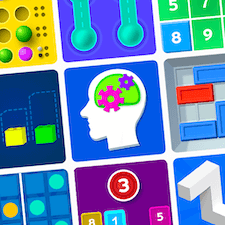
1. Train Your Brain
Train Your Brain

Train Your Brain is one of the best apps for dementia patients. It is specifically designed with seniors in mind to stimulate cognitive areas and provide memory brain training. It comes with a collection of games that help to develop memory skills and have fun at the same time. The key features of the app include:

  • Daily memory training
  • Simple and interactive interface
  • Variety of games including Find Card Pairs, Repeat Sequence, Memorize Pattern, etc.

Download Train Your Brain Android | iOS

2. Lumosity

Lumosity

One of the most popular apps to exercise your memory and reasoning is Lumosity. With 100 million worldwide users, Lumosity is used to exercise memory, speed flexibility, and problem-solving. The highlights of this app include:

  • 40+ activities for dementia patients
  • Challenges of memory, logic, math, problem-solving
  • Analysis of the user’s gameplay to understand their cognitive pattern

The game is developed by a team of scientists and designers exploring new ways to challenge the brain and advance cognitive research.

Download Lumosity Android | iOS

3. MyReef 3D Aquarium

MyReef 3D Aquarium

This app adds a beautiful 3D aquarium to a device. It comes with options to customize the fish tank and interact with 14+ types of vibrant tropical fish. This is one of the best relaxing apps for seniors with dementia with stress relief capabilities.

One can zoom in on the fish, tap on the glass, and feed the fish. Users can view their aquarium in soothing shades of midnight blue.

Download MyReef 3D Aquarium Android | iOS

4. Alzheimer’s Daily Companion

Alzheimer’s Daily Companion

This app is a great resource for caregivers. It helps them by providing immediate tips and practical advice for all the situations that they face with patients on a daily basis.

Caregivers can search for the situation they have and the app will suggest the solution to the problem immediately. The app is designed by experts and family caregivers of other dementia patients.

The app has more than 500 tips and solutions to guide the caregiver in any situation.

The key features include:

  • Access to other dementia and Alzheimer’s caregivers resources.
  • Free and immediate advice for dealing with dementia patients.
  • Caregivers can share their advice in the app to help others with a similar situation.
  • Caregivers can rate each tip, enabling other caregivers to benefit from ratings.

Download Alzheimer’s Daily Companion for Android.

5. Peak

Peak

Peak provides a free brain workout to expand your mental skills with 45+ games and puzzles in six categories. The activities challenge memory, language, and critical thinking to stimulate the brain. The major highlights of Peak are:

  • Daily brain activity to sharpen memory, attention, and emotion control.
  • Workouts such as coffee break, the weakest link, low rank, and the total workout.
  • Compete with others, track your progress with in-depth insights.
  • Advanced training material designed by scientists and universities.

Download Peak Android | iOS

6. MyTherapy

MyTherapy

There are different medication apps for dementia patients to remind them to take medication on time but MyTherapy comes on top. MyTherapy is an award-winning medication reminder and medical tracker app that combines pill tracking, mood tracking, and a health journal.

It can be used as an activity reminder to encourage a healthy lifestyle. The key features of the app are

  • A simple, easy-to-use interactive interface with no adverts.
  • A comprehensive PDF health report in your email that you can share with the doctor.
  • Tracks sugar levels, resting heart rate, and more than 20 other health measurements.
  • Reminders for all medications and pill tracker for both confirmed intakes and missed.
  • A journal for physical and mental well being.

MyTherapy is one of the best medication reminder apps for Alzheimer’s patients and seniors suffering from other forms of dementia.

Download MyTherapy Android | iOS

7. My House of Memories

My House of Memories

This app enables older adults who are suffering from dementia to explore the past together with family, friends, and caregivers. Pictures from different museums are brought to life with descriptions and audio and seniors can save them in a digital memory tree. There are activities to do with family and friends while exploring the objects from the past.

A must-have app for seniors to stimulate memory and conversation with objects, spanning from the 1920s to the 1980s.

Download My House of Memories Android | iOS

Technology can help dementia patients keep their minds stimulated. Family and professional caregivers can use puzzles, games, and elderly care apps to keep seniors active and entertained.

Let’s Have a Conversation:

Do you think technology can help dementia patients? In what ways? Which apps have you tried that you think may be helpful in this regard?

Read More

Help! I Have Mice in the House!

i have mice

‘Twas the night before Christmas, when all through the house

Not a creature was stirring, not even a mouse…

Except, er… something was stirring.

It began as a sort of shadow at the corner of my eye, while I was watching the television. Something seemed to have moved, but I couldn’t work out what.

Perhaps it was just a figment of my imagination.

But the second time, there was no mistaking it. It was clearly a small mouse with a long tail. Making itself comfortable in our house with ne’er so much as a by-your-leave.

I wondered what to do. The last time this happened, over 40 years ago, we had adopted a kitten, who did what kittens do and grew up to be a cat.

She never caught any mice, but as I had been advised, she deterred them, and we never saw any mice again.

Problem solved.

Mouse Traps

But we didn’t want a kitten just now. And our ‘shower’ cat has not been seen for weeks.

Now I am truly a gentle soul and don’t want to kill anything if I can avoid it. But I also don’t want mice getting into my house. You hear stories of them getting into the walls and then dying. The smell evidently lasts for months.

So, what to do? I studied what was available and eventually bought some plastic mousetraps. Nothing fancy. The kind you put cheese in and hope it catches something.

I put two traps out, complete with cheddar cheese, in the corner where the mouse had made its appearance. That should sort it out, I thought. For some reason, I was convinced we had only one mouse, but the second trap was ‘just in case’.

Then nothing for some days.

About a week later, I saw the mouse again, this time carefully making its way around the two mousetraps as if it knew they were booby trapped.

Damn. I will have to get something better. This is war.

So, I dismantled the two mousetraps, wondering how mouldy the cheese might be, given that it had been left for over a week.

There was no cheese to be found.

What kind of super-mice do they breed here in London? An animal that knows how to get the cheese out but not get the guillotine? And then knows how to sashay around the traps, showing me what might be considered a figurative two fingers?

How is such knowledge passed on from one generation to another without language and perhaps other accoutrements of civilisation?

Going to War

My son said peanut butter was what they liked.

I went out to buy peanut butter. Not something we eat, so I had to buy it specially. Super-crunchy? Smooth? I almost wanted to ask the mouse what was its preference du jour.

And I re-baited the traps with generous lashings of peanut butter, yet this time without a great deal of hope.

The next morning, I got up late and my husband was already eating breakfast. He told me we had caught two mice and he had disposed of them.

I was bowled over. First, that we had caught two just like that and second, if truth be told, that he had taken the initiative to get rid of them.

I baited the traps again with more peanut butter.

Nothing on the first day. Nor the second. Nor the third.

Perhaps the word had got round. Our house was not the place to be.

Thinking About Mice

Mice don’t enter my thoughts most of the time. I never had a pet mouse, although my sister did briefly as a child. Those were the care-free days when we were encouraged to take home small animals from the classroom.

Why had they come now? New neighbours are undertaking major works and friends tell me that such activity often disturbs long established mouse nests. I looked this up on Google and found the following:

“If the nest is well established and in a prime location, a mouse will simply come back once you are gone. However, if this is a new nest, they may decide it is safer to find a new location. If the nest currently has babies, the female mouse is very likely to return in order to rescue her young.”

Ahh. How sweet. Almost made me feel guilty.

Let’s Have a Conversation:

Have you ever had mice where you live? What did you do about them? Did it work?

Read More

The Beginning of the End of Grief

end of grief

“How do you cook one and a half eggs?” my friend asked when I told her it was my favorite breakfast.

I replied, “It’s simple; you fry three eggs and cut one in two. Then you each eat one and a half, with one and a half pieces of toast if you like.”

“Ah,” she said, “you didn’t tell me it was breakfast for two. It wouldn’t work in my house.”

I looked at my friend, who was on her way to pick up a pizza for her son-in-law, and realized my recipe wouldn’t work for many women. You had to have an easy-going husband who prioritized your enjoyment over his convenience, like my Tom.

I Lost Tom in 2022

After my husband died, I moved into a condo to pursue my new life. I recently threw a housewarming party to which 50 people from different parts of my acquaintance came. I hugged each one, offered a drink, and ran off to welcome the next one. I was too busy hosting to converse, trusting my friends to find common ground with one another.

When it was all over, I sat down to my dinner of leftover cheese and crackers and realized I was exhausted. At past parties, Tom had done the welcoming and I had done the circulating. It hadn’t occurred to me that one person couldn’t handle both. Tom loved making people feel comfortable, but he would never undertake to organize a party himself. Like Jack Spratt and his wife, we made an efficient team.

The End of Teamwork

In the last decade of our marriage, Parkinson’s disease took over. Tom’s physical and cognitive abilities gradually declined until, in the final three years, spurred on by the pandemic, he wound up blind, wheelchair bound, and confused. In the beginning, I took him to see doctors and occupational therapists and to boxing, dancing, and singing lessons for people with Parkinson’s.

Towards the end, I moved us into housing with caregiver support and found technology for vision impairment. He didn’t complain and he did the best he could, but I struggled nonetheless.

In the beginning, I grieved all the precious little stuff, like walking down the street hand in hand; toward the end, I resented the endless caregiving. Some people say they like caregiving because it brings them closer to their loved one. I found it painful to watch one physical insult after another overtake my husband, to feel him become less of a companion and more of a dependent month after month.

For over a year after Tom’s death, I couldn’t look at photos of him in his sickness. He appeared so wizened, so unlike the sexy guy I had known. When he surfaced in my thoughts, all I could envision was the Parkinson’s, and I shoved the memory aside.

But now, 18 months since his death, something is beginning to change.

A friend told me that she experienced a similar loosening of feeling around 18 months after her mother died of Alzheimer’s. She said she could finally visualize the mother of her youth instead of the distant person she had nursed for years. I don’t know what has happened in my subconscious, but I’m glad to start rediscovering the vital man I loved.

A Friendly Ghost

I like peach preserves on my toast in the morning. When I reach for a knife to spread it these days, I stop my hand mid-air and reach for a spoon instead. I see Tom grinning at me and pointing out that jelly slides off a knife but stays in the bowl of a spoon, and you can use the back of the spoon to spread the stuff.

Something of an outsider for most of his life, he had fewer preconceptions than most people about how things should be done, and he was good at seeing past others’ preconceptions. He was much better at reading a room than I was; I was way better at working it.

Our biggest joint project was raising a son whom we uprooted at age 11 and moved to Phoenix, where parents enrolled their boys in kindergarten at age six, and where they played sports year-round. As a result, our son, who had started kindergarten at five, was smaller and less practiced than his classmates, and he felt disoriented.

At first, he withdrew into himself; then he flirted with being bad. Tom’s response was “benign neglect”: articulate your values and only act on the big stuff. I, on the other hand, looked for ways to intervene. My method paid off once when I forced our son to attend a summer program where he found his own strength. These days, I watch him parent his kids using both Tom’s techniques and mine. He’s a really good dad.

Timeline

Tom believed the key to marital success was giving. He used to say, “If each one gives 100%, then both get 200%.” The arithmetic doesn’t work, but the formula did for most of our 42-year marriage. In the first 12 years, he made the money and I worked part time while managing the household.

For the next 12 years, I had the big job and he retired and ran the household, even teaching himself to cook the kind of healthy meals I preferred. After I completed my work and our son completed his education, Tom and I each settled into a “second act.” I began to write and Tom went to graduate school to become a therapist. He thoroughly enjoyed his new gig until Parkinson’s stole it away.

Research on the physiology of grief shows that it affects body systems at the cellular level, altering cortisol production, sleep patterns, immune function, heart rate and blood pressure, and blood coagulation, especially in the early months after a loss. Widowers suffer a 40% greater chance of experiencing mortality in the first six months after their spouse’s death than married men. Although science hasn’t found patterns for the psychological duration of grief, it’s known that a surviving spouse is less likely to die in the 18 months following their partner’s death if they have used hospice care.

Anecdotal Evidence

My widowed friends resonate with the notion that grief alters 18 months after loss. One woman decided to sell her isolated house at the top of a hill and move into a condominium community where she would at least see people walking by. Her grief did not attenuate at 18 months, but she was able to make her next move. Another friend was finally able to begin therapy to get her life in order.

As for me, I have been experimenting with alternatives to a one-and-a-half fried egg breakfast: a one-egg omelet with fresh spinach, oatmeal with three kinds of seeds, and leftover lentils with parmesan cheese. I’m grateful for whatever is allowing me to visualize Tom teasing me in the kitchen rather than fumbling with his pills. Things are looking up.

Let’s Have a Conversation:

How long has it taken you to overcome the loss of a partner? Do you remember the good or the bad moments? What is your life like now?

Read More

Lisa Barlow’s Season 4 Reunion Look

Lisa Barlow’s Season 4 Reunion Look / Real Housewives of Salt Lake City Season 4 Fashion

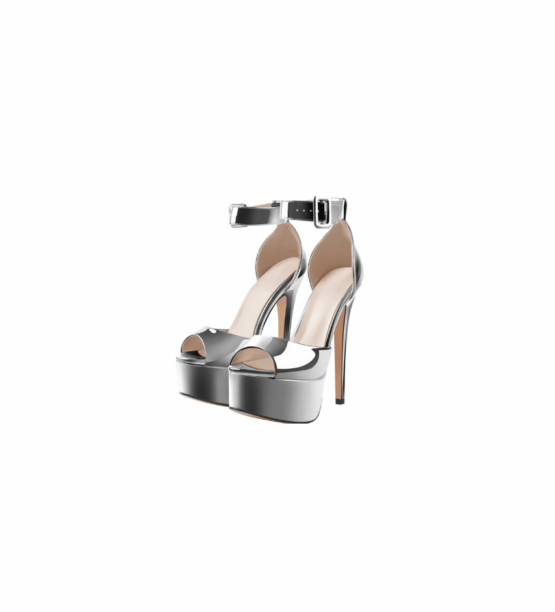
Yesterday, the Real Housewives of Salt Lake City Season 12 Reunion looks dropped, and I couldn’t contain my excitement! Lisa Barlow’s silver metallic cutout ring dress and platform sandals easily rank among my favorites. The coordination of her silver bracelets added the perfect touch to her icy aesthetic.

Lisa’s season two reunion also featured a metallic strapless dress and platform sandals, and I can’t help but love the look for her. If I had Lisa’s budget, I’d grab platform sandals in every shade. And the appeal of metallics on Lisa is undeniable, and her ability to embrace a flashy, runway-ready style is something we love her for. To top it off this look is head turning for a reunion and the holidays (hello next level New Years Eve!), so if you’re at Lisa’s level we’ve got the perfect picks for you.

Best In Blonde,

Amanda


Lisa Barlow's Season 4 Reunion Look

Click Here for Additional Stock in Her Dress

Click Here for Additional Stock in her Sandals / Here for More Stock

Hair: @oliviahalpin / Makeup: @makeupbynikkilarose / Nails: Jada / Photo: Clifton Prescod / Photo Assist: Jocelyn Prescod

Photo + Info: Bravo TV


Originally posted at: Lisa Barlow’s Season 4 Reunion Look

Read More
Venita Aspen’s White and Blue Floral Dress

Venita Aspen’s White and Blue Floral Dress / Southern Charm Season 9 Episode 12 Fashion

This isn’t your average puff piece on Venita Aspen. This is piece on her and the white and blue floral puff sleeve dress that she’s wearing. She looked adorable for night two in Jamaica and you’d never know she got ready en route. I love this style of dress because it’s cute, but also because there’s something youthful about it. But honestly the best thing about it is that it’s affordable which means it can easily be planted it in your closet. 🌱

Sincerely Stylish,

Jess


Venita Aspen's White and Blue Floral Dress

Style Stealers


Originally posted at: Venita Aspen’s White and Blue Floral Dress

Read More