Author: HairWeavings Editorial Team

Whitney Rose’s Black Sequin Halter Dress

Whitney Rose’s Black Sequin Halter Dress / Real Housewives of Salt Lake City Fashion Season 4 Episode 12

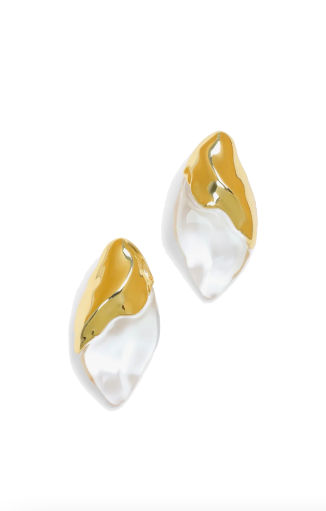
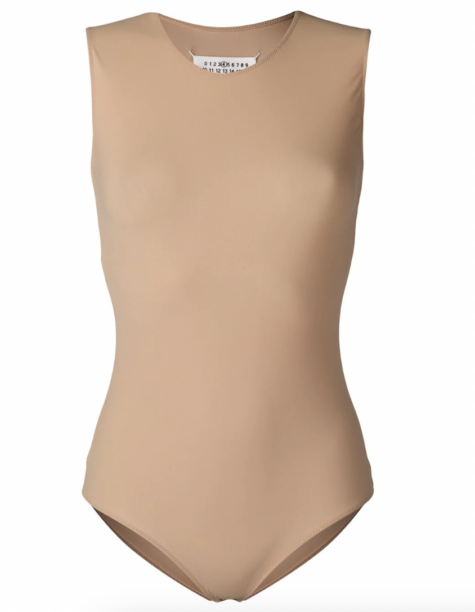
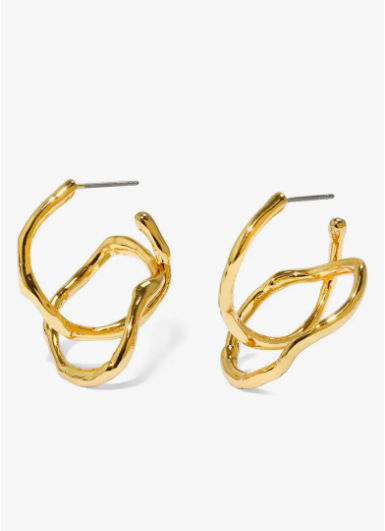
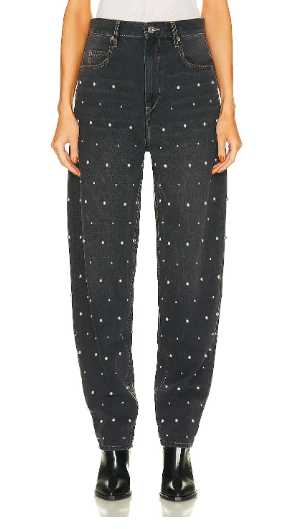
Whitney Rose slays in another stunning dress on tonight’s Real Housewives of Salt Lake City! Her black halter dress is pure perfection. And stock is super limited, but it’s over 50% off! Act fast or scroll for amazing, asymmetrical black sequin looks that are perfect for the holidays.

Best in Blonde,

Amanda


Whitney Rose's Black Halterneck Sequin Midi Dress

Style Stealers


Originally posted at: Whitney Rose’s Black Sequin Halter Dress

Read More

Two Ideas for Giving Tuesday

Giving Tuesday

I bet you have heard of Black Friday and Cyber Monday, but are you familiar with Giving Tuesday? Created in 2012, Giving Tuesday is a global day of giving that takes place on the Tuesday following Thanksgiving Day in the United States. It encourages people to give back to their communities and support charitable causes.

Here are a couple of ways to give that might also provide a tax benefit to you.

Donor-Advised Funds

A donor-advised fund (DAF) is a charitable investment account that allows donors to make charitable contributions, receive an upfront income tax deduction, and then disburse the funds as frequently as they wish over time. The account is managed by a sponsoring entity that is a section 501(c)(3) organization.

Many communities, religious entities, and even brokerage houses (Fidelity, Schwab, Vanguard, e.g.) sponsor donor-advised fund foundations or trusts to encourage charitable giving.

Some of the donor benefits of DAFs follow:

  • Receive an immediate charitable income tax deduction for your donation – no matter when the money is disbursed to a charity.
  • Make grants over time to any IRS-qualified public charity.
  • Until you disburse funds, invest the funds for tax-free growth. 
  • Donate long-term appreciated assets at fair market value to reduce potential capital gain tax.
  • Control when and where the DAF funds will be donated.
  • Simplify recordkeeping and organization of your charitable giving.
  • Support legacy planning.

Please note that a DAF may specify an account minimum and set a minimum grant size. Also, there are often fees associated with a DAF. It is always a good idea to check with your accountant or tax advisor to assure you that this, or any tax strategy, makes sense for you.

Charitable Rollover

Another tax-friendly option is a Qualified Charitable Distribution (QCD), sometimes called a Charitable Rollover. It allows you to support a qualified charity and, at the same time, count the donated funds toward your Required Minimum Distribution from your Traditional IRA when you reach RMD age (now 73).

Just follow these rules:

  • You must be 70 ½ or older.
  • You must make a DIRECT payment from your IRA to a qualified charity (see your account custodian for specific instructions).
  • The annual gift(s) may not exceed $100,000 in 2023 but that maximum will be increased for inflation starting in 2024.
  • The gift is NOT included in taxable income.
  • The gift is NOT a deductible charitable contribution for income tax purposes.
  • The gift counts toward your IRA’s Required Minimum Distribution.
  • Unfortunately, the charitable contribution cannot be made to a donor-advised fund.

Most financial institutions set a deadline for such a charitable request well before the end of the year, so this is time critical!

Although we don’t need a special day to be charitable, Giving Tuesday reminds us to be aware of those around us in need – human and animal – and include them in our holiday plans!

Further reading, HAVE YOU WONDERED WHERE YOU CAN INVEST? LET’S LOOK AT THE OPTIONS.

Let’s Have a Conversation:

Are you aware of DAFs? Charitable Rollovers? Have you used other methods for charitable giving – volunteer time, etc.?

Read More

Brynn Whitfield’s Houndstooth Blazer

Brynn Whitfield’s Houndstooth Blazer / Real Housewives of New York Instagram Fashion November 2023

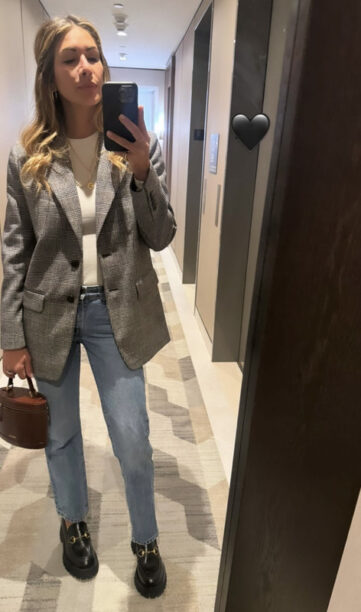
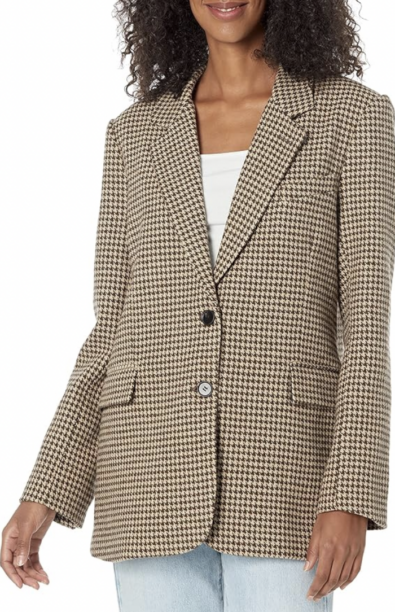
I think we all agree that we light up like a Christmas tree when Brynn Whitfield posts on Instagram. Not only is her style contagious, her smile is too! Trust me I would be smiling too if I was rocking this houndstooth blazer in NYC or LA, and you’ll see it’s appropriate for both below. Without a doubt, this jacket is the perfect look for fall or winter, and I’d bet a million dollar listing bucks it.

Best in Blonde,

Amanda


As Seen on Tracy Tutor

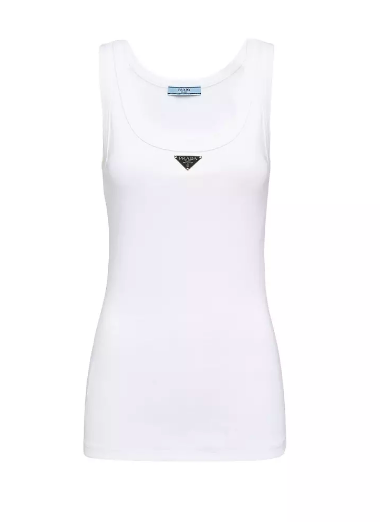
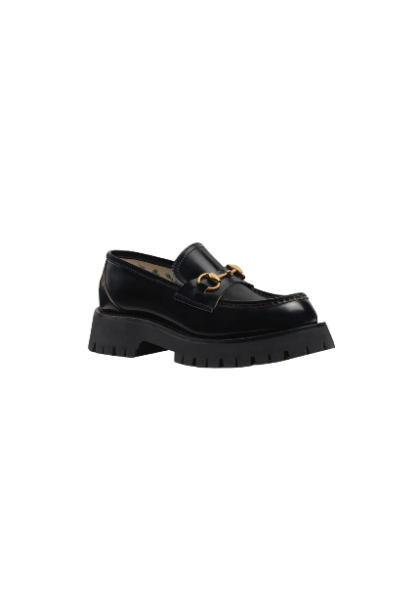
Tracy Tutors Crop Top and Skirt Set with Blazer
Brynn Whitfield's Houndsooth Blazer

Click Here for Additional Stock / Here for More Stock / Here for Even More Stock / Here for Even More / Here for Even More

Photo: @brynn_whitfield


Style Stealers


Originally posted at: Brynn Whitfield’s Houndstooth Blazer

Read More

Technology Tales – the Continuous Glucose Monitor

continuous glucose monitor

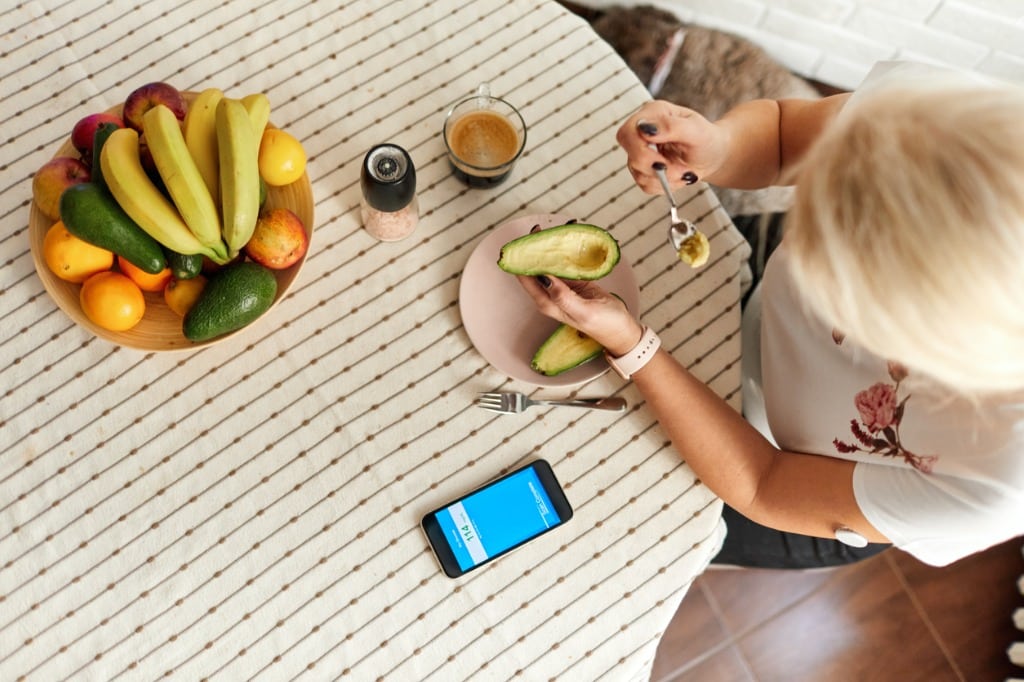
In the realm of health and wellness, new tech is always emerging to provide insight into our inner workings. One such innovation that has gained popularity, and some controversy, is the continuous glucose monitor (CGM).

CGMs measure glucose levels in the interstitial fluid, providing real-time data about blood sugar fluctuations. Designed for those with diabetes to manage their blood sugar levels, CGMs are now being embraced, though not necessarily encouraged, by a broader audience.

Why? Wearing a continuous glucose monitor can offer valuable insights into our metabolic health, helping us make informed choices for overall well-being.

Insulin Sensitivity

Insulin sensitivity refers to how well the body’s cells respond to insulin, a hormone that regulates blood sugar levels. Higher insulin sensitivity is generally considered good because it means cells efficiently take in glucose, helping to maintain stable blood sugar levels.

I’m participating in a comprehensive, long-term health program at Optispan. The purpose of this new company is to embrace preventive health care and ultimately, to make it more available to the average person.

My doctor recommended I wear a CGM because I’m borderline pre-diabetic, based on A1C levels, which came as a huge shock to me because I consider myself very healthy. There are many reasons however, that you can have poor insulin sensitivity*, including a genetic pre-disposition, chronic stress, sleep patterns, and low muscle mass, to name a few.

In addition, some seemingly healthy foods may contain hidden sugars or carbohydrates that can affect blood sugar levels. Some low-fat or fat-free products replace the fat with sugar to enhance flavor. This can include certain yogurts, snacks, and desserts.

Many packaged snacks like energy bars, even those marketed as healthy, can contain hidden sugars and carbohydrates. Some “whole wheat” or “multigrain” products may still have a significant amount of refined carbohydrates. This is why checking the ingredient list for all your foods is so important.

Insulin Resistance

On the other hand, low insulin sensitivity, known as insulin resistance, can lead to elevated blood sugar levels and an increased risk of conditions like type 2 diabetes.

Approximately 1/3 of U.S. citizens are diabetic or prediabetic, and so I know I’m not alone. My doctor asked me to wear the monitor for two weeks, to see if I learned anything. And I did; really quite a lot. I’m sharing it with you now, because it made such a huge impact on my daily habits.

Lessons Learned from Continuous Glucose Monitoring

I Have to Rest When Sick

Being sick and on antibiotics drastically changes your body’s glucose response. It’s always important to take care of yourself, right? But when you’re sick, your body needs it even more. Don’t power through unless you have no other choice. Eat, rest, repeat.

Movement Helps Me

Moving, even a little, after meals is a good idea. Washing dishes, household chores or a brisk walk after meals helps regulate blood sugar levels more effectively than sedentary behavior.

This awareness has changed the order in which I do things during the day. Whereas before I would eat, get some computer work done, then get up and move, I’ve switched to eat, move, computer work.

Always Transition to Exercise

Warming up before and cooling down after exercise significantly helps your body maintain better glucose levels. My glucose drops significantly when I work out, so transitioning into and out of it gradually gives my body the time to adjust without dramatic changes.

Monitoring My Triggers

Even a salad and whole grain bread causes a spike in blood sugar for me, but not for my husband. It’s the bread, every single time. Everyone is different. His is pretzels.

Knowing What I Eat

Read the labels and avoid foods high in added sugar. We hear this so many times that we tend to stop listening. It matters. A lot. Even chewable vitamins can influence your body’s insulin response.

I Listen to My Body

While traditional advice often emphasizes the importance of regular meal schedules, the reality is that optimal meal timing can vary among individuals. For instance, I found that I maintained more consistent blood sugar levels with many small, balanced meals throughout the day and my body’s response to glucose is better in the afternoon than it is in the morning. I knew this going in, just never thought much about it. The days I listen to my body are always better than the days I don’t.

Beyond diet, lifestyle factors play a significant role in blood sugar regulation. Exercise, stress, and sleep patterns all influence glucose levels, and wearing a continuous glucose monitor can unveil these connections.

Observing how your body responds to different stress levels or varying exercise routines can empower you to tailor your lifestyle to promote stable blood sugar. It certainly did for me.

Ways to Improve Insulin Sensitivity

Improving insulin sensitivity is important for nearly everyone’s overall health. Here are some more things you can do.

  1. Engage in regular physical activity, including both aerobic exercises and resistance training.
  2. Achieve and maintain a healthy weight to positively impact glucose homeostasis.
  3. Focus on a well-balanced diet that includes a variety of nutrient-dense foods and sources of omega-3 fatty acids in your diet, such as fatty fish (salmon, mackerel, sardines), flaxseeds, and walnuts.
  4. Avoid excessive consumption of refined carbohydrates, sugars, and processed foods.
  5. Foods high in fiber, such as fruits, vegetables, and whole grains, can help regulate blood sugar levels, among many other positive benefits.
  6. Stay adequately hydrated as dehydration can affect blood sugar levels.
  7. Ensure you get enough quality sleep each night, as inadequate sleep can negatively impact insulin sensitivity.
  8. Practice stress-reducing techniques such as meditation, yoga, deep breathing, or mindfulness.

These are some of the key steps in our journey to health, ones that we often forget in our busy lives.

My Glucose Tolerance Test Results

Recently, I underwent a Glucose Tolerance Test while wearing a Continuous Glucose Monitor (CGM) to gain a better understanding of my glucose metabolism. Surprisingly, the results revealed a fascinating discrepancy between my A1C levels (indicating borderline pre-diabetes) and the findings of the GTT, suggesting no significant glucose metabolism issues.

The GTT is a diagnostic test that involves fasting, followed by the consumption of a standard amount of glucose, with subsequent blood draws to measure how the body processes the sugar.

To my surprise, the GTT results indicated good glucose tolerance!

This contradicted the borderline pre-diabetes diagnosis suggested by the A1C levels, raising questions about the accuracy of either one as the sole diagnostic tool.

What Does This Mean?

Good question and there are a few possible answers:

  • My new diet, since my original blood draw and AC1 results, has made a positive difference for me.
  • It’s important to use multiple diagnostic tools to assess glucose metabolism comprehensively.
  • Another overnight fasting blood draw will be necessary to obtain a new AC1. It captures an image of overall blood glucose levels over a 3-month period, so I’ll wait 3 months from the first one in order to re-assess.

Should You Use a CGM?

As mentioned previously, CGMs are primarily designed and marketed for individuals with diabetes to help them manage and monitor their blood glucose levels effectively. The controversy over where people without diabetes should use them is based on a few undeniable facts.

Invasiveness

CGMs involve the insertion of a small sensor under the skin, which continuously measures glucose levels. This process can be perceived as invasive for individuals without diabetes.

Cost

The cost of CGM systems, including the sensors and the monitoring device, may be a deterrent for those who don’t have a medical necessity for continuous glucose monitoring.

Psychological Impact

The psychological impact of seeing fluctuating glucose levels, even within the normal range, could potentially lead to unwarranted concerns and behaviors.

Medical Professional Supervision

Non-diabetic individuals may not have the necessary guidance to interpret and act on the CGM data appropriately.

Misinformation

Certain “influencers” and marketers promote questionable advice, like the belief that all glucose spikes are harmful or that individuals should strive for extremely low blood glucose levels.

However, glucose spikes are a natural response to various foods, and the advantages of maintaining very low average glucose levels over normal range levels remain unclear. Recent research indicates that insulin sensitivity is a more reliable predictor of overall metabolic health than average blood glucose or spike frequency.

If you are considering using a CGM as a non-diabetic, it’s crucial to consult with your healthcare provider to discuss potential benefits and risks in your specific case. They are only available by prescription in the U.S., so discussing this with your doctor is inevitable. And a good thing.

Let’s Have a Conversation:

Have you ever noticed how certain foods impact your energy levels or mood? How do you currently structure your meals, and do you think it aligns with your body’s natural rhythms? Do you currently use any health monitoring tools or devices? Are you open to incorporating technology like continuous glucose monitors into your health routine? Why or why not?

Read More