
Author: HairWeavings Editorial Team
9 Hiking Trails in the USA for Women Over 50

Do you enjoy hiking? Many women our age find hiking enjoyable. There’s no better feeling than sliding into my hiking boots and setting out to lose myself (not literally) in nature. Are you interested in finding out about hiking trails in the USA that are perfect for women over 50?
Hiking is an excellent activity for us for several reasons. It can help improve cardiovascular health and strength, which can help prevent age-related conditions such as heart disease and osteoporosis. Hiking also provides a low-impact workout that is easy on the joints, making it an ideal form of exercise for those with arthritis or other joint issues. It also offers a chance to get outside and enjoy nature, which can help reduce stress and improve mental health.
There are plenty of renowned hiking trails in the USA that are suitable for women over 50. You choose how many miles you want to hike – you can do a simple day hike on a part of the trail or a multi-day hike spanning a larger part of the route.
Here are some top-rated hiking trails in the USA for women over 50:
- Appalachian Trail – This famous trail runs for over 2,200 miles along the east coast of the United States. It offers a range of terrains, from gentle paths to steep climbs, and it’s a great option for those who want a long-distance challenge.
- Grand Canyon National Park – The Grand Canyon is an iconic destination for hikers, and there are various trails available to suit different fitness levels. The Bright Angel Trail is a popular choice, with stunning views of the canyon.
- Yellowstone National Park – Yellowstone is home to a variety of trails, ranging from easy walks to challenging hikes. The Grand Loop Trail is a popular option, taking hikers on a 3–4-day journey through some of the park’s most beautiful scenery.
- Zion National Park – Zion offers a range of hikes, from easy strolls to challenging treks. The Angels Landing Trail is a must-do for adventurous hikers, offering stunning views of the park from a high vantage point.
Keep reading to discover more hiking trails in the USA.
What Makes a Good Hiking Trail for Women Over 50
Several factors can make a hiking trail good for women over 50.
Moderate Terrain
Trails that are not too steep, with gradual inclines and relatively even footing are good for women over 50 who may have mobility or balance concerns.
Access to Facilities
Access to restrooms, water, and shaded areas is important, especially for longer hikes or hikes in hot weather.
Well-Marked Trails
Trails that are well-marked with clear signs and maps are helpful for women over 50 who may have concerns about losing their way.
Scenery
Trails with beautiful scenery can be very motivating and uplifting, making the experience more enjoyable and memorable.
Safety
Hiking trails that are safe, with minimal risks of dangerous animals or hazardous terrain.
Length
Hiking trails that offer varying lengths, from short walks to longer treks, can provide options for women over 50 with different fitness levels and preferences.
Helpful Hiking Apps
Hiking apps are mobile applications designed to help hikers plan and navigate their hikes, track their progress, and access helpful information about their surroundings.
AllTrails

AllTrails is a popular mobile application and website that provides a comprehensive guide to hiking, biking, and running trails across the world, with a focus on the United States and Canada. The app offers an extensive collection of trail maps, GPS tracking, wayfinding features, user reviews, and community features.
AllTrails also allows users to record their hikes and track their progress, and offers personalized recommendations based on the user’s location and preferences.
Hiking Project

Hiking Project is another very popular mobile app that offers a comprehensive guide to hiking trails throughout the United States. The app provides detailed trail maps, descriptions, photos, and user reviews for thousands of hiking trails, as well as GPS tracking and wayfinding features to help hikers navigate their way along the trail. Hiking Project also offers personalized recommendations, allows users to create and save their own trail lists, and provides up-to-date information about trail conditions and closures.
Read more: Exploring the Great Outdoors: 10 Best Hiking Apps.
Hiking Trails Perfect for Women Over 50
Appalachian Trail
The Appalachian Trail is a 2,200-mile-long hiking trail that runs from Georgia to Maine, passing through 14 states in the eastern United States. It offers stunning views of forests, mountains, and waterfalls, as well as opportunities to encounter wildlife and connect with nature.
The best time of year to hike the Appalachian Trail depends on your personal preferences and level of experience. Generally, the trail is open year-round, but the best time to go is during the spring or fall when the weather is milder and the foliage is at its most beautiful.
In the spring, you can enjoy the wildflowers and budding trees, while in the fall, you can experience the breathtaking fall colors. The summer months can be hot and humid, making hiking more challenging, while the winter months can be icy and treacherous, requiring more advanced hiking skills.
- Trail difficulty: Moderate to difficult
- Elevation gain: Varies by section; some areas have steep climbs
- Estimated time to complete: Varies; day hikes to multi-week treks

Visit the Appalachian Trail website for more information.
Grand Canyon National Park
Grand Canyon National Park is a natural wonder of the world and a popular destination for hikers and outdoor enthusiasts. The park covers over 1.2 million acres and is home to the Grand Canyon, a massive, colorful, and awe-inspiring geological formation that is over 277 miles long, up to 18 miles wide, and over a mile deep. The park offers a variety of hiking trails, ranging from easy walks along the rim to challenging multi-day backpacking trips into the canyon.
The best time to visit Grand Canyon National Park is during the spring or fall when the temperatures are milder and the crowds are smaller. The summer months can be very hot, with temperatures exceeding 100 degrees Fahrenheit, while the winter months can be very cold and snowy, making hiking more challenging.
The park offers a variety of ranger-led programs, educational exhibits, and visitor centers that provide information on the park’s geology, ecology, and history, making it a great destination for learning and exploration.
- Trail difficulty: Moderate to difficult
- Elevation gain: 4,380 feet (Bright Angel Trail)
- Estimated time to complete: 6-8 hours (round trip for Bright Angel Trail)

Head on over to the Grand Canyon National Park website to plan your hike.
Yellowstone National Park
Yellowstone National Park is a vast wilderness area covering over 2 million acres in the western United States. It is known for its unique geological features, including geysers, hot springs, and mud pots, as well as its diverse wildlife, such as bears, wolves, bison, and elk. The park is also home to a variety of hiking trails that offer visitors the opportunity to explore the park’s natural beauty up close.
The best time to visit Yellowstone National Park is during the shoulder seasons of spring and fall when the crowds are smaller, and the weather is milder. The summer months can be very crowded, with long lines and wait times, and the winter months can be very cold and snowy.
- Trail difficulty: Easy to moderate
- Elevation gain: Varies; generally moderate inclines
- Estimated time to complete: 3–4 days for Grand Loop Trail

Visit the Yellowstone National Park website to learn more about the hiking trails.
Zion National Park
Zion National Park is a beautiful wilderness area located in southwestern Utah. It is famous for its towering red sandstone cliffs, narrow canyons, and lush vegetation.
The park has a range of hiking trails that cater to all abilities, from easy walks to strenuous hikes that offer stunning views of the park’s natural beauty.
The best time to visit Zion National Park is in the spring and fall when the weather is mild, and the crowds are smaller. Summers can be very hot and crowded, while winters can be cold and snowy.
Like most National parks, Zion has ranger-led programs, educational exhibits, and visitor centers that provide information on the park’s geology, ecology, and history.
It’s important to stay hydrated, wear comfortable shoes and clothing, and carry plenty of snacks and water when hiking in Zion.
- Trail difficulty: Moderate to difficult
- Elevation gain: 1,488 feet (Angels Landing Trail)
- Estimated time to complete: 4-5 hours (round trip for Angels Landing Trail)

Check out the Zion National Park website.
Pacific Crest Trail
The Pacific Crest Trail is a long-distance hiking trail that runs from the border of Mexico and the United States through California, Oregon, and Washington, and ends at the border of the United States and Canada. It covers over 2,650 miles of stunning wilderness, including deserts, forests, and mountains. The trail is a popular destination for hikers seeking a challenging and rewarding outdoor adventure.
The best time to hike the Pacific Crest Trail is during the summer months, typically from late May to early October, when the weather is mild and the days are longer.
It’s important for older hikers to take their physical abilities and health conditions into account when planning a hike of this magnitude, and to consult with a doctor before embarking on such a journey.
The trail offers a unique opportunity to experience some of the most beautiful and remote areas of the western United States and provides a chance to challenge oneself physically and mentally.
Hikers should make sure to carry plenty of water, food, and appropriate gear, and to take precautions for wildlife encounters and trail hazards.
After reading the book Wild by Sheryl Strayed several years ago, I added the PCT to my bucket list. The book has since been adapted into a movie featuring Reese Witherspoon.
- Trail difficulty: Difficult
- Elevation gain: Varies
- Estimated time to complete: 4-6 months (full trail)

Get more information about the Pacific Crest Trail here.
Acadia National Park
Acadia National Park is located on the coast of Maine and covers over 47,000 acres of rugged coastline, forests, and lakes. The park offers numerous hiking trails that range in difficulty from easy walks to strenuous climbs, as well as opportunities for wildlife watching, kayaking, and rock climbing.
The best time to visit Acadia National Park is during the fall months, from mid-September to mid-November, when the weather is mild and the crowds are thinner. The park can be crowded during the summer months, making it difficult to find solitude on the trails. Hiking in the fall also provides an opportunity to see wildlife preparing for winter and to enjoy the stunning fall colors.
Hikers should make sure to carry plenty of water, food, and appropriate gear, and to take precautions for ticks and other wildlife.
- Trail difficulty: Moderate
- Elevation gain: 1,058 feet (Precipice Trail)
- Estimated time to complete: 2-3 hours (Precipice Trail)

Visit the website to plan your hike.
Rocky Mountain National Park
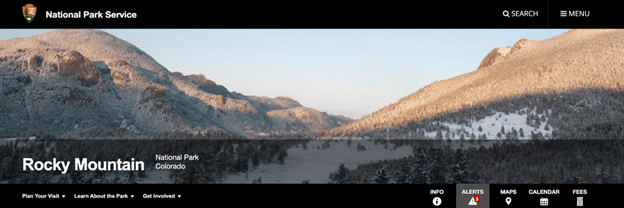
Rocky Mountain National Park is located in the western part of the United States, in the state of Colorado. The park is known for its stunning mountain landscapes, wildlife, and outdoor recreational opportunities.
It encompasses over 400 square miles of wilderness, including more than 100 peaks that rise above 10,000 feet in elevation. The park offers a wide variety of hiking trails, ranging from easy walks to challenging backcountry treks, as well as opportunities for camping, fishing, and wildlife viewing.
The best time of year to visit would be during the summer months, from June to August, when the weather is warmer and the trails are more accessible.
- Trail difficulty: Moderate to difficult
- Elevation gain: 1,710 feet (Sky Pond Trail)
- Estimated time to complete: 4-6 hours (round trip for Sky Pond Trail)
For more information on this national park visit the website.
Great Smoky Mountains National Park (Tennessee & North Carolina)
The Clingmans Dome Trail and Laurel Falls Trail offer stunning vistas and manageable terrain, making them excellent choices for women over 50 looking for a scenic and relatively easy hike.
The Clingmans Dome Trail is a paved 1-mile trail leading to the highest point in the park, offering breathtaking panoramic views. Laurel Falls Trail is a gentle 2.6-mile round-trip hike that leads to a beautiful 80-foot waterfall, making it perfect for those who prefer a shorter, rewarding trek.
- Trail difficulty: Easy to moderate
- Elevation gain: 332 feet (Clingmans Dome Trail), 314 feet (Laurel Falls Trail)
- Estimated time to complete: 30-45 minutes (Clingmans Dome Trail), 1-2 hours (Laurel Falls Trail)

Visit the park Website.
Olympic National Park (Washington)
The Hoh Rainforest Trail is a great low-impact hike through a lush, moss-covered forest. This magical trail offers a peaceful atmosphere and a chance to experience one of the most unique ecosystems in the country.
The 5-mile round-trip hike to Five Mile Island is a popular choice, taking hikers through a dense rainforest with towering trees, ferns, and abundant wildlife. The well-maintained, mostly flat trail makes it ideal for those looking for a relaxing yet immersive outdoor experience.
- Trail difficulty: Easy to moderate
- Elevation gain: 200 feet (Hoh Rainforest Trail)
- Estimated time to complete: 2-3 hours (round trip for Five Mile Island hike)

Visit the park website for more information.
Safety & Health Tips for Older Hikers
Hiking is a rewarding and healthy activity, but it’s important to prioritize safety and health, especially as we age. Taking the right precautions can make all the difference in having an enjoyable and worry-free hiking experience.
Hydration Tips
- Staying hydrated is critical while hiking, as dehydration can lead to dizziness, fatigue, and more serious health concerns.
- Always bring more water than you think you’ll need, and consider using a hydration pack for easy access.
- Electrolyte supplements or drinks can help replenish lost minerals, especially on hot days or longer hikes.
- Avoid excessive caffeine or alcohol before your hike, as these can contribute to dehydration.
Sun Protection
- Protecting your skin from the sun is crucial to prevent burns and long-term skin damage.
- Apply broad-spectrum sunscreen with at least SPF 30 before starting your hike and reapply every two hours.
- Wear a wide-brimmed hat to shade your face and neck.
- UPF-rated clothing provides extra protection against harmful UV rays.
- Sunglasses with UV protection can prevent eye damage from prolonged sun exposure.
Altitude Concerns
- If hiking at high elevations, be aware that altitude sickness can occur due to lower oxygen levels.
- Acclimate gradually by spending a day or two at a moderate elevation before tackling higher trails.
- Drink plenty of water and eat carb-rich snacks to maintain energy levels.
- Recognize symptoms of altitude sickness, such as headaches, nausea, or dizziness, and descend if they persist.
- Avoid alcohol and heavy exertion when first arriving at high-altitude locations.
Solo Hiking Precautions
- While solo hiking can be empowering, extra safety measures should be taken.
- Always let a friend or family member know your hiking plans, including your expected return time and trail details.
- Carry a personal safety device such as a whistle, pepper spray, or a GPS-enabled emergency beacon.
- Use hiking apps like AllTrails or Gaia GPS for navigation and offline trail maps.
- Stick to well-marked, popular trails and avoid isolated or unfamiliar routes.
- Trust your instincts—if something feels off, turn back or seek help.
Final Preparation Notes
Remember to always prepare adequately before embarking on any hiking adventure. Adequate preparation includes bringing the necessary gear, such as appropriate footwear, clothing, and equipment for the specific trail and weather conditions.
Read more: 4 Hiking Outfits for Women Over 50, and 10 Best Hiking Jackets for Women Over 50.
It’s essential to consult with your doctor before engaging in any strenuous physical activity, especially if you have any underlying medical conditions that may be affected by hiking.
It’s also important to research the trail and its difficulty level, terrain, and potential hazards beforehand, as well as to let someone know your planned route and expected return time. By taking these precautions, you can reduce your risk of injury, illness, or getting lost while enjoying the beauty of nature.
Read HOW (AND WHY) TO CULTIVATE A LIFELONG RELATIONSHIP WITH WALKING.
Let’s Have a Conversation:
Do you enjoy hiking? Have you hiked any of these trails? Do you plan to hike the trails mentioned in the article? Tell us about it in the comments below.
Read More
Ideas to Stay Socially Active in Retirement

Retirement can be a time of deep fulfillment, freedom, and joy, but staying socially active is key to making the most of it. Are you newly retired or well into your post-work years? Did you know that strong social connections can boost your mood, sharpen your mind, and even improve your health? Let’s explore some ideas to stay socially active in retirement that are fun, accessible, and perfect for building meaningful relationships.
Why Is Staying Socially Active in Retirement So Important?
Loneliness and isolation are common challenges in retirement. Without the daily interactions that come with work or raising a family, it’s easy to feel disconnected. But staying socially active can reduce the risk of depression, increase life satisfaction, and help keep your brain healthy.
The good news? There are more ways than ever to stay connected, whether you prefer small gatherings, new adventures, or quiet companionship.
Volunteering Can Help You Stay Social
Volunteering is one of the most rewarding and social activities you can take on in retirement. Whether it’s helping out at a local animal shelter, tutoring school children, or lending a hand at your local library, giving your time puts you in touch with like-minded people and strengthens your community ties.
Try this: Check with local non-profits, local shelters, or websites like VolunteerMatch.org for opportunities near you.
Read more: Volunteer Travel for the over 50’s – Giving Back While Seeing the World.
Join a Club or Group
From gardening to book clubs to hiking groups, joining a club adds structure to your week and lets you share hobbies with others. Community centers, libraries, and even coffee shops often host regular meetups for retirees.
Idea: Not seeing a group that speaks to your interests? Start one! Chances are, others are looking for the same connection.
Read more: Forget the Wine and the Attitude! Here’s What Starting a Book Club Really Requires.
Take a Class
Retirement is the perfect time to learn something new. Enroll in a dance class, learn to paint, try yoga, or even study a new language. Many community colleges and lifelong learning programs offer courses designed for older adults.
Social Bonus: You’ll meet new people who are curious, engaged, and likely to become new friends.
Read more: Are You Embracing a Growth Mindset in All Areas of Your Life?
You Can Make New Friends in Retirement
Making friends as an adult can feel intimidating, but it’s absolutely possible. Start by getting involved in regular activities where you’ll see the same faces. Whether it’s weekly pickleball, Sunday brunch, or a walking group, friendships grow from repeated interactions.
Tip: Don’t be afraid to strike up conversations – chances are, others are also looking to expand their social circle.
Read more: Diversifying Friendships After 60: Why It Matters and How to Begin.
Traveling Can Help You Meet New People
Consider group tours, cruises, or travel clubs designed for retirees. Traveling with others gives you shared experiences to bond over.
Try this: Look for solo travel groups or women-only trips if you’re traveling alone and want to meet others with similar interests.
Read more: 7 Best Senior Travel Groups.
What About Part-Time Work or Freelancing
If you miss the structure of work, consider a part-time job or freelance gig in an area you enjoy. Working at a bookstore, consulting, or teaching a workshop can give you social interaction and a sense of purpose without the stress of a full-time job.
Bonus: You get to keep using your skills and share your knowledge with others.
Read more: Working in Retirement: The 3 Rs That Will Help You Find Your Passion.
Technology Can Help You Stay Social
Video calls, social media, online games, and virtual events can keep you connected even when you’re home. Technology can bridge the gap with family and friends who live far away.
Start here: Learn how to use Zoom, FaceTime, or WhatsApp – and consider joining private Facebook groups that match your interests.
Read more: 2025 Tech Trends – A Guide to the Digital World.
Host Events at Home
Hosting a potluck, tea party, or movie night is a simple way to bring people together. You don’t need a big space or fancy food – just a welcoming atmosphere.
Fun idea: Create a rotating dinner club with friends where each person takes turns hosting once a month.
Should You Consider a Senior Center or Community Hub?
Definitely! Senior centers aren’t just for bingo anymore – they often offer fitness classes, creative workshops, day trips, and discussion groups. They’re a great place to meet people who are in a similar life stage and looking to stay connected.
Look for: Listings in your city’s Parks and Recreation department or check online directories for centers near you.
Intergenerational Activities Can Keep You Socially Active
Spending time with younger generations, whether through mentoring programs or simply hanging out with your grandkids, adds richness to your social life and keeps you feeling engaged.
Explore this: Look into local schools, after-school programs, or Big Brothers Big Sisters for opportunities to connect with youth.
Read more: Top 12 Destinations for Skip-Gen Travel in 2025.
How Can You Stay Social Even If You’re Homebound?
If you’re not as mobile as you used to be, you can still stay connected. Invite neighbors over for coffee, sign up for phone chat programs (like those offered by senior services), or join virtual book clubs and online support groups.
Resources: Organizations like AARP and Senior Planet offer online classes and social events specifically for older adults.
How Often Should You Socialize in Retirement?
There’s no one-size-fits-all answer. Some people thrive with daily social contact, while others prefer a few meaningful connections each week. The key is consistency. Try to build a weekly routine that includes a mix of solo time and activities with others.
What If You’re an Introvert?
Being socially active doesn’t mean being extroverted. Quiet one-on-one coffee dates, email or letter exchanges, or even walking your dog at the same time every day can build gentle connections without overwhelming your energy.
What’s the Best Way to Stay Social in Retirement?
The best way to stay socially active in retirement is the one that fits your lifestyle and brings you joy. Explore, experiment, and try something new. Social activity in retirement isn’t about filling your calendar – it’s about filling your life with people, purpose, and laughter.
Read more: Rewriting the Retirement Rulebook: How to Make Every Day Feel Like a Fresh Adventure.
Let’s Have a Conversation:
Are you socially active in your retirement? Do you feel like you should be more social? What are your favorite social activities to do? How often do you participate in social activities weekly? Do you have any other ideas to share with our community? Tell us about it in the comments below.
Read More
5 Ways to Silence Your Inner Critic and Finally Feel Free to Be Yourself

There’s a voice in your head that doesn’t want you to rise. She second-guesses your choices. She whispers that you’re too much… or not enough. And she questions your dreams and reminds you of your mistakes.
You know her well.
I call my inner critic Judy Judy.
Yes, I gave her two names – because of course she needed a little flair for the dramatic.
She shows up when I want to try something new, speak up, wear bold lipstick, or take a leap.
And just when I feel ready, she swoops in with doubt:
- “Who do you think you are?”
- “That’s not for you.”
- “You’ll look ridiculous.”
But here’s what I didn’t realize for the longest time: That voice wasn’t born with me. It was shaped by life. And understanding where it came from? That was the first step to taking my power back.
Where the Inner Critic Comes From
Your inner critic isn’t random – it’s built over time. Maybe it started as a teacher who embarrassed you in front of the class. Or a parent who meant well but pointed out every flaw.
Maybe it was the magazines that told you what your body should look like… or the workplace where your ideas were dismissed.
Each one of those moments leaves a mark. And over time, they form a voice inside that says: Be smaller. Be safer. Don’t take risks.
That voice might sound like your own – but it’s not your truth. It’s a collection of past experiences, old programming, and fear trying to protect you from rejection or failure.
The Upside of the Inner Critic
Believe it or not, your inner critic isn’t trying to be cruel. She’s trying to keep you safe. She thinks if she keeps you quiet, perfect, or hidden, you’ll avoid getting hurt.
But staying small isn’t protection – it’s self-abandonment. Once you realize she’s just scared – not right – you can stop letting her lead.
5 Ways to Silence Your Inner Critic
If you’re ready to quiet that voice and step fully into the woman you’re becoming, here are five ways to begin:
1. Name Her (Then Call Her Out)
Give your inner critic a name – something that helps you see her as a character, not your truth. Mine is Judy Judy. She means well, but she’s overly dramatic and a bit stuck in the past.
Now when she starts in with her commentary, I say, “Okay, Judy Judy, not today,” and I move forward anyway.
It sounds playful, but it’s a powerful way to take your voice back.
2. Talk Back – With Truth
Your inner critic isn’t honest – she’s just loud. So meet her voice with actual truth.
If she says, “You always mess things up,” respond with, “Actually, I’ve handled a lot in my life. I’m still learning, and that’s enough.”
Your brain believes what it hears often. Make sure it hears your truth – not just her fear.
3. Remember: She’s Trying to Protect You
That critical voice is fear dressed up as helpfulness. She wants to keep you from being rejected, embarrassed, or hurt. But playing small to stay safe only keeps you stuck.
You can thank her for trying to protect you – and then make the brave move anyway.
4. Keep a “Proof List”
Create a running list of moments you’re proud of:
- The compliment that stuck with you.
- That challenge you took on and got through successfully.
- The time you spoke up, showed up, or kept going.
Call it your “Evidence File.” When your inner critic gets loud, open it and remind yourself: I’ve done hard things before. I can do them again.
5. Practice Self-Compassion, Not Perfection
You don’t need to get it all right. You just need to keep showing up with love – for yourself.
When your inner critic starts nitpicking your body, your choices, or your dreams, offer yourself the same kindness you’d give to someone you love.
Perfection is impossible. Self-compassion is powerful.
Final Thought
You are not too old. You are not too late. And you are absolutely not alone.
We all have an inner critic – but we also have the power to turn her volume down and turn our own self-trust all the way up.
The next time she shows up uninvited, remind her gently: You’ve got this. You’re evolving. And you’re becoming the woman you were always meant to be.
Let’s Have a Conversation:
Is your inner critic scared, dramatic or stuck? Have you given her a name? How do you deal with her?
Read More
