Month: February 2020

Kristin Cavallari’s White Tie Waist Sweater Dress

Kristin Cavallari’s White Tie Waist Sweater Dress

Season 3 Episode 6 Very Cavallari Fashion

After hearing the weatherman say it’s negative 2 degrees today in Chicago seeing Kristin Cavallari’s white tie waist sweater dress was the positive I needed. Sure I enjoyed watching the UJ shoot in Mexico and all the resort wear that came with it, but this sweater dress is a little more my current situation. I love a sweater dress because it allows us to be super cozy yet very chic—my absolute favorite combo. I also love how Kristin paired it with ankle boots and a hat so make it super fashion-y. And though we all already know that boots are made for walking, I can also confidently say that this dress is made for buying.


Sincerely Stylish,

Jess


Kristin Cavallari's White Tie Waist Sweater Dress

Click Here To Shop Her & Other Stories Ribbed Tie Waist Sweater Dress


Originally posted at: Kristin Cavallari’s White Tie Waist Sweater Dress

Read More

The Lies We Tell Ourselves About Divorce After 60

Divorce After 50

For months, even years, I knew that my marriage was crumbling. Yet, I lied to myself, telling myself a million things that would somehow justify the reasons why I should stay in the marriage. The main one dealt with time.

I have put too much time into this marriage for it to end.

“I have sacrificed way too much and invested way too much time into this relationship. I’m not just going to walk away from it.”

You may have told yourself the same. But viewing your marriage as a time investment, especially when it is no longer healthy, serves no purpose but to prolong your suffering.

If you are doing the same, embrace these five lessons, so that you can move on and be happy.

Quit Viewing Your Years of Marriage as an Investment

The time you have put into your marriage is not a non-refundable down payment, so do not treat it like one. In a healthy and happy marriage, time spent together is beneficial – you have good memories and a beautiful life. But once the marriage unravels, you cannot invoke those years spent as a justification to stay in a relationship, especially when the relationship both partners are no longer invested in it.

Accept that You Deserve Better

Your life and happiness are not a commodity that you can barter. Unless you are practicing the piano or you are an Olympic athlete, erase the idea that time put into something (even a marriage) equals a guaranteed return.

Your life is not a commodity subject to negotiation, and treating it as such will only hurt you.

Those Married Years Taught You a Lot, but, They Don’t Owe You Anything

You probably have some good memories, and it is important to acknowledge them. They helped you grow. Yet be cautious of your selective memory. You must also recognize that the years in between those memories – the not-so-good-ones – are not collateral and an excuse to remain in a marriage that is no longer working.

You may have been married 20-40 years and made sacrifices during that time. You may think that you are owed something because of those unhappy years. But to treat those sacrifices and unhappy years as a bargaining tool, thinking it entitles you to happiness, gets you nowhere.

You must think of those married years as experience; you learned about relationships, families, and yourself. Be grateful for those lessons, but do not attempt to use them as a bargaining tool to remain in a marriage that is no longer sustainable. To do so denies you the opportunity to move on.

Don’t Stay in Your Marriage Just Because You Don’t Know How to Start Over

It’s okay to feel scared. Fear is what makes you human, but it’s the courage to give yourself another shot at happiness – even in your 60s – that makes you truly remarkable.

You may feel that the years invested in your marriage, even if you weren’t happy, you were at least comfortable. Your life, for the most part, was predictable. Moving on can be scary because it ends the vision of the life you had for yourself. You may be afraid to start over, afraid to go “back to the beginning” – whatever that means – because you think you are too old, too financially unstable, or too emotionally distraught to do so.

Give yourself more credit than that – recognize that you are smarter, more organized, more adaptable, and stronger than you even know.

A Long Marriage Does Not Necessarily Equal a Happy Marriage

Marriage is not a vending machine, where, if you put in a certain amount of money, you are guaranteed a certain item. In this case, putting in time does not mean you are necessarily guaranteed security or happiness. But you can find those things on your own, no matter what stage you are in life. It’s okay to move on, okay to start over, and okay to find happiness on your own terms.

As you start or continue to make a new life for yourself, you are given a choice about time. You may choose to spend it angry, bitter, or heartbroken about the end of your marriage, or you may choose to invest time in yourself and your own happiness.

You are not destined to live a life of hurt and misery because you are separating or divorcing. However, you can be destined for greatness and the opportunity to move on and become stronger, more compassionate, and a happier person. And putting your energy into that happiness is time well spent.

Have you, or someone you know, recently gone through a divorce? What did the experience teach you? What advice would you give to someone who is going through a divorce after 60? Please join the conversation.

Read More

Don’t Give Up on Resolutions Yet: 3 Great Ways to Handle Them in 2020

Resolutions

If you’re someone who makes resolutions each year, I’m impressed. It just doesn’t happen for me, other than what I call the triple crown (lose weight, eat better, exercise more).

I know myself and know that I will fall short, and the disappointment is more than I can manage. But, if you do make resolutions, this might be the time of year that you realize you have already failed, you have already fallen off the wagon of your choice. It’s over.

Well, the truth is, it isn’t over. And, rather than give up, use this time to right the ship and get yourself back on track. Here’s how:

Ease into It

You may have failed because you decided to go at it with everything you got. For instance, you may have gone to the gym 10 days in a row, which left you exhausted, and naturally, you gave up. Nobody can go to the gym day after day without feeling worn out, though.

You can’t expect to go from the couch to a marathon in three weeks. If you want to change your sedentary ways, do it gradually. Try one hour in week one, add another the second week, and a third the following week. You are much more likely to stick with it if you change gradually.

Have Reasonable Expectations

Did you think that eating better meant you would never crave sugar again? Of course not. Eating better might start with clearing your refrigerator of desserts. Or you could say goodbye to bread.

After a while you can add in another food group to avoid. Not everyone can eliminate all carbohydrates completely on day one, but that is no reason to give up hope.

Be Patient

If you made a resolution to lose weight and you are quitting because you have only lost two pounds, hey, that’s two pounds. Maybe it isn’t 10, but you can lose two more next month, then two more the next, etc. In a year, that would equal 24 pounds, and that sounds like a lot to me.

If you made a resolution to floss your teeth every night and you haven’t been following through, start. Did you resolve to make your bed every morning, but only manage it three days each week for a while?

The point is that you move yourself forward. That’s all. You want to make yourself better at the end of this year than you were at the end of last year. That’s really all you want to do, right? You want to be a better person by 2021. You can be, if you don’t stop trying.

We all know that most New Year’s resolutions flop. But that’s because we almost give up before we start. Remember, you haven’t failed at anything until you give up all together. Until you throw in the towel, you are still working on it. Stay in the game and you will find success sooner or later.

What resolutions did you make that you didn’t manage to keep? Are you willing to take them up again? Let me know. I look forward to hearing from you.

Read More

How to Improve Thinning or Graying Hair: 10 Practical Tips for Women Over 60

How to Improve Thinning Hair

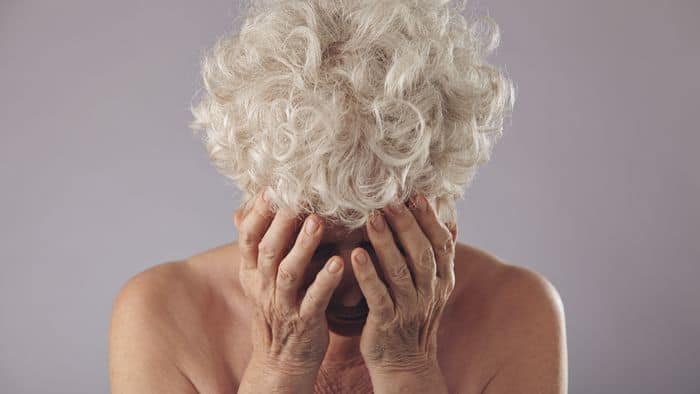
Have you noticed your hair is thinner than 30 years ago? If so, you’re not alone.

By middle age, most people’s hair becomes finer as the diameter of individual hair follicles, and the hair they produce, decreases. At the same time, when hairs fall out at the end of their life cycle, a higher percentage of follicles remain in their resting phase rather than reactivating to generate new hair.

Of those that do reactivate, the hair they produce tends to have a shorter lifecycle so it becomes increasingly difficult to maintain a longer hairstyle.

So, by the time you reach your 60s, most women are likely to have thinning hair, with less body that looks better when it is cut short.

A few lucky individuals will retain a full head of long, thick hair – although the hair they wear may not be their own!

The good news is that several diet and lifestyle changes can help your hair grow more thickly. And, if all else fails, your hairdresser can offer some options, too.

Why is Thinning Hair in Women Such a Challenge?

Each of your hair follicles goes through a cycle of hair growth, during which the hair lengthens, followed by a resting phase, in which the hair follicle shrinks and the bulb pulls away from the root. The hair then remains at a constant length until it loosens and falls out.

Because each hair has its own cycle, you normally lose between 80 and 100 scalp hairs per day. If daily losses are greater than this, gradual thinning occurs, especially in later life when hair growth also slows.

After the resting phase, the follicle may reactivate to produce a new hair, but this cycle does not repeat indefinitely. On average, each hair follicle reactivates around 25 times before it switches off, or produces hair that is increasingly wispy and short.

The way your hair changes with age depends partly on the genes you have inherited. It is also impacted by changing hormone levels around the time of the menopause, as well as, your diet and lifestyle.

Why Does Hair Turn Grey?

Your hair color is produced by cells at the base of each hair follicle. These cells make melanin pigments and feed these through to the hair root.

The pigment color you produce is genetically determined. Red melanin makes your natural hair color a gold, auburn or red. Black melanin produces hair that is brown or black. Pale melanin, which is concentrated in the spongey core of the hair shaft, rather than the outer cortex, causes your natural color to be more honeyed or blonde.

Hair turns grey due to an age-related decrease in the activity of an enzyme called tyrosinase. This enzyme produces melanin from an amino acid called tyrosine.

The age at which your hair loses color is genetically determined and a few lucky people may retain their hair shade throughout life.

If your hair is grey, then some pigment is still present within the hair. If your hair is totally devoid of pigment, it becomes transparent and reflects light to appear snow white.

Can Hair Turn Grey Overnight?

Can Hair Turn Grey Overnight with Stress

Stress can cause the lifecycles of different hair follicles to synchronise and enter their shedding phase (telogen) together. This results in hundreds of older, more pigmented hairs falling out at the same time, to produce a rapid, noticeable thinning. What remains are the finer, less pigmented hairs in the earlier stages of their current life cycle which suddenly become more noticeable.

This phenomenon, known as telogen effluvium, can cause someone to look noticeably greyer within a short period of time – the source of tales about someone turning grey from shock overnight.

Here are 10 tips for improving your thinning or graying hair.

1. Make Sure You’re Getting the Right Vitamins for Your Graying Hair

Although hair is a non-living structure, the follicles that produce it contain some of the most active cells in your body. As hair is not an essential structure, however, nutrients that are in short supply are diverted away from the follicles in times of deficiency.

This occurs when blood capillaries supplying your follicles constrict so the flow of oxygen and nutrients to your hair is reduced. This is especially common during times of emotional and physical shock. Poor blood supply also contributes to thinning hair that is dull, lack-lustre and limp.

Lack of vitamin C can cause hair that is misshapen, tangled and brittle, while a lack of vitamin E, or essential fatty acids, causes hair to become dry and lack-lustre.

Brittle hair and patchy hair loss can be a sign of iron deficiency – especially if there are other symptoms of anaemia such as paleness, tiredness and fatigue. Patchy hair loss can also result from a lack of B vitamins, zinc or vitamin D deficiency which lead to disordered hair cycles.

If you’ve noticed loss of the outer third of your eyebrows, or thinning eyelashes, you may have an underactive thyroid gland, which can be associated with a lack of iodine. Premature greying is sometimes associated with a lack of vitamins B5, B12 or a copper deficiency.

Of course, everyone’s body is different, so, it makes sense to check with your doctor if you have any concerns about your health.

2. Give Your Hair the Nutrition it Needs to Thrive

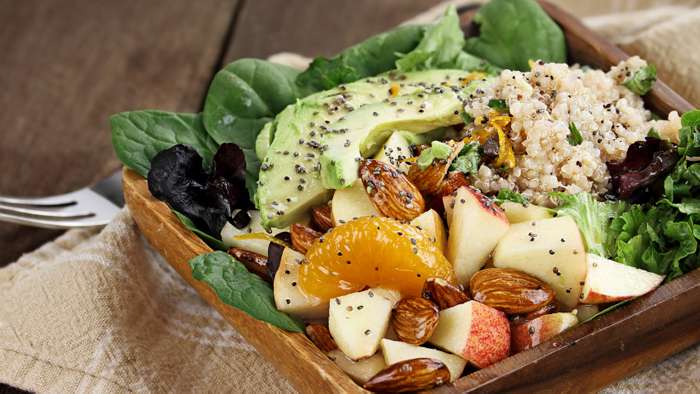
Diet should always come first, so, select whole grains, fruit, vegetables, nuts and seeds, which are a good source of vitamins, minerals and essential fatty acids to nourish your hair roots.

Whole grains nuts seeds fruit

Meats and dark green leafy vegetables are good source of iron. If your hair is thinning, however, then a multivitamin and mineral supplement is also a good idea to guard against nutrient deficiencies.

Before taking supplements, see your doctor to rule out related problems such as iron-deficiency anaemia, malabsorption of nutrients and hormone imbalances, including type 2 diabetes and thyroid problems which may need further investigation.

Garlic has beneficial effects on the circulation by dilating small blood vessels and increasing blood flow to the peripheries such as the scalp and nail folds by as much as 55 percent. Platelet clumping is significantly decreased after a dose equivalent to half a clove of garlic and lasts for three hours. Some of the ingredients in garlic are as potent as aspirin in this respect.

You can also stimulate circulation and increase the flow of nutrients to hair follicles by massaging your scalp regularly with your fingers, at least once a day. Concentrate on areas where your scalp seems tightly bound down to the underlying bone, to help improve any constriction to blood flow.

3. Make Sure You Have Enough (of the Right!) Protein in Your Diet

Hair mostly consists of keratin protein, which is produced using amino acid building blocks obtained from your diet.

To maintain a constant protein supply for your follicles, eat some with every meal, whether it’s poultry, lean meat, fish, eggs, nuts or beans. If you eat a plant-based diet, you may be more prone to thinning hair as some amino acids essential for healthy hair (such as lysine) and micronutrients (such as vitamin B12 and iron) are often difficult to obtain in sufficient quantities without taking a vegetarian-friendly supplement.

Do not skip meals, as this puts your body into survival mode so that the supply of protein and nutrients to hair follicles is reduced.

4. Drink Enough Water

Water is vital for maintaining optimum hydration of hair follicles cells. It also aids the flow of nutrients in and out of cells from the “internal sea” in which they are bathed.

Most guidelines suggest drinking 6 to 8 glasses (250mls each) of fluid (e.g. water, tea and other unsweetened drinks) per day in addition to eating water-rich foods such as soups, cucumber, watermelon and other fruit and veg.

5. Get a Hormone Boost to Reduce Hair-Loss

Hair loss increases after the menopause when oestrogen levels fall. This also increases the relative influence of the small amount of testosterone hormone that is made in the ovaries and adrenal glands.

Testosterone is converted into a stronger hormone (dihydrotestosterone, DHT) in hair follicles which increases male and female-pattern hair loss which is genetically determined.

If you are willing (and able) to take oestrogen hormone replacement therapy, this will help to boost hair quality. Once again, this is something that you can discuss with your doctor.

An alternative approach is to consume more plant oestrogens, especially isoflavones and lignans. Although these are between 500 and a thousand times less active than human oestrogen, they can provide a useful hormone boost. Isoflavones are found in edamame beans, tofu, miso and other soy products, sweet potato, lentils, nuts and seeds.

Sweet potatoes

As well as having an oestrogen-like action, lignans provide an additional benefit by inhibiting the enzyme (5-alpha reductase), which converts testosterone to the stronger dihydrotestosterone (DHT) in hair follicles. Research shows that increasing your intake of lignans (found in pumpkin seed oil, flaxseed oil and sweet potato) are associated with a reduced rate of hair loss and hair regeneration.

6. Consider Using a Caffeinated Shampoo

If you don’t already use a caffeinated shampoo, consider switching to one. Caffeine applied directly to the scalp has two beneficial effects. It relaxes smooth muscle fibres surrounding the hair to improve blood flow. More importantly, it also inhibits the enzyme, 5-α-reductase, which converts testosterone into dihydrotestosterone within scalp hair follicles and which is associated with male and female pattern hair loss.

A growing body of evidence supports the effects of caffeinated shampoos in stimulating hair follicles, and I’ve certainly noticed a dramatic improvement in hair thickness since starting to use one. Just two minutes contact with the scalp during shampooing allows the caffeine to penetrate into hair follicles, where it remains for up to 48 hours after washing.

Leave-on caffeine solutions (which often include vitamins B3 and B5) are also available and have been shown to increase the cross-sectional area of scalp hairs by 10%.

Drinking caffeinated beverages such as tea or coffee does not have the same effect, as the caffeine must penetrate into the hair follicles itself to inhibit 5- α-reductase.

7. Avoid These Foods to Keep Your Hair Healthy After 60

Excess salt is your hair’s number one enemy. Consuming too much has an adverse effect on hair follicles and trichologist have found that cutting back on salt intake can lessen hair loss by as much as 60 percent.

Steer clear of nutrient-poor sugary and fatty treats too – such as donuts, cakes, biscuits and pastries – which do nothing to nourish your hair follicles.

8. Consider These Useful Supplements for Healthy Hair

  • A multivitamin and mineral to guard against deficiencies (supplying 100% to 200% of recommended daily amounts, based on your age – select a supplement labelled for age 50 plus, or one tailored for hair, skin and nail support).
  • Soy isoflavones (40mg to 100mg daily). If you have a medical history of a hormone dependent condition (such as breast cancer) check with your doctor before taking them although evidence suggests they are beneficial in these cases, too.
  • A probiotic will supply beneficial digestive bacteria which may help to increase conversion of soy isoflavones to a stronger oestrogenic version called equol.
  • Flaxseed oil is one of the richest dietary sources of lignans.
  • Some nutritionists may recommend l-lysine amino acid supplements.

9. Follow This Healthy Hair Lifestyle Checklist

  • Avoid excess stress.
  • Stimulate the circulation to your scalp with a daily finger massage. Also take handfuls of hair and gentle move the scalp to and fro, and side to side, to loosen tension and promote blood flow.
  • Use a shampoo containing green tea caffeine which blocks DHT production and stimulates hair growth. Caffeine also reduces smooth muscle constriction around hair follicles to improve blood flow and nutrient delivery.
  • Ask your doctor if you need any tests to assess your thyroid function, to measure your serum ferritin levels to look for iron deficiency, or if any other hormone imbalances are likely.

10. Ask About These Salon Techniques and Olaplex

Ask your hairdresser about a new product called Olaplex, which mends broken disulfide bonds within hair strands. This is applied before or after your usual color or other salon treatment, then neutralised and washed off.

After the first use, I noticed my hair was stronger and more lustrous. After the second application, a month later, my hair regained its sheen and looked healthier (and felt thicker) than since I was in my 30s!

You can also have real hair woven into your own hair to disguise patchy hair loss or thin panels.

If you have found any other product or treatment that has improved your hair health, please let us know in the comments below. Let’s have a chat!

Read More

Tracy Tutor’s Red Wave Dress

Tracy Tutor’s Red Wave Dress on Instagram

Million Dollar Listing LA Fashion

Tracy Tutor’s red wave dress on Instagram made for the perfect Valentines Galentines Day post, not only because it’s gorgeous but because here at BBH we are always patiently awaiting any peek of what of fave realtor is wearing via the ‘Gram.

The detailing on this dress is super chic and it’s styled perfectly with white accessories that totally pop. While most of us normally think to style red with black, this was definitely the way to go. And even if you’d have to list your house to afford this dress, I definitely suggest taking some inspo and pairing your Valentines Day reds and pinks with the perfect pop of white.

The Realest Housewife,

Big Blonde Hair

Tracy Tutor's Red Wave Dress

Click Here to Shop her Mugler Dress

Photo: @TracyTutor

Originally posted at: Tracy Tutor’s Red Wave Dress

Read More