
Month: March 2020

The Painful Truth About Working While On Social Security

Working While On Social Security

Can you work and collect Social Security? The simple answer is yes. The more complicated answer is that you may not want to.

There are two reasons to wait to apply for benefits if you plan to continue to work – penalties and taxes.

Your age and how much you expect to earn will help you decide whether working, while collecting Social Security, makes sense.

What Is Your Full Retirement Age and Why is it Important?

If you have not reached your Full Retirement Age (FRA), you are subject to the earnings test. This means there is a limit to how much you can earn without a penalty.

Your FRA is the age that the Social Security Administration deems you eligible for your full Social Security benefit. It is the center point for determining the amount of your monthly payment.

If you begin collecting benefits before your FRA, your payment amount will be reduced. If you apply after FRA, your payment will be higher.

The Full Retirement Age used to be 65 for everyone, but now it depends on the year you were born.

If you were born between 1943 and 1954 your Full Retirement Age is 66. It increases as follows:

1955     66 and 2 months

1956     66 and 4 months

1957     66 and 6 months

1958     66 and 8 months

1959     66 and 10 months

1960+   67

If you begin collecting benefits before your FRA, there is an earnings limit of $15,720. You can work, but anything over that amount is subject to a penalty. You will be required to pay $1 for every $2 you earn. That is half of anything you make over the $15,720 limit.

For example, if you bring in $30,720 in a given year, that’s $15,000 over the limit. The penalty will be $1 for every $2 you earn or $7,500. The average monthly Social Security payment is $1,300. It would take nearly six months of payments to satisfy that amount.

This money is not immediately taken out of your paycheck. However, once reported, you will be expected to pay the penalty in full or your entire monthly Social Security payment will be withheld until the fine is fully paid.

You are supposed to report anticipated income to the Social Security Administration so that they can withhold penalty amounts from your Social Security payments as they are acquired. However, should you lose your job or decide to quit, it is difficult to get payments reinstated quickly. So, plan ahead, where possible.

Stopping and starting payments can be confusing for both you and the Social Security Administration. This is where many mistakes occur and, unfortunately, it may be difficult to get them straightened out.

Every year, your income is reported to the Social Security Administration by the IRS. That said, it may be several months before the Social Security Administration notifies you of the overpayment and asks for it to be paid back.

This is something you definitely need to plan for. The amount due may be significant and, if you cannot pay it, several months of your benefit may be withheld. If you continue to earn more than the limit, your payments may be suspended for years.

The Year of Your Full Retirement Age

In the year of your FRA, the earnings limit is higher and the penalty is lower than previous years. From the first of the year until the month you reach your FRA, the limit is $41,880. If you exceed this amount, you will incur a penalty of $1 for every $3 you earn.

Once you reach the month of your FRA, there is no limit to how much you can earn. There is no longer an earnings test or penalty. You can keep all the funds you make from this point forward.

You will be reimbursed for payments missed because of the earnings limit. Once you reach FRA, your benefits will be recalculated to include the months your payments were suspended. In addition, your monthly payment amount will be increased accordingly. But it is paid in small increments and may take 15 years to recoup the missed funds.

What About Taxes?

The U.S. Government considers Social Security benefits income. As a result, Social Security benefits may be taxed.

If your combined income – adjusted gross income, tax exempt interest income and half of your Social Security benefit – is over $25,000 for an individual and $34,000 for a couple, up to 85% of your benefit may be subject to Federal tax. Social Security Administration provides a benefit planner to help you determine if you need to pay tax on your payment.

In addition to federal tax, 13 states tax Social Security benefits – Colorado, Connecticut, Kansas, Minnesota, Missouri, Montana, Nebraska, New Mexico, North Dakota, Rhode Island, Utah, Vermont and West Virginia. Each state has its own tax rate. This may be a factor when deciding where to live later in life.

At the end of the day, you can definitely work while collecting Social Security benefits. That said, you should consider all of the factors and talk with a tax professional before making a final decision.

Do you plan on working in retirement? Did you realize that Social Security benefits may be taxable? Please join the conversation.

Disclaimer: Everyone’s financial situation is unique, so, please check with your financial professional before making any changes to your tax, retirement or investment strategies. None of the information in this article should be considered financial advice.

Read More

Is It Time to Move? 6 Questions to Help You Decide if It’s Time to Pull Up Your Roots

life after retirement moving house

My neighbor across the street lost her husband about a year ago. The huge house she now inhabits is an awful lot of work, as is the yard. The other morning after a seven-inch snowfall, our mutual neighbor was clearing her driveway, as he usually does, as I was digging out my own.

Her kids have helped with yard sales and company, but her place is Just. Too. Big. My neighbor to the north of five years ago, Marge, sold out and moved after her husband died. It happens.

I am facing much the same decision myself, albeit for different reasons. While I love my precious home of some 13 years – the longest I have ever lived in one place – I’m getting ready to sell. A smaller mountain town is in my immediate future.

When Memories Are Too Much

For 10 of those 13 years, I was involved with a man in a relationship which, putting it gently, caused me serious pain. This past year he moved in. That was a mistake. Good intentions aside, it simply didn’t work out.

Now this house, which radiates with a thousand memories, acts like an echo chamber in all the wrong ways. Just like both of my female neighbors, the house is no longer a sacred space. As much as I’ve put into the decorations, gardens, the hard work to make it my home, it doesn’t feed my soul any more.

But that’s not all.

When Is It Time to Move?

The loss of your primary relationship isn’t the only reason, although a big house and all its attendant responsibilities are certainly part of it. The other piece is when you have reached a point in your life when living somewhere new might be the kind of jump-start to reinvigorate your life.

Whether that’s setting up shop abroad in a much cheaper place to live or simply moving to a smaller city or town for a better quality of life, a move might be just what the doctor ordered.

Is It Worth It?

You might ask whether all the work a move entails is always worth it. That depends. On one hand, if we’ve been living in a place for decades, as I have in Denver since 1971, my web of connections, caregivers, and friends is both broad and deep.

I’ll be leaving the relative safety of knowing my way very well around town and all the pleasures that come with rich familiarity in my community.

On the other, that very familiarity has made me a bit stale. Combined with the massive influx of people to my state (more than five million since I moved here), Denver, and its lovely mountains, has irretrievably changed.

I can no longer safely ride a horse without being nearly run into by mountain bikers, cyclists, and others who are angry at me for using a trail that I’ve used for years. The mountains are overrun, to say nothing of the traffic.

It’s time. At least for me. It’s a quality of life issue.

I love smaller cities, the intimacy of those places. Others may prefer the sophistication of larger cities and the convenience of facilities and health care. I prefer acreage and trees around me but close enough to an airport to head out to the rest of the world.

Wherever You Go, There You Are

Part of the decision is whether you and I are running from, or running to, someplace new. And, if we are considering this, what expectations are we carrying?

Wherever we go, there we are. A new location isn’t going to make me happier. That only comes with the hard work I’m willing to invest in making new friends, getting involved in my community, and being available. What I love about the idea of shifting to a new place is all the hard work involved.

I have harbored dreams of a mountain home for decades. Selling my home in Denver allows me to realize that dream. I have to forfeit a lot to have it, but given that I’m 66, I don’t have a lot of time left to me to fully realize that dream while I’m hale enough to enjoy it.

The sale of my house will afford me much-needed extra cash. I can buy a nice home and land outright. Those options are, in part, driving my decision. That, and I love the adventure of making myself vulnerable in new worlds.

When I’m too comfortable, as I am now, I stop growing. A big move pushes me to expand.

The Questions to Ask Before You Decide

If you’re thinking about pulling up stakes and moving, let’s be clear it’s for the right reasons. Let’s ask:

  • Do I think a new place will make me happier?
  • Do I expect to leave my troubles or hurt behind me?
  • Will moving to a new place offer me a different kind of life, one that I want?
  • Will a shift provide me with options I don’t currently have?
  • Am I willing to put the work into making this new place a real home?
  • What are my expectations, and are they reasonable?

Moving is both a matter of the heart and the pocketbook.

For my part, the moment I knew it was time for me to leave was when I was speaking with my best friend’s husband. They’re thinking of moving too but are leaning towards staying. As I listened, I realized that if I stayed it would be for fear-based reasons.

That’s when I called the realtor. She’s coming tomorrow at 2 pm. I’ve already started packing.

I can’t wait.

What would make you consider moving late in life? Have you made the decision already? If you have moved, what worked and what didn’t? What advice do you have for those considering a big move later in life? Please share your experience with those of us who can make use of it.

Read More

Tarte Dropped A Full-Body Shape Tape Aimed At Stretch Marks & Age Spots

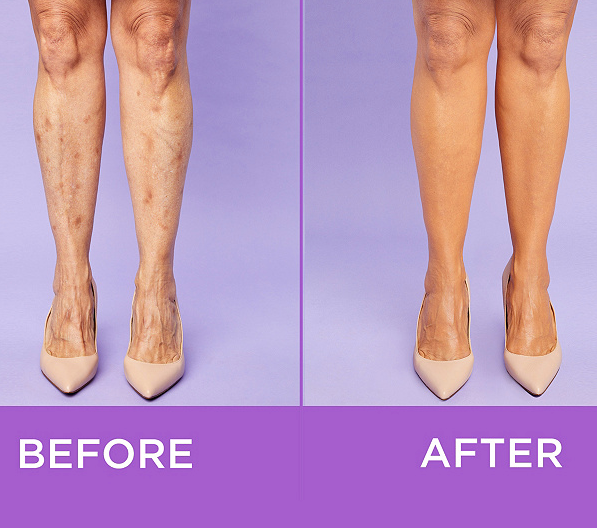
Tarte’s Shape Tape Contour Concealer is so popular, it makes sense the brand would want to expand on the franchise. A few months ago, the Glow Wand was released and now, Tarte Shape Tape Waterproof Body Makeup just might be your new favorite. We haven’t gotten a chance to try the new body product yet but so far, it looks really legit. Although we might not all be out and about right now, the body perfector comes just in time for summer temperatures and, ahem, smaller clothes to come.

First, it’s important to note that there’s nothing wrong with stretch marks, age spots or varicose veins. We’re not supposed to have Instagram-filtered legs IRL. But beauty is all about choice and there might be an occasion you want to blur out any skin discoloration on your body. Tarte’s Body Makeup is a vegan, full-coverage formula that’s meant to look and feel just like skin. Afraid you’ll sit down by the pool and leave some leg foundation behind? Tarte promises no transferring onto clothes. (The directions just say you wait a few minutes before getting dressed.) You also get a reusable application mitt for streak-free application.

tarte shape tape body

Image: QVC.

There are eight inclusive shades available: Fair, Light, Medium, Medium-Tan, Tan, Tan-Deep, Rich and Deep. It seems Medium-Tan and Rich are popular hues because they’re both waitlisted already.

tarte shape tape body shades

Image: QVC.

The body makeup formula contains Passiflora (maracuja oil), edulis seed oil, glycerin, and vitamin E for soft-feeling skin. To remove it, you just wash with soap and water.

tarte body makeup

Image: Tarte.

Tarte Shape Tape Waterproof Body Makeup is launching on QVC first, which works out well for all of us because the company is including the mitt for free. We have concealer for our face so why not our body, too?

Our mission at STYLECASTER is to bring style to the people, and we only feature products we think you’ll love as much as we do. Please note that if you purchase something by clicking on a link within this story, we may receive a small commission of the sale and the retailer may receive certain auditable data for accounting purposes.

Read More

Kenya Moore’s Snake Print Boots

Kenya Moore’s Snake Print Boots on Instagram

Real Housewives of Atlanta Instagram Fashion

We here at Big Blonde Hair love when we can actually spot something somewhat affordable on a Real Housewife, especially when it comes to accessories. And first glance I definitely would have thought Kenya Moore’s snake print boots are designer, however after some digging I found out that they’re actually affordable. Which goes to prove that sometimes even when a Housewife is being a snake all of us can benefit.


The Realest Housewife,

Big Blonde Hair


 Kenya Moore's Snake Print Boot

Click Here to Shop her Steve Madden Boots

Click Here for Additional Stock

And Click Here for Additional Stock

Photo: @KenyaMoore

Originally posted at: Kenya Moore’s Snake Print Boots

Read More

Let’s Plant a Money Tree! 5 Steps to Make Your Finances Bloom This Spring

retirement planning Plant-a-Money-Tree

Spring is in the air. I am getting ready to start my outdoor gardening, and I know there is a lot of work to do before I will harvest the bounty. As I do this, I can’t help but feel that the same is true with our monetary lives.

Spring Is an Important Financial Season

April is an opportunity to connect, create awareness, and do the best you can to bloom in areas of your financial life.

Even as you embrace your fall physical season, your financial world can continue to blossom. You may want to cultivate new conversations about how to create your version of prosperity. You may want to grow your financial resources to impact the world around you.

Pick one focus area this spring – it may be your charitable giving strategies, your investment decisions, your tax management tactics, your communication intentions or your spending habits.

To illustrate the blooming process, I’ll take the example of someone who wants to get reconnected and be intentional with her investments. Here are 5 steps to get ready to financially bloom this spring.

Begin the Process with a Purpose

The blooming process begins with the question of why.

Start with a firm understanding of why it is important to grow financially this spring. Some examples include:

  • Why you want to understand how to sustain the income needed during your distribution season of life.
  • Why you want to manage your expectations for returns based on your current allocations.
  • Why you want to position your assets to address legacy goals for your family or charitable organizations.
  • Why you want to confirm you are invested in companies that reflect your values.

Your ‘why’ will be unique to you, and there may be several of them. These are your motivators to press into the opportunity for growth.

Understand Where You Are

The next step of the process of growing your investments will be asking, “Where are they?”

This may seem like an obvious question, but you’d be surprised at how many places you have money that perhaps you didn’t realize. You may be a real estate investor, or you may hold stocks, bonds, or alternative assets such as hedge funds or private equity.

The question of the vehicles is also worthy of review. Your investments may be held within tax-deferred accounts, such as employer sponsored plans. Or if they’re held in brokerage accounts, it’s a good time to review if you are paying taxes annually on the income or gains.

You may even have investments in life insurance or annuities that are more complex, or offer less liquidity but also warrant your attention.

This April – here’s your spring cleaning: Dust off those statements and open them up. Look at how they are titled. Reflect back on your ‘why’ to keep you moving forward.

How Do You Want to Use Your Investments?

Which asset is best positioned to provide for your liquidity needs? A liquid savings account or money markets are good tools in this regard.

What About Lifestyle Needs?

You may want to consider using fixed income resources, like Social Security and pensions, for fixed expenses, and look at variable income from your portfolio – that will reflect your market allocation – for expenses that can be adjusted.

If the market is up, you can shave off gains and take that trip you have planned! If the market pulled back a bit, make the needed adjustments for a period of time.

What About Longevity Concerns?

Bond ladders or income annuities may be the investments you want to use for long term income. They, alongside social security and pensions, will help you to create income that you can’t outlive.

For legacy planning, qualified plans are good to leave to charitable organizations, and non-qualified investments or real estate receive a step up in cost basis when they are inherited.

Evaluate Who Is Involved

Of course, we need to ask ourselves, who is involved with this growth process?

Chances are you already have some family members or trusted colleagues that you’ve brought into the conversation. Use this as an opportunity to reflect upon any others you may have left out who would add value to your process.

Also, ask yourself about your level of satisfaction with your professional team. This can mean anyone from accountants to estate attorneys to your financial advisor.

If you feel that perhaps you’ve outgrown your current providers, this April may be the perfect time to embark on a search for new support that fits the new, blooming person that you are.

Take Action!

The final step in the area of financial growth will be “What will you do?” This is where your feet hit the ground – wearing whatever amazing shoes, or kick-ass boots you want – so step into your potential!

Combine accounts if appropriate. Reposition or rebalance investment allocations if needed. Change beneficiary designations where warranted. Harvest any gain or loss if the market environment is ripe.

Summary of the Blooming Process

Like a flower pushing its way through hard packed soil, financial work is not easy. I encourage you to press on through. These growing pains are a part of the blooming process.

Like harvesting and sharing the cornucopia from your garden – flowers or vegetables – know that your family, friends and your community will benefit from your hard work.

What are your financial goals for the coming year? Are you taking any of these steps to get control of your financial situation? If not, do you have any other tips you’d like to share? Please do so in the comments below and join the conversation!

Read More