Month: May 2020

Do You Feel Invisible or Invincible Over 60?

Do You Feel Invisible or Invincible Over 60

“Age has no reality except in the physical world. The essence of a human being is resistant to the passage of time” — Gabriel Garcia Marquez

In our youth-oriented society, women are often written-off by age, and if you watch TV or read articles, you would think that after 40 we begin a wild ride up and over the hill. It’s as if we begin a steady course toward invisibility.

Hollywood actresses are vocal about this on the rare occasion that they’re given the mic. They state clearly that good roles are not forthcoming for those who are losing or have lost their youthful movie star looks. Their talent and experience are rendered obsolete with the passage of time.

The 40s and 50s are often lumped together, and God forbid we’ve hit 70 because then we’re not even considered part of a focus group unless we are shopping for long-term care or are in the market for one of the thousands of pills and treatments offered by doctors and pharmaceutical companies.

In the cinema and on television, one would believe that females have a 42-year life span – not to mention on social media, where it looks like an extra decade is shaved off – when in reality, we ladies of the past have done most of the things that young women are striving for and stressing about today.

We’re Way Ahead

We’ve graduated from schools, thrived in careers, loved and lost relationships, mastered marriage, proudly parented, suffered through divorce and/or widowhood, and given back through enormous amounts of volunteer work.

We’ve taken girls to soccer and boys to baseball practice. We’ve cheered, coached, cajoled, pleaded, screamed, taken parenting classes, and all in all, have managed to survive our children’s tumultuous lives still standing.

We have loved, been loved, compromised, argued, and nurtured. According to an insurance company’s pitch on TV, the average age that a woman becomes a widow is 58, so apparently, we have also managed to outlive men.

We’re Not All Somebody’s Mom

Some of us have decided against children and focused on our careers. We’ve traveled for business and pleasure, and some have balanced both children and important careers while managing homes and social obligations.

We have worn a great number and variety of hats. We have dealt with change bravely. We started the Women’s Movement, for Pete’s sake!

We’ve had our failures and our major successes; we have had our share of medical scares and complications, and most of all, we’re still here, strong and still standing.

Look Around, We’re Everywhere

We are a force to be reckoned with and yet, our image is distorted. On TV we are portrayed as the doting grandmothers that a lot of us are not. Even if and when we become grandmothers, we do not all fit comfortably into the role assigned to us by others.

Some make fun of us as the frumpy and meddling “mother-in-law” that our daughter’s husband dreads to speak to on the phone, when the truth is that we get more calls from our children telling us about their challenges than make those calls ourselves.

For our trials and tribulations, we count on our girlfriends, and those of us with good insurance hire a therapist.

You should not let the media’s ageist proclivities blind you when you look at those 60 and over. A lot of us are starting new and exciting phases in our lives. We try new professional and personal activities and many of us are exploring the world.

Most of us are considering our options to see what to do next. Yes, even at this time in our lives. Whether it is a new job, a volunteer role, taking care of grandchildren or pursuing a new hobby, we bring with us passion and commitment and a wealth of knowledge and experience to share with the world.

Be Invincible!

Here are 9 ways that can help you on your path toward invincibility:

Don’t Be Afraid to Explore

Try new professional and personal activities. Consider your options to see what you want to do next, as opposed to what you need to do next. Sometimes you can even combine the two!

Never stop doing what you like to do. Learn new skills. Play new games. Take a class. Teach a class.

Pay Attention to Your Friends and Family

Nurture your relationships with those you love without the constraints of schedules or other people’s needs.

Your Spirituality Matters

Embrace your spirituality in whichever form you choose to manifest your beliefs.

Take Care of Yourself

Learn new ways to eat better, exercise smarter, and stay well, regardless and in spite of your growing aches and pains.

Embrace Your Looks and Learn to Experiment

Accept your body, your style, your own way of dressing and yet be open to experimenting with a new look, a new hairstyle, fun new makeup.

Nourish Your Cultural Self

Enrich yourself with knowledge and the enjoyment of books, art, music, cinema, and the theater.

Follow New Horizons

When the global pandemic is over, plan a trip to discover a new city, a town near you, or be adventurous and travel further. You can travel with a group, go solo, or convince a friend to travel with you.

Volunteer

Join an organization or group that you support and use your experience and your strong voice to help your community. Run for office!

As you age, do you feel invisible or invincible? What are your plans for embracing invincibility? Please share your thoughts and let’s have a conversation!

Read More

4 Tiny Makeup for Older Women Tips That Make a Big Difference

Makeup-for-Older-Women-Tips

61-year-old Janet arrived at the makeup counter wearing full makeup. As she gradually became more comfortable talking with me, she shared that her 9th grade best friend had taught her how to use makeup. They’d arrive at school early and sneak into the bathroom to put on their makeup together.

The minute I saw her, I knew she was still using the makeup techniques she’d learned as a young woman. Unfortunately, the makeup she was wearing did exactly the opposite of what Janet wanted: it aged her by at least 10–15 years.

Janet’s Story Is Not Unusual

Janet’s story is one I hear often. Whether we learned how to put on our makeup from our moms, a stylish aunt or Seventeen Magazine, most of us Baby Boomers are still using the same techniques that we learned when listening to Dion or Bobby Vee.

But what worked for us in our teens, 20s and 30s just doesn’t work as we hit our 40s and move beyond. Yet it’s totally understandable that we don’t know what to do differently, because where do we learn the makeup techniques that will work best for us now?

Only one of the major cosmetic company websites provides a single online makeup tutorial featuring an older woman – and that lasts for about 10 seconds. So many of us, understandably, just keep doing what we’ve been doing all our lives.

The Makeup Tips

Over the coming months, I’ll be sharing a variety of makeup tips and techniques – specifically for those of us who are over 60 – that can help us look our best now. Below are four of these tips which can make a big difference in your life.

Eyeliner

I think we can all picture a magazine ad featuring a woman in her 20s with thick black eyeliner above and below her eyes. Yes, eyeliner can definitely define and draw attention to our eyes, but the key to beautiful eyeliner in our 60s and beyond is to lighten the look and make it more natural.

A dark brown or gray eyeliner pencil is far more flattering than the thick black one we used in our younger years. And to create the most natural look, smudge the eyeliner with a Q-tip.

Not only does smudging the eyeliner soften the look, but it also means that those of us who can’t draw a perfect line along our lashes anymore – and let’s face it, who among us can? –  are able to smudge that line so it looks absolutely flawless.

As for eyeliner below the eye, it’s an absolute yes, with two major caveats.

Consider using a lighter color than you used for the eyeliner above your eye and – unless you have huge, to-die for eyes – only draw that line along the outer third of your bottom lashes. To create an even softer look, use eyeshadow instead of eyeliner.

Blush

Do you worry about blush going terribly wrong? Both the color and the placement of blush become very important as more birthday candles appear on our cake.

Our skin tone can definitely change over the years. So those of us who read Carol Jackson’s book Color Me Beautiful back in the 80s and figured out we were an ‘autumn’ or a ‘winter’ may no longer find those same color swatches to be as flattering.

But it’s still important to gauge whether your skin has a warm or cool undertone. If your undertone is warm, stick with coral or peach toned blush, and if your undertone is cool, go with pink and berry tones. (We’ll talk about how to determine your skin undertone in a future article).

Haven’t we always been told to put blush on the apples of our cheeks? But where have those apples gone, ladies?

Let’s work against Mother Nature and gravity by placing the blush slightly below the tops of our cheekbones, at least two finger widths from our nose and bringing it up toward the outer corner of our eye.

If you have dry skin, opt for cream blush over powder and add a touch of moisturizer on top of the blush to create a beautiful glow.

The Right Lip Color

Though the ‘nude’ lip look might be the trend, it can wash us out. So think about adding a touch more color to the lips. Go for one to two shades darker than your natural lip color.

And since very dark (and matte) lipstick can age us, consider choosing a slightly brighter color with shine or luminosity. A touch of gloss in the middle of the lower lip can create a light-enhancing glow.

It’s amazing how just the right lipstick color can brighten the entire face and create a truly radiant look. So it’s worth “trying out” some new lipstick shades at the makeup counter and even going outside your comfort zone to test some new shades.

Curiously, research has shown that the right lip and blush color – along with two other techniques – can help us look 5–20 years younger.

Eye Shadow Placement

A swath of color across the eyelids has been a typical go-to look for most of us. But to make our eyes look bigger, try patting a vanilla colored shadow on your eyelids from your eyelashes to the crease.

Use a medium tone shade in the crease – and slightly above the crease if you have hooded eyes. To create the medium tone for the crease area, consider mixing two or three cool and warm tones together such as a light orange tone with a medium cool brown.

It can make your eyes pop without looking garish. Then use a touch of the vanilla colored shadow just beneath the arch of your eyebrow to lift the eye, as well as at the inner corner of the eye.

And, as always, the secret to a flawless eyeshadow look is blending, blending and then more blending with a clean brush.

You’ll find that just a few small changes – with these tips in mind – can make a world of difference.

Have you changed your makeup routine since you were a young woman? What do you do differently now that works better for you? What other changes can you recommend for women in our community? Please join the conversation and share your tips with us!

Read More

Lessons from a Man Who Turned Back His Clock and Improved His Health

Lessons from a Man Who Turned Back His Clock and Improved His Health

At an Aspen dinner party, martini in hand, Chris Crowley chatted with an Exercise Science and Muscle Physiology researcher. This PhD showed Chris a graph of normal aging patterns in our country. According to the data, after age 50, people tend to gain weight, move slower, and develop aches and pains. 

One man represented on the chart seemed to hold steady. He didn’t slide downhill as he grew older. The researcher explained the man was a “serious exerciser.” “Exercise seems to make a big difference in how we age,” he explained to Chris. 

“I Want to Be That Guy”

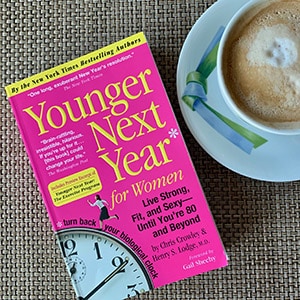
In 2004, the first of the Younger Next Year string of books, written by Chris and Dr. Henry (Harry) Lodge, debuted. In alternating chapters, Harry’s medical expertise and Chris’ anecdotes about life after 60 remind readers “we do have to age.”

“But we don’t have to rot,” says Chris. 

And it all starts with exercise.

Almost 30 years ago, Chris retired from a fancy Wall Street law practice. “What’s next?” he wondered. His own father had died of “terrible old age.” “And I didn’t want that for my life,” Chris says. 

He wanted to spend his remaining years navigating ski slopes and bike trails and foreign cities with friends. A few pounds overweight, with his share of stiff and sore joints, Chris wondered if he could get older and skip the frailty that often comes along.

Dr. Henry Lodge, an NYC physician and medical professor 25 years younger than Chris, wanted to help spread the message about ways to live a vibrant life into old age.

Rule #1 – Exercise 6 Days a Week

A person holding a bicycle

Description automatically generated

Their first rule? Make exercise a job. They outline the hows and whys to get moving six days a week, including four days of aerobics and two days of strength training.

“Even if we work hard at it, we will still lose a certain amount of muscle mass and coordination and balance,” says Chris. And exercise helps our minds too. 

Until age 60, Chris was a “weekend exercise guy.” The idea of beefing up his regimen and committing to a daily workout? “Holy Toledo! But I wanted to ski and bike, and I didn’t want to age like my dad,” he says. 

Rule #2 – Cut Out the Junk

Younger-Next-Year-Book

“Do you ever eat junk?” I ask. “All the time,” Chris admits. But, for the most part, he and his wife cook and eat healthy food.

Chris is diligent about hopping on a bike and picking up weights. But he does give in to hot dogs and french fries – and his martinis.

He believes part of Younger Next Year’s popularity is that the advice is the sort many can learn to heed. Chris doesn’t punish himself – unless you count a 20-mile bike ride as punishment.

But it’s not all exercise. Or reasonable nutrition and “cutting out the crap.” 

Rule #3 – Connect and Commit

Chris and Harry want us to make a job out of our social lives too. They’ve learned, through medical training and experience, engagement keeps us younger. “My mantra is to say yes,Chris says.

When approached to organize his high school reunion, Chris was initially not interested. “Too much trouble, too much work, I’m busy,” he remembers. But his mind and attitude and disposition reaped the benefits of the commitment, work, and conversation involved. 

“One of the great tricks in life – especially if you’re thinking of getting old, is to make new friends all the way through.” — Chris Crowley

It’s Never Too Late

Chris is living proof it’s never too late to start. At 85, exercise is his top priority. When I spoke with Chris via Zoom, he’d just finished a two-hour bike ride through the rolling hills of his rural Connecticut town. He rides most days or takes a spin class or lifts weights in the barn converted into a “wonderful gym” on his property. 

“Do I want to do all this? NO! But I’ve learned we start to decay – around 50 – unless we teach our bodies to do otherwise,” Chris says.

His knee replacement and two “scary heart procedures” have slowed him down – a little – in the last two years. And his birthday last fall was unsettling. “I see the waterfall coming,” he says. But he loves to speak and write and is proud to encourage others to live a better life. 

At the beginning of the pandemic and stay at home rules, I scoured the Internet for online workouts and yoga videos. I read a few articles about household items to substitute as weights. And that’s where I stopped. 

younger next year book

I miss my exercise classes at the Y and sweating along with friends. I walk through my neighborhood and do a few pushups and leg lifts here and there. And that’s about it. 

So, I’ll flip through Chris’ book n again. And get inspired to move – now. No more excuses. After all, what am I waiting for? 

Are you still exercising while quarantined? How many days a week do you exercise? How do you feel now, as compared to when you turned 50? Do you feel you are committed and engaged socially? Please share your observations with our sisters!

Read More

Dorinda Medley’s Pajamas on WWHL

Dorinda Medley’s Pajamas on WWHL

Watch What Happens Live Fashion April 30, 2020

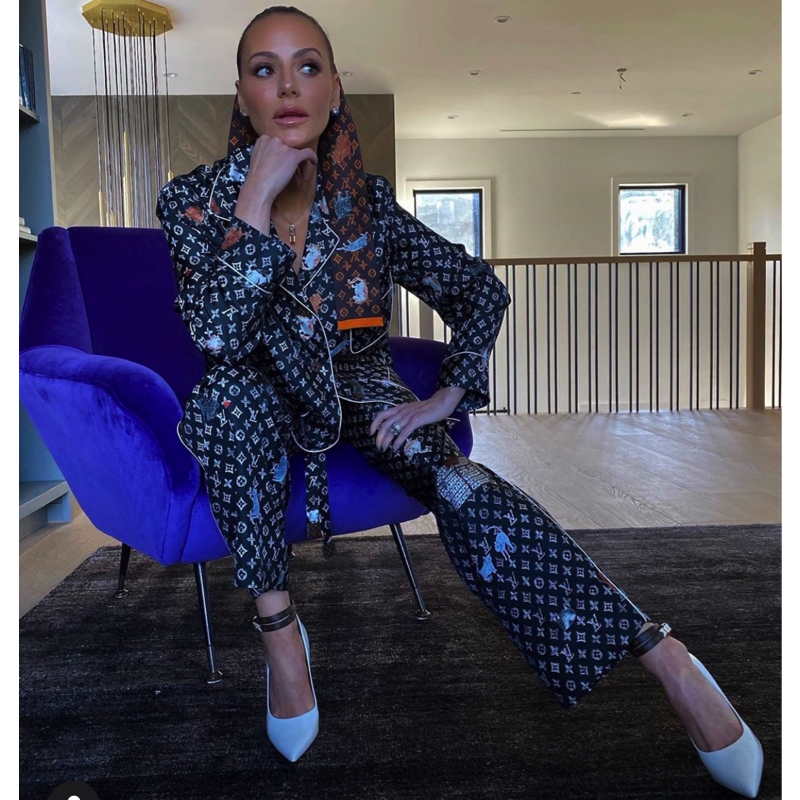
Andy Cohen started off last night’s episode of Watch What Happens Live by saying “just jump out of bed-y and you’re fashion show ready!” and that seriously could not have been more true for Dorinda Medley with her super chic designer pajamas (also seen on Dorit Kemsley). Now if only Sonja had given Leah something similar to wear to her Sonja By Sonja Morgan fashion show, we have a feeling she would have no problem showing up looking ready for bed-y.  

Fashionably,

Faryn

Dorinda Medley's Pajamas on WWHL

Also Seen on Dorit Kemsley in Black:

Dorit Kemsley’s Cat Print Louis Vuitton Pajamas

Click Here to Shop Her Louis Vuitton x Grace Coddington Pajama Top on eBay

Photo #2: @DoritKemsley

Originally posted at: Dorinda Medley’s Pajamas on WWHL

Read More

How to Negotiate in Everyday Life So You Can Save More and Retire Richer (My Top 6 Tips!)

How to Negotiate in Everyday Life So You Can Save More and Retire Richer

In a previous article, I gave a simple example of how learning how to negotiate could help you to save an additional $44,500 for retirement. In fact, I argued that learning to negotiate is one of the fastest and most effective ways to boost your retirement account.

What I didn’t have time to do was explain how to actually negotiate. So, in this article, I want to share some of the negotiation techniques that I have learned over the years.

You won’t find any academic studies or theory here… just from the streets techniques that I learned in my 40+ years in the business world, working with some of the top negotiators on the planet.

More importantly, these are the techniques that I personally used to pay down over $100,000 in debt and build a comfortable retirement that I would have never dreamt of just 10 years ago.

Just Do it!

Nike was right. Success in life (and in negotiating) starts with action. If you want to be a writer, stop talking about your book idea and start writing. If you want to learn how to negotiate, start negotiating. It sounds simple… and it is.

The problem is that most of us don’t know where to start. Or, we are so afraid of rejection (yes, failing to persuade someone feels like a rejection) that we just shut up and take what the world offers us.

So, if you are looking for a simple way to start negotiating… here’s a simple tip. Every time you purchase something over $200 in value, ask one of the following…

“[Frowning] That’s a bit more expensive than I would have expected. What kind of a deal can you give me on this?”

Or…

“[Looking Thoughtful] You know, I’d love to take this home with me… but, I just don’t think I can justify the price to my [wife/partner/goldfish]. Is there is anything you can do to help me get the price down a bit?”

Sometimes, you’ll get lucky and the sales rep will just knock 10% off of the price. Other times, they may give you an inside tip that a big sale is coming up. Or, they may tell you that you can get 5% off by signing up for their newsletter (you can always unsubscribe). But, regardless, you’ll never know until you try.

Not in the market for any big-ticket items but still want to work on your negotiating skills? No problem! Just head down to the local flea market or look for garage sales in your area. Don’t leave until you have negotiated on at least 10 items. Repeat this once a month for a year and you’ll soon feel like a master negotiator.

Master Your “I Want it Now!” Mentality

One of the biggest advantages that many older adults have when it comes to negotiating is… time! So, it always surprises me how many of us still feel like we need things *right now!*

There are several reasons that learning to walk away from transactions will make you a better negotiator.

First, salespeople hear people say that they will have to walk away all the time… most people don’t. So, it’s not enough to tell someone that you’re going to leave a deal on the table… you need to be prepared to actually do it.

Second, learning to walk away forces you to look at your alternatives. And, as we will discuss in the next section, you should never enter a negotiation without knowing what your backup options are – or, as they say in negotiation speak, your “BATNA (Best Alternative to a Negotiated Agreement.)

Here’s a simple exercise that you can use to combat your “I want it now” mentality. Pick one big ticket item (over $200 works for most people) that you want to negotiate on. Then, go out and negotiate for the same item at 3 different stores. Keep track of who gives you the best price, but, don’t actually buy the item.

Do this once a month. It’s a fun game that’s free to play!

Have a Backup Plan

This is the only academic term that I will use in this entire article, but, it is such an important one that I just couldn’t resist including it. The term that I want to introduce here is “BATNA” or Best Alternative to a Negotiated Agreement. In other words, it represents your backup plan or “what you will do if the negotiation fails.”

Before you go into any negotiation – from asking for a decrease on your credit card interest rate to arguing for a reduction on your cable bill – you should know your BATNA.

For example, let’s say that you are in the market for a new car. The monthly lease payment that you have been offered is $400, but, you feel like you can’t afford more than $350. In this case, you might right your BATNA(s) as:

  • Find another dealer who can offer a lower interest rate
  • Wait for a seasonal sale on this model
  • Buy a used car of the same type, but, from an earlier year
  • Use public transportation
  • Ride your bike to work
  • Buy a different car

Sometimes you can use these points directly in a negotiation. For example, “Look, I really do like this car, but, here’s the thing… I was just talking to XYZ motors across the street and the new Mustang is $2,000 cheaper. Plus, with the 1% interest deal they have going on right now, I could walk away with one for $330 a month. I’d love to work with you to find a solution here. Do you have any ideas on how we can make this work?”

But, beyond the direct benefit of having alternatives to fall back on, there is a psychological power that comes from knowing that you have options.

Just knowing that you have a backup plan will help you to fight the tendency to just accept someone’s offer for fear of missing out on the emotional benefit of a potential purchase.

Learn to Love Silence

Sometimes the most powerful thing you can say in a negotiation is *nothing at all*!

I’m not sure why we hate silence. Maybe it has something to do with our innate desire to please others. Or, perhaps it’s our lack of patience that makes us want to jump in and fill any gap in the conversation. But, for whatever reason, silence is a powerful negotiating tool.

I’m not kidding when I say that I have seen people get 20% discounts just by not instantly responding to a salesperson’s first offer. It goes something like this…


Customer: So, how much does that TV cost?

Sales Person: This one? It’s $999.

Customer: [Silence, looking unimpressed]

Sales Person: [After about 5 seconds] Well, actually, I could probably get my boss to let me go down to $899 for this one.


Another related technique is just to repeat the price that you are given and then shut the heck up. It goes something like this…


Customer: So, how much does that TV cost?

Sales Person: This one? It’s $999.

Customer: [Raising eyebrows] $999?

Sales Person: [After about 5 seconds] Well, actually, I could probably get my boss to let me go down to $899 for this one.


It doesn’t really matter how you introduce the silence into the conversation. The main point is to not be afraid of letting the conversation go quiet.

You may be surprised by how easy your negotiations become when your partner is doing all the work!

Be Bold – Dig for Gold and Shoot for the Moon

One final piece of advice that I want to leave you with is to be bold with your offers. Whether you are a buyer or a seller, it often makes sense to give an offer that you know will be rejected.

This technique worked especially well for me when I was in the market for a used car. I simply watched the online listings of 10 cars that I was interested in. Somewhat inevitably, 3 of these cars were still on the market, 2 months after I first saw them.

Once I checked the Blue Book value, I reached out to see if any of the owners would be willing to accept a price well below the market value of their vehicle. And, of course, I made my offers contingent on a full inspection and clean title check.

This technique allowed me to get a used Land Rover for $5,000 below the initial listed price, which was already a tad below market.

After running the car through the necessary checks, I paid cash and everyone was happy. I went on to drive the car for 3 years before selling it for almost the same amount that I purchased it for!

Another time to use the “shoot for the moon” technique is when someone refuses to be the first person to name a price. This is a somewhat unpleasant game that some people try to play and I go around it completely by naming a price that I know to be too high.

Most of the time, this forces the other party to make their own, more reasonable, offer.

Don’t Waste Your Savings

One risk that comes with negotiating is that we will end up spending our winnings.

Especially when big-ticket items are involved, I try hard to transfer any savings from the transaction to my investment account right away. This prevents me from sticking my hand in the cookie jar and ending up no better off than I was before the negotiation.

For an example of just how far a little negotiating can go, please check out my article, “Save $44,500 More For Retirement By Developing This One Simple Habit”

At the end of the day, you don’t need to be a master negotiator to save some extra money for retirement. Even if you just get in the habit of asking for discounts on all big-ticket items, you will save $100s if not $1,000s a year.

Now, get out there and make some money!

Do you regularly negotiate prices on your big purchases? Do you feel like you are a successful negotiator in your everyday life? What negotiating tips would you like to share?

Read More