Month: January 2021

Tiffany Moon’s Striped Bikini

Tiffany Moon’s Striped Bikini

Real Housewives of Dallas Season 5 Episode 2 Fashion

Based on the quick preview clip I’m not sure what type of liquid Tiffany Moon is chugging in the pool on tonight’s Real Housewives of Dallas, but I sure hope their’s alcohol in it. Who am I kidding, this is Bravo and people in are the pool at night, of course it’s alcohol! Now I just need to know how to chug alcohol and still look this good in a striped bikini just like Tiffany.


The Realest Housewife,

Big Blonde Hair


Tiffany Moon's Striped Bikini

Click Here to Shop her Heidi Klein Bikini

Originally posted at: Tiffany Moon’s Striped Bikini

Read More

7 Ways to Face Your Shadow Side and Express Your True Self After 60

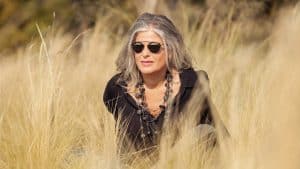
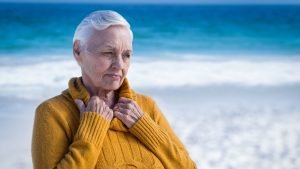
Express Your True Self After 60

A few years ago, an older, well-dressed woman walked into my therapy office. She seemed agitated. Nervously, she told me that she was unable to eat or sleep because she was troubled by sexual fantasies about her best friend’s husband.

Not a word or action had ever passed between them, but for the past six months, these desires were upsetting her. She felt ashamed and confused. She said, “I’ve always been a moral, kind person. This is simply not me.”

My client was experiencing an uncomfortable awareness of the ‘dark side’ of her personality. This can be a difficult experience.

We all have unwanted, unacceptable parts of ourselves that we struggle to deny or repress, often for most of our lives. Swiss psychiatrist Carl Jung called this buried part of the personality our ‘shadow side.’

How Do We Deal with Our Negative Thoughts?

Society sends us women powerful messages to be kind, generous, patient, grateful, forgiving, compassionate, brave and moral. So what do we do, starting in childhood, with the messy, ugly thoughts and urges that just don’t fit with social expectations?

We deny and hide them, and they form our shadow side. Every single human being possesses this buried aspect of personality.

Beware, this article has shocking content. It may make you squirm with discomfort. But it is time for us older women to admit the truth to ourselves. Throw away shame and judgement, and just admit it.

You have a shadow side. We all have it. This conglomeration of negative thoughts, desires and impulses has often been shoved away and buried for our entire lives. But no more.

Accepting Your Dark Side

You are a good person, you love your family, and you are always there for your friends and community. But – once in a while, more often lately, while washing dishes or drinking tea, something bubbles through. Something unpleasant.

Stop. Do not push it away this time. You are not alone! Admit to yourself that there is a part of your personality that may at times be manipulative, self-centered and uncaring.

Women in my life, clients and friends, ordinary, decent, lovely women, tell me secret tales of their innermost dark side. Rage that feels intense. Wildly inappropriate sexual fantasies starring best friends’ husbands, priests or the gender they do not usually partner with.

Wishes for revenge. Bitterness. Jealousy of our dearest friends. Desires to disappear and escape from our families. This is normal! These are thought, not action.

We women over 60 are ready to meet, acknowledge, and even embrace our disturbing shadows. Our lives to that point have equipped us with wisdom, perspective, experience and a fine ability to laugh at even the most unacceptable thoughts.

We have heard and seen it all. And we have learned to be gentle, accepting and forgiving towards ourselves.

Expressing Your True Honest Self

And now, entering the later stages of life, there is no time to waste. We must be our truest, most authentic selves. If we want to feel whole and balanced, to continue growing, to release our creativity, it’s time to make friends with our negative side.

In fact, once we are over 60, continuing to reject these negative aspects of ourselves can be downright dangerous.

We can wind up with physical illness, depression, anxiety, divorce, insomnia, chronic pain and even an untimely death. This is because pushing away parts of our true selves is stressful, exhausting and uses up energy that we need to live healthy lives.

4 Benefits of Integrating Your Shadow

  • Self-acceptance leads to becoming less judgmental and more accepting of others, more humble.
  • Owning the shadow side leads to a greater sense of wholeness and balance. You become more mature, peaceful and comfortable with yourself.
  • Letting go of the exhausting repression releases energy and improves health.
  • Making friends with the dark emotions can greatly increase creativity.

7 Ways to Face Your Shadow

  • Banish the shame: this is the first step toward unconditional self-acceptance. You are not the only one with unacceptable thoughts, desires and impulses.
  • Write in a journal. If you haven’t done that before, there are plenty of resources to help you start journaling and integrate it into your daily life. Journaling can help you in many personal aspects of life- from over worrying to achieving goals and dreams.
  • Laugh at yourself.
  • Meditate with a focus on self-compassion and acceptance of your own humanness. Meditation can help you hone in on negative thoughts and feelings and learn to live with them. A daily meditation practice is proven to quiet the mind and allow your authentic self to flourish.
  • Think of your good qualities and accept the possibility that the opposite may also be true of you, and that’s okay.
  • Realize that the shadow side is a reflection of your power, your honesty, your passion.
  • Talk to someone you trust, possibly a therapist.

This acceptance process is a part of the journey to becoming an elder and a wise woman. If we can be brave enough to face our dark side, we can become integrated, whole and comfortable in our own skin. Remember, Carl Jung said, “The privilege of a lifetime is to become who you truly are.”

How do you express your shadow side and manage negative thoughts? Does your shadow side scare you or do you accept it as part of your true self?

Read More

6 Meaningful Steps to Take Charge of End of Life Care

End-of-Life-Care

Those of us who have watched our parents slip into old age, face multiple health challenges and then pass through death’s door, know that the end-of-life journey can be tricky.

Modern medicine has made old age more possible, even more tolerable than in generations past. The tricky part is how we plan for these last years.

Legal documents called advanced health care directives – a living will, do-not-resuscitate instructions and designation of (health care) power of attorney – can smooth the way for ourselves and our families.

But lately, new questions have arisen about how well patients, their families, doctors and other caregivers understand advanced health care directives. The Institute of Medicine and the National Academy of Sciences are calling for improvements in both medical and social services’ end-of-life care.

Dying in America

A massive report, Dying in America, cites these issues:

  • A lack of awareness or interest by both patients and their families in completing advance directive forms.
  • Lack of institutional support for completing advance directives.
  • Clinicians’ unwillingness to adhere to patients’ wishes.
  • Resistance within the medical culture.
  • Differences in families’ culture traditions for completing health care directives.

Despite these challenges, we can do a lot to ensure that our own end of life care is as comfortable and meaningful as possible. Here are 6 meaningful steps you can take.

Document Health Care Directives

Accept that 70 percent of us who become critically ill at the end of our lives will be incapable of participating in decisions about our health care.

Without advance health care directives, we might find ourselves in a hospital intensive care unit under the eye of an ‘intensivist physician’ whose only job is to keep us alive at whatever cost – physical, emotional and financial.

Write a Will

Write a will and create a ‘living will’ outlining the kind of care you wish to receive if you are no longer competent or in a vegetative state. Appoint a legal health care representative to carry out your wishes.

Write a Do Not Resuscitate Directive

This directive tells any caregivers, doctors or emergency personnel to not intervene if you have no pulse or are not breathing. You can wear a DNR bracelet or get a tattoo, though a tattoo didn’t work in one recent emergency room case.

Communicate with Family

Make it clear to all family members that there will be no heroics. Get your legal directives filed with your doctor, the fire department and all family members.

If you go into a care facility, have the DNR posted in big type in plain sight in your room, although even that measure didn’t prevent a trip to the ER in the year before my mother died at age 98.

Only post contact information for your legal health care representative at your care center door. Keep other family member numbers elsewhere, so there is no confusion over who staff should call in an emergency.

Work with Care Center

Tell your ‘friends’ at the care center to not call 911 if you have a health crisis. Remember that if 911 gets involved, all the legally signed requests go out the window. The emergency folks are bound to preserve life… no matter what. The same goes for doctors in emergency rooms.

Assign Someone with Power of Attorney

Legally assign someone with durable power of attorney to manage your financial affairs when or if you become incompetent or incapacitated. You could also set up a bank trust that designates you as co-trustee until you hand over management of your financial affairs to the bank.

Make sure that the forms you use for these legal documents are state-specific. You can find them at www.smartlegalforms.com. For free printable advance directive forms by state, try AARP at www.aarp.org.

Most of us wish for a peaceful death in bed at home. The reality is, seven out of ten of us will spend our last years in a care facility.

Even with good planning, we likely will find weaknesses in our end-of-life initiatives. Some are outlined in The Good Death by Ann Neumann where she writes about the experience of her father’s dying.

“Part of the reason we don’t know how people die is because we no longer see it up close,” she writes. “Death has been put off and professionalized to the point where we no longer have to dirty our hands with it.”

But we should. We can help ourselves and our loved ones do better by getting our instructions on paper and by talking at length about these issues with our family and our caregivers.

Have you documented your end of life wishes? How did you go about filling out the necessary forms? Please share any tips you may have in the comments below.

Read More

Senior Isolation Meets Creative Solution

senior isolation

I fell into a mission for older people, not through caregiving as many think (that would come later) but through singing. Tired of playing in casinos and night clubs, I went into a senior community and started singing to the residents. And I never stopped.

I was averaging 100 performances a year part time, and it changed the trajectory of my health care career. I stopped counting the number of performances long ago, but I would imagine the number is more than 3,000!

Social Isolation Among Seniors

A report in the National Academies found that: “Social isolation and loneliness are serious yet under-appreciated public health risks that affect a significant portion of the older adult population. Approximately one-quarter of community-dwelling Americans aged 65 and older are considered to be socially isolated, and a significant proportion of adults in the United States report feeling lonely. People who are 50 years of age or older are more likely to experience many of the risk factors that can cause or exacerbate social isolation or loneliness, such as living alone, the loss of family or friends, chronic illness, and sensory impairments.”

An online survey of senior living residents from Altarum found that our seniors are lonelier than ever. More than half are not participating in any organized activities. Covid has exacerbated all of this of course.

A recent New York Times article cited the book Loneliness: Human Nature and the Need for Social Connection, which explains that stress hormones from feeling socially isolated can have as serious an impact on the human body as smoking or obesity.

The British government even appointed a minister for loneliness in 2017. Nursing home residents have experienced increased depression, weight loss, and more during the pandemic.

The Power of Music

John Carpenter, founder of the world-renowned Rebecca Center for Music Therapy in New York, shares that music helps stimulate communication and memory skills. Listening to live music and being involved in live music-making experiences empowers people to emerge from the isolation imposed by dementia or simply from loneliness.

People who are connected this way are less depressed, more likely to engage in other meaningful activities, and less likely to be given anti-psychotic medications for their symptoms.

Another study has shown that the mental acuity of Alzheimer’s patients who regularly sang over a four month period rose sharply. And still another study revealed that nursing home residents with dementia who often get agitated can benefit from internet video chat that enables residents to both see as well as hear others while reducing agitation.

Music also:

  • Lowers anxiety
  • Reduces loneliness
  • Lowers agitation
  • Improves memory
  • Improves cognitive skills
  • Involves caregivers
  • Promotes self-expression and stimulation
  • Provides cognitive stimulation
  • Provides motivation
  • Promotes physical engagement
  • Improves social connections
  • Helps improve self-identity
  • Provides pleasure and enjoyment
  • Contributes to a creative outcome

New Entertainment / Education Network Relieves Loneliness

About five years ago, I acquired the technology to stream concerts live. It was a novel idea. Care homes didn’t have the interest, bandwidth, or technology. Now things are different.

I have partnered with students from Northeastern University to solve a real societal issue – isolation – by creating a virtual entertainment and education network that provides livestream and pre-recorded programming to senior communities, senior centers, adult day care, hospice and home-bound adults.

“We couldn’t think of a more timely topic,” says Jane Braley, associate director of employer engagement and career design at The Experiential Network at Northeastern University.

Senior Communities Need Our Help

The pandemic has exposed the vulnerabilities of our health care systems: Loneliness and mental health issues loom large. We believe a community of like-minded organizations and individuals can fill the void by providing all kinds of support.

We believe this holistic, 360 degree approach is what sets this network apart, and I am glad to be part of it.

If you’re interested to help fight loneliness among older adults, please contact Anthony.

How often do you feel lonely or isolated? Is this due to the pandemic, or did it start before Covid emerged? Do you know of someone else who feels the same way? Have you experienced the power of music as an instrument against loneliness? Please share with our community.

Read More

Demi Lovato Got All Different Boob Sizes on Her Nails & They’re So Freaking Cute

Leave it to our girl Demetria Devonne Lovato to get boob-printed nails that are actually inclusive. Because, you know, bodies come in all shapes and sizes, Demi Lovato’s boob nails have five slightly different designs on each finger. Long and skinny, full and round, East West (when nipples face opposite directions) and just one breast—she’s got ’em all. “All boobies are beautiful,” she captioned the Instagram post.

The base of Lovato’s nails is a pink-and-white watercolor design and the breast shapes are painted on in black, making the already cute design even cooler. The singer credited Los Angeles-based nail artist Natalie Minerva (@nail_swag on Instagram) for the look. Minerva has created some of Lovato’s other killer talons, including evil eye coffin nails and VOTE-emblazoned tips.

Lovato’s famous friends are jealous of the designs (we are too!). Ashley Benson said, “I want I want” and Kesha wrote, “these are AMAZIN.” Lucy Hale gave a few claps and Kerry Washington said, “This is amazing.” We couldn’t agree more. We need these as press-ons STAT.

Instagram PhotoSource: Instagram

The singer has been switching up her look during this downtime, playing around with all different nail designs and hair transformations. First, she chopped off ALL her hair to reveal a blonde pixie with an undercut. Then just this week, stylist Amber Maynard Bolt dyed her blonde parts pastel pink. This is a shade we’re going to see more and more in 2021 as people get bored with their hair at home. It’s an easy way to update your ‘do without damage. Plus, it doesn’t last very long.

Instagram PhotoSource: Instagram

It’s official: Lovato can officially pull off anything.

STYLECASTER | Ashley Benson Interview


Read More