Month: May 2021

What You Need to Know About Kidney Disease, Dialysis, and Medicare Coverage

medicare and kidney disease

Kidney disease is a serious condition that worsens over time and can lead to death, without proper treatment. The kidneys filter waste out of the body, but when they start to lose function, this can lead to a host of serious symptoms that interfere with everyday life. If you’re not already familiar with the symptoms of kidney disease and how to prevent it, now is the time to learn more.

What Is Kidney Disease?

Kidney disease happens gradually as the kidneys lose their ability to filter out liquid waste effectively. Over time, these liquids can build up in your body, causing a range of dangerous symptoms. Kidney disease usually happens as the result of another health problem, such as diabetes or high blood pressure. It can also occur due to ongoing kidney infections or cysts and inflammation in the kidneys.

When kidney disease starts, you may not have many symptoms, making it very difficult to catch and treat. Kidney disease symptoms can include nausea and vomiting, fatigue, loss of appetite, changes in urination patterns, swelling of the lower extremities, and shortness of breath. Over time, kidney disease can cause serious cardiovascular complications, and it can also cause dangerous levels of fluid retention.

How Can You Prevent Kidney Disease?

The best way to prevent kidney disease is to maintain a healthy lifestyle. Maintaining a healthy weight with a nutritious diet and regular exercise is one of the best ways to prevent kidney disease.

You should also avoid smoking and take steps to quit if you have already started. If you take over-the-counter pain medications, you should also be very careful to stick to the recommended dose on the label. Taking too many pain relievers can lead to kidney damage.

If you have any chronic health conditions, work with your doctor to manage them effectively and prevent them from causing kidney disease. You should also talk to your doctor about kidney disease screenings if you are at a higher risk of developing the condition.

Medicare and Kidney Disease

Original Medicare covers a range of different services related to kidney disease. If you are diagnosed with kidney failure, Medicare may cover dialysis supplies, treatments, and training. Medicare also covers up to six sessions of kidney disease education to help you manage the condition effectively at home.

Medicare also covers kidney transplant services should you need one. If you have a Medicare Advantage plan, you may be covered for supplemental services beyond what Original Medicare provides.

Because of the severity of kidney disease, it’s important to be aware of the signs and symptoms so you can seek appropriate treatment. If you’re interested in learning more about your Medicare options, contact a licensed agent who specializes in Medicare so they can give you information based on your lifestyle, budget, and needs.

What do you know about kidney disease? Do you get preventative screenings to catch early symptoms? Has your doctor been cautious not to disturb your kidneys with harmful medication? What Medicare services have you used for diagnosing or treating kidney disease? Please share your story with the community.

Read More

Kenya Moore’s Yellow Ribbed Tank Dress

Kenya Moore’s Yellow Ribbed Tank Dress

Real Housewives All Stars Fashion

Kenya Moore’s yellow ribbed tank dress on the Housewives All Stars trip is probably the most wearable piece in fab, fashion-filled excursion yet and she looked simply stunning in it. Kenya had some of my favorite outfits on this trip and she looked like she should be on the cover of Sports Illustrated in all of her swimsuits. And since I can’t compete in that department, I think this tank dress that provides a little more coverage is my vote for most versatile in the fashion All Star game.


The Realest Housewife,

Big Blonde Hair


Kenya Moore's Yellow Ribbed Tank Dress

Click Here to Shop her Enza Costa Dress

Click Here for Details on Kyle Richards’ Dress

Click Here for Details on Melissa Gorga’s Dress

Photo: @MelissaGorga

Originally posted at: Kenya Moore’s Yellow Ribbed Tank Dress

Read More

9 Tips for Getting the Most Out of Your Online Fitness Classes (VIDEO)

tips online fitness classes

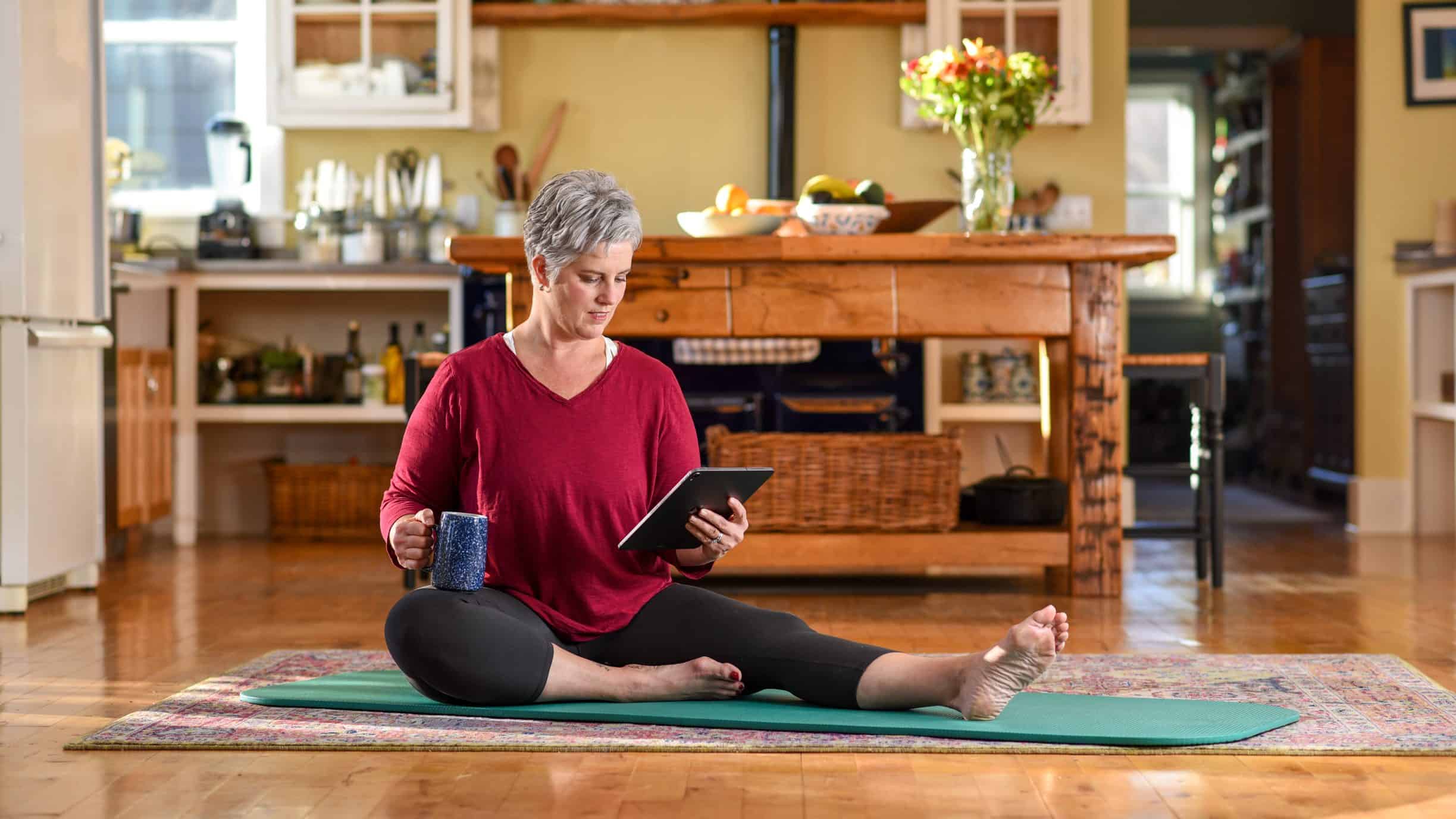
How has your fitness routine changed in the last 14 months? The global pandemic has uprooted our usual habits and has us exercising more inside our homes. With so many online fitness options out there, it can be challenging to sort through what will work best for you. Additionally, it’s important to know how to safely workout on your own while also getting the most out of the experience.

The History of Online Fitness

Online fitness is taking the world by storm right now. In the moment, this feels like a revolution of sorts, but it’s actually more of a revival. The evolution of home fitness began about 70 years ago. Raise your hand if you’ve ever followed along with some kind of fitness routine in your living room. I’m betting most of us have, at one point or another, on DVD or ahem, VHS.

In 1951, muscle man Jack LaLanne debuted a morning TV program geared toward women as part of a beauty routine and to stay slim. Over the next couple of decades, fitness took root as part of a healthy lifestyle. More and more people were making exercise a priority and getting out to jog or going to the gym regularly.

The emergence of VHS tapes in the 1980s brought home fitness back in a big way. We can look to Jane Fonda for that first instance of what we would now think of as an on demand exercise class. The image of her leotard and legwarmers, well curled hair and sweatband is something we can all conjure up in our minds with ease.

Many others would follow… the fun of Sweatin’ to the Oldies with Richard Simmons or feeling tough doing Tae Bo with Billy Blanks.

Types of Online Fitness Classes

So what are your options today? Online fitness has become so much more than that workout tape you used in the 80s. Here are three ways you can access an online exercise class.

On Demand

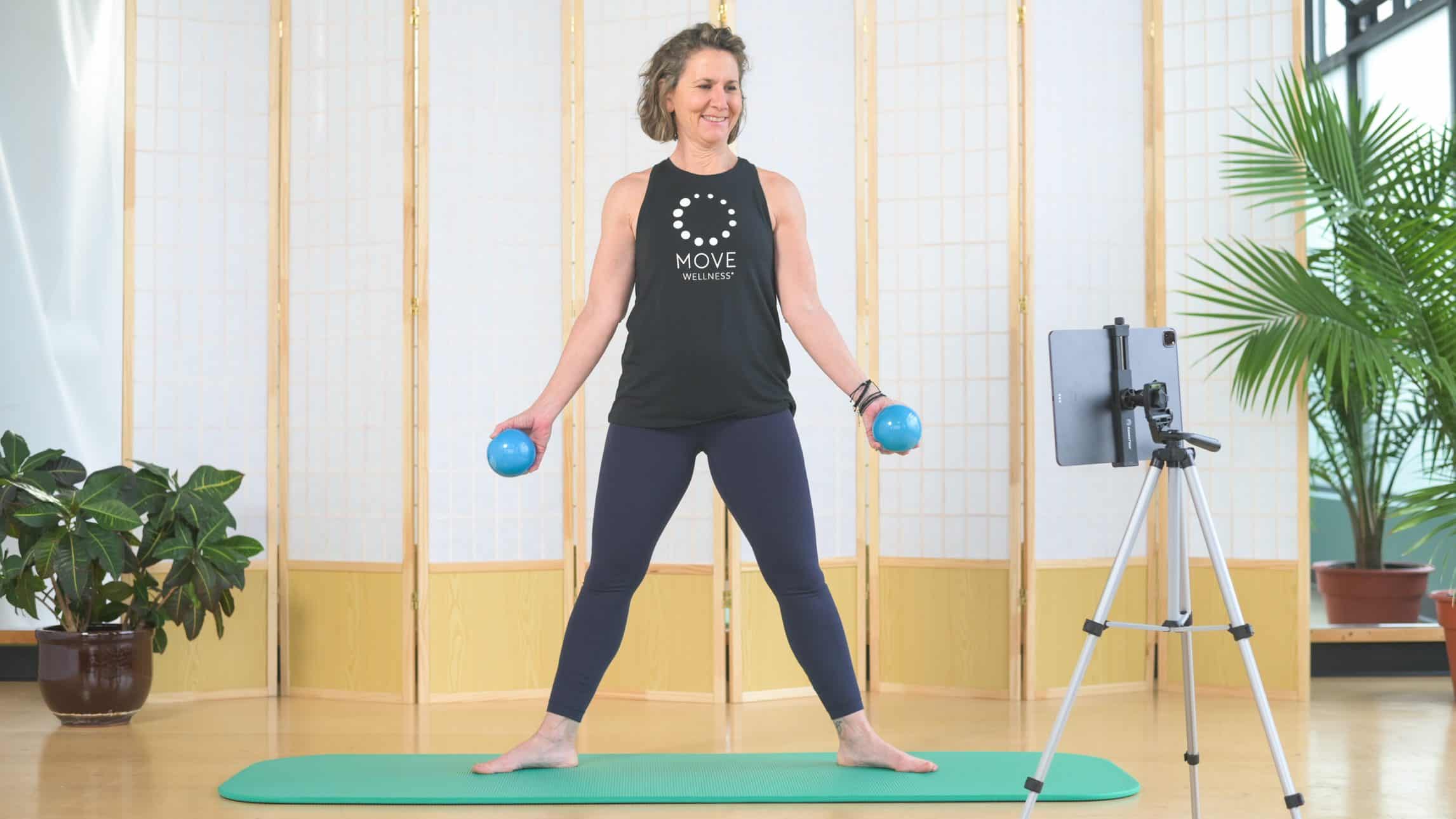
According to Merriam-Webster, on demand literally means “when requested or needed.” With on demand fitness classes, a fitness instructor will record a class in advance. You can access the class on your own time and wherever is convenient. You’ll find on demand classes on the internet with free and paid options.

Places like YouTube and Vimeo are very popular – my own fitness studio, MOVE Wellness, has its very own YouTube channel. You may also find on demand classes through your TV cable provider. Even social media sites like Instagram are sharing more and more fitness content every day.

Livestream

A livestream class will be presented more like the format of Jack LaLanne’s TV program. Classes are taught live to the audience who tunes in to follow along on a set day and time. Some people really benefit from the commitment to a schedule.

Livestream classes offer fresh, never seen before content each session to stave off boredom. You can usually choose to pay for one class at a time or sign up for a membership.

Interactive Livestream

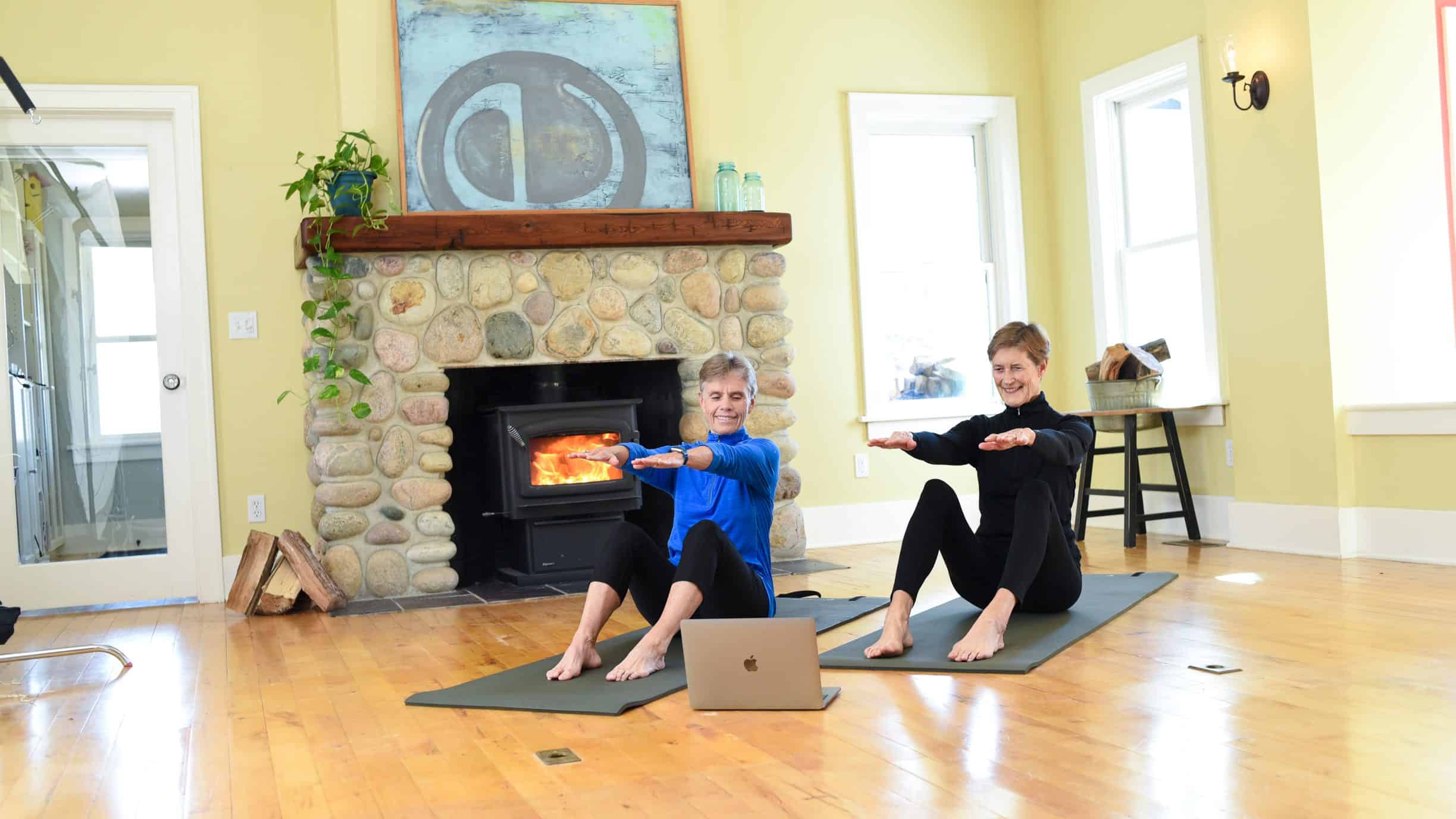
Taking livestream one step further, think of interactive livestream classes as your group fitness Zoom meeting. Interactive livestream classes will feel more like the traditional group fitness class you might be used to attending at your local gym. Classes are scheduled in advance and taught live to a group of people.

The interactive component comes in that the instructor can interact with you live on Zoom and offer real time advice and modifications. Interactive livestream classes are usually associated with a specific gym or fitness studio.

9 Tips for Online Fitness Success

So you’ve chosen a class and you’re ready to get moving. How do you make sure you’re moving safely and getting the most out of your workout when the instructor isn’t in the room with you?

I polled my awesome staff of trainers and compiled their best advice here for you. They teach everything from Pilates to barre, yoga, HIIT and more and have been teaching classes online since the very beginning of the pandemic.

#1: Choose the Right Place to Exercise

Make sure you have enough room around you to move and that there are no other hazards you could trip on. You know your house better than we do. Pick the best spot you can to work out.

  • Be aware of your surroundings.
  • Watch out for carpets and rugs that could become a tripping hazard.
  • Be careful with tables and chairs, as they may slide depending on how heavy they are and the type of flooring you have.
  • Keep props nearby, but not in your way.

#2: Don’t Be Late

For livestream classes, try to log in on time so you can hear what the instructor has planned for class. Many classes won’t use anything but a mat, but sometimes special props or equipment are incorporated.

They’ll usually share what you’ll need and what you can use instead if you don’t have it. You also want to make sure you don’t miss the warmup portion of the class.

#3: Listen to Your Body

If an exercise doesn’t feel right for you today, don’t do it. If you know a modification, do that instead. You can always skip the current exercise and do your favorite stretch, grab a drink, or simply catch your breath as you wait for the next round.

#4: Don’t Be Afraid to Ask Questions

In an interactive livestream class, you can speak directly to the instructor. Otherwise, you can usually contact the instructor ahead of time or after class for any clarification you need.

#5: Eliminate Distractions

Set aside your phone and have as few distractions as possible so you can stay with the flow of the class. Give yourself time to focus and enjoy moving your body. If you were taking the class in person, you wouldn’t be answering calls!

#6: Establish a Routine

Once you’ve found a couple of favorite classes, make a weekly recurring reservation to set a habit for yourself. By developing and sticking to routines, we hold ourselves accountable to a healthy lifestyle.

#7: Put Your Class in Your Calendar

Whether it’s a scheduled livestream class or you are setting aside time for an on demand workout, it’s just another step that will help you commit to showing up.

#8: Turn Your Camera On

If you’re taking an interactive class, consider turning on your camera to maximize your experience. Movement instructors really love to see you move! Make sure you are well lit and visible to the instructor. Lighter, brighter clothing colors are easier to see.

Some people are understandably shy about having the camera on. The instructor can really personalize your experience if they can see you in real time. And trust me when I say we love to see your smiling faces.

#9: Learn What Works for You

If you’re able, consider scheduling a few private training sessions (in person or online via Zoom) with a qualified instructor. This will help you identify ways to advance or modify exercises to fit your individual needs and goals.

Who Can Take Online Fitness Classes?

Anybody… and everybody! There’s truly something for everyone at all ages, stages, and levels of fitness. Being able to move together virtually has been such a gift during these challenging times.

Online fitness is here to stay. It’s incredibly convenient and can even connect you to a community of people with similar interests. Whatever fitness path you choose, we hope you’ll keep moving.

Enjoy a free trial of livestream movement classes with MOVE Wellness.

How many online fitness classes have you tried to date? Which ones were you able to keep and why? Were there any classes that you found too difficult to do or to connect with? Do you think an interactive class might be more helpful to you, or do you prefer a different option? Please share any tips you may have gained in your online exercise experience.

Read More

Cary Deuber’s Yellow Floral Two Piece Set

Cary Deuber’s Yellow Floral Two Piece Set

Real Housewives of Dallas Instagram

I always liked Cary Deuber’s style on the Real Housewives of Dallas, but when she came on Closet Confessions I learned IRL she has an amazing personality to match. And speaking of matching, her yellow floral two piece set on Instagram with some of our other Dallas faves is completely adorable for Spring and in stock many places. It’s totally going to look great on me after I finally make that trip up to Lemmon Avenue Plastic Surgery, which is just about my only priority this summer aside from buying a totally cute matching top and skirt set.


The Realest Housewife,

Big Blonde Hair

Cary Deuber's Yellow Floral Two Piece Set

Click Here to Shop her ALC Rylan Top

Click Here for Additional Stock

Click Here for More Stock

Click Here for Even More Stock

Click Here to Shop her ALC Lucie Skirt

Click Here for Additional Stock

Click Here for Even More Stock

Photo: @Carydeuber

Originally posted at: Cary Deuber’s Yellow Floral Two Piece Set

Read More

What Money Personality Type Are You? Spender, Idealist, Star, Avoider or Something Else?

What-Money-Personality-Type-Are-You

Your money style, whatever it may be, can be helpful, but it can also block your progress. Oftentimes we cling to beliefs about money without even thinking about why we hold them.

They may be based on your money history. Or, if you’re on your own after a divorce or the death of your spouse, that big transition can greatly impact your money style.

Experts, including Olivia Mellan, have defined several money styles or money personality types. Below are some examples of these various styles.

Do You Recognize Any of These Styles in Yourself?

  • Guardians are always alert and careful with their money issues.
  • Spenders prioritize pleasure and enjoyment through spending money on “the good life.”
  • Idealists put the most value on creativity, compassion, social justice, or spiritual growth.
  • Hoarders seek security and abundance by accumulating more financial assets.
  • Stars spend, invest, or give money away to be recognized or feel classy and increase self-esteem.
  • Avoiders don’t pay much attention to money, believing or hoping that life will work out for the best; they may feel incompetent or overwhelmed with money tasks.
  • Caretakers give and lend money to express compassion and generosity.
  • Empire builders and entrepreneurs thrive on power and innovation to create something of enduring value, which may include their own business.
  • Amassers like to have lots of money available to spend, save, or invest. They equate money with self-worth and power.
  • Nesters think that money invested in their homes brings happiness.
  • Bag ladies believe they don’t have enough money and may be out on the street soon. They feel powerless to do much about their financial situation. Many suddenly single women might feel this way at some point, even if only for a short period.

Does Your Money Style Trip You Up?

Sometimes your dominant money style can cause problems. For example, Guardians may prefer ultraconservative investments such as certificates of deposit and money market funds. This tendency may block their ability to build a diversified portfolio over time.

For Avoiders, whose husbands handled most of the family financial issues, it may feel strange to be in a decision-making role about money when this time arrives.

Some women may be fearful they won’t have enough money and can experience the Bag Lady syndrome. That was definitely me immediately after my husband died more than a decade ago.

I suddenly craved safety and security. Facing an unknown future, I felt insecure and lacked self-confidence. But that unhelpful money style dissolved soon afterward as I stabilized my life and moved forward.

Indeed, simply taking a deep breath and not embarking on a radical action may be the best move after a major life change. I re-evaluated my financial situation, calculated my numbers and knew I was going to be OK.

It’s Really About More Than Your Money

Ultimately, it’s not about the money. Rather, it’s about understanding your money and how you react to it. Recognize your natural inclinations toward spending, saving, giving, and investing, and what’s motivating those habits.

As you get to know yourself better, you can make important changes to create the financial life that’s best for you. Have an honest discussion with yourself about your money style.

Are you a saver or a spender? Are you a penny pincher who clips coupons? Do you give too much money to your children? Are you carrying lots of credit card debt?

What’s your money style today? Has your money style changed as you’ve matured? If so, why do you think it’s different now? What’s a positive feature of your money style today? What, if anything, about your money style, may be problematic going forward? Please comment on your money style and how it’s helping or hurting you today. What do you want for the future?

Read More