Month: July 2021

JLo Showed Off Her Natural Waves & New Bronze Hair Color While Teasing Her New Single

Jennifer Lopez has a new single and she’s celebrating over on her Instagram. While teasing Cambia El Paso, JLo showed off a new golden bronze hair color and her natural texture. “Un mensaje especial para mi #JLovers,” she wrote, which translates to “a special message for my…” She continues: “Tan emocionada por #CambiaElPaso … disponible este lunes,” which means “I’m so excited for Cambia El Paso available this Monday.” So soon!

Colorist Tracey Cunningham is responsible for Lopez’s new color, which she calls “golden bronze.” She used Redken color to give Lopez gorgeous low-lights, which breaks up her solid blonde and gives a more natural look that brightens Lopez’s face. She finished with Olaplex No. 8 Bond Intense Moisture Mask ($28 at Sephora) to keep her client’s hair soft and strong.

Our mission at STYLECASTER is to bring style to the people, and we only feature products we think you’ll love as much as we do. Please note that if you purchase something by clicking on a link within this story, we may receive a small commission of the sale.

Instagram PhotoSource: Instagram

Cunningham’s other celeb clients include Emma Stone, Khloe Kardashian, Jennifer Garner, Dakota Johnson, Halle Berry and Jessica Biel. She just released her first book, which will help you find the perfect hair color for you.

Tracey Cunningham true color

Amazon.

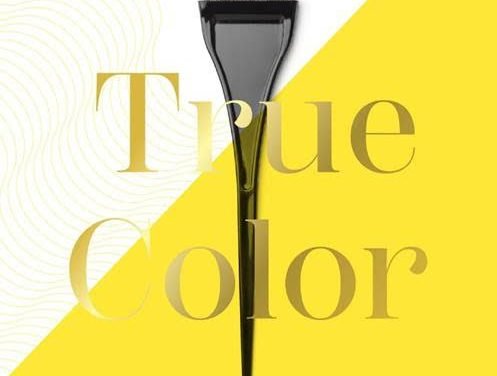
Tracey Cunningham’s True Color: The Essential Hair Color Handbook isn’t just some boring memoir. You’ll actually learn a lot about hair from this book. Cunningham’s hair color philosophy is all about revealing your true color by looking at photos of yourself as a child. So, she includes tons of pictures of celebrities as kids, including Christina Ricci, Lily Rabe and Maria Sharapova. It’s a really fascinating read.

Hey, maybe Lopez’s golden bronze hair is actually the perfect color for you. Find out by grabbing her colorist’s new book.

STYLECASTER | Ashley Benson Interview

Read More

It’s Time to Be Alone and Lonely No More

social connectivity

“Social Connectivity” is science-language for a simple and obvious experience, that of connecting with others. We humans are, like it or not, fundamentally social creatures. Even introverts, such as myself, need to interact with others – just not at the pace or in the quantity enjoyed by extraverts.

The Health Risks of Loneliness

In fact, social connectivity is so important to our health and well-being, that without it, we languish. We don’t do well at all. Research shows that lonely patients experience a four times greater risk for hospital readmission within a year of discharge. Not only that, but feeling lonely is associated with twice the risk of Alzheimer’s disease.

In addition, studies show that socially isolated seniors have a 64 percent increased risk of developing clinical dementia (of which Alzheimer’s is a specific type), as well as a 32 percent increased risk of stroke and 29 percent increased risk of coronary artery disease. Not to mention that social isolation also tends to result in more emergency room visits, hospitalizations and nursing home placements.

Not a pretty picture. All engendered by the lack of connecting with others, which considering how many of us inhabit the planet, surely can be overcome now that we are allowed, for the most part, to again meet and greet in person.

Take advantage of the rebound effect of the pandemic’s ending. Many of us, forced into solitude by virtue of Covid restrictions, have recognized just how important social connectivity is to our day-to-day well-being, and are now yearning to connect with others.

This is a prime time to find activities or hobbies done in concert with other people. The stigma or shame that can sometimes be associated with feeling lonely, or being alone, has – at least for now – vanished. We all have been alone and lonely this past year.

This does not mean it’s time to find a new spouse/partner, or re-connect on a deeper level with your current mate, although certainly both can be wonderful options. Social connectivity has to do with connecting beyond one’s mate or immediate family, to that “family” that exists outside your own.

Finding Ways to Connect

There are umpteen opportunities to connect with others: book clubs, walking groups, art classes, music groups, gyms, tennis groups, dance classes, bridge clubs and more. Whatever your interests or inclinations, there is bound to be a group or class that caters to them. Plus, the added bonus of the Internet provides easy ways to find what might appeal to you.

Volunteering is another terrific way to connect. It could be volunteering at an animal shelter, tutoring young ones at a local school, or lending a hand at a nearby hospital or homeless shelter. In addition to connecting with others, volunteering has the added benefit of supporting your health and longevity.

Look for opportunities to connect that aren’t “one-shot deals.” For example, running a marathon is a fantastic adventure and certainly involves many others, but training for it can be an individual effort – unless you team up with a group of people happy to train together.

Don’t shy away from what may appear to be unusual or unique opportunities to connect. For example, Ann and Al Hill, (now 78 and 79, respectively) spent the last 30 years fostering some 100 teenage girls, an undertaking they embarked on once their own two daughters were out of the family nest.

Between the girls themselves, their schools, sports, doctor visits, hobbies and assorted young friends, I doubt there was ever a moment that Ann or Al felt socially isolated, much less lonely. Granted, few of us would be up to the task, yet to Ann and Al, providing hearth, home and guidance to young girls in need was the most natural thing to do for this caring, compassionate couple.

Be brave. Be willing to step out into our new post-Covid world and join with like-minded people in whatever endeavor pleases you. Not only will your health and longevity benefit, but you’ll be contributing to the well-being of others, even as you tend to your own.

What new hobbies or activities have you taken up now that the world is slowly getting back to normal? How are you seeing the world now that you’re beginning to go out again? What have you done to reconnect with others? Do you believe our appreciation to be with others is permanent or fleeting?

Read More

Why It’s Time to Flip the Narrative from Independence to Interdependence

interdependence

Each July, we Americans dedicate time to celebrating our independence, and perhaps this year more so than others after we’ve endured various stages of isolation and lockdown amid the pandemic. The 4th is a time to revel in the notion of the American Dream and the freedoms that it’s meant to afford us – one where every individual is a given the opportunity to pursue a better life and assert their independence.

Independence is something we all strive to achieve and instill into others from a young age, and something we fear losing grasp of as we get older. Early on, we align independence with being granted permission to ride our bike around the block without mom or dad, getting a driver’s license, moving into our own place and setting off for college in another state.

As we age, we seek out ways to be independent by learning a new tech product without assistance, navigating our way as divorcees, traveling the country in an Airstream or doing our own home projects.

Adopting an Interdependence Mindset

Independence is instilled in us throughout life, but seldom are we able to be truly successful and achieve our dreams and goals on our own. Even the leaders from the 13 colonies who architected the Declaration of Independence had to do so collaboratively.

Society has developed a narrative around independence as something we all should strive to achieve and embody, but what if we instead evolve our mindset to value independence as much as interdependence?

Interdependence – defined as a state where two people or things are mutually reliant on each other – has somehow taken on a negative connotation, yet it’s integral to our lives today and should be reflected in the evolving American Dream.

Being dependent on other people and things actually helps you to be independent. These are not two separate things. Anyone who thinks they’re an island is not only misinformed, but doing themselves an injustice; going through life by failing to embrace all of the positive benefits of mutual dependency.

What Does Interdependence Look Like?

All of us rely on other people, tools and systems, but that actually fosters and facilitates our independence. There are plenty of examples of this.

Companionship

Interdependence is the healthiest type of relationship, according to Psychology Today. It’s one where “two people, both strong individuals, are involved with each other, but without sacrificing themselves or compromising their values.”

Loved ones, friends and acquaintances can be a safety net (and vice versa) for times when you’re taking an independent leap of faith by starting a new business, moving to a new state or making another move that might leave you vulnerable without a network to support you.

Society

Look at any vibrant and healthy community, and you’ll find an interdependent underpinning. We turn to our neighbors when we need someone to watch our children or pets, or to help with projects in our homes that require extra hands.

When someone is ill or passes away, we pull together and organize a meal train for the family. Our communities play a meaningful role in supporting and sustaining us – and they’re most productive and healthy when everyone in the ecosystem is involved.

Housing

In today’s crazy housing market, finding an affordable place to live can be a tall order. It’s no wonder, then, that Pew Research reports that 31.9% of the adult population lived in a shared household in 2017, up from 27.4% in 2006.

We can’t always afford to live on our own, and people are increasingly open to the idea of homesharing with others outside of their immediate family to their mutual benefit.

Money

Financial interdependence runs deep in our culture, and that’s neither a good nor bad thing. As employees, we rely on businesses as a means to generate income, and even on co-workers to show up for their jobs to keep the business humming so we can continue to earn and thrive.

The convenience store down the street depends on customers to keep their doors open. Even the wealthiest among us relies on businesses to keep operating so they can buy the food and other essentials they need to survive.

Sustenance

Stopping at the local farmer’s market to pick up some veggies or popping into a grocery store to buy milk? Those goods didn’t just show up in a poof of smoke.

The food chain is the epitome of interdependence, from the animals and plants that depend on each other for survival, all the way up to the farmers, processors, truckers, store operators, stockers and cashiers that get the sustenance into your hands that you and your family need to survive. Even if you have your own farm, chances are you didn’t build your own tractors and shovels.

Tools

Interdependence is not just relegated to people. There are endless tools that we depend on to make it through our day-to-day lives. We need tools to help us cook and clean, computers to help us work remotely when it’s our only option, TVs and radios to gain access to critical news, clothing to keep us warm.

Nothing and no one lives in isolation, so as we take time in July to celebrate our independence, let’s remind ourselves that we are not an island – and that’s OK. It’s time to reframe the way we think about interdependence, and acknowledge the way it enhances our lives, rather than detracts from them.

Getting comfortable with the notion of interdependence also paves the way for us to give and receive the help and support we need. That certainly would lead to a wealth of positive outcomes worth celebrating.

Happy Interdependence Day!

Have you considered how interdependent we are of each other? Do you think it’s more important to be independent or to learn to be interdependent? In what situations have you needed others’ support? Have you always been able to find it? Please join the conversation.

Read More

Sutton Stracke’s Blue Sunglasses

Sutton Stracke’s Blue Sunglasses

Real Housewives of Beverly Hills Season 11 Episode 7 Fashion

Sutton Stracke has quite the sunglasses game this season. Her blue sunglasses here are just another home run in the books. Now I don’t know much about sports other than the food is always good whenever there’s a game on. But I do know about fashion which is a whole different ballgame. That being said, I know that a cute pair of blue sunglasses need to be added to your roster. Pair them with any outfit and you’re sure to be the MFP (Most Fashionable Player).


Sincerely Stylish,


Jess

Sutton Stracke's Blue Sunglasses

Click Here to Shop Her Gucci Blue Sunglasses

Originally posted at: Sutton Stracke’s Blue Sunglasses

Read More

Kyle Richards’ Teddy Bear Sweater

Kyle Richards’ Teddy Bear Sweater

Real Housewives of Beverly Hills Season 11 Episode 7 Fashion

Nothing seems more comforting that a teddy bear. And nothing seems more comfortable than Kyle Richards’ teddy bear sweater. This whole scene was just too adorable. From the cute sweater to the cutest sister reunion. It made me wish that I had a sister growing up. But only for a second because then I remembered that sisters fight and steal each others clothes. I’d rather just stick to only having to steal celebrity’s style, such as Kyle.


Sincerely Stylish,

Jess


Kyle Richards' Teddy Bear Sweater

Click Here to See Her Ralph Lauren Bear Sweater

Originally posted at: Kyle Richards’ Teddy Bear Sweater

Read More