Month: August 2021

10 Silly Stories That Stop You from Losing Weight After 60
Losing-Weight-After-60

What stories do you tell yourself that keep you from losing weight?

We all have our little stories, like the things we believe about ourselves and our relationship with food and weight loss. There are stories that we have believed for so long that we don’t even question them.

But what if you did question them? I bet you’d find out that most of them aren’t true!

Do you tell yourself any of these?

I Love Food Too Much to Be Slimmer

Almost everyone loves food. Seriously. How many people do you know who don’t? Eating is, after all, one of the primal urges. In fact, there are some people who are so into food that they make it their career. We have all heard of famous chefs and cookbook authors.

Have you noticed though that a lot of them are trim? That’s because you can love food and enjoy eating the most delicious food around, and not overeat it. Loving food does not cause overweight – overeating does.

I Have to Clean My Plate Because Wasting Food Is Bad

Eating everything in your plate is a habit you probably picked up in childhood. Do you still believe what your parents told you about hungry children in China or Appalachia or wherever?

When you overeat by cleaning your plate, how is that helping anyone? All you’re doing is substituting your body for the trash bin. It is much more of a waste to put food into your body that you don’t need and which will be stored as fat (increasing your risk of several deadly diseases) than throwing food in the trash.

I Really Don’t Eat Very Much

Sometimes we don’t think that we eat too much. I used to believe that one, and so did every single one of my students. Then I started eating only when I was hungry and stopping before I was full. I also started writing down what I ate and realized that my body only needed about 60% of the food I was eating!

Studies have shown that overweight people underestimate the amount they eat by about 30%. So if you think you really don’t eat very much but are overweight, write down everything you eat for the next week. Just do it for yourself, be honest, and see if you are right.

I Can’t Lose Weight Because I’m a Food/Sugar Addict

Have you been diagnosed by a medical professional as a food/sugar addict? I’m not qualified to have an expert opinion on whether these conditions exist, but I used to wonder whether I was addicted to food.

In reality, I was an emotional eater, which is a habit, not an addiction. Once I learned to question why I was eating, and stopped eating to fix anything other than my physical hunger, I kicked that habit. Now I’m in control, not the food.

I’d also like to caution you against believing that you’re addicted. That kind of belief makes you give up all of your power and responsibility to change without going into a rehab program.

I’m Too Busy to Lose Weight

Even if you’re too busy to lose weight, you have to eat anyway, right? How can eating less take longer than eating more? Think about that one.

To lose weight and keep it off, you mostly have to pay attention so that you only eat when you’re hungry and notice when your body is lightly full so that you can stop eating. You can actually save time by changing your eating habits and losing weight comes as a bonus!

I Have No Willpower

Willpower doesn’t matter. Willpower is a finite resource, and it decreases over the course of the day as your energy gets depleted by stress and self-control. That’s why it’s easier to stick with your eating plan early in the day, and it is also why diets fail. You can only white-knuckle it for so long.

When you change how and why you eat, and eat in tune with your body’s signals, you’ll lose the desire to overeat and won’t need to rely upon willpower to be of a healthy weight.

I Hate To Exercise

Anyone can lose weight without exercising. In fact, exercise isn’t even a good weight loss tool. It takes a lot more time to exercise than to eat less.

Exercise because it can make you feel good, give you more energy, help you age better and keep you healthy. Surely, you can find some form of movement that you like. But you don’t have to exercise to lose weight.

Losing Weight After 60 Is Too Hard

I lost almost 50 pounds while in my late 50s. Many of my students have lost a lot of weight in their 50s and 60s. And 70s. All without dieting. So while your metabolism does slow down as you age, when you eat in tune with your body’s needs, you will lose weight and keep it off, regardless of how old you are.

My Metabolism Is Slow

Before you say that your metabolism is slow, have you actually had it tested and know this for a fact? Slow metabolism is very rare, and it’s usually not the cause of overweight.

This is one of the most common excuses people use for not losing weight. It’s popular because it allows you to put the responsibility for overeating outside of your control.

It’s Genetic; Everyone in My Family Is Overweight

The reason you see so many families in which everyone is heavy is much more likely due to the family’s eating habits and food culture than to any genetic reason. Approximately 1% of the population can blame their genes for their weight struggles.

Yet even for them, their genes are not their destiny. Researchers have concluded that many people who carry the so-called “obesity genes” are not overweight, and healthy lifestyles can counteract these genetic effects.

So, what story do you tell yourself?

Do you feel comfortable that you are at a healthy weight? If you are overweight, what do you think you should change in your lifestyle and eating habits? Do you think that eating less and only when physically hungry could help lose weight? Please share your comments below!

Read More

Khloe Kardashian Revealed Her Natural Hair Texture & Fans Are Loving It

As much as I love curly hair, all types of waves, kinks and coils, I don’t often wear my hair in its natural state. I just don’t think my waves are as pretty as other people’s curls. So, I blow out and straighten each wave, trying to adhere to some made-up beauty standard. No doubt, that’s how Khloe Kardashian feels about her hair. This is why posting a slideshow of photos of her “natural texture” is a pretty big deal.

Kardashian usually wears her hair long and straight, or maybe with some beach waves. Like her sisters, she often wears wigs and hair extensions. And there’s nothing wrong with it. But she chose to share her curly hair on Instagram because she “felt kinda cute with it” and begged followers not to “ruin the feeling.” No doubt, she didn’t want to read comments about the filters she uses or rude things about her body.

Our mission at STYLECASTER is to bring style to the people, and we only feature products we think you’ll love as much as we do. Please note that if you purchase something by clicking on a link within this story, we may receive a small commission of the sale.

Instagram PhotoSource: Instagram

Ignoring the filters for a moment, let’s look instead at how confident Kardashian is feeling. You know you’ve had a good hair day when you take a series of pictures from every angle. Her hairstylists both jumped into the comment section to show their support. Andrew Fitzsimons commented, “Your natural texture is my FAVORITE..” and Jen Atkin said, “ITS ALWAYS BEEN MY FAV.” It’s possible Kardashian is going through a bit of a curly hair journey because her strands look full and healthy. I hope we see more of it.

And if you noticed she’s not wearing her own Good American workout set, you have a good eye. She’s rocking a pastel seamless set from Black-owned brand LAPP The Label. There are other styles on the ASOS website right now on sale so you might want to jump on it.

STYLECASTER | Ashley Benson Interview

Read More

How Watershed Moments Come to Define Our Lives

watershed moments grandchild

We all have watershed moments in the course of our lives. Days when, from then on, things become notably different. The day you left home, the day you got married (or moved in together), the day you had your first child – all days signifying something important, and probably good, was happening in your life.

Most of us have also experienced watershed moments that signified a loss. The day a relationship finally came to an end. The move to a new and less desirable house. The death of a friend or – more so – a spouse.

Out of curiosity, I looked up the genesis of the word ‘watershed’. It seems that it was originally a geographical term for a place where water coming off a mountain divided into two separate rivers, in other words, a turning point.

And that is exactly what it feels like, when your life is either enhanced or diminished by some change.

A Grandson in Our Lives

My husband and I have been very close to one of our two grandsons by the accident of circumstances. His mother was diagnosed with stage 3 breast cancer when he was eight months old, her husband (my son) was trying to complete a Ph.D., and they needed a lot of help – and fast. (She eventually recovered, I am happy to say, and is now cancer-free.)

We cobbled together a number of people to look after the baby, including the other grandmother who came from the US for the purpose, two outsiders and myself. And, somehow, we dealt with his various needs for the next months and more.

My husband and I bought a baby bed, a highchair, a pile of nappies (diapers) and all the accoutrements of babyhood so that he could come to our house on short notice. Which he did perhaps once a week or so. Sometimes more.

As he grew into a toddler and small child, our house was constantly responding to his changing needs, but it was always ready for a visit. The baby clothes became children’s clothes. We always had his favourite food of the moment.

His Presence Was the Norm

My son’s old room became the grandson’s room and even my son’s place at our dining room table became his place. His little slippers were always in our front hall.

He felt completely at home in our house.

And then when he was six, his parents decided that the best primary school for his needs was one that was a ten-minute walk from our house (and 45 minutes by bus from their flat). To make their lives easier, we agreed that he could stay over with us on one night a week (and sometimes more). And we looked after him after school on other days, as needed.

To make a long story short, this child has been part of our day-to-day lives for 11 years. Some of this time was hard work – getting him up for school on days when I dearly wanted to lie in bed, going up the hill to collect him on cold and rainy days, seeing to his needs when I had other more pressing projects and so forth.

But taken as a whole, it has been both fun and deeply fulfilling. He is a very loving child, lively and interesting to talk to and full of opinions.

He has filled our house with his enthusiasms. He has kept us on our toes. And in some strange way, he has kept us young. Grandchildren do.

Our Watershed Moment

And suddenly, it is coming to an end. Several weeks ago, he finished at the nearby primary school. More drastically, the parents are going to live abroad for a year (with him) for an academic secondment. They leave shortly.

This lively grandson will no longer be coming to our house every week. Indeed, he won’t be coming at all for a year. His slippers are no longer in our front hall.

This is sadness enough.

But I realised that when they return, life will not go back to the old arrangements. The by-then adolescent will go to a local secondary school, where he will undoubtedly get caught up with friends, after-school activities and homework – all in his local area.

He will come to see us from time to time, of course, but he will no longer have that easy relationship that comes from seeing each other several times a week. We may feel close – I certainly hope that we do – but it won’t be in the same quotidian way.

I must quickly add that this is all right and good for him. Living abroad will be a terrific experience. He needs to grow up and find his own way. It was bound to happen.

But it is definitely a watershed moment for us. I watched him being driven home from our house for the last time in a while, smiling in the back seat of the car.

There was more than a slight lump in my throat.

Have you experienced a recent watershed moment? What was the triggering event? What did it make you feel? Have you had to separate from grandchildren because of someone moving to a different location?

Read More

Books to Help Your Grandchildren Polish Their Social Skills in Time for School

books grandchildren back-to-school

School is right around the corner for your grandchildren. The start of school can be challenging in a typical year, but this is not the usual start of school. Many children have been learning remotely and will have to adjust to being with classmates again.

Every year, countless back-to-school books flood the market, but many of these will not address some of the unique circumstances surrounding this new school year. (My next article will feature some of my traditional back-to-school book recommendations.) Books about friendship, caring, empathy, and inclusiveness will be helpful to prepare your grandchildren to transition back to in-class learning. Check these out!

Ages 2 – 4 Years

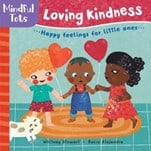
Mindful Tots: Loving Kindness …Happy Feelings for Little Ones

Also available in English/Spanish bilingual, this board book helps toddlers to “wish happiness, kindness and calm for everyone.” The book teaches the ancient practice of loving-kindness medication, which can be taught to children as young as 2 years. “Mindful Tots: Loving Kindness uses simple, straightforward instructions and bright illustrations to nurture compassion, self-awareness, and a strong caregiver-child bond.”

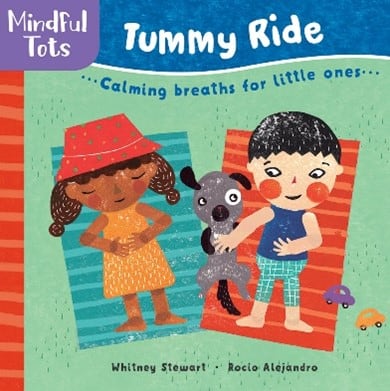
Mindful Tots: Tummy Ride …Calming Breaths for Little Ones

Mindful Tots: Tummy Ride will help your toddler grandchild manage everyday emotions. The instructions are clear and easy to follow. The imagery in this book aids grandparents to enjoy a simple breathing exercise with children as young as 2 years old.

“A must-have for naptime, bedtime, travel, and more, Mindful Tots: Tummy Ride is designed to help small children learn to soothe themselves while laying the foundation for self-awareness and kindness.”

Ages 4+ Years

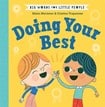
Big Words for Little People Series

As they grow up, children need to learn the words to explain their emotions. This series of books teaches children 4 years and up to recognize their feelings by putting focus on connected words and phrases.

If you’d like to focus on something like Kindness or Friendship, this series can certainly offer it. There is also one on Doing Your Best.

Ages 4 -9

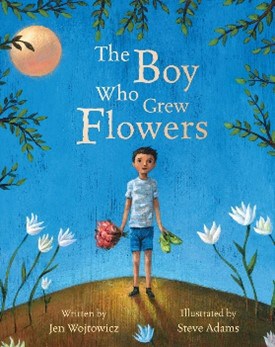
The Boy Who Grew Flowers

The Boy Who Grew Flowers is an excellent book for children who feel they don’t fit in with their peers. And for those children who don’t think they can achieve their dreams. “Inspired by the experiences of her brother, who is on the autism spectrum, Jen Wojtowicz’s heartwarming tale encourages children to empathize with and reach out to others.” Timely, timeless, and enlightening.

My Panda Sweater

My Panda Sweater provides an age-appropriate approach to immigration. It also can be used as a springboard to discuss social-emotional learning topics such as “…bullying, friendship, sharing, new experiences, and self-confidence.”

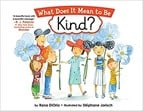
What Does It Mean to Be Kind?

What Does It Mean to Be Kind? is part of the “What Does It Mean to Be” series. All books in this series follow a similar formula, but each title addresses a different aspect of life, giving examples of how a child can be a better global citizen.

What Does It Mean to Be Kind? starts with examples of different definitions for the word “kind.” “Kind’ can mean category, “sort of” (as in “kind of”), etc. But this book makes it clear that it is addressing acts of kindness and includes a myriad of examples.

Some are everyday kindnesses such as holding a door open for others or picking up litter. But many of the examples are refreshingly unexpected such as “…seeing the best in people even when they are struggling to do their best” and “…allowing yourself to make and learn from your mistakes.”

The book concludes with the following wisdom: “Being kind means having the courage to treat others the way you like to be treated. So, show your friends what it means to be kind. And spread the word – if we can all be kind to each other and to ourselves, the world will be more loving, caring, and harmonious.”

This book provides opportunities to have children come up with their own examples of acts of kindness. Then, as a family, you can develop acts of kindness you could do together on a larger scale. The book also invites the reader to empathize with others, have compassion, and understand things from someone else’s point of view.

There is no age limit on kindness, so this book can be used to start a discussion with any grade level. The art is engaging, colorful, and whimsical. I highly recommend this book to everyone in the human race!

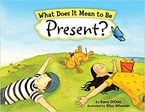
What Does It Mean to Be Present?

What Does It Mean to Be Present? provides an introduction to learning empathy and mindfulness for kids of all ages. It ties in with the mindfulness movement that has become very popular. It is backed by data gathered by scientists and doctors from Harvard and other prestigious schools. In addition, the Hawn Foundation, founded by actress Goldie Hawn, has brought mindfulness to schools through her program “Mind-up.”

Being present means…

Noticing when someone needs help

Waiting patiently for your turn

Focusing on what’s happening now

This book also provides opportunities to have children come up with their own examples of being present. The art is engaging, colorful, and whimsical. Highly recommended.

What kinds of books do you think will prepare your grandkids to return to school? Do you think they need to learn about kindness and friendship? What else might you want to teach them to polish their social skills?

Read More

What Does Evolution Say About the Natural Power of Women After Menopause

post menopausal women are important

Women often underestimate the value of post-menopausal life. I’ve been practicing medicine for 40 years, and many times I’ve heard women talk of their self-doubt after menopause.

They’ve told me: “The best part of life is over…” “I feel irrelevant… nonexistent…” “I’m not important…” “I don’t matter…”

This is too common. Our culture habitually overlooks the significance of older women.

But human evolution shows us something entirely different. For thousands of years, post-menopausal women were major players in the fight for human survival. They changed the course of human evolution!

Here’s what the science shows.

Our Unique Menopause

Did you know that post-menopausal life is very rare in the natural world?

With the exception of certain whales, only women live for long after menopause. All other female animals continue to reproduce until shortly before death.

Chimpanzees that live safely in zoos are known to have babies until near the end of a 60 year life span. Other female primates also stay fertile for most of adult life.

But women seldom give birth after age 45 or 50 — even though they often live, healthy and active, to age 80 and beyond.

What Scientists Ask

Scientists have long wondered about this: Why did human nature develop an extended span of life after menopause? Why do healthy women outlive their fertility by so many years?

Usually, evolution favors genes that promote reproduction. Individuals who successfully reproduce pass on their genes to the next generation. That’s the usual pattern: genes for successful reproduction get inherited again and again.

But a woman’s genes actually stop her reproduction in the middle of adult life! She can no longer reproduce even though she ordinarily has many more years ahead.

Why did human evolution develop this unusual life pattern? What’s so special about post-menopausal life?

The Grandmother Effect

In 1997, anthropologist Kristen Hawkes reported about the year she spent living with the Hadza people of northern Tanzania.

The Hadza lived as nomadic hunter-gatherers, moving season by season. Women dug for tubers and collected fruit, and men hunted and collected honey.

Dr. Hawkes discovered that the health of Hadza children depended very much on their grandmothers. Hadza mothers were often busy with pregnancy and nursing infants, so mothers were less able to care for dependent older children.

Dr. Hawkes reported on this:

“The hardworking, incredibly fit grandmothers, mostly in their 60s took up the slack. What was striking was that these older women were spending more time foraging than younger women were. As a result, the weight gain of children whose mothers were nursing depended on their grandmother’s foraging.”

Previous studies had emphasized the role of male family members to support the family, but Dr. Hawkes noted: “Grandmothers may be doing even more provisioning than male relatives.”

Dr. Hawkes concluded “The bottom line is ‘Grandmothers Matter’.”

Anthropologists have called this ’The Grandmother Effect’ — grandmothers help their grandchildren survive.

Scientists have confirmed this Grandmother Effect in other studies too.

They examined the church records of French Canadians living in the St. Lawrence valley from 1609 to 1709. And researchers studied records from pre-industrial Finland too. Both studies showed that grandchildren who lived closer to a grandmother were more likely to survive.

Research also showed that women living closer to their own mother tended to have more children. The presence of the senior woman strengthened her daughter’s fertility.

How Menopause Evolved

Here’s how scientists think menopause evolved:

Our earliest ancestors likely didn’t have our current pattern of long life after menopause — chimpanzees, apes, and monkeys still don’t.

But, over time, some women began outliving their fertility. These women were still strong and active, but they no longer gave birth. Instead, they supported family survival in other ways (such as foraging to feed their grandchildren!). Families that had the support of post-menopausal women were more likely to endure.

Over time (thousands of years), post-menopausal women were so successful at supporting family survival, that genes for post-menopausal life were passed on to more and more women.

Eventually, the contribution of postmenopausal women had proved so valuable, that genes for post-menopausal life were inherited regularly by all women.

Today, the average woman can expect to live half her adult life after menopause — a life pattern unique in the natural world.

Evolution’s Message

Evolution favoured the power of post-menopausal women – older, wiser women who weren’t limited by the demands of childbearing – mature women with the energy and insight required to do what needed to be done!

For countless generations, these experienced, determined women contributed powerfully, keeping grandchildren alive and family members well. They offered comfort and wise counsel. They cared.

And with their caring, they advanced their family and tribe. Tribes that had post-menopausal women were more likely to survive and grow. Their success ensured that genetic patterns for post-menopausal life was passed on.

As generations of humanity continued to benefit, post-menopausal life lengthened and became as common as it is today.

In this way, human evolution changed dramatically. Post-menopausal women have been important for a very long time!

As a post-menopausal woman, do you feel valued? Is your contribution recognized? Does your life reflect what you truly care about? Are you living what you value? Did your grandmother contribute to your well-being? Your survival? What did you most appreciate about her?

Read More