Month: August 2021

Pore-Refining Primers For a Flawless Pre-Foundation Canvas

Oversized pores are one of the most frustrating skincare woes to deal with, and unfortunately, they also happen to be one of the most tricky to refine and conceal.  And while using a pore-filling primer or mattifying foundation to conceal them is often a good course of action, prepping the skin with a skin-smoothing primer as your base will give you an extra refined base to work with. And, using an oil-controlling primer to help blur imperfections, fill in enlarged pores, and extend the wear time of your complexion products is especially important if you have oily or combination skin.

These game-changing pore-minimizing primers sink into the pores and fine lines, while also working to soften the look of texture, which makes your foundation look seriously flawless regardless of the formula. Best of all, there are plenty of blurring primers that diffuse imperfections like a filter without sucking the skin completely dry. that keep your skin’s oil levels balanced and minimize the look of large pores. As someone who has personally struggled with keeping my shiny t-zone from looking like a straight-up oil slick on the daily and my pores from peering through my foundation for years, I can personally attest to the magical powers of the products below.

Read More

3 Ways to Practice Body Awareness and Prevent Falls (video)

body awareness

According to Your Therapy Source, a place exploring child development, “Body awareness is the ability to understand where our bodies are in space and how our bodies move. Sometimes, if people have difficulties with body awareness, they may appear clumsy, uncoordinated, or have delays in motor skill development.”

We develop body awareness in all stages of life, but unfortunately, we lose some of it as we age. In our later years, being able to understand and develop this awareness of where our body is in space can help with falls prevention, hand-eye coordination, and cognitive development.

Globally, falls are a major health problem. There are over 646,000 fatal falls each year which is the second leading cause of unintentional injury death. One in three people over the age of 65 and one in two people over the age of 80 are at risk of a fall that could lead to serious injury.

Test Your Body Awareness

Are you aware of your own body dimensions and placement in space? To determine your body awareness level, try this exercise:

  • Take a deep breath in and see if you can fill your lower abdomen up. (Imagine filling a balloon up that is positioned in the lower part of your belly.)
  • Now let that breath go (exhale) slowly and feel your lower abdomen slowly descend.

Can you do it? If you are having trouble, try it seated or laying either on your belly or on your back.

Feel Your Body Areas

If you can easily breathe into your lower abdomen, the next step is to feel the different areas of your body while taking an inhale and exhale.

  • What can you feel?
  • Do you feel sore or stiff in any particular area of the body?
  • Do you feel relaxed in another?
  • Can you concentrate on the areas that are sore or stiff and focus on trying to relax into them while you are breathing gently?

Stand Up

If you could manage the above well, the next step is to find a clear space you can stand up.

  • Start by bringing your right leg forward one step then bringing your left leg forward to meet.
  • Then take your right leg back to the start and bring your left leg to meet.
  • Continue these 10 times. Then change the leading leg to the left one. Bring your right leg forward to meet then take the left leg back behind to the start and bring the right back to meet.

Like anything, the more you practice body awareness, the easier it becomes.

Exercise Is at the Root of Falls Prevention

By taking the power of exercise and incorporating body awareness tactics into your daily routine, this goes a long way in keeping the brain sharp and the body fit.

It is well documented that exercise is good for the brain and the heart. It is also great for your body awareness and falls prevention.

Here’s a short video where I discuss the correlation and show several exercises to that end.

The WHO Heidelberg guidelines for physical activity for older persons recommend that virtually all older people should participate in physical activity on a regular basis.

Regular physical activity has been shown to prevent and/or lower an older person’s risk of falling in community and home settings.

Furthermore, exercise, studies show, increases the presence of oxygen within the body, the bloodstream, and the cell.

By oxygenating the body in these ways, exercise – in addition to improving balance, strength, and coordination – lowers blood pressure, reduces cholesterol, decreases risk of diabetes, and generally improves cardiovascular health.

In a nutshell, exercise/movement is great for overall health and vitality.

Rachell offers a free guide on exercising for strong body. You can download it here.

Are you aware of your body’s position in space? Have you noticed changes in your body awareness? How is this affecting your balance? Have you tried doing exercises to increase your body awareness? Please share how they have helped you in everyday life.

Read More

Time Out – The Powerful Benefits of Daily Dancing

benefits of dancing

We all know the importance of taking breaks throughout the day to keep us refreshed and energized. What do your daytime breaks look like? Are they satisfying? Whether you need a break from your work or a brief intermission from sitting too long, wouldn’t you enjoy your breaks more if they made you smile?

The type of break I’m proposing has to do with exercise. But hold on… before you start groaning and thinking this is a ruse to get you into the gym and coax you to develop a positive relationship with barbells, battle ropes and treadmills – it’s not. This break type is better than that – and much more gratifying.

Imagine a fun exercise break that strengthens your muscles, oxygenates your lungs, takes you back to your heart, encourages self-expression, taps into your spiritual side, elevates your mood, and leaves you feeling revived.

Dance! Mash some spuds. Get your groove on with or without a partner. Maintain your rhythm by making dance your daily departure from your to-do list. Begin your interlude any time you need to pause your cause.

Why Dance?

Dance is the hidden language of the soul. 

Martha Graham

Dancing counts as exercise and boasts many health benefits similar to that of other cardio activities. Studies have proved that dancing is a full-body workout. Flow and glow.

Groove to some jammin’ tunes to help reduce your fatigue, improve your circulation, boost your cognitive performance, lift your disposition, and keep you on task. Music, when paired with dance, helps you stand in your power – free to be you! Fill your soul with song and samba your feet to the beat.

I love to dance; although it wasn’t until recently that I began appreciating the amazing health benefits. Beyond the physical advantages, dancing is liberating, entertaining and emotionally uplifting. Taking short dance breaks throughout the day is a body, mind and spirit experience.

Music, dance and pleasure all wrapped up in one hip-dipping engagement! There’s something soulful about song and dance. Hand in hand, they can help you bust through mental blocks and open you up to more. 

Dance Is More Than Exercise

To dance is to be out of yourself. Larger, more beautiful, more powerful… This is power, it is glory on earth and it is yours for the taking.​

Agnes De Mille

Dancing is an effective aerobic choice that can tone muscles and improve endurance, coordination and flexibility, but unlike some strenuous exercises, dancing is gentler on your body. You can practice steps from your tango class, cha-cha or waltz with an imaginary partner, or boogie to your favorite moves from back in the day.

The Pony. The Twist. The Popcorn. The Loco-motion. The Hitchhiker. Now fast forward to Backpack Kid. Do you know how to floss? It might be fun to practice flossing and then flaunt your dexterity in the presence of your grandchildren. They’ll be raving to their friends about grandma.

But as you pause from your usual routine, you don’t necessarily have to model the moves of a particular dance. Free-flowing freestyle is the perfect choice for your short breaks. Allow your inner choreographer to Moonwalk you across the room.

Be imaginative. You could even make your break a multimedia experience. As Elvis Presley belts out in “Jailhouse Rock”: “If you can’t find a partner, use a wooden chair.”

Music choices are highly personal, and you probably already know what tunes will spring you from your sedentary position into the spotlight of your living room floor. Until you have time to organize your favorite selections, here’s an eclectic playlist to help launch your daily break.

Queue Up Your Groovy Music and Rock Your Socks Off with These Classic Gems

  • Strengthen your core and calves to “The Twist” by Chubby Checker.
  • “Long Tall Glasses (I Can Dance)” by Leo Sayer will put a happy face on your dance date.
  • Let your hair down and dance the blues to “Let’s Dance” by David Bowie.
  • “Celebration” by Kool & the Gang may motivate you to express gratitude for yourself. Yahoo!
  • Allow the big band era to enhance your quality of life, beginning with “In the Mood” by Glenn Miller.
  • “Eye of the Tiger” by Survivor may make you feel unstoppable.
  • The guitar solos in “Oye Como Va” by Santana may bring back memorable moments with friends.
  • “Shake Your Booty” by KC & the Sunshine Band can keep your fascia healthy.
  • If you watched General Hospital when Luke and Laura were a hot item, “Rise,” the featured piece by Herb Alpert, will place you in the middle of those steamy scenes and thrust you into a seductive strut.
  • “Rainforest” by Paul Hardcastle may cause your creative juices to flow as steadily as the Amazon River.
  • Imagine yourself in one of the iconic ballrooms of the swing era, as you swivel your hips to “So Rare” by Jimmy Dorsey.
  • Let the good times roll with “Good Times” by Chic.
  • A crabby mood mender, “I Got You (I Feel Good)” by James Brown is the ultimate quick fix to procrastination.
  • “Stayin’ Alive” by Bee Gees may inspire you to imitate John Travolta’s smooth moves in Saturday Night Fever.
  • For the brave and experienced dancer, Walker Murphy’s version of “A 5th of Beethoven” will have you spinning, as your body meets the floor in a basic breakdance routine.

Who said exercise has to be boring and difficult? Cut a rug, jitterbug! Recharge! Spice up your day with short dance breaks to increase blood flow, strengthen your muscles and soothe your soul. Sing along or add your own vocals and laugh out loud.

Fitting in a few unscheduled dance moves during the day will help supply the energy you need to complete your daily tasks and make you feel good. Get your dance on! Exercising is so much fun, isn’t it?

What types of exercise breaks do you take during the day? Would you share two of your favorite dance songs? Which were the most popular dances during your high school years? Which ones did you enjoy the most?

Read More

Melissa Gorga’s Red Cutout Dress

Melissa Gorga’s Red Cutout Dress on Instagram

Real Housewives of New Jersey Instagram Fashion 2021

I think it’s safe to say we really L-O-V-E Melissa Gorga’s red cutout dress that we saw her wearing at an event with some of her RHONJ cast mates recently on Instagram. Now we just need to decide whether we L-O-V-E it more than the white version she wore (or maybe just purchase both to be safe). 


Fashionably,

Faryn


Melissa Gorga’s Red Cutout Dress

Melissa Gorga’s Red Cutout Dress

Click Here to Shop Her Cult Gaia Dress in 5 Colours

Click Here For Additional Stock

And Here For More Stock

And Here For Even More Stock

Click Here For Info on Margaret’s Dress

Photos: @MelissaGorga

Originally posted at: Melissa Gorga’s Red Cutout Dress

Read More

The Pros and Cons of Shaving, Waxing & Laser Removal

Now that we’re knee-deep in summer, one part of your beauty routine is probably pretty high up on your list: your high-visibility hair removal approach. You’ve likely asked yourself, “Should I shave? Wax? Laser off all that pesky hair in my bikini line, underarms and legs?!” If so, welcome to Hair Removal 101.

We all know that keeping our bodies hairless in all the right places isn’t always smooth sailing — all hair removal methods, whether it’s waxing, shaving, or laser has the potential for issues like nicks, bumps, ingrown hairs, and…general discomfort. Let’s take a cursory look at the multitude of removal options, and with them, the different levels of pain, commitment, expense, convenience and perhaps most importantly, longevity.

And as always, remember that how much hair you remove, if at all, is up to you and there’s nothing dirty or unsightly about body hair. It’s normal! It’s natural! So, you do you always. But if you do decide to jump into hair removal, these tips will help.

Our mission at STYLECASTER is to bring style to the people, and we only feature products we think you’ll love as much as we do. Completely Bare and Bella Verde are STYLECASTER sponsors, however, all products in this article were independently selected by our editors. Please note that if you purchase something by clicking on a link within this story, we may receive a small commission of the sale.


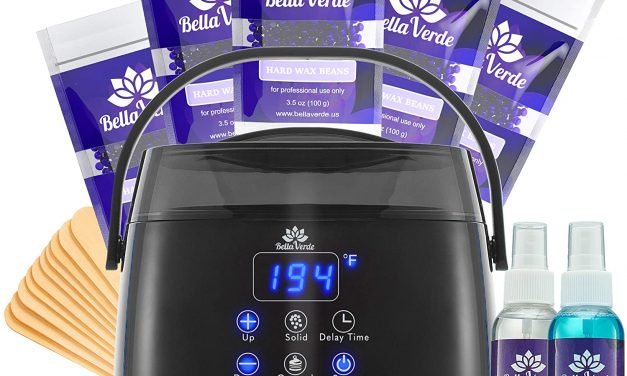
wax warmer home waxing kit

BELLA VERDE.

Waxing

How It Works: Hot (but not too hot!) wax is applied to the desired area and removed in the opposite direction of the hair growth, pulling hairs out from the root.
Best For: Legs, underarms, and bikini areas, and great for those with coarse, darker hair that tends to be stubborn.
Pros: Temporarily removes hair at the root for an average of three weeks of smooth skin, which can range from two to six weeks depending on your hair type and thickness.
Cons: Waxing requires some regrowth in order to be effective, as the wax needs at least a quarter-inch of stubble to adhere to. Treatments can be moderately painful, as hair is indeed being ripped out at the root, but it becomes more tolerable over time. Waxing can also result in ingrown hairs.
Average Cost: Anywhere from $15-80 for salon waxing, depending on areas waxed and your salon of choice. Or, you can go for at-home options, such as Bella Verde’s Wax Warmer Home Waxing Kit.
Tips: “Don’t drink and wax,” warns Noemi Grupenmager, founder and CEO of Uni K Wax Centers. “Some people come in after consuming alcohol thinking it’ll ease the pain, but alcohol tightens pores, making it much more painful.” Stimulants, like coffee, can also increase sensitivity, so be sure to remember this if you DIY.

gilette venus razor

Gillette.

Shaving

How It Works: Shaving removes hair from the skin’s surface by cutting it off with a razor.
Best For: Legs, underarms, and those with lighter, finer hair.
Pros: Inexpensive, painless, quick, and easy; and shaving creams used can help moisturize the skin, keeping it soft.
Cons: Regrowth happens quickly, and because hair is cut off at the surface, regrown hair is blunt, not tapered, so it can appear thicker. Razor burn, nicks, and cuts are possibilities, and those who shave regularly can also become prone to ingrown hairs.
Average Cost: Razors and shaving cream can be inexpensively purchased at any grocery or drugstore.
Tips: For those who can’t quit their shaving habit, “growth reduction” products promise to help inhibit hair regrowth, thus reducing the frequency of shaving required.

easy OFF Foaming Hair Removal Spray

Completely Bare.

Depilatory Creams

How It Works: Hair removal creams use chemicals to weaken the hair follicle, so you can effectively wipe it away.
Best For: Those who want quick, easy, relatively painless at-home results. Depilatories are most popular for facial hair, bikini lines, and underarms.
Pros: Can be done at home, and removes hair just below the surface of the skin, ensuring slower and less coarse regrowth than shaving.
Cons: Chemicals in these products can irritate sensitive skin, particularly in more delicate areas. These creams are infamous for their odor, and can also lead to ingrown hairs.
Average Cost: Around $6-$12 for a tube of cream or spray-on depilatory lotion.
Tips: Choose a cream suited for the specific area you’re treating—and maybe light some scented candles in the bathroom to mask the strong smell most of these products tend to have. A solid option is Completely Bare’s Easy Off Foaming Hair Removal Spray, which comes in an easy-to-apply foam that washes off in the shower.

Permanent Hair Removal, MiSMON IPL Laser Hair

MiSMON.

Laser Hair Removal

How It Works: Laser penetrates the skin to target the hair shaft and inhibit hair growth. It essentially destroys the follicle, meaning it can achieve permanent removal. Typically, the hair in treated areas falls out within 2-3 weeks.
Best For: People with hair darker than their skin—while professional dermatologists can vary the type of laser used, laser targets the melanin in the hair, so it’s not suited as well for people with dark skin or pale hair. The laser needs to be able to lock on to the dark pigment in order to differentiate the dark hair from the skin.
Pros: Great for long-term hair removal in all areas. “It causes no damage to the dermis, so even the most sensitive skin can be treated,” says New York dermatologist Dr. Ariel Ostad.
Cons: Laser hair removal can be painful, with most people describing it as a “snapping” sensation against the skin, as well as a sensation of heat from the laser. Also, it requires numerous visits to a dermatologist for best results. “It is important to go to a dermatologist who can offer different lasers which are customized to the patient’s skin color and hair color,” says Ostad.
Average Cost: $150 to $500 per treatment, with an average of six sessions recommended, depending on the area being treated. Several cycles of treatment are usually recommended to capture the hair follicles at different stages of the growth cycle. Some people require touch-up treatments to maintain, especially on larger areas.
Tips: While it may seem expensive, in the long run, many consider laser removal to be an investment that can pay off. “It is the most effective and cost-effective treatment, considering how much one can spend over a lifetime with options such as waxing or electrolysis,” says Ostad.

Finishing Touch Lumina hair removal The Pros and Cons of Shaving, Waxing & Laser Removal

Finishing Touch.

Electrolysis

How It Works: Electrolysis uses a fine, needle-shaped electrode to apply an electrical current to the hair follicle.
Best For: Small areas such as the eyebrows, upper lip, and underarms, as it treats each hair and follicle individually, which is time-consuming and can get expensive.
Pros: Can permanently remove hair and is suitable for very fine and light-colored hair, unlike laser, which works best on darker hair.
Cons: When improperly done, electrolysis can lead to scarring or skin discoloration. Treatments can be uncomfortable and cause a “stinging” or “pricking” sensation, and as with laser hair removal, permanent results require multiple sessions.
Average Cost: Around $25 to $150 an hour.
Tips: Dehydrated follicles can be more difficult to treat, so be sure to drink plenty of water the day before, the day of, and the day after your treatment.

hair removal 101

Adobe. Design: Cierra Miller/STYLECASTER.

STYLECASTER | Ashley Benson Interview

Read More