
Month: September 2021

Does Owning and Caring for Less Stuff Mean Less Stress?

less stuff less stress

I’ve always been somewhat of a minimalist myself, so my own experiences probably aren’t a good representation of the whole. After all, me being more comfortable and less agitated when my living space is small and devoid of clutter could just be my personal preference.

Let’s face it, most people love their stuff. From furniture and clothes to books and holiday decor, many consider their possessions to be a fine collection of a life well lived. However, recently everyone has been talking about how reducing possessions can help reduce stress and anxiety.

Downsizing, decluttering, and divesting have become all the rage. Tidiness gurus like Marie Kondo and Joanna Gaines as well as dozens of celebrities have touted the joys of minimalism. So, could it be true for more people than me? Could carrying fewer possessions through life actually have a positive effect on mindset and mood?

You Don’t Have to Be a Minimalist

Through my work at Simple Life, I’ve met dozens of people who have transitioned into cottage homes from something larger. Many folks start out not knowing if they can “actually do it” – they aren’t minimalists or even tiny home enthusiasts. They are just regular people looking for a way to live a more stress-free lifestyle.

It’s been amazing to witness first-hand people getting happier by living lighter. I can see it in the way they walk and talk. Our residents – my friends – are more relaxed, more content, and happier after choosing to downsize and live with less. My work has caused me to become a full believer that less really is more and having fewer possessions can help relieve stress for almost anyone.

Beating the Overwhelm

I recently talked to one resident who was particularly overwhelmed by the prospect of downsizing. She lived in a large house for over 20 years and although her accumulated possessions were a source of major stress, when she looked around, she felt so inundated she couldn’t even see a place to start.

As she remembers it, one day she got so fed up she pulled open the nearest drawer and dumped everything out on the floor. She sorted the contents into three piles; keep, donate, throw away/recycle. There was one thing in the ‘keep’ pile, one! A snapshot of a trip with a friend from years gone by. The rest went into the throw away pile.

And just like that, she had started. She experienced a huge sense of relief. It took her about four months to fully downsize, going through each room and taking it one step at a time.

She recalls that some days were pretty boring, but some days were exquisite. Throughout her journey, she uncovered some very special pieces, photos, and memorabilia that had been buried away for years. At the same time, she donated items to people and places that needed them.

Looking back, she says she can see the process of downsizing was truly cathartic. Her stress and anxiety lifted a little more each day as she methodically rid herself of unneeded possessions. Now she is careful to surround herself only with things that truly bring joy. As she says it, “Marie was on to something!”

Four Biggest Stress Relievers

My friend drilled down on four specific things she believes relieve the greatest amount of stress for her now.

Downsizing to a Smaller Home

Less clutter isn’t the only source of stress relief; the actual size of her new home makes a big difference. With less space overall she has less to manage. Her home has fewer rooms to clean and a more compact yard. She expends less time and money maintaining her home and property, and more on experiences that make her happy.

Fewer Things in Storage

It was driving my friend crazy that she had a large house full of stuff and she was paying for a storage unit. Looking around her house caused overwhelm she says but visiting her storage unit almost brought her to tears. Reducing her possessions enough to get rid of the storage unit and have all her things inside her home greatly reduced her anxiety.

More Control of Personal Finances

My friend was never a great accountant and keeping track of her expenses and filing taxes every year was always a major stressor. Through downsizing she came across documents that she knew she had but wouldn’t have been able to place.

Now those items are organized and easier to access when requested. Plus, the process helped her get rid of bills and financial statements that were almost as old as her grandchildren.

Becoming Aware of How Your Space Affects Your Mood

My friend said it best. “Just as clutter is self-imposed, so is self-appreciation.” Now when she thinks of taking care of herself – reducing stress – she thinks of her overall health, her mental health, and her physical space.

She says she now encourages others to create a life that is peaceful and organized and the stress will find there is nowhere to hide in your house or your life!

Do you think reducing stuff can reduce stress? How do you keep your head – and you home – clutter free? Share your secrets for the benefit of all!

Read More
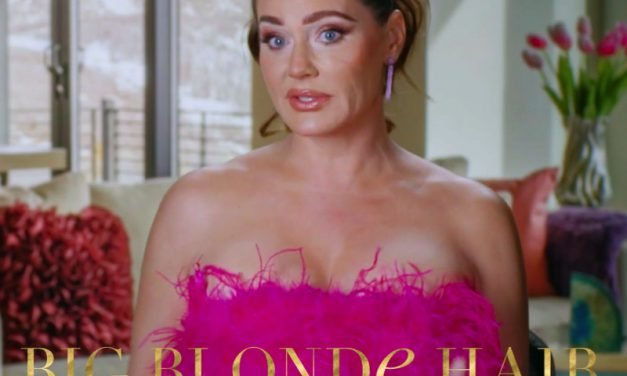
Meredith Marks’ Pink Feather Confessional Top

Meredith Marks’ Pink Feather Confessional Top

Real Housewives of Salt Lake City Season 2 Fashion

I think we can all agree that Meredith Marks’ pink feather lewk in her Real Housewives of Salt Lake City confessionals this season is absolutely perfect. So perfect that nothing and no one (*cough, Lisa Barlow and Jen Shah*) could even attempt to ruffle it. 


Fashionably,

Faryn


Meredith Marks’ Pink Feather Confessional Top

Top By @PaolaEstefaniaOfficial

Earrings By @ShopMeredithMarks

Makeup By @BrooksMarks

Hair By @NaomiMartinez.Beauty

Styling By @TheMatthewAlexander

Info: BravoTV.com

Originally posted at: Meredith Marks’ Pink Feather Confessional Top

Read More

Jen Shah’s Colorblocked GG Logo Tracksuit

Jen Shah’s Colorblocked GG Logo Tracksuit on RHOSLC

Real Housewives of Salt Lake City Season 2 Episode 2 Fashion

While we know we may catch some flack for reporting on Jen Shah in this $3390 colorblocked GG logo tracksuit, please note that we are investigative fashion reporters covering Housewives style and not the Salt Lake Tribune reporting on pending legal cases. So with that being said, keep scrolling if you would like to shop the real thing or some equally arresting Style Stealers below.


Fashionably,

Faryn


Sweatpants Also Seen on Tracy Tutor:

Jen Shah’s Colorblocked GG Logo Tracksuit

Jen Shah’s Colorblocked GG Logo Tracksuit

Click Here to Shop Her Gucci Track Jacket

Click Here to Shop Her Gucci Sweatpants

Click Here For Additional Stock

Photo #1: @HeatherMcDonald

Originally posted at: Jen Shah’s Colorblocked GG Logo Tracksuit

Read More

How to Start Writing Your Memoir

Writing-Your-Memoir

In a previous article, I wrote about how to structure your life stories. So, what do you do next?

After you gather all necessary materials, following one of the previously discussed structures, it is time to start writing the short of your life story or memoir.

What Is My Memoir or Life Story About?

Read through the notes you have been gathering, and ask yourself, “What aspect of my life is my memoir or short story about?” For example, it could be about overcoming an illness or a death, moving, going back to school, changing careers, etc.

A memoir focuses on something you went through that changed you as a person. In contrast, an autobiography is a chronological account of your life to date. Keeping those differences in mind, you can still incorporate many aspects of your life in a memoir through the use of flashbacks.

If you are just having an “a-ha” moment and realize you are writing an autobiography instead of a memoir, don’t hit delete. You can still use the following guidelines for the structure:

Visualize Your Story

The first step is to visualize your story. Visualization is a powerful tool – it helps make the final product real. Place the visualization of your story on paper by creating a story arc.

How to Create a Story Arc

Draw a huge arc on a piece of construction paper, and note the major events in your story from beginning to end. Sometimes, the shape will change as you begin to write, but it is important to have a shape in order to begin.

I have found that those people who try to write without the story shape may not have finished writing even 10years later. Please don’t let that happen; you owe it to yourself to write your story!

Here are four important parts of the story to identify on the arc:

Beginning

First, ground the story by describing the location, time, date and year the story begins, and introduce the main character (you).

Second, point out the theme of the story/memoir by writing about an incident that led to the story occurring. We refer to this incident as the ‘trigger’. It could be packing your suitcase and leaving your husband. It could be buying a one-way ticket to live in Costa Rica. It could be the diagnosis of a serious illness.

After you introduce the trigger, continue writing about the events that followed and the events that preceded the trigger through the use of flashbacks.

Flashbacks

Flashbacks give you the opportunity to write about those stories in your life which influence the theme of the memoir or life story. If you moved a lot in adulthood, you might find it important to describe how you were used to moving a lot as a child.

Although a memoir is primarily about a major incident in your life, there are still plenty of opportunities to include stories about your childhood, roots and past incidents that affect the main story. Flashbacks are the best way to accomplish that.

Story Climax

The climax is that point in your life story where you come to a crossroad. It is at that crossroad that you will make a major choice that will change the course of your life.

For instance, you leave your job, train in a new field, and take a job in a foreign country. Or, after fighting a life-threatening illness, you decide to live your life differently than you did before you became ill.

Conclusion

Your life story should end with the result of the choices you made. What did you learn? How did you grow?

Theme, a.k.a., What Is the Core of My Story?

Identify the theme of your story by asking yourself, “What do I want to achieve in the story or memoir?” This is the tread that holds your memoir together. By identifying what you want, you will see your objective clearly, and it will become easier to decide what stories to use and what stories to remove.

The objective can be getting healthy, if the story is about overcoming an illness. Or, you may want to retire in a foreign country, and so your book will be about the stages you went through to achieve that goal.

When you identify your intentions for the memoir, you will be able to see more clearly how that journey started, the obstacles you faced, how you overcame those obstacles and how you concluded that episode of your life.

Now, Be Tough!

Write the first and last paragraph in your memoir. This is usually the moment when my students groan. Recently, a student even growled at me, but she still wrote the paragraphs and was then pleased that they helped her to see the shape of her story.

You can rewrite these paragraphs as your book evolves, but it’s important to write them first. They will be your guides for what lies in between.

My next article will cover how to create the scenes between the beginning, climax and end of the story. But for now – good luck and write daily!

Have you started writing your memoir or life story? How far did you get? Have you experienced any difficulties? What suggestions can you offer to others who want to attempt writing a memoir? Please join the discussion below!

Read More

Could 60 Be the Best Time to Rethink How We Handle Stress? Yes – Here’s Why!

How-We-Handle-Stress

Women are different from men physically,
mentally and emotionally – that’s no big
surprise. We know it from personal experience, which science has then supported
over many years.

No surprise either that women handle
stress differently from our male counterparts – but, unfortunately, not in a good way. How we typically process
stress adversely affects our health and longevity.

Pace of Life Creates Stress

For men as well as women, the pace of
life has outstripped our brain’s ability to adapt, according to Dr. Amit Sood, retired professor of medicine at
the Mayo Clinic and founder of the Clinic’s Resilience Program.

That feeling you often have as your
day whips by – that there’s too much to do and too
little help to do it – is accurate.
You’re far from the only one. We are all suffering from a sense of less control
over what goes on in our day-to-day lives, which is a primary and critical
cause of stress.

Women Process Stress Differently Than Men

When it comes to how women handle
stress, researchers at the Yale University School of
Medicine found that women tend to view – and review – in our minds
whatever caused us stress.

It could be that we were late to an
appointment, a grandchild couldn’t be soothed, we can’t seem to shed pounds, a
project failed, or we had an argument with a loved one.

This continual and repetitive
processing of the stressful experience causes stress on top of the original
stress. No wonder we’re exhausted so often.

Men, on the other hand, generally
tend to go into problem-solving and action mode after experiencing stress. They
plot and plan and figure out what to do about the stress rather than simply
re-imaging it as women do.

This would be merely an interesting fact if it weren’t
for the consequences on our health and longevity. Stress is not good or bad in
and of itself. It’s the obsessing over the stress that kicks our body’s normal
and natural “flight or fight” response into overdrive.

Instead of a momentary, elevated inflammatory response
to support our immune system through a trying time, when we revisit our stress
over and over, our system continues to pump out emergency support in the form
of immune cells.

The over-production of these cells interferes with our
bodies’ healthy tissues, which can lead to chronic inflammation. What
started as a good, protective immune system function becomes a destructive,
harmful one.

The upshot of all this? Chronic
inflammation contributes significantly to health problems such as cancer, heart
disease, obesity, and more specifically, age-related conditions such as frailty
and cognitive decline.

I don’t
know much more about Ruth Westheimer, 91, a.k.a., “Dr. Ruth,” than what’s
available in the public domain, but I would bet that she has found a successful
way to deal with her stress.

Most
of us know of Dr. Ruth as a sex educator with a witty, fun way of sharing her
wisdom and expertise over her many years on TV. But before that, Dr. Ruth lost
her parents in WWII, trained as a scout and sniper in 1948, and was wounded in
action.

She
eventually migrated to the U.S. and became a therapist, media personality, author
of some 40 books, and a mother of two and a grandmother of four.

Her most recent book, Roller Coaster Grandma, published in
2018, is an autobiography written for ages 8–12. There’s no way Dr. Ruth
would have been capable of such a full and rewarding long life if she hadn’t
figured out a healthy response to her various stressors.

Destressing Steps

How
can you better manage stress?

First,
when stress is triggered, practice going quickly into problem-solving mode. One
technique that has worked for many women is to write down the stressor and why
it bothers you in one column.

In
a column next to it, write down possible solutions or actions, point by point,
to deal with the stressor. Then, take the required steps.

Second,
recognize that stress is an inevitable part of life. Today’s stressors are just
different from those of yesteryear. Take breaks from social media, don’t
over-schedule yourself, create a list of resources or people you can ask for help
when you’re feeling alone and overwhelmed.

Life
is meant to be enjoyed, not a burden to be endured. Learn to deal with your
stress differently and give your health and longevity a welcome boost.

What
are some common stress triggers in your life? What have you found that works to
reduce stress? Do you feel you are more stressed now than when you were
younger? Why? Please share your thoughts with our community.

Read More