Month: September 2021

You Don’t Need a Facelift – But, Your Concept of Midlife Certainly Does!

facelift-midlife

Once we pass 45 or 50, it often feels like the beginning of a slippery slope towards decline.

Birthday cards telegraph that the best part of life is behind you. Anti-aging products are targeted at you. Articles point out how out of touch you’ve become with some newfangled piece of technology. It’s as though some time bomb went off and suddenly your best choice is retreat or submission.

Forget your facelift. It’s time midlife got a facelift!

This mode of thinking, this belief system embedded in our culture, does little more than cause suffering. And it’s so unnecessary. I recently gave a talk at a local hospital. The health care setting inspired me to think about this suffering through the lens of a doctor. So I diagnosed us (our culture) with “Cultura Lagosis.” Sounds awful, right?

We are suffering from the results of a culture living according to outdated belief systems. Social Security was created during the Depression when life expectancy was about 58. So 65 was old! That definition of 65 as the ‘right’ age for a senior citizen was based more on economics than physiology. But now, life expectancy hovers around 80. Using the same thinking, today’s senior citizen would be around 83. Why do we remain stuck? Cultura Lagosis.

Author Ashton Applewhite writes about ageism and particularly its effect on our workforce. A million and a half people over 50 are unable to find jobs, and many just give up. In a New York Times column back from 2016 she wrote: “In Silicon Valley, engineers are getting Botox and hair transplants before interviews – and these are skilled, educated, white guys in their 20s, so imagine the effect further down the food chain.”

“Cultura Lagosis” is damaging to people of every generation, and it needs an antidote. It starts with acknowledging our increased life expectancy and what this longer life means, and amplifying the message that ageism is at the core of our cultural lag.

Here are my tips for taking control of your midlife so you can thrive:

Live Life in Stages Not Ages

It’s time we let go of the focus on a number and live according to the stage we are living – student, entrepreneur, parent, caregiver. At 56, Dana is walking down the aisle for the first time with a baby in tow; Mitch, at 53, left a legal career and is combining corporate training with his love of improvisational theatre; Mary, at 70, is figuring out how to tell her gentleman friend that she’s seeing someone else!

These people are experiencing something far from crisis, stagnation or decrepitude. They listened to their internal voice and are living in accordance with their stage, not any archaic idea of what’s acceptable at their age.

Be the Author of Your Life Story

You, and only you, should be authoring your story. Think of your life as a book made up of chapters, with various themes and a whole cast of characters. When we lived according to our chronological age there tended to be three primary chapters – education, work/family, and retirement. The reality is that life is a much more interesting story than that. Is it time for an edit?

Befriend and Beware the Gremlins

Writing your story means that you are taking responsibility for the choices you’re making. That’s a courageous act that often brings out the Gremlins – those self-limiting voices we all have in our heads. In some ways they are meant to keep us safe. They say, “Don’t do that, you might lose your job!” In other ways they hold us back from making courageous choices.

These little gremlins whisper to us that we can’t, that we aren’t good enough or rich enough or attractive enough. It’s high time to know when to listen and when to talk back to your inner gremlin and tell her to move along.

Consciously Curate Your Life

In order to have the clarity to make courageous choices, we need to have the time and space to figure things out. And that means we need to say “No.” Did you know there are 250,000 books on “how to say no” on Amazon? It’s time we stop being good girl pleasers and speak our truth. We have to stop seeing busy-ness and exhaustion as a badge of honor and start building a life based on our own choices we are willing to stand for.

Here is one quick tip to help start curating your life. For everything you say “yes” to, take a moment and identify what you are saying “no” to. For example, today I said yes to cooking healthy foods for the week. I said no to a friend who wanted to catch up and walk together on this beautiful day. Hard choice, and it was hard to say no to my friend, but I’m clear on my priorities and setting myself up for a healthful week was most important today.

What courageous choice are you ready to make? How are you redefining life in your 60s? What changes are you ready to make in order to be the author of your new life story?

Read More

Think You’re Not Creative? Think Again!

creative older woman

Let the beauty we love

be what we do.

There are a million ways to kneel

And kiss the ground.

~Rumi~

There are so many great things about being a woman of this certain age – what stretches out in front of us are our most creative years.

Every woman is creative. There is always something that she is doing that is steeped in creative process, and usually, there is more than just one thing.

We tend to look for the obvious when it comes to creativity: painting, quilting or writing. But there are other forms as well, different from art and crafts.

Do you see yourself as creative? If you don’t paint or make quilts, do you recognize your creative tendencies? Here’s my list of creative types who don’t fall into the category of art, and yet are real artists:

The Cook

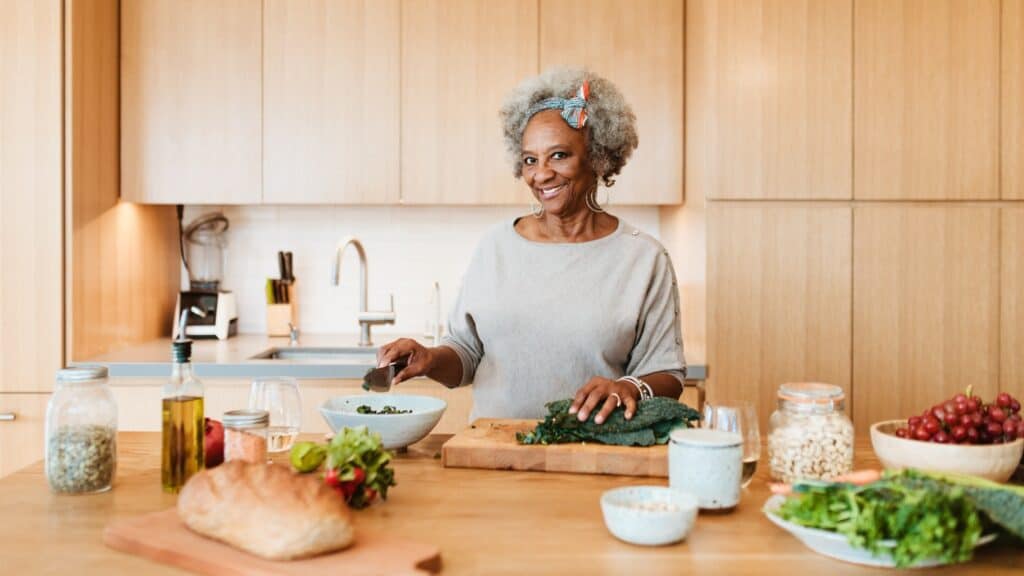
The cook is part alchemist and part Queen of the Harvest. She prepares that which physically and emotionally nurtures you. Have you ever met a good cook who wasn’t motivated by the expression of loving others through the act of feeding them?

cooking at home small servings

The Observer

A friend of mine had a series of medical treatments in front of her. Each day, as she walked to her appointment, she took pictures of flowers with her phone. At the end of the day, she posted them on Facebook.

I couldn’t help but see the metaphor of healing as unfolding blossoms. A keen eye had captured the beauty that surrounded her at a challenging time. This draw to observe the world and name it in words or in pictures is beautifully creative.

The Flexibility Coach

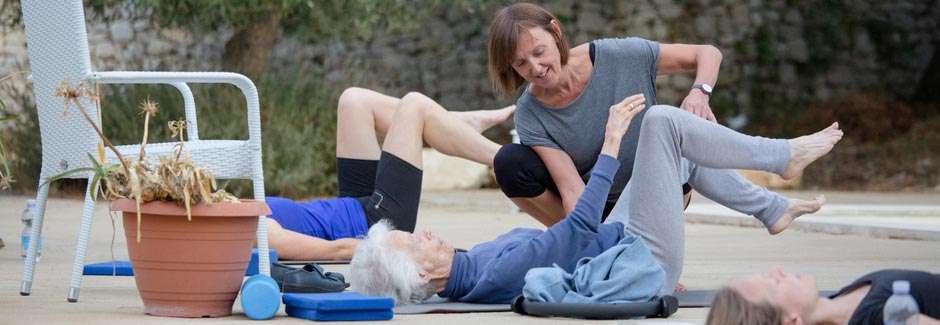
Do you know a yoga teacher or a Pilates coach? What incredibly creative people! These teachers, in working with aging bodies that may be challenged by arthritis or old injury, still find ways to help the body articulate, flex and strengthen.

Even though my arthritic back won’t move in the way that it used to, my teacher finds ways to stretch and tone my somewhat compromised musculature, allowing my life to be virtually free of pain.

The Librarian

One of the great privileges of my 60s is that I get to sit on the board of the University library. Each month when the board meets, we are led by a dynamic president who knows how to motivate and inspire. How does she get so much business done in so short a time?

Our meetings never go over the allotted hour. She is a creative magician who has taken the experience of her life’s work and now gives it in service to her community. You can find these creative types running all kinds of non-profits and boards in their community.

The Gardener

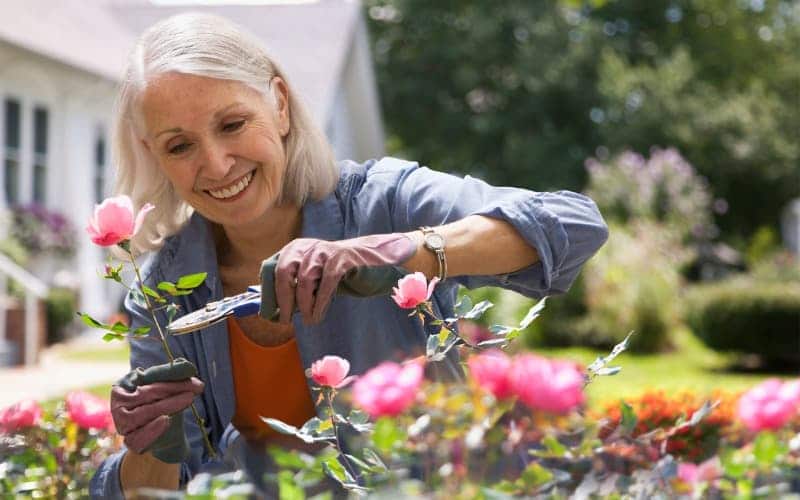
Some people might call gardening a hobby, but gardening is really a contemplative art form. The Queens of the Growing Lands bring beauty with flowers and sustenance with food.

Carefully tended beds whose blossoms radiate a cause for appreciation easily seduce one. And rows of tomatoes, chard and beans are, in my estimation anyway, the real importance and pulse of life.

Jobs for Retirees - Gardener

The Bookkeeper

The mysteries of the universe are written in numbers. There is a beauty to mathematics and how it unlocks the secrets of eternity. I may wax philosophical, but the woman who keeps my books is no less a wizard than Gandalf.

She puts things in rows and columns, in order and in form so that at the end of the day, it all makes sense. Mathematicians are highly creative beings working from a different side of their brain.

Every one of us is creative. We mirror the creative life force that is all around us and in us. Embracing our creativity is a way of saying that we want to stay curious, to learn, to be open and amazed by each other and ourselves. Embracing our creativity is nothing less than stating, “I love being alive.”

I know that I am surrounded by creative women on Sixty and Me. My deepest wish is that you see how creative you all are in your life.

So, tell me, what kind of creative person are you? Do you find joy in the expression of sculpting or in your kitchen? Are you creative in math and logistics, or does your creativity come from your ability to tell stories to your grandchildren? Please share your thoughts in the comments.

Read More

How Reading Books Can Wake Up Your Brain After 60

brain health after 60

Are you one of those people who, no matter how much you are enjoying it, simply cannot wait to finish the book you are reading when another interesting title catches your eye? Me too. Unfortunately, a busy schedule limits my dedicated reading time. So what’s a bibliophile to do?

Simple. I read multiple books at the same time.

Some of my friends exclaim, “I don’t know how you can do that! If I tried to read more than one book at a time, my brain would explode.”

Well, since I do perform this brain-multitasking feat on a daily basis, I thought I’d do some research to determine whether it really was hurting – or helping – my cognitive abilities as I age.

Information, other than individual opinions on the subject, was difficult to find. Of course, any search including the term “multitasking” brings up a plethora of negative articles claiming how dangerous this can be, like texting while driving.

“Split-focus” was another term I came across often, which, it is claimed, reduces focus and productivity. I even found several bloggers who claimed it was a disgrace to “cheat” a wonderful book out of your full attention.

Then I learned a brand new term for the habit: “poly-reader,” as opposed to a monogamous or serial reader.

Is It OK to Read More Than One Book at a Time?

Wow. I didn’t know reading more than one book at a time placed me in the non-monogamous category. So… I’m cheating on the first book with the second and third? Or is it more like polygamy, where all the books willingly consent to share my attention?

Then there’s the question of multiple media: physical book vs. eBook vs. audiobook. Can you mix these without the dose becoming lethal?

I say these theories are hogwash. First of all, I not only have at least two or three physical books on my nightstand at all times, but I also have a Kindle app on my phone (I know, this is really bad for my eyesight. But that’s a subject for another post…).

Since I’m also a huge fan of audiobooks, I virtually never listen to music on my car radio. I’m always listening to a book.

Interestingly, there has been some scientific research on how the brain responds to reading a physical vs. and eBook. From this 2009 article by Jonah Lehrer on ScienceBlogs, I learned that different parts of the brain respond differently to different types of text.

According to Lehrer, “one of the most interesting findings regarding literacy and the human cortex is the fact that there are actually two distinct pathways activated by the sight of letters.”

Researcher Stanislas Dehaene studied people’s brain waves under fMRI, and concluded that text in a familiar format, i.e., the printed page, stimulates the ventral reading pathway. This allows the reader to decipher and understand the content effortlessly.

When the format changes, however, as text on an eReader or computer screen, another part of the brain is triggered: the dorsal pathway. This is the more simplistic, basic process, and it’s the way we all learned how to read – by sounding out the syllables.

Why the Brain Loves Books

In layman’s terms, when reading a physical book vs. an eBook, the words are transported into our brains via two completely different pathways.

So, how can this be bad? We exercise our bodies in multiple ways, don’t we? It seems to me that exercising our brains in multiple ways can do nothing but help keep our minds in shape – and sharp.

Then we move on to the third medium: audiobooks. Now we have a whole different set of cognitive processes going on. I found some sources that claimed listening to an audiobook vs. reading one was “cheating.”

The foundation for this theory is that listening turns an active process into a passive one. But the author of this article on The Science of Us, Melissa Dahl, disagrees.

She cites science writer Olga Khazan, who noted in 2011, that a “1985 study found listening comprehension correlated strongly with reading comprehension.” So no, listening vs. reading isn’t cheating. It’s just absorbing the information via a different sensory route.

Listening to Audio Books Is Just Like Brain Exercise

Again, how can this be bad? By listening to an audiobook, we are utilizing yet another part of our brain. Exercising it. Exercise is good.

But now, the real question is, what about us poly-readers? What about those of us who not only partake of multiple forms of reading material, but more than one at the same time? Are we breaking some moral code? Are we totally overloading our brains and running the risk of burning out a neural pathway?

I don’t think so, and neither does Eddie Wharton, as he claims on his Working Theory blog. Most of the books Wharton reads are nonfiction, and he claims that reading more than one at a time has had three distinct and unexpected benefits, namely:

  1. He enjoys reading more.
  2. He finds himself “stumbling on new insights.”
  3. He “progress(es) through them all slower. The books have more time to bounce off of different life situations.”

And finally, in this wonderful article on AgileLifestyle, author Tony Khuon describes this kind of voracious reading as “more like a superpower.”

Since 2012, he has consistently reached his goal of 150 books in one year. He recommends, when reading books in parallel, to select three different kinds of books, i.e., a genre novel, a literary work and a nonfiction title.

That is exactly what I do.

Different Genres for Different Devices

The book(s) on my bedside table are nonfiction, craft books that help me to improve the novels I write. The book on my Kindle app is a genre fiction, usually one a fellow author has asked me to read and review. The audiobook booming out from my car’s speakers on my commute is usually a literary title or a classic.

I turn 60 in just a few short weeks. So far this year, I’ll bet I’ve “consumed” almost a hundred books in their various formats, though I haven’t kept count. Do I feel sharper, and smarter, and more motivated? Yes, indeed, I do. I walk, do yoga and ride a horse to exercise my body, and I read – profusely and diversely – to exercise my brain.

Are you a monogamous or a poly-reader? Do you enjoy books in multiple formats, or primarily one? I’d love to hear your thoughts in the comments below.

Read More

Kristin Cavallari’s Black Sleeveless Bodysuit

Kristin Cavallari’s Black Sleeveless Bodysuit on Her Instastories

Kristin Cavallari 2021 Instagram Fashion

Kristin Cavallari was ready to party in her black sleeveless bodysuit. She was celebrating the holiday weekend and wearing  yet another Labor Day lewk that we loved.  I mean you can never go wrong with a solid bodysuit. And on top of that it can be worn really in any season. So even though summer might be on it’s way out the door, a new bodysuit can still be on it’s way in.


Sincerely Stylish,

Jess


Kristin Cavallari's Black Sleeveless Bodysuit

Click Here to Shop Her Enza Costa Bodysuit

Photo Credit: @kristincavallari

Originally posted at: Kristin Cavallari’s Black Sleeveless Bodysuit

Read More

5 Guideposts for Developing Patience and Reducing Stress After 60

Reducing-Stress-After-60

Decades ago, I decided that it would be my major intention in life to develop more patience. As a result, I am always mindful of my pre-disposition to lose patience with people, places, things, and most of all, grocery store check-out lines.

But the good news is, I am making progress and finding more peace and less stress, even when purchasing groceries.

Patience is a coping skill I find increasingly challenging to develop in the age of instant gratification. Since the onset of the electronic age, the preponderance of gadgets (phones, texts, email, Amazon Now) has encouraged an expectation that nothing less than speedy responses will be accepted.

Answer the phone on the first ring. Why does it take so long for that woman to count her change? I sent you a text an hour ago. Everyone in your universe is responding at a snail’s pace and causing you stress. Help!

I was caught up short this summer, when I visited my oldest and best friend two weeks ago. I was trying to finish my novel, and Pat was ever present with her council.

“Have patience, Joan. You won’t be able to get through this process if you don’t see the long distance. There is an end coming, but there is a way to get to that end gracefully.”

Wise words. If you have a friend, mentor or family member caution you that the end is not the most important part of the process, you understand that process is part and parcel of the end result.

The following are 5 guideposts that will help you re-direct the emotional attachment to instant gratification and develop more patience.

Transform Frustration with Patience by Letting Go

When a friend, or even someone you don’t know, makes a remark to “Have patience,” it might aggravate or offend you. You think, How dare that person intrude on my space and my feelings of self-righteousness?

But not everyone moves at your pace – the waitress doesn’t come to the table in a timely fashion, the people buying tickets at the movies take too long.

Your ability to let go and release the negativity from your heart, turning inward until your needs are met is crucial to understanding practicing patience. It’s emotionally freeing and a powerful practice that can move you into meditation until you receive the gratification that you are searching for.

Turn the Negative into a Positive Patience

When things aren’t moving the way you want them to, when frustration obstructs you or renders you ineffective, when you have to delay gratification, your first response is to get angry or be disappointed. Yet, this is an opportunity to turn the negative into a positive.

Take those uncomfortable moments to recognize your vulnerability and cultivate strength of purpose and emotional honesty. Re-set a mantra or an intention, shine light on your family and their needs. Meditate on giving gratitude, possessing joy and living a stress-free life.

Learn to Adapt with Patience

The easier you adapt to situations with patience, the easier your life will be. Change and growth will follow. Abu Said, a famous 14th century Sufi poet in the Persian Empire gives us sound advice on adapting with patience: “Take one step away from yourself and lo behold! – the path.”

What Abu Said is advising is to get out of the way of yourself so you can see your life more clearly. I call this the 10 percent solution.

When you are frustrated because things aren’t moving fast enough, detach from the situation in order to gain perspective. Remove yourself from what is frustrating and then note how your stress level is reduced.

Better Relationships Through Patience

It is true that in difficult times, if you practice patience, personal growth will occur. When you face challenges as simple as waiting in line or trying to understand a new idea, patience is your path. And when you have difficulties in a relationship and hostilities increase, you heal with patience.

Patience is an indication of how successful you will be in relationships. With patience, you can take one step away and move forward, gaining objectivity, resolving issues, communicating more effectively and reducing stress.

Patience is liberating because it defies resistance and allows us to surrender, let go and see our life clearly.

Find Your Natural Pace with Patience

Life has a rhythm of its own – its ups and downs, its ins and outs – and is full of surprises. “Expect the unexpected.” The unexpected requires you to be aware, to be present to what is happening in the moment and put on the brakes if necessary to avoid unpleasantness.

Allow your breathing to fall into an easy rhythm, not overly deep or shallow, but with an easy cadence that feels natural to you. Release focus on the negative situation and know that your turn awaits you. Trust the flow, take joy in delaying gratification and reduce your stress level.

Which comes first? Frustration or lack of patience? The chicken and the egg dichotomy is a human dilemma that not only inhibits our emotional freedom, but it also brings out the worst in us. Lack of patience is not a good look on anyone.

People notice impatience, they can feel it in your mind and body. Transition the negative to the positive and discover a relaxed state of mind that will get you through the nerve-wracking moments in your day while reducing stress.

What do you do to reduce stress and develop patience in your life? Do you try to expect the unexpected and go with the flow in life? Which recent situation required more of your patience than you were wiling to give? Please share in the comments below.

Read More