Month: September 2021

6 Unusual Retirement Gift Ideas for Women

Sixty-and-Me---6-Unusual-Retirement-Gift-Ideas-for-Women

If you’re looking for unusual retirement gift ideas for women, I have you covered! Of course, the classic idea of a retirement gift is the “gold watch,” given by companies to retiring employees after decades of faithful service. But today, with more women over 60 reaching the end of their full-time careers, what are some more appropriate and thoughtful retirement gifts for women?

How to Think About Retirement Gift Ideas for Women

Retirement is a concept that is changing. It no longer necessarily means the end of our working lives – it just means the end of a full-time job. Most retired women over 60 still need extra income, so they may retire from a full-time corporate job – and happily celebrate that “retirement” – but still want to do things that are productive and profitable.

Other women might want to use their retirement years to pursue new interests, explore a creative passion, or even start a new business or non-profit organization dedicated to a favorite cause. In other words, retirement is not the end but the beginning of the next stage of life for a woman.

We need a new concept of retirement gifts for women that enable people to start a new chapter and celebrate the transition. The gift should be an expression of her individuality and a meaningful show of appreciation – not just flowers or chocolates!

Some ideas for unusual retirement gifts for women might include:

Experiences Before Things

Most women over 60 don’t want more “stuff” to clutter up their homes – but we often crave new experiences and adventures.

A good retirement gift idea for women might include fun and interesting experiences. Here are a few ideas:

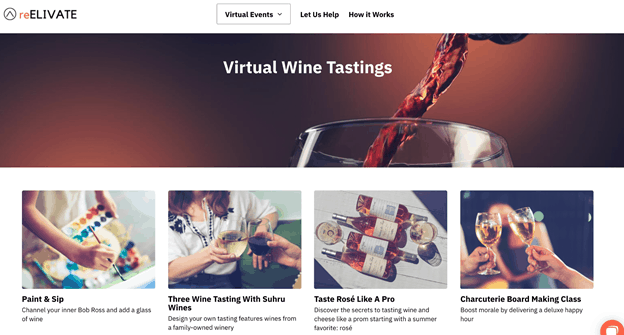
virtual wine tasting

Anything that’s unique and matches her interests and personality.

A Little Pampering Goes a Long Way

Many women want to reinvent themselves after retirement, and part of that process often includes a fashion makeover and personal pampering. Good retirement gifts for women might include gift certificates for a spa day, hairstyle, or makeup consultation.

spa finder

Note, giving a makeover might not be an appropriate retirement gift for a colleague – it might be a better gift for a family member. You don’t want to give the gift in such a way that the woman feels like you are implying she needs to update her look!

Instead, talk about the gift in terms of pampering, indulgence, and allowing her to finally get taken care of (after working so hard all these years to take care of everyone else).

Gift certificates to her favorite store is another great gift option. And it’s always fun if someone does give you a gift certificate and says, “Let’s go have a cup of tea or coffee and you can enjoy spending your gift.”

I think a gift certificate, along with sharing someone’s company while shopping, is both unexpected and very clever. Spending time with loved ones is a great gift for any age.

Handmade soaps and handmade skincare products are also a perfect gift for older women. We don’t tend to splurge so much on ourselves, so those little items are truly special and lovely!
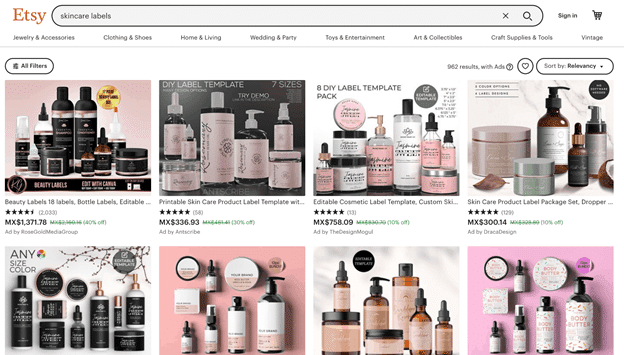
etsy handmade soaps

Consider the Gift of a New Skill

For women who are planning to pursue new creative interests in retirement, a great gift is to give them some tools of the trade – paints, brushes, colored pencils, and more. Some of the best retirement gifts for women are things that can actually be used!

She may want to learn something new. Offer her access to online classes.

masterclass

What About a Gift of Health and Balance?

We all know that as we get older we need to stay socially engaged. A great gift that involves both social and health benefits could be a yoga or Pilates class subscription. Or, if your loved one would prefer, a DVD or online video course that will help them stretch and do healthy exercises at home.

A different kind of healthy gift could be a supplement or special food that you know your loved one or friend is interested in. How about a thoughtful gourmet gift basket?

gourmet gift basket

Gifts for Women from Fair Trade Organizations

Fair trade organizations help women improve the standard of living for their children and families. Many international organizations help women by giving them access to sell their goods.

Ten Thousand Villages is a great destination for ordering unique retirement gifts from faraway lands and supporting local artists.
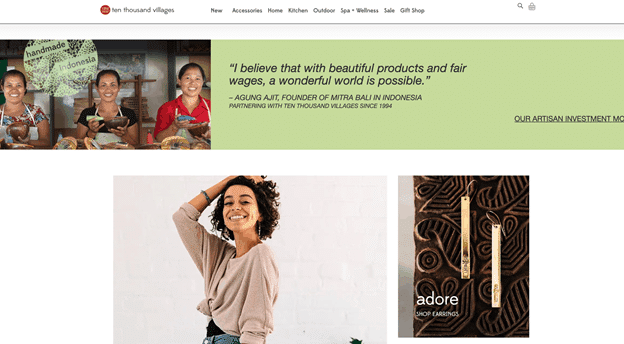
ten thousand villages

With a motto of “look good and do good,” the site Global Girlfriend offers sparkling images of woman artists from around the globe, with beautiful hand-crafted gifts at reasonable prices sure to delight. They offer adorable hand-stitched cosmetic bags for a mere $10.00. Each is unique and lovely.

She’ll feel good knowing that her retirement gift went to help empower women in their work.

Help Her to Celebrate Her Memories as She Looks to Create New Ones

It’s never been easier or quicker to create fun, professional-looking videos and digital photo scrapbooks and slideshows to commemorate the retirement of a valued colleague. Get a team together to spend a few hours collecting photos to scan and add to the collage.

Walk around with a smartphone camera to collect reminiscences from people around the organization to share a favorite story of working with the woman who’s retiring. There are many ways to make this gift memorable, touching, and inspiring as a way to say “thank you” and “good luck” to the new retiree.

Print out a book with photos of her through the years.

shutterfly

Make a “This Is Your Life” presentation of personalized newspaper pages from significant dates in her life or use humor to write a spoof newspaper “Announcement” with fake (but hilarious) quotes from the retiree, her manager, and her team.

Retirement parties are a great opportunity to share old stories and inside jokes.

Or give her a personalized “World Traveler Map” with pins and notes to commemorate the places she’s visited during her career – or the places where she’s planning to travel next!
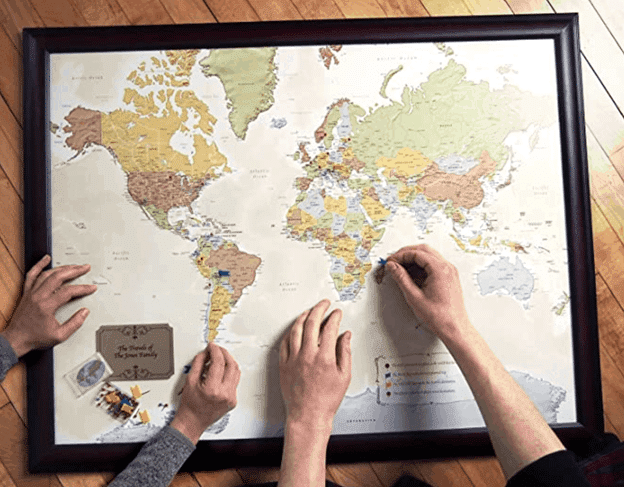
world traveler map

What do you think are the best retirement gift ideas for women? Are there any gift ideas that you think are best avoided? Please join the conversation.

Read More

OMG: Jennifer Aniston Is Launching a Beauty Brand & Fans Are Losing It

What do Selena Gomez, Rihanna, Jennifer Lopez and Becky G all have in common? They all launched makeup and/or skincare companies! Jennifer Aniston is next with her LolaVie beauty brand. The Morning Show actor is already the chief creative officer at Vital Proteins and has long been the face of Aveeno. So, this isn’t her first time getting into the beauty and/or wellness industry.

Back in 2010, Aniston actually released a perfume called LolaVie, but changed it to Jennifer Aniston “It turned out as we were getting close to the launch, there was something out there that was very similar and it was just going to get very confusing in the marketplace,” she told Reuters Television back in 2010. When speaking to WWD at the same event, she declined to explain what the name means to her, saying, “It’s a long story and honestly it’s too personal to tell, but it has a special significance.”

Instagram PhotoSource: Instagram

This new brand will seemingly have a little bit of everything. She filed a trademark for body care, deodorant, skincare, haircare, soaps, nail care and candles. And it looks like she’s already teasing the first product! When LolaVie first launched its Instagram account, I thought for sure skincare was going to be the first to launch. But this recent picture is of Aniston’s wavy blonde hair, which makes me think maybe it’s actually haircare we’re getting right off the bat. Although it could just be a photo of her in a LolaVie meeting.

Fans seem very excited about this launch, which is already coming on September 8. “I don’t know exactly what this is, but I’m sure it’s going to be awesome! I am excited,” wrote one fan on Instagram. “I’m so in love with this aesthetic,” wrote another.

We’ve reached out to LolaVie for more information and will update you as soon as we know more.

STYLECASTER | Ashley Benson Interview


Read More

Getting on With the In-laws

Getting-on-With-the-In-laws

Do you get on with – or even like – your in-laws? All of them? Really? If so, you are a lucky person indeed!

The Diversity of In-Laws

We all have in-laws. They come into our lives completely unbidden. Sometimes they are there for a long time. It’s not that they are always awful people – it’s just that they don’t always fit easily into your life or the way you want to spend your time.

It started when your sister married that completely decent guy, with a burning obsession with old cars and nothing else. Or you married a lovely man whose mother incessantly recounts her life history, forgetting each time that she has done so before.

Or his brothers are interested only in drinking beer in front of the TV when you like walking in the country.

Or your son is living with a beautiful young woman who is, unfortunately, a desperate social climber. (Having in-laws does not require a marriage to take place – some people call these ‘out-laws.’)

Perhaps no one has examples of all these at once, but most of us have someone who causes us an internal scream from time to time.

Why In-Laws Can Be Such a Problem

In-laws are a problem primarily because you are supposed to like them – or at least get on with them. Indeed, worse, they are suddenly part of your family.

Also, you are likely to see them on ‘special’ days like Christmas, which may be just the time you could do without them because you want to relax.

Of course, if you are lucky, your in-laws have delightful personalities, compatible interests and a warm heart. You enjoy their company and see them frequently. You are pleased that someone’s marriage (or partnership) brought them into your life.

If you are unlucky, they have completely different values, politics, religion or personal habits. So many problems start here that the less said the better.

And in between these two extremes, there are the in-laws who Really Try. This is probably more common than you think.

When I married my English husband, my American mother tried to make him feel welcome by buying bottled Guinness (I think England and Ireland got mixed up here). She put it in the fridge for him, where Americans always put beer.

Being young and not wanting to displease his new mother-in-law, my dear husband drank the stuff, although he didn’t even like it and certainly not cold.

This proved, of course, that he liked it. She always had some available when we visited their house. It took some years to put this right.

Grandmothers and In-Laws

When I was first planning to interview women for my book about what it is like to be a grandmother, I thought I might get nothing from them but sentimental stories about how wonderful it was. As all good books need a little grit, this was the cause of some initial concern.

But in-laws came to my rescue. I hadn’t even realised the number of ways that sons- and daughters-in-law could cause problems for grandmothers.

Some were bringing up the grandchildren in ways that seriously disappointed – they overfed them or ignored them or let them have too much screen time. Some were felt to be altogether too controlling of their direct family.

Much more problematic were those who were so hostile to the grandmother interviewed that she couldn’t even visit. There are many painful stories out there.

Final Note

Whatever the problems we experience, we may need to remind ourselves that we are not always innocent. Probably, we are someone else’s irritating daughter, sister or mother-in law. It makes you think.

What is your relationship with the in-laws like? Do you try to get along? How has that worked out? Please join the conversation below!

Read More

How Have Our Perceptions of Aging Changed in Covid Times

perceptions of aging

The way society views aging is always changing and evolving, and during the coronavirus pandemic, these perceptions have continued to change. How has the coronavirus impacted aging? A recent study by Stannah Stairlifts, Embracing Aging, recently set out to find out.

Since the coronavirus hit, the average life expectancy for those living in the U.S. has actually decreased by 1.3 years. This isn’t as extreme of a dip as the 1918 influenza pandemic, however, where the life expectancy dropped by 10+ years (accounting for gender variables).

But what exactly does aging mean? What age does a person reach before they think of themselves as aging significantly? According to this study, the answers vary depending on your current age. Respondents under 50 felt like 24 was the age when they did or will begin to age increasingly, while respondents 50 and over believed this age to be 39. (Kind of funny when you think that people over a certain age use 39 as their forever age!)

It makes sense that younger adults might view 24 as a time when they aged significantly, since this is just a few years out of college, once the demands of the real world tend to sink in. Since 39 is near 40 (a milestone age) and coming closer to retirement age, it also makes sense that this number would stand out for older Americans.

What Americans Are Thinking About Getting Older

One of the most interesting insights I spotted, which was a validation of things I have experienced, is that perceptions of aging become more positive the older one gets. For example, 33.2% of those under 50 noted feeling more positive about getting older over time. However, among those at least 50 years old, 44.3% felt positive about aging.

This might indicate that when the aging goal post is further away, you feel more apprehensive and negative about this unknown time in your life. In general, both groups (those under 50 and those 50 or over) felt mostly positive about aging, overall.

What is the number one reason respondents feel positive or even excited about aging? Retirement was overwhelmingly the main factor respondents noted. The top worries, no surprise, were physical health, mobility, mental health, and appearance.

How Gender Impacts Concerns About Aging

Gender also plays a huge role in concerns about aging, with appearance topping the list of worries for women. What’s interesting is that while 68.8% of women prefer to dye their hair rather than going gray (compared to 33.7% of men), women actually believe gray hair is more attractive than men do. (Having my hair starting to turn white in high school and being called “Pops” by classmates, I tend to embrace my Anderson Cooper hair color!)

When asked if gray hair was more attractive on men, women, or both genders, women rated more positively than men did in two categories. Although most men thought gray hair looked most attractive on men, women found gray hair on women and both sexes to be more appealing than men did. So, although women may feel societal pressure to look younger, according to this survey, they’re actually more inclined than men to find gray hair appealing.

Mental Health and Aging

Mental health was another worry respondents mentioned in reference to aging. While some aspects of mental health (having life experience and gaining wisdom, for example) ranked high as positive aspects of aging, more serious concerns, such as cognitive decline, were examined.

Respondents 50 and older reported overwhelmingly that their mental health had stayed the same or improved, while only 18.8% noted a decline. Some of these answers could be attributed to retirement and having more time to pursue passion projects and expand their mind. More than half of the respondents 50 or over also noted a closer connection with long-term partners, which might also be attributed to better mental health.

The Meaning of Life – How to Stay Positive

I have spent thousands of hours around older people through my singing and consulting. I have gleaned huge life lessons from them. I actually have boiled it down to eight things I have learned that can help us age with quality and positivity.

  • Continue to have purpose.
  • Keep physically active. Move naturally, as they say in the Blue Zones.
  • Laugh every day and laugh at yourself. Humor can cure a lot.
  • Never stop learning.
  • Engage socially with a diverse array of family and friends.
  • Express gratitude daily for something or someone.
  • Maintain a positive attitude.
  • Have unconditional love for others.

Everyone’s experience with aging is unique, but what’s clear from this survey is that perceptions of aging become more positive as each of us age. Although there are gender disparities worth noting within these results, respondents agree that aging comes with some good perks, such as feeling more confident, earning life experience, and gaining wisdom.

Although the pandemic has caused the life expectancy average to decrease, based on historical trends, it’s likely that Americans will find ways to improve life expectancy, bringing the numbers back up. It’s good to see resilience during these challenging times.

What’s your take on aging? Is it more positive now that you are past 60? What did you think of aging 10 years ago? How about 20 or 30 years ago? Has your perception changed?

Read More

4 Steps for Managing Food Cravings While Eating What You Love

food cravings

Do you often get the urge to eat when you aren’t hungry? Do you find yourself having lots of cravings for certain foods? The inability to manage cravings can be the downfall of the best efforts of many people who want to lose weight.

But why is it such a problem? And what can you do to manage your cravings so you don’t routinely overeat and gain weight?

There’s nothing wrong with craving and eating something when you’re hungry. The problem arises when you regularly have cravings for certain foods when you aren’t hungry.

Why People Have Cravings

First, let’s talk about why people have cravings. A major cause is food restriction and dieting. Yes, you read that right. Many studies have shown that for most people, attempting to restrict or deprive yourself of a particular food causes you to want it more.

Not only that, but because forbidding yourself to eat certain foods creates a mindset of scarcity, you’re more likely to overeat or binge on this food when you ultimately do eat it. This scarcity mindset is one of the reasons why 97% of dieters fail to lose weight and keep it off.

I said “attempting to restrict” because the great majority of people who don’t allow themselves to eat certain foods, whether it’s sweets, snacks, fried foods or whatever, ultimately “cave in,” and eat it, often to excess.

Does This Scenario Sound Familiar?

Let’s say you decide you’re going on a diet (which I hope you won’t do ever again!), and you can’t eat sugar. The scarcity thinking created by dieting and food restriction makes you want sweets even more than normal. Then you go to a gathering, and there are lots of delicious homemade cookies there. You weren’t going to eat any, but because you’ve forbidden yourself, you really want some.

You can’t keep your eyes off them. You decide that just one won’t hurt. Then the scarcity thinking sets in. “I don’t know when I’ll get to have cookies next, so I’d better eat my share of them while I can!” So you wolf down five, barely tasting them, and sneak a couple more into your handbag.

Compare that to someone who doesn’t restrict what they eat, but simply eats according to her hunger and fullness signals. She’s at the gathering, too. Because she knows she can have cookies whenever she really wants them, she doesn’t have a scarcity mindset.

She sees the cookie platter and thinks about whether she’s really in the mood for a cookie tonight, then decides that she’ll have a coconut macaroon. She eats the macaroon, savors every delicious mouthful, and feels satisfied. She doesn’t think about the cookies again, and enjoys the rest of the evening.

It may be a rebellious streak in you or what I call the Garden of Eden Effect. You’re in paradise with an abundance of everything, but you want the one thing you can’t have. It’s human nature.

Exploring the Roots of Your Cravings

But there’s more to your cravings than that. Often, people really need something other than food, but because food is readily available and socially acceptable, they use food in an attempt to meet needs that food can’t fulfill.

For example, maybe you’re overwhelmed because you’re working full-time but also caring for a mother with dementia in your free time, and really need some time to rest. Because you feel guilty resting, you eat chocolate to feel better.

Or maybe you’re upset because your daughter and her boyfriend, the latter of whom you aren’t fond of, moved in with you temporarily, and you have no privacy or time to yourself, plus it’s impossible to keep the house picked up and it’s stressing you out. You make friends with a pint of ice cream each night as a reward for having to put up with this.

Or you’re angry at your mother-in-law for her continual efforts to engage you in a power struggle, so you aggressively munch down a bag of chips.

Those reasons for eating aren’t really about food. Most overeating isn’t about food. It’s about using food to fill a need that it can’t fill, and that you might not even be aware that you have.

That’s why, if you want to stop having cravings, it’s so helpful to dig deep beneath them and figure out what you really need. Behind every craving, there is almost always an emotional need that’s being neglected.

If hunger isn’t the problem, food won’t solve it. It may make you feel better for a few minutes, but once the food is gone, you’re left with the same problems that prompted you to eat in the first place, and may be adding to your problems by continuing to gain weight.

What Do You Really Need?

To figure out what you really need, ask yourself questions like these:

  • What kinds of foods do you usually crave when you want to eat but aren’t hungry?
  • What is the reason why you crave it? Don’t stop at “because I love it” or “I don’t know.”
  • What do these foods mean about your needs? Do you need more comfort? Are you taking out your anger on that bag of chips?

For example, when I was an adolescent, my mother often told me what I should and shouldn’t eat. I resented this and her attempts to control what I put in my body. As an adult, when I visited my mother, I would sneak food as a way to spite her.

She didn’t know I was doing this, and I obviously was only hurting myself, but I was doing it in reaction to things that happened in my past. Once I realized this, I could stop raiding my mother’s pantry. Do you binge on foods that your parents wouldn’t let you have as a child?

Some people crave certain foods for nostalgic reasons. Perhaps you crave your mother’s special apple cake because you miss her, and it makes you feel close to her to eat “her cake.”

Here’s a big one: maybe you don’t have enough pleasure in your life, so you rely on food as your main source of pleasure. If it’s pleasure that’s missing in your life, there are some ideas in my Sixty and Me post entitled, “What is Your Hunger For? More Pleasure in Your Life, or Food?”

Sometimes, you just crave foods because you’ve deprived yourself of these foods as a chronic dieter, but often, there’s something deeper underneath those cravings.

So What Can You Do to Manage Your Cravings?

Get Rid of Your Lists of Forbidden Foods

That and start working on cultivating what I call an Abundance Mindset. I know it might feel scary to give yourself unconditional permission to eat whatever foods you love. You may feel powerless around certain foods right now. You may feel like it’s impossible to stop eating your favorite foods once you start.

I get it. I used to feel that way too. But that’s because you’ve restricted these foods in the past. You think of them as scarce, so you want them even more. But if you listen to your body, it won’t tell you to eat brownies all day because you’d feel awful.

It may take time, but once you’ve established an abundance mindset, you won’t feel the lure of those foods, and will trust yourself and feel the freedom of being able to eat what you love without going off the rails. Check out my Sixty and Me article “How to Enjoy Holiday Food Without Gaining Weight” for more on cultivating an abundance mindset.

Eat Consciously and Don’t Multitask While Eating

When you eat these foods you love so much, why not pay attention and savor each bite? You’ll enjoy them so much more that you will be satisfied with less, and your cravings will wane. On my website, you can download a free 30 Days of Conscious Eating calendar that will help you dip your toes into being a more mindful eater, one step at a time.

Discover What’s Navigating Your Urge

Discover what is underneath the urge to eat when you aren’t hungry, and give yourself what you really need instead of food. To do this, think about these questions:

  • What was going on right before you got the craving to eat?
  • What thoughts and feelings did you have?
  • What might you be distracting yourself from by wanting to eat?
  • What do you think you really need?
  • What would you do right now if eating wasn’t an option?

Then consider how you think you’ll feel if you eat this food and compare it to how you will feel if you don’t eat it. Make an intentional choice.

Surf the Urge

The last method for managing cravings is a mindfulness technique called Urge Surfing. Urges to eat when you aren’t hungry, or to eat too much sugar or drink too much, are like waves in the ocean. They rise in intensity, peak and then dissipate.

If you’ve ever swam in the ocean, you know that there’s no way to beat those waves. You can’t resist them or fight them, or you may even drown. You need to move with them. Urge surfing involves noticing the urge, then letting it gently pass without fighting back against it or white-knuckling it.

For example, when you’re stressed about a project at work and feel the urge to eat to feel better, say to yourself, “thanks, but eating when I’m not hungry won’t help me get this project done,” and just ignore the urge. It will pass in a few minutes.

Urge surfing is a great way to allow us to choose behaviors that bring us towards what we really want in life, our long-term happiness, rather than on fleeting immediate gratification. Listen to Episode 66 of the Weight Loss for Foodies podcast to learn more about how to do it, and Episode 67 has a guided urge surfing meditation you can use when you feel the urge to eat but aren’t hungry.

The way to make cravings a thing of the past requires you to recognize that food is fuel for your body, but also a source of pleasure. After years of dieting and restrictive thinking about food, many people have difficulty giving themselves permission to eat what they want and what their body wants, and to really enjoy food. That’s why you hear people talk about certain foods as being “sinful,” when in reality, food is just food.

Using these four strategies when you have a craving to eat but you aren’t hungry will help you establish positive eating habits that will allow you to enjoy the foods you love without overeating them.

Do you find yourself craving forbidden foods? Who forbade those foods in the first place? What happens when you get a hold of the foods you really crave? Do you think you have a scarcity mindset? Does it control your food habits? Have you tried surfing your urge to eat when you aren’t hungy?

Read More