
Month: October 2021

Whitney Rose’s Tan and Black Teddy Jacket

Whitney Rose’s Tan and Black Teddy Jacket at Home

Real Housewives of Salt Lake City Season 2 Episode 7 Fashion

Whitney Rose’s tan and black teddy jacket that she wore while making calls to invite the ladies on the tubing trip on last night’s episode of RHOSLC was super cute. And considering it’s unfortunately sold out, our advice right now is that you go “fluff your aura” Whitney-style and then go shop a fluffy Style Stealer down below. 


Fashionably,

Faryn


Whitney Rose’s Tan and Black Teddy Jacket

Click Here to See Her Jacket

Originally posted at: Whitney Rose’s Tan and Black Teddy Jacket

Read More
ColourPop’s ‘Nightmare Before Christmas’ Collection Is the Brand’s Most Requested Collab Ever

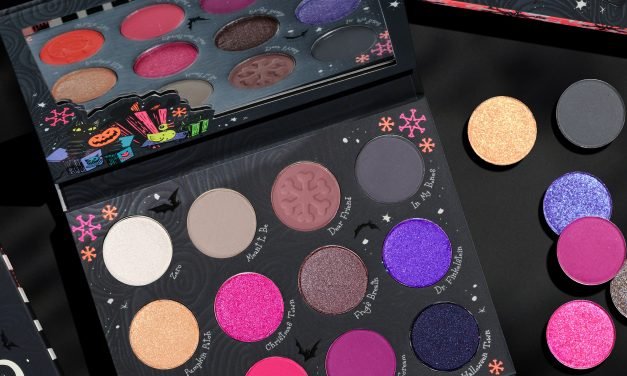
Whether you think it’s a Halloween or a Christmas movie (we vote Halloween), The Nightmare Before Christmas is a classic to watch throughout the holidays. In fact, the iconic Disney and Tim Burton film is so popular that fans have been asking ColourPop when they’re getting a Nightmare Before Christmas collab, considering the brand has launched numerous Disney collections in the past. Well, the holidays just came early and this collection is even better than we could have expected.

Just in time for Halloween, ColourPop is rolling out a 13-piece collection inspired by Jack, Zero, Sally, Oogie Boogie and all of your favorite Nightmare characters. Packaging features neon illustrations from the film that glow with the flash of a black light, while products include pressed powder and jelly eyeshadows, glitter gels, lux crème lipsticks and so much more.

Our mission at STYLECASTER is to bring style to the people, and we only feature products we think you’ll love as much as we do. Please note that if you purchase something by clicking on a link within this story, we may receive a small commission of the sale.

colourpop nightmare before christmas

ColourPop.

Starting October 28 on ColourPop’s website, shop The Nightmare Before Christmas Palette, Trio Of Terror Jelly Much Shadow Trio, BFF Liquid Liners, Master of Fright Gliterally Obsessed, Zero Blending Sponge, Nightmare Before Christmas Individual Face Crystals and Lux Lipstick Holiday Decorations. The latter are the cutest lipstick ornaments featuring Jack Skellington, Sally and Oogie Boogie. These are perfect to give out to friends, family, coworkers — anyone a fan of the film.

These are also ColourPop’s first embossed lipsticks, with raised skull and bones details.

colourpop lux lipsticks

ColourPop.

The collection will also launch at Ulta on October 31 so you’ll want to set your iCal alarm. If you can’t wait, you can still pick up the Hocus Pocus collection, which includes ColourPop’s first candle — the Iconic Black Flame Candle, of course.

STYLECASTER | Ashley Benson Interview

Read More

Shoppers Have Found The Secret To Getting ‘Healthier, Fuller & Stronger’ Hair In A Few Weeks

You know those hair product commercials that feature models with extremely thick and luscious locks with strands that are so shiny, they practically reflect? Those made me angry for a very long time. See, my hair is extremely coarse and it gets oily in what seems like 2.5 seconds after I wash it. I didn’t think it was ever possible to achieve those incredible looks myself, until I started using cleansing shampoos and thickening products that incorporate biotin into their ingredients list.

Ever since, I’ve seen (and felt) noticeable changes to my hair. For one, less of strands are coming out after I brush—even when my hair’s wet. Two, it takes a few days for my hair to get greasy, which is an absolute miracle in itself. And three, I’ve been able to achieve incredible blowout results just like the ones in those commercials.

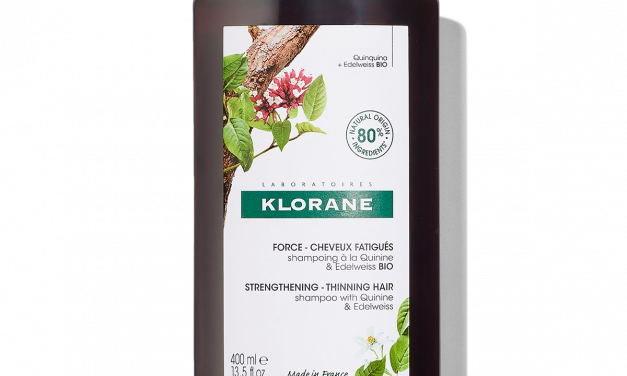
Because of this, I keep a keen eye on different growth products out there, and recently found one that seems to check all of the boxes. It’s Klorane’s plant-based strengthening shampoo that’s specifically designed for thinning hair. The vitamin-rich haircare product is formulated with a mix of powerhouse vitamins and plant products, like quinine bark and edelweiss to cleanse and strengthen hair. The thickening agent is so affective that shoppers have called it a “game-changer” for their beauty routines.

“I’ve tried dozens of shampoos for thinning hair,” wrote one reviewer who said that after 6 weeks of consistent use, “my hair is healthier, fuller and stronger.”

Our mission at STYLECASTER is to bring style to the people, and we only feature products we think you’ll love as much as we do. Please note that if you purchase something by clicking on a link within this story, we may receive a small commission of the sale.

RELATED: Shoppers Say This Dark Spot Corrector Is ‘Even Better Than Laser Treatments’—Here’s How

Klorane Strengthening Shampoo

Courtesy: Klorane.

This kind of reaction is common for users—according to a consumer trial carried out by the brand, after 12 applications of this shampoo, 84% of participants reported that their hair “had restored strength and vitality.” They also noted a significant decrease in the “number of broken hairs.” And, as most people who are obsessed with hair thickening know, keeping the hair your already have in place and in one full strand is crucial to a a fuller appearance.

“My hair feels stronger and am not seeing larger amounts coming out in my hair brush like it did prior to using this shampoo,” one reviewer wrote. Another said that after noticing their hair grow thin postpartum, this product has helped prevent strands from breaking off.

Another benefit is the product’s ability to heal and practically reverse the damage of color or heat-treated locks.

“I just had my hair highlighted and my colorist commented that my hair was feeling much thicker, like it did pre-menopause. She pulled my wet hair into a ponytail and had me grab onto it and sure enough…thick again,” wrote one reviewer who said that, thanks to this shampoo, they finally “have my glorious locks back.” STYLECASTER | Ashley Benson Interview

Read More

Decluttering the Nest: Helping Your Adult Children (and You!) to Move Forward

adult children decluttering

Why is it that so many adult children use their parents’ home to store all their childhood mementos? What effect does this have on them? And how does it affect the parents who allow it?

Four Adults and a Pile of Childhood Clutter

When my husband and I bought our current home in the UK, the retired couple who owned it wanted a quick sale, we wanted a quick purchase, and the legal boffins assured us that it could all be completed within three weeks at the most.

The only thing that slowed the process down was the time needed for the couple’s adult children, who had long since left home, to visit and sort through all the childhood belongings they had left in the house. That added another three long weeks to the process.

There we all were, four adults wanting to complete our business, being held up by boxes of childhood keepsakes that it turned out the children mostly didn’t even want. They came, they sorted, threw most of it out, and finally we could all proceed.

“Why on Earth Would I Want That?”

An interesting aspect of this was how shocked the parents were at how few things the children actually wanted. For years they had provided a rent-free storage facility for all these items, only to discover there had been very little point.

They gave us some examples.

“Don’t you want this photo of the two of us on the day we dropped you off to begin university?” the mother asked the daughter.

“Why on earth would I want that?” the daughter replied, and tossed it in the bin.

“What about this beautiful horse saddle?”

“No, of course not. It’s way too small for me, and I don’t have time for riding now anyway.”

And so it continued until the attic, the garage, and the children’s bedrooms were empty.

Maybe It’s Time to Declutter the Nest

We’ve all heard of empty nest syndrome, when children leave home and parents are left to themselves. The adjustment is especially hard for women who have put their own pursuits on the back burner for so long to make taking care of their children their primary focus.

However, as the American humourist, Erma Bombeck, once said, “When mothers talk about the depression of the empty nest, they’re not mourning the passing of all those wet towels on the floor, or the music that numbs your teeth, or even the bottle of capless shampoo dribbling down the shower drain. They’re upset because they’ve gone from supervisor of a child’s life to a spectator.”

They wake up one morning and discover they are left to live their own life and are no longer sure how to do that. Motherhood has been so central to their identity that without it, they no longer feel useful or have a clear purpose of their own.

Curating a Museum of Mementos

Some mothers genuinely welcome their offspring flying the nest. They congratulate themselves on a job well done and enthusiastically embrace the next phase of their life.

But for those who find the transition more challenging, there is a much greater likelihood they will try to assuage empty nest feelings by allowing them to leave some or all of their childhood possessions at home.

This can start out quite innocently. The son or daughter goes travelling, goes to university, or gets an apartment that’s too small for all their stuff, so the things they don’t use or need on a daily basis get left behind. But weeks turn into months, and months turn into years, and before you know it you’ve become the curator of a museum of mementos.

It may bring you some comfort to maintain the connection to your offspring in this way, and you may think you are helping by keeping all their stuff. But if it drags on too long, you need to consider the effect it can have on both you and them.

Avoiding Stagnant Energy

Stagnant energy always accumulates around anything stored for a long period of time, including things you are keeping for others. In my book, Clear Your Clutter with Feng Shui, I explain that different areas of your home relate to different aspects of your life, such as health, relationships, prosperity, and so on.

Even with the best of intentions, items permanently stored in one area will stagnate the energy of that part of your home and will have a corresponding effect on that aspect of your life. It can make you feel like parts of you are on hold.

In the story at the beginning of this article, it turned out that it was mostly the parents who had held on to things, not the children. By keeping all the items, they felt able to hold on to fond memories of when the children were young.

But the children themselves had moved on. They were living their own lives and didn’t need those reminders. Letting the items go not only freed them to live more fully in the now, but also freed their parents to do likewise.

Overcoming Cluttered Nest Syndrome

Of course not all adult children are like this. Some do hold on. Childhood items can remain for decades in the old family home, never used or looked at but comfortingly “there.” They are like a place marker, giving the reassurance of somewhere they can return to if life does not treat them well.

But this can give a false sense of security that prevents them from becoming all they can be. It can also hold them back because part of their consciousness will be resting somewhere else. And when you die, as you eventually will, they will have to sort through not just your possessions, but their own things too. It will multiply the number of decisions that need to be made at an already difficult time.

Far better you take a proactive approach to make them self-sufficient by using some of my suggestions to overcome cluttered nest syndrome. This will help you to reclaim your own life and help your children to move forward with theirs too.

Do your adult children still have childhood mementos in your home? How long has this been going on, and how much longer will you allow it? For others, how have you encouraged adult children to claim their mementos? What secrets can you share for decluttering the nest? Please join the conversation.

Read More

Multivitamins vs. Individual Supplements – What’s Best for Healthy Aging?

healthy-aging-supplements

An estimated one in two Americans take a vitamin supplement. However, when you’re facing a wall of products, it’s not always easy to know which one to buy.

Should you select a multivitamin and mineral, opt for a bespoke blend, or buy each nutrient individually? This is an excellent question, to which the answer is: it depends on why you want to take them!

Of course, none of the following information is intended to be medical advice, but, we hope that it gives you something to discuss with your doctor on your next visit.

Healthy Aging: Where to Start

If your diet isn’t as good as it could be, then a multivitamin and mineral that supplies around the daily recommended intake of as many micronutrients as possible can act as a nutritional safety net.

If you are seeking a particular therapeutic result, however, then a selected blend, or a single vitamin or mineral, may prove a better option.

Whichever supplements you choose, make sure they are produced to pharmaceutical standards (known as GMP in the UK and CGMP in the US, which stands for Current Good Manufacturing Practice).

This means the supplements and their ingredients are checked at all stages of production for purity and consistency of dose.

Multivitamins as Nutritional Safety Net

Although diet should always come first, national dietary surveys consistently show that significant numbers of people do not meet the recommended intakes for particular vitamins and minerals. While average intakes seem OK, an average is only an average – half are getting more, and half are getting less.

There are many reasons why your diet may lack particular micronutrients. These range from poor appetite and difficulty chewing to following a restricted diet for ethical, religious, or health reasons.

Perhaps you have particular food intolerances, or are cutting back to lose weight. In these cases, a multivitamin is probably exactly what you need.

Not all multivitamins are the same, though. As a result, make sure you know what to look for.

How Diet and Deficiencies Impact Healthy Aging

As a family doctor working in a deprived inner-city area, I dealt with countless patients who felt tired all the time and lacking in energy. They had little money for fresh fruit and vegetables, so I ended up prescribing a vitamin and mineral supplement. When they perked up and felt better, they were more open to improving their diet.

Specific Nutrients for Specific Benefits

Some supplements contain a carefully selected blend of vitamins and minerals aimed at maintaining a particular body part or function.

Potassium, magnesium, and B vitamins, for example, are often combined to help maintain normal blood pressure, and to reduce tiredness and fatigue.

Antioxidant blends (e.g., vitamins A, C, E, and the mineral selenium) are also popular to protect cells from the damaging particles (free radicals) that are associated with premature ageing.

Supplements to support eye health tend to contain research-based blends of antioxidants, B vitamins, carotenoids (lutein and zeaxanthin), and zinc. And those designed for older women tend to major on calcium, magnesium, vitamin D, vitamin K, and possibly boron for healthy bones.

Calcium is usually combined with vitamin D to aid its absorption. Ideally, look for a supplement that also includes vitamin K2 to reduce the chance of excess calcium being deposited in artery walls.

You get the idea – if you have a particular health problem, look for a blend designed to address it. This isn’t always clear from the product label, unfortunately, due to legislation that prevents food supplements from making unapproved health claims.

Single Nutrients for Specific Needs

Single nutrients are usually recommended or prescribed medically, to treat or prevent an identified deficiency.

Iron

Iron deficiency is the most common mineral deficiency world-wide. Supplements may be prescribed to treat iron-deficiency anemia when your level of the red blood pigment, hemoglobin, is demonstrably low.

A low iron reserve is also associated with restless legs, thinning hair, and recurrent Candida infection even when iron status is not low enough to cause overt anemia. As iron is toxic at levels only just above the required intake, take care not to exceed recommended doses.

Vitamin C

While scurvy, due to severe deficiency of vitamin C is rare, it remains the most popular single vitamin supplement, often taken in high doses to boost immunity against viral infections.

As a water-soluble vitamin, it is relatively safe, but an upper tolerable level of 1000mg per day is suggested for long-term use from supplements to avoid indigestion. It can be taken in higher doses short-term and non-acidic forms (e.g., ester-C) are available.

Folate

Folate is the most widespread vitamin deficiency in developed countries. Single supplements are recommended before and during early pregnancy to reduce the risk of developmental abnormalities.

Outside of pregnancy, lack of folate is associated with a particular form of anemia. This is often accompanied by lack of vitamin B12, and these two B vitamins are prescribed together long-term (partly to avoid masking the blood changes used to help identify a B12 deficiency).

If you have a raised level of homocysteine (an amino acid that damages blood vessels), vitamin B6 is added to the mix to help convert homocysteine into safer forms.

Vitamin B12

High doses of vitamin B12 are prescribed to treat pernicious anemia. This develops when the immune system attacks the stomach cells that make intrinsic factor, which is needed for vitamin B12 absorption.

However, if you lack this factor, you are unlikely to absorb enough even from high oral doses, so it is usually given by injection, or via sublingual sprays/lozenges for absorption under the tongue.

Vitamin B6

Popular among women with premenstrual tension, Vitamin B6 is sometimes recommended to treat carpal tunnel syndrome although evidence for its effectiveness is inconsistent.

Vitamin D

Another vitamin often taken on its own, especially during winter months, is Vitamin D. This is when people living at northern latitudes do not meet enough UV light to synthesize their own supplies.

People over the age of 60 are especially vulnerable as you are only able to make a half to a quarter of what you could synthesize in your 20s – even when the sun is shining. What constitutes the right dose is controversial.

Vitamin E

The popularity of single-supplement vitamin E waxes and wanes. It is usually taken together with other antioxidants – especially vitamin C which is needed to regenerate vitamin E once it has acted as an antioxidant.

Magnesium

Magnesium is one of the few supplements that I take individually – partly because of compelling research that it might help me to live longer! It also has a useful laxative action and promotes a good night’s sleep. Several different magnesium salts are available, all with different absorptions.

Closing Thoughts About Healthy Aging

Diet should always come first. If you are healthy but know your diet is not as good as it could be, a multivitamin and mineral is the best option if you decide to take a supplement.

During winter months, additional extra vitamin D may be advisable, depending on where you live. If you have a particular health issue, such as raised blood pressure or a family history of osteoporosis, then a bespoke blend may be the way to go.

Take care, however. If you mix and match supplements, it’s easy to obtain too much of certain micronutrients (e.g., vitamin A, iron, or magnesium) which can lead to toxicity in excess. Check upper safe levels here.

If you are taking any prescribed medication, or if you are in doubt about what you need, always check with your doctor or with a pharmacist.

Do you take any vitamin or mineral supplements? If so, which ones did you select, and why? I’m always curious to know what people take and how they reach their decisions. What healthy aging tips would you like to share? Please share in the comments section below.

Read More