Month: December 2021

Discovering Creativity in the Practice of “Quiet Time”

quiet time

Towards the end of each year, I find myself thinking about how I want to improve or refocus my life for the New Year. Yes, I recognize that the timing is purely arbitrary: you don’t have to wait for a new year to make a decision to change. And not everyone’s New Year begins on that date. But for me, the first of January has power.

And so, at the end of 2020, my goal was to find a way to generate smarter and more useful ideas that would help me to make 2021 more creative and more productive.

The frantic “Year of Covid – 2020” had been a dark time for so many people. My own life, too, had changed on a dime. On March 7th, 2020, everything that I had planned for the year as a singing performer shut down for the foreseeable future.

But I had been lucky. I was able to shift gears and teach singing on Zoom. I also started to do some intensive work on my YouTube channel called, Singing After Forty.

Thick Mental Soup

But my progress in these new waters was painfully slow. I felt like I was swimming through thick mental soup. Perhaps it was not surprising after such a tumultuous year. But I felt alarmingly empty of inspiration, even with a husband who is able to generate creative ideas on the fly.

And so I started looking through some of those thousands of “Be more creative!” books and manuals on the internet until I came across the Three Simple Steps by Trevor Blake.

In part of the book, he laid out a process called “quiet time” that struck a deep chord with me. The author said in an interview, “Quiet time is purely a system of problem solving.” The idea is to sit quietly, first thing in the morning for 20 minutes with your eyes closed, while you allow your mind to work.

Blake claims that “This practice allows your brain to work undistracted and when it works undistracted, it works at the speed of light.”

I thought to myself; “What do I have to lose? I’m going to try this!”

For greater incentive, I bought myself a pre-Christmas present – a thick journal book called Dreams. I was happy that the large unlined book was hefty at 416 blank pages. I felt like I was making a real commitment.

And now, almost one year later, while the book has its first entry on January 2, 2021, it is only about two thirds full, even with my more than 300 entries.

So what is this daily process? And why is it worth the effort?

A Simple Process

As Blake says, it’s pretty simple – but it does take motivation. He writes about having to get up 20 minutes earlier than usual to have “quiet time” before driving to work.

For me, it’s even simpler. At the age of 68, I no longer think about going “out” to work. My work is in my studio upstairs. But I do get up a little earlier than my husband – at around 7:00 AM – to make myself some coffee. And since we live in the country, I take the steaming cup and walk to a room where I can look out at a patch of tall trees.

I sit in a comfortable chair and give myself a prompt such as, “I need new ideas for my YouTube channel.” Or the mental suggestion could be more family-oriented: “How can I help my kids to feel better about themselves?” Or it may be very personal: “How can I be more useful to others?”

Then I close my eyes, follow my breath and let my mind float. At first, there are lots of unrelated thoughts moving through my mind. I let them sail along. I try not to fixate on any of them. After a year of doing this, I know that fighting these random thoughts is not required. By letting them come and go, they calm down in a few minutes.

Then I begin to feel the prompt-related ideas emerge from a deeper place. I listen to them for a minute or so. Soon I start to jot a few notes in my journal, so that I don’t lose the ideas.

Sometimes, new ideas flow like water. I can’t write fast enough. Often, only one or two useful ideas emerge from a session. They go into my book, with gratitude. But there have been times when I have had no useful prompt-related ideas emerge from my 20 precious minutes. But the process still serves a vital function.

I understand now that these daily sessions offer more to my life than just the generation of ideas – as valuable as that may be. The sessions have greatly improved my feeling of well-being.

Results Are More Than I Imagined

I recently watched a show on Netflix where a young woman, Yanjaa Wintersoul, a triple world-record holding memory athlete was interviewed. She is able to remember and recount thousands of words, images and names. She said something that stayed with me about proven ways to build a better memory. She said, “the one thing I’ve seen in every single study… is honestly, [the value of] meditation.”

Trevor Blake does not call his “quiet time” meditation. But my experience with his practice is that I have begun to experience greater mental clarity, more focus and a generally improved sense of wellbeing, after almost one year of daily sessions.

And I understand how this kind of frequent quietening of the mind can improve my memory as well, with time.

Why Not Give It a Try?

You don’t need a special book. But you do need a place where you can be undisturbed for 20 minutes. And you need the desire and commitment to work with the process for at least 30 days. At first, I struggled to keep going. But after a month, I was hooked.

At the very least, quiet time begins your day in peace. That is no small thing in this noisy world.

Have you tried something like this yourself? If so, what were your results? If you have not done this yet, is it something you think you could experiment with?

Read More
Kristin Cavallari’s Cropped Plaid Shirt

Kristin Cavallari’s Cropped Plaid Shirt on Instagram

Kristin Cavallari 2021 Instagram Fashion

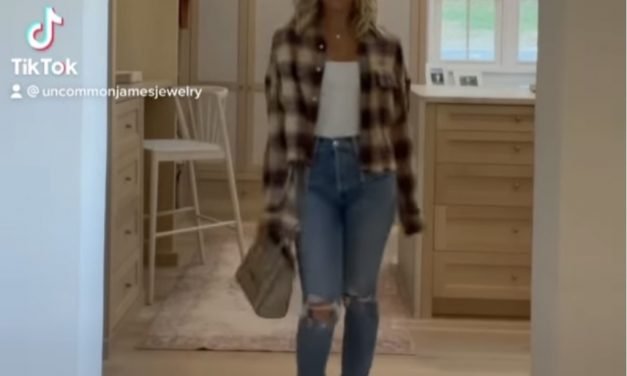
Kristin Cavallari took to Instagram to share a video of all her fav UJ pieces rounded up from this year. Little did she know she also rounded up a few of our *new* fav outfits. For instance, her cropped plaid shirt in the first ‘fit. Suuuuper cute and paired perfectly with the distressed jeans. KCav just has a knack for giving us great styles. And we here at BBH have a knack of giving you ways to steal it below.


Sincerely Stylish,

Jess


Kristin Cavallari's Cropped Plaid Shirt

Click Here to Shop Her R13 Shirt

Click Here to Shop Her Re/Done Jeans 

Click Here to Shop Additional Stock

Photo Credit: @kristincavallari

Originally posted at: Kristin Cavallari’s Cropped Plaid Shirt

Read More

Preventing a Health Setback from Becoming a New Health Set-Point

recovery from health setbacks

Like so many people around the world, my husband and I battled Covid for several weeks. We’re both healthy with no pre-existing conditions except being over 65, but it was a tough couple of weeks when we both ended up with pneumonia as well.

We’re back to normal now, but I found the psychological aspect of recovery to be both really interesting and really relevant to how an individual’s mindset can impact both daily choices and recovery from severe health challenges.

In my work, I’ve explored a large body of research on the psychology of healthy aging – things like what drives health beliefs, behaviors and outcomes – and, more recently, how perceptions impact recovery from acute illness or injury.

One really eye-opening Harvard University study demonstrated that people with a positive aging mindset were 44% more likely to recover fully from a severe illness or injury than those with a negative aging mindset. That’s a pretty large advantage – one I certainly want working for rather than against me!

A Health Setback

For us, Covid was like having a really bad flu that just kept lingering on and on. As many people have experienced, the fatigue was relentless so that each day became primarily about getting through it without doing anything taxing that could make it worse.

With very little energy or motivation, my husband and I spent most of the days sleeping, watching TV, or reading. Even though I had a lot of office work to do, I simply couldn’t muster the mental or physical energy to do it!

Psychology of Doubt

After about 2 weeks of being ill with no signs of recovery, the on-going media attention to the worst-case scenario (death statistics) brought feelings of vulnerability and even fear. We’ve always been strong and healthy and were knocked pretty flat. Being In our mid-60s was our only risk factor but we started to wonder if we would recover!

At that point, I started doing some research and learned that the recovery rate from Covid for people with no pre-existing health conditions ranges from 97 to 99.75% (CDC, WebMD). That’s no comfort to those who have lost loved ones, but it allowed us both to consciously stay focused on the probability of recovery rather than possibility of the worst outcome.

Path to Recovery

Even though the intense illness only lasted three weeks, it became obvious how easy it would be to stay in a mindset of just “making it through the day” even when we started feeling better. This mindset was reinforced after a couple of false starts when we would feel better and do too much, or one of us had a chore to do – like tromp through the snow to feed horses – and then would end up back in bed.

Once we genuinely started feeling better, we were both leery of repeating that mistake. Out of necessity, we had settled into a very sedentary pattern, and I had to remind myself of advice I often give in healthy aging seminars – don’t let a health setback become a new health set-point.

It took conscious effort, lots of self-talk, and consistent action each day to prevent our new pattern – conserving energy by doing just enough to get by – from becoming a lifestyle habit.

Aging and Illness/Disability

Experiencing how susceptible I was to the 18-month narrative around Covid re-enforced my belief in how easily negative “aging scripts” – the stereotypes we’ve been exposed to over our lifetimes – can be internalized to drive our personal responses to illness, injury, or functional issues.

Health challenges combined with an internalized aging narrative can act as a directive to withdraw from challenges and make life smaller. I use directive because I’ve observed that this reaction is often not so much a conscious choice as it is a surrender to ageist programming.

Let me be clear – I fully support anyone’s right to make whatever choice is right for them about responding to a health challenge. I just encourage individuals not to make long-term choices based on “survival mode” strategies ingrained during a crisis.

Instead of allowing a health setback to automatically become a new health set-point, consider consciously seeking the fullest recovery possible – regardless of age – and maximizing adaptive strategies before determining what’s possible for your life moving forward.

Overcoming vs Coping with Challenges

The disability movement provides a valuable roadmap to follow. Young people with severe physical and cognitive challenges are given a steady diet of resilience training with resources, tools, and encouragement to overcome challenges and live fully in-spite of them – and they accomplish remarkable things!

In contrast, why are older adults so often only given tools and resources to cope with – rather than overcome – health challenges? There’s a profoundly different mindset between overcoming and coping, resulting in profoundly different outcomes. A mindset of coping makes it much easier to subconsciously default to withdrawing rather than opening up to possibilities.

Reclaiming Well-Being

Research demonstrates even a week of bedrest (at any age) or long periods of sedentary behavior significantly reduces muscle mass, cardiovascular endurance, and mobility.

For my husband and me, recovering fully required reclaiming strength, mobility, and endurance, doubling down on good nutrition and immune boosting vitamin C, D, and zinc, and reclaiming passions that uplift emotional and social well-being.

My first post-Covid horseback ride was exhausting but also exhilarating. Normally, spending 4-5 hours on horseback doesn’t seem like much effort, but this 2 ½ ride was physically challenging. It was also life affirming as a critical step towards reclaiming my lifestyle and knowing I would recover fully.

Have you recovered from a recent illness or injury? Did negative or positive “aging scripts” impact your experience? What’s your best advice for living well regardless of long-term health challenges?

Read More

Kristin Cavallari’s Tan Blazer

Kristin Cavallari’s Tan Blazer on Instagram

Kristin Cavallari 2021 Instagram Fashion

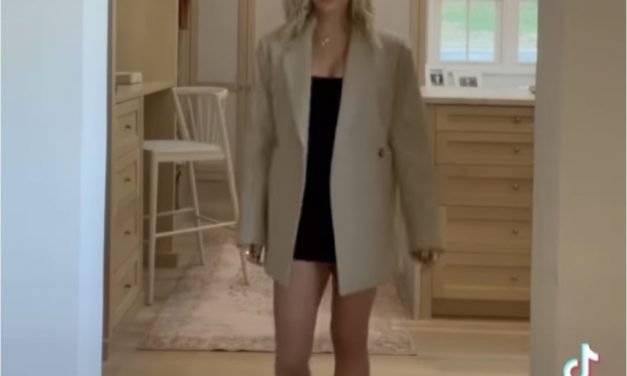
Yet another solid outfit from Kristin Cavallari’s UJ roundup vid. This one features a tan blazer paired with some chunky boots. I love this look for two reasons. One, because it’s obviously cute. Two, because this outfit is a warm weather outfit turned cold weather outfit. For those of you that live in the colder states you know it’s gut wrenching to put your cute summer dresses away for the winter. Welp, thanks to KCav, now we don’t have to. We can just toss a blazer and some boots on with it and call it a day night out.


Sincerely Stylish,

Jess


Kristin Cavallari's Tan Blazer

Click Here to See Her Anine Bing Blazer

Click Here to Shop Her Bottega Veneta Boots

Photo Credit: @kristincavallari

Originally posted at: Kristin Cavallari’s Tan Blazer

Read More

Owning Your Gift, Every Day

your gift

Tis the season for gift giving. While most of us enjoy receiving gifts, there is nothing quite like giving a gift to others and watching them light up with delight.

The type of gift I want to share with you today is not necessarily the kind you wrap and place under the tree. This gift is the one you first unwrap from within and must own in order to give away.

For my 2010 birthday wish, I wanted to meet Zenyatta. She had already won 19 straight races, and she was now preparing for her 20th and final race.

Being an actor, I never thought of celebrities as being any better than my lesser known but equally talented, fellow creative professionals. In the realm of horses, Zenyatta was different.

Zenyatta transcended not only her species but also the profession by which she had established a second-to-none legacy. I had to meet her.

Through a group of close friends I knew from the racing world, a visit with Zenyatta was arranged. I understood going in this was a gift like no other. I had no idea, though, that another, much more profound gift was awaiting me.

This Is Who I Am. This Is What I Do.

In the early morning, we arrived at Zenyatta’s barn. She was in her stall with her head out, awaiting her trainer, John Shireffs, to start her morning workout routine.

I walked over to her.

Here was Zenyatta, one of the largest and most physically imposing horses to ever race, looking down at me. Without even thinking whether she would understand, I said to her, “Zenyatta, I have always wanted to meet you and I am so excited to be here with you.”

She liked this, and I had her full attention now.

With the regal tilt to her head and brilliant attentive gaze, her magnificent presence was focused on my face. Zenyatta’s truth is simple, and her gifts are readily seen and experienced. But there is much more to her than what our eyes can see.

I felt this magical connection between us in an undeniable way.

I continued with an equal dose of enthusiasm and genuine gratitude, “Zenyatta, I want to ask you a question. I am an actor, and I would psych myself out long before I ever booked 19 jobs in a row. How did you win 19 consecutive races?”

The mood shifted between us.

She looked at me with bemused disdain and said, “What is it with you humans, you make everything so complicated? Why wouldn’t I win every race? This is who I am, and this is what I do.”

I Am No Horse Whisperer

I know it seems hard to believe, but Zenyatta did look into my face and say this. I could never make something like that up. And the way she communicated to me is not even how I think or speak.

I do want to be clear I am no horse whisperer. Zenyatta did not open her mouth and speak as you or I would. It was a language of the mind, of the heart. Some describe it as a form of telepathy.

It is when you tap into the thought waves of another living being and intuitively connect on a level that words could not aptly describe. I have never had an experience like that before, nor have I had one since. Beyond the connection we had is the profound, transformative gift Zenyatta bestowed onto me that day.

Accepting Your Gift to the World

Yes, Zenyatta is a racehorse, I am an actor and author, these are the gifts we share with the world. But what is a gift if it is not unconditionally accepted from within and shared externally with others?

If you are not accepting of who you are in this moment, your gift to the world, which is an extension of your true self, becomes more of a burden than something to joyously embrace and accept.

Accepting your gift is about first knowing who your true authentic self is. This is what struck me about Zenyatta.

There was no doubt or overthinking in anything Zenyatta did. There was no shrinking from the moment or playing small. She carried herself with a sense of uncompromising purpose and pure confidence born of a present-minded ownership of the moment.

Everyone has a unique gift to offer the world.

When you reject your gift, you reject your true self. By owning your gift, and having complete trust in your purpose, you remove any lingering thoughts about not being enough just the way you are.

Once you own your gift in this manner, there is no room for limited thinking. You can give away your gift for others to enjoy without feeling as if you are losing something of yourself or being burdened with unrealistic demands for what you want in return.

Honor Your Value

Now, before I engage in any creative, collaborative endeavor I say to myself:

I am here to share my authentic gifts and contribute to the vision of the project. This is who I am, and this is what I do.

I invite you to journal your answers to the following questions:

  • What are my authentic gifts?
  • What lingering thoughts have hindered my desires to share my gifts with the world?
  • How can I more fully own my unique gifts and accept my true, authentic self?

In the comments below, I invite you to share your personal experiences with how you have come to recognize, own, and share your gifts with the world.

Read More