Month: September 2022

Honoring My Loved Ones in September, National Suicide Prevention Month

suicide month

Each year in September, I honor those who have died by suicide. Unfortunately, in my six decades of living, I have to report that I now know seven individuals who have taken their lives. They’re unrelated to each other, but all tragic.

My first early experience with suicide was my beloved grandmother, who took her life in my childhood home when I was just 10 years old.

Too Much Grief

It was the 1960s and therapy was not commonplace. A few days after I found her – after she’d taken an overdose of sleeping pills – my mother handed me a red leather Kahlil Gibran journal with beautiful quotes across the top of each page. She knew that writing would help me feel better.

My mother, also an only child, was dealing with her own grief, and found it too challenging to manage my grief in addition to hers. She figured that a journal would be a good substitute, and she was right.

The Journal Saved Me

That journal served as a springboard for questions begging for answers, such as why my grandmother took her life at the age of 61, and why my parents wouldn’t allow me to go to her funeral. Instead, they sent me to stay with my aunt and uncle.

Writing also led me to ask other meaningful questions. For days on end, I sat in my walk-in closet writing with clothes hanging over my head. I poured my grief onto the journal pages. Those days were also the beginning of my life as a seeker – that is, someone seeking answers to life’s mysteries.

Seeker of Mysteries

As a seeker, I’ve always found that writing helps me pose and answer important questions, such as those related to my life’s purpose, my destiny, and how to tap into my passions. These questions inspired me to look for the messages of my heart – which came to serve as a source of growth and transformation.

I wanted to understand the reasons why certain things happened. In essence, losing my grandmother led me down a path of self-discovery. Writing also allowed me to tap into questions about my own mortality and helped me come face-to-face with my periodic bouts of depression.

Coincidentally, my grandmother had also been a writer. Years after her passing, I found the journal where she wrote about her tormented life as an orphan and “an unwanted child” during World War I, orphaned as a result of the cholera pandemic in Poland. After reading her words, I realized that we’d shared many parallel experiences and emotions, which led us both to become seekers.

Seekers are often those who have experienced either physical or psychological trauma. Many writers – especially poets like myself – are seekers. While we may not know why we initially sit down to write, as we do so, answers to unanswered questions emerge that can lead to healing and transformation.

Writing Can Be Scary

Although I became a devoted seeker after my grandmother’s suicide, I believe I was probably one even before that momentous event. Sometimes writing down one’s deepest feelings can be scary, but the results are often worth it. That is, no risk, no reward. Writing from one’s deep, authentic self leads to healing, growth, and transformation.

In addition to writing about my grandmother and trying to understand her for more than 60 years, writing has helped me on my life journey. My grandmother was my primary caretaker, so losing her was extremely painful. I wrote many poems in her honor. One of the first I ever wrote asks why she took her life. It begins: You took your life in the house where we lived together forty years ago. I was ten and you sixty.

In the poem, I wrote about how I remembered her. I also thanked her for instilling in me a love for words. By the end of the poem, I received the answer to my initial question of why she’d taken her life: her deep childhood wounds had led to a profound sense of depression.

Years later in my first memoir, I also wrote about her life and our relationship. The book is called, Regina’s Closet: Finding My Grandmother’s Secret Journal.

Be Open-Minded

I learned that to be a seeker, one needs to be open-minded and consider new ways of thinking and doing. This means opening your mind to examine who you are, your belief systems, and where you’ve come from. It also means pushing yourself to go places spiritually or do things that you might not ordinarily do – that is, releasing fear and pain.

Spiritual seekers have a deep sense of spiritual hunger and a need to understand themselves and their motives, as well as those of others. Even though I am a seeker, I’ve realized that I also seek the opportunity to share my stories with others, which helps them navigate their own journeys.

Spiritual seekers are not necessarily religious. Most often, they have little interest in organized religious practice. In fact, studies have shown that 33 percent of Americans are spiritual and not religious in the more traditional sense. Many of my articles and poems come from the seeker in me. Please check out my website, to see more of my writings.

Below are some writing prompts to bring out the seeker in you. Write as much or as little as you’d like about the following:

  • What really matters to you?         
  • What is your soul’s purpose?
  • What is the purpose of life?
  • What do you want people to remember you for?
  • What would you like to do that is outside of your comfort zone?
  • Is there something you’ve worked hard for and poured your soul into, and then you decided you wanted nothing to do with it? Why do you think this was the case?

You may find that while diving deeply into your mind and heart for answers to the big questions, you will find a level of peace and contentment you hadn’t yet realized.

Let’s Have a Conversation:

Are you a seeker of mysteries? Do you remember the time when you became one? What type of discoveries have you made about yourself and the world as a result of your seeking?

Read More
5 Tips to Get Back in Shape After 55

get back in shape

“I’m too old to get back in shape.” As a personal trainer who has worked with hundreds of women over the age of 55, I hear this all the time. It’s absolutely not true. Getting back in shape after 55 can be harder than when you were in your 20s, but it’s absolutely possible! 

No matter whether you have been out of your healthy routine for a short while or even if it’s been years or even decades, you can feel stronger and more confident in your body, lose some stubborn pounds, and gain vitality after 55 with the right exercises, nutrition, and healthy habits. 

Dig Deep to Discover Your Goals!

Before you even start exercising or adjusting your nutrition, take the time to do a little mindset work. This is one of the keys to starting and keeping your new healthy habits! Take a few minutes to think about why you want to get back in shape.

You might start out thinking you want to lose a few pounds, you want to fit into your clothes better and see more tone in your arms and core, but if you dive deeper, you might realize you want to be healthy for years to come. You want to stay independent and active as you age and not become a burden to your family. 

Uncovering these deeper goals can make the changes you are going to make more meaningful, and you can remind yourself of those when it gets tough to keep up with the new changes or struggle with motivation. It’s absolutely normal for motivation to go up and down just like any other emotion, keep a reminder of why this is important to you to keep you going. 

Then take a few minutes to think of some short term goals you can work towards and can celebrate keeping up with them! Maybe it will be consistently working out 3 times a week for 30 minutes each or walking every day or planning ahead for your meals.

Skip the Boring and Long Cardio Sessions: Use Interval Training!

Hopping on the treadmill, elliptical, stationary bike or going for a walk on the track are all good ways to get cardio in but do not make this mistake: many women spend too much time at a leisurely pace or a steady pace that isn’t challenging their body enough.

You can get a more effective cardio workout by varying your intensity, speed, or challenge by adding some hills or more resistance. 

Go for a shorter interval workout for 20 to 40 minutes versus long hours of cardio, your cardiovascular system as well as your muscles will get more of a challenge and more bang for your buck in a shorter time!

Start with a steady pace for a warmup, push yourself for a quicker pace, add a hill or incline, or increase the challenge for 30 seconds to 1 minute then resume a steady pace for 5 minutes or shorter as you progress. You can increase your interval challenge times and increase your pace during your interval and your steady section of the interval as you get back in shape and it feels easier! 

Remember, going too extreme as you get back into your workout is the number one way to burn out and lose momentum and motivation to continue working out. Take it steady and build up and progress over time and you will have more success, your body will feel better, and you will stick with the new habit! 

Add Strength Training to Tone Muscle and Protect Your Joints!

As we age, our body loses muscle mass in the natural process of aging. We can work against that process and build muscle through strength training. Building strength can help you to reduce aches and pains in your joints. Focus on the major muscle groups such as glutes, quads, mid back, and core.

When starting out, do 8-15 reps with 2-3 sets of each exercise working out 2-3 times a week for strength training. You should feel a good challenge by the last few reps of each set of exercises. If not, you should add some weights or increase the challenge.

Fuel Up on Balanced Healthy Foods!

Too often I hear from women who want to lose weight or get back in shape and immediately start restricting their foods. This method is not sustainable and can have an adverse effect on your body, your hormones, and your metabolism.

Focus on fueling your body with a good balance of a variety of veggies, lean proteins, such as fish, chicken, lentils, quinoa, chickpeas, and whole grain carbs like brown rice, quinoa, and sweet potato. If you don’t have the right nutrients in your body, you will lose energy quickly and not have the energy to continue with your healthy habits. 

Get Your Sleep!

Sleep is so important for your metabolism, your energy, and your recovery, and can be a challenge for many women over 55. Set yourself up for success with a great evening wind down routine limiting screen time.

Stop eating 2-3 hours before bed, try to go to bed and wake at the same time each day, limit caffeine intake, get your exercise in earlier in the day, and try some gentle stretches, meditation, or breathing exercises before bed.

Check out this video for my evening stretches:

With focus and the right push for your body, you can get back into shape after 55! In my virtual fitness community, Vitality Fitness and Wellness, with our live virtual workouts and our nutritional support, I help women do it every day! For more guidance, check out my Thrive after 55 Guide.

Let’s Have a Conversation:

Are you in shape? How do you maintain it? What did it cost you to start exercising at 55 or older? Do you have an evening routine that helps you to wind down after a long day?

Read More

Can Mini Adventures Enrich the Spirit? Oh Yes!

mini adventures

Adventures don’t have to be big and bold. Adventures come in many sizes and forms and help us feel young again. I like taking mini adventures that sometimes aren’t planned but thrust on you like when you are riding your bike in the afternoon and the summer rains make an unexpected appearance.

One’s initial thought might be, Oh, crap, I have to find shelter. How inconvenient. What if my iPhone and ear buds get wet? But then you remember the reusable shopping bag in your bike basket which can easily shelter the electronics. Once that concern is mitigated, you can reframe the weather blip into a mini adventure (provided it’s not thundering and lightning as is typical on Florida summer days).

You quickly realize the rain and overcast sky are a welcome relief from the 98-degree scorching temperatures. And, better yet, the rain sent fellow riders and walkers scurrying for shelter leaving the bike path all to yourself.

A Cultural Collaboration to Benefit Humanitarian Efforts for Ukraine

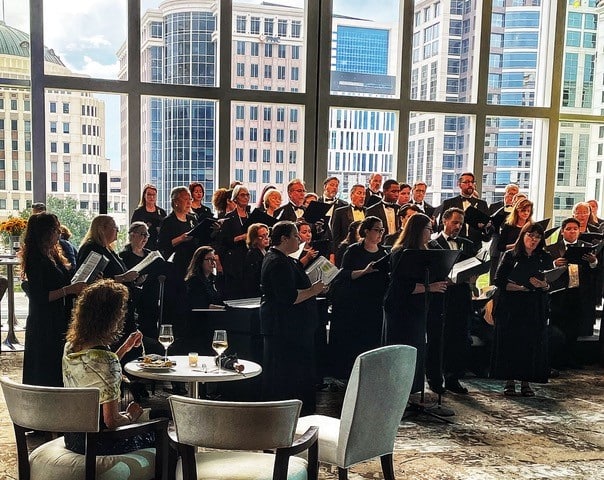
Okay, getting caught in the rain constitutes a mini adventure, but I did enjoy a different sort of mini adventure recently at the Dr. Phillips Center for the Performing Arts in downtown Orlando. The event was billed as a cultural collaboration between the Ukrainian Ballet, the Orlando Philharmonic, Bach Festival Choir, and Opera Orlando to raise funds for Ukraine. The event raised more than $500,000.

Bach Festival Choir performs for Ukrainian fund raiser

I knew going in that there were all kinds of sponsors of the event:

  • Presenting sponsors whose contributions were at the $25,000 level;
  • Premier sponsors at the $10,000 level; and
  • Lead Sponsors who contributed $5,000.

I was at the “buy a single ticket for $100.00 level.” While I was very happy to support this Ukrainian humanitarian effort, albeit at a significantly lower level, my primary impetus for attending was to hear the Bach Festival Choir. My husband is a member of the choir, and I wanted to support him.

Left-over sprinkles from an earlier rainstorm lingered at the 5:30 hour when my tuxedo clad husband was due to report backstage at Steinmetz Hall. “I’ll get there early and drop you off,” I suggested. “Then you will be able to see our pre-concert performance during the silent auction,” Jim suggested.

Assuming I was a good two hours early for the ballet performance, I was surprised to see luxury car after luxury car deposit elegantly attired women and men at the entrance to the center.

One of my favorite outfits

The crowd (including me) was herded inside to a check-in line where concert goers were given yellow lanyards with VIP credentials. “I don’t think my name will be on this list,” I quietly advised the lady with the clipboard when I finally reached the front of the line. “Well, if you aren’t on the list, you can’t go upstairs.”

Apparently, “upstairs” meant a cocktail and hors devours reception for sponsors where they would be serenaded by the Bach Choir. What am I going to do for two hours? I wailed to myself, simultaneously cursing my husband for failing to provide me with the requisite details for the evening.

The Employees Working an Event are Invisible to the Concertgoers

I got pretty chummy with the staff at the center as I aimlessly wandered around the lobby. It dawned on me how invisible the ushers, bartenders, and security guards are as fancy frocks rush past them en route to the bar, bathroom, or seats.

I was actually kind of glad that my experience on the periphery that evening increased my awareness of these unsung employees. “Why don’t you just get on that elevator and go up and see if they’ll let you hear the music,” one of those unsung staff members urged. That little push was all I needed to insinuate myself into a cluster of people awaiting the elevator.

“You don’t have a lanyard,” a guard accused as I exited the elevator. “I promise I’m not going to drink anything or eat the appetizers. I just want to see the choir perform.” “Ask that guy over there,” she directed pointing to a man wearing an official looking orange vest guarding the entrance to the DeVos Family room.

My new usher/guard friend could not have been kinder and allowed me to crash the party. Still very much aware that I lacked the requisite yellow lanyard, I lurked in margins of the room listening to the choir sing Prayer for Ukraine. Clanking silverware and the clamor of conversations competed for attention with their beautiful voices.

How tough it must be for performers in restaurants or night clubs trying to entertain people who seem more interested in baked ziti and stuffed mushrooms. Could the buffet food really be that good to justify ignoring the talent in front of them? My mini adventure offered me yet another revelation as I realized I’ve done the same thing in social settings.

My Mini Adventure Was Accompanied by a Surprising Compliment

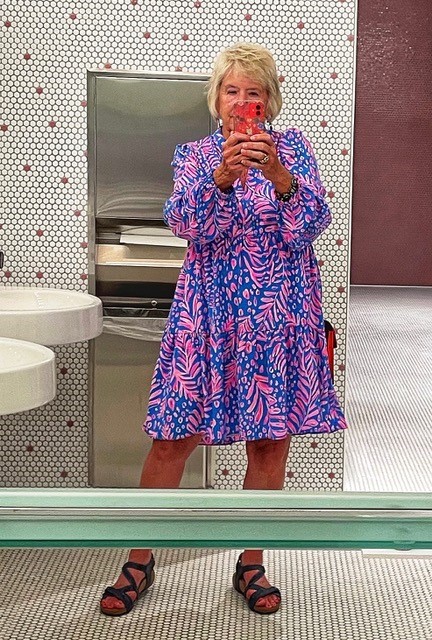
“Your dress is beautiful,” I heard a voice say. I turned to find a young, handsome, well-dressed man looking at me! “I saw you threading your way through the crowd.”

You could have knocked me over with a feather. I was trying desperately to avoid being noticed and the opposite had happened – complete with a compliment. “You have made my year,” I replied wanting to hug him.

I had to take a selfie in the bathroom after hearing the compliment

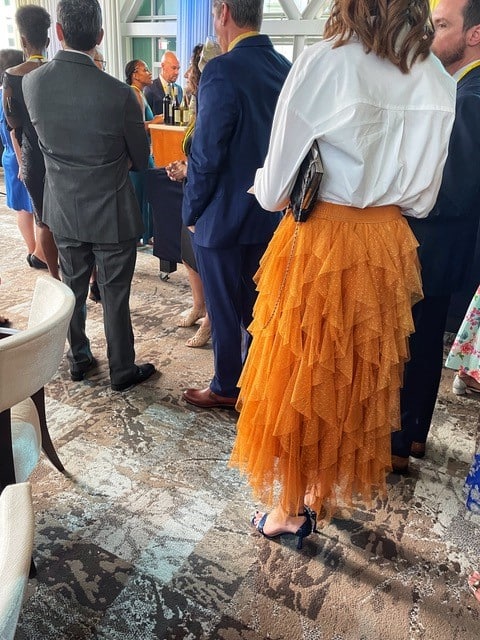
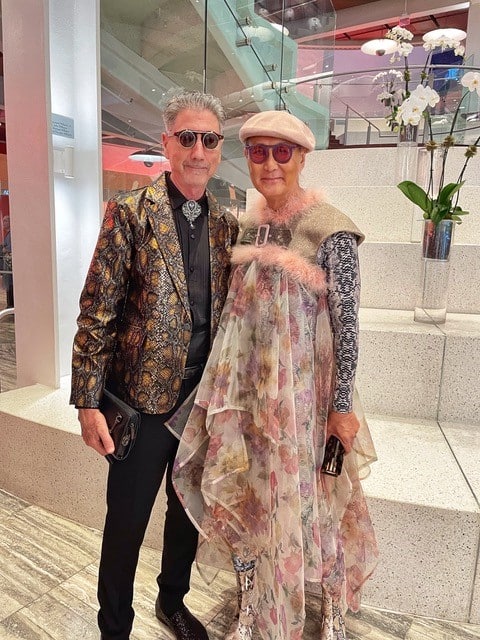
The event was a feast for the eye and the ear. The music was lovely as were the costumes. This was my favorite couple who had recently moved to Florida from Hawaii.

Best dressed couple

Due to the tardiness of my purchase, I sat in the nose-bleed section of Steinmetz Hall on the fourth tier. 

My view from the nosebleed section

It did not matter. This architecturally stunning performance hall was designed to be acoustically perfect, and I enjoyed every pirouette and orchestral note.

Mini Adventures Should Be Solo Affairs

I enjoyed the many gifts of this date night with myself. It’s recommended, at least on occasion, that a mini adventure be a solo affair. Alone, we can luxuriate in the freedom to make our own choices. One moment dictates the next.

Even our inner voices go silent during these escapades, ceasing their judgements for a bit. These “spaces” enable us to be more observant and mindful, more present, even to the point of noticing those on the margins who work hard to make our experiences pleasurable, and at whom we barely cast a glance. 

Let’s Have a Conversation:

What mini adventure you have taken recently? How did it impact the way you felt about yourself at the time? Do you think mini adventures should be solo experiences?

Read More

Lifestyle by Nature or How to Adopt a Style of Living That Helps You Thrive

keeping a nature lifestyle after 60

Earlier this summer, a running friend told me of a book she was reading written by an amazing woman. The more she talked, I began to realize I had met this author.

Still a young thing in my 50s, I participated in a Chi Running Workshop held in Bethesda, Maryland. One of the trainers working with Danny Dreyer was Betty Holston Smith, a super-fit, personable woman around 60 years of age.

A Trainer Turned Author

As Danny introduced his training assistants, he told us Betty was a coach for her local running group as well as serving as a Chi Running Instructor. We also learned that many years earlier, she and her sister were the first black students to integrate the school where we were meeting for this training.

So, these years later, as my friend excitedly told me about the book she discovered, I, of course, had to get a copy of my own. Betty’s self-titled book, Lifestyle by Nature, details her experience over many years of developing a process that has worked for her. She modifies her diet and activity as she learns of new or updated information.

80 Years Young and Still at It

Without going into specifics, Betty is now in her 80s and continues to be in incredible shape, continuing to run and swim fantastic distances and has an active and healthy lifestyle.

In her book, she shares how she achieved a full lifestyle change from some unhealthy living in her early adulthood, and how she still manages to maintain it.

Betty Holston Smith spent 30 to 40 years investigating health information and carefully developing a plan for herself. She happily shares what she learned and suggests we get curious and learn more as well. Her process developed out of her curiosity and desire to live a natural lifestyle, and she acted on both to achieve that life.

How We Can Achieve a Lifestyle by Nature

Betty eagerly shares with her readers a guide to finding their own best life through the six steps, done in order, that she advocates and continues to follow.

Step 1 – Look Inward

As you begin, find your internal strength. Betty suggests searching your psyche for that challenge or trauma you had to overcome. Search for the strength within.

You will use that inner strength as you proceed to your healthier life. Where you find your inner strength will be different for each person, and it will be important to be true to yourself through each step.

Step 2 – Mind-Body Harmony

Spend time considering how your body can impact your thinking and how your thoughts and beliefs can impact your physical health and achievements. I particularly liked the One Breath Focus technique.

Step 3 – Nutrition-Movement Harmony

Betty focuses on functional nutrition and functional fitness. She recommends quality foods along with exercise that strengthens, as well as increases flexibility, balance, and relaxation. She puts nutrition and fitness on equal status of necessity.

Step 4 – Lifestyle Change Line

In Betty’s experience, if you have worked diligently through the first three steps, it becomes easier. You will know when you are crossing that line.

It will likely be a struggle getting to Step 4, and you will have found your way through obstacles to get to this point. You will have your program down, but she recommends continuing to push and explore how to further improve mind-body and nutrition-movement.

Step 5 – Ongoing Challenges

New challenges will always be before us. Those challenges will keep us on the correct path and keep us curious. There is always something new to reach for.

Step 6 – Healthier Outcomes

This is where it all pays off. If Betty is any indication, when you arrive at Step 6 you will feel better generally, deal with stress better, be in better condition as you age and be stronger if some of those age-related health issues come your way.

Having followed the steps consistently, Betty believes, although you must continue to challenge yourself, the pattern of improvement and kindness to yourself becomes permanent internally.

Healthy Living Is Constant Work

I consider myself to be a healthy and active person who continues to work toward a better me. Although I doubt I will reach Betty’s incredible fitness, energy, and discipline level, I have room for improvement, and there is much to be learned from her.

I particularly like the appendices that provide a matrix for specific vitamins/foods/health possibilities. It is an easily used guide. Additionally, the appendix on body alignment is visually easy to follow.

Betty follows a plant-based diet, so you will not find most animal products in her chart. Although I rarely eat meat, I do enjoy fish, eggs, dairy products, etc. So, for my own reminders, I have hand-written in where they those products provide nutrients.

I’m pleased to have run across Betty Holston Smith twice in my life; once as a Chi Running Clinic participant and now through her book, learning far more about her and her path to a natural lifestyle.

Let’s Have a Conversation:

Do you attempt to follow a natural lifestyle, avoiding processed foods and working on mind-body harmony? What have you read recently that has made you curious about how much you can improve your life, your health, your happiness? Are you excited and curious about such a challenge? Let’s have a conversation!

Read More

How to Move Past the Wounds of Estrangement and Find Relief

move past estrangement

Feeling numb, dumbfounded, angry, and depressed over the angst of being cut off from a family member is expected. Estrangement can occur with adult children, mothers, fathers, siblings, uncles, aunts, grandparents, and grandchildren.

Descriptions include “feeling like I am dead” and “devasted.” What can we do to get our life back?

Estrangement Brings Uncertainty

Research describes the ambiguous and uncertain nature of being cut off from the family. Many focus on how they can arrive at their desired outcome and get things back to where they were before the event shocked their world.

A repaired relationship is an ideal outcome when the circumstances warrant reconciling. In cases of abusive and toxic relationships, individuals estrange out of self-preservation. Reconciling is not recommended unless behaviors have significantly improved.

Estrangement Is Overwhelming

The experience of estrangement harms our emotions and thoughts and is traumatizing. Prolonged immersion in meditating on the traumatic experience can be stressful and overwhelming. Stress is emotionally taxing, but we can devise ways to manage the emotional strain. Let’s add that coping can be productive and detrimental.

Overwhelming is when we lose the ability to cope and cannot function. We respond with feelings of grief and potentially chronic stress. Being cut off is a lot to navigate as humans. It can break us for a while if we aren’t careful. Protecting ourselves must be an intentional posture we cling to.

Being on Both Ends of Estrangement

I am aware of both sides of the estrangement condition. My severed relationship with my sister resulted because being with her was highly unmanageable. People around me were generous with their suggestions and “you shoulds” which only helped me feel more guilt.

Then my son decided to disconnect from his siblings physically and emotionally about five years ago. And later he disconnected from my husband and me. The ache and shock would not subside.

But I needed to continue living; I avoided dealing with the blow.

Avoidance Is Not the Solution

Compartmentalizing pain is a great coping mechanism. It’s akin to putting stuff in the attic for a day you might get to it in the future. Compartmentalizing is a defense mechanism used to avoid and suppress our emotions. Avoiding can be helpful when we are distressed but still need to show up for something important. But in the long run, avoiding prolongs the pain.

It is most helpful when we go back and sort through the box. The stuff I keep in my literal attic is mostly stuff I cannot part with for now. It has meaning and value. I saved some baby blankets in a box only to find they took on that musty smell.

When it comes to our figurative attic or the pain we want to avoid, we only get relief in the short term. Contents in the attic do not just sort themselves. We need to go in there and process. We move past so we can find relief and live despite the blow.

How to Move Past the Wounds of Estrangement

Get Support

The wounds of estrangement require someone to come alongside us and be there to help share and bear the burden. Trained therapists guide someone towards healing.

A supportive therapist and friend will patiently listen as you ventilate and make meaning of what has happened.

They know how to help you feel heard and give nonjudgmental feedback. Therapy is where you can take that box out of the attic as it is, and someone skillfully enables you to process it.

Estrangement support groups will also provide an opportunity not to feel alone and gain insights. Therapy is where we talk about what’s troubling us and our desire to feel less distressed. Early in the estrangement and even lingering, we may experience grief, shock, denial, anger, guilt, and depression. But the shame one feels when their family rejects them keeps estrangement in the shadows. Shame also occurs when someone leaves a relationship.

The human need for connection is so great that when threatened by someone who needs to cut off, it shakes us to our core. Shame, differing from guilt, is feeling something is wrong with us. When we are ashamed to talk about what has happened in our family, it fuels our inability to move past and heal. Brené Brown, author of Daring Greatly, has amplified the necessity to be vulnerable as a pathway to courage.

To move forward and find relief, we need to honestly go into those attic boxes, even the ones that have been there too long, but take someone with us. The trouble with doing the work all alone is that we lose perspective on what has value.

If we have been in the throes of grief and are ashamed, we are likely critical and unloving toward ourselves. We might ruminate about our mistakes and condemn ourselves rather than forgive. Taking responsibility for our part is essential but being wedged in the mire of our shame leaves us stuck.

When someone witnesses these heavier places, they can reflect with an empathetic perspective. That friend, therapist, or group member can remind us that we are more than someone’s sibling, daughter, mother, or father.

You start remembering your strengths and values. Processing emotions and feelings help us build a bridge to who we are and feel more connected. We take the risk, feel heard, and find that connection.

Connection, along with love and belonging (two expressions of connection), is why we are here, and it is what gives purpose and meaning to our lives.

— Brené Brown, Daring Greatly

I know from those who write and speak to me that therapy has helped them to find a path towards healing. One woman was estranged from her daughter after she and her husband decided to divorce. When we first began, she could hardly get through a session without weeping over the loss of her relationship with her husband, daughter, and grandchildren.

Another woman navigated her anger over her two daughters “kicking her to the curb” with her desire to reconcile. The theme of those who have benefitted from therapy relay is empathy, and gentle guidance has helped them to move past the wounds and find relief.

Self- Care

As a therapist and wellness coach, I think self-care is probably one of the most misunderstood essential things humans require. Describing self-care as a practice of caring for oneself is part of the problem. Self-care is an attitude you commit to when you love yourself enough to know you are worth honoring. It’s more about knowing you are worth the effort and time to do what it takes to ensure you are well emotionally, spiritually, relationally, and physically.

As a society, we adore our pets. I will admit that I am guilty of loving my sorely missed little Lola more than myself. She went to her veterinarian appointments, was impeccably groomed, fed well, and adored.

On the other hand, I have avoided the dentist like the plague, forcing myself to listen to that cleaning tool. But besides self-care, such as getting enough sleep, eating nutritious foods, exercising, and drinking enough water, we need to reach into our attitude about ourselves.

Do we make time for social engagements and fun? Are we engaging in downtime that allows our bodies and minds to pause from all the pressures of life? Resurrecting a hobby that pleases us is an excellent place to start. Positive regard for our well-being means we are building a bridge back to ourselves.

Especially when we are dealing with the wounds of estrangement and our focus is on an outcome with someone we can’t control. We can influence how we move past the awfulness and emotional pain of being cut off.  

We can join a book club, take a pottery class, do volunteer work, and walk a trail with a friend. When we let accumulated intense feelings out, we begin to soften ourselves. Our self-care attitude is more than a manicure but an appointment with someone you care about. Cultivating self-compassion comes from self-acceptance and treating ourselves as we would a dear friend.

A daily self-care routine will help you build your reservoir to prepare you for the uncertain future. Breathing techniques, prayer, and meditation help us stay calm. Basic self-care is essential and so is having fun.

A spiritual practice helps us stay grounded. Journaling and gratitude practice are excellent mood lifters. The most significant predictor of well-being is gathering with those who love and value you. If it’s not your family, then connect with friends. Above all, it is the attitude that your life matters that will help you move past the wounds and find relief.

Let’s Have a Conversation:

What have you done to move past your wounds of estrangement? What has helped you get unstuck from your estrangement? What self-care practices have been the most helpful as you move forward?

Read More