Month: September 2022

4 Reasons Why You Need to Practice Gratitude Regularly (ASAP)

the power of gratitude

As you know, gratitude is the quality of being thankful. It’s a readiness to show appreciation for, and to return, kindness.

So, what are you grateful for?

If the answer comes easily to you, according to research, you’re set up to live a healthy, happy life.

To encourage you to practice gratitude regularly (as in, daily), here are four big benefits that come from gratitude, plus how you can easily incorporate it into your life starting today.

Gratitude Improves Your Relationships

According to a study by Sara B. Algoe and colleagues, gratitude increases your satisfaction with both your relationships and your life. By practicing gratitude, you amplify and strengthen your relationships, no matter how shallow or deep, new or old.

What’s more, there are so many science-backed reasons why being social is good for your health, including improved:

  • Mental health
  • Emotional health
  • Physical health
  • Cognitive health
  • Longevity

Packed full of benefits, right?

So, it’s worth improving this key ingredient for an ideal retirement lifestyle, which is your relationships and connection to people in your community, whether your family, friends, neighbors or even strangers.

Gratitude Helps You Sleep and Exercise

In a study of over 400 participants, researchers from Manchester, UK revealed a strong correlation between gratitude and the quality of your sleep. They discovered that gratitude “influences sleep through the mechanism of pre-sleep cognitions.”

Which means, if you go to bed with the right mindset of gratitude, you’ll catch better z’s.

On top of that, another 11-week study of 96 Americans, found that the participants who practiced gratitude by keeping a weekly gratitude journal exercised 40 minutes more each week compared to those who didn’t.

So, not only do you get better sleep, but also practicing gratitude gives you an energy boost for better exercising.

If you’re having trouble sleeping at night, you can read more about the importance of sleep + 11 sleep tips to help you get a good night’s rest.

Gratitude Boosts Your Physical Health

Naturally, if you’re exercising more, getting better sleep, and strengthening your relationships, gratitude will also improve your overall physical health.

There’s research to back up this benefit of practicing gratitude. One study out of San Diego, CA analyzed results of close to 185 patients.

Their discovery? People who have gratitude experience a range of health benefits, including a better mood, better heart health and (again) better sleep.

The team of researchers found that more gratitude in these patients was associated with “better mood, better sleep, less fatigue, and lower levels of inflammatory biomarkers related to cardiac health.”

The lesson is short and sweet: Gratitude positively impacts your overall health, which means your sleep quality, mood, fatigue level and cardiac health.

Gratitude Improves Your Mental Health

Gratitude is also good for your emotional and mental health. According to one study, grateful people tend to be more agreeable and open, which also means less neurotic. The same study found that gratefulness decreases depression and improves your life satisfaction.

What’s more, practicing gratitude reduces cortisol by 23%, and that means you have less stress overall.

After all, when too much cortisol hormone is released in your body, your blood pressure and sugar levels rise, which can ultimately lead to chronic problems like hypertension, carb cravings, and fat deposits on your face, neck, and belly (yikes!).

Now that you’re (hopefully) convinced practicing gratitude is a daily must, let’s get to some simple tactics.

Easily Practice Gratitude by Keeping a Gratitude Journal

One of the easiest ways to practice gratitude regularly is to keep a gratitude journal. It’s a powerful way to make gratitude a daily habit.

On top of that, gratitude journaling has positive health impacts according to 2016 pilot study. Researchers found that patients who kept a gratitude journal for two months showed reduced markers of inflammation and increased heart rate variability (HRV).

(HRV is a key indicator of your health since heart failure is normally characterized by a loss of HRV as a disease progresses.)

So, What’s It Take to Keep a Gratitude Journal?

It’s as simple (and personal) as writing down each day what you’re grateful for.

Formore specific tips on getting the most out of gratitude journaling, look to Robert A. Emmons, Ph.D., the world’s leading scientific expert on gratitude and renowned author, who recommends these gratitude journaling tips:

Don’t Just Go Through the Motions

Make the conscious effort to journal for the purpose of becoming happier and more grateful, rather than just as a routine exercise.

Go for Depth Over Breadth

Dig deep and elaborate on the details of why you’re grateful for something, instead of only listing off typical items.

Focus on People

Appreciate people instead of possessions or things that you’re grateful for. You can even try writing and sending thank you cards to people.

Try Subtraction, Not Just Addition

Count your blessings, but also try picturing what your life would be like without certain people or things.

Savor Surprises in Your Life

Jot down notes about life’s surprising and unexpected joys. This will elicit a stronger level of gratitude.

Grateful for You

THANK YOU for being proactive in educating yourself to lead a happier, healthier life. You’re helping to shift our culture to be better – simply by reading and implementing healthy habits into your daily life.

It’s our everyday mission to help people live a purposeful retirement lifestyle to be active, healthy, and engaged – and to stave off scary stats on the rise, like Alzheimer’s, loneliness, depression, and nursing home occupancy.

For the path to a purposeful retirement life, check out this free workshop on How to Live a Purposeful Retirement Lifestyle.

Do you practice gratitude? Is this a daily habit? If not, what can you do today to commit to practicing gratitude? How can you practice gratitude regularly? Have you thought about a gratitude journal? Please share your thoughts with our community.

Read More
Miranda Kerr Just Launched Body Products & Now Her Skin ‘Has Never Felt So Soft’


If you purchase an independently reviewed product or service through a link on our website, STYLECASTER may receive an affiliate commission.

Model-turned-businesswoman Miranda Kerr has great skin. Sure, she has access to the best of the best derms and beauty treatments, but it’s skincare, too. If you’ve tried her brand, Kora Organics, you know how well it works without irritating the skin. It would only make sense Kerr would want to expand the Kora Organics line to body products. Skin doesn’t just stop at your neck.

“I feel it is important to take care of our bodies like we do our face,” Kerr tells STYLECASTER. Previously, the brand had a body lotion and body wash, and there’s still the best-selling Noni Glow Body Oil ($54 at Amazon). But this new body collection is reformulated with “new-and-improved,” organic ingredients and more sustainable packaging.

“We are also now Climate Neutral Certified for 2021 and beyond!” she says. “Climate Neutral will measure all of Kora’s carbon emissions for each year beginning with 2021 and we will purchase verified carbon credits to offset our entire footprint. These carbon credits fund projects across the globe which help combat climate change and replenish the environment, such as tree planting, water filtration systems, renewable energy sources and more.”

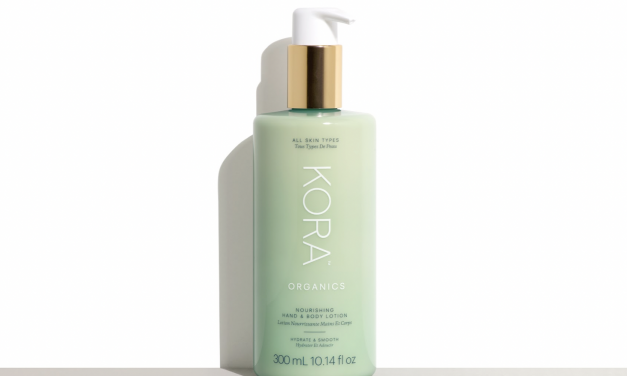
kora lotion

Kora Organics.

“Last year we began launching all our products in more sustainable packaging,” she continues. “We will be using more glass, aluminum, post-consumer resin and recycled FSC/biodegradable paper for our packaging. Our ultimate goal is to continue finding new ways to lower our carbon footprint with more sustainable business and manufacturing processes.” The brand also partnered with the Organic Farming Research Foundation, which works to inspire, educate and inform the public about organic farming.

kora body wash

Kora Organics.

In addition to the reformulated body lotion and wash, Kerr added an entirely new product to the offerings, inspired by the best-selling Turmeric 2-in-1 Brightening and Exfoliating Mask ($50 at Amazon). “I also received so much positive feedback from customers and dermatologists that were recommending this face scrub for Keratosis pilaris on the back of their arms, so I wanted to create a Body Scrub version that was just as powerful and uplifting but with a formula specifically designed for your whole body. I was inspired by our best-sellers in skincare in wanting to bring certified organic ingredients and powerful results to your full body.”

kora body scrub

Kora Organics.

I asked Kerr how she incorporates these new products into her routine so we can pretty much do the exact same thing. She starts by dry brushing with her Dry Body Brush ($32 at Kora Organics). Then, she cleanses her body with the Renewing Body Wash, which she says “is an incredible gentle cleanser that helps bind moisture to your skin even after rinsing.” Next comes Invigorating Body Scrub, which “scrubs away all my dead skin and leaves me feeling silky smooth, and glowing.”

When she gets out of the shower, she applies the Nourishing Body Lotion, “which leaves my skin feeling hydrated and strengthened,” with “a layer of the Noni Glow Body Oil” all over her body. “My skin has never felt so soft,” she says. Sign me up.

STYLECASTER | Ashley Benson Interview

Read More

Miranda Kerr Just Launched Body Products & Now Her Skin ‘Has Never Felt So Soft’


If you purchase an independently reviewed product or service through a link on our website, STYLECASTER may receive an affiliate commission.

Model-turned-businesswoman Miranda Kerr has great skin. Sure, she has access to the best of the best derms and beauty treatments, but it’s skincare, too. If you’ve tried her brand, Kora Organics, you know how well it works without irritating the skin. It would only make sense Kerr would want to expand the Kora Organics line to body products. Skin doesn’t just stop at your neck.

“I feel it is important to take care of our bodies like we do our face,” Kerr tells STYLECASTER. Previously, the brand had a body lotion and body wash, and there’s still the best-selling Noni Glow Body Oil ($54 at Amazon). But this new body collection is reformulated with “new-and-improved,” organic ingredients and more sustainable packaging.

“We are also now Climate Neutral Certified for 2021 and beyond!” she says. “Climate Neutral will measure all of Kora’s carbon emissions for each year beginning with 2021 and we will purchase verified carbon credits to offset our entire footprint. These carbon credits fund projects across the globe which help combat climate change and replenish the environment, such as tree planting, water filtration systems, renewable energy sources and more.”

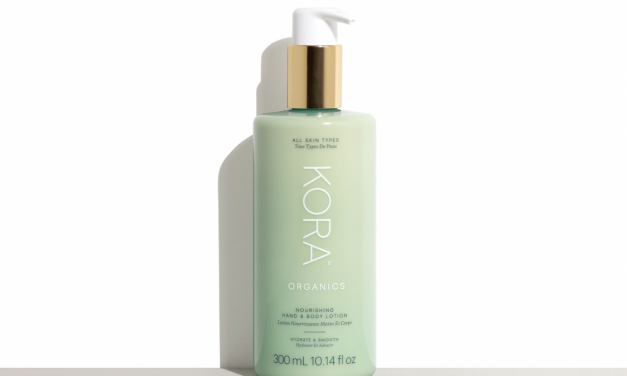
kora lotion

Kora Organics.

“Last year we began launching all our products in more sustainable packaging,” she continues. “We will be using more glass, aluminum, post-consumer resin and recycled FSC/biodegradable paper for our packaging. Our ultimate goal is to continue finding new ways to lower our carbon footprint with more sustainable business and manufacturing processes.” The brand also partnered with the Organic Farming Research Foundation, which works to inspire, educate and inform the public about organic farming.

kora body wash

Kora Organics.

In addition to the reformulated body lotion and wash, Kerr added an entirely new product to the offerings, inspired by the best-selling Turmeric 2-in-1 Brightening and Exfoliating Mask ($50 at Amazon). “I also received so much positive feedback from customers and dermatologists that were recommending this face scrub for Keratosis pilaris on the back of their arms, so I wanted to create a Body Scrub version that was just as powerful and uplifting but with a formula specifically designed for your whole body. I was inspired by our best-sellers in skincare in wanting to bring certified organic ingredients and powerful results to your full body.”

kora body scrub

Kora Organics.

I asked Kerr how she incorporates these new products into her routine so we can pretty much do the exact same thing. She starts by dry brushing with her Dry Body Brush ($32 at Kora Organics). Then, she cleanses her body with the Renewing Body Wash, which she says “is an incredible gentle cleanser that helps bind moisture to your skin even after rinsing.” Next comes Invigorating Body Scrub, which “scrubs away all my dead skin and leaves me feeling silky smooth, and glowing.”

When she gets out of the shower, she applies the Nourishing Body Lotion, “which leaves my skin feeling hydrated and strengthened,” with “a layer of the Noni Glow Body Oil” all over her body. “My skin has never felt so soft,” she says. Sign me up.

STYLECASTER | Ashley Benson Interview

Read More

4 Most Common Post Menopause Symptoms and What You Can Do to Control Them

4 Most Common Post Menopausal Symptoms and What You Can Do To Control Them

Life post menopause should not be a time of suffering. Rather, it should be a time of wisdom, freedom, and reflection for self-growth.

If you find yourself ill at ease with your menopause journey, addressing food and lifestyle changes, alongside any other intervention you choose with the help of your doctor, can be of major benefit.

Some women paint a very bleak picture of their menopause woes including depression, low energy, and being short-tempered while other women have very few symptoms, or no symptoms at all.

During peri-menopause symptoms are very different to post menopause. This article is going to focus on the post-menopause time frame.

Typical Post Menopausal Symptoms

  • Risk of osteoporosis and fractures increase due to bones becoming brittle.
  • Thinning and drying of the mucous membranes of the vagina and urethra, leading to painful intercourse or urinary incontinence.
  • Skin becomes thin, dull, and lifeless.
  • Loss of muscle tone.

Risk of Osteoporosis and Fractures Increase Due to Bones Becoming Brittle

Bone loss accelerates substantially in the late peri menopause and continues at a similar pace in the first post menopausal years.

Oestrogen and progesterone are needed in maintaining bone mass, and it is these hormones that decrease in production as menopause progresses. With the drop in oestrogen and progesterone, more bone is broken down while less bone building occurs, ultimately causing bone loss.

Many people know of the importance of calcium for strong bones, but little credence is given to Vitamin K and Vitamin D. When oestrogen levels decline, Vitamin K function in bones also declines, including its role in the proper formation of bone protein, which provides the framework for our bones. Most of us don’t get enough Vitamin K. Food sources include aged cheeses and fermented foods, dark leafy vegetables such as kale, collards, or spinach.

Vitamin D, is also required to absorb calcium and limit bone breakdown. Sun exposure boosts Vitamin D production in the skin so make sure to have access to the sun’s rays for at least 10-15 minutes a day in the summer.

Resistance training and weight-bearing exercises are critical for halting the incidence and progression of osteoporosis. When you perform weight-bearing exercises, your bone adapts to the impact of weight and pull of muscle by building more cells and strengthening the bones. Some activities recommended to build strong bones include brisk walking, jogging, gardening, yoga, and Pilates. Weight bearing exercises also improve muscle tone and prevent falls.

Vaginal Dryness

With loss of oestrogen come vaginal dryness, thinning of the vaginal walls and atrophy (narrowing of the vagina). In your younger years, oestrogen maintained a moist and healthy vaginal tissue.

Regular sexual activity stimulates the vaginal lining to produce natural lubricants, helping to delay dryness and atrophy in the menopause. Masturbating can bring about the same benefits also.

Thinning of the Skin

As we age and the levels of oestrogen decrease, this causes a reduction in the skin’s collagen content. Collagen is a structural protein that gives skin its youthful plumpness and resiliency. With decreased collagen, the skin is less able to maintain adequate hydration, and becomes drier and thinner.

The oil glands in the skin produce less oil, which makes the skin drier and more sensitive.

When we were younger, skin cells would die off and be replenished with new ones on a quick rotation cycle. As we age, this cycle does not move as fast as it once did. Exfoliation can help in assisting in keeping the skin soft and supple, particularly the face. Simply exfoliate the face once a week at the end of the day and allow the face to replenish with a hydrating face cream.

Moisturizing also should come from within. It is important to drink at least 8 glasses of water a day (8oz/250mls) as well as increasing oils in your diet from healthy fats. These foods include avocado, oily fish such as mackerel and salmon, olives, and coconut oil.

Loss of Muscle Tone

The hormone androgen assists in the creation of lean muscle mass from the calories you take in. Muscle cells actively burn more calories than fat cells thus increasing metabolism.

In menopause, androgen levels drop, resulting in less muscle mass. The result being decreased metabolism, less calories burned and increased weight gain.

Adding to the fray, your weight gain is also exacerbated by inactivity. As we age we tend to become more sedentary.

Women tend to lose about 1% of their lean body mass per year if they’re inactive. Cardiovascular exercise, such as brisk walking or jogging, strengthens the heart, lungs, and large muscle groups, while strength training helps build lean body mass in the arms, legs, and upper and lower back.

Increase you activity and become a participator instead of a spectator. Get out and go for a walk for your lunch break, join a local walking group or running group, or take up gentle yoga or Pilates.

Looking for more information? Here is an interview that I recently did with Margaret with more tips for dealing with post menopause symptoms.

What are your main menopausal symptoms that you would like to have discussed? Please join in the discussion below and share your tips to help you “survive the menopause”.

Read More

Social Anxiety – Do You Have It?

social anxiety

I’ve been a volunteer for an environmental action group for a while now. I recently received an invitation to their annual social with a note to bring a guest or guests. I RSVP’d that I would be there since it was a night I knew I wasn’t working and really had no excuse not to attend.

My husband, who anticipated he would know none of the other guests, agreed to go with me. When the night arrived, neither of us was enthusiastic about going, but because he knew it was important to me to be there, he went along with me.

Why the Hesitation?

Here are some of my feeble excuses: who will I talk with, and what do we have in common? Will I remember names of people I’ve met before? I’ve hardly done any work for the group; will they think I only like socials? What if it’s noisy and I can’t hear people?

My voice is soft – what if no one can hear me? What if my husband feels lost and can’t get engaged with anyone? What if we’re both ignored?

Social Anxiety

Have you come up with excuses like these? I call them excuses because while some of them may be true, none is the real reason. The real reason is I’m nervous walking into a social situation thinking I’ll have nothing to offer or will feel like an outsider. In simple words, I suffer from social anxiety.

It turns out we had a fine time. I reacquainted with some people I knew from the past and met a few new ones too, as did my husband. On our way home, we talked about how we felt before we got there and how we felt afterwards.

We both admitted to our nervousness about going and took a guess that the likelihood is strong that virtually everyone struggles with some degree of social anxiety.

Everyone Is Different

I talked with a few people about this since the event. Each and every one said they feel some level of anxiety before social events, even those where many friends will be in attendance. A few who I asked were shocked to find I feel that way since I have a calm demeanor, and even more were shocked when I told them that virtually everyone I asked has said they have these feelings of unease before a gathering.

Social anxiety may just be a part of the human condition. Maybe it’s our ancient brain remembering to watch out for danger. Maybe it’s our personality. What do you think?

Social Isolation Made It Easy (a.k.a. Worse)

The pandemic made it easy to avoid social interaction. Mandates required social isolation. While we social anxiety folks may have found a measure of relief in this imposed isolation, in the long run it has made us less comfortable with live gatherings.

If you used video calls as your major link with the outside world for two years, and even turned off video so no one could see you, coming back into the real world with live people may pose a real challenge. But don’t pass it up. Live human connection is vitally important.

Infants literally cannot survive without human touch and connection. When we’re in the midst of people who we know love and care about us, we thrive, even if we’re a little nervous before we meet. When we reach out and help a person in need, we thrive.

We Can Do It

When we conquer our social anxiety and realize most people share the same feelings, we open ourselves up to new communities of mutually caring people. It will change you and the world for the better.

For me, I’m going to keep saying yes to invitations. When I get there, I’ll introduce myself to one person and ask them what brought them there, or I’ll ask them about themselves. And I’ll do my best to stay calm, remember that person I’m talking to may have similar feelings, and be grateful that someone thought of me when they made up the invitation list.

How about you?

Have you been to a social event since the pandemic? Were you anxious about it? How did you conquer your social anxiety?

Read More