Month: October 2022

This Kim Kardashian & Victoria Beckham-Approved Exfoliator Is 35% Off—But Not For Long


If you purchase an independently reviewed product or service through a link on our website, STYLECASTER may receive an affiliate commission.

I’ve been fighting acne on-and-off throughout my life, but it came back in a big way a few years ago. Washing my face with my hands never seemed to make my skin feel very clean. I started to get frustrated that I wasn’t seeing a difference in my skin despite adapting to a 7-step skincare routine. Then, as a holiday gift, my mom bought me the FOREO Luna Mini 2 (AKA the device that celebs like Kim Kardashian, Victoria Beckham, and Cindy Crawford have all gone on record praising), and let me tell you, it’s been a game-changer.

After two months of using this cleansing brush twice a day, my skin finally started to clear. The breakouts almost completely stopped (aside from the occasional blemish here and there), my skin feels more elastic and it feels like my cleanser is actually getting rid of dirt, oil and dead skin cells.

RELATED: This Does-It-All Skin Tint Has Been Sold More Than A Million Times — What’s The Deal?

So, I’m obviously more than excited to say that this wondrous gadget is 35% off right now, as part of Amazon’s Early Access Sale. Here, you can shop hair and skincare essentials for huge discounts right before the holidays hit full swing.

As my family and friends can attest, it’s difficult for me to change my routine, but I religiously use this silicone brush twice a day—no matter how tired I am. To use it, I put my cleanser on my face, wet the cleanser and move it in a circular motion around my skin for one minute, then I rinse. I usually just use the basic setting and don’t play around with the other seven vibration levels. I’ve been using it since December and haven’t had to recharge it once.

Even though this brush is a little pricey, usually retailing at $139, it’s worth adding to your cart. The aquamarine cleansing brush is only $90 today, so you’ll be saving $50 on it. I don’t know how long it will last though, so you should shop it now.


StyleCaster | FOREO Cleansing Brush

Courtesy of FOREO.

Aquamarine Foreo LUNA mini 2

This bright blue silicone cleanser won’t be hard to find in your purse, backpack or suitcase. It’s a whopping 35 percent off, so definitely worth adding to cart if you’ve been lusting after this tool.

Buy: Foreo LUNA mini 2 $90


StyleCaster | FOREO Cleansing Brush

Courtesy of FOREO.

Pearl Pink Foreo LUNA mini 2

You can’t go wrong with this light pink cleansing device. It’s one of the more popular color options out there. And this colorway is also 39% off.

Buy: Foreo LUNA mini 2 $84

More Prime Day 2022 Deals to Shop

StyleCaster newsletter

Read More

Having Trouble Downsizing? These 6 Questions May Help You to Simplify and Move Forward

Upsizing Downsizing

Simplifying, downsizing, decluttering… these topics seem to be very popular. Why is this such an issue for so many people?

When I went through a major downsizing several years ago, one of the things I learned was that I needed a very small percentage of the things that I had accumulated over the years.

This is absolutely not to say that it was easy to sell, donate and throw out piles and piles of things that had been – and in many cases still were – important to me.

As I’ve explained in my book, The Upside of Downsizing: Getting to Enough, that sorting and disposing process was very painful at times; however, now that I’m on the other side of it, I realize how little I actually need in order to feel perfectly satisfied – to feel as if I have just enough.

More Than We Need

Why do many of us keep piling in possessions way beyond the point of need? Why do we cram more and more things into closets, drawers, garages, basements and attics?

And, when all that gets full to the bursting point, why do we rent an external storage unit for which we pay not an insignificant amount of money every month?

Each of us will have our own answer for that. I invite you to spend some time with these questions if you’re one of the many of us who have accumulated way more stuff than we need.

As I’ve talked to people about downsizing and simplifying, some version of the following story seems to be fairly common:

Jane, a composite of many people who told me their story, grew up with parents who had lived through the great depression, and so were very frugal. As a child, Jane remembers having very few (by today’s standards) clothes and three pairs of shoes: Sunday shoes, play shoes and school shoes.

Every year, she and her sister each received three Christmas presents from Santa. One usually was either something for school (a new book bag), underwear or pajamas. She had one much loved doll whose stuffing was falling out.

She and her sister shared a wagon. And since everyone around Jane lived pretty much the same way, she was satisfied most of the time.

The Impact of Technology

Over the decades, our world has changed significantly. Perhaps one of the most significant changes is the impact of television and the Internet. We now have ready access to images of how people live in places very far from us.

We see poverty, of course, but we also watch nightly sitcoms where seemingly average people are living in ideal apartments in New York or Paris or London.

We are flooded with ads for all the things we can buy that will make us beautiful, successful, desirable, sexy, younger… all we have to do is buy that thing. And we have ready access to fairly inexpensive things in a burgeoning number of megastores that are close by.

So, in the middle of all this is Jane, who grew up with three pairs of shoes, and now often can afford to buy many pairs of shoes at any number of outlet stores or with one quick click of the key at Amazon and have them delivered in two days.

We simply have lost track of what is enough.

This story, or some variation of it, may help explain the current situation for Jane, but what is at the heart of this? For those like Jane, there are two causes: 1) our tendency to compare ourselves with others and/or with an idealized self and 2) our fear of not having enough or of being without.

Each of these can be explained from the story of Jane above. Jane grew up comparing herself with those in her immediate environment, not with those thousands of miles away who were living very different lives than she was.

Additionally, she was not hourly being inundated with information about all the things she could buy that would make her ‘better’.

In Jane’s case, she also may have heard stories her parents told about not having enough or of having to go without. Today, she remembers very well a childhood where there was significantly less than what she has gradually become comfortable with and used to.

Your Story

This is Jane’s story. Yours may be very different. I’ve heard dozens of explanations for why stuff seems to accumulate in our homes. What’s yours?

If, over the years, you have amassed far more than you need and can reasonably use on any kind of a regular basis, why do you think that is? Are you comparing yourself to others that may have much more than you do? Do you have trouble making decisions?

Do you have an image of yourself that seems more desirable than the current image you have of yourself? Did you experience significant loss in your childhood?

Are you afraid of not having enough or of running out of things you need to keep yourself comfortable? Is comfortable enough or is there more that you’re striving for?

If you’re starting to feel as if it may be time to begin downsizing your home, now or in the near future, these are some questions you can begin asking yourself so when the time comes, you’re ready to face the difficult feelings that may arise.

And, if downsizing doesn’t seem to be in the near future for you, it still is an excellent time to think about these questions and begin to get rid of unused things and stop acquiring new ones unless something is realty necessary.

You may find this process challenging, or even painful, so consider providing yourself with some extra support. Ask a non-judgmental friend to help you by sitting with you and asking you what’s important as you reflect on the issue. Or consider hiring a coach like myself to help you.

You can do it! Good luck!

Let’s Have a Conversation:

Have you started the process of downsizing yet? Are you even considering it? What’s the first thing you would get rid of, if you were to start downsizing your stuff? Please let us know in the comments below.

Read More

Do You Allow Busyness to Overtake Your Life After 50 and Beyond?

Do You Allow Busyness to Overtake Your Live After 50 and Beyond?

I was trying to plan an outing with
a friend I’d not seen in a while. But when I looked at my calendar, I realized
that my next window wasn’t for another month.

“I’m really sorry,” I
said. “October is insane. I’m afraid that’s the reality of being a freelancer.”

“No, it isn’t,” she
quipped. “That’s the reality of being Delia.”

Work First, Life Second

Although the comment stung, I knew
she was right. Much in the way that other people are addicted to their
phones or other, more nefarious substances, I’m addicted to busyness.

And the primary way that I make
myself busy is through work. I frequently work on weekends. I tell myself
that this is down to the “plight of the freelancer” – and there is
some truth to that – but I know that a lot of it is my own inability to stop
working.

I was really proud of myself
recently for carving out a three-hour window to see friends every Friday
evening between now and Christmas. I finish teaching at 4 o’clock on Fridays,
and I’m usually totally beat. So I thought, “Yes! That’s when I’ll
chill!”

I told another friend how excited I
was about finding this window for my social life.

“You and your windows!”
she said, shaking her head. (Are
you seeing a pattern here with my friends
?)

My friend organizes her life around
seeing her friends and slots her work in around that. I do the reverse.

Fear of Death

I’d love to tell you that my
endless busyness is driven by the fact that I’m a high-energy person. I am. And
particularly
now that I love my job
, I don’t mind working extra hours when I need to.
Work is fun.

But it runs much deeper than
that. There is a fear of the abyss – of how to deal with the thoughts and
fears that crop up when I don’t have 10,000 things to tick off my to-do
list. 

I
worry that if I slow down, I won’t re-start
. It is, at the end of the day,
akin to a fear of death. In my mind, to stop moving is to stop being. And who am I without constant movement

This fear
is particularly acute on Sundays
, when I always feel like I’m right on the
edge of a tidal wave of despair. But if I swim fast enough, I can just escape
being swallowed up. Over the course of the day, what might have been depression
morphs into a prickly disquietude. And I ward it off through work.

Paying It Forward 

When I was growing up, my mother
used to say, “I’m cold; put a sweater on.” It was her way of
projecting onto me her own needs.

I hate to say that I now do this
with my own daughter. Except that instead of telling her to put a sweater on, I
tell her to stop being so busy. My daughter does a gazillion after-school
activities. (Apple, meet tree.) Her motto, which is emblazoned on a neon sign
in her room, is “Vive
la Vie
!”

Unlike me, however, my daughter
isn’t busy because she’s fleeing something. For her, living life to the fullest
means never saying no.

If someone invites you to the
theater or to a bubble tea or to a political protest at the last minute, you
say “yes,” even if you’ve got a mound of homework to get through. She
doesn’t want to miss out on life’s experiences.

I admire this in her. Just like I
admire my friend who organizes her social life first and her work life second.

And yet, I am constantly
admonishing my daughter to do less. “You’re too busy!” I tell her.
“Slow down a bit!”

Who am I really talking to?

Vive la Vie

Not for the first time, I find myself taking life lessons from my recently turned-adult children. I think it’s time to put my money where her mouth is and vive my own vie.

Which is to say, it’s time for me
to let go of the fear and be OK with slowing down.

I won’t be able to do this overnight.
But I can start with Friday afternoons. Are you free for a coffee?

Let’s Have a Conversation:

How do you handle busyness in
life and work? Do you have way too many commitments? What would be a good way
to slow down and simply enjoy life? Please share in the comments below.

Read More

Reviewers Say This Strengthening Shampoo Made Their Hair Grow In As Little As 2 Weeks—& It’s Down to $7


If you purchase an independently reviewed product or service through a link on our website, STYLECASTER may receive an affiliate commission.

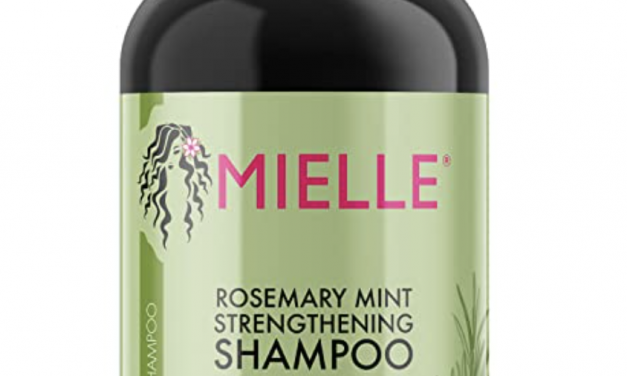
Dealing with hair loss is a frustrating situation all on its own, but when you add in the necessary products needed to tackle the problem, it can also prove to be a pretty pricey one as well. With so many serums, vitamins and treatments available, it can be difficult to figure out where to start you hair journey. Finding products that actually will get you to your desired results is even harder. With that, we introduce you to Mielle Organics Rosemary Mint Strengthening Shampoo. The best-selling hair care item’s formula packs a punch with its A-list lineup of ingredients, and it has the testimonials to back that up. And if you thought this magic-like shampoo would cost you over $50, you’d be sorely mistaken. Typically, this baby would cost you $15, but thanks to Amazon’s Prime Early Access Sale, you’ll be playing an even lower price of $7. We got your back (and your hair) besties!

So what makes this shampoo so great? It’s infused with biotin for one, which stimulates keratin production in hair and can increase the rate of follicle growth. Some people take their intake of biotin in the form of a pill, but isn’t it so much easier to channel hair growth with a good lather, rinse, and repeat cycle? The shampoo also provides intense moisture for all kind of hair types—working especially well for Types 3A to 4C natural hair—with a gentle formula that nourishes, cleanses and helps strengthen weak and brittle hair. Those with damaged hair know that having that extra boost that won’t cause further breakage is key. 

Mielle Organics Rosemary Mint Strengthening Shampoo

Courtesy of Amazon.

One shopper shared their experience using the product, with it providing wicked fast results. “I’ve been using this for about two and a half weeks now & already have new growth,” they wrote. “I am 5 months postpartum & have been shedding for about two months now.”

The reviewer continued, “The smell is very nature like & clean. It tingled my scalp the first few times I used it which I enjoyed. I just noticed recently some new baby hairs coming in on my hairline. I’m honestly shocked how quickly this has worked.”

In addition to Biotin, the Mielle Organics find also has rosemary and mint essential oils. Both of which are known to increase blood circulation which allows for more oxygen to be carried to your scalp. When a higher amount of oxygen is massaged onto your head, it stimulates your hair follicles, resulting in faster and thicker hair growth.

Read More

How to Update a Wardrobe After 70

update wardrobe after 70

For most of us, what we wore in our 60s was not all that different from what we wore in our 50s, at least not through much of our 50s. Maybe that’s because, as a savvy friend of mine suggests, the demarcation lines of how we see ourselves and how we are seen in the world tend to be drawn at the half-decade mark: 45-55, 55-65, etc. Certainly, the physical changes that occur with menopause would corroborate this idea for our 50s.

With that in mind it’s important to consider how our bodies change over time. That will give us clues about how to update a wardrobe after 70.

The Physical Realities of Fashion After 70

If you’ve searched for items online lately you may have encountered one of those questionnaires that asks for your age before suggesting the ideal size for a garment. This is because as we age there is often a change in the distribution of our weight.

The fit and drape of an item can look very different on two women of the same size but of very different ages. Gravity can displace busts and bottoms. Another thing about gravity is that we all tend to shrink, hence, the importance of keeping our bones strong.

Then there are the parts you just may no longer want to show. Veiny arms or legs, fleshy or sagging underarms, crepey or wrinkled skin, and skin discolorations are usually the ones most women complain about.

Personally, I admire women who have no insecurities about showing their battle scars and signs of aging. But if you feel that any of those elements is a problem, just avoid any trend that will reveal them.

And there’s the subject of posture. Clothing is designed for an upright body. If you have hunched shoulders or are starting to get a rounded back, now is not too late to start working on your posture. Yoga and regular gentle stretching can do wonders for this. (It also helps all your organs function better because you will take the compression off the front of your body.)

So, do an honest assessment of your body’s shape and the areas you feel you must cover before you shop for a new garment.

Style First

When I’ve polled my readers about shopping as they age, I always ask how they want to be seen. They consistently use words like sophisticated, hip, and self-aware. They also want to be “current,” meaning fashion-forward but not overly trendy.

But the biggest mistake I see among them, especially among retired clients, is that they have trouble letting go of the colors and styles they are familiar with, regardless of how those suit their current lifestyle and body. It’s hard to let go of the familiar. But the value is that updating a wardrobe can be a real mood elevator.

Evaluate Your Current Closet

I once did a closet clearing for a woman who hung onto oversized (she was tiny, even then) very “cutesy” dresses that were over 30 years old and that were considered extremely fashionable at the time. They also reminded her of an enjoyable phase in her life.

We analyzed the details of those dresses to determine what it was about them that she loved. Then we applied those criteria to several of her more current wardrobe items and created a wish list for what to add. She loved the new version of her style.

So, do some careful analysis of your closet. Be honest with yourself about whether you will ever, realistically, wear each of the garments again. But take note of what you like about certain pieces because there is always something more fashion-forward that will incorporate those elements.

Invest in Quality Purchases

When you update, be sure to go for higher quality garments. If money is tight, there are always sales on the better brands, especially now when retailers are scrambling for customers. And be willing to look at current trends, even those aimed at younger women. Once you understand what you need, you can apply the criteria of what you like to the trend and find something in a color or textile that you would enjoy wearing.

A change of climate or very different social environment might require a bigger wardrobe overhaul. But if you have always been a buttoned-down classic type, it’s not likely you will become a sarong-wrapping vamp overnight.

Or if you have always been something of a free spirit or quintessential bohemian type, you aren’t going to give up your layers of accessories and loose flowing garments and suddenly embrace a minimalist wardrobe. (Actually, you will likely just become an admired, more iconic version of yourself.) In either case, it might just be the textiles that need updating to suit that new climate or environment.

So let’s look at how to experiment a little with new or slightly different versions of the garments you already wear.

Colors and Patterns

Some women as they age – especially those with brighter, peachier coloring – can still wear a lot of multi-color prints. But for many women over 70, particularly those with more subtle or more rich-toned coloring, a mono-color or tonal outfit (two shades of the same color) will create the most elegant, sophisticated and hip look.

Mono-Tone Colors Look Great

That might be a combination like olive green slacks worn with a lighter shade of olive (or a similarly yellow-green toned) blouse or sweater. Or, for example, if your darkest neutral falls in the purple range, a deep purple suit with and orchid sweater or top could be spectacular.

The truth is, older women, regardless of coloring, look terrific in mono and tonal outfits. If you want to bring some brighter color to a darker monochrome, tonal, or all neutral look, accessorize with another color. But preferably, choose one that also incorporates one of the colors in the outfit. That could be a two-toned bag, shoes, or multi-colored scarf.

Your darker neutrals can be any in a range from black to charcoal, aubergine to burgundy, forest green to dark olive, brown to tan. But lately we’ve also started seeing a lot of white and ivory in slacks, jeans and outerwear for the fall and winter. That puts to rest the old adage that “you can’t wear white after Labor Day” (the first Monday in September in the US).

You can wear these darker neutrals with other neutrals in sweaters and tops and outerwear for a very sophisticated look. Or, for a really “wow” look, try pairing them with an exactly matching shade of white. This is an especially great option if your hair has turned white or silver.  

If you are carrying more weight, particularly in your mid-section, or if you are very busty, avoid anything with horizontal stripes, especially large stripes. They will add pounds to you and shorten you. Striped tees and sweaters are very popular again, but they mostly work for a more rectangle-shaped body or for women with smaller busts. Vertical narrow striped classic shirts will work for almost every style.

Patterns and Prints – What to Wear and What to Avoid

Whenever it comes to patterns, you have to take into consideration your height, weight, and the parameters of your style. Dramatic, flamboyant, or romantic style types, particularly taller women, can still wear larger prints in general, especially florals.

But be careful with novelty prints. Unless your wardrobe is still full of mostly quirky and playful things, they can make you look a little silly. Polka dots suggest youthfulness and playfulness, and work well if you have dimples and a fundamentally buoyant nature. But whatever your style, keep the dots on the smaller side.

Animal prints are a definite “yes” for women after 70: shoes, bags, scarves, skirts (yes, skirts!), even dresses. The only thing to watch for is the background color. If you have very striking coloring, lighter white or tan backgrounds are fine. If your coloring is more ivory, olive or pale, look for a toned down white or tan background.

Textiles

If the idea of a tonal or monochrome outfit seemed a little boring to you, you can make it really sophisticated by mixing up the textiles and weaves. For example, wear one or two pieces with a weave, one flat. That might be a textured or cable-knit sweater with similar-colored flannel slacks. Or, it could be a garment with a patterned weave, such as a herringbone or houndstooth jacket, worn with plain weave wool pants that match one of the colors in the jacket weave.

And you can always add a bag, shoes or other accessory with even a third type textile, such as suede or tweed. Or you could accessorize slacks and a similar colored cotton sweater or blouse with a leather jacket or blazer, all in the same color family.

Satin Is Trendy

But for special events or to add a little shine and flirtiness (yes, 70-year-olds can still flirt) satin is another option. It’s extremely popular right now in everything from blouses to skirts and dresses. A midi-length satin slip skirt, even one in an animal print, could be the basis of a great look.

Cashmere Works Well

Pair it with a soft cashmere or alpaca cardigan (or “jumper” as they are known in the UK) add a pair of sling-back lower heels, small gold or gemstone earrings. Add a blazer and you have a pretty and very fashion-forward holiday outfit.

And Then There Is Leather

If you are loathe to wear animal skins, the newer versions of faux leather really look amazingly like the real thing. And softer real or faux leather is extremely popular this year. We’re seeing it in pants, jackets, dresses, shirts, and trench coats.

Now a little personal confession: when I wrote the first edition of my book, I discouraged older women from wearing leather pants. That’s because fewer of us over 70 have the body to carry this look off without looking a bit like we’re “trying too hard.” Also soft, fitted leather is often pretty revealing of the body underneath it. If you have a big bottom, heavy legs, or really thin legs, I don’t recommend it.

But I have been a bit chastised about this. One of my mentors told me that her step-mother looked fabulous in leather pants well into her 80s. So it’s your call. (BTW, I did edit that section in my book a bit!)

A dress, trench or longer blazer in leather is a fairly dramatic look. If you feel comfortable and authentic in it, that’s fine. But another option is a knee-length or midi leather skirt. This could be worn with flat – or flatter heeled knee high boots, tailored cotton or silk satin blouses or cashmere pullover sweaters, and a blazer, jacket or a longer cardigan. Our much-loved shorter cardigans will never really go out of style, but if your outfit is too prim or classic, consider the new longer cardigans for a more updated look.

Go Natural

Finally, go for as much natural fiber as possible in everything you wear. Woven bamboo or tencel drape beautifully, and wool, silk, cashmere, and linen last longer and are more flattering than synthetics. Just ditch any light weight cheap looking garment in polyester. You deserve better now.

How I Changed My Own Style After 70

In my 50s, a friend’s daughter (who taught middle school and therefore had to be a very good judge of personalities) said, “I get you – you want to be taken seriously.” Oh, was she ever right!

Because my underlying personality and style has always been a little bit quirky or playful, I often felt people didn’t get to see all of me. So, when I hit 70, I felt I had finally earned the right to own my more sophisticated side.

I went through my closet and tossed anything that seemed passe, required too many accessories to pull off, or just took too much work to convince myself that I could still wear it. I created a very wearable and much smaller wardrobe of very interchangeable items and kept a few of my hipper and edgier pieces and jackets to maintain the other facets of my style.

So, don’t let a number define you. Don’t fall into the trap of thinking you are stuck with limited options because you’ve reached your 70s. It all comes down to how you want to be perceived at this stage of your life. Dress up and show up.

We’ll look at style icons over 70 next month!

Let’s Have a Conversation:

How has your wardrobe changed since you turned 70? What have you stopped wearing that you used to wear? What new trends have you tried or are you considering? What has been your feedback about those?

Read More