Month: December 2022

The Dark Spot Treatment That Faded My Spots & Scars Overnight Is Down to $20 Until the End of the Day


If you purchase an independently reviewed product or service through a link on our website, STYLECASTER may receive an affiliate commission.

I know everybody and their mother tells us not to pick our zits because doing so will leave behind scars, but I simply can’t help myself. When I see a big honking whitehead on my face, the only thing I want to do is get that popped and out of my system. But, of course, this leads to the scarring that I’ve been warned about. Is the satisfaction of popping zits worth it? Welllllll sometimes. Hey, those things can hurt! And I have a product on my side that can help erase those marks fast. And when I say fast, I mean it. After just one use, I noticed a difference in an acne scar overnight.

My hero product is Peace Out new Skincare’s Dark Spots Serum. You might know the brand because it produces those TikTok-viral pore strips that suck up gunk like they’re Dyson vacuum cleaners. For the record, the brand has so many other life-changing products, like a retinol stick that makes using the exfoliant so much easier. But, I digress.

I tested the dark spot serum early before it launched, and let me tell you: This thing is no joke. I first patch-tested it on a new scar on my arm to make sure it wouldn’t result in any weird spots on my face and found that it lightened the area with ease. But the real magic happened when I used it on an acne scar on my face. I used one pump of the product on a particularly dark spot that was the result of some glorious cystic acne that popped up during my period. After just one night, the area was lighter and less noticeable. With a good concealer on my side, I could finally cover the spot for real.

I didn’t think this treatment could get any better—until I found out the entire site is 30 percent off  (one of the highest we’ve seen all year)—during Peace Out’s Holiday Sale. You’ll also get free shipping on all orders, so make sure to get this serum at a discount before the discount ends tonight. Usually $29, you can shop it now for just under $21.

RELATED: Reviewers Say Their Hair Has ‘Never Been So Full & Beautiful’ With the Help of This Purifying Scalp Oil

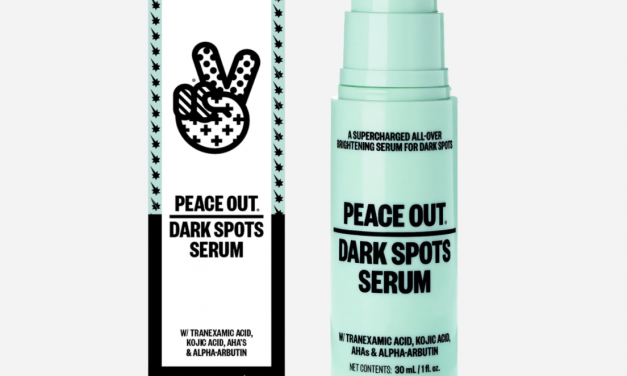
Peace Out Dark Spots Serum

Photo: Peace Out Skincare.

The brand calls this a “supercharged” serum and they’re not joking. This is a seriously potent potion! It’s chock-full of AHAs, chemical exfoliants like glycolic acid that help rebuild collagen production, as well as tranexamic acid, kojic acid and alpha-arbutin. All of these ingredients minimize the look of dark spots, brighten skin tone and even out the tone of your skin.

Per the brand, this unique formula can treat acne scars, dark spots, age spots and pollution damage. A dream come true.

I’ve used this on everything from light dots to extremely deep scars and it does the trick each time. For those harsher spots, it takes about a week to heal. I use it every night after my other serums and before my moisturizer and haven’t noticed any bad side effects. Not even dryness. This is a big feat given that my skin gets dry the instant I go outside!

For the record, the vegan serum lasts a long while. I’ve been using it every night for about a month and I don’t even think it’s anywhere close to done. Be warned: It has an odd smell to it, but that goes away after a little bit. A slight stinge to the nose is fine with me for the incredible impact this has on my face, anyways.

This is the kind of skin treatment I didn’t know I needed until I started using it. As somebody who suffers from acne and acne scars, it’s heaven-sent. It treats those scars better than anything I’ve tested, and I can’t imagine my skincare routine without it. With this serum in my arsenal, I know that my skin will be glowing and looking as healthy as can be. That’s something to write home about, am I right?!

Make sure to grab it during Peace Out’s Holiday Sale, alongside other top picks from the brand like this line-smoothing retinol stick.

STYLECASTER | Ashley Benson Interview

Read More

Heather Gay’s Pink Jumpsuit & Clutch

Heather Gay’s Pink Jumpsuit & Clutch

Real Housewives of Salt Lake City Season 3 Episode 11

Going into this episode of the Real Housewives of Salt Lake City, I can barely remember who is fighting with who! And then, just when I thought it couldn’t get more confusing, all of the ladies put blonde wigs on for a super random Marilyn Monroe party! I could barely tell who was who, but you’d better believe I’d recognize Heather Gay’s pink terry clutch anywhere. And while you won’t be getting your hands on her jumpsuit, if you love the bag, you can get that shipped to you Express, just in time for Christmas.


The Realest Housewife,

Big Blonde Hair


Heather Gay's Pink Jumpsuit & Clutch


Click Here to Shop her Bottega Veneta Clutch in Pink or Purple

Click Here for a Fab Amazon Style Stealer

Click Here to See her Express Jumpsuit

Originally posted at: Heather Gay’s Pink Jumpsuit & Clutch

Read More

Want to Live Longer? Learn to Need People More!

want to live longer

We arrange lunch with pals. We keep a doctor’s appointment and visit the dentist for regular cleanings. We schedule a yoga class and offer to pick up our grandchildren from school. We thank an employee or coworker who has gone the extra mile.

Our everyday interactions are all about people: our team members as we go through life. We are constantly building our medical or business network, our social and family support system. We depend on a lot of people in a day’s, a week’s, a year’s time. And they depend on us.

A key finding of The Longevity Project, Dr. Lewis Terman’s eight-decade study tracking 1,500 people from birth to death, is that people with large social networks live longest.

Another interesting discovery: “Those who helped their friends and neighbors, advising and caring for others, tended to live to old age.”

As we age, and some of our capabilities diminish, we need people more than ever. Sadly, research shows we spend less and less time with people as we age.

Our time with our children shrinks when they get busy with their own lives. Our time with coworkers dwindles as we ease into retirement and spend more time with our partners. If our partner dies before we do, the time alone expands as never before.

I think about this a lot. I have no children and work independently. I am divorced, and I could be facing a long stretch of years alone as an ‘elder orphan.’ It’s time for me to get busy building a larger team if I plan to make my 100th birthday.

Your Social and Family Network: Grow It and Nurture It

A good friend I hadn’t seen face to face in decades visited this year, and we were happy to go on a girls’ night out.

I mentioned what a rarity the evening was for me. She told me about the importance of her ‘library club’ – nothing to do with books at all; just a regular night out with girlfriends, no questions asked.

I don’t go out on my own in the evening, but I am adding to my team in other ways. I joined a music ensemble and network with a group of like-minded business owners in the area.

A neighbor asked me to volunteer for a committee. Do I want to? Not really. But I did because I need a neighbor on my team since I’m new to the ‘hood.

Everything we commit to may interfere with our important relationships. But in my case, I believe growing my social network is important to my future happiness. If I miss lunch or cocktail hour with my current partner now and again, I think he’ll understand.

For your closest team members – friends and family – little things mean so much. If a girlfriend is stuck at home after knee surgery, it only takes five minutes to stop by with flowers and a hug.

Say your grandbaby has the sniffles and can’t go to daycare. Play hooky together, making cookies and memories and easing a burden for your frazzled daughter-in-law. If you can find the time to make a favorite dinner? Kudos!

When my sister and I text our mom “Good Morning” each day, she knows we care. We know she’s okay when she texts back, plus it keeps us involved in each other’s day-to-day lives. That’s teamwork.

Your Body Guards: Trusting Your Medical Support Team

Your primary physician and your dentist are key players on your medical support team. If you don’t like them or feel like they don’t care enough about you, start shopping for new medical professionals. It doesn’t hurt to look for someone younger than you who is experienced with treating older patients.

I chose my current physician carefully. My previous doctor went into concierge care, way too rich for my pocketbook.

I started asking friends and medical professionals, as well as my insurance company, and found a good fit. During early visits, I was dubbed their ‘pediatric patient’ because I was so much younger than most of the clientele.

Just recently, I had an incident on vacation where my pulse dropped dangerously low. It’s pure luck a vacationing paramedic stood next to me when I passed out.

“You might be a candidate for a pacemaker, young lady,” he told me. One call to my primary physician, and I was scheduled with a cardiologist the day I returned home. That’s awesome teamwork!

Getting the Job Done: Your Service Team

It doesn’t matter if it’s a waiter, a car mechanic, your hair stylist or the trash service – it’s important to treat the people who serve you with great respect. When I tell the landscape guys the grass looks great, it makes them feel good about their job.

My mother has called the same driver to pick up or drop off family at the airport for as long as I can remember. Just recently, she hopped a plane herself to visit me in Florida. Her driver is retired now, but that didn’t stop him from helping his favorite long-time customer with her ride and her luggage.

Some peers of mine, who aren’t that keen on aging, complain and are more demanding each time I see them. I hope they adjust before ill temper becomes a habit. Life is too short to hang with a bad attitude.

In his book The Mature Mind, the late Dr. Gene D. Cohen, former director of the National Institute on Aging, makes a very good point:

“With age we are often more discriminating about our relationships. Research shows that older adults more readily sever superficial or unsatisfying relations in order to spend their time with people they care about and with whom they feel comfortable and able to freely express their true selves.”

If you want good friends, you have to be a good friend – it’s as simple as that. That holds true for all the important relationships in your life. Go Team!


Please help Sixty and Me by filling out our short end-of-year survey!


Let’s Have a Conversation:

How are you growing your social network as you get older? What could you do to be a better friend or team player? What are your fears about isolation or loneliness in your coming years? Please share your thoughts and insights below.

Read More

5 Reasons a Dog Can Be a Boomer’s Best Friend

Senior woman having a dog

Many baby boomers, like myself, own dogs. My husband Eric and I are the proud ‘parents’ of five German Shepherds. They have become a part of our family now that our kids are grown and left home.

They are our official mental and physical fitness trainers because they keep us active, healthy, happy and stress-free. They also happen to be very large ‘professionals’ with an average weight of 90 pounds each!

Boomers like us are reportedly the first generation of Americans for whom pet ownership is common. We represent about 37% of all pet owners, and, while people historically tend to own fewer pets as they age, boomers show no signs of slowing pet ownership.

Surprisingly, though, very few people truly understand how beneficial these furry family members are to our overall health and wellbeing. Many scientific studies support the positive health benefits of pet ownership. Owning a pet, especially a dog, has been associated with all of the following:

Reduced Risk of Heart Problems

A nationwide population based study of more than 3.4 million people over 12 years suggests that owning a dog is linked to a longer life.

The results of the study were published in Scientific Reports on November 17, 2017. Reportedly, dog owners have a lower risk of death due to cardiovascular disease than people who do not report owning a dog. They also have a lower risk of death from other causes.

Longevity was more evident for those people who lived alone with a dog as compared to those who lived alone without a dog. This may be due to the fact that pet owners are more likely to exercise. Even just one hour of physical exercise can counteract the effects of sitting for six to seven hours a day.

Lower Blood Pressure

The American Heart Association released a scientific statement affirming “an association between pet ownership and lower blood pressure.” This could be due to increased exercise levels or bonding and companionship with one’s pet.

Lower Stress

The companionship people receive from their beloved pets better equips them to deal with stress. Petting and playing with your dog helps your body reduce the release of cortisol, the stress hormone. It also promotes relaxation.

Improved Social Behavior

study was conducted in Germany with dementia patients in a nursing home. The patients were provided therapy sessions that included dog visits.

Those that worked with the dogs had significantly longer periods of verbal communication, physical contact and longer attentiveness than patients who did not have any interaction with the dogs.

Similar associations have been found with dogs and children with autism as well. Walking your dog is also a great way to get out of the house and meet other people, so the social benefits are numerous.

Overall Wellbeing

People with pets are generally found to be happier, more trusting and less lonely than those without. Pets also give structure to our days and help keep us in the moment, both of which are important once we retire.

Best Breeds for Boomers

German Shepherds like ours may not be the best breed for some boomers though. They shed a lot, are high on energy and require lots of physical activity.

However, they are great swimmers and one exercise that all baby boomers should engage in is swimming. Water workouts are great for our bodies, and these dogs can be great pool companions.

Before you start looking, however, there are some things that we, as boomers, need to keep in mind:

Energy Levels

Think about your energy levels and try to match them with your dog. Just because a dog may be small, doesn’t mean it won’t require a lot of exercise, play and entertaining. Sometimes the smaller dogs are the liveliest!

Pet’s Health History

Check out your prospective pet child’s health history. Some boomers may have fixed incomes and should get an idea of what kinds of healthcare costs your new family member may require.

Puppy or Adult?

Seriously consider getting an adult dog rather than a puppy. While puppies are admittedly cute and fun, having one around is like having a newborn at home. I know you love your grandkids, but would you really want them around 24/7 while they are still in diapers?

While there are others, Dog Digest recommends the following as probably the best breeds for boomers:

Pugs are affectionate and require very little grooming. They don’t need a lot of exercise or space.

Schnauzer comes in different sizes to fit your living situation. These dogs are great with children.

Cocker Spaniels are of medium-size. They are outgoing and love to play, but they need a lot of grooming.

The Chihuahua is perfect for small living spaces. This dog is very affectionate and loyal, but keep in mind that it needs exercise.

Boston Terriers are of manageable size. They are friendly and love people, and are very easy to groom.

A Shih Tzu dogs are noisier but also playful, friendly and alert. They are great for apartments, but do need grooming.

Beagles are friendly, loyal and playful. Need more exercise than other breeds or they may “act out.”

Poodles come in different sizes. They are easy to train, hypo allergenic and adaptable.

A Yorkshire Terrier is a smaller breed that requires grooming. These dogs are adaptable and friendly.

Pomeranians are of small size and very intelligent. They require minimal exercise and grooming needs.

Should You Adopt, Buy or Share?

Once you’ve decided you want to add a pet to your family, and you have an idea of breed and size, the next decision you’ll need to make is whether to purchase or adopt your newest family member.

While there are arguments to be made for each, given the number of loving dogs who are eagerly awaiting ‘furever’ homes, I would recommend that you consider rescue first.

There are several reasons for choosing to rescue over purchase. The first is that you are saving your new dog from an uncertain fate – you may even be saving his life. There are also economic benefits. For example, many animal shelters will let boomers rescue dogs and other pets for reduced fees.

And if you would like to have the benefits of pets without owning one, there are programs that allow you to “rent a pet, share a pet with other families or foster an animal.” There are also therapy dogs available that can help you overcome physical and emotional issues.

Cats Count Too!

I don’t want to forget my fellow boomers who may have cats. Research is showing more and more that the stereotypical ‘cat lady’ may know something others don’t. As it turns out, one study suggests that healthy women over the age of 50 were 40 percent less likely to die of a stroke if they had a pet.

Additionally, cat ownership has been associated with a lower stroke risk than dog ownership. One researcher speculated that cat owners may have personalities that protect their hearts, rather than the cats themselves affecting heart health.


Please help Sixty and Me by taking our end-of-year survey!


Let’s Have a Conversation:

What is your experience with pets? What kind do you have or would you get? Why would you or did you choose that breed? Do you do anything special to keep them healthy?

Read More

Managing Stress with the Relaxation Response Method

managing stress relaxation response method

We have all experienced stress in our lives. It’s a normal and natural part of life. But did you know there is a difference between the stress response and the stress reaction?

To understand this, we must look to the pioneering work of Dr. Herbert Benson, who coined the term “Relaxation Response” to explain how to manage our response to stressful situations. So, let’s explore this and how it can help us manage everyday stressors.

The Stress Response

The stress response is an innate physical reaction within your body when faced with a stressful situation. For example, you may experience increased heart rate, shallow breathing, muscle tension, or even sweating when stressed.

This universally experienced “fight-or-flight” instinct can be helpful in certain situations as it allows us to respond quickly on a gut level. However, this quick action can lead to more harm than good if not managed appropriately.

The Stress Reaction

The stress reaction is a controlled reaction that comes after the initial stress response has been triggered. It allows you to use conscious thought processes and become aware of your body’s responses so that they can be managed appropriately for each situation.

By acknowledging these physical reactions and employing mindful techniques such as deep breathing or progressive muscle relaxation, you can gain control over them – allowing them to dissipate rather than escalate into full-blown distress or panic attack.

The Relaxation Response

Dr. Herbert Benson of Harvard Medical School developed a systematic approach based on his research into how people respond to stress and anxiety called The Relaxation Response. The Relaxation Response is the physiological antidote to the stress response. By understanding the body’s physiological responses to stress, the relaxation response can provide a solution for managing stress.

Practical tools for managing one’s reactions in a stressful situation, such as simple mindfulness exercises, deep breathing, meditation, yoga, Tai Chi, and progressive muscle relaxation (PMR), can be practiced daily.

The Relaxation Response can be elicited through numerous techniques and has been studied through the Benson-Henry Institute for Mind-Body Medicine at Massachusetts General Hospital. Consistent practice is the key to both improved stress reaction and calmness daily. This response can be elicited easily with just four simple steps:

1) Sit comfortably and in a quiet room with no distractions.

2) Close your eyes and focus on the task at hand.

3) Gently, breathe normally, and focus on your breath.

4) Repeat a word or phrase silently (such as “calm” or “relaxed”).

5) Practice for 5-10 minutes.

With practice, this technique will cause physiological changes in your body that will help reduce feelings of distress associated with stressful situations leading to better overall mental health and well-being.

Numerous practices provide an opportunity for calm and peace. However, when faced with stressful situations, it is essential to understand the difference between the stress response and the stress reaction to manage both effectively.

With practice, managing your physical reactions during times of distress can provide lasting benefits for overall mental health and well-being – allowing you to feel calm even during chaotic times in life!


Please help Sixty and Me by taking our short annual survey.


Let’s Have a Conversation:

How do you manage stress and stay calm? What is your usual stress response? What about your stress reaction?

Read More