
Month: July 2023

Cutting Ties with People-Pleasing

cutting ties with people-pleasing

How often have you sacrificed your well-being by placing other people’s desires, wants and needs above your own?

If you can relate, you are not alone.

According a 2022 YouGov survey, 49% of Americans self-identify as people-pleasers. That same survey concluded that 56% of women identify as people-pleasers whereas men were in the low 40 percentile.

The fact that more women are prone to people-pleasing should not be surprising to any of us over 60. Most women of our generation were raised and educated to be people-pleasers, even if we never heard that term until much later in life.

How does being a people-pleaser affect your well-being after 60?

More than you may realize.

There are many effective ways to cutting ties with people-pleasing. But first, you must be consciously aware of what is at the root of it. Otherwise, any effort to cut those ties will be akin to cutting weeds without pulling them out at the root.

This is the second of a six-part series titled, “5 Simple Steps to Being What It Is We Seek.” In this article and the accompanying video, I am going share with you what is behind people-pleasing and the #1 solution to cutting ties with it.

The Cost of People-Pleasing

At our core, human beings are loving and kind. Despite the chaos of our world, very few people want to see others suffer. This is especially true for those we have close relationships with.

It goes without saying that there is nothing wrong with wanting to make people in your life happy.

But like anything, when the desire to please others is out of balance with your own well-being, you cut yourself off from having your own desires fulfilled.

In a 2022 article on people-pleasing for The Washington Post, psychotherapist Amy Morin was quoted as saying:

“Trying too hard to make other people happy can come at a cost. For example, if you spend all day worrying about everyone else’s problems, you may not have enough mental energy left to focus on achieving your goals.”

From feeling unloved, unsupported, unworthy, and underappreciated to your emotional, mental, and physical well-being compromised, the cost of people-pleasing is steep.

With the hazards of people-pleasing clear, why is it difficult to cut ties with it?

The Root of People-Pleasing

At the root of people-pleasing is an unconscious feeling of unworthiness to have your own desires fulfilled. The origin of this is different for everyone, but there is a common thread for all of us.

According to most psychologists, unhealed trauma is the common denominator for feelings of unworthiness, which leads to people-pleasing.

This can range from fear of abandonment to being raised in an unstable environment. Under these harsh circumstances, the need to pacify one or more authority figures was an unconscious survival tactic.

Whatever the root of people-pleasing may be for you, it establishes a set of beliefs and behaviors to seek love, acceptance, and validation outside of you.

A Disempowered Mindset

We all want and deserve to be loved, valued, acknowledged, and appreciated. But when we unconsciously place our sense of well-being on the whims, opinions, or mood swings of others, we have disengaged from our true, authentic selves.

Unhealed trauma may be the root of people pleasing, but it is not what keeps it going.

What keeps most people stuck in a cycle of permission driven self-worth is a disempowered mindset. This may be the byproduct of unhealed trauma, but the experience of the trauma is long gone.

So, who or what is running the show?

Your inner critic.

Your inner critic hides the root cause of people-pleasing through limiting beliefs it disguises as being beneficial for you.

One example is how it convinces you that your worthiness, safety, belonging, and fulfillment in life come by way of other people’s permission and approval to feel loved, happy, and fulfilled.

This means your innermost desires take a backseat to getting the desires of others met first. In doing so, your value and worth rests entirely on outside conditions you have no control over.

Accept Who You Are

What is the #1 solution to cutting ties with people-pleasing?

Embodying your worthiness.

How do you go about doing this?

Accept who you are today by loving all of who you are now.

This is about loving and accepting parts of you that people have dismissed. It also includes releasing any regret, guilt, or resentment toward any past versions of yourself who may have sacrificed her well-being to fit in and feel loved.

Although it is wise to seek professional guidance when releasing unhealed trauma, ultimately, the responsibility to do this resides in the one place where all healing takes place and where all desires are fulfilled.

Within you.

That is why going inward through daily practices of self-love and self-care is an essential step to transform a disempowered mindset into an empowered mindset.

In the next article and video of this series for Sixty and Me, we will look at step two of being what it is you seek by focusing on, Embodying Your Worthiness.

In the meantime, join me in the video where I will share additional insights on people-pleasing. To help you integrate what you are learning, I will guide you through three journal prompts.

Let’s Have a Conversation:

Is people-pleasing causing you pain? What’s at the root of your people-pleasing habits? Do you think people-pleasing is different from helping when needed?

Read More
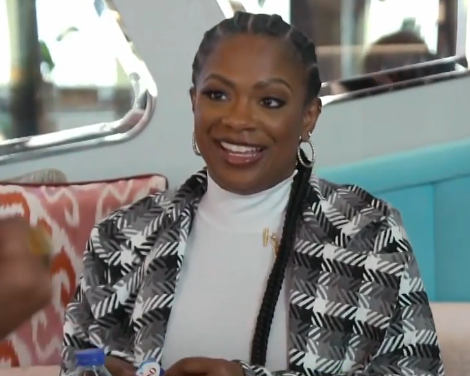
Kandi Burruss’ Black and White Plaid Coat

Kandi Burruss’ Black and White Plaid Coat / Real Housewives of Atlanta Season 15 Episode 11 Fashion

Kandi Burruss showed up to meet the girls in a beautiful black and white plaid coat on last night’s episode of Real Housewives of Atlanta. You never know what to expect on RHOA, but you can count on the girls looking fabulous where ever they are, even if it ends up being in an ambulance.

I’d have to guess that Kandi was not prepared to spend her last day in Portugal in the hospital. But as the supportive and good friend she is, she stayed with Kenya and stayed warm in the hospital thanks to her cute coat.

Best In Blonde,

Amanda


Kandi Burrus's Black and White Plaid Coat

Style Stealers


Originally posted at: Kandi Burruss’ Black and White Plaid Coat

Read More

Let’s Talk About Our Lifelong Search for Intimacy

lifelong search for intimacy

If the infamous ‘man from Mars’ were to suddenly arrive on this earth, what would he think that people were all about? From scanning traditional media, not to mention social media, I would surmise that he would see a search for wealth, beauty, fame, power and influence – in short, worldly success.

And I guess a lot of people do want exactly these things. They want to be beautiful, rich or famous or, preferably, all three. They want to be powerful and/or influential people. And when they achieve any of these aims, they feel they have succeeded in life.

Not me. And not a lot of others like me. What we are constantly striving for is on a very different plane. We want to achieve various forms of intimacy.

This needs a little thinking about.

What Is Intimacy?

Intimacy entails a feeling of enormous closeness to another person, due to a willingness to be honest about one’s deepest thoughts. It means a lack of guile. Nothing hidden. Even things that might otherwise feel shameful.

We let the other person see us without the usual protective veil we put around ourselves, and we see him or her in the same naked light. It can be quite scary on both sides.

Very occasionally, it happens almost right away. We meet someone, and we know that there is something held between us, although we would find it difficult to explain what. Something about ‘knowing’ them even when we don’t.

But more often, it takes time to develop, building up over shared experiences, laughter and common interests. Plus, some other ingredient that is very difficult to specify, but we know it when we feel it.

Sex and Intimacy

When we talk of intimacy, the first word that comes to mind is sex. Quite reasonably. Sex is the purest form of intimacy, in the sense of physical ­– and, at its best, emotional – closeness to another person.

And perhaps I should have added sex to the list of things the man from Mars would see us searching for. But this is to confuse matters.

Yes, there is a very visible search for sex, but this is generally seen in its most physical form. We want it now. We want it to be exciting. We want sexual satisfaction.

But little of this is intimacy. Certainly not automatically.

Intimacy and Family

Sex is not the only form of intimacy by any means. We can – and frequently do – feel intimate with other members of our family members or a few good friends.

Some people say that ‘of course’ they have a sense of intimacy with other family members. They feel very close to either one or both of their parents all their lives. Sometimes, a woman will say that her mother is her ‘best friend’, with all that implies.

Or one or more of their siblings. Brothers and sisters share many of the same memories – whether of a happy or an unhappy childhood – which brings its own form of closeness.

Looking down the generations, perhaps the ‘purest’ form of intimacy comes between parents and their small children.

No woman who has ever breast-fed her baby, whether for a few days or weeks or for much longer, will deny the enormous sense of intimacy generated by this simple act. Indeed, we know that we produce hormones which foster it.

And this continues to various degrees as our children grow. Adolescence is not the easiest time for intergenerational intimacy, but it can come back as this period becomes a thing of the past.

Going much further down the line, grandparents can have a special form of intimacy with their grandchildren, especially when they see them frequently.

But intimacy is not automatic with family members, especially once they are adults, so it should not be assumed to be the case. It depends on so many factors of circumstance and personality.

Friends

Intimacy, we all know, also develops between friends. Not all of them, of course, but one or two special ones. Not enough attention is paid to such bonds in our culture.

Close friendships are important. The friends who know everything about us. The ones we haven’t seen in years, but we pick up where we left off as soon as we meet or hear them on the end of a phone.

We know they are there for us in any hour of need. And vice versa.

Intimacy between friends develops for much the same reasons as do those between family members. We may have known them since childhood and gone through all life’s stages together – the marriages, the divorces, the grandchildren and so forth.

Or they may have developed because of some very intense joint experience. Working on a joint project that is very demanding. Sharing a moment of deep vulnerability.

I well remember sitting with my arm around a friend (at the time not especially close) when her husband had just died suddenly and her family had not yet arrived. It changed our relationship forever. It happened years ago, but the feeling of closeness is still there.

Spouses

I have left spouses (or partners) for last not because they are least important, but because they are so essential to this discussion.

The intimacy we feel with our partner has many different stages.

There is the initial meeting and courtship, which is exciting because it feels like a major shift in our lives.

We become deeply involved in getting to know them and their ways and letting them see us – the very meaning of intimacy. My husband reminded me recently about the first time we kissed and what it meant to him.

Then, there is the period when we have passed the initial stages and are settling down to a more prosaic day-to-day life. Children are being born, careers are being advanced, and it is harder work to keep the relationship on a good path.

Some couples lose their sense of intimacy at this point for a whole host of reasons, but not all do. It feels like a major accomplishment to hold it all together. And some who lose it along the way manage to regain it.

But then, if we are very very lucky, there is the intimacy of old age. When we have been through all the early and middle stages, the children have left home and it is only ourselves. There are many pleasures here – and a very strong sense of intimacy.

I feel that I am one of the lucky ones and thank my stars for this almost every day.

Final Comment

Occasionally, I see a note from a reader that she is very lonely. Perhaps she used to have close family or a spouse or friends, but something has changed, and this is no longer the case.

I want to tell her – or anyone in the same situation – it is never too late. There are numerous ways to engage with the world and find potential sources of friendship and, eventually, intimacy.

Go for it.

Let’s Have a Conversation:

Is intimacy important to you? Why? Do you have a sense of intimacy with family members or friends or a partner? How would you advise someone to develop intimacy with another person?

Read More
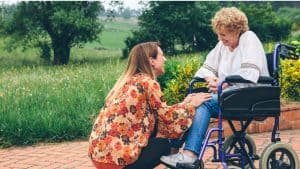
Maximizing the Capability of a Loved One with Dementia Benefits Everyone

cognitive capabilities dementia

Worldwide, there are over 50 million people living with dementia and receiving support from family and friends. Caregivers of those living with dementia have a tremendous responsibility and opportunity. They work tirelessly to meet the needs of the loved one and adjust to the decline with additional help from family, friends, adult day programs, and professional caregivers.

Sometimes caregivers overlook the capability of their loved one to contribute to their care. With forethought and patience, caregivers can identify tasks that their loved one can do. Maximizing the capability of a loved one with dementia benefits everyone.

What Is the Caregiver’s Role?

Carol Amos, author of H.O.P.E. for the Alzheimer’s Journey, was a caregiver for her mother who lived with dementia for over 11 years. She developed The Caregiving Principle®, a framework for the caregiver’s role. It basically states the caregiver’s role is to fulfill the needs of their loved one which the loved one cannot do for themselves.

Your loved one has needs, and in the early stages of the disease, they will be able to meet most of those needs on their own. However, as the disease progresses and as they age, your loved one will be unable to take care of many of their needs. These unfilled needs become the role of the caregiver or caregivers.

Ms. Amos’ family worked proactively to slow the decline of their mother’s physical ability and cognitive capability and thus to maximize her ability to care for herself.

Working on Physical Decline

They maximized their mother’s physical ability by scheduling doctor appointments for all of her physical illnesses. She also received vaccinations and age appropriate health screenings. The family carefully weighed the risk and benefits of any medical procedure. For instance, they agreed to their mother’s knee replacement and cataract surgeries because they believed the benefit outweighed the time, pain, cost, and risk.

Slowing Cognitive Decline

To help slow the decline of the cognitive capability, Ms. Amos states that it is important to receive a proper diagnosis from a memory or dementia specialist. Specialists will rule out other causes of the symptoms such as vitamin deficiencies, hormone imbalance, medication overload, depression, or even sleep apnea. The doctors will do extensive blood tests, cognitive tests, a brain scan, and other tests.

Caregivers need to prepare for the increase in required care. Initially, Ms. Amos’s mother needed family oversight but then as she began to need more, a social worker, then a social worker and a nurse, then assisted living, and then memory care came into play.

As Ms. Amos interacted with her mother, she focused on three areas to maximize her mother’s cognitive capability. They were:

Maintaining Routine

Establishing a routine provides a sense of comfort and familiarity. Set mealtimes were the foundation of her mother’s routine with activities added between meals. The family tried to maintain this routine when they visited or took her to appointments and outings. Ms. Amos believes her mother found comfort in this routine.

Minimizing Anxiety

Minimizing anxiety reduces stress and helps the loved one focus on the task at hand. Ms. Amos created several techniques to defuse anxiety in her mother. These techniques included “living in the patient’s world,” which is basically not correcting them when their mind takes them to earlier times.

Another technique, redirection, can be accomplished by encouraging them to change their actions or sometimes by simply changing the subject. In every situation, Ms. Amos always tried to set a positive tone, especially when her mother looked like she may say something negative.

Engaging in Stimulating Activities

Stimulating activities may slow the mental decline and help a person reach their full potential. Appropriate puzzles and games such as Bingo, UNO, and Dominoes are mind stimulating and fun. Almost any project or activity can be modified to stimulate the mind.

Caregivers can also identify tasks for their loved one to do such as sorting/folding laundry, cleaning deck furniture, or setting the table. The caregiver may have to provide some support such as labeling kitchen cabinet doors and drawers.

The task may take longer and the result may be slightly different. But does it really matter what side of the plate the fork is on? Caregivers must gauge daily if the task is appropriate with minimum frustration for both and adjust the activities as their loved one declines.

Maximizing Cognitive Capability Is a Win-Win

Maximizing the ability of the loved one benefits the caregivers and the loved one. However, caregivers also need to adjust their expectations as their love one declines. Finding the right balance of pushing the upper limits of a loved one’s capability can vary from day to day.

Finding that balance can reduce the stress and workload for the caregivers. It may slow the progression of the disease. But most importantly, it will increase the self-esteem of the loved one as they contribute to the household and their personal care.

Let’s Have a Conversation:

Do you think people suffering from dementia can contribute to their own care? What kinds of tasks would you entrust them with? How would maximizing a dementia patient’s cognitive ability help their family? Please join the conversation!

Read More

Can We Transform Our Brains? (By Coming to Our SENSES)

transform our brains

Exercise can transform your brain. Have you ever considered this before? Did you know that exercise can:

  • Boost your memory and thinking skills?
  • Increase your energy?
  • Improve your focus?
  • Decrease stress?
  • Decrease social anxiety?
  • Improve processing of emotions?
  • Build stronger neural connections?

And exercise has also been shown to stave off signs of early dementia and other neurological conditions. It sounds like miracle medicine for the mind, doesn’t it? That’s because it is!

Exercise Can Transform Your Brain

Did you already know that exercise was such a super power?

Do you know why?

Here is how exercise affects the brain and why it is so powerful. Exercise:

  • Increases blood flow to the brain, which exposes the brain to more oxygen and nutrients.
  • Induces the release of beneficial proteins in the brain that keep brain cells healthy and promote the growth of new neurons.
  • Reduces insulin resistance and inflammation, and stimulates the release of growth factors that affect the health of brain cells, the growth of new blood vessels in the brain, and even the abundance and survival of new brain cells.
  • Decreases feelings of anxiety and boosts memory and thinking indirectly by improving mood and sleep, and by reducing stress and anxiety.
  • Promotes the growth of new brain cells and protects the brain from aging and neurodegenerative diseases.

And there is another bonus: Exercise helps you sleep better too (which also improves your brain health).

Come to Our SENSES

In my series of articles on creating a more beautiful brain, I wrote about the importance of starting your mind makeover by first Coming to Our Senses for better brain health. And I am using the acronym SENSES (Sleep, Exercise, Nutrition, Stress Management, Eliminating toxins, and Self Care) to discuss the foundations for creating a more beautiful brain.

As you scan over the categories, you will see that they are common sense.

But what we must realize is that our common senses do not automatically translate into common actions.

Today’s topic of exercise is a perfect example of that.

It’s common sense and common knowledge that exercise is good for our brain, right?

And I suspect every neuroscientist and brain health guru on the planet believes that exercise is critical for having a healthier brain.

Wendy Suzuki, Professor of Neuroscience and Psychology at the New York University Center for Neural Science, tells us about the super power of exercise:Exercise is the most transformative thing that you can do for your brain today.”

Let that sink in… “Exercise is the most transformative thing we can do for our brain today!”

And if that doesn’t get your attention, then consider what American neurosurgeon, Dr. Sanjay Gupta proclaims, “Exercise is the only thing we’ve scientifically documented to improve brain health and function.

We Should but We Don’t

So, why then is it that more than half of us are not getting enough exercise? In fact, a recent study by the CDC found that 4 out of 5 Americans are not getting enough exercise.

Although we all know ‘we should exercise’ many of us often fall short. With the current recommended exercise of about 150 minutes a week, it seems like we could do better; don’t you think?

People, why the heck aren’t we lining up to sign up at the gym? Why aren’t we lifting weights, taking step classes, or attending the cardio extreme sessions?

Because some of us hate to exercise! In fact, some of us would rather get a root canal than go to yet another one of those 45-minute, heart-pounding, sweat-inducing, body pump classes! Am I right?

So, if the philosophy of ‘no pain… no gain’ just doesn’t appeal to us or inspire us, what then shall we non-exercisers do?

Well, rather than throwing in the ‘sweaty towel’, why don’t we consider a new paradigm for thinking about acquiring more fitness for our brain?

Adopt a New Exercise Attitude

Let’s begin by doing an exorcism on the word ‘exercise’ and adopt a new attitude.

There are, in fact, many brain-healthy people out there that don’t ‘work out’.

In Dan Buettner’s book, The Blue Zones, he writes about his research on the healthiest communities in the world. He found seven populations of people that lived longer and were healthier than others. And guess what? The Blue Zone populations didn’t have gym memberships.

In fact, they rarely refer to the term ‘exercise’. They simply integrate movement as they perform their daily activities.

Movement throughout the day is their way of life.

That should really come as no surprise to us. It wasn’t that long ago that most of ‘our people’ used to live their lives like that as well.

In 1968 Kenneth Cooper published the book Aerobics, which created a desire among the general population to take part in regular exercise. That was when gyms, fad diets and exercise workout routines began popping up left and right and a new craze was born.

The truth is that as much as the marketers would like us to ‘buy’ in, going somewhere to do our daily workouts just isn’t working out for most of us.

I love this YouTube video with Darryl Edwards (fitness explorer) as he discusses how changing our attitude and vocabulary about exercise is a ‘game’ changer.

Why Working Out Isn’t Working Out | Darryl Edwards | TEDxRoyalTunbridgeWells – YouTube

Move Instead of Exercise

Let’s start replacing the word ‘exercise’ with the word ‘movement’.

If we want to have a better brain, a clearer focus and improved memory then our goal is to move more! That’s it… that is what God made our bodies to do. Move. (And frankly, I don’t think He envisioned Eve in the garden doing cardio kick boxing! No judgment, of course, on those of you who do cardio kick boxing.)

So, let’s look at some basics for incorporating more movement into our lives:

Start with the math:

M+M is than M*2

Movement becomes synergistic and compounded. The more we move, the more we want to move and the better our Brain Health becomes – which then energizes us to move more!

15 Tips to Get Moving More

Set a Clear Intention and Know Your ‘Why’

Example: I will choose to move more every day. My Why is because I want to have a healthy brain and body to be my healthiest for myself, my husband, children and grandchildren. I also want to set an example for others to take responsibility in improving their brain health.

Begin Where You Are At

I know, I know, it sounds stupidly simple, doesn’t it? But, my friends, it is the truth. We don’t decide to run a marathon if we are currently not able to walk around two blocks. Just do what you are doing now plus decide to add More Movement. Remember the math?

Small Steps

If we want to make sustainable changes in our life and create more and better healthy habits, we have to start where we are at and take small steps to move forward. For example: I began moving more by parking further away at the grocery store, and I walked around the block. I took the stairs rather than the elevator.

Be Aware of Convenience

It doesn’t always correlate with better brain health. Drive-throughs continue to offer us a more sedentary lifestyle. Bank drive-throughs, prescription drive-throughs, or post office letter drop drive-throughs. And now we can just drive up to many grocery stores, sit in our cars and let them load in our purchases.

The Words You Say Create Your Reality

Make a pact with yourself to jettison the negative naysayer talk. No more

  • do I have tos,
  • I don’t want tos or
  • I hate tos

Continue to remind yourself that with each small step you take, you are getting stronger, your brain is getting better, and your mind is becoming more beautiful.

Change Your Identity

Create a new identity that aligns with your ‘more movement’ challenge. There was a recent study that was done at Harvard with the Wonder Woman Pose. Just by standing with your chin up and your legs apart and your hands on your hips for 2 minutes, you will change your attitude about yourself. And once you change your identity, you will change your actions and your decisions. What identity do I choose? “I am a strong woman with a beautiful brain.”

Our Everyday Chores Are Movement

You might have to fire the maid, let the cook go, as well as the butler and the gardener – if you have them. In 2022, a large international study that tracked the health of more than half a million people showed that the simple act of performing household chores like cooking, cleaning and washing the dishes can cut the risk of dementia by a stunning 21%.

Movement Plus Movement = More Movement

Attach more movement to what you already do. Be creative and make it fun. When washing dishes, you can do some toe stretches, or when vacuuming the floor shake some bootie. When cleaning the cupboards, hold up the tin cans and do some weight lifting. As you work in the garden, do more bends and stretches. You can even do a tight rope walk through your rows of corn.

There Is Power in One More

As we work to put more movement in our lives, we should brand this mantra in our brains: “There is power in ‘just one more’.” Park one more parking place further away, walk one more block, do one more sit-up, just one more push-up, one more lap in the pool. One more time up and down the stairs. Always be thinking, “one more…  just one more.” There is power in one more.

Reminders

We are often sedentary throughout our days without even taking notice. Set the alarm on your phone or your kitchen timer to remind yourself to get up and move more.

Play More to Move More

Kids are such a great example of play. They show us that movement is fun. When we were young, we were let out that classroom door and every child there started running, jumping, playing teether ball, swinging, climbing the monkey bars, playing baseball, volleyball or tag. It was fun! Remember?

Resurrect that feeling. When was the last time you played in the ocean? Go out and buy yourself a Hoola-hoop! Play ping pong, pickleball, golf, and shoot some hoops. Have some fun!

Mix It Up

Walk, dance, stretch, step, bend, push, pull, lift, open, close, sit, stand, balance on one leg, shake your bootie and strut your stuff.

Find Support

Make your movement more social. A daily walk with a friend is so much more fun, and shooting hoops and playing four-square with your grandkids makes for a great day, and a more beautiful brain.

Assessment

Use a Fitbit, your phone or other mechanism to help you measure your additional movements, steps, and successes.

Celebrate Your Wins!

Give yourself credit; every small step gets you closer to your destination!

My friends, let’s come to our SENSES and take care of the basics. Moving More will transform our minds and our brain health. So, let’s move it!

Stand up now and give us a ‘Wonder Woman’ pose!

As always, consult a doctor before making any changes to your exercise and/or movement routine.

Let’s Have a Conversation:

Won’t you share some of your tips and challenges for moving more? Is movement part of your daily life? Do you think you’re ready to switch your mindset from “exercise” to “movement”?

Read More