
Month: September 2023

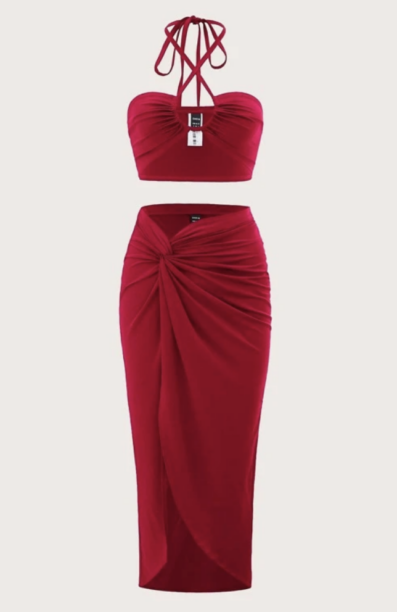
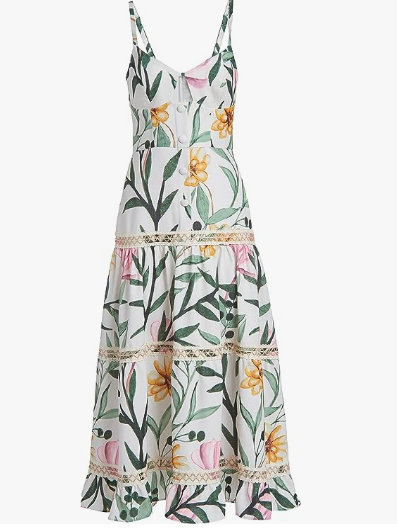
Jessel Taank’s Maroon Bralette and Maxi Skirt

Jessel Taank’s Maroon Bralette and Maxi Skirt / Real Housewives of New York Season 14 Episode 10 Fashion

Jessel Taank’s maroon pleated bralette and maxi shirt in Anguilla on last night’s Real Housewives of New York was her most daring look yet. And she totally nailed it. I am a huge fan of Jessel’s style as I think she brings it every time, whether she’s dressed up for a night out, wearing a cute swimsuit or relaxing at home in a sweater. And while I’m happy to deliver the news parts of the look are still in stock, really we should tell Jessel taank you very much for inspiring out style.

Best In Blonde,

Amanda


Jessel Taank's Maroon Bralettte and Maxi Skirt

Click Here for Additional Stock in Her Skirt


Style Stealers


Originally posted at: Jessel Taank’s Maroon Bralette and Maxi Skirt

Read More

Moving to New Home Later in Life: Things to Consider

moving to a new home later in life

In my prior blogs for this series, I covered the motivations for moving in your later years and making the big decision of whether to find a new home.

If you’ve made the decision to move after soul-searching and research, you have a few more questions to consider:

  • Will you move close to your current home or not?
  • Will you downsize, upsize or look for the same amount of space?
  • Will you buy or rent?
  • Will this be a second home?
  • Have you thought about time-shares or fractional ownership?

Moving Close by or Further Away

No matter how far you move, much work is involved. However, the further you move, the greater the effort in terms of cost, time and stress.

Moving close to your current home allows you to keep some of your established patterns. For example, you’ll still be close to friends and family. You may also continue to use your current doctor and other service providers.

Many moving companies say relocating even 50-100 miles away would still be considered a local move. Going over 100 miles away or over a state line is considered a long-distance move involving more planning, higher costs, and extra time.

Downsize? Upsize? Stay the Same?

Most moves later in life will probably motivate a need to downsize. Empty nesters often realize they have excess space and a lot of “stuff” they could live without. Downsizing will be covered in greater detail in a future blog in this series.

Some older adults choose to upsize when they move. In a 2019 survey by the Del Webb company, 22% of respondents said they planned to expand the square footage in their next home. Typical reasons for this are moving up to a long-desired dream home, adding living space for aging parents or having ample accommodations for visitors.

Some move to a new home with the same square footage. Both downsizers and “stay-the-samers” need to carefully assess what will fit into the new space. Take measurements of the new home to determine if all your belongings will fit.

Buying or Renting?

There are several issues to think about when considering the question of buying or renting in retirement.

Ownership has several advantages including ownership of an asset, tax benefits and not being at the whim of a landlord. The downsides of owning include housing market fluctuations and costs for maintenance, insurance and property taxes.

On the other hand, renting has the advantages of flexibility, cash liquidity and no maintenance and tax costs. However, the landlord typically builds these costs into the monthly rent. The negatives of renting are lack of home equity, few tax breaks and being at the mercy of the landlord.

Ultimately, the decision to buy versus rent depends on your particular circumstances. Weighing the pros and cons of each will help in making the best choice for your unique situation.

New Home = Second Home?

Perhaps your new home will be a second home. Here, too, the buy versus rent decision must be analyzed. It’s important to be brutally honest about your financial ability to afford two homes since it means doubling the cost of ownership. The last thing you’ll want to do is risk your retirement nest egg.

Perhaps you intend to buy a second home and earn extra income via short-term renting like an Airbnb. This decision is not trivial decision since the option involves significant costs and effort.

Rather than buying, renting a second home might make more sense for some people. Despite the downsides of renting (e.g. – having a bad landlord), the flexibility afforded by this arrangement may drive the decision. Sometimes, moving to a new location results in some unexpected negatives. In these cases, the ability to change to a new situation at the end of the lease could be a lifesaver.

Timeshares Versus Fractional Ownership

Another alternative for a new home could be a timeshare or its cousin, fractional ownership.

In most of these cases, you keep your existing home but put money toward an arrangement where you live elsewhere part-time. This may be a good option for those who can’t afford to purchase a second home outright but still want to have a nice “getaway” for part of the year.

One way to do this is via a timeshare. A timeshare revolves around the idea of “divided use rights” in which you have the right to be on the property during a specific time period. Timeshares have a bad reputation because of the high-pressure tactics sometimes used to sell them and some buyers’ difficulty in exiting their contracts. Nevertheless, for decades, many people have enjoyed the timeshare lifestyle.

An alternative to timeshares is fractional ownership in which multiple buyers own a fractional share of an actual real estate asset that can be sold or inherited. Like a timeshare, the arrangement allows each owner to live in the property for a specified period of time each year.

Unlike timeshares, many fractional ownership contracts allow owners to rent out part or all of their share time. Also, while timeshares are notoriously difficult to sell at a decent price, fractional ownership shares have an underlying real estate asset, making them easier to sell.

If you are considering moving to a new residence in your later years, carefully research all the options. Doing so will help increase the prospects for many happy years in your new home.

To learn more about finding your new home later in life, check out my eBook at Living50+.

Let’s Have a Conversation:

Are you considering moving? Would you downsize, upsize or stay the same? Do you think moving to a location within 100 miles of your current home is a good alternative? Where would you move if you could do it right away?

Read More

Ubah Hassan’s White Tropical Print Cutout Dress

Ubah Hassan’s White Tropical Print Cutout Dress / Real Housewives of New York Season 14 Episode 10 Fashion

Based on last night’s episode of #RHONY we now know that Ubah Hassan definitely knows what she likes and what she doesn’t like. What she doesn’t like is her phone being taken. What she does like is a certain resort wear brand that is very popular with the Real Housewives. And lucky for us no one has taken the remaining stock of her white tropical print cutout dress before we could get our hands on it.

The Realest Housewife,

Big Blonde Hair


Ubah Hassan's White Tropical Print Cutout Dress

Click Here for Additional Stock


Style Stealers


Originally posted at: Ubah Hassan’s White Tropical Print Cutout Dress

Read More

Routines and Time Management

routines and time management

In my recent posts, I’ve talked about a wide range of activities that give us the foundations for a healthy life. There’s still a missing piece of the puzzle, though. To make sure we regularly complete those activities, we need to develop a routine that incorporates them, plus strategies for protecting them from the unexpected.

The Benefits of a Routine

Of the many quotes that people like to attribute to Albert Einstein, one of the wisest is this: “The definition of insanity is doing the same thing over and over again but expecting different results.” What this quote always brings to my mind when I hear it are all the people I’ve known through the years – including myself – who have tried, fruitlessly, to develop healthy new habits without making these part of a daily routine.

For many reasons, routines are an indispensable part of accomplishing goals. They increase our personal effectiveness and self-management. They reduce procrastination. They help us to switch from one task to another more effortlessly. They eliminate distractions, allowing us to focus on our true priorities.

They make it easier to get things done on those days when we’re not feeling at our best. And they stop us from resorting to mentally burdensome measures such as multitasking, which, according to research by the American Psychological Association, is 40 percent more inefficient and ineffective than focusing on one task at a time.

Getting Started with Routines

The basic rhythm of human life is set by Earth’s spin on its axis. The logical starting point for building a routine, then, is the unit of time created by that cosmic dance – the day. Here is a generic example of a daily routine; I encourage you to develop your own according to what is best for you.

7:00 am Arise and greet the morning! Make bed.
7:15 am Exercise programme.
7: 50 am Shower.
8:20 am Dress.
8:30 am Breakfast. Deal with emails and any business.
9:00 am Ready for the day. Morning activities.
12:00 pm Meditation. Lunch.
12:30 am Brisk 20-minute walk.
1:00 pm Afternoon activities.
5:00 pm Dinner.
6:00 pm Relax.
9:00 pm Read a book. Prepare for bed.
10:00 pm Bedtime.

With a daily routine like this one in place, you’ll find it easier to fit all the ad hoc engagements of your week and month into windows you’ve set aside for them. In the routine above, they would slot into the parts labelled “morning activities” and “afternoon activities.”

Stopping Your Routine from Falling Apart

But what if an event can’t be accommodated within one of those windows? You will surely have had days when you’ve woken up ready to tackle a big list of things you’d carefully planned the day before, only to find yourself completely blown off course by a friend dropping by unannounced, or a long incoming call from a colleague, or a sick pet, or any one of a billion other acts of force majeure.

When such things happen, the temptation is to try to either cram everything into the day or let things that are important to us be pushed aside. But that’s a guaranteed formula for a muddled, stressed life in which self-care falls by the wayside.

What we really need in this situation is a system that lets us make calm, sensible decisions about amending our routine. The system I like to use is the Eisenhower Matrix. It’s based on the ideas of Dwight D. Eisenhower, whom you’ll no doubt know as the man who led the Allies in Western Europe during World War II and then served two terms as President of the United States.

As systems go, it has quite the track record. For what was D-Day if not the ultimate test of good time management?

The Eisenhower Matrix

The way the system works is quite simple. First, we assess each potential time commitment based on its urgency and importance. And then we prioritize what we do based on our assessments.

What do we mean by “importance” here? Well, it’s simply a question of what you value. And that’s for you to decide. The only observation I’ll make is that if you’ve been reading my posts, taking care of yourself is likely something that you value.

Under Eisenhower’s system, any given task will have to fall within one of the following four categories:

Urgent and Important Tasks

These include any time-sensitive tasks on your default daily schedule, plus all those serendipitous opportunities that are just too good to miss when they come along. On a more sombre note, they can also include health emergencies and other crises experienced by you or your loved ones.

When something is urgent and important, you can be confident that deviating from your schedule to fit it in is the right thing to do, not a sign you’re disorganized.

Not Urgent but Important Tasks

These are tasks that are crucial for your long-term goals and development but don’t necessarily have to be done at a specific moment in time. Many of the self-care activities I’ve discussed in my posts – and therefore many of the things you’ll have included in your default daily routine – fall into this category.

Things that are not urgent but important should only yield to unforeseen tasks that are both urgent and important. Don’t forget to reschedule them, and when you do so, you have full license to give them priority over the two categories of tasks that we’ll take a look at next.

Urgent but Not Important Tasks

These are things that ask for a swift response from you but don’t contribute to what you value. Things like sales calls from your cell phone service provider or requests from friends to run errands for them at short notice belong in this category, as do most notifications from the apps on your smartphone.

Eisenhower’s solution to these tasks was to delegate them to others. The extent to which you can delegate tasks will depend on your personal circumstances. I would say that if you can’t delegate them or they don’t involve a legal obligation, and if they impinge in any way on the things you want to do (even if what you want to do is just relax), feel empowered to decline engaging with them.

Having a short period in your daily routine to take care of these tasks is also a good approach. In our example routine, the part labelled “deal with emails and any business” is where they would get dealt with.

Neither Urgent nor Important Tasks

These are essentially tasks that bring us no value and that no one is asking us to do in a hurry. Often, they are mindless habits – flicking through TV channels, for example. If you’ve determined something is neither urgent nor important, you can in good conscience pass up the opportunity to do it.

When your time is planned and managed, it flows according to a regular pattern, and the unforeseen becomes much easier to deal with. And on a more philosophical level, it gives us the chance to stop living what Socrates called an “unexamined life.” We begin reflecting on what things are really important to us, which makes our lives more enjoyable, more meaningful.

Let’s Have a Conversation:

Have you ever tried creating a routine or using a time management strategy? What worked, and what didn’t? What effect did it have on your stress levels?

Read More