Month: September 2023

Taylor Armstrong’s White Floral Print Blouse

Taylor Armstrong’s White Floral Print Blouse / Real Housewives of Orange County Season 17 Episode 13 Fashion

The #RHOC ladies landed in Mexico and in style. Taylor Armstrong decided to go a classy route by wearing a white floral print blouse for the trip. I think this top is really chic and gives a nice coastal vibe, but NGL I was a little shocked when I found out who it’s by. No shade whatsoever it was just surprising to learn! This top is sold out, however the Style Stealers of it below will have oh saying “Oh chico, those are cute”.

Sincerely Stylish,

Jess


Taylor Armstrong's White Floral Print Blouse

Style Stealers


Originally posted at: Taylor Armstrong’s White Floral Print Blouse

Read More

16 Danger Signs for Seniors to Be Aware of This National Suicide Prevention Month

suicide among seniors

Chances are that during the course of your lifetime, or maybe more so in your 50s and 60s, you’ve known people who’ve said that they wanted to end their lives. Perhaps they were victims of trauma or were dealing with physical and/or psychological challenges. Maybe they were simply crying for help.

Regardless, it’s important to take any
discussion about suicide seriously. There’s also a school of thought which says
that those contemplating suicide do not always give warnings.

When speaking with colleagues who are
psychotherapists, that they’re often surprised to hear about a patient’s
passing. Some have even claimed that they thought another one of their patients
was more likely to take his or her life than the one who actually did.

The Nature and Incidence of Suicide Among Seniors

Suicide is a permanent solution to what might
be a temporary problem. September is National Suicide Prevention Month and a
good time to brush up on the facts about suicide and how to help those who
might be considering it.

According to the American Foundation for Marriage and Family Therapy, while older adults account for 12 percent of the population in the United States, they also account for 18 percent of suicides. And, men are more likely than women to consider taking their lives.

In seniors, or those battling life-threatening
illnesses, there’s something called “silent suicides” where death occurs as a
result of self-starvation, overdosing, or accidents. According to a study
published in the Journal for Family Issues, relationship issues are the most common
reasons for suicide.

In the elderly, in particular, loneliness,
living in isolation, and grieving the loss of loved ones are often causes of
suicide. Another reason in the case of seniors relates to aging,
life-threatening diseases, and the limitations placed on their lives due to reduced
financial and health situations.

Most often there’s a sense of hopelessness and
loss of interest in life. According to many sources, including the U.S. Department of Health and Human Services, having major depression can increase the
chance of suicide, so recognizing and treating this condition is very
important. Those who are depressed tend to isolate themselves and focus on
negativity more than the rest of the population.

Suicide Attempts by Seniors

Most suicide attempts are rehearsed or
planned. Seniors are more likely to be successful when trying to take their
lives. In fact, one in four seniors usually succeeds which is higher than those
trying to take their lives during their youth.

If you hear of or notice an attempt, it’s
important to intervene immediately. Some warning signs include insomnia,
nightmares, restlessness, and agitation.

If you observe that your loved one is becoming
more withdrawn, then it might be a good time to find out what’s going on. They
might withdraw because they do not want help but simply want to detach from
loved ones. That is, they just want to die.

The American Foundation of Marriage and Family Therapy claims that at least 40 percent of suicides in the elderly are due to what is known as “secret despair” where they might feel trapped by negative experiences and have a profound sense of hopelessness.

These types of suicides are related to
self-neglect, self-starvation, self-dehydration, and accidents.

After someone dies by means of a suicide, and the
person’s loved ones are questioned afterward, most say that they had no idea of
the person’s intentions. They’re often in shock and riddled with deep feelings of
guilt.

They might find themselves asking if there was
a sign they missed or if there was something they could have done to prevent
this irreversible act.

Impending Suicide: Signs to Watch Out for

While there are not always clues to an
impending suicide, these are behaviors to be cognizant of:

  • References to, or jokes about, suicide
  • Displaying a sense of despair
  • Indicating that there’s no reason to live
  • Feeling that he or she is a burden to others
  • Being in unbearable physical or psychological pain
  • Withdrawal/isolation
  • Sleeping too much or too little
  • Profound depression
  • Anxiety
  • Loss of interest in daily activities
  • Irritability
  • Engaging in risky behaviors
  • Giving away or selling personal items
  • Reaching out to people to say they love them
  • Self-neglect.

What to Do

My grandmother committed suicide when I was 10,
and nobody spoke about it until many decades later. While years ago, suicide
had been a taboo subject, rarely discussed, today the lines of communication are
much more open, and there are many more resources available for those in need.

Here are some immediate things you can do if
you’re worried about those in your life:

  • Be
    straightforward – ask if they’re thinking about taking
    their lives.
  • Remain in contact
    via phone, text, and/or email.
  • Visit when possible.
  • Seek professional
    help.

If you or someone you know has talked about suicide, please call:

  • The American Foundation of Suicide Prevention hotline at 800 –273-TALK.
  • Talk Suicide Canada hotline at 1.833.456.4566.
  • Suicide Prevention UK at 0800 689 5652.
  • Suicide Prevention Australia at 1300 659 467

If you live in any other country, google “suicide prevention [your country]” for the current number.

Let’s Have a Conversation:

What do you know about senior suicide in the
United States? Has a relative or close friend taken their life? Did they show
any signs that you only recognized in the aftermath of the event? Please share
with our community and let’s have a conversation.

Read More

Despite Popular Opinion, Laziness Has Almost Nothing to Do with Obesity

obesity and laziness

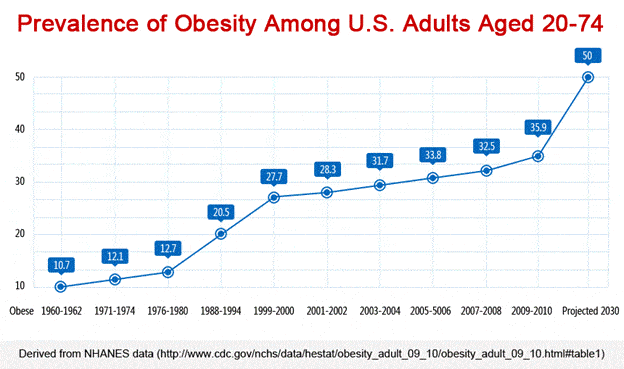
Fifty years into the obesity epidemic, people are quick to blame excessive weight on laziness. Well, I hate to dispel what would be a convenient explanation (although one that blames the individuals suffering with it), but obesity is not caused by laziness. Here’s what’s really going on.

A Look at the Data

First, take a look at what is happening to us as a country:

Now, ask yourself if people these days are truly any lazier than people were in the 1960s.The answer is no. In fact, researchers describe a more frenetic pace of life and more intentional physical workouts to combat obesity among U.S. adults in these modern times.

So, what accounts for the dramatic increase in obesity, if not a wholesale character flaw of laziness among everyone we know? The answer is that we have not changed – not our genetics and not what makes us tick as human beings, but that the environment in which we live has. It is both as simple and as deeply complex as that.

The Obesogenic Environment

An obesogenic environment refers to the complex interplay of factors within our surroundings that promote weight gain and obesity. These factors are incompletely understood but start and end with biochemistry, although along the way, there are additional things like physical, social, economic, and policy-related components.

Essentially, the environment we live in, including the foods we eat, the drugs we take, and the chemicals we are exposed to can change our most fundamental biochemical processes, while additional factors can either facilitate or hinder healthy behaviors related to diet, physical activity, and overall lifestyle, which in turn impact our risk of obesity.

Over the past half-century, significant changes have occurred in our environment that have contributed to the rising obesity rates globally. Some key changes include:

Pharmaceuticals

Numerous widely prescribed drugs, including antidepressants, steroids, hormonal treatments, and others, cause weight gain as a side effect. Millions of people take obesogenic drugs every day, and millions more are exposed to tiny amounts of the drugs in everything from breast milk to drinking water.

Food Staples Like Wheat

Around the time the obesity epidemic exploded, we began consuming an entirely different strain of wheat, known colloquially as dwarf wheat. Some researchers believe an unintended consequence of breeding the wheat and other staples like rice, soy, and corn to have higher yields and better storage quality was that they interfere with normal metabolism and lead to increased fat storage in the body.

Other Obesogens

These are chemicals that can disrupt the endocrine system and interfere with metabolism, leading to weight gain and obesity. While we do not yet know which, if any, of these are playing a role in the obesity epidemic, these chemicals abound in our environment.

There is reason to suspect that exposure to chemicals like Bisphenol A (BPA), phthalates, perfluorinated chemicals (PFCs), organophosphate pesticides, and polychlorinated Biphenyls (PCBs) may lead to weight gain. The mechanisms through which these chemicals influence obesity are still being investigated, and individual susceptibility can vary based on genetics, timing of exposure, and other factors.

From a nutrition standpoint, artificial sweeteners are consumed widely and have been suggested to interfere with appetite regulation and the body’s ability to process sugars. This disruption could potentially contribute to overeating and weight gain.

Sugar and high-fructose corn syrup, meanwhile, are likely the biggest culprits in causing obesity, especially since they are found in high quantities in everything from beverages to salad dressings. Beware of lots of “low-fat” foods that contain a lot of these deadly carbs. They may be low fat, but you will not be.

Other Causes of the Obesity Epidemic

The obesity epidemic is complex and multi-faceted. In addition to the list of environmental changes above, there are other factors in play.

Gut Microbiome

Our gut has a whole lot of bacteria that live there and exert an effect on our energy use and storage. A shift to some populations of bacteria is associated with increased obesity. Things like antibiotics push our system there.

Dietary Patterns

There has been a shift towards consuming diets that are energy-dense and specifically tested and engineered to produce neurochemical experiences of pleasure. The availability and consumption of highly processed foods, sugary beverages, and fast food have increased dramatically. These foods are frequently high in calories, fats, added sugars, and low in essential nutrients.

Portion Sizes

Portion sizes of food and beverages have grown substantially, both in restaurants and at home. Larger portions can lead to increased calorie intake, contributing to weight gain.

Sedentary Lifestyle

Technological advancements have led to more sedentary behavior despite working harder. Many people are spending more time in front of screens – whether for work, entertainment, or communication – and less time engaging in physical activities.

Urbanization

Rapid urbanization has led to changes in transportation patterns and work environments. Increased reliance on cars and desk jobs has reduced opportunities for physical activity.

Marketing and Advertising

The food industry’s marketing and advertising strategies often promote unhealthy foods, especially to children. These tactics influence food preferences and choices.

Accessibility and Convenience

Unhealthy foods have become more accessible and convenient than healthier options in many places. Fast food outlets and vending machines are often more prevalent than grocery stores offering fresh produce.

Social Norms

Changes in social norms can impact eating habits. For instance, larger portion sizes are sometimes seen as better value for money, and consuming certain unhealthy foods is normalized.

Economic Factors

Socioeconomic status can influence obesity risk. Healthier foods can be more expensive and less accessible, pushing lower-income individuals towards cheaper, calorie-dense options.

Built Environment

Urban planning can affect physical activity. The lack of availability of safe and accessible parks, sidewalks, and recreational spaces can impact how much physical activity people engage in.

Policy and Regulation

Policy changes related to food labeling, advertising, school nutrition, and urban planning can play a significant role in shaping the environment. Positive policy changes can help create a healthier environment.

Medical Conditions

Certain medical conditions and medications can lead to weight gain or make weight loss more challenging. Conditions like polycystic ovary syndrome (PCOS), hypothyroidism, and certain medications for mental health issues can affect metabolism and contribute to obesity.

The Bottom Line

The obesity epidemic isn’t about laziness. It’s a complex issue influenced by a combination of food supply, environmental factors, metabolism, socioeconomic conditions, and psychological aspects. Blaming laziness completely misses the true causes, oversimplifies the problem, and fails to address the root causes of obesity.

It’s important to approach the topic with a comprehensive understanding of these factors to develop effective strategies for prevention and treatment.

Let’s Have a Conversation:

Do you think there is a root cause of obesity that runs deeper than “being lazy”? What factors contribute to obesity? Have these factors influenced your health and weight?

Read More

Gina Kirschenheiter’s Tie Dye Jogger Set

Gina Kirschenheiter’s Tie Dye Jogger Set / Real Housewives of Orange County Season 17 Episode 13 Fashion

It looks like the ladies are heading to Mexico this week on #RHOC! All in style of course, though Gina Kirschenheiter seemed to choose style and comfort for her travel day look. She wore a tie dye jogger set that honestly is to dye for. It looks so cute and so comfy whether you’re in an airport lounge or in your house lounging it would do the trick. Which is why you need to travel below to get a set before the stock takes off. ✈

Sincerely Stylish,

Jess


Gina Kirschenheiter's Tie Dye Jogger Set

Style Stealers


Originally posted at: Gina Kirschenheiter’s Tie Dye Jogger Set

Read More

Gina Kirschenheiter’s Pink Shirt Dress

Gina Kirschenheiter’s Pink Shirt Dress / Real Housewives of Orange County Season 17 Episode 13 Fashion

What do ya know, Gina Kirschenheiter is rocking another signature shirt dress looks! If you recall way back when to the time she wore the lavender version on #WWHL and it almost broke BBH’s LTK because it was so popular! Then we saw it again for her #RHOC Season 17 title photo in yellow, then in black earlier in this season. NOW she’s wearing it in pink for Heather Dubrow’s network launch and it still slaps. And considering this style of dress is the High Definition of cute means that if you haven’t already you definitely need to shop it below!

Sincerely Stylish,

Jess


Gina Kirschenheiter's Lavender Dress on Watch What Happens Live
Gina Kirschenheiter's Black Shirt Dress
Gina Kirschenheiter's Pink Shirt Dress

Click Here to Shop Additional Stock


Style Stealers


Originally posted at: Gina Kirschenheiter’s Pink Shirt Dress

Read More