
Month: September 2023

5 Tips to Keep Playing Tennis as You Age
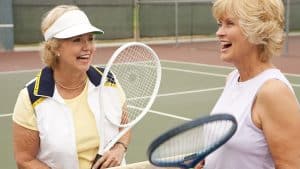
The older I get, the more I realize that age is no reason to stop playing tennis, or any sport for that matter. In fact, as the “golden years” sneak up on us (really, what are they anyway?) and the demands of family and employment lessen, we may have more time to participate.
Needless to say, illness and ongoing health issues may not allow us to do everything we wish, but that can be a factor at any point in life. Allow me the liberty of assuming you do not have any serious limitations and you do have an interest in the game of tennis.
There appears to be some evidence of the game being played as far back in time as ancient Greece. However, records usually refer to the game of “Paume” (Palm) played in 12th Century France as the beginning of tennis as we know it today.
Tennis smashed onto the worldwide athletic scene soon after its modern rules and equipment were introduced in 19-century England. Exciting, competitive and uniquely accessible to people of all ages and talent levels, tennis continues to enjoy popularity, both as a recreational activity and a spectator sport. Now it is possible to follow the tour practically all year.
Tennis Is Fun
You laugh a lot more playing tennis than you do playing golf, that’s for certain! Most of the people I play with are over 50, and some are in their mid-80s.
There is no shortage of competitive spirit and those who may not be able to scramble like they used to, can still play a good game of doubles. Several of the seniors have just taken up the game and enjoy it tremendously.
I’m willing to bet there are tennis clubs in your neighborhood, both private and public, and groups of people of all ages that would welcome you. Playing tennis is a fabulous way to socialize, too.
Like anything else, lessons are essential to get started and there will always be groups to join at your level. Once you learn the game, your enjoyment watching the action on television or attending tournaments will be enhanced.
Tom Sweitzer, a USPTA Master Tennis Professional at Blue Ridge Country Club, offers up the following helpful tips for seniors to improve their game and have fun while playing tennis.
Tip # 1: Improve Your Strokes
You want to have effortless strokes, which allows for maximum control and power with minimal effort. Young guys can stand on their head when they hit the ball, but bad mechanics really show up when you get older. Better strokes lead to better play – and for seniors, fewer injuries.
Tip # 2: Play Within Your Abilities
Seniors should play within their abilities. A typical injury occurs when you are hitting back and forth, and a player will run after a drop shot like they are 20-years old. If you are 50, you have to, at some point, realize you don’t play like you are 20. Use realistic judgment and know your limitations.
Tip # 3: Take Time to Rest
Smart senior players realize the body needs to recharge and will play every other day instead of every day. Even the top five players in the world know the body needs to recharge, so you have to know your own time table for recovery.
Tip # 4: Choose a Clay Court
The sooner a senior player starts playing on a clay court, the better it will be on their joints. Not only from a physical standpoint in extending a career, but it also teaches you to control the ball better. Playing on a clay court also cuts down the heat index.
A hard court will burn the skin right off when you touch it, a clay court is dirt and is watered regularly. The biggest growth in USTA (United States Tennis Association) tennis is with seniors and super seniors and most of them are playing on clay courts.
Tip # 5: Choose the Best Time of Day
We’ve had some pretty hot days, so it’s important to play in the morning or in the evening. Those are the best times to play for seniors because you can play longer and don’t get drained. We schedule USTA team matches at 6 p.m. because you aren’t getting the direct sun and the temperature decreases as much as 10 degrees.
No matter when you play, you want to take fluids as you lose fluids. Take in fluids a little at a time, every two games during a changeover.
It’s never too late to add a new activity to your life or pick up one you may have dropped some time ago. Just do it!
Let’s Have a Conversation:
Do you play tennis or some other sport? What tips have you adapted to the game as you have aged? Please share in the comments below.
Read More
Ballet – Diverse and Inclusive. Really?
The idea of inclusivity demands that we examine who we are and what we stand for. I struggle with that on a personal level, as I don’t want routine assumptions to blind me to reality and limit my participation in our evolving society.
But what about established cultural institutions, where the role of tradition is especially strong? As audiences are comprised more and more of the grey-haired among us, the need for relevance (read new patrons) is acute.
Let’s Talk Ballet
The world of ballet, for example, has always fascinated me. Captivating is my word for the elegance and discipline of its dancers. But I recently found myself wondering how ballet organizations, both performing and training, are making this art form more accessible and reflective of society. I decided to chat with some key people leading this change. Their dedication and vision left me feeling so inspired.
I found that traditional ballet institutions are indeed working to include a broader range of styles and viewpoints. They’re trying to preserve ballet’s beauty while making it more accessible to everyone, to reinvigorate it with fresh creativity.
Change Is in the Making
Esie Mensah is one of the dynamic change agents bringing new thought, feeling and movement to the world of dance. Earlier this year, she worked with Ballet Kelowna to direct her new work, which had been commissioned especially for the company. In the video below, she touchingly describes the inner work required to make these outer changes, and the discipline needed over her own thoughts and feelings. Change, it seems, comes from a combination of courage and creativity.
When I spoke with John Dalrymple, the executive director of Canada’s National Ballet School (NBS), he emphasized the need to include the right voices in the conversation. He told me, “We had to reflect on who we didn’t know, people we should have known for years, who should be at the table when we have any event.”
What Is Not Being Said
The struggle to search for what is not seen rather than what is already visible is such a worthwhile effort, and so challenging. As a therapist, I was trained to listen to what is not being said. This is taking that idea to a whole different level. What is it that we are not thinking, what are we ignoring, that is right in front of our faces?
Robert Binet, a choreographer at the National Ballet of Canada, shared a similar sentiment, saying that ballet has a big role in keeping all doors open for young people, so they can excel and make choices that align with who they are. The very idea that success can come from including the whole person, rather than giving people the skills to fit into a pre-ordained model, reflects a larger change in society. It is new and exciting, and we don’t know where it will end up. But we can’t do anything other now, as the genie is out of the bottle in that regard.
It’s About Keeping a Balance
I found out that Canada, through its National Ballet School, is playing a key role in balancing ballet’s discipline with inclusivity. Some years ago, NBS initiated Assemblée Internationale, a gathering of dancers and teachers from different ballet schools around the world to help young dancers learn and grow.
This year, many more schools, including some important schools founded by artists of colour, were included (expenses for all attendees were paid by NBS!). John said to me, “We’re not here to compete against each other. All performances will be by blended casts, so kids from different schools meet each other, learn different roles in a new work, spend a few hours in the studio and then present it on the stage.” The new work was one developed by Esie and Rob, mentioned above. Needless to say, it featured creativity and feeling.
Expanding Ballet in the Community
Collaboration could really push ballet into new territories, making it more approachable and reflective of society. Sponsoring artistic projects can help brands reach new customers, while funding enables dance institutions to take risks with innovative productions. Small wins can make a big difference. Offering classes in under-served communities, providing scholarships, and making sure people with disabilities can participate all help create a radically expanded ballet world.
One amazing example is how Canada’s National Ballet School is helping people with dementia through ballet. A 20-minute film on YouTube, Dancer Not Dementia, is so beautiful it had me in tears. It includes comments from Mavis Staines, the Artistic Director and CEO of NBS, whose visionary leadership has been crucial to the concept of dance as an integral part of the broad community.
As I explored the changing world of ballet, I couldn’t help but feel excited about the future. Empowering the next generation of ballet dancers and promoting inclusivity is so important for keeping ballet relevant. New collaborations, diverse artistic styles, and a focus on inclusivity point towards a bright future for ballet, one where everyone can enjoy its beauty.
In the end, the transformation of ballet is not just about dance; it’s about the power of art to bring people together, regardless of their background, and to create a more vibrant world. How wonderful is that!
Let’s Have a Conversation:
Are you a regular of ballet performances? Which ones are among your favorites? What do you think ballet lacks that can make it more attractive to all audiences?
Read More

Navigating Financial Realities After Losing Your Spouse

Sixteen years ago, my world shattered. That’s when cancer killed my beloved husband. A spouse’s likelihood of passing away is three times higher for women than men. Many women find that widowhood forces them to take on and make critical financial decisions during a particularly trying time.
My initial grief seemed unending, a relentless storm of anguish. However, as time passed, I began transitioning from that deep grief and intense mourning period into a time of growth – Stage 2 of widowhood.
Brain fog gradually lifts during this phase, and your thinking regains normalcy. A widow I spoke with put it perfectly when she said she no longer felt like she had “Jell-O brain” after her husband died. In this second stage of widowhood, it’s important to focus on the material aspects of your life, particularly your financial security. As you come to terms with life without your partner, you may need to make some important financial choices you had been putting off.
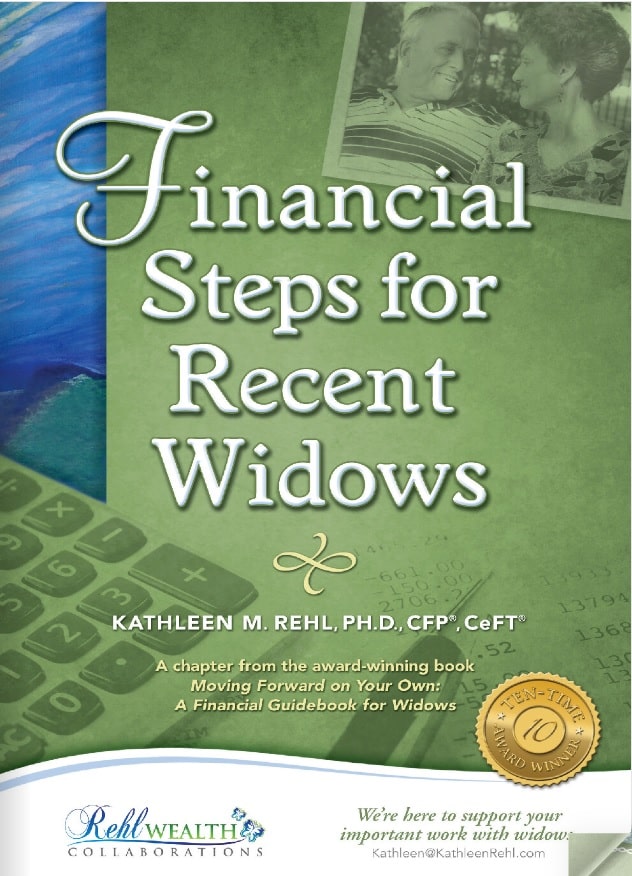
To review the 3 stages of widowhood, read my recent Sixty and Me article. By the end of Stage 1, many widows will have completed most actions outlined in Financial Steps for Recent Widows, a free eBooklet available on my website. In Stage 2, you’ll focus on new financial considerations.
Evaluate Your Financial Situation
Be honest with yourself about your income and spending habits. Your salary (if you still have one), retirement benefits like Social Security and pensions, and interest and dividends from investments all count. Consider ways to increase your income or decrease your expenses if there is a gap between the two. If you have a surplus, on the other hand, what does that mean for your future plans?
Maybe you were smart and invested the money you received from your spouse’s life insurance policy in a money market account. Now is the time to consider how those funds can be used in the long term.
Have you reached retirement age yet? If not, could you increase your earnings by investing in yourself and your professional development through additional training or education? Have you considered phased retirement rather than full-time retirement if you need extra income?
Consider whether staying in your current home is feasible or moving to a smaller, less expensive place makes sense. If you own a second home and your spouse has passed away, will you reconsider keeping it, especially if your spouse did all the repairs and upkeep? A second home can be a big financial drain.
Review Your Investments
Women in Stage 2 of widowhood can benefit from looking at all their investments, including stocks, bonds, cash, real estate, and alternative investments. Previously successful strategies that worked for you as a couple may no longer be optimal after your spouse’s passing. Do your plans make sense in light of your current financial situation?
For instance, if you’re worried about financial stability, you might want to diversify from your late spouse’s choice of high-risk investments. You may benefit from the advice of a true fiduciary advisor if you need assistance with these financial decisions.
In my situation, I was more knowledgeable about money than my late husband; however, after his death, I tweaked my investment portfolio a bit by increasing my holdings in stable U.S. treasury bonds and high-interest paying certificates of deposit. As I added new money to my retirement savings plans, that’s where I made additions for my future.
Two Key Tips for Widows
Don’t Be Controlled from the Grave
Just because your late husband bought an investment years ago doesn’t mean you must keep it, especially if you don’t understand it or it doesn’t fit your values. Some widows initially may feel disloyal in exchanging their late husband’s volatile stock holdings for new conservative choices that are more stable and secure.
You are not being unfaithful to your late spouse as you look to the future and what’s best for you. You can seek guidance to reallocate your assets into a diversified and balanced portfolio that suits your risk tolerance and goals for your current situation today.
2. Update Your Estate Plans
After settling your spouse’s estate, it’s crucial to revisit your own estate plans. Your previous legal will may have been as short and sweet as “Honey, I love you, and I give everything I own to you.” But now it’s time to decide how your assets should be distributed when you eventually pass on. Consider creating a new legal will that reflects what matters most to you. Depending on your situation, a trust may also be advisable. Consult with your advisors to ensure your estate plan satisfies your needs and desires.
Maintaining an up-to-date living will is critical for sharing your healthcare wishes, including those regarding artificial means of prolonging life. Give someone you trust the authority to make important decisions about your healthcare and finances if you become incapacitated.
Remember to designate new beneficiaries on your life insurance policies and retirement accounts, such as IRAs and U.S. savings bonds. Replace your husband’s name with the names of relatives or friends, and consider designating a charitable organization as a partial beneficiary. If you have minor children, plan for their protection, including life insurance on yourself, and naming guardians and financial custodians if you become incapacitated or otherwise unable to do so yourself.
After going through the loss of a spouse, it can be difficult to face your own mortality. But this preparation for death is a lasting present for your loved ones. Having your affairs in order will help avoid chaos after you pass away and ensure that your wishes are carried out.
You Are on Your Own but Not Alone
Many aspects play a role in transitioning through the stages of widowhood. That includes your financial confidence, health, age, the amount of help you receive from loved ones, and preparations you made before your husband’s death. But remember, in navigating your financial realities, you’re not alone.
Support, guidance, and strength to help secure your financial future are available, ensuring that you thrive in this new chapter of life on your own. A great resource filled with lots of free information is the Women’s Institute for a Secure Retirement. Especially note their section on widowhood.
In my next article, I’ll share how I and many other widows have moved from “Heartbreak to Breakthrough Living” in Stage 3 of widowhood.
Let’s Have a Conversation:
If you’re on the widow’s journey, do you remember moving from Stage 1 to Stage 2 of widowhood? What part was the hardest for you? What wise choices did you make with your money? Did you encounter any difficulties? We’d love to hear your thoughts.
Read More
