Month: November 2023

The Silent Struggle: Healthcare Challenges for Older Women with Hearing Loss

hearing loss challenges

As we age, our bodies undergo various changes, and one of the most common issues that affect older individuals, especially women, is hearing loss. Hearing loss is a pervasive problem among the elderly population, and it significantly impacts emotional, social, physical and cognitive health.

In this article, we will explore the unique healthcare challenges faced by older women in relation to hearing loss and how healthcare providers, families, and society can better support them.

Unique Healthcare Challenges for Older Women with Hearing Loss

Across the globe, some of the challenges associated with hearing loss include:

Prevalence

Hearing loss is the single most common neurological problem afflicting older adults. The prevalence of hearing loss increases with age, so the aging population poses a significant challenge in terms of healthcare resources and services.

Diagnostic Delays

Many individuals with hearing loss experience delays in diagnosis and treatment. This can be due to various factors, including a lack of awareness about the signs of hearing loss, stigma associated with hearing aids, and limited access to hearing healthcare professionals.

Access to Services

Access to hearing healthcare services, including audiology and prescriptive hearing technology, can be limited, especially in rural areas. Long waiting times for appointments and treatment can exacerbate the impact of hearing loss on individuals’ quality of life.

Cost of Hearing Aids

There can still be a significant cost associated with hearing aids and related services for those who do not qualify for support. This can create financial barriers to treatment. But keep in mind that a reputable audiologist will always focus on access and affordability, without compromising your healthcare.

Awareness and Education

Many people are not aware of the causes, and most do not understand the dire consequences of living with untreated hearing loss. Raising public awareness and improving education about hearing health is a challenge that we must meet. Untreated hearing loss can increase the risk of a traumatic fall, loss of independence and may increase the risk of cognitive decline and dementia.

Workplace Accommodations

Ensuring that workplaces provide accommodations for employees with hearing loss, as required by law, can be a challenge. Employers may not always be aware of their obligations or may be reluctant to make necessary adjustments.

Social Isolation

Hearing loss can lead to social isolation and mental health issues if not addressed promptly. This can put additional strain on healthcare and social support systems.

Technological Advancements

Keeping up with rapidly evolving hearing aid technology and assistive devices can be a challenge for both healthcare providers and individuals with hearing loss. Ensuring access to the latest and most effective solutions is important.

Quality of Care

Variations in the quality of audiology services and aftercare can impact the effectiveness of interventions for hearing loss. Ensuring consistent high-quality care across any country is a challenge.

Research and Funding

Research into the causes and treatments of hearing loss requires funding. Securing sufficient funding for research initiatives is also a challenge.

What We See Across the Globe

The United Kingdom

The UK government, healthcare providers, advocacy groups, and charitable organizations are actively working to address these challenges through policy changes, awareness campaigns, and improved access to services. Nonetheless, hearing loss remains an ongoing healthcare concern in the UK and globally.

Canada

The Canadian government, provincial and territorial healthcare systems, advocacy groups, and charitable organizations are actively working to address these challenges through policy changes, awareness campaigns, and improved access to services. Nevertheless, hearing loss continues to be a significant healthcare concern in Canada, and efforts to address it are ongoing.

New Zealand

Public healthcare systems in New Zealand can have long wait times for hearing assessments and treatments. This can lead to delays in receiving necessary care, potentially worsening hearing conditions.

South Africa

The challenge can be even greater in South Africa. Many South Africans, especially those in rural and underserved areas, face challenges in accessing healthcare services, including hearing healthcare. This limited access makes it difficult for individuals with hearing loss to receive timely diagnosis and treatment.

In addition, South Africa faces a shortage of audiologists and ear specialists, which results in long waiting times for appointments and limited availability of specialized care for hearing disorders.

Efforts to address these challenges include government initiatives, NGO programs, and international collaborations aimed at improving hearing healthcare in South Africa. These efforts may involve increasing the number of trained professionals, raising awareness, improving access to affordable hearing aids, and strengthening early intervention programs, among others.

Australia

In Australia, The COVID-19 pandemic has accelerated the use of telehealth services in healthcare, including audiology. Ensuring that individuals with hearing loss can access and benefit from telehealth services is an evolving challenge.

Additionally, Indigenous Australians experience higher rates of hearing loss compared to the non-Indigenous population. Addressing hearing health disparities in Indigenous communities is a significant challenge.

India

In India, high levels of noise pollution in urban areas contribute to hearing loss. Occupational noise exposure, as well as noise from traffic and construction, can be significant factors. There is a need for more comprehensive hearing screening programs, especially for newborns and young children. Early detection and intervention can significantly improve outcomes for children with hearing loss.

It’s worth noting that healthcare challenges related to hearing loss are not unique to any of these countries and are encountered in most countries around the world. Efforts to improve hearing health outcomes often require collaboration among healthcare professionals, government agencies, advocacy groups, and the community.

Supporting Older Women with Hearing Loss in Healthcare

Older women who are dealing with healthcare challenges related to hearing loss can benefit from a combination of medical care, assistive devices, lifestyle adjustments, and emotional support. Here are some tips to help you manage your healthcare challenges effectively.

Consult an Audiologist or ENT Specialist

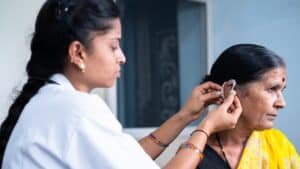
Start by scheduling an appointment with an audiologist. They can diagnose the extent and cause of hearing loss and recommend appropriate treatments.

Regular Hearing Tests

It’s essential to have regular hearing tests to monitor any changes in hearing loss and to adjust treatment plans accordingly.

Prescriptive Hearing Aid Technology

If hearing loss is moderate to severe, consider using hearing aids. Consult with a hearing healthcare professional to choose the right type and model for your needs.

Cochlear Implants

In cases of severe hearing loss or deafness, cochlear implants may be an option. Discuss this possibility with your healthcare provider.

Communication Strategies

Inform friends, family, and colleagues about your hearing loss so they can make necessary accommodations during conversations.

Well-Lit Environments

Ensure that the environment is well-lit when communicating with others. Good lighting can help you see facial expressions and gestures better.

Reduce Background Noise

Minimize background noise when having conversations. This may involve choosing quieter locations or using noise-canceling headphones in noisy environments.

Use Visual Aids

Visual aids like closed captions on TV and subtitles in movies can make it easier to follow along with content.

Seek Emotional Support

Dealing with hearing loss can be emotionally challenging. Consider joining support groups or seeking counseling to help you cope with any feelings of isolation or frustration.

Medication Review

Some medications can affect hearing. Review your medications with your healthcare provider to determine if any of them might contribute to hearing loss.

Protect Your Hearing

Take steps to protect your remaining hearing. Use earplugs or earmuffs in loud environments, such as concerts or construction sites.

Stay Active and Social

Engage in social activities, hobbies, and exercise to maintain mental and emotional well-being. Loneliness and isolation can exacerbate healthcare challenges.

Advocate for Yourself

Don’t hesitate to advocate for your needs in healthcare settings. Ensure that healthcare providers are aware of your hearing loss and make necessary accommodations.

Stay Informed

Keep up with advancements in hearing technology and healthcare options. New treatments and devices are continually being developed.

Remember that hearing loss is a common issue for many older adults, and there are numerous resources and support systems available to help you navigate these challenges. Seek help, stay proactive, and maintain a positive attitude towards managing your hearing loss and overall healthcare.

Please don’t hesitate to contact me at www.drkeithdarrow.com with any questions or concerns.

Let’s Have a Conversation:

What hearing loss and hearing care issues are you facing in your country? Are there government agencies or non-profits that you can approach for assistance? What approach have you taken to care for your hearing health?

Read More

The Older, Wiser (and Better!) Learner

older, wiser, better learner

We’re all familiar with the phrase “older and wiser” and science proves it to be true. As the mind develops with age, so do certain areas of cognition that serve us both socially and in problem solving.

But learning new things is humbling, and it can prompt us to feel less than wise. Not only do we have to struggle with the challenges that anyone of any age would when taking on something new, we also have to contend with messages about how our capacity for rapid learning diminishes as we age.

How many times have you heard – or even said – “you can’t teach an old dog new tricks”? And it’s accepted that kids are “little sponges” while adults lose mental capacity with every year over 40. If we’re not vigilant, negative messages can sneak through and keep us from excelling at the things we long to experience.

Good News!

I’m here to put those pesky messages to rest! As someone who has taught guitar for over 50 years to people of all ages, I can say that without a doubt, your life experience is an asset when learning a new instrument!

Sure, a 5-year-old will learn more rapidly than an adult, but is faster always better? Most of the things we want to learn as adults are beyond the grasp of a 5-year-old. Not only that but working without a foundation of what is common knowledge to an adult is a big impediment to learning an instrument.

A young guitar student, for example, is usually unable to quickly identify her right hand from her left or know which letter comes before D. It can take a year or more to teach some young students how to sit quietly and focus, listen carefully, or follow directions. In addition, most students under the age of 8 or 9 have few experiences with investment and reward to refer to as a motivation for practice.

Although playing an instrument can sometimes appear to be an athletic feat, it’s actually more of a mental and emotional activity than a physical one. It’s your mind – processing spatial relationships and sound – that performs the magic.

Of course, you’ll need a certain amount of hand strength and flexibility to play well. But those things will come when you’re feeling relaxed, focused, committed, and connected to the process. With correct technique and a logically ordered curriculum, you’ll build the strength you need.

Armed with that knowledge, you’re on your way to understanding the skills necessary for success with your guitar. Take a few minutes to consider which of those you already possess.

Your Assets

Think about how much wiser you are now than you’ve ever been. What traits do you currently possess that you didn’t when you were younger? Your answer probably reflects qualities and skills that will enable you to succeed at guitar. Here are a few qualities you may recognize in yourself:

You’re More Patient Than You Were in Years Past

Patience is an important quality in learning guitar, and the one that most often sabotages progress in new guitar players. Because you understand and appreciate that everything comes in its own time, you may be in the best time of your life to build a new skill and mode of expression.

You’re More Open to New Ideas

You’ve learned that there are more than a few ways to view and do things and you enjoy exploring them. Closed minds tend to close musical doors. A beginner’s mind opens them.

You’re More Self-Assured

You don’t adopt other people’s values or put as much stock in their opinions as you did when you were younger. Because you’re more aware of your own value, you don’t bring as much self-judgment and criticism – two of the most destructive emotions in guitar practice – into the learning process.

You’re More Interested in Creating and Enjoying Your Life Than in Building an Identity

Diving into the personal satisfaction you experience from learning an instrument is more important to you than impressing someone. When you act from intrinsic motivation, you’re more likely to progress quickly and enjoy the process than if you were primarily seeking acceptance, recognition, or fame. 

You’ve Heard More Music, Attended More Performances and Sung More Songs

These are rich experiences that feed your musical mind, memory, and heart!

There’s More!

Think of all the skills you’ve acquired or developed in your career and personal life that apply to everything you learn. Skills that you may take for granted, such as discipline, information processing, time management, and goal setting are all essential for implementing and sustaining a productive practice routine.

When you add in the right guitar and some good guidance, you’ll have everything you need to fulfill your musical dreams. Now all that’s left is to go have some fun!

Let’s Have a Conversation:

What qualities that enhance learning and playing music do you want to develop further? Would you like to be more adventurous? More disciplined? More introspective? More social? How can you take one small step today – either in your playing or your life – toward one of the qualities on your list?

Read More

How to Find Joy in Growing Older

growing-older

Years ago, I wrote a children’s book for my grandchildren called Find Joy. It is the story of a grandma who spends the day with her grandchildren as they hunt for what they think is a person named Joy.

She shows them by the activities they are doing, the places they are going, and the play they are engaging in that they can find joy in their life and be joyful.

I often ask seniors what it feels to be old, and I receive a multitude of answers. One person told me they use the word “older” instead of “old.” To her it feels good to grow older, but not be old. Another person told me when her body doesn’t do what it is supposed to do, she feels old.

We can embrace our age while striving to eat, exercise, and keep our appearance young. The truth is, everyone approaches aging with different attitudes, feelings and health.

I like to think that you are never old until you stop finding joy in life. When my patients have an especially bad day some say something like, “I need this to be done. This is no life.” Then a few days later, they are up, smiling, laughing, and participating in life again. So perhaps finding and experiencing joy in life is what makes us feel alive and young.

Celebrate Who You Are

I, for one, love life. The other day I was purchasing a type of insurance and was asked the year I was born. The broker misheard the year and thought I was born in the 60s instead of the 50s which would make me 10 years younger.

He said, “I bet you wish that were the case.” I immediately said no. I do not want to relive 10 years of my life. I liked my life very much, but I look forward to each day ahead.

As a child grows up, they want to be older. We love our birthdays. I do, anyway. I like to start at the beginning of the week and celebrate every day of my week that celebrates me. After all, we are amazing.

Ask a child how old they are, and they will hold up their fingers and proudly proclaim. I do that too. Well, not with my fingers, because I ran out of fingers and toes long ago, but I proudly proclaim my age. I earned those years. I have made myself into what I am. You have also.

Your Age in Years May Not Reflect Your Age in Appearance or Health

In my profession, I have worked with many people who are in their 80s, 90s, and beyond. I have dear friends who are in their 90s. Because of that, I was taken back when I took a job at a nursing home and found residents to be young in age, but old in health. A few of them were a couple years older than I am. Many were in their 70s, but not young 70s.

My mom always seemed old for her age because of health reasons. She was at least 10-20 years younger than she looked because of her health. I care for a man who is sweet, kind, and very feeble. I asked him how old he was and was surprised when he said 73. I was sure he was 90 plus. My 90-year-old friends are younger in life than he is.

How does that happen? For some people, life takes an unfortunate turn and because of disease or an accident, they end up needing care at an early age and will probably not see their 90s.

However, for those same people who are young in age but old in health, their attitude of finding joy in life makes all the difference in the way they live their lives. If you have had an illness or accident that made you a little older, you can make up for it in attitude.

Look at Life’s Challenges as Mere Inconveniences

I know a most remarkable man. One day I had extra time to communicate and listen to him one-on-one. He uses an electric scooter because he was paralyzed many decades ago in an accident. He now has both legs amputated at different levels. His hands are gnarled, and he has many other physical problems he deals with daily.

But he is always happy. That is what makes him so remarkable.

It is easy to take what life hands you, hunker down, and sulk, making your life and everyone else’s life miserable. I see that all the time. But he ended our conversation with this, “I don’t consider myself handicapped, I am merely inconvenienced.”

There is so much to learn from a man who lives life every day serving someone else, wearing a smile on his face and bringing joy to others.

As you continue to the end of your beautiful life, make each day amazing by finding the joy around you.

Read more on the topic, LOOKING AND FEELING YOUNG… BEYOND 80!

Let’s Have a Conversation:

What can you do to find joy each day? What is your definition being old? How do you know when you are “old”? How important is attitude in the process of growing older? How do you know when you are old and not finding joy? Please share in the conversation.

Read More

Grandma School Part 1: The Impact of Grandma Time

grandma school and grandma time

As a grandma, or an aunt, or a grandma figure to someone else’s children, you may already be aware that child play is how children learn. But have you ever wondered about the best ways to enhance that child’s play time for better brain development?

Especially with some of us having limited time or visit opportunities due to living in different cities. I found myself wondering how to have both fun and learning time together with my grandchildren to maximize the most positive experiences and have the best impact on their future as well.

Our Grandma Role

In my Mind, Money, Motion business, the focus on a healthy mind includes both brain health and a positive mindset. So, as we become grandmothers, our relationship with our family expands to our grandchildren where we want to role model and enjoy a positive mindset as well.

Thus, I am expanding my blog and podcast focus to incorporate helpful information that we may already apply or want to start incorporating into our grandmother roles since that is so important and top of mind for many of us.

The Idea of Grandma School

My grandchildren are all under 10 years of age right now, so they are in what I refer to as the “sponge” ages when their brains tend to be super “absorbent” to sensory experiences around them. You can imagine my delight when I met and began visiting with a wonderful grandma, Jill VandeHey Klefstad, who also happens to be a retired Professor of Early Childhood Education from the University of Wisconsin-Stout. I was fascinated when she started telling me about her “granddarlings” and “Grandma School.”

Jill’s goal with her “granddarlings” when they are together for “Grandma School” is to get them to be thinkers by fostering the joy of learning. She does that by setting the stage for learning at their own pace in an environment where they unconsciously, yet enthusiastically, learn through their play. She sets up the environment to be rich in language and includes vocabulary experiences, songs, stories, music, rhyme and open-ended art.

Making an Impact: How and Why

I asked Jill for some tips: What, specifically, can we do with our grandchildren, and why is it so important? (NOTE: these are geared primarily for 2-5 year olds)

Idea #1: Create/Choose Activities

  • What? See Jill’s one-page sheet for a variety of November activities.
  • Why? Time spent with granddarlings gives you the opportunity to share your wisdom and knowledge and family experiences and events. Who knows, maybe Grandma’s Goodies could become keepsakes for years to come!

Idea #2: Singing

  • What? Sing nursery rhymes together.
  • Why? So many reasons!
    • They help children experience the rhythm of language.
    • They expand children’s imagination.
    • Repetition encourages your granddarlings to watch, listen, and copy what they see others saying and doing.

Idea #3: Make Cookies

  • What? Making smelly playdough then moving from playdough turkeys and pumpkins to a cooking experience of making and decorating sugar cookie turkeys and pumpkins will send the children’s senses into 7th heaven.
  • Why? This allows children to utilize their sense of sight, smell, and touch. Given kitchen utensils such as rolling pins, cookie cutters, spatulas and cookie sheets also develops fine motor skills and allows them to do what grandma does.

Idea #4: Proper Set-Up

  • What? Be intentional about the environment. Jill likes to think about the environment as a meaningfully structured learning space where everything has a purpose and a place. Whether it is your home, the granddarlings’ home, the yard or a park, strive to set up those learning experiences that will be interesting and challenging and allow for various levels of learning.
  • Why? Having granddarlings allows a grandma to do all the things she didn’t have time to do as a mom.

The Importance of the Senses

Overall, the intentional and meaningful interaction between grandma and granddarlings allows opportunities to refine the five senses: hearing, seeing, touching, tasting, and smelling. Learning through the senses gives children information about how things work through meaningful experiences. Ah, what better time to do more of this than the holidays!

Remember that the key is to provide a balance of activities that stimulate different aspects of development while also ensuring that children have time for unstructured play and downtime. What a bonus, engaging in fun activities with them that promote cognitive, social, emotional, and physical development while also maximizing their brain development!

Watch for Part 2 and Part 3 of this series with Dr. Jill VandeHey Klefstad. She is compiling a book for grandparents, teachers, parents and anyone with a love of nurturing children and their brains. She plans to share a theme page of activities each time in this blog series so you have the What and the Why ready to use with your own granddarlings.

Let’s Have a Conversation:

What simple activities have you enjoyed with your grandchildren? Have you realized the impact you are having on their development? What questions might you have for Jill? Please share your feedback!

Read More