Month: February 2024

Reading Options When Sight Is an Issue

large print books

Thanks to an issue with my right eye, I struggle to read an actual book. As problems go, it’s a tiny one. It’s also solvable. 

I read newspapers and magazines on a tablet. For books, I rely on my trusty Kindle. With both devices, I can adjust the font size, lighting, and contrast. I know I’m not the only one who has difficulty navigating traditionally published and printed books.

We’re lucky to live in a time where we have so many choices for our reading pleasure…

Large Print Books

The good news? Large print books are in demand, so they do still exist. The bad news? They are expensive for publishers to print and customers to purchase. In recent years, publishing houses have offered fewer and fewer large print options in their catalogs. “The choices are becoming more precious,” said one bookseller.

There is no concise directory of available large print titles for readers to browse online. Bookstores don’t have access to one either. 

If we desire a current historical fiction novel or thriller or non-fiction book, a reader’s best bet is to contact a local independent bookseller. If a customer calls or visits a bookstore with a list of titles they’d like to read, booksellers can quickly determine if a large print edition is offered.

They’re happy to order the book but be warned. Although the book will likely be in paperback form, it will sport a hefty hardcover price.

Although I discovered an online large print bookseller and a large print book club, both offer limited titles, plus fees or high price tags. 

The online behemoth, Amazon, seems to offer the most titles for the best prices. With some persistence, I located bestsellers like Cloud Cuckoo Land, The Giver of Stars, and Where the Crawdads Sing in large print formats.

On Amazon’s website, search large print books and browse from there. OR, go to a specific title, click on SEE ALL FORMATS AND EDITIONS, and click on PAPERBACK to see if the book is available in large print. 

In my quest for large print titles, I hit the jackpot at the local library. When I inquired about large print books, the delighted librarian directed me to a vast section of titles. Although the shelves didn’t seem to house recent bestsellers, the great variety of books was sure to interest readers of all sorts.

I spotted a wide assortment of biographies and titles by popular authors David Baldacci, Mary Kay Andrews, Elin Hilderbrand, Lisa Genova, Robyn Carr, and James Patterson.

eBook Readers

I’m not trying to sell you an eBook reader but, with my eye issue, my Kindle has been my savior. Many readers love to curl up with a physical book, study the cover design, and flip back through the pages to recall a character or scene. And I get that. 

Although Amazon’s Kindle dominates the digital reader market, this article offers a nice comparison of eBook readers. It comes as no surprise that the newer, more expensive versions offer faster page-turning, water resistance, and better contrast. I read on a Kindle Paperwhite, which sells for $140 – about the same amount as five large print books. 

Like anything else, the more you use and play around with the device, the more comfortable you become with its features. Readers may adjust the font type and size and screen brightness and instantly see how many minutes are left in a chapter. My favorite feature is the built-in dictionary. Press on the unknown word, and a definition pops up. I also highlight quotes or facts and take notes for future book review articles.

If two family members own Kindles, books may be shared. No need to purchase separate copies of the same book. 

Through your public library, browse their online eBook selection and select a title delivered straight to your Kindle. All you need is a library card. 

When I interviewed author Susie Orman Schnall, she introduced me to BookBub, a service (free!) alerting readers to fabulous deals on eBooks. How I love receiving my daily email recommending a handful of books – tailored to my preferences – priced at $1.99 or $2.99. And don’t skip over the Wish List section. Maintain a list of titles you’d love to read, and BookBub will notify you when the eBook goes on sale. 

Audio Books

Many readers love their audiobooks. They pop on headphones while cooking or gardening or flaneuring. Listen in a car or bus or plane. Sit back, relax, and get lost in a story read to them.

Audible leads the pack, but this article outlines various audiobook subscription services. It compares monthly fees and the trial periods, which all services seem to offer. 

For those readers wishing to support their local independent bookstore, Libro.fm is a pricey but worthwhile option. The downside? Subscribers must have a U.S. or Canadian credit card. 

A good starting point is Overdrive and Libby, free services connected to local libraries. If you need assistance, your librarian can assist you with setting up these options. All you need is a library card!

Once in place, readers may borrow, place holds, and receive audiobooks, eBooks, and magazines from the comfort of their homes. Libby and Overdrive are not available in all countries, and the waiting list can be long for recent releases and bestsellers. 

Let’s Have a Conversation:

Do you prefer actual books, an e-reader, or audiobooks? What is your primary source for books? Do you have any tips for readers with sight issues?

Read More

Kyle Richards’ Pink Pants

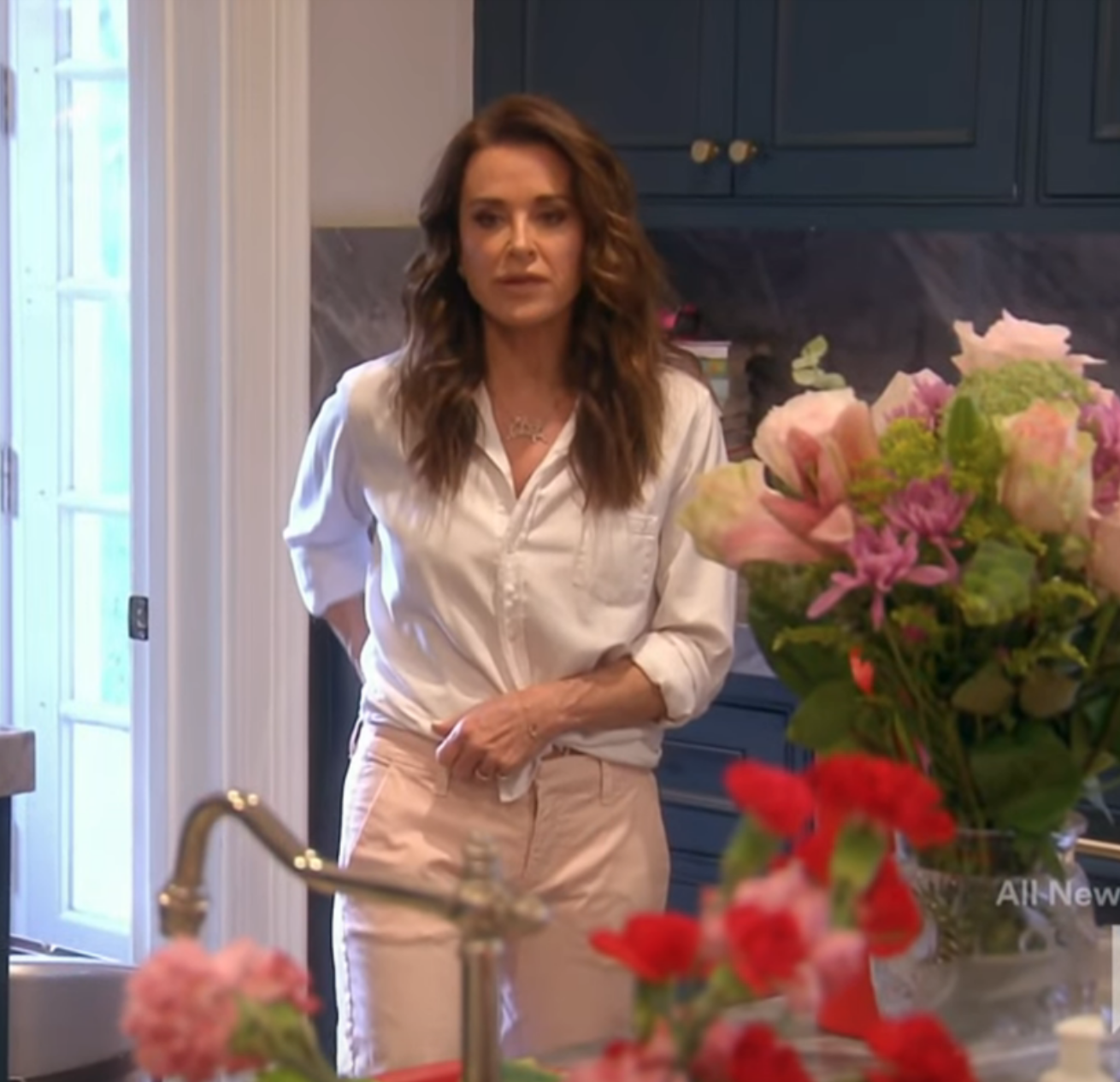
Kyle Richards’ Pink Pants / Real Housewives of Beverly Hills Season 13 Episode 16 Fashion

Kyle Richards had us thinking a lot of things on last night’s Real Housewives of Beverly Hills. But the one thing I’m referring to is that she had us thinking was pink! She wore a light pink pair of trousers and white top to chat with Mauricio and in doing so gave us the perfect simple springtime look! And now we can’t wait to shop for our new Favorite Daughter pants.

Sincerely Stylish,

Jess


Kyle Richards' Pink Pants

Click Here to Shop Additional Stock of Her Pants

*Please Note: we are not 100% sure on the top, but we think it is it!


Originally posted at: Kyle Richards’ Pink Pants

Read More

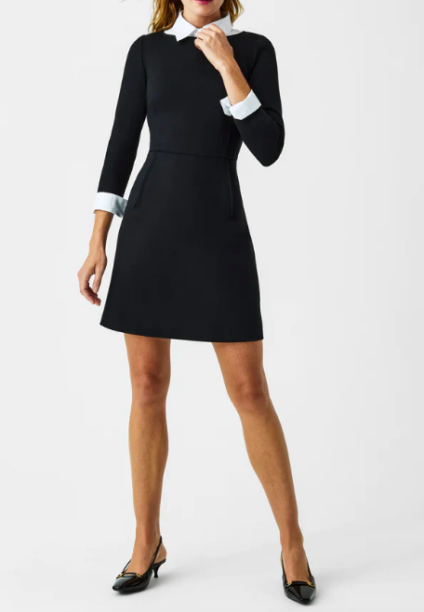
Marysol Patton’s Black Dress with White Collar

Marysol Patton’s Black Dress with White Collar / Real Housewives of Miami Season 6 Episode 16

Marysol Patton is a woman who knows what she wants and she’s not afraid to ask for it, whether it’s vodka at a tequila party or dildos falling from a piñata. And when it comes to me, I know what I want and it’s her black dress with white poplin collar and cuffs. It’s giving Wednesday in the chicest way possible. Unfortunately, unlike Marysol, I don’t get what I ask for when the price tag is over 3k .

The Realest Housewife,

Big Blonde Hair


Marysol Patton's Black Dress with White Collar

Style Stealers


Originally posted at: Marysol Patton’s Black Dress with White Collar

Read More

3 Ways Virtual Reality Can Help Dementia Patients

virtual reality for dementia patients

According to a study by the University of Kent in the UK, virtual reality can help people with dementia recall old memories and improve language and reasoning skills often caused by Alzheimer’s.

At the SXSW panel in Austin, Texas, researchers suggested that VR can help combat feelings of loneliness and isolation, the two key factors linked to Alzheimer’s.

According to a study by the National Academy of Science, Engineering and Medicine, social isolation and loneliness among seniors are associated with a 50% increased risk of dementia.

The use of virtual reality helps doctors study the health conditions of dementia patients by monitoring their behavior when older adults respond to different activities and games.

Here are 3 ways virtual reality can help dementia patients:

1: Avoid Loneliness and Social Isolation

It is common for older adults to feel lonely and socially isolated due to several factors. Some elderly live alone in their homes or care centers, away from family and friends. Others lose their spouse or are homebound because of immobility issues due to an illness or disability.

Loneliness and social isolation are associated with a 50% increased risk of dementia among older adults (according to a 2020 report). AARP Innovation Lab has developed an app (Alcove) to combat loneliness among seniors with dementia.

The app provides a virtual home filled with endless experiences to play games, travel the world, connect with loved ones, get moving, customize your virtual home, and relax. You also have a pet rabbit to play with.

More about ALCOVE.

Read my previous articles here: Mobile Apps For Dementia Patients, Alexa Skills for Dementia Patients, and iPad Gamesfor Dementia Patients.

2: Virtual Reality Promotes Wellness Among Dementia Patients

New research from York University (published in the Journal of Prevention of Alzheimer’s Disease) shows that VR therapy could improve mood and manage symptoms in older adults with dementia.

The key findings suggest:

  • VR therapy can improve mood and manage symptoms among senior dementia patients.
  • Virtual reality helps treat and manage apathy and aggression among dementia patients with cognitive decline.
  • VR therapy improved the quality of life for dementia patients who were unable to leave the hospital room because of mobility issues by stimulating the experience of nature for them.
  • VR therapy has a positive effect on family, professional caregivers and hospital staff dealing with dementia patients.

The typically non-communicative dementia patients showed great progress. They became animated, laughing and making jokes after VR experience with natural scenes and experiencing images and memories from a previous experience like stimulating the environment of the country where they grew up.

3: Virtual Reality Stimulates Memory in Dementia Patients

One of the major symptoms of dementia is memory loss which negatively affects the patient’s ability to perform day-to-day activities. The finding of a recent study suggests that encounters in virtual environments help patients recall old memories.

The participants accessed five different environments using virtual reality including a cathedral, a forest, a sand beach, a rocky beach, and the countryside. The participants remembered a trip they had taken and details like when they saw the bridge in a virtual environment that reminded them of that holiday.

Caregivers also reported improved relationships with patients after the VR experience.

Frequently Asked Questions

Can Seniors Use Virtual Reality?

Seniors can use virtual reality to socialize, engage in new activities, and virtually visit new places. VR technology can be used for entertainment, to ease physical pain by providing distraction, and as positive impact on cognitive functions, including improving attention and visual memory.

Can Virtual Reality Help with Dementia?

Studies highlight many benefits of virtual reality for dementia patients, including reduced anxiety and depression. A study by the University of Kent found that VR can improve the quality of life for dementia patients by helping them recall memories, reduce aggression, and improve their interaction with caregivers.

Can You Play VR in a Wheelchair?

Yes, there are many games and experiences to enjoy through VR while sitting in a wheelchair. You can adjust the camera and settings and choose games with front-facing action to make VR wheelchair-accessible. VR enables wheelchair users to explore historic locations and nature from their chairs.

Conclusion

Numerous studies and statistics highlight the benefits of virtual reality for dementia patients and caregivers. VR vastly improves the quality of life for dementia patients by enabling them to recall memories, reducing aggression, and improving interaction with family and professional caregivers.

Let’s Have a Conversation:

Have you ever considered virtual reality as a way to help people suffering from brain deterioration conditions? Do you have any experience with virtual reality?

Read More

The Perennial Fruits of Our Imagination

fruits of our imagination

Older adults, raise your hand if you believe that imagination’s ripeness remains in the realm of children. If your hand shot up, you should know I would’ve joined you – until two months ago.

After reading a long-term study debunking this myth, I was reminded of my passion regarding inspiration and ageless possibilities. In the weekend edition of The Wall Street Journal of December 2, 2023, Professor Andrew Shtulman wrote about research disputing the idea that imagination declines with age.

I suspect that the great Napoleon Hill would concur. Long ago, he wrote: “The imagination is the workshop of the soul.” My encounters and observations at a conference I attended a few weeks ago, reinforce this premise even more.

Shtulman’s Research

Before discussing more about the conference’s delights, let me share more about Professor Shtulman’s findings based on 40 years of research.



Children’s imagination doesn’t decrease as we get older. Instead, it may be the opposite.

You can’t imagine what you don’t know. Thus, the more seeds we sow, the chances for more robust blooms increase.

Dr. Shtulman’s essay, adapted from the book Learning to Imagine: The Science of Discovering New Possibilities, describes the in-depth evidence based on his experiments with children. To me and, I hope, for older adults, this information validates for us what Dr. Hill declared in his book, Think and Grow Rich.

Whatever the mind conceives and believes, it can achieve.

My Experience at the Conference

At the end of January, I attended a conference in Austin, Texas for novel marketing. We ingested delicious offerings for which I’m most grateful. However, meeting new and creative people topped everything. A few Gen Zs, many Gen Xs, and several Baby Boomers mixed, creating a scrumptious concoction. The imagination dazzling at its best.

I spoke with a 21-year-old woman who hailed from another part of Texas. Her novel, In the Company of Cows, now sits on Amazon’s list for Christian westerns and westerns. I told her that age favors her for many sumptuous gifts in the years ahead. Her imagination will flourish as she adds life’s lessons along the way.

A 33-year-old man shared with me his abilities to write about mental health issues.

Next along the age chain, a lovely Gen X person whom I met at another conference has her first novel arriving in June, When The Ocean Roars, ready for preorder. I promised I’d read and review when it comes out.

Boomers and Imagination

Finally, there were several of us Boomers. They shined as they revealed their years of earlier learning sprinkled their imagination with a rich foundation.

First, my new bestie writes Women’s Fiction. I just purchased her book, Julia Redesigned, from her Second Chance Series. Her roommate for the conference, also a Boomer, writes dystopian novels.

Next, I spent time with another woman, age 70, whose novel focuses on Susan B. Anthony’s brother and involves Kansas and Martha’s Vineyard nearer to my stretch of the woods. This book will be the first in a trilogy.

Other boomers I encountered included one woman who wrote a book about a divorced womаn’s colony in the 1950s’ Nevada. Another, a gentleman at least north of 70, shared with me he had been writing for 30 years. He added he went slow, and I told him, “So what?” and used the adage about the tortoise and the hare.

We oldies but goodies navigated the terrain no less than our younger counterparts, and, I hope, we provided fodder that the imagination doesn’t wither with age.

Older Can Mean Greater

Think about the great ones whose imaginations emboldened them later in life.

Grandma Moses didn’t start painting until age 76. James Parkinson didn’t identify the disease named after him until age 62. In his 60s, Colonel Sanders had been on the brink of despair until he got the idea of perfecting his chicken recipe and birthing Kentucky Fried Chicken.

Many older adults have done similar things in the sunset of their lives.

I hypothesize that every one of these individuals entered their creative workshops, went on an exploration, and uncovered those gems of inspiration ready for the taking.

All of us can discover the gifts of our imagination even under the most arduous circumstances, but like so many things, it’s up to us.

If you haven’t yet, brush off the dust surrounding your imagination and watch what happens.

Let’s Have a Conversation:

Do you think you have lost your imagination with age? Where did this belief come from? Are you willing to change your mind based on current research? What was your last work of imagination?

Read More