Month: February 2024

How to Make the Most of Life in Your 60s

make the most of life after 60

Our 60s can be an exciting phase of life filled with new possibilities and opportunities. It’s a time to reflect on achievements, recognize our own wisdom, and perhaps nurture ourselves a little more than we’ve done in the last few decades. It may not come naturally to be a bit more self-centered, so it may help to engage in a bit of self-discovery. It will be time well spent, if it enables us to be intentional about how to make the most of life in our 60s.

There Are Really No Boundaries in Our 60s!

This can be a time to explore new hobbies, interests, and even possibly career paths. Or it can be a time to relax and enjoy well-earned comfort and family time, if that’s what you crave and what helps you, personally, to thrive.

Whatever activities you choose to pursue, stepping out of your comfort zone a bit can help you to stay flexible and nimble. If you venture into uncharted territory, you may also discover hidden talents and passions that bring joy and fulfillment to your life.

Let’s talk about some practical ways to take advantage of this wonderful opportunity for joyful reinvention and rediscovery.

Life Is Full of Opportunity in Your 60s

As we reach our 60s, responsibilities and commitments may start to ease, allowing for more personal freedom. This newfound flexibility provides the perfect opportunity to prioritize our own desires and embark on adventures that we’ve always dreamed of.

It’s also a wonderful time to make a commitment to immerse ourselves in activities that we are truly passionate about.

Making the most of life in our 60s requires making a conscious effort to live in the present moment. This means being mindful and savoring each experience as it unfolds, appreciating the beauty and wonder of the journey.

By cultivating a present-focused mindset, we fully engage with the adventure at hand and create lasting memories.

Let’s get into how to make the most of life in our 60s.

How to Make the Most of Life in Your 60s

1. Stay Active and Healthy

The most important thing to make the most of life in our 60s is very simple and straightforward. We must work to maintain our physical and mental well-being. The good news is that this is easy to understand. The basic rules to follow are unchanged from earlier in life. The challenge? Staying active and healthy, and preserving our physical and mental well-being, may begin to take more of a conscious effort in our 60s.

To fully enjoy the adventures that await us, we need to step up to the plate and prioritize our well-being, first and foremost.

So how can we do this? A few basic commitments to ourselves. We must:

  • Nurture our mind, body, and spirit so we have the energy and vitality to fully savor every adventure.
  • Maintain an active lifestyle that includes regular exercise, such as walking, swimming or yoga.
  • Adopt a balanced, healthy, nutritious diet that provides energy and nutrients we need to thrive.
  • Manage our lifestyle and set boundaries that enable us to get sufficient, quality sleep.
  • Continue to keep our minds active and engaged, through continuous learning and seeking out new adventures and opportunities.

That’s right. Seeking adventure in our 60s is an excellent way to not only maintain our health but to challenge ourselves physically and mentally.

Let’s agree to set wellness goals and engage in activities that sensibly push our limits, such as hiking, kayaking, weight training, learning a new skill or exploring a topic of interest that is new to us.

Pushing ourselves beyond our comfort zones helps build resilience and self-confidence while invigorating our spirit.

2. Nurture Existing Relationships and Cultivate New Ones to Make the Most of Life in Your 60s

Nurturing relationships is essential at any age, and our 60s are no exception. Surrounding ourselves with loved ones, friends, and a supportive community can bring immense joy and emotional well-being.

These long-standing relationships can provide a sense of familiarity, support, and shared memories. We must:

  • Take the time to connect with others, share experiences, and create meaningful memories together.
  • Reach out to old friends, family members, and acquaintances we’ve lost touch with.
  • Schedule regular catchups, outings, or phone calls to reconnect and invest in those connections.

Entering your 60s can also be an opportune moment to cultivate new relationships.

Social groups are an excellent way to meet others who share common interests. We can seek out local community centers, book clubs or hobby groups that align with our passions. Whether it’s a walking group, or a volunteer organization, these platforms offer opportunities to connect with others who share our enthusiasm.

It’s key to approach new encounters with an open heart and mind and to be open to finding new friendships at any age, as connections can be formed in unexpected places.

Engage in community events, workshops, or online forums, and be receptive to forming bonds with people from diverse backgrounds and experiences.

3. Make the Most of Relationships, New and Old, to Make the Most of Life in Your 60s

It can be easy to sit back and let the younger folks lead the way and set the tone for conversations and activities. But we serve ourselves most by being present and engaging with others. This means actively listening, asking open-ended questions, and being genuinely interested in what others have to say. By fostering connection through meaningful conversations, we build strong and lasting relationships.

Technology can also open up a world of possibilities for connecting with others.

Explore and experiment with social media platforms or online communities. Online forums create opportunities to share experiences, join discussions, and connect with people who may inspire or resonate with your journey.

4. Seek Out New Experiences Outside Your Comfort Zone to Make the Most of Life in Your 60s

Entering your 60s doesn’t mean that the thrill of adventure has to come to an end.

In fact, this stage of life presents a remarkable opportunity to adopt a growth mindset, experience new things and seek adventure like never before.

Sign up for classes, workshops, or clubs that align with your interests. Whether it’s art, photography, cooking, music, or any other passion that fuels your creativity, embrace it with gusto. Attend workshops, join clubs, or participate in classes to pursue and refine your skills.

Exploring new activities not only broadens your horizons but also provides opportunities to meet like-minded people and make new friends.

Be curious and embrace the chance to learn and grow alongside new companions. Consider using some of your free time to travel and experience different cultures. Seek out the stimulation of novelty and create lifelong memories.

Welcome the unfamiliar and be open to trying new things. From novel activities to different cuisines, from learning a new language to travelling to new places, from committing to an exercise program to taking up a challenging hobby, the possibilities are endless. Just do something new!

Because stepping outside of our comfort zone stimulates personal growth and creates a sense of vibrant living.

5. Continue to Seek Meaning and Purpose to Make the Most of Life in Your 60s

As you enter your 60s, it’s natural to reflect on your life’s purpose and the legacy you want to leave behind. Take the time to identify what truly matters to you and aligns with your values.

And then brainstorm ways to become more fully committed and active in ways that demonstrate who you truly are and what you stand for.

Volunteer work is a possible means to align your actions to your principles and values and it not only benefits your community but also provides an avenue for connection and purpose. Identify causes or organizations you feel passionate about and offer your time and skills.

Volunteering also brings people together, fostering camaraderie and forming new connections built on shared values.

Whether it’s giving back to your community, mentoring others, or pursuing a cause close to your heart, finding meaning and purpose can bring immense fulfillment – and open doors to new relationships and experiences.

How to Make the Most of Life in Your 60s

As you work to stay healthy, fit, and active, and explore new opportunities, don’t forget to celebrate the milestones and accomplishments you’ve already achieved in life, and the new ones that you are encountering, along your path of continued growth and development.

Your 60s are a time to acknowledge your accomplishments and be proud of the person you’ve become, as well as to continue your ongoing journey of self-discovery.

Continue to seek out opportunities and savor each moment with gratitude and enthusiasm.

Let’s start a conversation about how to make the most of life in your 60s!

Thank you as always for reading.

If you haven’t yet subscribed, please visit KindCompassCoach and enter your email address so you never miss a post. 

Let’s Have a Conversation:

What adventures have you pursued recently that you would recommend to others? Do you know others in their 60s who you admire? What principles do they represent? How are they a good role model for others? Was there an active grandparent or family friend or colleague in your earlier life who demonstrated what it looks like to be an active, vibrant, 60-year-old? What does it look like to you, to make the most of life in your 60s? How will you know you’re achieving your goal of a fulfilling, meaningful phase of life? What actions can you take this week, this month, this year to align your activities with your intentions?

Read More
5 Things You Should Tell Your Hairdresser

hairdresser

While a lot of us confide in our hairdresser, sharing some of the most private details about our lives, I’ve learned from writing for the hair industry that often we leave out the information that actually matters in terms of how our hair will turn out.

If you’re a stylist’s first-time client, it’s not enough to have the hairdresser look at you and feel your hair. You have a lot of knowledge that will improve your chances of a good outcome. And if you’ve been seeing the same hairdresser loyally on a rigid schedule, things may have changed in your life that are worth mentioning.

Even when asked for information while we’re sitting in the chair, we can forget dates and details. I asked one of my best sources, Todd Faulk, an educator with the Aveda Arts & Sciences Institutes, to run down the list of what clients should be telling their hairdressers before color or scissors ever touch the hair. These are his top five.

#1: Hair Color Candor

Have you ever had hair color take beautifully on the regrowth at the roots but not so well on the rest of your hair? That’s what will happen if the same formula is applied all over to hair that has been previously colored. Typically, the color should be applied on the roots well before the rest so it can process for a longer time. Your roots may need their own formula as well.

According to Todd, clients tend to report that they have color on their hair only if the color is fresh. By the time it’s washed out or faded, they disregard that color application. Rather than asking you whether you have color on your hair, the better question for stylists to ask is: “When was the last time you had a hair color or other chemical service?” So even if that’s not the question you get, it’s the one you should answer.

The “other chemical service” part is important, because a perm or straightening service deposits chemicals on your hair just as a color service does. In a worst-case scenario, the hair could break off if there’s no elasticity left in the hair when your stylist bleaches over an old perm.

Sometimes clients do know they have color on their hair, but they’re reluctant to tell the stylist because either they went to a different salon or they did it themselves.

“Don’t be embarrassed,” Todd says. “I know that people don’t want to be judged on whether they went to another stylist or they used box color. But hair color isn’t like paint – you can’t just paint over it. Hair color is achieved through a chemical process. When you look at your hair you might think the color is gone or the perm has fallen out, so the chemicals aren’t there anymore. But the chemicals are still in the hair even if you can’t detect them.”

#2: Scalp Health

Your stylist can run a thumbnail across your scalp to determine whether there’s a buildup of sebum, which is oil on the scalp. Sebum causes inflammation, and it can drive hair loss if the follicle gets clogged or the inflammation suffocates the follicle enough to keep hair from growing out of it.

You can give your stylist a heads-up, though. If you’ve been noticing any thinning, oiliness, itchiness or flaking, let your hairdresser know. Don’t assume the flaking is dandruff, which is believed to be caused by a fungus and seen pretty rarely after adolescence.

Todd says that, typically, the cause of flaking on middle-aged women is dry scalp. If you’re using a dandruff shampoo on a dry scalp, it may make you feel squeaky clean but it’s actually aggravating the situation if that shampoo is stripping oil from your scalp.

#3: Medical Information

As part of your physical body, your hair and scalp will be affected by an illness, allergies or medication you’re taking. For example, if a seasonal allergy causes patchiness on your arm or generally irritated skin, your scalp may be experiencing the same condition.

If you’ve ever noticed that you “shed” more during a certain part of the year, that’s the reason. You may benefit from using a product just for that season.

You’ll probably tell your hairdresser if you’re undergoing chemotherapy, but that’s not the only time you should mention a new medication. While younger women’s hair can change during pregnancy or from birth control medication, we older women take all sorts of things that might be affecting our hair.

“If you’re trying to cover gray and the color isn’t taking, it could be due to medication you’re taking for high blood pressure or thyroid,” Todd says. “Medication can deplete some of the pigment in the hair, so there will be less pigment left and, if the hair is resistant, you may need to either change your color formula or let it sit longer.”

You probably think that the last thing a hairdresser wants to hear about are your menopause symptoms. But both men and women stylists are very accustomed to that conversation, and it can be important. Menopause presents so many major changes in your body that it can impact hair growth, pigment, texture, strength and elasticity.

Do you have a mole on your forehead, scalp or neck that isn’t visible with your current hairstyle? Let your stylist know. Your hairdresser not only will keep an eye out for any changes in size and color as time goes on, but if you ask for a short cut like a pixie, the stylist will remind you that the mole will be showing and will make sure that’s okay with you.

#4: Lifestyle and Travel

Sometimes you and your stylist will be trying to figure out why your hair feels drier than usual, and the answer is simpler than you think – you just returned from visiting a drier climate, or your home humidifier has been on the blink, or you started swimming for exercise. It can be a lot of things. Always think through what’s changed in your life, and mention it. Diet, stress, activity – it can all impact your hair.

If you’re planning to travel, that’s something to bring up, too. You might want to take along a leave-in conditioner if you’ll be in dry air or saltwater. Todd offers this tip if you’re going to be in chlorine: Rinse your hair with tap water before you jump into the pool.

“The hair will be saturated like a saturated sponge, and then it can’t absorb as many of the pool’s chemicals,” Todd notes. “After swimming, rinse again. You can condition before and after also, even if you don’t shampoo.”

If your finances are tight or they’ve changed, don’t be embarrassed to let your stylist know you’d like to have options for lower price points on the recommended services and products. Maybe you just can’t afford highlights this time. Again, this is not an uncommon salon conversation, and a good stylist will not be judgmental or push you to do anything that’s not comfortable for you.

#5: Home Hair Care Routine

What you’re using at home is important. If you walk into the salon with lots of product already on your hair, your stylist may want to wash your hair before applying color. If your hair feels dry and you say that you shampoo every day, your stylist may suggest switching to every two or three days.

Your stylist should educate you on products. If you color your hair, your hairdresser will probably recommend a color-safe shampoo. A minty shampoo may make your hair feel extra clean, but Todd says the mint is an astringent and will pull color out of the hair.

“People often don’t understand why we recommend sulfate-free shampoos,” Todd adds. “Sulfate makes the product lather, but it’s filler and dries out the hair. Even if it says it’s 100% organic, that refers only to the active product, not the filler, and that filler can take up a lot of the bottle. There’s even an organic sulfate, but it’s still a detergent. Be truthful with your stylist about everything you’re using on your hair.”

Also read, HAIRSTYLE TIPS FOR OLDER WOMEN: 13 TRADE SECRETS YOUR HAIRDRESSER WANTS YOU TO KNOW!

Let’s Have a Conversation:

Do you visit the same hair stylist every time you need a touch up? How well does he/she know you and your hair condition? Do you share any of the above information?

Read More
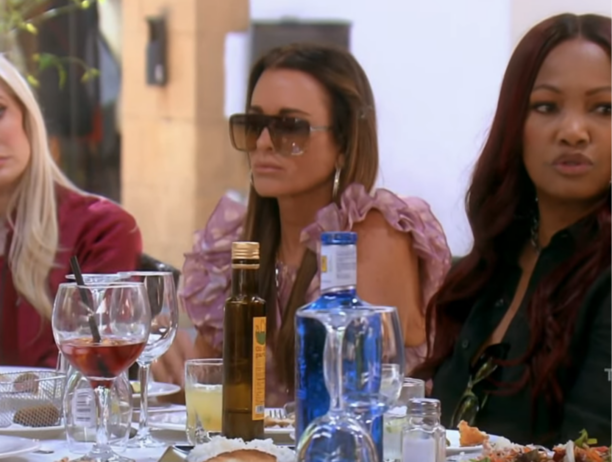
Garcelle Beauvais’ White V Neck Dress with Black Trim

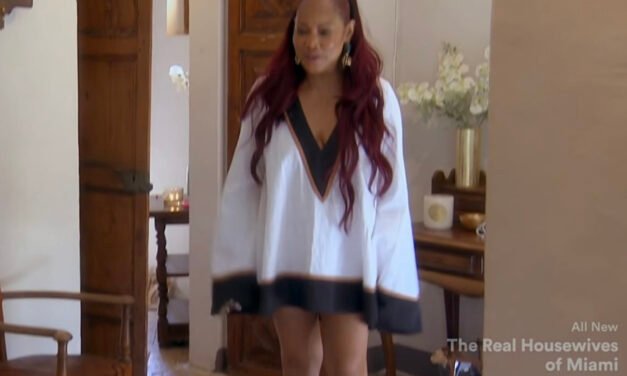
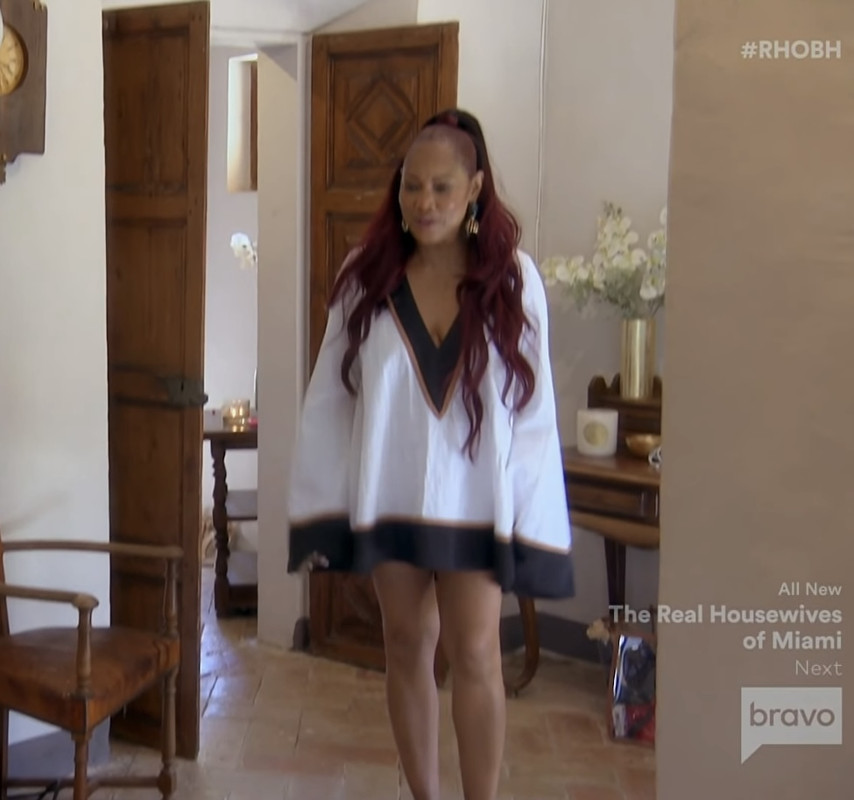
Garcelle Beauvais’ White V Neck Dress with Black Trim / Real Housewives of Beverly Hills Season 13 Episode 14 Fashion

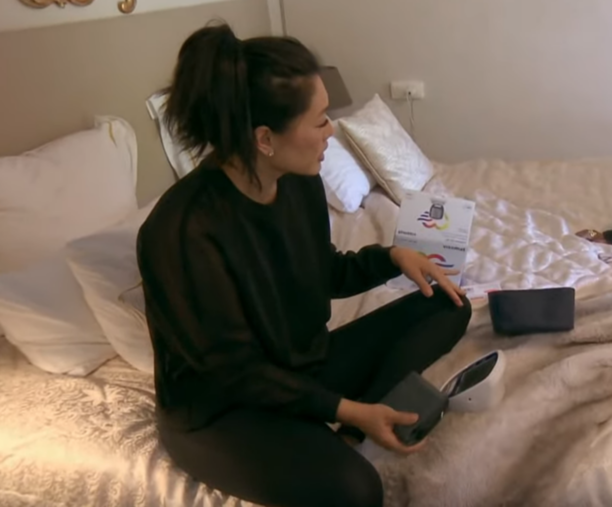
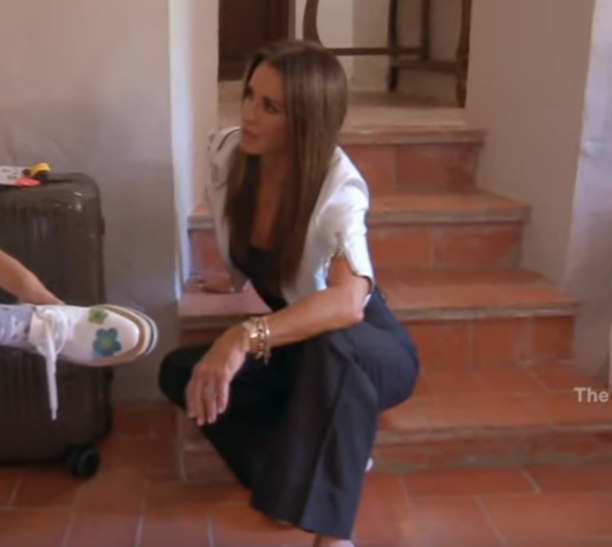
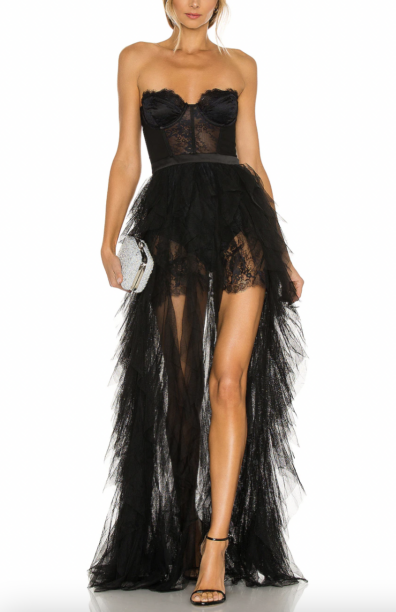
Garcelle Beauvais strutted into Crystal Kung Minkoff’s room like a heaven-sent angel checking up on her on last night’s episode of Real Housewives of Beverly Hills. And even my blood pressure skyrocketed at the sight of her white v-neck dress with black trim. It’s the ideal blend of luxury and cuteness, perfect for breezing through a warm day.

Best in Blonde,

Amanda


Garcelle Beauvais' White V Neck Dress with Black Trim

Style Stealers


Originally posted at: Garcelle Beauvais’ White V Neck Dress with Black Trim

Read More
Shrinking? Expanding? 5 Tips for Looking Taller and Slimmer

shrinking or expanding; 5 tips for looking taller and slimmer

The holidays are behind us and some of us might find things fitting a little snug. Also, if you’ve found that you’re taking more things to the tailor for shortening you’re not alone. Gravity and bone loss are real at our age. We can start losing bone density as early as in our 30s, and it’s not uncommon for women to lose as much as 2” (5.08 cm) by the age of 70.

So, yes, keep taking your bone-building supplements, stand up straight, and do those stretching and bone-building exercises!

But in the meantime, there are several things you can do to create the effect of being taller and slimmer.

Think “Column”

Our brains automatically associate straight vertical lines with height, and horizontal ones with width. So, the easiest way to create the illusion of being taller and slimmer is to build your outfits to create an uninterrupted vertical line.

If you tend to carry weight around your middle, wearing a jacket, sweater or tunic that falls in a straight line from your shoulder to your hips will do this. But make sure the hem of the jacket or top does not end at the mid-point between your hip joint and the top of your knee. That demarcation line will make your legs look shorter.

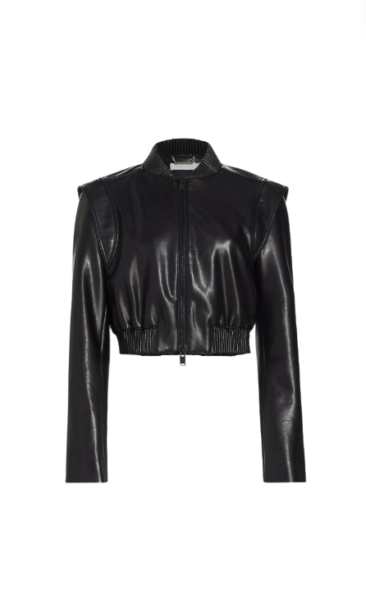
For a standard length jacket (not a cropped one), the hem should fall no longer than below the middle knuckle of your middle finger when your arms are resting at your side. As for cropped jackets, avoid them, as they will make your torso appear shorter. And if you are broad in the middle, a cropped jacket will emphasize that as well.

If you are a “pear” shape, look for tops and jackets that have a little padding at the shoulders. Pear shapes tend to have narrow shoulders and you wouldn’t want to create a diagonal line from your shoulders to your thighs. Adding a little bit of padding at the shoulders will help to create that straight line.

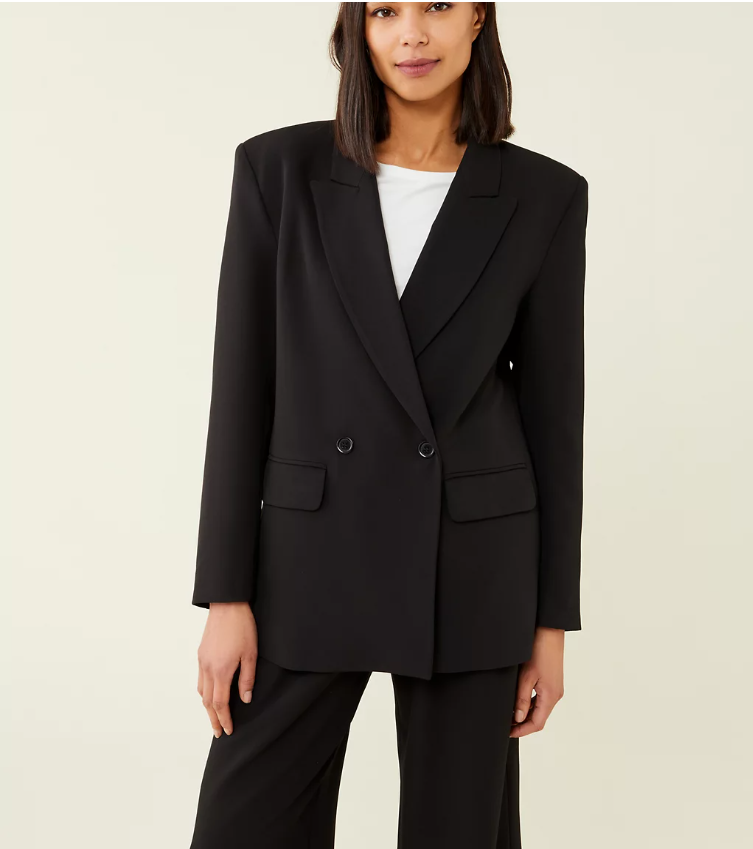
Double Breasted Blazer on Marks and Spencer

Double Breasted Blazer on Marks and Spencer

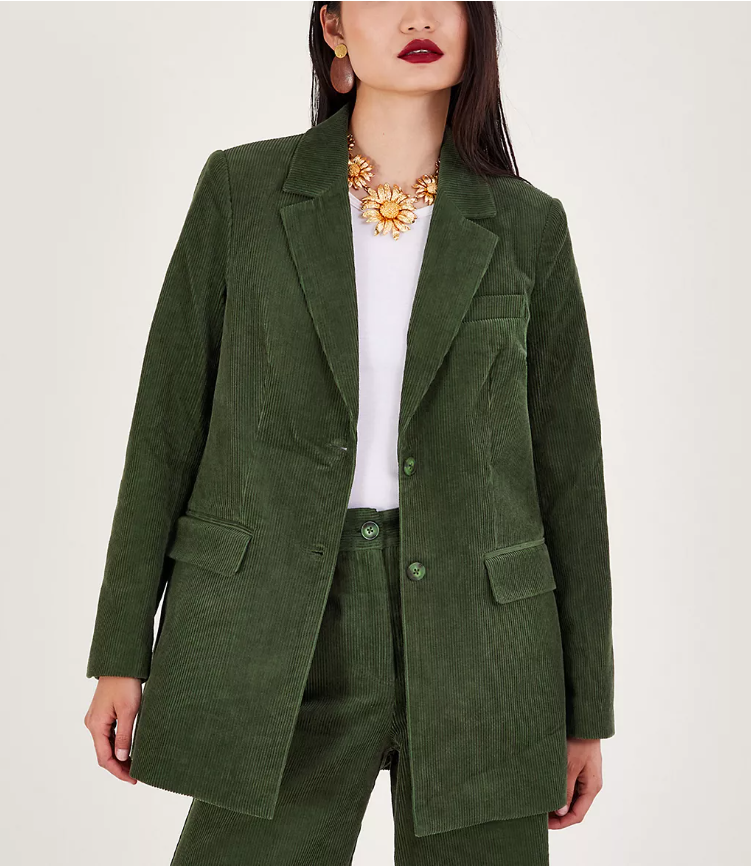
Cord Single Breasted Blazer on Marks and Spencer

Cord Single Breasted Blazer on Marks and Spencer

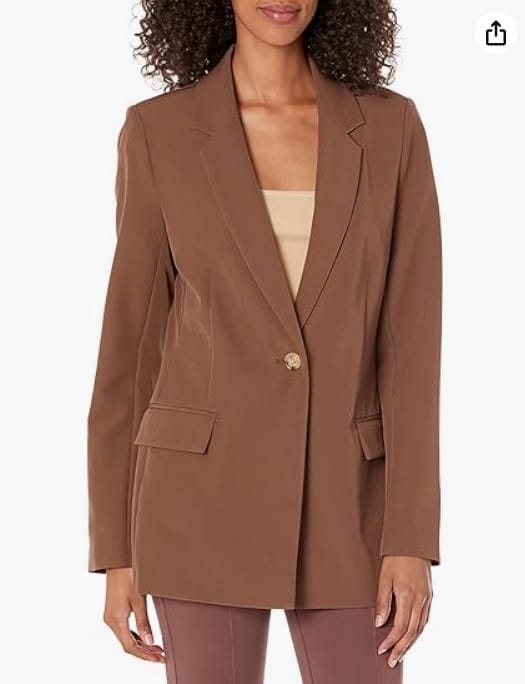
The Drop Women’s Blake Long Blazer

The Drop Women’s Blake Long Blazer

Now, if you are an hourglass shape, this “straight line” idea just doesn’t work very well. And, frankly, it would violate the charm of who you are, fundamentally. So, just consider some of the other tips below.

Once you’ve created that longer line, make sure the bottom half of what you wear continues the line. A midi length skirt or dress should end just about at the point where your calf muscle starts to get smaller. Proportionally it is a more flattering look. But you could also pair such a top with a pencil skirt that hits just above the knee. To make the whole outfit coherent, look to the next tip.

Longer Coats

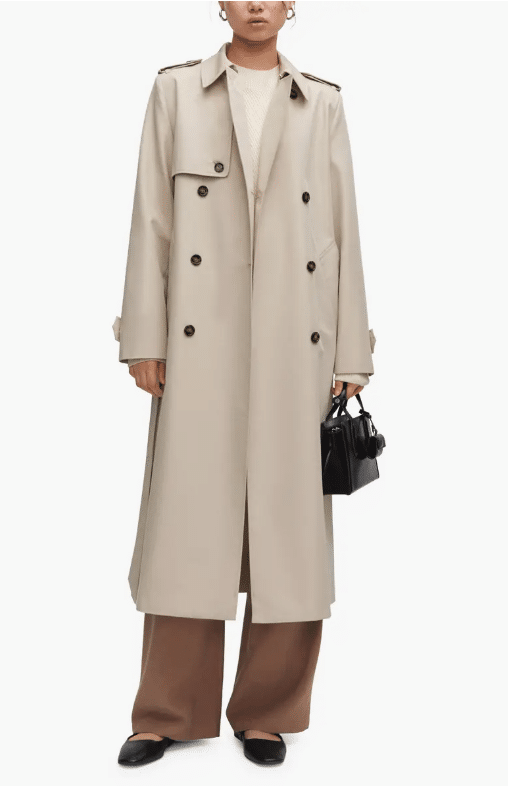
The basic trench coat never went out of style but is having a huge revival right now. And we’re seeing them in longer lengths. That automatically creates a columnar look if you don’t belt it. Most traditional trench coats are double breasted. It’s particularly important to avoid buttoning and tying the belts on trench coats if you have large breasts. Just make sure you get the right size.

MANGO Double Breasted Water Repellent Trench Coat | Nordstrom

MANGO Double Breasted Water Repellent Trench Coat | Nordstrom

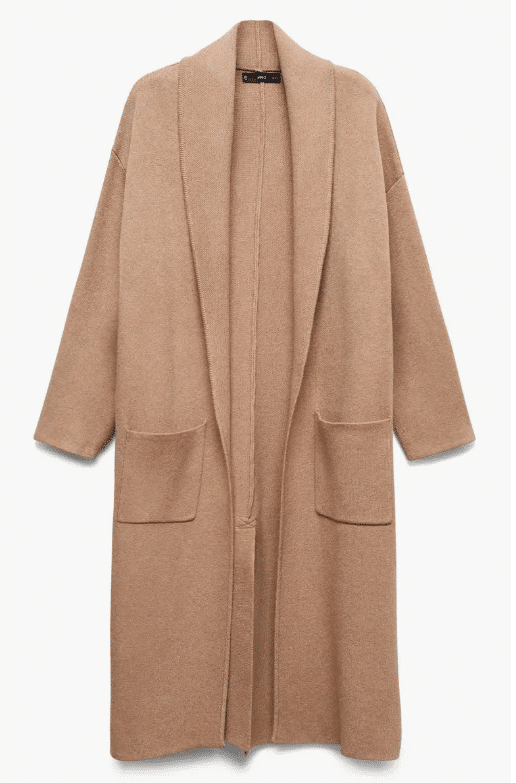
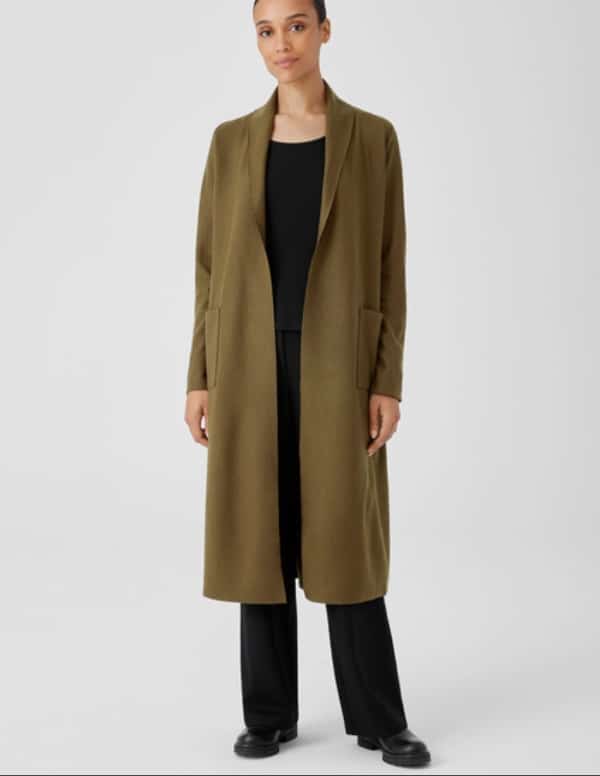
But we’re also seeing a return of the long-line cardigan coats that are either knee length or midi length. The key to wearing those is to keep what is worn underneath very simple: no patterns, no distracting sleeves, or collars. Keep your skirt or slacks or jeans simple and in similar color.

Any long coat that skims the body and has few details can work well to create that same long and slim line. You’ll see some of these in knit materials that are heavier than a cardigan but lighter than winter outerwear.

Mango Oversized Knit Coat Nordstrom

Mango Oversized Knit Coat Nordstrom

Boiled Wool Jersey High Collar Jacket at Eileen Fisher

Boiled Wool Jersey High Collar Jacket at Eileen Fisher

Think Monocolor or Tonal Color

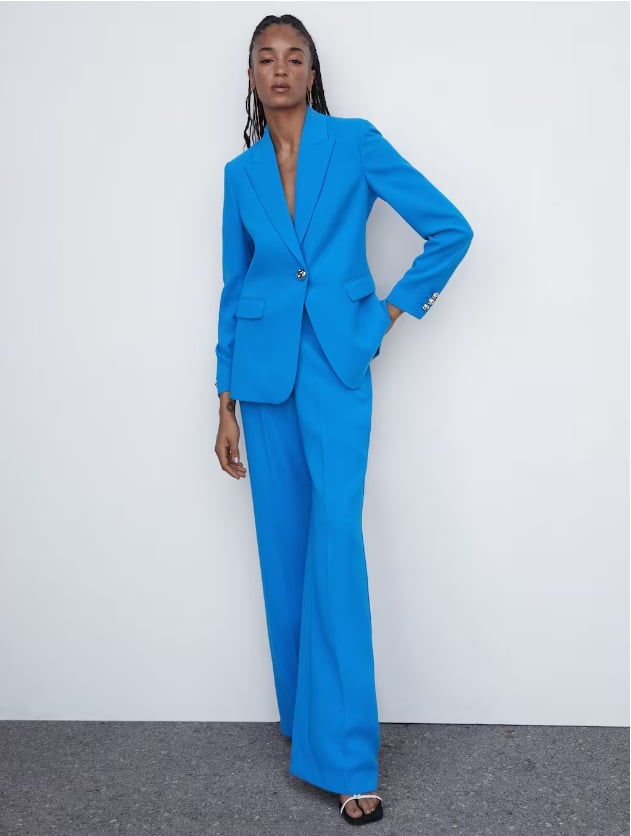
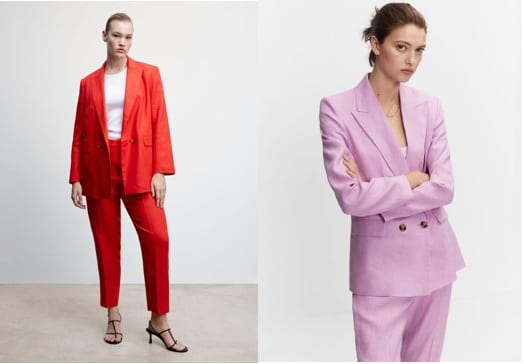
An all-one-color outfit is very slimming. It also incorporates the “columnar” concept. That’s pretty much a universal truth regardless of your body shape or where you might have added extra weight.

Blazer with Jewel Button

Blazer with Jewel Button

100 % Linen Suit Blazer

100 % Linen Suit Blazer

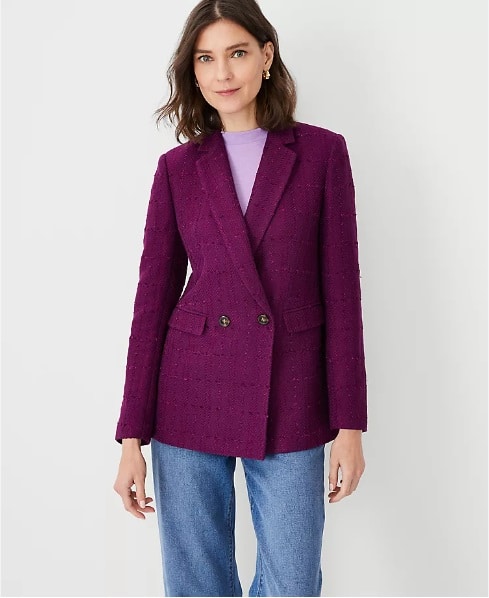
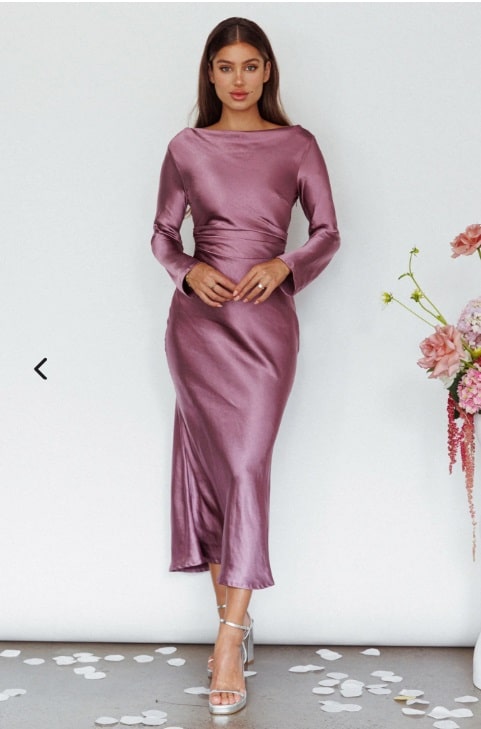
Also, wearing different shades of the same color, or what is called “tonal” dressing, has a similar effect. To make tonal dressing work, make sure that the shades of the color you are wearing are 1) both of the same coolness or warmth, and 2) similar saturation level.

As for coolness or warmth, colors that lean toward yellow are considered warm colors, those that lean toward blue are cool. (We tend to understand this concept intuitively when we choose our lipsticks.)

So, for example, you wouldn’t want to pair a teal jacket with a sky blue skirt. But wearing a darker shade of teal on top with a slightly lighter shade of teal on the bottom does work. Or wearing a dress with a jacket in a darker shade of that dress color does the same thing.

The Tailored Double Breasted Long Blazer in Tweed

The Tailored Double Breasted Long Blazer in Tweed

Loveland Cowl Back Midi Dress Grape | Selfie Leslie

Loveland Cowl Back Midi Dress Grape | Selfie Leslie

The concept of “saturation” refers to how much pigment the color contains. The example I used in my book is that when you apply one coat of a nail polish you have a sheerer shade than when you have applied multiple coats.

The reason this is important is that even if the colors are in the same color family and warmth/coolness category, if they are vastly different in saturation, that will create a demarcation line. Any time you create a demarcation line you truncate the length of the body.

Lastly, and this also pertains to the previous tip about wearing mono color, make sure your stockings or leggings are in or very close to the same color as your shoes, skirt, or dress. And by the way, colored stockings are back!!

Vertical Stripes or Asymmetry

It’s kind of a no-brainer that anything with vertical lines is going to fool the eye into seeing length. We’ve been seeing so many horizonal striped sweaters and French-style bateau striped tees in the past couple of years that it’s very tempting to lean into that very stylish and perennially popular trend.

But especially if you have added a few pounds around the middle, or have a large or heavy bust, horizontal stripes are not particularly flattering. They will bend and “wave” around your bulges, drawing attention to them.

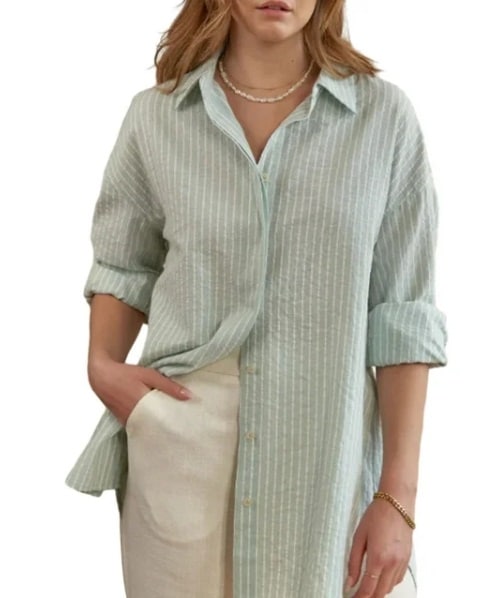
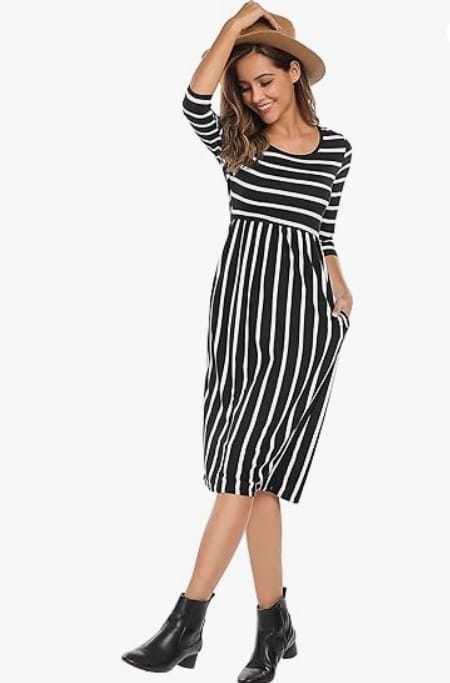
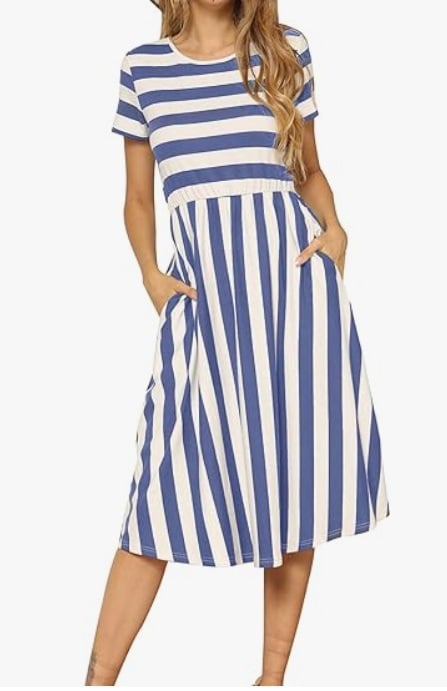
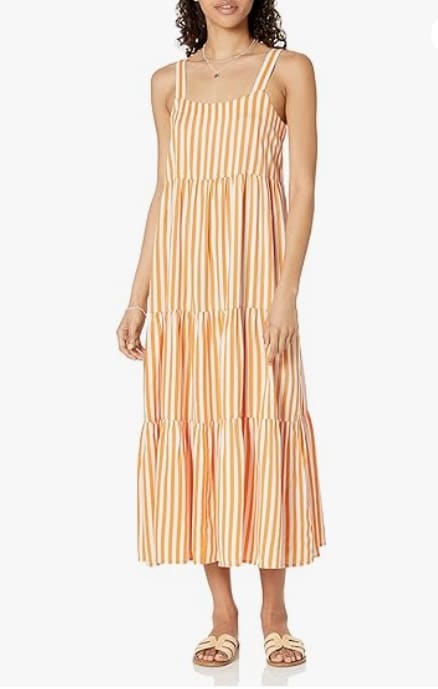
But vertical stripes, particularly during the warmer season, are also perennially fashionable. You’ll see them a lot in blouses, sun dresses or tunics. If you tend to be on the slim side already and long waisted, but short legged, you could even incorporate one of the styles that has horizontal stripes up to just below the bust, and then vertical stripes below in a longer skirt length (Amazon has some of these). That will make your legs look very long and will camouflage wider hips.

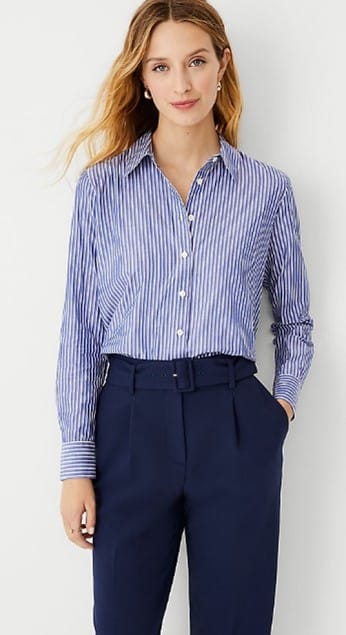
Women Button Down Shirts Vertical Striped Turn-Down Collar Blouses

Women Button Down Shirts Vertical Striped Turn-Down Collar Blouses

Petite Striped Relaxed Perfect Shirt

Petite Striped Relaxed Perfect Shirt

Halife Women's 3 4 Sleeve Stripe Elastic Waist Casual Dress with Pocket

Halife Women’s 3 4 Sleeve Stripe Elastic Waist Casual Dress with Pocket

levaca Women's Casual Short Sleeve Striped Swing Midi Dress with Pockets

levaca Women’s Casual Short Sleeve Striped Swing Midi Dress with Pockets

The Drop Women's Britt Tiered Maxi Tent Dress_DUP

The Drop Women’s Britt Tiered Maxi Tent Dress_DUP

Lengthening Shoes

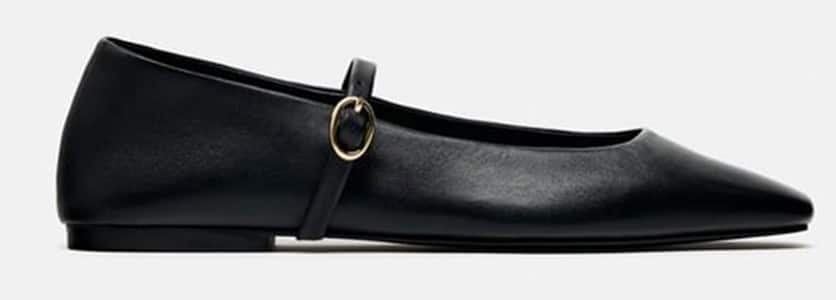
The currently popular MaryJane style flats and heels are a fun way to bring a touch of youthful playfulness into your outfit. But they will definitely make your legs look shorter. Anytime you wear a shoe with a strap around the instep it does this. They will also make pudgy feet look more so. (If you have particularly long feet, and want them to look smaller, these could be a nice style for you.)

Mary Jane Shoes Woman | ZARA United States

Mary Jane Shoes Woman | ZARA United States

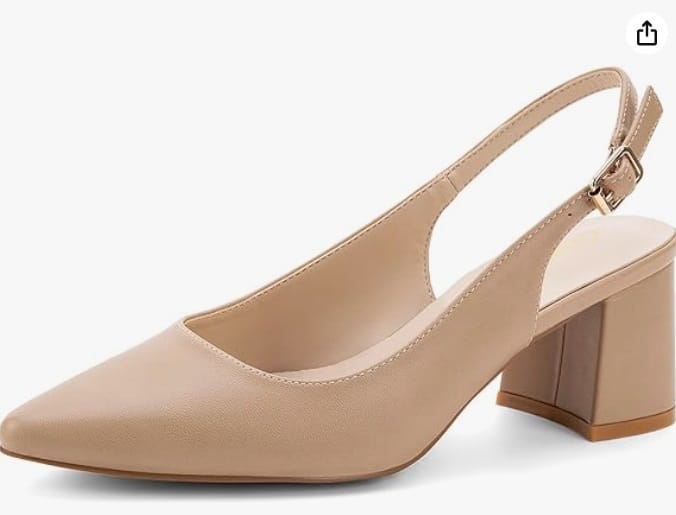
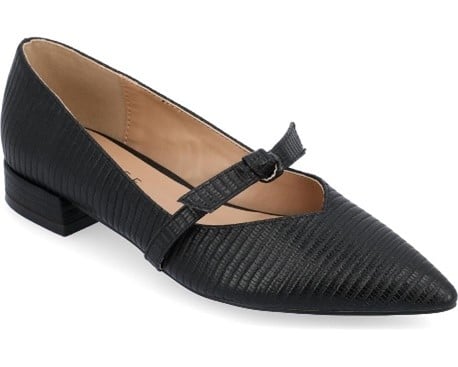
To elongate the look of your legs, continue the lengthening line from your outfit into your shoes. The best way to do this, unfortunately, is with pointed toe shoes – heels, sling-backs, and flats. I say “unfortunately” because too often these shoes are extremely narrow in the toe box area. It’s a menace to womankind, particularly if you tend toward having bunions or neuromas.

But it is just the case that pointed toe shoes make your legs look longer, especially if they are in the same color as your pants, skirt, dress and/or stockings. There are some shoes with pointed toes that have ample width for your toes below where the point starts. Look for those. If you shop online, it’s hit-or-miss, so make sure the item is returnable.

Greatonu Womens Nude Sexy Pointed Closed Toe Comfortable Slingback Pumps Court Shoes

Greatonu Womens Nude Sexy Pointed Closed Toe Comfortable Slingback Pumps Court Shoes

Journee Collection Cait Flats | Zappos.com

Journee Collection Cait Flats | Zappos.com

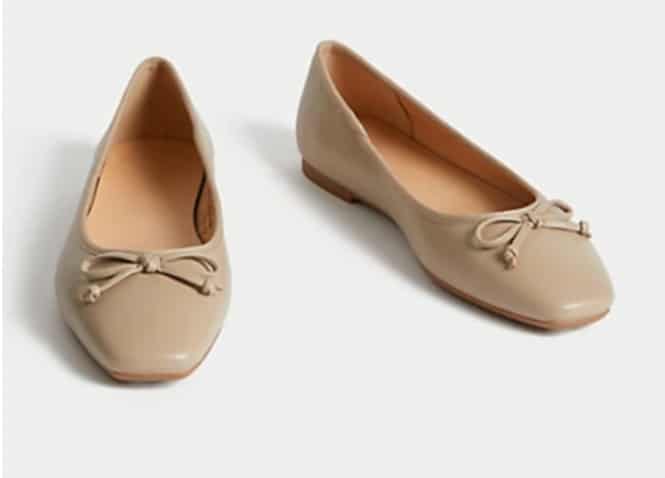
However, there are some flats with almond or slightly squared shaped toe areas. This is a nice compromise if pointed toe shoes are something you just can’t abide.

Bow Flat Ballet Pumps | M&S US

Bow Flat Ballet Pumps | M&S US

And lastly, as mentioned, keep the color of your stockings the same color as your bottoms or shoes. This is especially important if you are wearing a midi skirt.

Longer Hemline in Pants

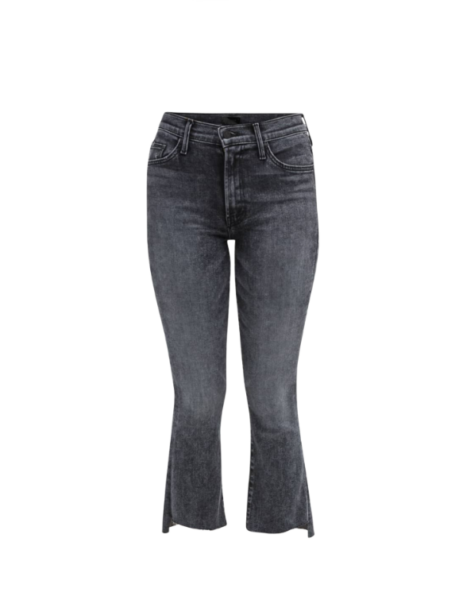
You’re going to be seeing a lot of cropped trousers and jeans plus the new “carrot” and rounded shaped jeans in fashion. They are being worn with fitted tops (tees and sweaters) and kitten-heeled shoes and loafers. It’s a cool and very fashion-forward look, but generally, it will make you appear shorter.

If you have shorter legs, you want to create the illusion of length by having a pant hem that just skims the back of the heel of your shoe. These longer types of pants or jeans are being worn with kitten-heeled pointed ankle boots. Both elements, the hemline, and the pointed toe shoe, will create that illusion of length.

The most effective styles of pants for this idea are looser in general and can include pleating at the waist in fabrics that gently drape from the waistline. But you will also soon start seeing narrower leg flared jeans with this longer hem. If you aren’t carrying a lot of weight in your legs this is a fun trend for you that echoes an almost 70s’ look. Wear them with one of the new silver ballet flats, or even sneakers.

Women's Harlow Pants | Madewell

Women’s Harlow Pants | Madewell

So, as you can see, for us shorties (I’m 5’1” – 152 centimeters – on a good day) there are solutions. And for those of us for whom the holidays were a month of sweet treats, there are workarounds. Stand up (tall) for our petite compatriots in arms! (And legs…)

Let’s Have a Conversation:

Are you finding that you have to have your things tailored more now? Have you bought anything new to accommodate weight gain, and if so, what? How are you managing a shrinking frame?

Read More

I Used to Ski: Thoughts on How to Reconcile Your Past

Reconcile your past and present

Right after Thanksgiving, in the Northeast USA the temperature drops precipitously. It’s ice cold outside. As I step out of my warm cozy home, the best place I have ever lived, onto a newly planked landing, looking at one of the best cars I have ever owned, in my favorite mink coat with rosettes on the bell sleeves (cause it’s that cold); en-route to meet friends for coffee, the best friends I have ever had, my first thought when the chilly air hits my face is: I’m glad I am not on a ski lift!

The truth is, where I live, there are no gondolas or enclosed lifts. Being whisked to the top of the mountain is not a magic ride. No special occasion needing long fancy dresses, sporty rental car and hotel suites overlooking the ocean with 3 bathrooms. In my past everyday life, there was just the barebones steel wobbly 2-chair lift. It’s time to be honest with myself about why I don’t ski anymore.

Swooshing down the slopes with the sun shining down, the clean white snow punctuated by the greenest trees and the bluest skies. Counting on your body to hold you, propel you. Your mind and body – one. Making every cell align and feeling happy, exhilarated, free, at peace. No drugs, no alcohol, no help. Naturally leaning left or right, bending my knees, placing my poles in the deep soft snow, gliding down the hill in a graceful linking s-pattern. Digging deep into a tight mogul. Skiing was one of my life’s greatest pleasures.

I stopped because of the clothes. No matter how much I spent or how much weight I lost, they didn’t keep me warm or fit right. Halfway down the mountain, I would twist and something would shift either binding me or exposing a patch of skin, that didn’t need exposure.

My arthritis and the years of wear and tear made the ski boots uncomfortable. The other people on the hill got faster – or did I get slower? And once the trails were co-mingled with snowboarders, navigating was hard work akin to changing lanes in a six-lane highway. I missed the backroads. And what rant about the state of skiing today would be complete without complaining about the parking situation. Mushy, muddy, deep iced ruts. Getting through the parking lot, I always wished I had obstacle course training and could afford a valet.

So why do I have to come to grips with the statement: I used to ski?

Process the Loss

For many years, I have not let myself think this deeply about why I loved skiing. Honestly, I started blogging for Sixty and Me three years ago to the date. I moved to this town because it was a 12-minute drive to the mountain. And the mountain is everything. I see it going and coming into town. When it gets cold, before the first snow, late at night, the sound of the blower never fails to excite me.

The promise of skiing filled me with joy. I started skiing before I was 13 years old. I skied for 40 years. How come it is no longer in my life? How could my body betray me like this? When did my equipment get so old? When did it become too much effort to do something I love?
It was too painful for me to think about. It wasn’t just the skiing. It was the friends I shared the weekends with, my daughter relying on me and a weekend so different from my every day, that it reinforced me for a hard week.

Revisit Revisionist History

When I break up or lose a lover or friend or family, I tend to have revisionist history. I only see black and white. I only feel it was all good or all bad. Usually, I remember the version that allows me to continue to mourn the loss and beat myself up. My internal monologue goes like this:

Why didn’t I appreciate them when they were in my life? It’s all my fault. Why did I start asking for what I need?

I don’t remember how they took advantage of me or loved to pick fights and were always (and I mean black and white always) running late. I remember only the good parts. No more.

My memory of skiing was all good. I loved it. My pants always fit, I was never cold, I raced down the hill like Suzi Chapstick, and all was right with the world.

I think there is a reason our hair turns gray. To remind us that life is just like that. It’s in the muted tone, the everyday, the realness that we find peace.

Accept Two Divergent Thoughts

The hallmark of being older and living without regret for me is being able to hold two complicated thoughts. Such as, I loved skiing and hated the cold. Or, swishing down the mountain, I felt free and yet carrying all that equipment was exhausting. And then, the breath of fresh air as I gathered speed was exhilarating, and the long wait on the lift line exhausting.

Being able to hold these two thoughts keeps me balanced and better able to look back on my life with deep gratitude.

Get the Balanced View

Now I force myself to write a list. Two simple columns. Usually, on a bright yellow or pink sticky note. Sometimes I use a frilly heart shaped pad so I remember to love myself. On the left, I list what was great. On the right, what sucked. No sugarcoating, no long sentences. Just the facts, Ma’am.

Writing it down forces me to see it. To come face-to-face with the assessment I keep making in my head but never changing in my heart and keep saying, one day, one day. I needed to change that narrative.

Today was that day. I walked into the cold air and said, “I’m glad I’m not on a ski lift.” It’s the first day I didn’t beat myself up about not skiing.

Once the “it sucks” column gets longer than the “it’s great column,” I know I have to change my ways. And when I forget and start getting angry and mad at myself that I no longer do something I love, I can spend time, looking for the list and once I find it, being grateful for the memories.

Pro Tip: Use one notebook for these musings. Or create a file on your computer or a note on your phone. The easier it is to find them, the more you look at them, the more you will remember to have the balanced view. For me, that changed everything.

Be Honest, Even When You Don’t Want To

The truth is that I probably couldn’t ski if I wanted to. I am not in shape. And that was even before the pandemic. All the way up to my 40s I stayed in pretty good shape no matter the pounds I packed-on. And before ski season, extra wall squats, getting those thighs stronger than ever to go all day long, up and down the mountain, up and down the moguls, up and down from falling. At age 60 I was no longer even close to being in shape.

And there’s more. When the pandemic hit, people had to make a reservation for the lift. That was way too much pressure for me. What if I wanted to linger longer over my coffee, the dog needed extra time or I just couldn’t get out of bed – all possible and real scenarios. I mean, how long would it take me to get my tight ski pants on anyway? The truth for me today is, I’m just happy I can get down the steps and to the car without breaking my other hip. Having to get to a ski line appointment just isn’t something I am willing to tackle.

Know Your Body’s Current State and Ability

If you were reading carefully, you noticed I said, “get down the steps without breaking my other hip.” Yup, one of my hips was replaced at age 46. I like to tell everyone it was a ski accident. Then I break the news, it happened the night before, in the slippery sliding parking lot at the lodge. The truth is, skiing compounded the lack of cartilage in my hip, after pounding down moguls year after year. The high heels I lived in didn’t help, and the years of walking on sprained ankles compensating with my hip was a recipe for disaster.

Know your body’s current ability. One of the downfalls of my skiing career was that when I bought my last new pair of ski boots and all the supporting equipment, I chose what I would have skied best in when I was in my 20s and 30s. Fast blades, with a deep wood core and racing stance. That wasn’t what my body could handle anymore. Instead of me riding the skis, they were riding me. It was scary.

What’s Next

Enjoy what you are doing now, like walking barefoot, shoveling the snow, because not being able to do it, may be just around the corner. You know, I used to be quite the skier.

Let’s Have a Conversation:

Is there an activity that you were good at but have had to give up? What did that feel like? What was the reason for giving up that activity or hobby?

Read More