Month: March 2024

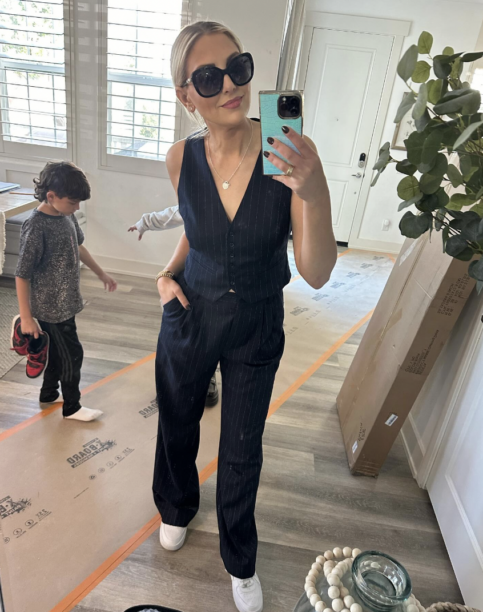
Gina Kirschenheiter’s Pinstriped Vest and Pant Set

Gina Kirschenheiter’s Pinstriped Vest and Pant Set / Real Housewives of Orange County Instagram Fashion March 2024

Gina Kirschenheiter’s morning reminder about working hard through life’s challenges was just what I needed today, along with her chic outfit that I must have in my closet ASAP. Her pinstriped vest and pants set are the latest chic look for business girls. And life may get chaotic at times but fashion keeps us going. Pin your next fit below to level up your day!

Best In Blonde,

Amanda
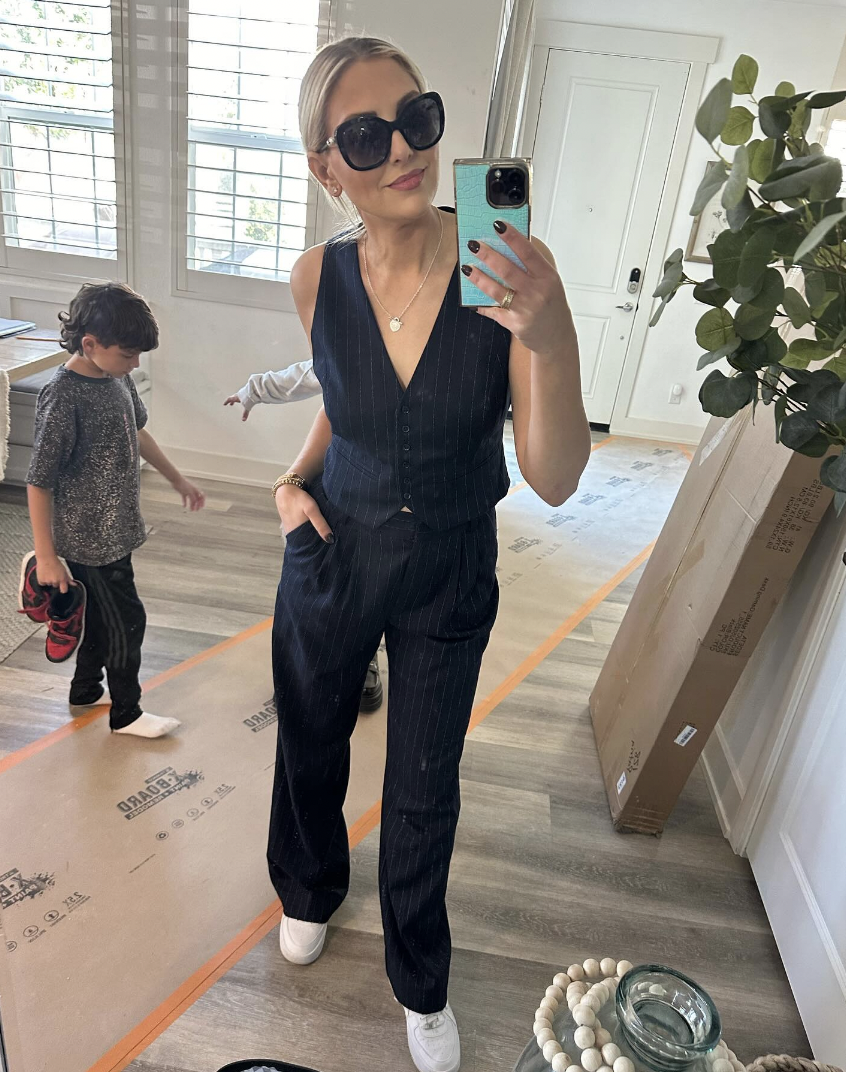

Gina Kirschenheiters Pinstriped Vest and Pant Set

Click Here for Additional Stock in Her Top / Here for More Stock / Here for Even More Stock

Click Here for Additional Stock in Her Pants / Here for More Stock / Here for Even More Stock / Here for Even MORE Stock

Click Here for Her Top in Black

Photo + Info: @ginakirschenheiter


Style Stealers


Originally posted at: Gina Kirschenheiter’s Pinstriped Vest and Pant Set

Read More

How Much Control Do We Have Over Our Lives?

how much control do we have over our lives

My favourite philosopher, Socrates (470-399 BCE), said, “An unexamined life is not worth living.” When we begin the lifelong journey along the narrow road of examining our life and gaining self-knowledge and self-improvement, we become philosophers. The term philosophy comes from two Greek words: philos, which means friend or love, and sophia, which means wisdom. The true philosopher, or “lover of wisdom,” is committed to living a thoughtful and self-disciplined life in the pursuit of truth and reality.

Of course, there are few things as intricate and multifaceted as a human life. So knowing what to examine first can feel overwhelming.

I’d like to share what I think is a very useful first question to ask ourselves.

How Much Control Do We Have Over Our Own Lives?

Before we go any further, let’s define control. For me, control is two linked things: the power to direct and restrain our own and/or other people’s behaviour, and the power to command the course of events.

Perhaps ironically for someone who loves philosophy, I think the question is most usefully tackled first of all by calling in the psychologists rather than the philosophers. Fascinating though philosophical debates on whether we have free will are, they’re not necessarily the quickest way to arrive at practical insights that can tangibly improve your life right now.

Locus of Control

Julian B. Rotter was a psychologist who, back in 1966, introduced the concept of the locus (i.e., location) of control. On the level of the individual, the positioning of this locus couldn’t be more important in determining how they live their lives.

Reflecting on our own locus of control forces us to face one of the most important questions a human being can ask themselves: Do we believe – and, just as importantly, act like – our lives are controlled by ourselves or by external forces, whether these are other people or concepts such as destiny, chance, or fate?

Those of us who opt to position our locus of control squarely within ourselves feel empowered and optimistic about the future. Those of us who give up our locus of control to other people or circumstances are much more susceptible to feeling hopeless and victimized.

Where Is Your Locus?

So I encourage you to ask yourself where your own locus of control is, and where you’d like it to be. Different readers may have different answers to the first part of the question. But the second part is a bit of a trick. Who, after all, wants control of their life to be out of their own hands?

We can probably all agree, then, that not having any control sounds fairly unappealing. But we need to be careful to not confuse our “locus of control” with some boundless form of “control.” Because wanting more control than is possible – being a “control freak,” in other words—is detrimental to our wellbeing, too.

Controlling Our Responses

The great Stoic philosopher Epictetus (55-135CE) said, “It’s not what happens to us, it’s how we react to it that matters.” What he meant by that was that we may not be in control of what happens around us or to us, but we can control how we respond. The emotional distress that we feel because of an event isn’t caused by the event but by how we choose to react to it.

What We Can Control

Epictetus made a list of things we can control with our willpower: our judgment of events and people, our impulses, our desires, our aversions, and our mental faculties in general. These are the things we take charge of once we’ve brought our locus of control in-house.

We Have No Control Over

He also made a list of what we can’t control: our body, our property, parents, siblings, children, country, and friends. It’s impossible to completely control others. And everyone’s life begins in an environment – their family, their childhood, their education, for example – that they didn’t choose and couldn’t control.

However, what we make of the hand that we have been dealt is where our own control begins.

Above All, What We Can Control Is Our Self-Development

We have the choice of what kind of human we want to be. Do we want to self-develop as much as we can, which means we actively direct our lives and take responsibility for our actions? Or do we want to drift through life, letting it happen to us, being the victim of other people or events, often complaining along that road?

If we are prepared to make self-development our life work and focus on this rather than on achieving riches or fame, our reward is that we get to evolve into our higher self and enjoy the sense of fulfilment and contentment that comes from doing so. We transform from children, who are at the mercy of their emotions and are ignorant of life, into adults who have achieved self-mastery. We become fully mature human beings, self-possessed, self-contained, and self-controlled. This is a lifelong process, and the main purpose in life. We are a work in progress.

In short, we have control only over our mind and attitudes. We accept things we can’t control in life – including other people – as they are. We accept that our responsibility is to practise self-control, be happy, and work with others, doing our little bit to improve the lives of those around us. This enlightenment leads to a peaceful, contented life.

Let’s Have a Conversation:

Are you on the road of self-development? Do you know what you can control in your life? Are you happy being a work in progress?

Read More

Reclaim Your Place as an Artist: Creative Thinking Is for Everyone

creative thinking older adults

Creativity has always been a topic I love reading about, so it’s really no surprise that I stumbled on this quote by Pablo Picasso: “Every child is an artist; the problem is staying an artist when you grow up.”

What’s more surprising is that there’s research that proves this to be true – and it’s decades old.

Back in 1969, NASA commissioned Professor George Land to design a creativity test to help decide who to hire to work on the Moon Landing project. Understandably, NASA wanted only the most innovative thinkers – or “creative geniuses.”

The test was designed so that the subjects would look at a certain problem and come up with new, innovative, possible solutions.

Looking for clues to our creativity, the same test was administered to 1,600 5-year-olds – with the surprising result that 98% of the children scored at the “creative genius” level.

The same children were retested every five years, and the results were stunning. At age 10, only 30% scored at the “creative genius” level. By age 15, the score had dropped to 12%.

The same test was administered to 280,000 adults age 25+ with only 2% scoring as “creative geniuses.”

What Happened to Their Creativity?

Our inner artist gets shut down as we enter the school system in which creative thinking is largely discouraged. What tends to get rewarded is memorizing facts and figures and regurgitating them on standardized tests.

I can recall hating tests that had me rely on memory work to fill in the blanks with the “correct” answer. However, I loved and excelled at creative writing because I was able to tap into my own imagination.

When we enter the work system, creative thinking is again discouraged in many workplaces. There is often a Policy and Procedures Manual that itemizes every scenario under the sun, with little room for deviation to satisfy individual situations. And, many bosses demand that you do things their way – or leave.

Study after study reveals that 70% of employees are unhappy with their jobs. At the same time, those in creative fields report being happy and fulfilled.

It’s worth noting that school dropouts have bucked the system. Bill Gates, Steve Jobs, and Richard Branson are well-known examples.

Two Types of Thinking

In that 1969 study, Professor Land identified two types of thinking processes:

Convergent Thinking

Judging ideas, criticizing them, refining them, combining them, and improving on them constitutes convergent thinking. This happens during conscious thought.

Divergent Thinking

On the other side is divergent thinking, where you imagine new, original ideas, which are different from what has come before, but which may be only rough ideas to begin with. These most often happen subconsciously. Divergent thinking happens in the dream state.

Land says schools try to teach children to use both kinds of thinking at the same time, which is impossible.

Brainstorming Is a Creative Process

His advice is to “let your mind run free while you come up with ideas, and only afterwards to sit down, evaluate them, and start working on the ideas you think will work best.”

This is the essence of brainstorming – which is often encouraged during office meetings, until someone pipes up and says, “we can’t do that,” “that won’t work,” “we’ve never tried that before,” or some other killjoy response.

We now live in a time of chaos and unpredictable change. It’s essential for us to tap into innovative thinking. We need to encourage people to come up with a range of possibilities to create a new future to solve the problems we face.

As our world transitions into automation, and as we’re faced with an increasingly changing environment, we’ll need to rekindle our creative thinking.

How to Rekindle Creativity

A detailed study of the brain of Albert Einstein showed his creative genius stemmed from his highly connected brain.

A key to creativity is divergent thinking. You can enhance this through exercises such as brainstorming alternative ways to use common items like a paper clip, elastic band, wooden box, newspaper, paper bags, etc.

Creativity requires us to notice things that pass through our mind’s eye, which is another name for our subconscious mind. Creativity lives in our subconscious mind.

Do You Meditate?

Meditation allows us to quiet our conscious mind, often termed the “monkey mind,” so we can access our more powerful subconscious mind. We know meditation encourages mindfulness.

Meditation can help you clear your mind of clutter and distraction so you can be open to new ideas. You can use meditation as a key to unlock your own creativity.

Remember when the Beatles studied meditation with Maharishi Mahesh Yogi? They said meditation was a high without drugs and the White Album emerged from this practice.

Walt Disney is one of the first people to adopt mindfulness into the business world. Google, Apple, and Nike also use meditation in the workplace – as a means to awaken creativity.

Art Can Be a Form of Meditation

The ability to use our creativity is one of the greatest gifts about being human. Making art has been termed the “new meditation.”

Creating art is a form of meditation as long as we don’t worry about the outcome or the judgment of others. Art can be a channel to cope with overwhelming emotions.

Art therapy is used for its healing effect on depression, trauma, and illness. As a therapeutic practice, it encourages self-discovery. Art can also be used as a spiritual practice.

Do Art For Its Own Sake

Creativity enables you to experience the world through child-like wonder and fuels passion, purpose, and meaning. Creating art can still the mind and help us tap into our deeper core while allowing for self-expression.

Expressing your creativity could change your life and our world. It’s not too late to start!

Let’s Have a Conversation:

What would you consider a creative project? Are you working on one? Do you think of yourself as creative? Would you meditate or attend an art class to develop your creative potential? Why or why not? Join the conversation below!

Read More

Is There a Different Way to Look at Red Flags?

different way to look at red flags

It’s no secret that women over 60 have extremely high standards as they experience the dating scene. You are smart, independent, and savvy and don’t want to settle for anything less than you already have. You’ve built a beautiful life for yourself. The problem is, you’ve built a beautiful life for one, and it gets lonely.

Unfortunately, when you meet someone new, it’s typical to evaluate him based on your ‘list’. Everyone has one, even if you don’t have it written down. And it’s human nature to naturally look for a reason to say “No” rather than “Yes.” Your brain is working overtime to keep you safe by making it easy for you to swipe left or walk away. Protecting you is the primary job of your subconscious mind.

I know from personal experience how easy it is to break things off with a man when things don’t line up perfectly or match the picture you have in your mind of what the perfect relationship looks like. And unfortunately, you can miss out on some really wonderful men if you do that too quickly or easily.

Knowing your must haves and deal breakers is essential to being able to recognize a man who is a good fit for you. However, if your lists contain more than three or four things each, you are becoming too specific and may narrow your dating pool even further. There’s a shift you can make to date with a more sophisticated approach that helps you slow things down, to give yourself time to get past his date-face and start getting to know the real man.

Here are a few of the things you can do:

Put in Some Effort to Know the Man

Make a special point to find at least three things to like about any man you meet. Look for ways to say “Yes.” Remember what you focus on expands, so focus on his positives.

Consider Real Red Flags

Ask yourself if everything you consider to be a ‘red flag’ really is red. Is it something that you would love to have in your perfect world, or is it truly something that you could never deal with in a life partner?

Try to Neglect Small Flaws

Embrace his minor ‘red flags’ and consider them opportunities to grow as a couple. Rather than move on, evaluate if this is something you could negotiate or create a workaround for. These are the situations that help you learn how each of you loves, argues, deals with conflict, and disagrees. This can help deepen the emotional intimacy you share more than you can imagine.

Stop Worrying About the Lack of Common Interests

If you and a man like to do one or two of the same things, you have a good starting point. It’s more important for you to share personal values and goals than to share interests and hobbies. You can learn a new hobby in time, or not. Having separate interests keeps the conversation fresh and new for years to come.

Become the Person You Want to Meet

Believe it or not, men are evaluating you through their list as well. It’s not fair to expect your date to be ‘more’ than you are. Quality men look for quality women, so be sure you’re living your best life as well.

Disregard Stereotypes

Throw out most of the myths you heard about dating at this stage of life. Men at our age are much less threatened by smart, successful women than they may have been in their 30s or 40s. They still like to feel appreciated for what they do, but they recognize that smart, successful women help make adulting easier and more fun.

Stop Assuming Men Aren’t Sensitive

Men can carry forward as much pain and hurt from the past to present relationships as we do. They simply don’t talk about it as much. I have found men to be much more open about their feelings at this stage of life than ever before. It simply takes them a bit longer to feel safe enough to share them.

If you’ve been reading my articles, you know that recently I moved on too quickly from a special man because he didn’t match my perfect picture of what a relationship should be. As I thought about that experience, after the fact, I realized that I was dating through a fear lens rather than a love lens. And if I didn’t do something to change, it was highly likely to happen again. And I would continue to be alone. That’s when I took action.

If you think it’s time for you to take your own type of action, I invite you to enter to win my free 60-minute coaching session. This is your opportunity to talk with me one-on-one about your unique situation. We’ll talk about what’s working, what’s not, and how to change things so you can level-up your dating style, meet higher-quality men, and start having more fun. Simply click here to enter. I’ll be selecting one winner in the next 10 days, and it could easily be you.

In the meantime, keep your heart open and ready for love. You never know where you will find it.

Let’s Start a Conversation

Do you think you bring as much to the table as you ask of men? If not, what types of things could you delete from your list?

Read More

One Piece of Financial Advice You Can Ignore

one piece of financial advice you can ignore

If there is one piece of traditional financial advice I wish we all knew we could ignore, it would be:

“Only spend on what you need, not what you want.”

You’ve probably heard this piece of wisdom thousands of times in your life, and maybe you’ve even said it as many times! But the wants-vs-needs decision making strategy is probably the worst piece of financial advice for anyone.

Here’s why:

“Only spend on what you need, not what you want” isn’t working because:

  1. It’s too emotional.
  2. It’s too fast.
  3. It reinforces scarcity and failure.

It’s Too Emotional

It’s difficult to find two words in the English language that are more emotional than “want” and “need.” Essentially, we’re trying to make good, logical decisions using emotional language. Emotions are tools and are often a part of our decision making process, but using emotions this way is overly simplistic and not reflective of the complexity of our lives.

Emotional decisions are typically very fast and solve for only one thing. Here’s a story from another article about a couple, each partner is solving for one thing and making emotional decisions:

A couple, Sam and Mo, are shopping for a couch. The “right” couch is out there, they just have to find it, right?

Sam: Hey look, this one would fit great in the living room, and it’s in our price range.

Mo: Is it comfortable?

Sam: I don’t know, we could read reviews, or see if we can find it in a showroom.

Mo: Yeah, let’s do that. It doesn’t matter how much it costs if it’s not comfortable, right?

Sam: Yeah, but if it’s not in our price range it doesn’t matter how comfortable it is because we’re not getting it, right?

Each partner is solving for one thing. Sam is solving for price, Mo is solving for comfort. They both think what they’re solving for is the only logical thing to be focused on, and they’re both engaging in emotional decision making.

It’s Too Fast

It’s too fast and easy to justify a decision to ourselves. All we have to do is check the “need” box and move on. Combine that with the simplistic emotional reaction from above, and we’ve got a lightning-fast decision made with little to no thoughtfulness.

Most of the time we know at the moment that we’re using justifications (at least at some level), but in the absence of any other way to make decisions, justification is all we have left. We feel like we have no other choice, and that messaging makes it harder and harder to trust ourselves.

It Reinforces Scarcity and Failure

We have long memories for our own failures, and the wants vs needs strategy provides us with even more evidence that we’re not good at making decisions, even small ones.

And still we don’t evaluate the decision-making process we’re using, only ourselves. Maybe you’re not bad at using the “just focus on your needs, not your wants” strategy, maybe it’s just a bad strategy.

That failure tells us we’re never going to have enough, never going to be enough, and never going to make the right decisions, which amps up scarcity mindset and the pressure we apply to ourselves.

So how do I work with my clients so they can make better choices (financial or otherwise) without the wants vs needs thing?

I use and teach a tool that is a little slower, a little more detailed, but still easy enough to deploy in the service of making better decisions. And not just spending decisions, but in almost all decisions.

Note: This tool is best used for high-frequency, low cost/risk choices from daily spending up to a car purchase. For larger, low-frequency, high cost/risk choices like home purchases, starting or stopping relationships or jobs, this tool will not suffice.

Step 1: What Are the Possible Values of This Choice?

The value of choice CANNOT be its price. Too often we conflate the value of something with its cost.

And we’re not just talking about its monetary price, but also in the time and energy cost of a choice. Essentially, what service does this choice, purchase, or option provide to you?

Let’s consider the question of buying a bottle of carbonated water and practice this idea of values assessment to dig a little deeper.

Possible values of a bottle of carbonated water:

  • Hydration is necessary for life.
  • It’s cold and I’m hot/ it will be refreshing.
  • It’s convenient.
  • It’s delicious.
  • It’s __________.

There are echoes of the WvN assessment here, right? That’s ok, we just need to explore and dig into the reasoning a bit more.

Let’s think about the value of “delicious” for a moment. While we are intentionally using language that steers us away from emotion, we do need to factor it in to our assessments. I love carbonated water, but someone who finds it disgusting would evaluate this differently. What you find satisfying, pleasurable, comforting, nourishing, disgusting, repulsive, or nasty should be part of this assessment, but it should not be the only thing we use to evaluate our choices.

We’re just practicing on a bottle of water so our list won’t be very long. What other values of this bottle of water can you think of?

Step 2: What Are the Possible Risks Associated with This Choice?

The risks of a choice CAN and should include its cost. The monetary cost of this bottle of water was $3. Applying the concept of an opportunity cost to this is pretty intuitive…. Once I spend this $3 on this bottle of water I cannot spend that same $3 on anything else. I can spend a different $3, but not THAT $3.

Where opportunity costs can get fairly philosophical is when we apply the same concept to the time and energy it took to make that $3. Even if I’d found $3 laying on the ground it would have taken me a very little bit of time and energy to pick it up. I cannot spend that time and energy on anything else.

Economics typically focuses the opportunity cost on monetary costs, but rarely turns that same assessment on how we spend our time and energy.

We can always make more money. We can always make more energy. The one thing we can never make more of is time.

So we have one risk so far:

The opportunity costs of spending my time, energy, and money on this bottle of water.

Other risks could be:

  • It could be flat.
  • It could have been manufactured incorrectly/gross.
  • It could be ________.

What other possible risks can you think of for this bottle of water?

Step 3: Is There Any Other Way?

Specifically, is there any other way to get some of the values without some or all of the risks.

Let’s go back one last time to the convenience store where I’m standing with my bottle of water. In just a few seconds, I’d run through the possible values and risks of buying this bottle of water, now I ask myself, “Is there any other way to get some of the values of this bottle of water without some or all of the risks?” I turn my head, looking around, and guess what I see…

A drinking fountain. One of the big refrigerated ones. I could have then done the assessment again with the values, risks, and any other ways of the drinking fountain, but instead I just put the bottle back and sucked down a bunch of refrigerated water.

Sometimes there is no other way. What is important is that we are taking the time to LOOK for other ways.

Often in the headlong press through our lives we don’t look for other options. Feeling like we don’t have or can’t take advantage of more than one option is a kind of crisis. By teaching ourselves (and others) this three-step assessment we bake in the idea that we always need to look for other options.

What are some Any Other Ways for this bottle of water?

  • I could get a cheaper bottle of boring water.
  • I could hold out until I get home.
  • I could drink from the drinking fountain.
  • I could get a cup and get water from the soda machine.
  • I could ______________.

Step 4: Repeat

Repeat the assessment as many times as you like with as many Any Other Ways as you like.

Bonus!

Kids get a kick out of playing this as a game, and I encourage it as a decision making tool you can teach off-the-cuff that will ultimately serve your grandchildren by helping them slow down their decision making process.

Also read, DOES YOUR MONEY SPENDING ALIGN WITH YOUR VALUES?

Let’s Have a Conversation:

Do you consider purchases based on wants or needs? Have you ever thought to slow down your decision making process? What tools have you learned to use that make sense for your finances?

Read More