Month: March 2024

Do You Show Special Attention to the Delicate Skin Around Your Eyes?

delicate skin around your eyes

As we age, we notice how our skin changes in appearance and texture. We can attribute the look and feel of our skin to our lifestyle, our nourishment, our genetics, and our skin care regimen. Wrinkles around the eyes may develop as the skin ages, due to it losing the ability to renew itself. Certain essential oils and products may help to diminish those wrinkles in the eye area.

However, whatever product you use, remember to apply it by very, very, very gently dabbing or patting. Never rub, pull, tug, or use anything stronger than a light touch from your middle or fourth finger. Your index finger is just too strong for delicate application.

Wrinkle Categories

We may have one or more types of creases under and over our eyes, each of which occurs due to a different cause.

Dynamic Wrinkles

Dynamic wrinkles form from repeated contraction of muscles underneath the skin. They typically develop between the eyebrows and on the forehead. Crow’s feet, which are wrinkles near the outer corners of the eyes, are also an example of dynamic wrinkles.

Static Wrinkles

Static wrinkles remain visible even when the facial muscles are at rest. They form as a result of exposure to the sun, smoking, and poor nutrition.

Wrinkle Folds

Another type of wrinkle is the wrinkle fold. This is the age-related sagging of facial structures that usually develop in the grooves between the nose and mouth, but they may also occur underneath the eyes.

Prevention

Wrinkles are an inevitable part of aging, but people can take steps to prevent them. Home remedies such as placing slices of cucumber on the eyes or applying banana face masks, are popular, but there is no scientific data to support these, although they feel good and can ‘plump’ those areas of delicate skin for a short period of time.

Other methods include:

  • Wearing sunscreen with a minimum SPF of 30 every day.
  • Avoiding sitting in direct sunlight.
  • Moisturizing gently with organic products every day.
  • Only gently patting the under and over eye area.
  • Quitting smoking, if relevant.
  • Eating a healthful, balanced diet.

The Good News

The good news is that some studies suggest that polyphenols, chemical compounds found in foods and essential oils, can diminish the appearance of eye wrinkles. The four main categories of polyphenols are:

  • Flavonoids, found in colorful fruits, vegetables, tea, and wine.
  • Phenolic acids, found in the seeds, skins, and leaves of fruits and vegetables.
  • Lignans, found in whole grains, nuts, and seeds.
  • Stilbenes are abundant in peanuts, grapes, and berries.

We can all do our own research, experimentation, and applications to see what enhances our particular delicate eye area skin texture. From my own experimentation, I found that combining certain organic essential oils reduces my dry, creased, and loose eye area skin.

My Organic Growing Younger Gracefully Eye Serum

GYG Organic Eye Serum is a unique formula of:

Castor Oil

Rich in polyphenols, Castor Oil penetrates the skin and has been shown to stimulate the body’s own production of collagen and elastin. Castor oil is a humectant, meaning it helps the skin hold onto water molecules and helps to sustain hydration over a longer period of time.

Grapeseed Oil

Grapeseed Oil rejuvenates the skin naturally, nourishing while minimizing the appearance of fine lines and wrinkles under eye area where dark circles appear.

Coconut Oil

Coconut Oil carries antioxidants and anti-inflammatory compounds that can hydrate the under eye area, reduce inflammation, and potentially lighten dark circles.

Almond Oil

Almond Oil can help to lighten the dark circles under the eyes and reduce puffiness thanks to its anti-inflammatory and antioxidant properties. It also contains retinol, vitamin E, and vitamin K, which can keep the delicate skin under your eyes smooth without irritating it. These naturally occurring ingredients may also help contract the dilated blood vessels that are causing the discoloration.

Avocado Oil

Avocado Oilcan help reduce dark circles, puffiness, and wrinkles. It can be used morning and evening to reduce the appearance of signs of fatigue or skin sagging. Gently dabbing (never tugging or rubbing) helps to stimulate blood and lymphatic circulation, and has a draining effect. Avocado oil is suitable for all skin types.

Helichrysum Oil

Helichrysum Oil tightens and tones the delicate skin around the eyes, quickly absorbing to remove puffiness, and supports plumping to give your eyes a fresh vibrant look.

We have all tried different eye care regimens over the years. Some worked, others didn’t. Whatever you decide to do for your eye area, just remember – always be gentle!

Also read, 10 BEST EYE CREAMS FOR WOMEN OVER 50.

Let’s Have a Conversation:

Have you tried any products that are specifically for eye area skin care? What are they? Have they worked for you? Would you experiment to create your own care formula?

Read More

The Unfinished Stories of Our Lives

unfinished stories of our lives

Most of our stories are unfinished… incomplete – the stories that need pages for the telling. Most of the illustrative quirks, curiosities, endearments, and the very molecular breath of personality go into the dust when the body dies.

My Dad’s Unfinished Story

There is the story of the hard times my dad suffered after his factory, Ironmasters, a wrought iron furniture manufacturing company, burned to the ground. The insurance he needed was not what he had. It is the story of my dad walking from his factory to his neighbor down the street, another factory owner, to ask what it would take to borrow from him, to borrow from his family to keep his business going. My dad knew who he was asking. It was a sober last-ditch ask.

The answer is where the story starts. It went something like, “Bob, I like you too much to lend you the money. You know what it would mean, and I will not do that to you. I should, but I won’t. The answer is no.”

Did my father nod and simply walk away? Had he tried to persuade? Did he go to the corner deli and get a pastrami sandwich? I don’t know, nor will I ever.

Remembering a Chance Meeting

Walking on 64th Street toward Central Park on a brisk late autumn day, the sunlight was a cool yellow with overtones of gold and a breeze whipped leaves and scarves as if in a dance. It was a most beautiful day, and I was filled with joy and the love of my new husband.

Outside a door, held by the liveried doorman of an apartment building, stood a young woman. Under the awning, she was huddled inside a long, plush, dark mink coat. Her face registered; it was Tina, my best friend from 8th and 9th grades, whom I hadn’t seen in years.

Tina was such a pretty person. Her hair was thick and blond, lush with swirls of caramel. We both had lavish manes; it was one of our many connections. I could feel my happiness beaming toward her. I was with my beloved; it was a glorious day, and now I see this dear old friend. My delighted face met a face that certainly remembered me, remembered my name, remembered our connection, but was clearly at war with how to respond to our incidental encounter.

She seemed to pull further into her mink shell as she said hello.

Before we exchanged more than a few inconsequential pleasantries, a chauffeured black town car pulled up. You could tell it was there for her; the air shifted in that way that presages an action. Thus, cued, we waved goodbye and walked on.

That was 38 years ago, and I find myself thinking about those few moments. She remains an untold story. I so wanted to listen to it. I remember feeling words poised, experiences begging to be shared. She had been my best friend. I could feel her feeling; I could feel her weighed down as a heavy sac would be, unseen but borne, nonetheless.

I have made up many narratives for the lack of her story. My urge to know so I could understand was at first relentless, but over time, it was not enough to drive me to try to find her and ask.

Stories Lost to Time

In high school, I had a classmate named Wendy. Wendy became a standard to which I aspired for four decades.

I could not figure out how she did it. When a sunny, warm day would turn grey and rainy, I would become soaking wet, my waist-length hair frizzy and knotted, homework ink dribbling down the pages of my notebooks. Wendy, on the other hand, in her little sundress and espadrilles, would pull out a spring raincoat and umbrella, keep her waist-length red hair dry and smooth, her homework tidy and safe in her bag – all of which she did not have with her when she arrived at school that morning.

Awe and fury.

When I would go to her home, her room would always be perfect. The radio was always playing the best music; her underwear drawer was a work of art, and her beading materials – it was the 1970s – were agonizingly organized and just screamed interesting!

Over the years, I have tried to find her and have remained unsuccessful. I have never been able to see how her story unfolded. I could never ask her how the hell she managed to have it together seemingly and always. It was an art form lost to time.

Seeking Stories

In the summer before my senior year in college, I worked in Manhattan, commuting from New Rochelle. When the nights came in early, and the weather held at bay, I walked from the station to my apartment. It was a pleasure of mine to pass by and look at the homes that fronted on the streets. These lovely homes contained stories that I would never know.

I filled the vacuum when I passed by windows with people in them. I sketched out a story about this home and assigned an outline of a personality for each individual I saw, imagining how they interacted with each other. Each lit window, occupied or not, offered me a peek into the vignette of how other people lived and stirred my desire to hear the story not yet told.

Do Other People Do the Same?

I peer into grocery carts belonging to other shoppers to see something new, learn something new, learn about them, and gather pieces of their story.

When I wash the dishes or do the laundry, I imagine others doing the same tasks and wonder how they do it. Are they rushing? Are they careful? As a friend said, are they finding beauty in the act? For me, these musings dispel the banality of the ordinary, and thus, I am sewn into the fabric of life all around me – life I cannot see but can now reasonably believe is there.

People shut the door to their homes as they go out to attend to the list of must-dos. I wonder if they ever drop their keys not once but twice, or if, as they place the water bottle into the carry-all and when adjusting their arms, do the things they just put in occasionally cause everything else to tip out?

Actions caused by distraction are mostly a one-person show, and you are your own audience. Sometimes, they serve as the lead-in or fade-out of a bigger tale that has yet to come to be.

Mostly, we forget the passing moments of our lives when we realize the car needs gas. But were we to consider life’s filler moments as a narrator would, we, the reader, would be thinking, “And so what happened then?”

(Not) The End.

Let’s Have a Conversation:

What unfinished stories have you wondered about? Have you wondered about the lives of long lost friends? Do you ever think about other people’s daily lives and how they do their chores?

Read More

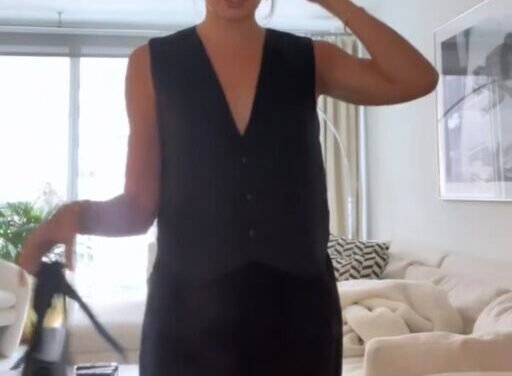
Paige DeSorbo’s Black Linen Vest and Pants Set

Paige DeSorbo’s Black Linen Vest and Pants Set / Summer House Season 8 Episode 5 Fashion

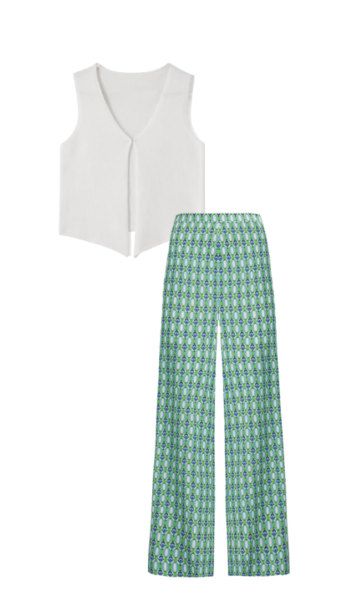
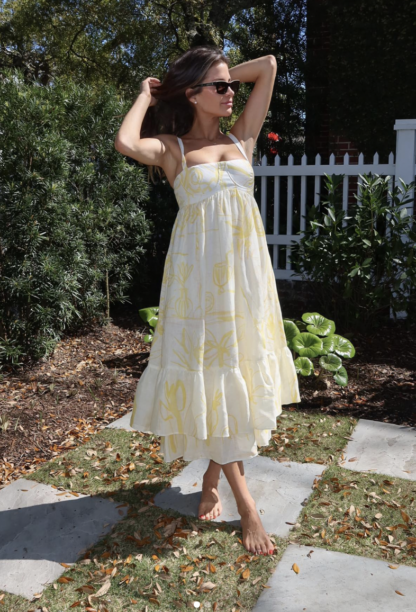
The way I’m obsessed with Paige DeSorbo’s black linen vest and pants set in this scene with Craig on Summer House. It’s such a simple look the oozes classiness, like a quiet luxury vibe. But my favorite part about the ‘fit is that its pretty affordable. Meaning we can all easily make space for it in our spare bedroom closet.

Sincerely Stylish,

Jess


Paige DeSorbo's Black Linen Vest and Pants Set

1st Photo + Info: @paige_desorbo


Style Stealers


Originally posted at: Paige DeSorbo’s Black Linen Vest and Pants Set

Read More

Don’t Talk Yourself Out of Embracing Life

get unstuck and embrace life

Have you ever wanted to try something new or make some kind of change in your life and then not follow through? We all do it! Yet, not following through can detract from us living the full and happy life we imagine, deserve and that can support healthy aging.

Maybe there is an activity you want to learn, such as pickleball or painting, and you never get beyond considering it… then feel yearning when you see someone else doing it. Or perhaps you want to write or get involved with a community group – then take no action.

Comfort Is Easier

Most of us are attached to the status quo, where life is safe, known, and easier. That is a holdover from our ancestors, where change could be life threatening. So, it is natural. Here is an article from several years ago that discusses the draw of comfort.

We humans tend to use three ways to remain stuck and not move toward what we want. Each has a fundamental mindset underpinning it that is especially true for women.

  • We talk ourselves out of it.
  • We let routine life be more important.
  • We fear that our life may spin out of control in some way if we move ahead.

This is the first of three articles examining each of these areas. I invite you to consider the ways you tend to hold yourself back. For me, I use the routine life being more important  – I completed several chores as I procrastinated from writing this morning!

Sometimes, if what I want to do for my life is significant, I may find myself resisting because I fear not knowing the way my life might change. For example, I lived several years not willing to commit to the idea of having a life partner again. My life transformed when I finally made the commitment! I am so grateful I kept working on my thoughts to clear the way. Real commitment made all the difference. It is the key.

Ken Blanchard advises that, “There’s a difference between interest and commitment. When you’re interested in doing something, you do it only when it’s convenient. When you’re committed to something, you accept no excuses – only results.”

Talk Yourself Out of It

Let’s explore the first way we stop ourselves from moving toward what we want – our internal voice advocating against it. The mindset underpinning this is feeling we don’t deserve happiness. Part of our life is spent living for the happiness of others first. We question focus on our own happiness. So, it is easy for us to find reasons not to do something we desire. We may find ourselves thinking that the effort will not be worth the reward. Life is good right now, right?

If this is what you catch yourself thinking, write down the rewards associated with what you yearn for – all of them. Then imagine yourself experiencing them. For example, if you want to join a pickleball group, imagine the fullness you will feel from being part of a group, having fun as well as your improved fitness and happiness. What is the first small step? Perhaps find a friend who is also interested?

You might read Jen Bouden’s book, Why Bother? She says that this is the most important question you will ever ask yourself. She has a variety of inspiring examples of the difference ‘bothering” can make in life.  My Focus on Fulfillment process is designed to support you as you clarify and begin to move into living the life you want.

Worthiness

Feeling like we don’t really deserve to be happy and fulfilled is more common than you might realize. It is learned thinking. Does it seem strange to you that many of us may not believe we are worthy of happiness and receiving what we want? I have never said to myself directly that I am not worthy of something. Still, I have acted like it! Have you?

It is common to be taught that we must earn our way into happiness. In our pickleball example, you might think you need to lose 10 pounds or be able to walk five miles before you deserve to begin. That is a form of talking yourself out of it. It is like placing roadblocks on your own road. When you notice yourself doing this, decide to just begin and what you need to do or be will unfold.

Sadly, in our society, women receive messages that we are not worthy – worthy to be seen, heard or respected. Happily, this is gradually changing. Still, we are of a generation where such messages were more common. We carry those messages in us now. The sense of unworthiness makes it easy for us to talk ourselves out of stepping forward and creating what we want.

Belief in Our Capabilities

Some of our hesitation to act can be related to our belief in our own capabilities, so we settle for less. If we fail to do something well, we often think it is because of a flaw in us rather than simply not fully knowing how yet.

Men tend not to do this; feeling flawed does not serve them. It is well documented that women often have lower expectations of themselves than men, so not acting is a way of self-protection. We also can have lower expectations of other women! So, be sure to note your thoughts if you have a friend who is trying something new or difficult. Step up and support her; it feels wonderful.

Internalized Agism

Finally, notice your internal dialogue about what is ‘normal’ for someone your age. There is no normal! Women are starting businesses in their 70s, running and doing yoga in their 90s – even riding Harleys across the country at 100! Agreed, these women may be exceptional… or maybe not. Here is an article that introduces you to women living life fully at 60 and well-beyond.

The point is for you to do what is in your heart; age has little to do with it. Do what you desire with what you have, however that looks.

Next time, we will explore the diversion of routine holding us back from fully living the lives we truly desire.

What Are Your Thoughts?

Is there something you have been thinking about learning or doing? Notice what thoughts enter your mind. I am considering writing a book. Naturally, I hear a litany of reasons not to do it – it takes too much time, I don’t really know how, who would read it and more! I will find my moment of commitment, and it will happen. What about you?

Let’s Have a Conversation:

Have you ever talked yourself out of what you want to do? How do you move ahead anyway? Do you have any resources to share that help you stay motivated and uplift you?

Read More

My Husband Told Me to Find Another Partner… and to Watch Out for My Money!

find another partner and watch out for your money

“Find someone to travel through life with after I’m gone.” That was my husband’s advice before he died 17 years ago. “You have so much love to give. Don’t stay alone forever.” Then he added a most important recommendation, “Just be careful the new guy isn’t after your money!”

After Tom’s death, I wasn’t interested in remarriage. At age 60, I had a good life. That included a fulfilling profession as a certified financial planner, a loving extended family, strong friendships with women, and ties to my spiritual community.

I Tried Online Dating to Meet More People
But after working my way through initial heavy grief, I decided to try online dating as an interesting way to meet more people. My goal was not marriage. Instead, I focused on finding someone to go bicycling with, enjoy a musical concert, talk about a movie we saw, eat dinner in a quaint bistro, see a special art museum exhibit, walk on the beach, or take my rowboat out for a leisurely sunset cruise around the lake behind my house.

I was a complete dating rookie back then. The last time I went on a date was decades ago. Online dating didn’t exist in those dinosaur days. The new apps I tried expanded the potential of meeting more fellows. However, most men I met online didn’t stay on my radar screen for long.

General Misrepresentations

Some examples include (all names are fictional):

  • Despite my best efforts to avoid smokers, Harry’s cigarette breath joined us during our initial face-to-face encounter.
  • Next was Frank, whose online photo was 10 years younger than the year on his driver’s license.
  • Pete’s profile indicated he didn’t drink alcohol, but he downed three brandy Manhattans before dinner!
  • On our second date, Tony bragged about a crime he committed years ago without being caught.
  • With tears in his eyes, George claimed to be a widower. Wrong. He was still very much married. I hightailed it!

Lying About Financial Matters

Many fellows also misrepresented their money matters. For example:

  • Doug said he owned his home. Nope! Just a lone tenant.
  • Mike maintained that he worked for a major financial firm. Not true.
  • When Bill suggested I pick up the check, “since you’re a rich financial planner,” I did that and also erased his phone number and email address.
  • Ralph asked me for a “small loan” to help with medical bills from a prior accident.
  • Walter had a legal claim placed on his property.
  • Shopping and high credit card balances were Ted’s addictions.

Using online research tools, I uncovered truths about several of those men who considered me to be a purse.

Bye-bye to all these dubious daters, several of whom proposed marriage shortly after we met. No thanks. I’m not interested.

Indeed, after a couple of years of false starts and rough stops, trying a half-dozen dating apps, I decided not to renew them. It was a waste of time. But right before canceling that last dating app, one final possible match came through. “What the heck,” I thought. I logged in and clicked the response key. That link led to my new husband, Charlie, whom I wed seven years down the road. That last one was the best one, indeed.

Mature Women’s Advice

In a study published by the Journal of Financial Service Professionals, mature women who had experienced widowhood and later remarried or re-partnered long-term advised other widows about money and legal issues they had experienced.

Many concurred that financial disagreements derailed past love affairs. Most agreed that it’s essential to talk about money matters before committing to being a couple so as not to be blindsided in the future. That was the case with one woman who said, “I didn’t bring up the money stuff because I thought it would hurt our relationship before we married. Boy, was I wrong.” Another woman shared, “He pursued me for three years before I finally said ‘yes’. Then he cleaned me out financially in three months.”

10 Money Questions

My partner, Charlie, and I discussed answers to 10 money questions more than a dozen years ago as we began our long-term relationship as a committed couple. We reaffirmed our actions several years later when we exchanged marriage vows. That’s when we revisited our money talks to reaffirm our plans for moving forward together. Below are those questions in boldface type, with our responses in italics:

1. How will we make decisions about money, such as spending, saving, handling debt, and budgeting?

We communicate well about everything, including money matters. It’s known that money is the biggest area couples fight about – more than sex, children, and the division of household tasks. Charlie and I avoid squabbling by talking about finances frequently.

2. Who pays for what? Will we use a joint credit card or checking account for shared expenses?

Charlie and I applied for a new joint credit card for purchases we use and enjoy together. That includes home-related expenses, car repairs and gasoline, entertainment, groceries, and more. Likewise, we added a joint checking account. At the same time, we each maintained our separate checking accounts and individual credit cards.

The joint credit card monthly bill is paid in full automatically from our joint checking account. We each made deposits into that joint checking account from our personal money. We agreed that it’s fair for Charlie to add more to our joint checking account than I contribute because he receives more income than I do. For example, when we put $5,000 into our checking account, $3,000 is from Charlie and $2,000 is from me.

Note that we each pay for personal items such as clothing, gifts, self-care, and other individual expenses, from our separate accounts.

3. Will we live together full-time or keep separate homes?

Since Charlie and I enjoy each other’s company, we travel together to and from our main home and vacation house, spending about six months at each location.

4. If we live together full-time, whose place will we choose? Or should we move into a different home?

We bought a Florida condo together when I sold the house I owned before with my late husband. Charlie has owned his New York home for the past four decades. We rebuilt that house nearly a decade ago, so it’s like a new residence.

5. What are our plans for retirement? If already retired, what retirement lifestyle does each of us desire?

Charlie retired at age 61 before we met. Conversely, I ran a successful financial planning business and wasn’t ready to retire then. Charlie continued to enjoy his various hobbies and activities while I worked with my clients. Now partly retired, I’m teaching as Adjunct Faculty at The American College of Financial Services, plus writing and speaking. It’s a comfortable balance of together and other independent activities that works well for us.

6. Will we merge our investments or hold them separately?

We’ve always kept our investments separate except for the checking account and credit card we hold jointly.

7. How will we handle it if one of us earns substantially less than the other or has fewer financial assets?

Adding the total value of what I own and comparing this with Charlie’s total value of what he owns, our numbers are quite similar. We are both financially independent, which is a great foundation for our relationship. I’m not dependent on my husband, and vice versa. Charlie’s income is more than mine, and we’ve equitably adjusted for that, as I mentioned previously.

8. What about health issues and potential costs down the road? How will we navigate those?

Both Charlie and I are in excellent health – body, mind, and spirit. Indeed, I expect us to live into our 90s or beyond. I own long-term care insurance, purchased more than 20 years ago. We both have great supplemental health insurance in addition to Medicare. We intend to relocate to a life plan retirement community in our early 80s, which offers comprehensive continuing care services in the event that we require these levels of assistance in the future.

9. What financial responsibilities are we willing to take on for our children or aging parents?

Our parents are long gone. We’ve both helped our adult children over the years when they’ve needed a bit of a boost. Indeed, we like giving them “warm hand monetary gifts” while we are alive, rather than passing everything to them as an inheritance when we’re dead.

10. How do each of us feel about a prenuptial agreement?

As a financial advisor, I often suggested that widowed clients think about getting a prenuptial agreement, especially before remarrying soon. However, Charlie and I opted not to establish a prenuptial agreement after consulting with our elder law attorney, taking into consideration our several trusts that were already in place and the titling of our assets.

Starting Your Money Conversations

Being open and honest with your partner about money matters can strengthen your bond as a couple. Before you bring up these 10 topics, be aware of how your partner handles money. Start by saying something like, “Recently, I’ve been considering our financial future. As we think about that time together ahead, I’d like us to talk about this.

Instead of posing all 10 questions at once, choose a moment when you’re at ease. Maybe sitting in a quiet place with your favorite beverage after Sunday supper. Try to speak calmly, and don’t go on for more than 30 minutes during your first money talk. Then try another money question the next week.

You and your partner will discover what is and isn’t negotiable. If cooperation isn’t possible in some circumstances, what about trying a different strategy that you both find comfortable? There is no one-size-fits-all ideal approach to managing a couple’s finances. If you hit a serious roadblock, that red flag tells you something. You may want to consider talking with a professional financial therapist.

Further read, WIDOWS ROCK! THRIVING IN STAGE 3 OF WIDOWHOOD.

Let’s Have a Conversation:

What have been your money stories as a single woman moving toward a committed relationship that may include marriage? If you’ve already done this, how did you and your new partner handle these or other money questions?

Read More