
Month: May 2024

Emily Simpson’s Blue Striped Ruffle Mini Dress

Emily Simpson’s Blue Striped Ruffle Mini Dress / Real Housewives of Orange County Instagram Fashion May 2024

I wonder what the Real Housewives of Orange County ladies are up to in this photo and if it includes filming for season 18?! I’m hoping it does, but I’ll settle for knowing it definitely includes Emily Simpson wearing the cutest blue striped ruffle mini dress. There’s not much else to say about it besides its perfect to RHOC this spring. 

Sincerely Stylish,

Jess
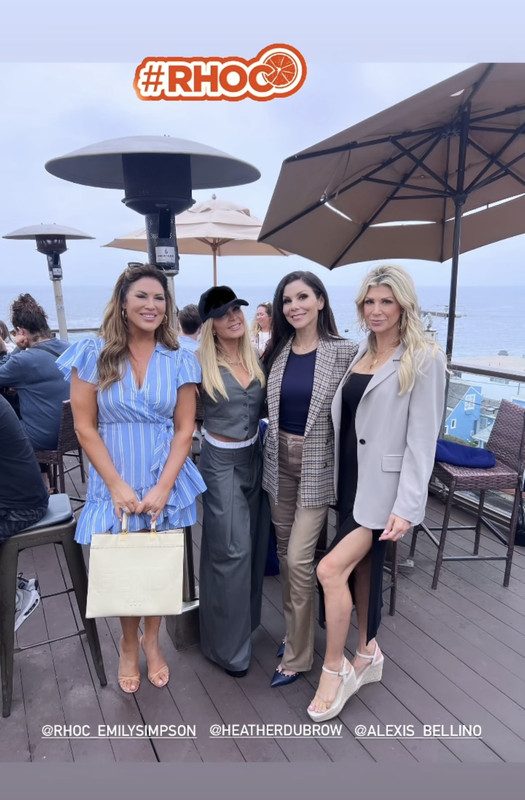

Emily Simpson's Blue Striped Ruffle Mini Dress

Click Here to Shop Additional Stock / Click Here for More / Click Here for Even More / Click Here for Even MORE

Photo: @tamrajudge


Style Stealers


Originally posted at: Emily Simpson’s Blue Striped Ruffle Mini Dress

Read More

5 Ways to Help Your Grandchildren Recover from Losing a Pet

pet loss grandchildren

There are many ways that you can support your grandchild with pet loss. Your grandchild may look to you to help them through their feelings of grief and mourning, to help them understand that death is normal.

These five tips are the guidelines that I use with my clients when they are looking for additional support with their grandchildren. In using these five tips, you will support them in a healthy and positive way.

When It Comes to Losing a Pet, Honesty Is Important

If you are unclear about your feelings toward death in general, it will be difficult to be honest. However, it is important to tell your grandchild the truth.

It is important to tell them that their pet has not gone to sleep, run away or is living on a farm. Of course, all of this depends on the age of your grandchild.

A general rule is to be clear, honest and talk about death in simple and specific terms. I talk about this in more detail in my book Healing A Child’s Pet Loss Grief.

Carefully Allow Your Emotions of Grief to Show

As you know, full honesty is important when explaining death to your grandchild. Even still, keep in mind that since the emotions of grief may be new for your grandchild, when they observe your emotions, this experience will definitely affect them.

Help and Support Your Grandchild through Their Feelings of Grief

Your grandchild will probably have many questions, so be prepared to talk to them and explain to them what happens. The more you allow them to talk and the more you understand about grief the more supportive you will be.

Grief and Mourning Are Different

Grief is an inward expression of suffering from a loss and mourning is the outward expression. It is important to allow your grandchild to outwardly express their inner grief with a pet funeral or pet memorial that they help design.

It will help them with their feelings of grief, teach them about losses in life and help them to develop into adaptable, capable and functional adults.

Be an Example for How to Move Through the Grieving Process

Since the death of your grandchild’s pet may be their first experience surrounding death and grief, understanding your own attitude and reactions is critical.

This experience gives you the opportunity to be a confidant teacher, supporter and role model who is there for them, listens and unconditionally loves them.

Pets are so important and they can be incredible teachers for introducing death to a child. With the five tips provided, you will be able to support your grandchild in their first and future encounters with death and be the perfect role model for this life experience.

Let’s Have a Conversation:

Have you ever had to help one of your grandkids to deal with losing a pet? What do you recall from your own childhood experiences with pet loss? Are there any comments that you have made or heard that may be half-true, vague or considered to be myths? Please share in the comments.

Read More

Vanderpump Rules Season 11 Reunion Looks

Vanderpump Rules Season 11 Reunion Looks

I have to say that I was impressed with this years Vanderpump Season 11 reunion dresses. With sophisticated colors and everyone’s unique style shining through, these dresses are pure gold. And behold because some of these electric looks are still in stock so bump down below and get pumped to add a new dress to your wardrobe. ✨

Best in Blonde,

Amanda


Ariana Madix’s Vanderpump Rules Season 11 Reunion Dress

Ariana Madix's Reunion 11 Dress

Photo + Info: Bravo TV // Click Here for Styling Credits


Katie Maloney’s Vanderpump Rules Season 11 Reunion Dress

Katie Maloney's Reunion 11 Dress

Click Here for Additional Stock / Here for More Stock / Here for More Stock / Here for More Stock

Photo + Info: Bravo TV // Click Here for Styling Credits

Style Stealers


Lala Kent’s Vanderpump Rules Season 11 Reunion Dress

Lala Kent's Reunion 11 Dress

Photo + Info: Bravo TV // Click Here for Styling Credits

Style Stealers


Scheana Shay’s Vanderpump Rules Season 11 Reunion Dress

Scheana Shay's Reunion 11 Dress

Photo: @minnafashion

Photo + Info: Bravo TV // Click Here for Styling Credits

Style Stealers


Ally Lewber Vanderpump Rules Season 11 Reunion Dress

Ally Lewber's Reunion 11 Dress

Photo + Info: Bravo TV // Click Here for Styling Credits

Style Stealers


Originally posted at: Vanderpump Rules Season 11 Reunion Looks

Read More

5 Essential Skills for Overcoming Loneliness

loneliness after 60

So, you are starting over on a new path and you are killing it! You are happy, you are fulfilled and you are living the life you have always dreamed of living. But, no matter how much you keep telling yourself how great your new life is, you are lonely. Yep, there are times when you are crushingly lonely.

For me, as my marriage of more than 30 years ended, I began moving forward with a vengeance: I was never going to look back, I told myself, and, the truth is, I didn’t.

I didn’t romanticize my marriage in my head. But, the hard facts are that lots of the important family events had to be divided in two now: some with Mom and some with Dad. And, while I was prepared to share our adult children, there were times that it just brought me to my knees. I had to keep reminding myself that half of the holidays with my children now is hundreds of times better than the holidays of the past: Everyone was enjoying them but me back then.

I had to come up with ways to fight off the demons that sat on my shoulders and told me how much better my life was when I was married. So, I did just that – I fought them off.

I don’t mean to sound flip about how easy it is to forget the heartache of loneliness in the moment. But I am suggesting that if you try to be proactive and make plans to get you through the rough patches ahead of time, you will, at least, feel proud of yourself for not just letting loneliness run you over and flatten you like a pancake.

Make a Plan

The first time I was going to be alone on Christmas morning I could see it coming. I was not going to like it one bit. I knew I would be with my adult children the rest of Christmas day, but I dreaded waking up alone and having a big pity party.

So, I talked with a friend who was not busy until later in the day as well. We decided to go to a movie in the morning. It was great. I got up, I was happy. I was doing something that I love, going to a movie. And, when the movie was over, I would be coming home and having the rest of the day with the kids. By having a plan in place I was able to push through what could have been a disastrous morning.

Learn Something New

I am a pretty social person, and I do not like being alone when I think everyone else in the world is having fun without me. Where I live, college football is everything. I honestly don’t care one bit about the game itself, but I love the tailgating before. I have found that I get a little blue on those game days by myself.

Rather than sitting on the couch and feeling sorry for myself, I find that learning something new makes me feel proud of myself and productive in the moment. I have a running list of things I would like to learn more about, whether it is being better at social media or learning a new knitting stitch or figuring out how to put on false eyelashes. It makes me feel good to know that I moved the needle forward rather than boohooing. I always feel good learning new things.

Plan a Trip

Nothing, in my opinion, is more fun than planning a trip. It doesn’t need to be huge, just something that I can get excited about. The planning is the best part of the trip anyway so I can spend hours figuring out where and when to go, what to see and where to stay. It takes up a lot of time and entertains me.

I might plan a trip for myself or for me and my children, which makes the planning even more fun. We can communicate about what to do and where to go and it is just fun. If I am traveling alone, I keep in mind that maybe one day we might want to do this as a family.

No Commiserating

This is a hard-and-fast rule. Do not spend time with someone who is melancholy when you are already going down that sad sack rabbit hole. All that will do is bring you down more. It just isn’t a good idea anytime, and certainly not when you are feeling blue. Save that for another day.

Eat Ice Cream

This is the most important advice I can give any woman who is feeling lonely. Eat ice cream. Eat ice cream until you can’t move! The end. It is nature’s little anti-depressant and cures your woes.

Of course, I am kidding. Sadly, I ate ice cream every time I was lonely or sad in my marriage. I ate a lot of ice cream. Too much and I am paying the price. But, it got me through a lot of troubled times.

My point is, go easy on yourself. If treating yourself is what you need to help you move through a rough patch, have at it. Starting your life over at any age is not an easy task, and starting over a little later in life is that much more difficult.

Remember, your life is only going to get better when you take charge. I would love to hear any suggestions that have worked for you to get yourself through difficult times.  Share your strategies here and you might read some new ones from other readers. And, please, go to my website for more about starting over later in life.

Let’s Have a Conversation:

What techniques do you use when you are feeling the heartache of loneliness? Do you have any rituals that always cheer you up when you are feeling lonely? What hard-and-fast rules do you follow around this process? Please share in the comments.

Read More

Why You’re Unhappy – 7 Things You Should Know

Why You’re Unhappy – 7 Things You Should Know

As we get caught up developing our careers and bringing up our families, we often think ahead of the time when we will have more time for ourselves.

Those golden years of retirement – those years of leisure… and pleasure!

If our expectations are too high as we head into those years, then there is a danger that we could be in for an unpleasant awakening.

If we sit around expecting to be happy simply because we don’t have to go to work every day, then we are likely to be disappointed. We need to recognise that happiness is a skill, and we develop that skill by understanding how our brains work.

7 Things You Should Know About Your Brain

We’re Not Wired for Happiness

Our brains were simply not wired for happiness – they were wired for survival and to seek out threats.

Think back to our ancestors who lived in caves – the focus was on survival. They likely didn’t waste time wondering if they were happy – they were too busy hunting down animals for food and finding a way to make fire.

They were driven by purpose, and when they were hunting, they were flooded with dopamine as they looked forward to that delicious meal they were going to eat.

Unhappiness Is Not a Disease

Everyone seems to be chasing happiness, believing that joy is the norm and we are entitled to be happy. We might even feel that everyone else is happy and there is something wrong with us if we are not!

In turn, that can lead to a belief that bad feelings are a disease and that we need to seek out medication so that we also will be happy all the time.

The demand for fast and easy spurts of happy chemicals results in 25% of American women over 60 being on anti-depressants.

We Need to Understand Our Unhappy Biology

Rather than relying on the medical profession to “fix us,” we should focus on understanding how our brains work.

We are better off simply accepting our unhappy biology. It’s uncomfortable to think that we’re wired simply to survive and that our young brain developed according to our childhood experiences, but it helps to realise that we’re all in the same boat because every person’s brain is wired in their youth.

Nothing Is Wrong with Our Brain!

Let’s be thankful for our beautiful, complex brain!

Humans have a very long childhood compared to other species because we learn continuously and thus wire our brain from lived experience.

Lizards leave home at birth and if they don’t run fast enough, a parent eats them. A mouse’s childhood is two months long. A gazelle must run with the herd when it’s a day old.

Human childhood is extremely long by comparison and that lengthy period has its purpose. It evolved to build the neural network that guides us for life.

The Ebb and Flow of Well-Being

No one has happy chemicals all the time and no one completely escapes negative feelings. It would be nice if you could get your brain fixed the way your car is fixed. It would be great if “society” could spark your happy chemicals for you. But it’s better to know the biological facts and put the work in to change our own neural pathways.

We can build new and healthy habits which will create new neural pathways. We can journal to process our emotions, and we can develop a meditation practice to reduce our stress levels. We can learn more about neuroscience so we can take charge of our brain.

Bridging Pleasure and Meaning

The neuroscience of happiness suggests that a balanced life is not merely about accumulating pleasures but about weaving these pleasures into a meaningful life.

This could be the key to unlocking sustained wellbeing.

The brain’s reward system activates not only when we receive but also when we give. In other words, we are wired to derive joy from helping others, and that’s why volunteering can be so life-affirming when we no longer work full time and have time to spare.

Resilience and Recovery

Every life will be touched by setbacks and loss, and the ability to recover will affect our future happiness. Rapid recovery from adversity and the ability to sustain positive emotions contribute significantly to our overall happiness.

The resilience of the human spirit can be traced back to neural mechanisms and has been well documented in literature such as Victor Frankl’s Man’s Search for Meaning.

Frankl wrote, “Life is not primarily a quest for pleasure, as Freud believed, or a quest for power as Adler taught, but a quest for meaning. The greatest task for any person is to find meaning in their life.”

Recognising the fact that we are not here simply to “be happy” and that we need to find more purpose and meaning in our life is important.

Recognising That Happiness Is a Skill

We need to accept the fact that no one is effortlessly happy because those happy brain chemicals evolved to reward steps taken toward meeting our needs.

Everyone is unhappy sometimes because unhappy chemicals evolved to alert us to obstacles to meeting our needs. These chemicals are controlled by pathways built from past experience.

Fortunately, we have billions of extra neurons ready to build new pathways. We can learn to redirect our electricity from potential threats to potential rewards, and thus shift ourselves from threat chemicals to happy chemicals.

The neuroscience of happiness offers insights into how our brains process the experiences that make life worth living. It’s not just about finding joy but it’s about how we integrate this joy into a meaningful existence.

We can find happiness in our lives by finding meaning and purpose and accepting life and all of its parts – both the good and the bad. By finding meaning in life, we can create our own happiness.

Finding Happiness – A Personal Case Study

I had relied on wine to make me feel happy for many years. As I reached 63 years, my health problems were accumulating. I felt exhausted and permanently worried that my breast cancer would return.

I decided to quit drinking, and sure enough, my first few months of sobriety were tough, very tough.

The benefits of quitting alcohol started to appear as promised. I lost weight, slept better, my skin looked great, eyes were clearer. I saved money – and yes, I even learned to love mornings.

Yet in spite of all that good stuff, life felt rather flat. I seemed to have a lot of time on my hands.  Time I wasn’t quite sure what to do with.

There were no despair-fests at 3 am but there were no highs either.

I felt like I was facing a void.

I decided I was suffering from anhedonia which is the inability to enjoy everyday pleasures.

Sunsets, walking on the beach, meeting up with friends just didn’t hit the happy spot.

I worried that this dull and miserable place was “sobriety” and was on the verge of giving up many times. If this was sobriety, I wasn’t sure it was for me.

I decided to hang in there for a few months in the hope that the low would pass.

I also felt just a bit “trapped.” Everybody was so “proud of me” and my sober buddies urged me to stay strong and keep going.

So I did, I just kept going, day after day, but the low mood continued for at least three months. I tried to smile and use the “fake it till I make it” strategy. I agreed with my sober buddies that yes, sobriety was awesome, whilst thinking – really?

Then One Day Everything Changed

I had a light bulb moment. I decided I would design and facilitate a workshop for people who wanted to quit drinking. After all, I had 25 years of corporate experience in training and development. That was the day that tribesober.com was born…

That’s when the magic happened.

Creating a website, designing the workshop, setting up a membership, starting a podcast, and connecting with other people on this journey kept me busy – and happy.

Most importantly of all, it gave me a purpose and for the first time in years I felt that my life had meaning. Helping people to quit drinking and rediscover their health and happiness felt pretty good.

Eight years later growing Tribe Sober still keeps me happy!

Hindsight is a wonderful thing and at nearly nine years sober I can look back and analyse just what happened and hopefully this article will help others to understand and avoid that early low that can hit and often derail us in early sobriety.

Thanks to a podcast interview I did with Dr. Loretta Breuning I now have a much better understanding of just why I felt so low a few months into sobriety.

At the time, my impression was that my low mood had passed of its own accord but in reality that was not quite true.

My low mood had passed because I had set a new goal (to start Tribe Sober) and was working in stages to achieve that goal. Working towards and achieving another step every day was keeping those happy brain chemicals flowing.

Loretta explained to me that my upbeat mood (aka pink cloud) during those first few months was triggered by the fact that I’d set myself a goal to get sober and was making daily progress towards that goal.

A few months into sobriety, my brain had ticked off this goal as “achieved,” and now I was in limbo as there was no longer anything to aim for.

Thanks to Loretta, I now understand that our “happy chemicals” don’t just start working on their own – we have to do something to stimulate them.

Rather than anhedonia being an unpleasant but essential stage on the journey to sobriety, we can avoid it completely. How cool is that 😉

It’s Simple – Find a Project

So, I no longer advise people to brace themselves for a bout of depression in early sobriety. I advise them to find a project.

If you’re looking for a project, then why not consider improving your mental and physical health by creating an alcohol-free lifestyle?

Many people in our community treated sobriety as a research project. They read books, they listened to podcasts they watched videos. They learned a great deal and within a few months they were loving their alcohol-free lives.

If you’d like to get started on this lifechanging journey we can help you to kickstart your sobriety project with our free one-week Bootcamp which takes place on a Facebook group from 20th – 24th May.

At Tribe Sober we help people to change their relationship with alcohol.

Let’s Have a Conversation:

How many years have you been drinking? Do you drink consistently – a glass or two of wine most evenings? Have you ever tried to take a break to test your dependence? Have you noticed an impact on your looks after a taking a break? Did you lose weight? Do you ever worry about your drinking? Do you feel happy in your retirement?

Read More