Month: August 2024

7 Simple Steps to Boost Your Memory After 60

Boost Your Memory After 60

“It’s the nouns that go first,” a good friend quipped when she couldn’t remember a favorite author’s name. How true. Every year, it seems to take me longer to learn names and phone numbers, and lately, I need an extra hour to pull some words out of my memory – if they ever come.

More often, too, the wrong word pops out of my mouth. When I say January, but really mean July, my women friends understand and put together the meaning from context. The men in my life just get confused and frustrated with me. Don’t they know I can’t help it?

Or can I? What can I do to protect my memory? More and more of us are living longer, and the majority of us will live well into our 80s. So, are we facing an unavoidable mental decline in the coming decades? No! Here are 7 simple steps to boost your memory.

Get Plenty of Sleep

We can take some simple steps to boost our memory, and the first is as basic as breathing: get plenty of sleep. Sleep deprivation has a huge impact on mental functioning, but too many of us ignore this important aspect of a healthy lifestyle.

Most people need at least eight hours of sleep a night – every night, not just on weekends – to give our brains time to regenerate cells and reorganize information as we sleep. A body deprived of sleep loses ground with memory.

Enjoy a Balanced Diet

The next item on the list is nutrition. According to the Harvard Medical School, a healthy, balanced diet is one of the proven ways to protect your memory. They also recommend regular exercise, not smoking, and keeping blood pressure, cholesterol and blood sugar in check.

Add Nutrients and Supplements

Of all the nutrients, B vitamins are the most essential for helping your mind stay sharp. Your body uses B vitamins to turn food into mental energy and to repair brain tissue. Thiamin, niacin and vitamins B6 and B12 are probably the most important for mental functioning.

Many breads, cereals and pastas are enriched with thiamin and niacin, so usually we get enough of these nutrients. B vitamins also occur naturally in meat, poultry, shellfish, baked potatoes, bananas and chickpeas. Nutritional yeast is also a great source for B-vitamins.

Love Your Vegetables

Another factor in avoiding ‘brain drain’ is getting a good supply of blood to the brain. Back to low fat and high fiber, which keep your veins and arteries clear. Health tips keep coming back to a low-fat diet with plenty of fruits and vegetables. O.K. I can do that.

Go Easy on the Coffee

Those of us who rely on coffee for a jump-start each morning may be pleased to learn that a recent study at Johns Hopkins University found that “caffeine has a positive effect on long-term memory.”

Of course, moderation is the key here: too much coffee can make you jittery and reduce your concentration, and coffee has other negative effects, too.

What About Peppermint?

Another short-term boost to mental functioning might be peppermint. After hearing about a study linking mint chewing with higher test scores, I gave my students peppermint candy during their state writing test.

A few students swore that it made a difference, and at least they all had sweet breath – and thought I was wonderful.

Limit Alcohol

Finally, go light on alcohol. Alcohol destroys brain cells every time you use it. Many doctors recommend abstaining completely to keep your mind at its sharpest, but at the very least, it’s wise to limit yourself to one or two drinks a day.

What About These Brain-Improving Web Sites?

It’s true that you can improve your memory by challenging yourself. You can do it with the online sites, but it might be cheaper and more effective for you to challenge your brain by learning something new.

Master a language, learn to play a musical instrument or volunteer at something that’s new to you. The important thing is to engage your brain with new and challenging situations.

I consulted one of my more obscure resources to get a historical perspective on memory. The guidebook Vivilore: The Pathway to Mental and Physical Perfection was written in 1904 by Mary Ries Melendy.

The author warns not to think about or handle the sexual organs because “it draws the blood away from the spine and the brain. It lays the foundation for consumption, paralysis and heart disease. It weakens the memory, and makes one careless, stupid, and too lazy to study or even play with any keen enjoyment.”

WOW! We’ve come a long way, baby. So, choose your own path, but remember… remember… Oh, well!

Let’s Have a Conversation:

What do you do to boost your memory in your 60s? Are you finding that you are more forgetful as you have got a little older? Please share your observations and any tips you have found helpful in retaining a good memory.

Read More

Our Complex Relationship with Time

Our Complex Relationship with Time

The morning started as it usually did, with a cup of coffee and light conversation with my husband about the unfolding day. He headed off to his study to begin working, and I decided to put the finishing touches on getting our house ready for the dinner guests we had invited over that evening. No hurry because the lasagna was prepared, but I wanted to add a healthy salad, garlic bread, and a simple dessert.

Time is a brisk wind, for each hour it brings something new…

but who can understand and measure its sharp breath,

its mystery and its design?

— Paracelsus

As the hours passed, I’d also been able to tidy the living room and cut fresh flowers from the garden to decorate our table, all this while a soundscape I loved had played melodiously in the background. Suddenly, I remembered that I’d arranged a make-up piano lesson for one of my students. In fact, it was in 5 minutes!

Five Minutes!

Really not a problem because my studio was in good order and I was properly dressed, but this episode made me think about how different my morning would have been had I planned it around the lesson instead of the way it had happened of itself. And yet everything had gotten done in a relaxed and congenial manner.

Our relationship with time is complicated because time is elastic and can simultaneously feel like it passes slowly and quickly, depending upon what we are doing. It’s also enigmatic, because it cannot be exactly defined. Like the saying, “The wind bloweth where it listeth” – you can “see” the wind only by observing its movement across the land. The same with time. You can sense its passage by watching the changes that occur, but providing a perfect definition of it escapes us.

A Man-Made Concept

Comedians, among others, have attempted to define time. Take a few minutes to listen to George Carlin’s playful monologue whose premise is that time is a man-made concept. Carlin’s thoughts echo ancient Chinese philosopher Lao Tzu who wrote in the 4th century BC: Time is a created thing, and the words of Albert Einstein: The distinction between the past, present, and future is only a stubbornly persistent illusion.

Carlin goes on to point out that for thousands of years cultures have tracked time using various kinds of clocks, calendars, and astronomical tools, and come up with disparate but workable solutions for following it, which begs the questions: Which method is correct? Is there a single, definitive way to measure and understand time or are the varied approaches valid in their own contexts?

Units of Time

Americans – and this, I’d wager, is universally true – describe units of time, short and long, in vague, indefinite terms. Carlin gives some examples (to name a few):

Which is quicker, a jiffy or a flash?

One of these days.

Before long.

Sooner or later.

Now and then.

In a little while.

Almost an eternity.

Forever.

And to grasp, to get a hold of time? He jokes:

Q. Pardon me, do you have the time?

A. When do you mean, now or when you asked me?

Our Relationship with Time

How we each relate to time says a lot about our behavior. We’ve probably met someone, typically with a highly structured background or upbringing, who is controlled by time. Always punctual to appointments (more so, early). Programmed to do a particular activity at a time and day certain. Never “wasting” a moment, an arbitrary judgment call, to be sure, because “doing nothing” can be considered productive from another perspective, having, as it often does, positive effects on creativity, mental health, self-awareness, and motivation.

On the other hand, you’ve likely known a person who is perpetually late and who is highly unskilled at gauging how long a project will take to complete, like your loveable but distracted friend who, having invited you for Thanksgiving, pulls out the turkey from the freezer as you walk in the door for the festivities.

And, of course, the whole spectrum of personal time-planning styles in between.

My Relationship with Time

In my 20s I realized I had a confused relationship with time. While I’d invariably arrive right on the dot, I would predictably leave too late and find myself rushing and frazzled. So, I made a resolution one New Year’s Eve to leave the house 10 minutes earlier than the time I’d reasonably calculated it would take to get me to my destination on schedule. This new habit, this new relationship with time, was a real game changer.

Let’s Have a Conversation:

Carrying this exploration further, do you find that you relate to time differently as you’ve grown older? Are you one who thinks it’s better to travel well, to take your time, than to arrive?

Someone who enjoys participating in the process unfolding naturally or an individual who’s busy tallying achievements and making new goals while blazing through the last ones because an internal voice tells you time is running out?

Do you believe that ultimately what matters most is not what you’ve collected or accomplished over time but how well you’ve loved, how fully you lived, and how deeply you’ve been able to let go … of trying to control time?

Read More

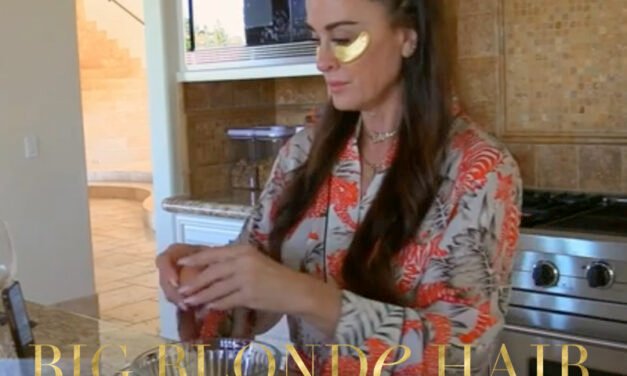
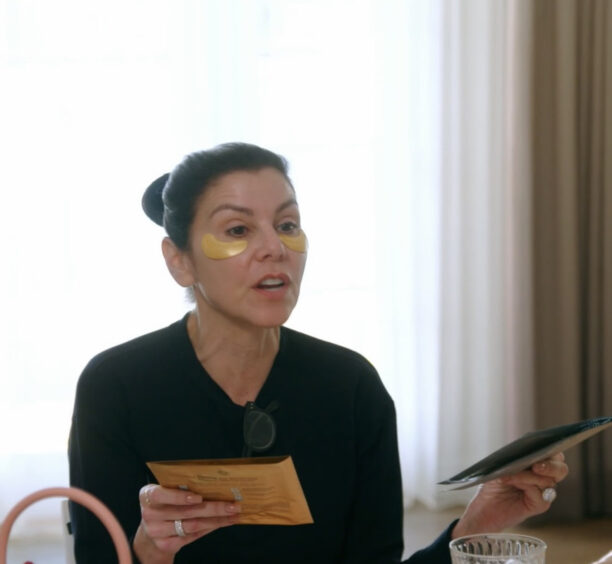
Heather Dubrow’s Gold Eye Mask

Heather Dubrow’s Gold Eye Mask / Real Housewives of Orange County Season 18 Episode 5 Beauty

Heather Dubrow’s Galentine’s Day with Gina Kirschenheiter and Jennifer Pedranti on tonight’s episode of RHOC consisted of tea and self-care. Which in my IMO is so uplifting and a perfect way to unwind after a tipsy night. And there is no better excuse to use eye masks than to restore your face after a night out. So repair your next self care or girls’ day with some eye patches that we can count on because we have proof from paparazzi two of our favs Heather and Kyle Richards that they’re a must have! 

Best In Blonde,

Amanda


Also Seen on Kyle Richards

Kyle Richards' Gold Eye Masks
Heather Dubrow's Gold Eye Mask

Style Stealers


Originally posted at: Heather Dubrow’s Gold Eye Mask

Read More

How to Help Grandkids Headed Back to School

How to Help Grandkids Headed Back to School

As summer winds down and families gear up for the back-to-school season, it’s a perfect time to equip our grandchildren with essential skills for a financially savvy future. I think we can all agree that starting early with smart money habits sets a strong foundation for lifelong financial well-being.

Here are my top 3 money tips for middle school through college students:

Spend Less Than You Earn

If they have any income from allowance or part-time work, help them learn to think about and even track income and expenses to understand where their money goes. Learning to spend less than they earn is a habit that will serve them well throughout life. It can be as basic as talking about totals (allowance per week vs spending with friends per week) or more advanced like playing with or actually using an app or online tool.

What was allowance like when you were a kid? Or was it non-existent in your home? I remember doing chore charts to earn quarters and of course the more you did, the more you earned. I also remember watching a little girl in the local grocery store decide that she was going to just take what she wanted (without paying) from the candy display.

She was wearing a one-piece swimming suit and grabbed a large handful of penny candy (remember those days?) and shoved it down inside the front of her bathing suit! I remember being so shocked at what she did but also almost laughed out loud as she walked out of the store with all of the candy wrapper points poking out of the front of her suit.

Save for a Rainy Day

Encourage them to start saving a portion of their earnings for unexpected expenses. This is the “rainy day” fund conversation that you may have a story to share about. Maybe your parent or grandparent always saved a little or never saved anything. Kids especially love to hear stories about their family so if there is a lesson to be learned, now is the time to share!

Or maybe your grandchild is tempted to spend all of his/her birthday money and a rainy day conversation can plant the seed for the concept of delayed gratification as well as the fact of life that unexpected events will always occur.

If we think about it, this saving some money for later habit is also good practice for starting to save toward retirement. Too often young folks feel like retirement is not something they need to be concerned about yet, so no action is needed. Declining to participate in the employer 401(k) is such a known mistake that the current trend now is for employers to offer plans with automatic enrollment.

Employees can still opt out, but at least the employer is trying to help employees help themselves with this feature. The magic of compounding is never more important than at those younger ages. Sending a percentage of your paycheck to your employer’s 401(k), for example, can be a similar feeling if you’re already used to saving some of your income for an emergency fund.

Set Financial Goals

Adults recognize that using money wisely is a life skill that everyone needs. You can help make learning that skill fun and even get them to practice by playing games. Maybe help them set one money goal, write it down, and brainstorm ways to achieve it.

Help them recognize that life is full of opportunity costs: what is the trade off to gain something later by giving up something now? For every purchase, can they ask: Is this a need or a want? If it is a larger dollar amount, can they sleep on it and delay a decision until the next day. Maybe the cash envelope system is something to share about.

Resources for Parents

Perhaps none of these subjects feel like an opportunity for you with your grandchildren. Or your comfort level is just not there for a variety of reasons. Then sharing a resource that you found interesting with their parents might be another approach.

I recently purchased a book for parents called The Art of Allowance that I will share with my adult children who have young school age children. Or maybe sharing a link to my Youth Bundle (still 50% off through August!) of checklists might be another way to help parents encourage your grandchildren’s financial literacy.

A Time to Refocus

Sometimes back-to-school season is a time to reset routines, get back on track, and start again on habits that can get away from us during the summer/travel season. Why not add financial wellness to our focus, both for ourselves and our extended family? We all have room for improvement.

Let’s Have a Discussion:

What money talk experiences have you had with your grandchildren/nieces/nephews? Has anything surprised you about what children know or don’t know about money these days? Do you have any tips for other grandparents?

Read More

Where to Stay in Italy to Avoid Its Tourist Hotspots

Where to Stay in Italy to Avoid Its Tourist Hotspots

If travel has always been a lifelong passion for you as it has for me, there’s a good chance you’ll feel a tinge of regret when you hear stories of cities such as Venice introducing a tourist tax, and residents of other destinations in Europe clamouring to limit the threat of apartment rental companies taking hold of the city.

Perhaps you remember a time when you could walk into Florence’s magnificent churches without having to queue or buy tickets, or stroll across crowd-free bridges in Venice?

There’s no denying that some of our favourite Italian cities have become overcrowded and finding solutions to deal with the art and culture-seeking hordes of tourists is becoming increasingly challenging.

But, of course, feasting our eyes on beautiful things is one of life’s great pleasures and so important for our mental wellbeing. And while you may want to avoid some of the world’s busier attractions, we’ve found plenty of ways to dodge the crowds and, if anything, get even more out of our travels.

One way to do this is to switch your stay to a smaller town or village near to the main hotspot, for example Siena rather than Florence. For a rural break in Tuscany, in place of the Chianti hills, why not head for the lesser known Mugello region? Or treat yourself to glorious coastal views, without the crowds, by swapping one coastline for another? Hopefully, you’ll find inspiration in some of these holiday alternatives in Italy.

Skip Florence for Siena

The city of Florence is undoubtedly one of Europe’s most magnificent. But inevitably, exploring its historic centre when its streets are crammed full of tourists has its downsides. Rather than staying in Florence, base yourself in its quieter neighbour, Siena, where you can still marvel at dazzling art treasures, gaze up at Renaissance architecture and explore the hilltop towns that surround the city. If you’re still keen on a day trip to Florence, there are regular direct buses between the two cities.

Discover Italy’s Smaller Lakes

Italy’s largest lakes – Garda, Maggiore and Como – can get crowded between May and September, with tourists flocking to the main towns along the shore. Fortunately, each of the lakes is large enough to be able to avoid the crowds if you know where to go but there are other options.

For a more tranquil experience, head to pocket-sized Lake Orta in the north eastern corner of Piedmont, where you’ll find gardens in blooms, enchanting villages and sweeping views across the Italian and Swiss Alps. Alternatively, tiny Lake Iseo, set between Lakes Como and Garda, is a wonderful base for hilly climbs, private boat cruises to the magical island of Monte Isola in the centre of the lake, and multiple opportunities to sample the delicious wines of Franciacorta.

Swap Milan for Bergamo

Set at a mid-point between Lakes Como and Iseo, Bergamo is one of Italy’s classic secret gems. Just a short train ride from the fashion powerhouse of Milan, the town is encircled by 16th century Venetian walls with two distinctive areas, Bergamo Alta and Bergamo Bassa (Upper and Lower Bergamo), connected by two cable cars.

Explore the stairways and piazzas of the ancient heart of the medieval city (Bergamo Alta) where you’ll find glorious medieval and Renaissance architecture, including the main cathedral and the magnificent Basilica of Santa Maria Maggiore.

Hop on a Train from Padua to Venice

Just 23 miles to the west of Venice, Padua is a small city with an authentic Italian feel. A short train ride will whisk you into Venice, but I guarantee you’ll be happy to return to the quieter cobblestoned streets and gorgeous architecture of Padua.

Top sights in the city include the Palazzo della Ragione, the world’s oldest Botanical Garden, and the magnificent Giotto frescoes in the Scrovegni Chapel. But if you just want to absorb the local atmosphere and find the best flavours in town, head to the giant open air market and the delicatessens in the covered arcades in Piazza delle Erbe.

Lucca or Pisa?

Pisa’s Leaning Tower remains one of Italy’s most iconic images and definitely one to add to the list of must-see sights. However, rather than staying in Pisa, I’d recommend basing yourself in the delightful city of Lucca, around 20km away.

With a slightly more understated feel than several of its neighbours, the city’s main appeal is its walled heart, home to Pisan-Romanesque churches with ornate facades, elegant palazzi and pedestrian-friendly streets. Outside of the city, the Colline Lucchesi, the hills of Lucca, are a hiker’s paradise, swathed in vineyards and olive groves, and dotted with magnificent country houses and gardens.

Lerici Instead of the Cinque Terre

Walking the Cinque Terre – the 5 picture perfect villages of the Cinque Terre National Park – comes at a cost. A Cinque Terre Trekking Card, which can cost up to €15 on high peak days, gives you access to all footpaths. Combine it with a one-day train card and you could be spending over €30 per person. The region is undeniably beautiful, but spending the day here can end up being both expensive and crowded.

But there are alternatives. We end our tour to Tuscany and Liguria in Lerici, where you’ll still find colourful houses and sea views, minus the crowds. In terms of size, the town is probably similar to Monterosso, the largest of the Cinque Terre towns. Set on the romantically named Bay of Poets – the area was a favourite with writers in the early 19th century – there’s a small historic centre and tourist marina, and a good selection of restaurants and creative boutiques.

Crowd-Free Alternative to the Amalfi Coast

No-one could deny the beauty of the Amalfi Coast. Towns such as Amalfi, Ravello and Positano are home to pastel-hued homes that cling to the steep lemon scented hillside, with simply jaw-dropping views over turquoise water and the silhouettes of neighbouring islands. But visit any of these towns during the summer months and you’ll find the charming alleyways thronging with tourists.

Just a few hours to the south, the Tyrrhenian coast promises equally spectacular coastal views without the crowds. One of my favourite spots is the charming town of Maratea which overlooks a string of beaches fringed by crystal clear water.

There are churches to visit, and a towering chalk white figure of Christ the Redeemer which seems to hover over the town, arms outstretched, from its lofty sea-facing location. But a stay in Maratea is all about the coastline’s natural beauty, its fabulous beaches and that very Italian sense of ‘dolce far niente’ – the ‘sweetness of doing nothing’.

Images provided by Jackie Parsons of Hedonistic Hiking.

Also read, Top 10 Small Museums and Attractions in Italy.

Let’s Have a Conversation:

What memories do you have of travelling in Europe? Are you put off by crowded places? How do you feel about having to pay for entry to cities such as Venice?

Read More